Results by title
434 books match the query 'Ethics & Moral Philosophy' and 13 start with l

Latin American Immigration Ethics
Edited by Amy Reed-Sandoval Luis Rubén Díaz Cepeda
University of Arizona Press, 2021
Without eschewing relevant conceptual resources derived from European and Anglo-American philosophies, the essays in this book emphasize Latin American and Latinx philosophies, decolonial and feminist theories, and Indigenous philosophies of Latin America, in the pursuit of an immigration ethics. The contributors explore the moral challenges of immigration that either arise within Latin America, or when Latin Americans and Latina/o/xs migrate to and reside within the United States. Uniquely, some chapters focus on south to south migration. Contributors also examine Latina/o/x experiences in the United States, addressing the lacuna of philosophical writing on migration, maternity, and childhood.
Latin American Immigration Ethics advances philosophical conversations and debates about immigration by theorizing migration from the Latin American and Latinx context.
Contributors
Luis Rubén Díaz Cepeda, Lori Gallegos, Margaret Griesse, Eduardo Mendieta, José Jorge Mendoza, Amos Nascimento, Carlos Pereda, Silvana Rabinovich, Amy Reed-Sandoval, Raúl Villarroel, Allison B. Wolf
Lectures on Ethics, 1900 - 1901
John DeweyDonald F. Koch
Southern Illinois University Press, 1991
In Lectures on Ethics, 1900–1901,Donald F. Koch supplies the only extant complete transcription of the annual three-course sequence on ethics John Dewey gave at the University of Chicago.
In his introduction Koch argues that these lectures offer the best systematic, overall introduction to Dewey’s approach to moral philosophy and are the only account showing the unity of his views in nearly all phases of ethical inquiry. These lectures are the only work by Dewey to set forth a complete theory of moral language. They offer a clear illustration of the central methodological questions in the development of a pragmatic instrumentalist ethic and the actual working out of the instrumentalist approach as distinct from simply presenting it as a conclusion.
Letters on Ethics
To LuciliusLucius Annaeus Seneca
University of Chicago Press, 2015
Written as much for a general audience as for Lucilius, these engaging letters offer advice on how to deal with everything from nosy neighbors to sickness, pain, and death. Seneca uses the informal format of the letter to present the central ideas of Stoicism, for centuries the most influential philosophical system in the Mediterranean world. His lively and at times humorous expositions have made the Letters his most popular work and an enduring classic. Including an introduction and explanatory notes by Margaret Graver and A. A. Long, this authoritative edition will captivate a new generation of readers.

Levinas on the Primacy of the Ethical
Philosophy as ProphecyJeffrey Bloechl
Northwestern University Press, 2023
The philosophy of Emmanuel Levinas affirms both the urgency of peace and the fact that peace is never finally assured. This tension is a question of responsibility and of the ethical relation in which that responsibility is grounded. Jeffrey Bloechl pursues this prophetic dimension of Levinas’s philosophy—his commitment to phenomenology and to a philosophy of religion—to make the case for the mutual reinforcement and intelligibility of these two threads.
Levinas on the Primacy of the Ethical traces the emergence of Levinas’s early thought in relation to modern political philosophy, his revision of Martin Heidegger’s existential phenomenology, the consolidation of his mature position, his important differences with Freudian psychoanalysis, the turn from metaphysics to language in his later philosophy, and his complex relationship with Christian theology. Starting with an exposition of how positive notions of religious transcendence are already present in some of Levinas’s early phenomenological texts, Bloechl then stakes the reverse claim: that Levinas’s conception of God is dependent on his existential phenomenology. Proceeding chronologically, but with frequent nods to later developments, this book builds toward the ultimate assertion that Levinas offers us a phenomenology of event and of relation without appeal to any foundation, ground, or causal principle. Only in this way is Levinas able to generate an argument—and not merely an exhortation—for the primacy of the ethical as he conceives it.
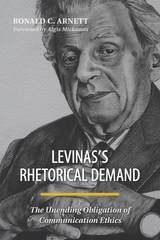
Levinas's Rhetorical Demand
The Unending Obligation of Communication EthicsRonald C. Arnett. Foreword by Algis Mickunas
Southern Illinois University Press, 2017
Distinguished Book Award, Philosophy of Communication Division, National Communication Association, 2017
Top Book Award, Communication Ethics Division, National Communication Association, 2017
Philosopher Emmanuel Levinas’s ethics as first philosophy explicates a human obligation and responsibility to and for the Other that is an unending and imperfect commitment. In Levinas’s Rhetorical Demand: The Unending Obligation of Communication Ethics, Ronald C. Arnett underscores the profundity of Levinas’s insights for communication ethics.Arnett outlines communication ethics as a primordial call of responsibility central to Levinas’s writing and mission, analyzing it through a Levinasian lens with examination of social artifacts ranging from the Heidegger-Cassirer debate to Rupert Murdoch’s News of the World story concerning illicit possession of information.
Levinas’s Rhetorical Demand offers an account of Levinas’s project and the pragmatic implications of attending to a call of responsibility to and for the Other. This book yields a rich and nuanced understanding of Levinas’s work, revealing the practical importance of his insights, and including a discussion of related theorists and thinkers.
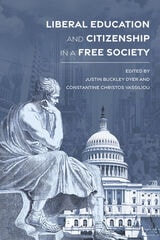
Liberal Education and Citizenship in a Free Society
Justin Buckley Dyer
University of Missouri Press, 2023
With Liberal Education and Citizenship in a Free Society, a collection of 19 original essays, editors Justin Dyer and Constantine Vassiliou present the work of a diverse group of scholars to assess the value of a liberal arts education in the face of market, technological, cultural, and political forces shaping higher learning today.
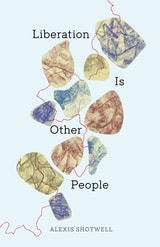
Liberation Is Other People
Alexis Shotwell
University of Minnesota Press, 2026
A compelling call to transform isolation into solidarity and turn shared action into lasting change
Liberation Is Other People offers a bold and timely exploration of how we confront the immense, interconnected challenges of our time. It begins with the truth that many of the crises we face—climate collapse, war, systemic inequality—are human-made and therefore humanly transformable. Yet such “wicked problems” cannot be solved by individuals alone. Every attempt to repair exposes how deeply our lives are entangled across histories of power, privilege, and vulnerability.
Rejecting the idea that personal virtue or guilt can solve the world’s problems, Alexis Shotwell offers a philosophy and practice of collective freedom through collective struggle. Drawing on thinkers such as Angela Davis and Ursula K. Le Guin, she argues that freedom is not the power to act alone but the capacity to shape the world with others. Through sustained engagement with climate politics, white settler responsibility, and the reimagining of sexuality and gender, Liberation Is Other People shows how embracing complicity and acknowledging that none of us stand outside the systems we wish to change can open new possibilities for solidarity and transformation.
Rather than a call to purity or perfection, Liberation Is Other People is a vision of politics as a shared, necessarily imperfect process of creation. Shotwell builds a compelling case that solidarity can be a source of joy, inspiration, and political power. In this age of division and isolation, Shotwell insists that our greatest possibility lies not in fixing the world by our individual selves but in remaking it—together.
Retail e-book files for this title are screen-reader friendly.
Listening to the Whispers
Re-thinking Ethics in HealthcareEdited by Christine Sorrell Dinkins and Jeanne Merkle Sorrell
University of Wisconsin Press, 2006
Listening to the Whispers gives voice to scholars in philosophy, medical anthropology, physical therapy, and nursing, helping readers re-think ethics across the disciplines in the context of today's healthcare system. Diverse voices, often unheard, challenge readers to enlarge the circle of their ethical concerns and look for hidden pathways toward new understandings of ethics. Essays range from a focus on the context of corporatization and managed care environments to a call for questioning the fundamental values of society as these values silently affect many others in healthcare. Each chapter is followed by a brief essay that highlights issues useful for scholarly research and classroom discussion. The conversations of interpretive research in healthcare contained in this volume encourage readers to re-think ethics in ways that will help to create an ethical healthcare system with a future of new possibilities.
Outstanding Academic Title, Choice Magazine
Living Up to Death
Paul Ricoeur
University of Chicago Press, 2009
When French philosopher Paul Ricoeur died in 2005, he bequeathed to the world a highly regarded, widely influential body of work which established him as one of the greatest thinkers of our time. He also left behind a number of unfinished projects that are gathered here and translated into English for the first time.
Living Up to Death consists of one major essay and nine fragments. Composed in 1996, the essay is the kernel of an unrealized book on the subject of mortality. Likely inspired by his wife’s approaching death, it examines not one’s own passing but one’s experience of others dying. Ricoeur notes that when thinking about death the imagination is paramount, since we cannot truly experience our own passing. But those we leave behind do, and Ricoeur posits that the idea of life after death originated in the awareness of our own end posthumously resonating with our survivors.
The fragments in this volume were written over the course of the last few months of Ricoeur’s life as his health failed, and they represent his very last work. They cover a range of topics, touching on biblical scholarship, the philosophy of language, and the idea of selfhood he first addressed in Oneself as Another. And while they contain numerous philosophical insights, these fragments are perhaps most significant for providing an invaluable look at Ricoeur’s mind at work.
As poignant as it is perceptive, Living Up to Death is a moving testimony to Ricoeur’s willingness to confront his own mortality with serious questions, a touching insouciance, and hope for the future.

Living the Good Life
Steven J. Jensen
Catholic University of America Press, 2013
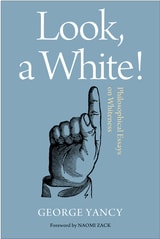
Look, A White!
Philosophical Essays on WhitenessGeorge Yancy
Temple University Press, 2012
Look, a White! returns the problem of whiteness to white people. Prompted by Eric Holder's charge, that as Americans, we are cowards when it comes to discussing the issue of race, noted philosopher George Yancy's essays map out a structure of whiteness.
He considers whiteness within the context of racial embodiment, film, pedagogy, colonialism, its "danger," and its position within the work of specific writers. Identifying the embedded and opaque ways white power and privilege operate, Yancy argues that the Black countergaze can function as a "gift" to whites in terms of seeing their own whiteness more effectively.
Throughout Look, a White! Yancy pays special attention to the impact of whiteness on individuals, as well as on how the structures of whiteness limit the capacity of social actors to completely untangle the way whiteness operates, thus preventing the erasure of racism in social life.

Love and Saint Augustine
Hannah Arendt
University of Chicago Press, 1995
In Love and Saint Augustine, Joanna Vecchiarelli Scott and Judith Chelius Stark make this important early work accessible for the first time. Here is a completely corrected and revised English translation that incorporates Arendt's own substantial revisions and provides additional notes based on letters, contracts, and other documents as well as the recollections of Arendt's friends and colleagues during her later years.

Loving Animals
Toward a New Animal AdvocacyKathy Rudy
University of Minnesota Press, 2013
The contemporary animal rights movement encompasses a wide range of sometimes-competing agendas from vegetarianism to animal liberation. For people for whom pets are family members—animal lovers outside the fray—extremist positions in which all human–animal interaction is suspect often discourage involvement in the movement to end cruelty to other beings. In Loving Animals, Kathy Rudy argues that in order to achieve such goals as ending animal testing and factory farming, activists need to be better attuned to the profound emotional, even spiritual, attachment that many people have with the animals in their lives.
Offering an alternative to both the acceptance of animal exploitation and radical animal liberation, Rudy shows that a deeper understanding of the nature of our feelings for and about animals can redefine the human–animal relationship in a positive way. Through extended interviews with people whose lives are intertwined with animals, analysis of the cultural representation of animals, and engaging personal accounts, she explores five realms in which humans use animals: as pets, for food, in entertainment, in scientific research, and for clothing. In each case she presents new methods of animal advocacy to reach a more balanced and sustainable relationship association built on reciprocity and connection.
Using this intense emotional bond as her foundation, Rudy suggests that the nearly universal stories we tell of living with and loving animals will both broaden the support for animal advocacy and inspire the societal changes that will improve the lives of animals—and humans—everywhere.