Results by title
27 books match the query 'Jesus'
A Biblical Path to the Triune God
Jesus, Paul and the Revelation of the TrinityDenis Farkasfalvy
Catholic University of America Press, 2021
A Quest for the Historical Christ
Scientia Christi and the Modern Study of JesusAnthony Giambrone, OP
Catholic University of America Press, 2021

A Ransom for Israel
Jesus and Jewish Salvation in MatthewNicholas J. Schaser
SBL Press, 2025
Discourse on the State and Grandeurs of Jesus
The Ineffable Union of the Diety with HumanityPierre de Bérulle
Catholic University of America Press, 2023
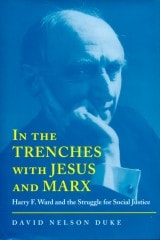
In the Trenches with Jesus and Marx
Harry F. Ward and the Struggle for Social JusticeDavid Duke
University of Alabama Press, 2006
The story of a Social Gospel leader who brought faith, activism, and social justice into the heart of modern American politics.
Radical religious and political leader Harry F. Ward started life quietly enough in a family of Methodist shopkeepers and butchers in London. But his relentless pursuit of social justice would lead him to the United States and a long career of religious activism. Ward served as professor of Christian ethics at the Union Theological Seminary and chairman of the board of the American Civil Liberties Union for two decades. He also became a leader in labor groups, Protestant activist organizations, and New York intellectual circles.
David Duke builds his comprehensive story of this fiery leader from extensive archival sources, including FBI files and private correspondence, sermons, class notes, and other unpublished material. Duke skillfully charts Ward's rise from an idealistic Methodist minister in a Chicago stockyard parish to a prominent national religious leader and influential political figure. Ultimately, Ward's lifelong attempt to synthesize the beliefs of Jesus and Marx and his role as an admirer of the Soviet Union put him on a collision course with McCarthyism in Cold War America. Viewed by some as a prophet and by others as a heretic, traitor, and communist, Ward became increasingly marginalized as he stubbornly maintained his radical positions. Even in his own circle, he went from being a figure of unquestioned integrity who eloquently spoke his convictions to a tragically short-sighted idealogue whose unwavering pro-Soviet agenda blinded him to the horrors of Stalinist oppression.
Harry Ward's long, colorful career intersected nearly every intellectual current in American culture for more than a half century. This biography will be important for scholars of American religious history, students of liberalism and politics, social Christians, and general readers who enjoy a compelling tour into the private and public lives of notable figures of history.
Jesus and Mary Reimagined in Early Christian Literature
Vernon K. Robbins
SBL Press, 2015
Explore the diverse character of emerging Christian narratives
This book presents essays that show how prophetic and priestly emphases in Luke and Acts, and emphasis on Jesus’s existence prior to creation in the Gospel of John, are reworked in some second- and third-century Christian literature. Early Christians interpreted and expressed the storylines of Jesus, Mary, and other important figures in ways that created new images and stories. Contributors show the effect of including rhetography, the rhetoric of a text that prompts images and pictures in the mind of a hearer or reader, in interpretation of texts.
Features:
- Readings that attempt to account for the development of richly creative and complicated early Christian traditions
- Essays bridging New Testament studies and interpretation of Early Christian literature
- Interpretations that integrate social and rhetorical interpretations

Jesus and the Gang
Youth Violence and Christianity in Urban HondurasJon Wolseth
University of Arizona Press, 2011
While only a small fraction of youths in a neighborhood are active members of a gang, most young men must learn the styles, ways of communicating, and local geography of gangs in order to survive. Due to the absence of gang prevention programs sponsored by the government or outside non-governmental organizations, Catholic and Pentecostal churches have developed their own ways to confront gang violence in their communities. Youths who participate in church organizations do so not only to alter and improve their communities but also to gain emotional and institutional support.
Offering firsthand accounts of these youths and how they make use of religious discourse, narrative practices, or the inscription of tattooed images and words on the body to navigate dangerous social settings, Jesus and the Gang is an unflinching look at how these young men turn away from perpetuating the cycle of violence and how Christianity serves a society where belonging is surviving.
This book will appeal to readers with an interest in Latin American studies, urban anthropology, and youth studies. With its focus on the lives of young men and women, it’s also a compelling read for anyone interested in the plight of urban youth trying to escape the gang life.
Jesus and the Gospel Movement
Not Afraid to Be PartnersWilliam Thompson-Uberuaga
University of Missouri Press, 2006
Jesus in America and Other Stories from the Field
Claudia Gould
Utah State University Press, 2009
Drawing on ethnographic field work she conducted among Christians in her home state of North Carolina, Claudia Gould crafts stories that lay open the human heart and social complications of fundamentalist belief. These stories and the compelling characters who inhabit them draw us into the complex essence of religious experience among southern American Christians.

Jesus the Central Jew
His Times and His PeopleAndré LaCocque
SBL Press, 2015
Not a Jew marginally, but centrally
In this book, LaCocque presents the case that Jesus was totally and unquestionably a Jew. He lived as a Jew, thought as a Jew, debated as a Jew, acted as a Jew and died as a Jew. He had no intention of creating a new religion; rather, he was a reformer of the Judaism of his day. True, his critique went far beyond an intellectual subversion. In fact, Jesus progressively thought of himself as the “Son of Man” inaugurating the advent of the Kingdom of God on earth.
Features:
- Focused attention given to the historical Jesus and not Christianity or Christology
- Addresses restricted sources, namely, the Synoptic Gospels
- Close examination of Jesus’s way of thinking, teaching, and behaving
Jesus the Mediator
William Brownsberger
Catholic University of America Press, 2013
Jesus, Interpreted
Matthew J. Ramage
Catholic University of America Press, 2017
Jesus, Jobs, and Justice
African American Women and ReligionBettye Collier-Thomas
Temple University Press, 2013

Jesus, Son of Mary, in Muslim Thought
S. R. Burge
SBL Press, 2026
John, Jesus, and History, Volume 1
Critical Appraisals of Critical ViewsPaul N. Anderson
SBL Press, 2007
John, Jesus, and History, Volume 2
Aspects of Historicity in the Fourth GospelPaul N. Anderson
SBL Press, 2009
This groundbreaking volume draws together an international group of leading biblical scholars to consider one of the most controversial religious topics in the modern era: Is the Gospel of John—the most theological and distinctive among the four canonical Gospels—historical or not? If not, why does John alone among the Gospels claim eyewitness connections to Jesus? If so, why is so much of John’s material unique to John? Using various methodologies and addressing key historical issues in John, these essays advance the critical inquiry into Gospel historiography and John’s place within it, leading to an impressive consensus and convergences along the way. The contributors are Paul N. Anderson; Mark Appold; Richard Bauckham; Helen K. Bond; Richard A. Burridge; James H. Charlesworth; Jaime Clark-Soles; Mary Coloe; R. Alan Culpepper; Craig A. Evans; Sean Freyne; Jeffrey Paul Garcia; Brian D. Johnson; Peter J. Judge; Felix Just, S.J.; Craig S. Keener; Edward W. Klink III; Craig R. Koester; Michael Labahn; Mark A. Matson; James F. McGrath; Susan Miller; Gail R. O’Day; Bas van Os; Tom Thatcher; Derek M. H. Tovey; Urban C. von Wahlde; and Ben Witherington III.
John, Jesus, and History, Volume 3
Glimpses of Jesus Through the Johannine LensPaul N. Anderson
SBL Press, 2016
A critical analysis of the historicity of the Gospel of John
Since it began in 2002, the John, Jesus, and History Project has assessed critically the modern disparaging of John's historicity and has found this bias wanting. In this third volume, an international group of experts demonstrate over two dozen ways in which John contributes to an enhanced historical understanding of Jesus and his ministry. This volume does not simply argue for a more inclusive quest for Jesus—one that embraces John instead of programmatically excluding it. It shows that such a quest has already indeed begun. Contributors include Paul N. Anderson, Jo-Ann A. Brant, Peder Borgen, Gary M. Burge, Warren Carter, R. Alan Culpepper, James D. G. Dunn, Robert T. Fortna, Jörg Frey, Steven A. Graham, Colin J. Humphreys, Craig Keener, Andreas Köstenberger, Tim Ling, William Loader, Linda McKinnish Bridges, James S. McLaren, Annette Merz, Wendy E. S. North, Benjamin E. Reynolds, Udo Schnelle, Donald Senior, C.P., Tom Thatcher, Michael Theobald, Jan van der Watt, Robert Webb, Stephen Witetscheck, and Jean Zumstein.
Features
- A state-of-the-art analysis of John’s contributions to the quest for the historical Jesus, including evaluative responses by leading Jesus scholars
- •An overview of paradigm shifts in Jesus scholarship and recent approaches to the Johannine riddles
- Detailed charts that illuminates John's similarities and differences form the Synoptic Gospels as well as the gospel's contributions to the historical Jesus research
John, Jesus, and History, Volume 4
Jesus Remembered in the Johannine SituationPaul N. Anderson
SBL Press, 2024
John, Jesus, and History, Volume 4: Jesus Remembered in the Johannine Situation addresses the narrative development of the Johannine corpus over as many as seven decades. Contributors connect how Jesus is presented in the Fourth Gospel to how the memory of his ministry is developed in Palestine during the earliest period (30–70 CE), in Asia Minor in the later first century (70–100 CE), and in the main and alternative streams of post-Johannine early Christianity (100 CE and later). Contributors include Paul N. Anderson, Harold W. Attridge, Giovanni Bazzana, Jonathan Bernier, Sherri Brown, Rex D. Butler, Andrew J. Byers, Stephen C. Carlson, Warren Carter, Amber M. Dillon, Jonathan A. Draper, Musa W. Dube, Charles E. Hill, Karen L. King, Peter T. Lanfer, Kasper Bro Larsen, Ian N. Mills, Alicia D. Myers, Reinhard Pummer, Tuomas Rasimus, David Rensberger, Clare K. Rothschild, Geoffrey Smith, Travis D. Trost, Meredith J. C. Warren, Kenneth L. Waters Sr., and Lorne R. Zelyck. The collection pushes Johannine, Jesus, and early Christian history studies in new directions, raising possibilities for future research.
John, Jesus, and History, Volume 5
Jesus Remembered within the Johannine TraditionPaul N. Anderson
SBL Press, 2026

Law and Liberty
Jesus, Paul, and the Newness of ChristianityRomano Penna
Catholic University of America Press, 2026
Mark, Mutuality, and Mental Health
Encounters with JesusSimon Mainwaring
SBL Press, 2014
An incitement to re-assess how society relates to persons with poor mental health
Mainwaring explores the societal contexts of those who suffer poor mental health, and in particular the relational dynamics of how identity, agency, and dialogue are negotiated in personal encounters. This work seeks to serve as an experiment, such that interested readers might better understand the dynamics of relational power that pervade encounters with persons with poor mental health.
Features:
- Foucauldian analysis of the relational dynamics of poor mental health used to re-imagine hegemonic relational dynamics
- Close readings of encounters between individual characters to evaluate how mutuality operates in those encounters
- Study of mutuality as it has emerged in mental health literature, feminist theologies, and theologies of disability
The Adeodatus Handbook on Catholic Education and Culture
Volume 1: From Jesus the Teacher to St. John Henry NewmanAlex E. Lessard
Catholic University of America Press, 2025
The Galilean Economy in the Time of Jesus
David A. Fiensy
SBL Press, 2013
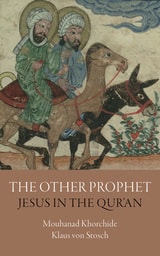
The Other Prophet
Jesus in the Qur’anMouhanad Khorchide and Klaus von Stosch
Gingko, 2025
The Qur’an identifies Jesus as a sign of God, and he holds a place as one of the most important prophets in Islam. Looking at Jesus in Islam also reveals both deep differences from and rich connections to the view of Jesus in Christianity. In The Other Prophet, Mouhanad Khorchide and Klaus von Stosch explore and explain the position of the Qur’anic Jesus, with one scholar working from the Muslim and the other from the Christian theological perspective. Their combined research presents a history of Jesus’ presence in the Qur’an and provides astute observations to deepen the understanding of both Christians and Muslims. Here we find that a common view of Jesus from the Muslim and Christian sides is not only possible but also expands our understanding of Jesus and his message.
The Philosophy of Jesus
Peter Kreeft
St. Augustine's Press, 2007
Amazingly, no one ever seems to have looked at Jesus as a philosopher, or his teaching as philosophy. Yet no one in history has ever had a more radically new philosophy, or made more of a difference to philosophy, than Jesus. He divided all human history into two, into "B.C." and "A.D."; and the history of philosophy is crucial to human history, since philosophy is crucial to man; so how could He not also divide philosophy?
This book (1) looks at Jesus as a complete human being (as well as divine), therefore also as a philosopher; (2) looks at philosophy as Jesus' pre-modern contemporaries did, as a wisdom, a world-view, and a way of life rather than as a super-science (Descartes, Hegel) or as a servant-science (Hobbes, Hume); and (3) looks at philosophy in light of Jesus rather than at Jesus in light of philosophy. It explores the consequences of Etienne Gilson's point that when St. John brought Christianity and Greek philosophy into contact and identified the Messiah the Jews had most deeply sought with the logos that the Greeks had most deeply sought, nothing happened to Christ but something happened to the logos.
This book explores the most radical revolution in the history of philosophy, the differences Jesus made to metaphysics (the philosophy of being), to epistemology (the philosophy of knowing), to anthropology (the philosophy of man), and to philosophical ethics and politics.
And, besides, it has the greatest ending of any philosophy book in a century.
Two Shipwrecked Gospels
The Logoi of Jesus and Papias's Exposition of Logia about the LordDennis R. MacDonald
SBL Press, 2012
What That Pig Said to Jesus
On the Uneasy Permanence of Immigrant LifePhilip Garrison
University of Utah Press, 2017
Philip Garrison says his book of essays is “in praise of mixed feelings,” particularly the mixed feelings he and his neighbors have toward the places they came from. His neighborhood is the Columbia Plateau, one of many North American nodes of immigration. Following a meandering, though purposeful trail, Garrison catches hillbillies and newer Mexican arrivals in ambiguous, wary encounters on a set four hundred years in the making, built on a foundation of Native American displacement. Garrison is the product of the earlier surge of new arrivals: from the 1930s to the 1970s, those he calls hillbillies left such mid-nation states as Arkansas, Missouri, Oklahoma, Kansas, and the Dakotas for the West. The more recent wave, from 1990 to 2010, came mostly from the central plateau of Mexico. These are folks with whom Garrison communes in multiple ways. Anecdotes from sources as varied as pioneer diaries, railroad promotions, family Bibles, Wikipedia, and local gossip “portray the region's immigration as a kind of identity makeover, one that takes the form first of breakdown, then of reassembly, and finally of renewal.” Garrison’s mix of slangy memoir and anthropological field notes shines light on the human condition in today’s West.