Results by title
1726 books match the query 'Film' and 53 start with l
L.A. Private Eyes
Dahlia Schweitzer
Rutgers University Press, 2019
Watch a video of the author speaking about this topic: https://goo.gl/Xr9RFD
And also: https://www.dropbox.com/s/mkqw3mplruf7jje/Detective%20Talk%20Full.mp4?dl=0 (https://www.dropbox.com/s/mkqw3mplruf7jje/Detective%20Talk%20Full.mp4?dl=0)
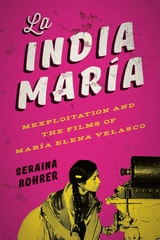
La India María
Mexploitation and the Films of María Elena VelascoBy Seraina Rohrer
University of Texas Press, 2017
La India María—a humble and stubborn indigenous Mexican woman—is one of the most popular characters of the Mexican stage, television, and film. Created and portrayed by María Elena Velasco, La India María has delighted audiences since the late 1960s with slapstick humor that slyly critiques discrimination and the powerful. At the same time, however, many critics have derided the iconic figure as a racist depiction of a negative stereotype and dismissed the India María films as exploitation cinema unworthy of serious attention. By contrast, La India María builds a convincing case for María Elena Velasco as an artist whose work as a director and producer—rare for women in Mexican cinema—has been widely and unjustly overlooked.
Drawing on extensive interviews with Velasco, her family, and film industry professionals, as well as on archival research, Seraina Rohrer offers the first full account of Velasco’s life; her portrayal of La India María in vaudeville, television, and sixteen feature film comedies, including Ni de aquí, ni de allá [Neither here, nor there]; and her controversial reception in Mexico and the United States. Rohrer traces the films’ financing, production, and distribution, as well as censorship practices of the period, and compares them to other Mexploitation films produced at the same time. Adding a new chapter to the history of a much-understudied period of Mexican cinema commonly referred to as “la crisis,” this pioneering research enriches our appreciation of Mexploitation films.
La danse des valeurs
Sergueï Eisenstein et le Capital de MarxElena Vogman
Diaphanes, 2020
Le Capital de Sergueï Eisenstein (1927-1928) est un fantôme à plus d’un titre: bien que le film n’ait jamais été réalisé, il a néanmoins hanté l'imagination de nombreux cinéastes, historiens et écrivains jusqu’à aujourd’hui et même récemment avec les Nouvelles de l’Antiquité idéologique : Marx – Eisenstein – Le Capital d’Alexander Kluge. De plus, sa première matérialisation publique – un fragment d’une dizaine de pages issu des carnets du réalisateur – était marquée par ce qui demeurait absent : les images et le matériau de travail d’Eisenstein.
La Danse des valeurs ambitionne d’invoquer à nouveaux frais le fantôme du Capital mais en se fondant cette fois-ci sur l’ensemble de son corps d’archives. Cette « instruction visuelle à la méthode dialectique », selon les mots-mêmes d’Eisenstein, comprend plus de 500 pages de notes, de dessins, de coupures de presse, de diagrammes d’expression, de plans d’articles, de négatifs d’Octobre, de réflexions théoriques et de longues citations. La Danse des valeurs explore la nécessité formelle qui sous-tend les choix d’Eisenstein dans le Capital. Sa lecture fait valoir que sa complexité visuelle ainsi que son efficacité épistémique résident précisément dans l’état de son matériau : une danse de thèmes hétérogènes et de fragments disparates, un flux non-linéaire, provisoire et inarticulé.
Les séquences visuelles d’archives, publiées ici pour la première fois en France, ne sont pas bâties à titre de simples illustrations, mais en tant qu’arguments à part entière, donnant à voir ce qui se joue pour Eisenstein dans le Capital : une théorisation visuelle de la valeur. Une lecture des archives d’Eisenstein, dans leur logique interne, permet non seulement de reconstituer des éléments morphologiques présents dans le concept de valeur chez Marx, mais également de théoriser une crise plus fondamentale de la représentation politique, un présent qui s’étend de son contexte contemporain jusqu’à nos jours. Mettant en œuvre un procédé morphologique sans équivoque, les séquences de montage d’Eisenstein produisent une sorte de plus-value qui leur est propre, un excès sémiotique qui brasse les matériaux et présente les corps dans une danse analogue à la « danse » des « conditions pétrifiées » de Marx. C’est dans ce langage polymorphe et « diffus » – associé au stream of consciousness de l’Ulysse de Joyce – qu’Eisenstein perçoit le potentiel critique et affectif d’un cinéma à venir.
La proyección del neoliberalismo
Las transformaciones del cine mexicano (1988–2012)Ignacio M. Sánchez Prado
Vanderbilt University Press, 2019
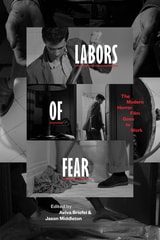
Labors of Fear
The Modern Horror Film Goes to WorkEdited by Aviva Briefel and Jason Middleton
University of Texas Press, 2023
2024 Best Edited Collection, Midwest Popular Culture Association / Midwest American Culture Association (MPCA/ACA)
How work and capitalism inspire horror in modern film.
American ideals position work as a source of pride, opportunity, and meaning. Yet the ravages of labor are constant grist for horror films. Going back decades to the mad scientists of classic cinema, the menial motel job that prepares Norman Bates for his crimes in Psycho, and the unemployed slaughterhouse workers of The Texas Chain Saw Massacre, horror movies have made the case that work is not so much a point of pride as a source of monstrosity.
Editors Aviva Briefel and Jason Middleton assemble the first study of horror’s critique of labor. In the 1970s and 1980s, films such as The Shining and Dawn of the Dead responded to deindustrialization, automation, globalization, and rising numbers of women in the workforce. Labors of Fear explores these critical issues and extends them in discussions of recent works such as The Autopsy of Jane Doe, Midsommar, Survival of the Dead, It Follows, Get Out, and Us. Covering films ranging from the 1970s onward, these essays address novel and newly recognized modes and conditions of labor: reproductive labor, emotion work and emotional labor, social media and self-branding, intellectual labor, service work, precarity, and underemployment. In its singular way, horror continues to make spine-tingling sense of what is most destructive in the wider sociopolitical context of US capitalism.
Lady Chatterley's Legacy in the Movies
Sex, Brains, and Body GuysLehman, Peter
Rutgers University Press, 2010
Peter Lehman and Susan Hunt relate a host of wide-ranging films to a literary tradition dating back to D. H. Lawrence's Lady Chatterley's Lover and an emerging body culture of our time. Through an engaging and compelling narrative, they argue that the hero's body, lovemaking style, and penis-revealed through extensive male nudity-celebrate conformity to norms of masculinity and male sexuality. Simultaneously, these films denigrate the vital, creative, erotic world of the mind. Just when women began to successfully compete with men in the workplace, these movies, if you will, unzip the penis as the one thing women do not have but want and need for their fulfillment.
But Lehman and Hunt also find signs of a yearning for alternative forms of sexual and erotic pleasure in film, embracing diverse bodies and vibrant minds. Lady Chatterley's Legacy in the Movies shows how filmmakers, spectators, and all of us can be empowered to dethrone the body guy, his privileged body, and preferred style of lovemaking, replacing it with a wide range of alternatives.
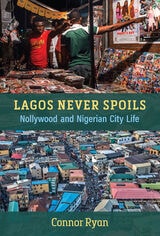
Lagos Never Spoils
Nollywood and Nigerian City LifeConnor Ryan
University of Michigan Press, 2023
Winner of the Society for Cinema and Media Studies, Media Industries Scholarly Interest Group Outstanding Book Award
The slogan “Lagos shall not spoil,” found in print media, political campaigns, and common conversation, represents a shared expression of the optimism the city embodies. However, on city streets the phrase also appears scrawled in irreverent variations—“Lagos cannot spoil more than this!”—that meet the frustrations of city life with irony. In both cases, the slogan captures the resilience and persistence with which residents of Lagos live on, despite it all. This book examines the circumstances that make it possible for residents to persist in pursuing their various projects and for the city to remain a platform that supports these projects and creates space for even more to emerge. Author Connor Ryan argues that residents continually work to combine contingency and endurance in opportunistic ways that make the city work for them, and as such, Lagos never spoils: it endures.
What makes Lagos remarkable is what residents have made of it, and Nollywood—the industry and the body of films—both embodies and represents this continual urban transformation. Lagos Never Spoils traces how Nollywood arose from the social milieu of Lagos and, in turn, generates a repertoire of stories, images, styles, and sentiments with which audiences come to grips with city life. The book traces the evolution of the screen media industry in Lagos and explores how this corresponds with historical phases in the city’s representation onscreen. It discusses important urban spaces of production and consumption, including historic movie halls, video marketplaces, film sets, and multiplex cinemas. Across six chapters, it attends to celluloid films about oil-boom wealth, television sitcoms about urban tricksters, video melodramas about urban crisis, glossy romantic comedies about young professionals, and dark thrillers on streaming platforms about the pleasure of moral transgression. In this fashion, the book offers new approaches to the interpretation of screen texts produced in and about Lagos, a place that is today the most influential image of West African city life.
Lana and Lilly Wachowski
Cael M. Keegan
University of Illinois Press, 2018
Cáel M. Keegan views the Wachowskis' films as an approach to trans* experience that maps a transgender journey and the promise we might learn "to sense beyond the limits of the given world." Keegan reveals how the filmmakers take up the relationship between identity and coding (be it computers or genes), inheritance and belonging, and how transgender becoming connects to a utopian vision of a post-racial order. Along the way, he theorizes a trans* aesthetic that explores the plasticity of cinema to create new social worlds, new temporalities, and new sensory inputs and outputs. Film comes to disrupt, rearrange, and evolve the cinematic exchange with the senses in the same manner that trans* disrupts, rearranges, and evolves discrete genders and sexes.
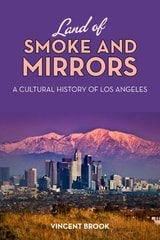
Land of Smoke and Mirrors
A Cultural History of Los AngelesBrook, Vincent
Rutgers University Press, 2013
Unlike the more forthrightly mythic origins of other urban centers—think Rome via Romulus and Remus or Mexico City via the god Huitzilopochtli—Los Angeles emerged from a smoke-and-mirrors process that is simultaneously literal and figurative, real and imagined, material and metaphorical, physical and textual. Through penetrating analysis and personal engagement, Vincent Brook uncovers the many portraits of this ever-enticing, ever-ambivalent, and increasingly multicultural megalopolis. Divided into sections that probe Los Angeles’s checkered history and reflect on Hollywood’s own self-reflections, the book shows how the city, despite considerable remaining challenges, is finally blowing away some of the smoke of its not always proud past and rhetorically adjusting its rear-view mirrors.
Part I is a review of the city’s history through the early 1900s, focusing on the seminal 1884 novel Ramona and its immediate effect, but also exploring its ongoing impact through interviews with present-day Tongva Indians, attendance at the 88th annual Ramona pageant, and analysis of its feature film adaptations.
Brook deals with Hollywood as geographical site, film production center, and frame of mind in Part II. He charts the events leading up to Hollywood’s emergence as the world’s movie capital and explores subsequent developments of the film industry from its golden age through the so-called New Hollywood, citing such self-reflexive films as Sunset Blvd.,Singin’ in the Rain, and The Truman Show.
Part III considers LA noir, a subset of film noir that emerged alongside the classical noir cycle in the 1940s and 1950s and continues today. The city’s status as a privileged noir site is analyzed in relation to its history and through discussions of such key LA noir novels and films as Double Indemnity, Chinatown, and Crash.
In Part IV, Brook examines multicultural Los Angeles. Using media texts as signposts, he maps the history and contemporary situation of the city’s major ethno-racial and other minority groups, looking at such films as Mi Familia (Latinos), Boyz N the Hood (African Americans), Charlotte Sometimes (Asians), Falling Down (Whites), and The Kids Are All Right (LGBT).

Landscape and the Science Fiction Imaginary
John Timberlake
Intellect Books, 2018
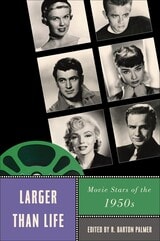
Larger Than Life
Movie Stars of the 1950sPalmer, R. Barton
Rutgers University Press, 2010
Larger Than Life offers a comprehensive view of the star system in 1950s Hollywood and also in-depth discussions of the decade's major stars, including Montgomery Clift, Judy Holliday, Jerry Lewis, James Mason, Marilyn Monroe, Kim Novak, Bing Crosby, Gene Kelly, Jayne Mansfield, and Audrey Hepburn.
Lars von Trier
Linda Badley
University of Illinois Press, 2011
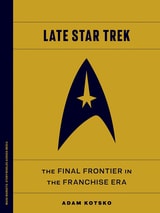
Late Star Trek
The Final Frontier in the Franchise EraAdam Kotsko
University of Minnesota Press, 2025
How Star Trek’s twenty-first-century reinventions illuminate the unique challenges and opportunities of franchise-style corporate storytelling
Late Star Trek explores the beloved science fiction franchise’s repeated attempts to reinvent itself after the end of its 1990s golden age. Beginning with the prequel series Enterprise, Adam Kotsko analyzes the wealth of content set within Star Trek’s sprawling continuity—including authorized books, the three “Kelvin Timeline” films, and the streaming series Discovery, Picard, Lower Decks, Prodigy, and Strange New Worlds—along with fan discourse, to reflect on the perils and promise of the franchise as a unique form of storytelling.
Significantly including the licensed novels and comic books that fill out the Star Trek universe for its fans, Kotsko brings the multiple productions of the early twenty-first century together as a unified whole rather than analyzing them in their current stratified view. He argues that the variety of styles and approaches in this tumultuous era of Star Trek history provides the perfect opportunity to reflect on the nature of the franchise storyworlds that now dominate popular culture. By taking the spin-offs and tie-ins seriously as creative attempts to tell a new story within an established universe, Late Star Trek highlights creative triumphs as well as the tendency for franchise faithfulness to get in the way of creating engaging characters and ideas.
Arguing forcefully against the prevailing consensus that franchises are a sign of cultural decay, Kotsko contends that the Star Trek universe exemplifies an approach to storytelling that has been perennial across cultures. Instead, he finds that what limits creativity within franchises is not their reliance on the familiar but their status as modern myths, held not as common cultural heritage but rather owned as corporate intellectual property.
Retail e-book files for this title are screen-reader friendly with images accompanied by short alt text and/or extended descriptions.
Latent Destinies
Cultural Paranoia and Contemporary U.S. NarrativePatrick O Donnell
Duke University Press, 2000
O’Donnell argues that paranoia on the broadly cultural level is essentially a narrative process in which history and postmodern identity are negotiated simultaneously. The result is an erasure of historical temporality—the past and future become the all-consuming, self-aware present. To explain and exemplify this, O’Donnell looks at such books and films as Libra, JFK, The Crying of Lot 49, The Truman Show, Reservoir Dogs, Empire of the Senseless, Oswald’s Tale, The Executioner’s Song, Underworld, The Killer Inside Me, and Groundhog Day. Organized around the topics of nationalism, gender, criminality, and construction of history, Latent Destinies establishes cultural paranoia as consonant with our contradictory need for multiplicity and certainty, for openness and secrecy, and for mobility and historical stability.
Demonstrating how imaginative works of novels and films can be used to understand the postmodern historical condition, this book will interest students and scholars of American literature and cultural studies, postmodern theory, and film studies.
Latin American Documentary Filmmaking
Major WorksDavid William Foster
University of Arizona Press, 2013
Foster provides a series of detailed examinations of major texts of Latin American filmmaking, discussing their textual production and processes of meaning. His analysis delves deeply into the world of Latin American film and brings forth a discourse of structure that has previously been absent from the fields of filmmaking and Latin American studies. This volume provides perspective on diverse and methodological approaches, pulling from a wide scope of cinematic traditions. Using his own critical readings and research, Foster presents his findings in terms that are accessible to non-Spanish speakers and Latin American film enthusiasts.
A much-needed contribution to the field of Latin American documentary film, Foster’s research and perspective will be a valuable source for those interested in film studies, gender studies, and culture.
Latin American Melodrama
Passion, Pathos, and EntertainmentEdited and with an Introduction by Darlene J. Sadlier
University of Illinois Press, 2008
Like their Hollywood counterparts, Latin American film and TV melodramas have always been popular and highly profitable. The first of its kind, this anthology engages in a serious study of the aesthetics and cultural implications of Latin American melodramas. Written by some of the major figures in Latin American film scholarship, the studies range across seventy years of movies and television within a transnational context, focusing specifically on the period known as the "Golden Age" of melodrama, the impact of classic melodrama on later forms, and more contemporary forms of melodrama. An introductory essay examines current critical and theoretical debates on melodrama and places the essays within the context of Latin American film and media scholarship.
Contributors are Luisela Alvaray, Mariana Baltar, Catherine L. Benamou, Marvin D’Lugo, Paula Félix-Didier, Andrés Levinson, Gilberto Perez, Darlene J. Sadlier, Cid Vasconcelos, and Ismail Xavier.
Latina/o Stars in U.S. Eyes
The Making and Meanings of Film and TV StardomMary C. Beltran
University of Illinois Press, 2008
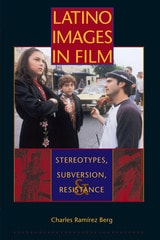
Latino Images in Film
Stereotypes, Subversion, and ResistanceBy Charles Ramírez Berg
University of Texas Press, 2002
The bandido, the harlot, the male buffoon, the female clown, the Latin lover, and the dark lady—these have been the defining, and demeaning, images of Latinos in U.S. cinema for more than a century. In this book, Charles Ramírez Berg develops an innovative theory of stereotyping that accounts for the persistence of such images in U.S. popular culture. He also explores how Latino actors and filmmakers have actively subverted and resisted such stereotyping.
In the first part of the book, Berg sets forth his theory of stereotyping, defines the classic stereotypes, and investigates how actors such as Raúl Julia, Rosie Pérez, José Ferrer, Lupe Vélez, and Gilbert Roland have subverted stereotypical roles. In the second part, he analyzes Hollywood's portrayal of Latinos in three genres: social problem films, John Ford westerns, and science fiction films. In the concluding section, Berg looks at Latino self-representation and anti-stereotyping in Mexican American border documentaries and in the feature films of Robert Rodríguez. He also presents an exclusive interview in which Rodríguez talks about his entire career, from Bedhead to Spy Kids, and comments on the role of a Latino filmmaker in Hollywood and how he tries to subvert the system.
Latino Los Angeles in Film and Fiction
The Cultural Production of Social AnxietyIgnacio López-Calvo
University of Arizona Press, 2014
Latino Los Angeles in Film and Fiction sets out to reconfigure the scope of Latino literary and cultural studies. Integrating histories of different regions and nations, the book sets the interplay of unresolved contradictions in this particular metropolitan area. The novelists studied here stem from multiple areas, including the U.S. Southwest, Guatemala, and Chile. The study also incorporates non-Latino writers who have contributed to the Latino culture of the city.
The first chapter examines Latino cultural production from an ecocritical perspective on urban interethnic relations. Chapter 2 concentrates on the representation of daily life in the barrio and the marginalization of Latino urban youth. The third chapter explores the space of women and how female characters expand their area of operations from the domestic space to the public space of both the barrio and the city.
A much-needed contribution to the fields of urban theory, race critical theory, Chicana/o–Latina/o studies, and Los Angeles writing and film, López-Calvo offers multiple theoretical perspectives—including urban theory, ecocriticism, ethnic studies, gender studies, and cultural studies— contextualized with notions of transnationalism and post-nationalism.
Latter-day Screens
Gender, Sexuality, and Mediated MormonismBrenda R. Weber
Duke University Press, 2019

Law in Film
RESONANCE AND REPRESENTATIONDavid A. Black
University of Illinois Press, 1999
Drawing on both film studies and legal scholarship, David A. Black explores the implications of representing court procedure, as well as other phases of legal process, in film. His study ranges from an inquiry into the common metaphorical ground between film and law, explored through "the detective" and "the witness," to a critical survey of legal writings about the cinema, to close analyses of key films about law. In examining multiple aspects of law in film, Black sustains a focus on the central importance of narrative while also unearthing the influences—pleasure in film, power in law—that lie beyond the narrative realm. Black's penetrating study treats questions of narrative authority and structure, social authority, and cultural history, revealing the underlying historical, cultural, and cognitive connections between legal and cinematic practices.
Lear’s Other Shadow
A Cultural History of Queen LearThomas G. Olsen
University of Delaware Press, 2025
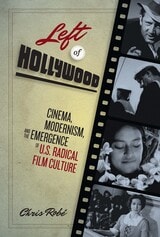
Left of Hollywood
Cinema, Modernism, and the Emergence of U.S. Radical Film CultureBy Chris Robé
University of Texas Press, 2010
In the 1930s as the capitalist system faltered, many in the United States turned to the political Left. Hollywood, so deeply embedded in capitalism, was not immune to this shift. Left of Hollywood offers the first book-length study of Depression-era Left film theory and criticism in the United States. Robé studies the development of this theory and criticism over the course of the 1930s, as artists and intellectuals formed alliances in order to establish an engaged political film movement that aspired toward a popular cinema of social change. Combining extensive archival research with careful close analysis of films, Robé explores the origins of this radical social formation of U.S. Left film culture.
Grounding his arguments in the surrounding contexts and aesthetics of a few films in particular—Sergei Eisenstein's Que Viva Mexico!, Fritz Lang's Fury, William Dieterle's Juarez, and Jean Renoir's La Marseillaise—Robé focuses on how film theorists and critics sought to foster audiences who might push both film culture and larger social practices in more progressive directions. Turning at one point to anti-lynching films, Robé discusses how these movies united black and white film critics, forging an alliance of writers who championed not only critical spectatorship but also the public support of racial equality. Yet, despite a stated interest in forging more egalitarian social relations, gender bias was endemic in Left criticism of the era, and female-centered films were regularly discounted. Thus Robé provides an in-depth examination of this overlooked shortcoming of U.S. Left film criticism and theory.
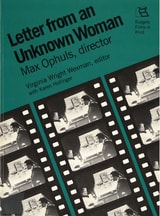
Letter from an Unknown Woman
Max Ophuls, DirectorWexman, Virginia
Rutgers University Press, 1986
This volume provides a detailed transcription of the 1948 film. Notes appended to the film's continuity script detail all the significant differences between the finished film and the shooting script.
Wexman's introductions to each of the book's sections discuss the history of the film's reception and provide an overview of the central issues the film has raised. A cross section of commentary by well-known critics attests to the film's enduring position as a central text for cinema study. These essays acknowledge the film's significance as a preeminent example of Ophuls's art, as an important woman's film, and as a representative of the classic Hollywood style. A biographical sketch of Ophuls, the entire Zweig novella, a bibliography and other background materials are also included.
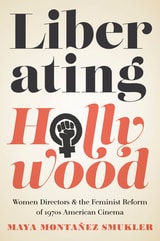
Liberating Hollywood
Women Directors and the Feminist Reform of 1970s American CinemaSmukler, Maya M
Rutgers University Press, 2019
Liberating Hollywood examines the professional experiences and creative output of women filmmakers during a unique moment in history when the social justice movements that defined the 1960s and 1970s challenged the enduring culture of sexism and racism in the U.S. film industry. Throughout the 1970s feminist reform efforts resulted in a noticeable rise in the number of women directors, yet at the same time the institutionalized sexism of Hollywood continued to create obstacles to closing the gender gap. Maya Montañez Smukler reveals that during this era there were an estimated sixteen women making independent and studio films: Penny Allen, Karen Arthur, Anne Bancroft, Joan Darling, Lee Grant, Barbara Loden, Elaine May, Barbara Peeters, Joan Rivers, Stephanie Rothman, Beverly Sebastian, Joan Micklin Silver, Joan Tewkesbury, Jane Wagner, Nancy Walker, and Claudia Weill. Drawing on interviews conducted by the author, Liberating Hollywood is the first study of women directors within the intersection of second wave feminism, civil rights legislation, and Hollywood to investigate the remarkable careers of these filmmakers during one of the most mythologized periods in American film history.
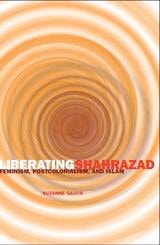
Liberating Shahrazad
Feminism, Postcolonialism, and IslamSuzanne Gauch
University of Minnesota Press, 2006
In Liberating Shahrazad, Suzanne Gauch analyzes how postcolonial writers and filmmakers from Algeria, Morocco, and Tunisia have reclaimed the storyteller in order to portray Muslim women in ways that highlight their power to shape their own destinies. Gauch looks at Maghrebian works that incorporate Shahrazad’s storytelling techniques into unexpected and unforeseen narratives. Highlighting the fluid nature of storytelling, Gauch demonstrates how these new depictions of Shahrazad—from artists such as Moufida Tlatli, Fatima Mernissi, Tahar Ben Jelloun, Assia Djebar, Leïla Sebbar—navigate the demands of a global marketplace, even as they reshape the stories told about the Islamic world.
In the face of both rising fundamentalism and proliferating Western media representations of Arab and Muslim women as silent, exploited, and uneducated victims, Gauch establishes how contemporary works of literature and film revive the voice of a long-silenced Shahrazad—and, ultimately, overthrow oppressive images of Muslim women. Suzanne Gauch is assistant professor of English and women’s studies at Temple University.
Life between Two Deaths, 1989-2001
U.S. Culture in the Long NinetiesPhillip E. Wegner
Duke University Press, 2009
Wegner shows how phenomena including the debate on globalization, neoliberal notions of the end of history, the explosive growth of the Internet, the efflorescence of new architectural and urban planning projects, developments in literary and cultural production, new turns in theory and philosophy, and the rapid growth of the antiglobalization movement came to characterize the long nineties. He offers readings of some of the most interesting cultural texts of the era: Don DeLillo’s White Noise; Joe Haldeman’s Forever trilogy; Octavia Butler’s Parable novels; the Terminator films; the movies Fight Club, Independence Day, Cape Fear, and Ghost Dog; and the television series Buffy the Vampire Slayer. In so doing, he illuminates fundamental issues concerning narrative, such as how beginnings and endings are recognized and how relationships between events are constructed.

Life-Destroying Diagrams
Eugenie Brinkema
Duke University Press, 2021
Lights! Camera! Arkansas!
From Broncho Billy to Billy Bob ThorntonRobert Cochran
University of Arkansas Press, 2015
Lights! Camera! Arkansas! traces the roles played by Arkansans in the first century of Hollywood’s film industry, from the first cowboy star, Broncho Billy Anderson, to Mary Steenburgen, Billy Bob Thornton, and many others. The Arkansas landscape also plays a starring role: North Little Rock’s cameo in Gone with the Wind, Crittenden County as a setting for Hallelujah (1929), and various locations in the state’s southeastern quadrant in 2012’s Mud are all given fascinating exploration.
Robert Cochran and Suzanne McCray screened close to two hundred films—from laughable box-office bombs to laudable examples of filmmaking -- in their research for this book. They’ve enhanced their spirited chronological narrative with an appendix on documentary films, a ratings section, and illustrations chosen by Jo Ellen Maack of the Old State House Museum, where Lights! Camera! Arkansas! debuted as an exhibit curated by the authors in 2013. The result is a book sure to entertain and inform those interested in Arkansas and the movies for years to come.
Like a Natural Woman
Spectacular Female Performance in Classical HollywoodPullen, Kirsten
Rutgers University Press, 2014
Bringing a fresh perspective to film history through the lens of performance studies, Kirsten Pullen explores the ways in which these actresses, who always appeared to be “playing themselves,” responded to the naturalist notion that actors should create authentic characters by drawing from their own lives. At the same time, she examines how Hollywood presented these female stars as sex objects, focusing on their spectacular bodies at the expense of believable characterization or narratives.
Pullen not only helps us appreciate what talented actresses these five women actually were, but also reveals how they sought to express themselves and maintain agency, even while meeting the demands of their directors, studios, families, and fans to perform certain feminine roles. Drawing from a rich collection of classic films, publicity materials, and studio archives, Like a Natural Woman lets us take a new look at both Hollywood acting techniques and the performance of femininity itself.

Limiting Secularism
The Ethics of Coexistence in Indian Literature and FilmPriya Kumar
University of Minnesota Press, 2008
With a backdrop of religious violence and escalating regional tensions in South Asia, Priya Kumar’s Limiting Secularism probes the urgent topic of secularism and tolerance in Indian culture and life. Kumar explores Partition as the founding trauma of the Indian nation-state and traces the consequences of its marking off of “Indian” from “Pakistani” and the positioning of Indian Muslims as strangers within the nation.
Kumar unpacks the implications of the Nehruvian doctrine of tolerance-with all of its resonances of condescension and inequality-and asks whether more ethical cohabitation can replace the “arrogant compulsive tolerance” of the state and the majority. Informed by Jacques Derrida’s recent work on hospitality and living together, Kumar argues for the emergence of an “ethics of coexistence” in Indian fiction and film. Considering narratives ranging from the cosmopolitan English novels of Rushdie and Ghosh to literature in South Asian languages as well as recent Hindi cinema, Kumar demonstrates that these fictions are important resources for reimagining tolerance and coexistence.
Distinctive and timely in its investigation of secularism and communalism, Limiting Secularism works to envision the radical possibilities of going beyond tolerance to living well together.
Priya Kumar is associate professor of English at the University of Iowa.
Line Of Sight
American Avant-Garde Film Since 1965Paul Arthur
University of Minnesota Press, 2005
For three decades, Paul Arthur has been a leading observer and critic as well as a direct participant in America’s avant-garde cinema. In A Line of Sight, he provides a sweeping new account of the extravagant energies of American experimental cinema since 1965.
Balancing close analysis of both major and lesser-known films with detailed examinations of their production, distribution, and exhibition, Arthur addresses the avant-garde’s cultural significance while offering a timely reconsideration of accepted critical categories and artistic options. Rather than treating American avant-garde cinema as a series of successive artistic breakthroughs, A Line of Sight emphasizes the importance of social and institutional networks, material exchanges, and historical disruptions and continuities. Throughout, Arthur pays close attention to themes and visual practices neglected or underrepresented in previous studies, scrutinizing portraiture as a vehicle for projecting dissident identities, highlighting the essay film and the contemporary city symphony, and assessing the contributions of regional and African American filmmaking to the avant-garde. He also explores thematic and formal questions that have been central to the avant-garde achievement: experimental film's relationship with mainstream narrative cinema and postwar American painting as well as the legacy of sixties’s counterculture; the uses and theoretical implications of found footage and the allegorizing of technology; and the schism between a poetic, expressive cinema and the antisubjective, rationalist bias of structural filmmaking.
Amid the current resurgence of experimental filmmakers and the emergence of a new audience for their work, A Line of Sight reaffirms the extraordinary breadth and diversity of the avant-garde tradition in America.
Listening with a Feminist Ear
Soundwork in Bombay CinemaPavitra Sundar
University of Michigan Press, 2023
Honorable Mention of the 2023 MLA Aldo and Jeanne Scaglione Prize for South Asian Studies
- Longlist Finalist of the 2024 Kraszna-Krausz Foundation Moving Image Book Award
Listening with a Feminist Ear is a study of the cultural politics and possibilities of sound in cinema. Eschewing ocularcentric and siloed disciplinary formations, the book takes seriously the radical theoretical and methodological potential of listening. It models a feminist interpretive practice that is not just attuned to how power and privilege are materialized in sound, but that engenders new, counter-hegemonic imaginaries.
Focusing on mainstream Bombay cinema, Sundar identifies singing, listening, and speaking as key sites in which gendered notions of identity and difference take form. Charting new paths through seven decades of film, media, and cultural history, Sundar identifies key shifts in women’s playback voices and the Islamicate genre of the qawwali. She also conceptualizes spoken language as sound, and turns up the volume on a capacious, multilingual politics of belonging that scholarly and popular accounts of nation typically render silent. All in all, Listening with a Feminist Ear offers a critical sonic sensibility that reinvigorates debates about the gendering of voice and body in cinema, and the role of sound and media in conjuring community.
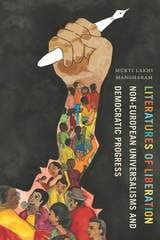
Literatures of Liberation
Non-European Universalisms and Democratic ProgressMukti Lakhi Mangharam
The Ohio State University Press, 2017
In this way, she posits that these universalisms reconceptualize democratic ideals not as Western imports into precolonial societies but as regional phenomena tied to local relations of power and resistance. In charting these alternative democratic trajectories, Mangharam examines oft-overlooked regional and vernacular literary forms and provides a fresh approach to current theorizations of postcolonial and world literatures.
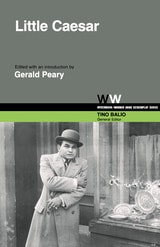
Little Caesar
Edited, with an introduction by Gerald Peary; Tino T. Balio, Series Editor
University of Wisconsin Press, 1981
Little Caesar, a 1931 Hollywood gangster classic, is viewed in revivals today with nearly as much audience enthusiasm as it enjoyed a half-century ago, in the depths of the Great Depression.
In general, the Hollywood film industry responded to the dark economic conditions of the 1930s with escapist and non-topical films. The fascinating exception was the gangster film, through which the studios joined in the debate over the spiritual and economic health of the nation. Little Caesar, considered by many to be an architype of the genre, is one of the most memorable dramatizations of the discontent and alienation, the deep anxiety and hostility shared by millions of Americans during those dark years.
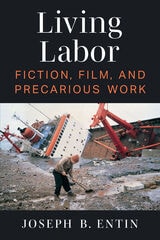
Living Labor
Fiction, Film, and Precarious WorkJoseph B. Entin
University of Michigan Press, 2023
Cover attribution: Allan Sekula, Shipwreck and worker, Istanbul, from TITANIC’s wake, 1998/2000. Courtesy of the Allan Sekula Studio.
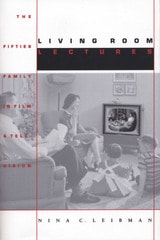
Living Room Lectures
The Fifties Family in Film and TelevisionBy Nina C. Leibman
University of Texas Press, 1995
With a breadwinner dad, a homemaker mom, and squeaky-clean kids, the 1950s television family has achieved near mythological status as a model of what real families "ought" to be. Yet feature films of the period often portrayed families in trouble, with parents and children in conflict over appropriate values and behaviors. Why were these representations of family apparently so far apart?
Nina Leibman analyzes many feature films and dozens of TV situation comedy episodes from 1954 to 1963 to find surprising commonalities in their representations of the family. Redefining the comedy as a family melodrama, she compares film and television depictions of familial power, gender roles, and economic attitudes. Leibman's explorations reveal how themes of guilt, deceit, manipulation, anxiety, and disfunctionality that obviously characterize such movies as Rebel without a Cause,A Summer Place, and Splendor in the Grass also crop up in such TV shows as The Adventures of Ozzie and Harriet,Father Knows Best,Leave It to Beaver,The Donna Reed Show, and My Three Sons.
Drawing on interviews with many of the participants of these productions, archival documents, and trade journals, Leibman sets her discussion within a larger institutional history of 1950s film and television. Her discussions shed new light not only on the reasons for both media's near obsession with family life but also on changes in American society as it reconfigured itself in the postwar era.
Long Shadows
The Second World War in British Fiction and FilmEdited by Petra Rau
Northwestern University Press, 2016
Long Take
Akira Kurosawa
University of Minnesota Press, 2025
A multifaceted portrait of the great Japanese director
For years, Akira Kurosawa resisted writing about himself. “It would turn out to be nothing but talk about movies,” he said. “In other words, take myself, subtract movies, and the result is zero.” The memoir he finally started serializing in 1978, Something like an Autobiography, ended with Rashomon, the film that launched him on the world’s stage in 1950. Long Take, first published in Japan shortly after Kurosawa’s death in 1998, at last tells the story of the rest of his life.
By turns intimate, provocative, and revealing, Long Take creates a dynamic portrait of Kurosawa from his own writings; his conversations with writer Inoue Hisashi and director Yamada Yōji; and essays by his daughter and colleague Kurosawa Kazuko, who details the collaborative history of the “Kurosawa crew.” It features a wealth of industry lore, cultural reference points, inside jokes with other filmmakers and writers, and backstories for his own productions, from the earliest to the last. Of particular interest to all cinephiles is an annotated list of Kurosawa’s 100 favorite films.
A survey of Kurosawa’s prodigious career, this book situates the visionary in the media milieu of his youth, in the literature and performing arts of twentieth-century Japan and Hollywood, and among the myriad films he loved, admired, and referenced, including Japanese silent film and comedy as well as productions from India, Iran, and Soviet-era Russia. Now available to English readers for the first time, Long Take offers a lasting picture of the peerless filmmaker in his element.
Look Closer
Suburban Narratives and American Values in Film and TelevisionCoon, David R
Rutgers University Press, 2013
In recent years, the media landscape in the United States has followed a pattern similar to that of the physical landscape by becoming increasingly suburbanized. Although it is a far cry from reality, the fantasy of a perfect suburban life still exists in the collective imagination of millions of Americans. This dream of suburban perfection is built around a variety of such ideologically conservative values and ideals as the importance of tradition, the centrality of the nuclear family, the desire for a community of like-minded neighbors, the need for clearly defined gender roles, and the belief that with hard work and determination, anyone can succeed.
Building on the relationships between suburban life and American identity, Look Closer examines and interprets recent narratives that challenge the suburban ideal to reveal how directors and producers are mobilizing the spaces of suburbia to tell new kinds of stories about America. David R. Coon argues that the myth of suburban perfection, popularized by postwar sitcoms and advertisements, continues to symbolize a range of intensely debated issues related to tradition, family, gender, race, and citizenship. Through close examinations of such films as American Beauty, The Truman Show, and Mr. & Mrs. Smith as well as such television series as Desperate Housewives, Weeds, and Big Love, the book demonstrates how suburbia is used to critique the ideologies that underpin the suburban American Dream.
Looking Past the Screen
Case Studies in American Film History and MethodJon Lewis and Eric Smoodin, eds.
Duke University Press, 2007
Focusing on Hollywood cinema from the teens to the 1970s, these case studies show the value of this extraordinary range of historical materials in developing interdisciplinary approaches to film stardom, regulation, reception, and production. The contributors examine State Department negotiations over the content of American films shown abroad; analyze the star image of Clara Smith Hamon, who was notorious for having murdered her lover; and consider film journalists’ understanding of the arrival of auteurist cinema in Hollywood as it was happening during the early 1970s. One contributor chronicles the development of film studies as a scholarly discipline; another offers a sociopolitical interpretation of the origins of film noir. Still another brings to light Depression-era film reviews and Production Code memos so sophisticated in their readings of representations of sexuality that they undermine the perception that queer interpretations of film are a recent development. Looking Past the Screen suggests methods of historical research, and it encourages further thought about the modes of inquiry that structure the discipline of film studies.
Contributors. Mark Lynn Anderson, Janet Bergstrom, Richard deCordova, Kathryn Fuller-Seeley, Sumiko Higashi, Jon Lewis, David M. Lugowski, Dana Polan, Eric Schaefer, Andrea Slane, Eric Smoodin, Shelley Stamp
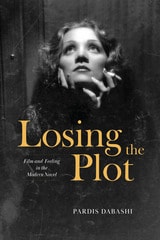
Losing the Plot
Film and Feeling in the Modern NovelPardis Dabashi
University of Chicago Press, 2023
The modernist novel sought to escape what Virginia Woolf called the “tyranny” of plot. Yet even as twentieth-century writers pushed against the constraints of plot-driven Victorian novels, plot kept its hold on them through the influence of another medium: the cinema. Focusing on the novels of Nella Larsen, Djuna Barnes, and William Faulkner—writers known for their affinities and connections to classical Hollywood—Pardis Dabashi links the moviegoing practices of these writers to the tensions between the formal properties of their novels and the characters in them. Even when they did not feature outright happy endings, classical Hollywood films often provided satisfying formal resolutions and promoted normative social and political values. Watching these films, modernist authors were reminded of what they were leaving behind—both formally and in the name of aesthetic experimentalism—by losing the plot.
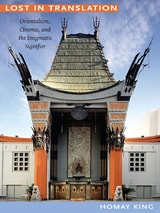
Lost in Translation
Orientalism, Cinema, and the Enigmatic SignifierHomay King
Duke University Press, 2010
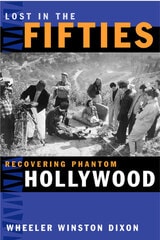
Lost in the Fifties
Recovering Phantom HollywoodWheeler Winston Dixon
Southern Illinois University Press, 2005
Lost in the Fifties: Recovering Phantom Hollywood reveals two 1950s: an era glorified in Hollywood movies and a darker reality reflected in the esoteric films of the decade. Renowned film scholar Wheeler Winston Dixon turns to the margins—the television shows and films of a hidden Hollywood—to offer an authentic view of the 1950s that counters the Tinsel-town version. Dixon examines the lost films and directors of the decade. Contrasting traditional themes of love, marriage, and family, Dixon’s 1950s film world unveils once-taboo issues of rape, prostitution, and gangs. Television shows such as Captain Midnight and Ramar of the Jungle are juxtaposed with the cheerful world of I Love Lucy and Howdy Doody. Highlighting directors including Herbert L. Strock, Leslie Martinson, Arnold Laven, and Charles Haas, Dixon provides new insights on the television series Racket Squad, Topper, and The Rifleman and the teen films I Was a Teenage Werewolf and High School Confidential.
Geared for scholars and students of film and pop culture, Lost in the Fifties includes twenty-five photos—many previously unpublished—and draws on rare interviews with key directors, actors, and producers. The volume provides the first detailed profile of the most prolific producer in Hollywood history, Sam Katzman, and his pop culture classics Rock Around the Clock and Earth vs. The Flying Saucers. Dixon profiles, for the first time, B-movie phenomenon Fred F. Sears, who directed more than fifty touchstone films of a generation, including the noir thriller Chicago Syndicate, the criminal career story Cell 2455 Death Row, and the 3-D color western The Nebraskan. Also profiled is Ida Lupino, the only woman to direct in Hollywood in the 1950s, who tackled issues of bigamy, teenage pregnancy, and sports corruption in The Bigamist, The Hitch-Hiker, Outrage, Never Fear, Not Wanted, and Hard, Fast and Beautiful, when no major studio would touch such controversial topics. Dixon also looks at the era’s social guidance films, which instructed adolescents in acceptable behavior, proper etiquette, and healthy hygiene.
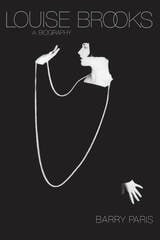
Louise Brooks
A BiographyBarry Paris
University of Minnesota Press, 2000
The long-awaited republication of this captivating account of the star’s life.
Louise Brooks left Wichita, Kansas, for New York City at age fifteen and lived the kind of life of which legends are made. From her beginnings as a dancer to her years in Hollywood, Berlin, and beyond, she was hailed and reviled as a new type of woman: independent, intellectually daring, and sexually free. In this widely acclaimed, first and only comprehensive biography, Barry Paris traces Brooks’s trajectory from her childhood through her fall into obscurity and subsequent "resurrection" as a brilliant writer and enduring film icon.
Lourdes Portillo
The Devil Never Sleeps and Other FilmsEdited by Rosa Linda Fregoso
University of Texas Press, 2001
Filmmaker Lourdes Portillo sees her mission as "channeling the hopes and dreams of a people." Clearly, political commitment has inspired her choice of subjects. With themes ranging from state repression to AIDS, Portillo's films include: Después del Terremoto, the Oscar-nominated Las Madres: The Mothers of the Plaza de Mayo,La Ofrenda: The Days of the Dead,The Devil Never Sleeps, and Corpus: A Home Movie for Selena.
The first study of Portillo and her films, this collection is collaborative and multifaceted in approach, emphasizing aspects of authorial creativity, audience reception, and production processes typically hidden from view. Rosa Linda Fregoso, the volume editor, has organized the book into three parts: interviews (by Fregoso and Kathleen Newman and B. Ruby Rich); critical perspectives (essays by Fregoso, Yvonne Yarbro-Bejarano, Sylvie Thouard, Norma Iglesias, and Barbara McBane); and production materials (screenplays, script notes, storyboards, etc.).
This innovative collection provides "inside" information on the challenges of making independent films. By describing the production constraints Portillo has surmounted, Fregoso deepens our appreciation of this gifted filmmaker's life, her struggles, and the evolution of her art.
Love Rules
Silent Hollywood And The Rise Of The Managerial ClassMark Garrett Cooper
University of Minnesota Press, 2003
Traces the surprising connections between silent films and the rise of bureaucracy
Arguing for a sweeping new consideration of the shift from print to cinema as a governing system for organizing modern American social relations, this book uncovers an intimate connection between Hollywood romances of the silent era and the empowerment of a managerial class.
During the 1910s and 1920s, American movies told love stories through what rapidly became ubiquitous images. Again and again, silent features showed lovers separated by seeming happenstance and reunited as if by magical forces. Mark Garrett Cooper argues that this “magic” implies the expertise of the corporate movie studio with its hierarchies of professional experts. In other words, the Hollywood love story amounts to a managerial technique. Through close study of such films as Birth of a Nation, Enoch Arden, The Crowd, Why Change Your Wife? and The Jazz Singer, Love Rules shows how cinematic romance offers an object lesson in how to arrange American society—a lesson that implies that such work can be accomplished only by a managerial class.Love Rules offers a boldly original account of how the Hollywood feature film supplanted the “imagined community” of print culture and, in doing so, played a key role in the transformation of American mass culture.
Lovers of Cinema
The First American Film Avant-Garde, 1919–1945Jan-Christopher Horak
University of Wisconsin Press, 1998
Also included in the book is a listing of all American avant-garde films produced in the years before World War II as well as a bibliography of the most relevant criticism, literature, and news accounts.
Lowering the Boom
Critical Studies in Film SoundEdited by Jay Beck and Tony Grajeda
University of Illinois Press, 2007
As the first collection of new work on sound and cinema in over a decade, Lowering the Boom addresses the expanding field of film sound theory and its significance in rethinking historical models of film analysis. The contributors consider the ways in which musical expression, scoring, voice-over narration, and ambient noise affect identity formation and subjectivity. Lowering the Boom also analyzes how shifting modulation of the spoken word in cinema results in variations in audience interpretation. Introducing new methods of thinking about the interaction of sound and music in films, this volume also details avant-garde film sound, which is characterized by a distinct break from the narratively based sound practices of mainstream cinema. This interdisciplinary, global approach to the theory and history of film sound opens the eyes and ears of film scholars, practitioners, and students to film's true audio-visual nature.
Contributors are Jay Beck, John Belton, Clark Farmer, Paul Grainge, Tony Grajeda, David T. Johnson, Anahid Kassabian, David Laderman, James Lastra, Arnt Maasø, Matthew Malsky, Barry Mauer, Robert Miklitsch, Nancy Newman, Melissa Ragona, Petr Szczepanik, Paul Théberge, and Debra White-Stanley.
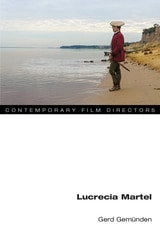
Lucrecia Martel
Gerd Gemünden
University of Illinois Press, 2019