406 books match the query 'Greece' and 9 start with l
cover of L. Annaeus Cornutus: Greek Theology, Fragments, and Testimonia

L. Annaeus Cornutus

Greek Theology, Fragments, and Testimonia

George Boys-Stones

SBL Press, 2018

The first English translation of Greek Theology

The first-century CE North African philosopher Cornutus lived in Rome as a philosopher and is best known today for his surviving work Greek Theology, which explores the origins and names of the Greek gods. However, he was also interested in the language and literature of the poets Persius and Lucan and wrote one of the first commentaries on Virgil. This book collects and translates all of our evidence for Cornutus for the first time and includes the first published English translation of Greek Theology. This collection offers entirely fresh insight into the intellectual world of the first century.

Features

  • Translation based on the latest critical text
  • The first truly holistic picture of Cornutus’s intellectual profile
  • A new account of the early debate over Aristotle’s Categories and the Stoic contribution to it
[more]
cover of Landscapes of Disease: Malaria in Modern Greece

Landscapes of Disease

Malaria in Modern Greece

Katerina Gardikas

Central European University Press, 2018

Malaria has existed in Greece since prehistoric times. Its prevalence fluctuated depending on climatic, socioeconomic and political changes. The book focuses on the factors that contributed to the spreading of the disease in the years between independent statehood in 1830 and the elimination of malaria in the 1970s. 

By the nineteenth century, Greece was the most malarious country in Europe and the one most heavily infected with its lethal form, falciparum malaria. Owing to pressures on the environment from economic development, agrarian colonization and heightened mobility, the situation became so serious that malaria became a routine part of everyday life for practically all Greek families, further exacerbated by wars. The country’s highly fragmented geography and its variable rainfall distribution created an environment that was ideal for sustaining and spreading of diseases, which, in turn, affected the tolerance of the population to malaria. In their struggle with physical suffering and death, the Greeks developed a culture of avid quinine consumption and were likewise eager to embrace the DDT spraying campaign of the immediate post WW II years, which, overall, had a positive demographic effect.
[more]
cover of Lessons from the Past: The Moral Use of History in Fourth-Century Prose

Lessons from the Past

The Moral Use of History in Fourth-Century Prose

Frances Pownall

University of Michigan Press, 2003
Because of the didactic nature of the historical genre, many scholars ancient and modern have seen connections between history and rhetoric. So far, discussion has centered on fifth-century authors -- Herodotus and Thucydides, along with the sophists and early philosophers. Pownall extends the focus of this discussion into an important period. By focusing on key intellectuals and historians of the fourth century (Plato and the major historians -- Xenophon, Ephorus, and Theopompus), she examines how these prose writers created an aristocratic version of the past as an alternative to the democratic version of the oratorical tradition.
Frances Pownall is Professor of History and Classics, University of Alberta.
[more]
cover of Listening to Homer: Tradition, Narrative, and Audience

Listening to Homer

Tradition, Narrative, and Audience

Ruth Scodel

University of Michigan Press, 2002

The Homeric poems were not intended for readers, but for a listening audience. Traditional in their basic elements, the stories were learned by oral poets from earlier poets and recreated at every performance. Individual nuances, tailored to the audience, could creep into the stories of the Greek heroes on each and every occasion when a bard recited the epics.
For a particular audience at a particular moment, "tradition" is what it believes it has inherited from the past--and it may not be particularly old. The boundaries between the traditional and the innovative may become blurry and indistinct. By rethinking tradition, we can see Homer's methods and concerns in a new light. The Homeric poet is not naive. He must convince his audience that the story is true. He must therefore seem disinterested, unconcerned with promoting anyone's interests. The poet speaks as if everything he says is merely the repetition of old tales. Yet he carefully ensures that even someone who knows only a minimal amount about the ancient heroes can follow and enjoy the performance, while someone who knows many stories will not remember inappropriate ones. Pretending that every detail is already familiar, the poet heightens suspense and implies that ordinary people are the real judges of great heroes.
Listening to Homer transcends present controversies about Homeric tradition and invention by rethinking how tradition functions. Focusing on reception rather than on composition, Ruth Scodel argues that an audience would only rarely succeed in identifying narrative innovation. Homeric narrative relies on a traditionalizing, inclusive rhetoric that denies the innovation of the oral performance while providing enough information to make the epics intelligible to audiences for whom much of the material is new.
Listening to Homer will be of interest to general classicists, as well as to those specializing in Greek epic and narrative performance. Its wide breadth and scope will also appeal to those non-classicists interested in the nature of oral performance.
Ruth Scodel is Professor of Greek and Latin, University of Michigan, and former president of the American Philological Association.
"Ruth Scodel's Listening to Homer proves it is still possible to explore the workings of epic without recourse to a battery of jargon or technicalities. This is not a 'one big idea' book but a rich . . . set of reflections; it makes refreshing reading . . . ."
---Greece & Rome
"This is an important book, putting the receiving rather than the sending side of the performance of the Homeric epics center stage. The many observations on narrative technique are often new and worthwhile."
---Irene J.F. de Jong, Gnomon
[more]
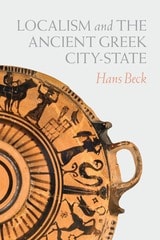
cover of Localism and the Ancient Greek City-State

Localism and the Ancient Greek City-State

Hans Beck

University of Chicago Press, 2020

Much like our own time, the ancient Greek world was constantly expanding and becoming more connected to global networks. The landscape was shaped by an ecology of city-states, local formations that were stitched into the wider Mediterranean world. While the local is often seen as less significant than the global stage of politics, religion, and culture, localism, argues historian Hans Beck has had a pervasive influence on communal experience in a world of fast-paced change. Far from existing as outliers, citizens in these communities were deeply concerned with maintaining local identity, commercial freedom, distinct religious cults, and much more. Beyond these cultural identifiers, there lay a deeper concept of the local that guided polis societies in their contact with a rapidly expanding world.

Drawing on a staggering range of materials­­—including texts by both known and obscure writers, numismatics, pottery analysis, and archeological records—Beck develops fine-grained case studies that illustrate the significance of the local experience. Localism and the Ancient Greek City-State builds bridges across disciplines and ideas within the humanities and shows how looking back at the history of Greek localism is important not only in the archaeology of the ancient Mediterranean, but also in today’s conversations about globalism, networks, and migration.
 
[more]
cover of Love, Sex & Tragedy: How the Ancient World Shapes Our Lives

Love, Sex & Tragedy

How the Ancient World Shapes Our Lives

Simon Goldhill

University of Chicago Press, 2004

"If you do not know where you come from, you will always be a child." Cicero wasn't talking about being a child in the sense of enjoying life in a state of ignorant bliss. He was, rather, adamant that those who don't understand their origins are consigned to a life without power or authority, without the ability to act fully in the world. Love, Sex & Tragedy is acclaimed classicist Simon Goldhill's corrective to our state of ignorance. Lifting the veil on our inheritance of classical traditions, Goldhill offers a witty, engrossing survey of the Greek and Roman roots of everything from our overwhelming mania for "hard bodies" to our political systems.

Marx, Clark Gable, George W. Bush, Oscar Wilde, and Freud—Goldhill's range here is enormous, and he takes great delight in tracing both follies and fundamental philosophical questions through the centuries and continents to the birthplace of Western civilization as we know it. Underlying his brisk and learned excursions through history and art is the foundational belief, following Cicero, that learning about the classics makes a critical difference to our self-understanding. Whether we are considering the role of religion in contemporary society, our expectations about the boundaries between public and private life, or even how we spend our free time, recognizing the role of the classics is integral to our comprehension of modern life and our place in it.

When Goldhill asks "Who do you think you are?" he presents us with the rarest of opportunities: the chance to let him lead us, firmly but with a wink, back two thousand years to where we are.
[more]
cover of Lucian’s Laughing Gods: Religion, Philosophy, and Popular Culture in the Roman East

Lucian’s Laughing Gods

Religion, Philosophy, and Popular Culture in the Roman East

Inger N.I. Kuin

University of Michigan Press, 2023

No comic author from the ancient world features the gods as often as Lucian of Samosata, yet the meaning of his works remain contested. He is either seen as undermining the gods and criticizing religion through his humor, or as not engaging with religion at all, featuring the gods as literary characters. His humor was traditionally viewed as a symptom of decreased religiosity, but that model of religious decline in the second century CE has been invalidated by ancient historians. Understanding these works now requires understanding what it means to imagine as laughing and laughable gods who are worshipped in everyday cult.
 
In Lucian's Laughing Gods, author Inger N. I. Kuin argues that in ancient Greek thought, comedic depictions of divinities were not necessarily desacralizing. In religion, laughter was accommodated to such an extent as to actually be constituent of some ritual practices, and the gods were imagined either to reciprocate or push back against human laughter—they were never deflated by it. Lucian uses the gods as comic characters, but in doing so, he does not automatically negate their power. Instead, with his depiction of the gods and of how they relate to humans—frivolous, insecure, callous—Lucian challenges the dominant theologies of his day as he refuses to interpret the gods as ethical models. This book contextualizes Lucian’s comedic performances in the intellectual life of the second century CE Roman East broadly, including philosophy, early Christian thought, and popular culture (dance, fables, standard jokes, etc.). His texts are analyzed as providing a window onto non-elite attitudes and experiences, and methodologies from religious studies and the sociology of religion are used to conceptualize Lucian’s engagement with the religiosity of his contemporaries.
 
[more]
cover of Lyric Poetry and Social Identity in Archaic Greece

Lyric Poetry and Social Identity in Archaic Greece

Jessica M. Romney

University of Michigan Press, 2020

Lyric Poetry and Social Identity in Archaic Greece examines how Greek men presented themselves and their social groups to one another. The author examines identity rhetoric in sympotic lyric: how Greek poets constructed images of self for their groups, focusing in turn on the construction of identity in martial-themed poetry, the protection of group identities in the face of political exile, and the negotiation between individual and group as seen in political lyric. By conducting a close reading of six poems and then a broad survey of martial lyric, exile poetry, political lyric, and sympotic lyric as a whole, Jessica Romney demonstrates that sympotic lyric focuses on the same basic behaviors and values to construct social identities regardless of the content or subgenre of the poems in question. The volume also argues that the performance of identity depends on the context as well as the material of performance. Furthermore, the book demonstrates that sympotic lyric overwhelmingly prefers to use identity rhetoric that insists on the inherent sameness of group members.

All non-English text and quotes are translated, with the original languages given alongside the translation or in the endnotes.
[more]
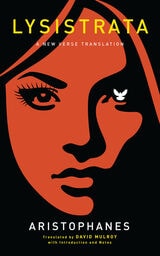
cover of Lysistrata: A New Verse Translation

Lysistrata

A New Verse Translation

Aristophanes, Translated by David Mulroy, with Introduction and Notes

University of Wisconsin Press, 2020

Aristophanes, a native Athenian and the leading exponent of Greek comedy, was born c. 450 BCE. Today forty-three of his plays are known by title; eleven survive. The most famous of these is the whimsical fantasy Lysistrata.

A perennial classroom and stage favorite as well as the basis of Spike Lee’s Chi-Raq, the play is as relevant today as it was 2,500 years ago. The premise is simplicity itself: to end the Peloponnesian War, women decide to withhold sex from their husbands until the fighting stops.

The play is by turns raucous, bawdy, frantic, and funny. David Mulroy’s exciting new translation retains the original’s verse format, racy jokes, and vibrancy—setting it apart from previous efforts, which are typically reproduced as prose or depart from meaning and meter. His introduction offers a concise summary of Aristophanes’ life and social milieu, including a brief overview of the Peloponnesian War, which took place during the playwright’s lifetime. The appendices include guides on translating meter and Greek pronunciation for aspiring thespians.
[more]