Results by title
405 books match the query 'Human Geography' and 18 start with l
La Frontera
Forests and Ecological Conflict in Chile's Frontier TerritoryThomas Miller Klubock
Duke University Press, 2014
Land, Memory, Reconstruction, and Justice
Perspectives on Land Claims in South AfricaCherryl Walker
Ohio University Press, 2010
Land is a significant and controversial topic in South Africa. Addressing the land claims of those dispossessed in the past has proved to be a demanding, multidimensional process. In many respects the land restitution program that was launched as part of the county’s transition to democracy in 1994 has failed to meet expectations, with ordinary citizens, policymakers, and analysts questioning not only its progress but also its outcomes and parameters.
Land, Memory, Reconstruction, and Justice brings together a wealth of topical material and case studies by leading experts in the field who present a rich mix of perspectives from politics, sociology, geography, social anthropology, law, history, and agricultural economics. The collection addresses both the material and the symbolic dimensions of land claims, in rural and urban contexts, and explores the complex intersection of issues confronting the restitution program, from the promotion of livelihoods to questions of rights, identity, and transitional justice.
A valuable contribution to the field of land and agrarian studies, both in South Africa and internationally, it is undoubtedly the most comprehensive treatment to date of South Africa’s postapartheid land claims process and will be essential reading for scholars and students of land reform for years to come.
Landscape With Figures
Nature & Culture New EnglandKent C. Ryden
University of Iowa Press, 2001
Landscape, Nature, and the Body Politic
From Britain's Renaissance to America's New WorldKenneth Robert Olwig
University of Wisconsin Press, 2002
Landscape, Nature, and the Body Politic explores the origins and lasting influences of two contesting but intertwined discourses that persist today when we use the words landscape, country, scenery, nature, national. In the first sense, the land is a physical and bounded body of terrain upon which the nation state is constructed (e.g., the purple mountain majesties above the fruited plain, from sea to shining sea). In the second, the country is constituted through its people and established through time and precedence (e.g., land where our fathers died, land of the Pilgrims’ pride). Kenneth Robert Olwig’s extended exploration of these discourses is a masterful work of scholarship both broad and deep, which opens up new avenues of thinking in the areas of geography, literature, theater, history, political science, law, and environmental studies.
Olwig tracks these ideas though Anglo-American history, starting with seventeenth-century conflicts between the Stuart kings and the English Parliament, and the Stuart dream of uniting Scotland with England and Wales into one nation on the island of Britain. He uses a royal production of a Ben Jonson masque, with stage sets by architect Inigo Jones, as a touchstone for exploring how the notion of "landscape" expands from artful stage scenery to a geopolitical ideal. Olwig pursues these contested concepts of the body politic from Europe to America and to global politics, illuminating a host of topics, from national parks and environmental planning to theories of polity and virulent nationalistic movements.
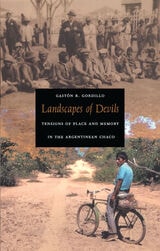
Landscapes of Devils
Tensions of Place and Memory in the Argentinean ChacoGastón R. Gordillo
Duke University Press, 2004
As Gordillo explains, the bush is the result of social, cultural, and political processes that intertwine this place with other geographies. Labor exploitation, state violence, encroachment by settlers, and the demands of Anglican missionaries all transformed this land. The Toba’s lives have been torn between alienating work in sugar plantations and relative freedom in the bush, between moments of domination and autonomy, abundance and poverty, terror and healing. Part of this contradictory experience is culturally expressed in devils, evil spirits that acquire different features in different places. The devils are sources of death and disease in the plantations, but in the bush they are entities that connect with humans as providers of bush food and healing power. Enacted through memory, the experiences of the Toba have produced a tense and shifting geography. Combining extensive fieldwork conducted over a decade, historical research, and critical theory, Gordillo offers a nuanced analysis of the Toba’s social memory and a powerful argument that geographic places are not only objective entities but also the subjective outcome of historical forces.
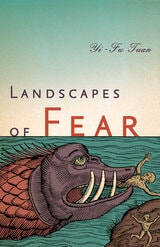
Landscapes of Fear
Yi-Fu Tuan
University of Minnesota Press, 2013
To be human is to experience fear, but what is it exactly that makes us fearful? Landscapes of Fear—written immediately after his classic Space and Place—is renowned geographer Yi-Fu Tuan’s influential exploration of the spaces of fear and of how these landscapes shift during our lives and vary throughout history.
In a series of linked essays that journey broadly across place, time, and cultures, Tuan examines the diverse manifestations and causes of fear in individuals and societies: he describes the horror created by epidemic disease and supernatural visions of witches and ghosts; violence and fear in the country and the city; fears of drought, flood, famine, and disease; and the ways in which authorities devise landscapes of terror to instill fear and subservience in their own populations.
In this groundbreaking work—now with a new preface by the author—Yi-Fu Tuan reaches back into our prehistory to discover what is universal and what is particular in our inheritance of fear. Tuan emphasizes that human fear is a constant; it causes us to draw what he calls our “circles of safety” and at the same time acts as a foundational impetus behind curiosity, growth, and adventure.
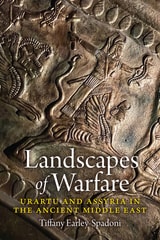
Landscapes of Warfare
Urartu and Assyria in the Ancient Middle EastTiffany Earley-Spadoni
University Press of Colorado, 2025
Tiffany Earley-Spadoni challenges traditional views by emphasizing warfare’s role in organizing ancient landscapes, suggesting that Urartu’s strength lay in its strategic optimization of terrain through fortified regional networks. Using an interdisciplinary approach that includes GIS-enabled studies and integrates archaeological, historical, and art-historical evidence, she illustrates how warfare was a generative force in structuring space and society in the ancient Middle East. Landscapes of Warfare situates Urartu’s developments within the broader context of regional empires, providing insights into the mechanisms of warfare, governance, and cultural identity formation.

LatinX
Claudia Milian
University of Minnesota Press, 2019
Nationality is not enough to understand “Latin”-descended populations in the United States
LatinX has neither country nor fixed geography. LatinX, according to Claudia Milian, is the most powerful conceptual tool of the Latino/a present, an itinerary whose analytic routes incorporate the Global South and ecological devastation. Milian’s trailblazing study deploys the indeterminate but thunderous “X” as intellectual armor, a speculative springboard, and a question for our times that never stops being asked. LatinX sorts out and addresses issues about the unknowability of social realities that exceed our present knowledge.
Forerunners: Ideas First
Short books of thought-in-process scholarship, where intense analysis, questioning, and speculation take the lead
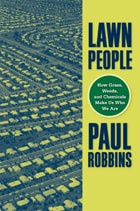
Lawn People
How Grasses, Weeds, and Chemicals Make Us Who We ArePaul Robbins
Temple University Press, 2007
For some people, their lawn is a source of pride, and for others, caring for their lawn is a chore. Yet for an increasing number of people, turf care is a cause of ecological anxiety. In Lawn People, author Paul Robbins, asks, "How did the needs of the grass come to be my own?" In his goal to get a clearer picture of why people and grasses do what they do, Robbins interviews homeowners about their lawns, and uses national surveys, analysis from aerial photographs, and economic data to determine what people really feel about-and how they treat-their lawns.
Lawn People places the lawn in its ecological, economic, and social context. Robbins considers the attention we pay our turfgrass-the chemicals we use to grow lawns, the hazards of turf care to our urban ecology, and its potential impact on water quality and household health. He also shows how the ecology of cities creates certain kinds of citizens, deftly contrasting man's control of the lawn with the lawn's control of man.
Lawn People provides an intriguing examination of nature's influence on landscape management and on the ecosystem.
Learning to Love
Arranged Marriages and the British Indian DiasporaRaksha Pande
Rutgers University Press, 2021
Learning to Unlearn
Decolonial Reflections from Eurasia and the AmericasMadina V. Tlostanova and Walter D. Mignolo
The Ohio State University Press, 2012
Learning to Unlearn: Decolonial Reflections from Eurasia and the Americas is a complex, multisided rethinking of the epistemic matrix of Western modernity and coloniality from the position of border epistemology. Colonial and imperial differences are the two key concepts to understanding how the logic of coloniality creates ontological and epistemic exteriorities. Being at once an enactment of decolonial thinking and an attempt to define its main grounds, mechanisms, and concepts, the book shifts the politics of knowledge from “studying the other” (culture, society, economy, politics) toward “the thinking other” (the authors).
Addressing areas as diverse as the philosophy of higher education, gender, citizenship, human rights, and indigenous agency, and providing fascinating and little-known examples of decolonial thinking, education, and art, Madina V. Tlostanova and Walter D. Mignolo deconstruct the modern architecture of knowledge—its production and distribution as manifested in the corporate university. In addition, the authors dwell on and define the echoing global decolonial sensibilities as expressed in the Americas and in peripheral Eurasia. The book is an important addition to the emerging transoceanic inquiries that introduce decolonial thought and non-Western border epistemologies not only to update or transform disciplines but also to act and think decolonially in the global futures to come.
Lie Of The Land
Migrant Workers and the California LandscapeDon Mitchell
University of Minnesota Press, 1996
A hard-hitting look at the story behind California's famous scenery.
The beauty of the California landscape is integral to its place in the imagination of generations of people around the world. In The Lie of the Land, geographer Don Mitchell looks at the human costs associated with this famous scenery. Through an account of the labor history of the state, Mitchell examines the material and ideological struggles over living and working conditions that played a large part in the construction of the contemporary California landscape.
The Lie of the Land examines the way the California landscape was built on the backs of migrant workers, focusing on migratory labor and agribusiness before World War II. The book relates the historical geography of California to the processes of labor that made it, discussing not only significant strikes but also on the everyday existence of migrant workers in the labor camps, fields, and “Hoovervilles” where they lived. Mitchell places class struggle at the heart of social development, demonstrating concretely how farm workers affected their social and material environment, as well as exploring how farm owners responded to their workers’ efforts to improve their living and working conditions. Mitchell also places “reformers” in context, revealing the actual nature of their role in relation to migrant workers’ efforts—that of undermining the struggle for genuine social change. In addition, this volume captures the significance of the changing composition of the agricultural workforce, particularly in racial terms, as the class struggle evolved over a period of decades. Mitchell has written a narrative history that describes the intimate connection between landscape representations and the material form of geography. The Lie of the Land places people squarely in the middle of the landscapes they inhabit, shedding light on the complex and seemingly contradictory interactions between progressive state agents, radical workers, and California growers as they seek to remake the land in their own image.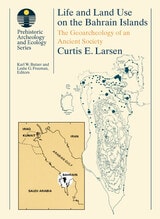
Life and Land Use on the Bahrain Islands
The Geoarchaeology of an Ancient SocietyCurtis E. Larsen
University of Chicago Press, 1983

Life in the Age of Drone Warfare
Lisa Parks and Caren Kaplan, editors
Duke University Press, 2017
Contributors. Peter Asaro, Brandon Wayne Bryant, Katherine Chandler, Jordan Crandall, Ricardo Dominguez, Derek Gregory, Inderpal Grewal, Lisa Hajjar, Caren Kaplan, Andrea Miller, Anjali Nath, Jeremy Packer, Lisa Parks, Joshua Reeves, Thomas Stubblefield, Madiha Tahir
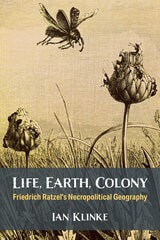
Life, Earth, Colony
Friedrich Ratzel's Necropolitical GeographyIan Klinke
University of Michigan Press, 2023
Life, Earth, Colony finds that there is an as yet unexplored necropolitical impulse at the heart of Ratzel’s entire oeuvre, a preoccupation with death and dying, which had a profound impact on twentieth-century history.

Liquor and Labor in Southern Africa
Jonathan Crush
Ohio University Press, 1992
In June 1976 political demonstrations in the black township of Soweto exploded into an insurrection that would continue sporadically and spread to urban areas across South Africa. In their assault on apartheid the youths who spearheaded the rebellion attacked and often destroyed the state institutions that they linked to their oppression: police stations, government offices, schools, and state-owned liquor outlets. In Soweto alone during the first days of the revolt protestors smashed and burned eighteen beerhalls and a similar number of bottle stores; as the rebellion spread more were destroyed. This study sets out to demonstrate that liquor outlets were not simply convenient symbols of oppression. The anger that launched gasoline bombs into beerhalls across South Africa had specific origins in deep and complicated struggles over the control of alcohol production and consumption in South Africa.
Conflict over alcohol has continuously intruded upon the lives of the black residents of southern African towns, cities, and labor compounds and upon the rural communities to which these people traced their origins. Yet the subject has received little systematic scholarly attention until now. In Liquor and Labor in Southern Africa scholars explore the complex relationship between alcohol use and the emergence of the modern urban-industrial system. In examining the role of alcohol in social control and the state, they also reveal the vibrant subcultures nurtured in beerhalls and underground shebeens and expose the bitter conflicts over alcohol that run along the fault lines of age, gender, class, and ethnicity.
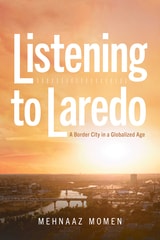
Listening to Laredo
A Border City in a Globalized AgeMehnaaz Momen
University of Arizona Press, 2023
Bringing together issues of growth, globalization, and identity, Mehnaaz Momen traces Laredo’s trajectory through the voices of its people. In contrast to the many studies of border cities defined by the outside—and seldom by the people who live at the border—this volume collects oral histories from seventy-five in-depth interviews that collectively illuminate the evolution of the city’s cultural and economic infrastructure, its interdependence with its sister city across the national boundary, and, above all, the strength of its community as it adapts to and even challenges the national narrative regarding the border. The resonant and lively voices of Laredo’s people convey proud ownership of an archetypal border city that has time and again resurrected itself.

Love in the Time of Zika
Environmental Crisis and the Future of ReproductionPaige Marie Patchin
Duke University Press, 2026