366 books match the query 'International' and 8 start with l
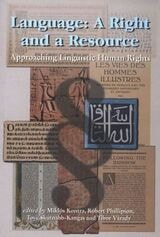
cover of Language: A Right and a Resource: Approaches to Linguistic Human Rights

Language

A Right and a Resource: Approaches to Linguistic Human Rights

Tibor Várady

Central European University Press, 2000

Linguistic Human Rights (LHR) is a fast growing new area of study combining the principles of national and international law with the study of language as a central dimension of ethnicity. Implementation of these principles is aimed at ensuring that no state or society violates these basic rights.

This path breaking study broadens our knowledge of the important role of language in minority rights and in social and political struggles for LHRs. Exploring the interactions of linguistic diversity, biodiversity, the free market and human rights, the contributors present case studies to highlight such issues as Kurdish satellite TV attempting to create a virtual state on the air through trying to achieve basic LHR’s for Kurds in Turkey; the implementation of LHRs in the Baltic states; language rights activism in Canada; the spread of English as an international language; and the obstacles met in education by Roma and the Deaf in Hungary because of lack of appropriate LHRs.

Language: A Right and a Resource is a valuable multi-disciplinary text which can be used in a variety of different areas of study in the legal profession, linguistics, cultural and political studies.
[more]
cover of Law Beyond the State: Pasts and Futures

Law Beyond the State

Pasts and Futures

Edited by Rainer Hofmann and Stefan Kadelbach

Campus Verlag, 2016
Law beyond the State brings together contributions by renowned experts on international and European Union law to celebrate the centennial of Goethe‒Universität Frankfurt. The essays explore Frankfurt’s contribution to the development of international law; the historical development of international law; how this form of law can be used as a tool to improve the world and create a better future for all; the essential relevance of the spiritual dimension of legal orders, including the European Union, to ensuring their values will be taken seriously; and the possibility, offered by the Internet, for all persons concerned with global lawmaking to participate effectively in relevant decision-making processes.
[more]
cover of Law and Democracy in the Empire of Force

Law and Democracy in the Empire of Force

H. Jefferson Powell and James Boyd White, editors

University of Michigan Press, 2009

The authors of this book share a concern for the state of law and democracy in our country, which to many seems to have deteriorated badly. Deep changes are visible in a wide array of phenomena: judicial opinions, the teaching of law, legal practice, international relations, legal scholarship, congressional deliberations, and the culture of contemporary politics. In each of these intersections between law, culture, and politics, traditional expectations have been transformed in ways that pose a threat to the continued vitality and authority of law and democracy.
 
The authors analyze specific instances in which such a decline has occurred or is threatened, tracing them to "the empire of force," a phrase borrowed from Simone Weil. This French intellectual applied the term not only to the brute force used by police and soldiers but, more broadly, to the underlying ways of thinking, talking, and imagining that make that sort of force possible, including propaganda, unexamined ideology, sentimental clichés, and politics by buzzwords, all familiar cultural forms.
 
Based on the underlying crisis and its causes, the editors and authors of these essays agree that neither law nor democracy can survive where the empire of force dominates. Yet each manages to find a ground for hope in our legal and democratic culture.
 
H. Jefferson Powell is Frederic Cleaveland Professor of Law and Divinity at Duke University and has served in both the federal and state governments, as a deputy assistant attorney general and as principal deputy solicitor general in the U.S. Department of Justice and as special counsel to the attorney general of North Carolina. His latest book is Constitutional Conscience: The Moral Dimension of Judicial Decision.
 
James Boyd White is Hart Wright Professor of Law emeritus and Professor of English emeritus, at the University of Michigan. His latest book is Living Speech: Resisting the Empire of Force.

"An extraordinary collection of provocative, insightful, and inspiring essays on the future of law and democracy in the twenty-first century."
---Geoffrey R. Stone, Edward H. Levi Distinguished Service Professor of Law, University of Chicago

"These thoughtful essays diagnose democracy's perilous present, and---more importantly---they explore avenues to democracy's rescue through humanization of law."
---Kenneth L. Karst, David G. Price and Dallas P. Price Professor of Law Emeritus, UCLA

Contributors
Martin Böhmer, Universidad de San Andres, Buenos Aires, Argentina
M. Cathleen Kaveny, University of Notre Dame
Howard Lesnick, University of Pennsylvania
The Honorable John T. Noonan Jr., Ninth Circuit Court of Appeals
H. Jefferson Powell, Duke University
Jedediah Purdy, Duke University
Jed Rubenfeld, Yale University
A.W. Brian Simpson, University of Michigan
Barry Sullivan, Jenner and Block LLP, Chicago
Joseph Vining, University of Michigan
Robin West, Georgetown University
James Boyd White, University of Michigan

[more]
cover of Law and Moral Action in World Politics

Law and Moral Action in World Politics

Cecelia Lynch

University of Minnesota Press, 2000
[more]
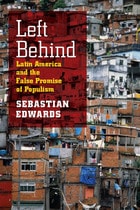
cover of Left Behind: Latin America and the False Promise of Populism

Left Behind

Latin America and the False Promise of Populism

Sebastian Edwards

University of Chicago Press, 2010

The political and economic history of Latin America has been marked by great hopes and even greater disappointments. Despite abundant resources—and a history of productivity and wealth—in recent decades the region has fallen further and further behind developed nations, surpassed even by other developing economies in Southeast Asia and elsewhere.

In Left Behind, Sebastian Edwards explains why the nations of Latin America have failed to share in the fruits of globalization and forcefully highlights the dangers of the recent turn to economic populism in the region. He begins by detailing the many ways Latin American governments have stifled economic development over the years through excessive regulation, currency manipulation, and thoroughgoing corruption. He then turns to the neoliberal reforms of the early 1990s, which called for the elimination of deficits, lowering of trade barriers, and privatization of inefficient public enterprises—and which, Edwards argues, held the promise of freeing Latin America from the burdens of the past. Flawed implementation, however, meant the promised gains of globalization were never felt by the mass of citizens, and growing frustration with stalled progress has led to a resurgence of populism throughout the region, exemplified by the economic policies of Venezuela’sHugo Chávez. But such measures, Edwards warns, are a recipe for disaster; instead, he argues, the way forward for Latin America lies in further market reforms, more honestly pursued and fairly implemented. As an example of the promise of that approach, Edwards points to Latin America's giant, Brazil, which under the successful administration of President Luis Inácio da Silva (Lula) has finally begun to show signs of reaching its true economic potential.

As the global financial crisis has reminded us, the risks posed by failing economies extend far beyond their national borders. Putting Latin America back on a path toward sustained growth is crucial not just for the region but for the world, and Left Behind offers a clear, concise blueprint for the way forward.
[more]
cover of Lessons from East Asia

Lessons from East Asia

Danny M. Leipziger, Editor

University of Michigan Press, 2001

This compilation of case studies and cross-country essays focuses on the role of public policy in the experience of East Asian economies. A major theme running through the volume is regional learning and regional contagion -- the spread of that learning. Beginning with the model and experience of Japan and continuing with the impressive achievements of countries originally considered unviable in the 1950s and 1960s, like Korea and Taiwan, contributors demonstrate how regional policy lessons permeated borders easily. The 1980s brought further lessons and flows of capital to the second generation of rapid industrializers. And the 1990s have seen regional contagion benefit new aspirants like Vietnam. As the chapters cumulatively reveal, however, the transferability of lessons depends on the institutional framework in which policy is formulated, the consistency of policy, and the quality of implementation. Part 1 includes the case studies for the first generation of rapidly developing East Asian economics -- the tigers -- while Part 2 incorporates the later generation success stories -- the cubs -- plus the Philippines, a country only now beginning to show significant progress. Part 3 includes cross-country essays on public investment, foreign direct investment, and cross-country patterns that synthesize the lessons learned and propose actions for other development aspirants to pursue. The essays aim to fill two major gaps -- the paucity of country-specific work on the institutional side of development policy and the failure to explain the mixed record of industrial policies in East Asia. The volume will appeal to students, scholars, and policymakers in development economics. This title was formally part of the Studies in International Trade Policy Series, now called Studies in International Economics.
[more]
cover of Lion Songs: Thomas Mapfumo and the Music That Made Zimbabwe

Lion Songs

Thomas Mapfumo and the Music That Made Zimbabwe

Banning Eyre

Duke University Press, 2015
Like Fela Kuti and Bob Marley, singer, composer, and bandleader Thomas Mapfumo and his music came to represent his native country's anticolonial struggle and cultural identity. Mapfumo was born in 1945 in what was then the British colony of Rhodesia (now Zimbabwe). The trajectory of his career—from early performances of rock 'n' roll tunes to later creating a new genre based on traditional Zimbabwean music, including the sacred mbira, and African and Western pop—is a metaphor for Zimbabwe's evolution from colony to independent nation. Lion Songs is an authoritative biography of Mapfumo that narrates the life and career of this creative, complex, and iconic figure.
 
Banning Eyre ties the arc of Mapfumo's career to the history of Zimbabwe. The genre Mapfumo created in the 1970s called chimurenga, or "struggle" music, challenged the Rhodesian government—which banned his music and jailed him—and became important to Zimbabwe achieving independence in 1980. In the 1980s and 1990s Mapfumo's international profile grew along with his opposition to Robert Mugabe's dictatorship. Mugabe had been a hero of the revolution, but Mapfumo’s criticism of his regime led authorities and loyalists to turn on the singer with threats and intimidation. Beginning in 2000, Mapfumo and key band and family members left Zimbabwe. Many of them, including Mapfumo, now reside in Eugene, Oregon.
 
A labor of love, Lion Songs is the product of a twenty-five-year friendship and professional relationship between Eyre and Mapfumo that demonstrates Mapfumo's musical and political importance to his nation, its freedom struggle, and its culture.
 
[more]
cover of Long-Term Factors in American Economic Growth

Long-Term Factors in American Economic Growth

Edited by Stanley L. Engerman and Robert E. Gallman

University of Chicago Press, 1986

These classic studies of the history of economic change in 19th- and 20th-century United States, Canada, and British West Indies examine national product; capital stock and wealth; and fertility, health, and mortality. "A 'must have' in the library of the serious economic historian."—Samuel Bostaph, Southern Economic Journal
[more]