Results by title
135 books match the query 'Landscape' and 23 start with l
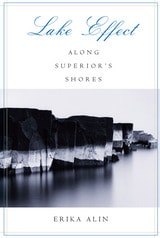
Lake Effect
Along Superior’s ShoresErika Alin
University of Minnesota Press, 2003
Personal reflections on the natural splendors and human history of the Lake Superior shoreline
The 2,900-mile shoreline of Lake Superior offers some of the most beautiful scenery in the world: stunning juxtapositions of shape, color, and texture, from the birch and evergreen forests of Minnesota’s north shore and the maple-clad slopes of Wisconsin to Ontario’s granite outcrops and Michigan's sandstone shelves. Inhabited by hundreds of species of mammals, birds, and insects, the diverse ecosystems around Superior have also experienced human habitation for millennia.
In Lake Effect, writer Erika Alin explores both the natural and the human landscapes of Lake Superior, meditating on the rich geological, historical, and cultural events that have shaped the region. She begins her journey around Superior at the St. Louis River near Duluth and continues along the shores of the lake to Temperance River State Park, Grand Marais’s Artist’s Point, and Lake Superior Provincial Park. Following the Michigan and Wisconsin coasts, Alin visits the Keweenaw Peninsula, the Porcupine Mountains, and Chequamegon Bay before concluding at the south shore’s Brule River. Inspired by these and other places on the lake, Alin’s engaging essays delve into such diverse topics as the origins of river names, early Native American settlement, the exploits of seventeenth-century French-Canadian voyageurs, the breeding habits of ring-billed gulls, the contributions of women botanists, Canada’s Group of Seven painters, and aboriginal rock art. A holistic and deeply personal reflection on Superior’s shoreline, Lake Effect reveals a profound sensitivity to the natural world and a penetrating historical imagination.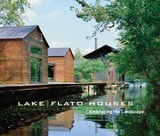
Lake|Flato Houses
Embracing the LandscapeLake|Flato Architects
University of Texas Press, 2014
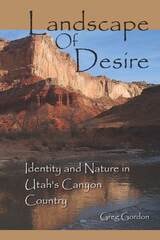
Landscape Of Desire
Greg Gordon
Utah State University Press, 2003
Landscape of Desire powerfully documents and celebrates a place and the evolutions that occur when human beings are intimately connected to their surroundings. Greg Gordon accomplishes this with a tapestry of writing that interweaves land use history, natural history, experiential education, and personal reflection. He tracks the geomorphology of southern Utah as well as the creatures and plants his student group encounters, the history lessons (planned and unplanned), the trials and joys of gathering so many individuals into a cohesive will, and his own personal epiphanies, restraints, insights, and disillusionments.
Landscape of Desire examines the plight of the western landscape. It discusses a wide range of issues, including mining, grazing, dams, recreation, wilderness, and land management. Since recreation has replaced extraction industries as the primary use of wilderness, especially in southern Utah, Gordon addresses its impactful qualities. He overviews the history of the conflict between preservation and development and places these issues in a cultural context. The text is presented in a narrative format, following the individuals of one field course Gordon lead that explored Muddy Creek and the Dirty Devil River from Interstate 70 to Lake Powell. Though each chapter focuses on the geologic formation the group is traveling through, the plants, animals, ecology, and human impacts are all tightly woven into the narrative. Not only does the land affect the members of the field course, but their attitudes and insights affect the land.
In Landscape of Desire Gordon achieves a vision of wholeness of this popular and contested region of Utah that centers around the implications of being human and also stewards of the wild.
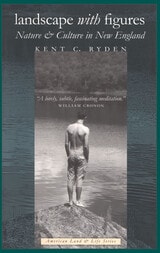
Landscape With Figures
Nature & Culture New EnglandKent C. Ryden
University of Iowa Press, 2001
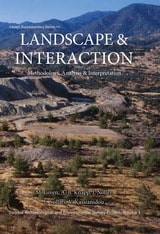
Landscape and Interaction. The Troodos Archaeological and Environmental Survey Project, Cyprus. Volume 1. Methodology, Analysis and Interpretation
Michael Given
Council for British Research in the Levant, 2013
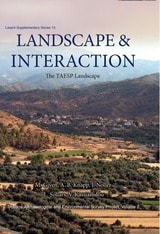
Landscape and Interaction. The Troodos Archaeological and Environmental Survey Project, Cyprus. Volume 2. The TAESP Landscape
Michael Given
Council for British Research in the Levant, 2013
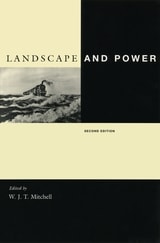
Landscape and Power, Second Edition
Edited by W. J. T. Mitchell
University of Chicago Press, 2002
The first edition of this book, published in 1994, reshaped the direction of landscape studies by considering landscape not simply as an object to be seen or a text to be read, but as an instrument of cultural force, a central tool in the creation of national and social identities. This second edition adds not only a new preface, but five new essays—from Edward Said, W. J. T. Mitchell, Jonathan Bordo, Michael Taussig, and Robert Pogue Harrison—extending the scope of the book in remarkable ways.
Landscape and Power continues to be a central text for students and scholars who want to understand the importance of landscape to the making of our social, political, and cultural world.

Landscape and the Science Fiction Imaginary
John Timberlake
Intellect Books, 2018
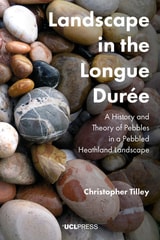
Landscape in the Longue Durée
A History and Theory of Pebbles in a Pebbled Heathland LandscapeChristopher Tilley
University College London, 2017
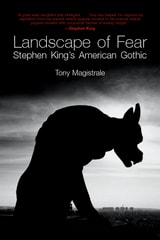
Landscape of Fear
Stephen King's American GothicTony Magistrale
University of Wisconsin Press, 1988
One of the very first books to take Stephen King seriously, Landscape of Fear (originally published in 1988) reveals the source of King's horror in the sociopolitical anxieties of the post-Vietnam, post-Watergate era. In this groundbreaking study, Tony Magistrale shows how King's fiction transcends the escapism typical of its genre to tap into our deepest cultural fears: "that the government we have installed through the democratic process is not only corrupt but actively pursuing our destruction, that our technologies have progressed to the point at which the individual has now become expendable, and that our fundamental social institutions-school, marriage, workplace, and the church-have, beneath their veneers of respectability, evolved into perverse manifestations of narcissism, greed, and violence."
Tracing King's moralist vision to the likes of Twain, Hawthorne, and Melville, Landscape of Fear establishes the place of this popular writer within the grand tradition of American literature. Like his literary forbears, King gives us characters that have the capacity to make ethical choices in an imperfect, often evil world. Yet he inscribes that conflict within unmistakably modern settings. From the industrial nightmare of "Graveyard Shift" to the breakdown of the domestic sphere in The Shining, from the techno-horrors of The Stand to the religious fanaticism and adolescent cruelty depicted in Carrie, Magistrale charts the contours of King's fictional landscape in its first decade.
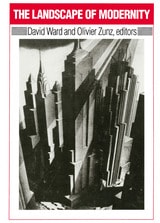
Landscape of Modernity
Essays on New York City, 1900-1940David Ward
Russell Sage Foundation, 1992
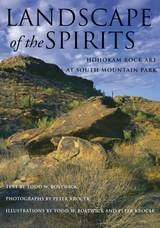
Landscape of the Spirits
Hohokam Rock Art at South Mountain ParkText by Todd W. Bostwick; Photographs by Peter Krocek; Illustrations by Todd W. Bostwick and Peter Krocek
University of Arizona Press, 2002
Todd Bostwick, an archaeologist who has studied the Hohokam for more than twenty years, and Peter Krocek, a professional photographer with a passion for archaeology, have combed the South Mountains to locate nearly all of the ancient petroglyphs found in the canyons and ridges. Their years of learning the landscape and investigating the ancient designs have resulted in a book that explores this wealth of prehistoric rock art within its natural and cultural contexts, revealing what these carvings might mean, how they got there, and when they were made.
Landscape of the Spirits is the first book to cover these ancient images and is one of the most comprehensive treatments of a rock art location ever published. It conveys the range of different rock art elements and compositions found in the South Mountains—animals, humans, and geometric shapes, as well as celestial and calendrical markings at key sites—through accurate descriptions, drawings, and photographs. Interpretations of the petroglyphs are based on Native American ethnographic accounts and consider the most recent theories concerning shamanism and archaeoastronomy.
Written in a simple and accessible style, Landscape of the Spirits is an indispensable volume for anyone exploring the South Mountains, and for rock art enthusiasts everywhere who wish to broaden their understanding of the prehistoric world. It is both an authoritative overview of these ancient wonders and an unprecedented benchmark in southwestern rock art research at a single geographic location.
Landscape with Bloodfeud
Wendy Barnes
University of Massachusetts Press, 2022
Landscape with Human Figure
Rafael Campo
Duke University Press, 2002
Landscape with Smokestacks
The Case of the Allegedly Plundered DegasHoward J. Treinens
Northwestern University Press, 2000

Landscape, Memory and History
Anthropological PerspectivesEdited by Pamela J. Stewart and Andrew Strathern
Pluto Press, 2003
Contributors from North America, Australia, New Zealand, Taiwan, and Europe explore a wide variety of case studies that includes seascapes in Jamaica; the Solomon Islands; the forests of Madagascar; Aboriginal and European notions of landscape in Australia; place and identity in 19th century maps and the bogs of Ireland; contemporary concerns over changing landscapes in Papua New Guinea; and representations of landscape and history in the poetry of the Scottish Borders.
Landscape, Nature, and the Body Politic
From Britain's Renaissance to America's New WorldKenneth Robert Olwig
University of Wisconsin Press, 2002
Landscape, Nature, and the Body Politic explores the origins and lasting influences of two contesting but intertwined discourses that persist today when we use the words landscape, country, scenery, nature, national. In the first sense, the land is a physical and bounded body of terrain upon which the nation state is constructed (e.g., the purple mountain majesties above the fruited plain, from sea to shining sea). In the second, the country is constituted through its people and established through time and precedence (e.g., land where our fathers died, land of the Pilgrims’ pride). Kenneth Robert Olwig’s extended exploration of these discourses is a masterful work of scholarship both broad and deep, which opens up new avenues of thinking in the areas of geography, literature, theater, history, political science, law, and environmental studies.
Olwig tracks these ideas though Anglo-American history, starting with seventeenth-century conflicts between the Stuart kings and the English Parliament, and the Stuart dream of uniting Scotland with England and Wales into one nation on the island of Britain. He uses a royal production of a Ben Jonson masque, with stage sets by architect Inigo Jones, as a touchstone for exploring how the notion of "landscape" expands from artful stage scenery to a geopolitical ideal. Olwig pursues these contested concepts of the body politic from Europe to America and to global politics, illuminating a host of topics, from national parks and environmental planning to theories of polity and virulent nationalistic movements.
Landscapes
Selected Writings of J.B. JacksonJ. B. Jackson
University of Massachusetts Press, 1970
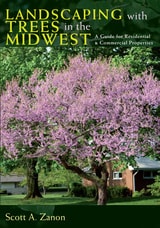
Landscaping with Trees in the Midwest
A Guide for Residential and Commercial PropertiesScott A. Zanon
Ohio University Press, 2014
Trees not only add beauty and value to property but also enhance the physical environment by providing shade, reflecting heat, and blocking wind. Choosing the right trees for the right location and conditions, however, is not always easy: each species has its own requirements for sunlight, water, drainage, and protection.
Landscaping with Trees in the Midwest: A Guide for Residential and Commercial Properties describes sixty-five desirable tree species, their characteristics, and their uses. More than 325 color photographs illustrate the appearance of each species through the seasons—including height, shape, bark, flowers, and fall colors—as well as other factors that influence selection and siting in order to help the landscape professional or homeowner make informed choices.
This guidebook also considers trees as a factor in overall environmental health and gives special consideration to the effects of the emerald ash borer, which continues to wreak havoc in wooded areas of the Midwest, offering replacement alternatives for vulnerable areas. In addition to the text and photos, the book includes a table of growth rates and sizes, a map of hardiness zones, and other valuable reference tools.
Learning from Bryant Park
Revitalizing Cities, Towns, and Public SpacesAndrew M. Manshel
Rutgers University Press, 2020
In this new book, Andrew M. Manshel draws from both urbanist theory and his first-hand experiences as a urban public space developer and manager who worked on Bryant Park and later applied its strategies to an equally successful redevelopment project in a very different New York neighborhood: Jamaica, Queens. He candidly describes what does (and doesn’t) work when coordinating urban redevelopment projects, giving special attention to each of the many details that must be carefully observed and balanced, from encouraging economic development to fostering creative communities to delivering appropriate services to the homeless. Learning from Bryant Park is thus essential reading for anyone who cares about giving new energy to downtowns and public spaces.
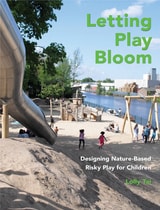
Letting Play Bloom
Designing Nature-Based Risky Play for ChildrenLolly Tai
Temple University Press, 2022
Children love to play in risky—often misunderstood to mean unsafe—ways. It is often how they learn. Research shows that activities like climbing on trees and boulders, hiking in nature, and playing in a creek are excellent ways for kids to develop their creativity and their senses, because playing outdoors evokes different sights, sounds, smells, and textures.
Letting Play Bloom analyzes five outstanding case studies of children’s nature-based risky play spaces—the Slide Hill at Governors Island in New York, the Berkeley (CA) Adventure Playground, and Wildwoods at Fernbank Museum in Atlanta, as well as sites in the Netherlands and Australia. Author Lolly Tai provides detailed explanations of their background and design, and what visitors can experience at each site.
She also outlines the six categories of risky—not hazardous—play, which involve great heights, rapid speeds, dangerous tools, dangerous elements, rough-and-tumble play, and wandering or getting lost. These activities allow children to explore and challenge themselves (testing their limits) to foster greater self-worth while also learning valuable risk-management skills such as dealing with fear-inducing situations.
Filled with more than 200 photographs, Letting Play Bloom advocates for a thoughtful landscape design process that incorporates the specific considerations children need to fully experience the thrill that comes from playing in nature.
Lie Of The Land
Migrant Workers and the California LandscapeDon Mitchell
University of Minnesota Press, 1996
A hard-hitting look at the story behind California's famous scenery.
The beauty of the California landscape is integral to its place in the imagination of generations of people around the world. In The Lie of the Land, geographer Don Mitchell looks at the human costs associated with this famous scenery. Through an account of the labor history of the state, Mitchell examines the material and ideological struggles over living and working conditions that played a large part in the construction of the contemporary California landscape.
The Lie of the Land examines the way the California landscape was built on the backs of migrant workers, focusing on migratory labor and agribusiness before World War II. The book relates the historical geography of California to the processes of labor that made it, discussing not only significant strikes but also on the everyday existence of migrant workers in the labor camps, fields, and “Hoovervilles” where they lived. Mitchell places class struggle at the heart of social development, demonstrating concretely how farm workers affected their social and material environment, as well as exploring how farm owners responded to their workers’ efforts to improve their living and working conditions. Mitchell also places “reformers” in context, revealing the actual nature of their role in relation to migrant workers’ efforts—that of undermining the struggle for genuine social change. In addition, this volume captures the significance of the changing composition of the agricultural workforce, particularly in racial terms, as the class struggle evolved over a period of decades. Mitchell has written a narrative history that describes the intimate connection between landscape representations and the material form of geography. The Lie of the Land places people squarely in the middle of the landscapes they inhabit, shedding light on the complex and seemingly contradictory interactions between progressive state agents, radical workers, and California growers as they seek to remake the land in their own image.
Lost Boston
Jane Holtz Kay
University of Massachusetts Press, 2006
At once a fascinating narrative and a visual delight, Lost Boston brings the city's past to life. This updated edition includes a new section illustrating the latest gains and losses in the struggle to preserve Boston's architectural heritage.
With an engaging text and more than 350 seldom-seen photographs and prints, Lost Boston offers a chance to see the city as it once was, revealing architectural gems lost long ago. An eminently readable history of the city's physical development, the book also makes an eloquent appeal for its preservation. Jane Holtz Kay traces the evolution of Boston from the barren, swampy peninsula of colonial times to the booming metropolis of today. In the process, she creates a family album for the city, infusing the text with the flavor and energy that makes Boston distinct. Amid the grand landmarks she finds the telling details of city life: the neon signs, bygone amusement parks, storefronts, and windows plastered with images of campaigning politicians-sights common in their time but even more meaningful in their absence today.
Kay also brings to life the people who created Boston-architects like Charles Bulfinch and H. H. Richardson, landscape architect and master park-maker Frederick Law Olmsted, and such colorful political figures as Mayors John “Honey Fitz” Fitzgerald and James Michael Curley.
The new epilogue brings Boston's story to the end of the twentieth century, showing elements of the city's architecture that were lost in recent years as well as those that were saved and others threatened as the city continues to evolve.