Results by title
998 books match the query 'Life' and 107 start with l
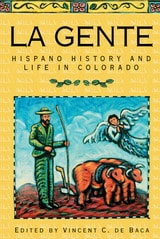
La Gente
Hispano History and Life in ColoradoVincent C. De Baca
University Press of Colorado, 1998
Several essays address the employment patterns of the early part of this century, when desperate native-born Hispanos and Mexican immigrants competed by the thousands for jobs at mining and agricultural corporations throughout Colorado. Four essays study particular expressions of this conflict, including the infamous Ludlow coal strike of 1913-1914; Colorado's sugar beet industry, where Mexican immigrants faced constant discrimination; the growth of the state's sugar industry, the collapse of which devastated Mexicans (the preferred labor force in the field); and a New Deal-era experiment in which laid-off miners were trained to weave Río Grande-style blankets, in the process revitalizing a dying folk art.
Finally, four essays encompass the recent political and cultural rebirth of Hispanos, including a study of the origins of the Crusade for Justice, Denver's leading Chicano rights organization of the 1960s, which - based on declassified FBI documents - proves that government agencies tried to suppress the Crusade and its popular leader, Corky Gonzales.
Lakota Hoops
Life and Basketball on Pine Ridge Indian ReservationAlan Klein
Rutgers University Press, 2020
In Lakota Hoops, anthropologist Alan Klein trains his experienced eye on the ways that Lakota traditions find a seamless expression in the sport. In a variety of way such as weaving time-honored religious practices into the game or extending the warrior spirit of Crazy Horse to the players on the court, basketball has become a preferred way of finding continuity with the past. But the game is also well suited to the present and has become the largest regular gathering for all Lakota, promoting national pride as well as a venue for the community to creatively and aggressively confront white bigotry when needed.
Richly researched and filled with interviews with Pine Ridge residents, including both male and female players, Lakota Hoops offers a compelling look at the highs and lows of a community that has made basketball its own.
Landbridge
Life in FragmentsY-Dang Troeung
Duke University Press, 2024

Last Cavalier
The Life and Times of John A. Lomax, 1867-1948Nolan Porterfield
University of Illinois Press, 1996
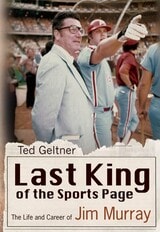
Last King of the Sports Page
The Life and Career of Jim MurrayTed Geltner
University of Missouri Press, 2012
Part crusader, part comedian, Jim Murray was a once-in-a-generation literary talent who just happened to ply his trade on newsprint, right near the box scores and race results. During his lifetime, Murray rose through the ranks of journalism, from hard-bitten 1940s crime reporter, to national Hollywood correspondent, to the top sports columnist in the United States. In Last King of the Sports Page: The Life and Career of Jim Murray, Ted Geltner chronicles Jim Murray’s experiences with twentieth-century American sports, culture, and journalism.
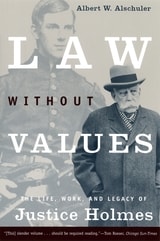
Law Without Values
The Life, Work, and Legacy of Justice HolmesAlbert W. Alschuler
University of Chicago Press, 2000
Law at the End of Life
The Supreme Court and Assisted SuicideCarl E. Schneider, Editor
University of Michigan Press, 2000
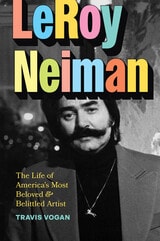
LeRoy Neiman
The Life of America’s Most Beloved and Belittled ArtistTravis Vogan
University of Chicago Press, 2024
LeRoy Neiman—the cigar-smoking and mustachioed artist famous for his Playboy illustrations, sports paintings, and brash interviews—stood among the twentieth century’s most famous, wealthy, and polarizing artists. His stylish renderings of musicians, athletes, and sporting events captivated fans but baffled critics, who accused Neiman of debasing art with popular culture. Neiman cashed in on the controversy, and his extraordinary popularity challenged the norms of what art should be, where it belongs, and who should have access to it.
The story of a Depression-era ragamuffin–turned–army chef–turned–celebrity artist, Neiman’s biography is a rollicking ride through twentieth-century American history, punctuated by encounters with the likes of Muhammad Ali, Frank Sinatra, Joe Namath, and Andy Warhol. In the whirlwind of his life, Neiman himself once remarked that even he didn’t know who he really was—but, he said, the fame and money that came his way made it all worth it. In this first biography of the captivating and infamous man, Travis Vogan hunts for the real Neiman amid the America that made him.
.
Leadership
Lessons from a Life in DiplomacySimon Mcdonald
Haus Publishing, 2023
Simon McDonald argues that we should reflect on the nature and strategies of leadership before entering a leadership role, and we should look to examples of others to help us in shaping our own approaches.
Over nearly four decades in Her Majesty's Diplomatic Service, McDonald worked for four permanent under-secretaries and a dozen senior ambassadors before becoming a permanent under-secretary himself and leading the Service—which has over 14,000 staff members in 270 countries—for five years. He also worked directly for six foreign secretaries and under five prime ministers. Observing these people undertaking such important and difficult work, McDonald saw the behaviors which helped them achieve their objectives, as well as those which hindered them.
In this book, McDonald synthesizes the skills he’s learned through his many years working in diplomacy, offering an insightful contribution amid heightening debates over the leadership of the United Kingdom. Considering the future of British leadership, he makes a case for the reform of the monarchy, the cabinet, civil service, and, in particular, the House of Lords, of which he has been a member since 2021.

Learning Politics From Sivaram
The Life and Death of a Revolutionary Tamil Journalist in Sri LankaMark P. Whitaker
Pluto Press, 2007
This remarkable book is both an intimate portrait of the man and a fascinating account of the political dilemmas that he faced—and that still face us today. It explains how an educated man adopts a position of supporting violence. And while his position softens, Sivaram remains critical of the liberal principles that govern Western policy. Written by a close friend, this unique account highlights some of the most difficult political questions facing us today.
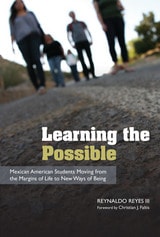
Learning the Possible
Mexican American Students Moving from the Margins of Life to New Ways of BeingReynaldo Reyes III; Foreword by Christian J. Faltis
University of Arizona Press, 2013
Laura, Christina, Luz, Maria, and Ruben, as the author calls them, had daunting challenges: difficulties with English, extremely low self-confidence, teenage motherhood, conflict between gender roles and personal desires, and a history of gang membership. Focusing on the importance of constructing a new identity as a successful student, Reynaldo Reyes III shares with readers the experiences of these marginalized students. Their stories, coupled with perspectives from instructors, CAMP staff and counselors, and the author’s own observations, illustrate the influence of past schooling, the persistence of culture, and the tensions and challenges inherent in developing a new identity.
This is a study of students who came from the margins and, in a very short time, moved toward the mainstream. In the micro view, it provides extraordinarily useful case studies of a successful intervention program in process. In the larger scope, it is a look at the socially constructed nature of possibility, hope, and success.
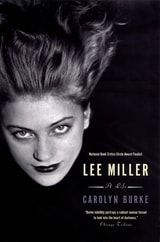
Lee Miller
A LifeCarolyn Burke
University of Chicago Press, 2007
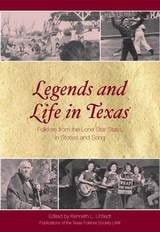
Legends and Life in Texas
Folklore from the Lone Star State, in Stories and SongKenneth L. Untiedt
University of North Texas Press, 2017
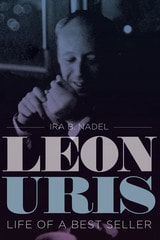
Leon Uris
Life of a Best SellerBy Ira B. Nadel
University of Texas Press, 2010
As the best-selling author of Exodus, Mila 18, QB VII, and Trinity, Leon Uris blazed a path to celebrity with books that readers could not put down. Uris's thirteen novels sold millions of copies, spent months on the best-seller lists, appeared in fifty languages, and have been adapted into equally popular movies and TV miniseries. Few other writers equaled Uris's fame in the mid-twentieth century. His success fueled the rise of mass-market paperbacks, movie tie-ins, and celebrity author tours. Beloved by the public, Uris was, not surprisingly, dismissed by literary critics. Until now, his own life—as full of drama as his fiction—has never been the subject of a book.
In Leon Uris: Life of a Best Seller, Ira Nadel traces Uris from his disruptive youth to his life-changing experiences as a marine in World War II. These experiences, coupled with Uris's embrace of his Judaism and desire to write, led to his unprecedented success and the lavish excesses of a career as a best-selling author. Nadel reveals that Uris lived the adventures he described, including his war experiences in the Pacific (Battle Cry), life-threatening travels in Israel (Exodus), visit to Communist Poland (Mila 18), libel trial in Britain (QB VII), and dangerous sojourn in fractious Northern Ireland and the Irish Republic (Trinity). Nadel also demonstrates that Uris's talent for writing action-packed, yet thoroughly researched, novels meshed perfectly with the public's desire to revisit and understand the tumultuous events of recent history. This made him far more popular (and wealthy) than more literary authors, while paving the way for writers such as Irving Wallace and Tom Clancy.
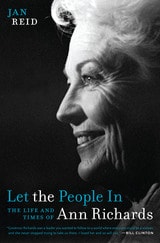
Let the People In
The Life and Times of Ann RichardsBy Jan Reid
University of Texas Press, 2012
Winner, Coral Horton Tullis Memorial Prize, Texas State Historical Association, 2012
Liz Carpenter Award for Research in the History of Women, Texas State Historical Association, 2012
When Ann Richards delivered the keynote of the 1988 Democratic National Convention and mocked President George H. W. Bush—“Poor George, he can’t help it. He was born with a silver foot in his mouth”—she instantly became a media celebrity and triggered a rivalry that would alter the course of American history. In 1990, Richards won the governorship of Texas, upsetting the GOP’s colorful rancher and oilman Clayton Williams. The first ardent feminist elected to high office in America, she opened up public service to women, blacks, Hispanics, Asian Americans, gays, and the disabled. Her progressive achievements and the force of her personality created a lasting legacy that far transcends her rise and fall as governor of Texas.
In Let the People In, Jan Reid draws on his long friendship with Richards, interviews with her family and many of her closest associates, her unpublished correspondence with longtime companion Bud Shrake, and extensive research to tell a very personal, human story of Ann Richards’s remarkable rise to power as a liberal Democrat in a conservative Republican state. Reid traces the whole arc of Richards’s life, beginning with her youth in Waco, her marriage to attorney David Richards, her frustration and boredom with being a young housewife and mother in Dallas, and her shocking encounters with Lyndon Johnson and Jimmy Carter. He follows Richards to Austin and the wild 1970s scene and describes her painful but successful struggle against alcoholism. He tells the full, inside story of Richards’s rise from county office and the state treasurer’s office to the governorship, where she championed gun control, prison reform, environmental protection, and school finance reform, and he explains why she lost her reelection bid to George W. Bush, which evened his family’s score and launched him toward the presidency. Reid describes Richards’s final years as a world traveler, lobbyist, public speaker, and mentor and inspiration to office holders, including Hillary Clinton. His nuanced portrait reveals a complex woman who battled her own frailties and a good-old-boy establishment to claim a place on the national political stage and prove “what can happen in government if we simply open the doors and let the people in.”
Letters From Side Lake
A Chronicle of Life in the North WoodsPeter M. Leschak
University of Minnesota Press, 1992
After a brief taste of urban life, and convinced that nothing equaled the formidable challenge of life in the heart of the vast woods, Peter M. Leschak returned to northern Minnesota. Letters from Side Lake chronicles the marvelous range of adventures and reflections-described with thoughtfulness and humor-springing from his pioneer-like existence. In Leschak's unique voice and beautifully crafted style, Letters from Side Lake captures the great pleasures and rugged feats and hardships of North Woods living.
"Letters from Side Lake is a celebration. Leschak revels in what he loves the best: the beauty of the north woods; the sweep of Andromeda across a black sky; the sleek thrust of his canoe slicing across a mirror-flat lake; and the simplicity of small-town life." -Washington Post Book World"A vivid, engaging book by a talented writer." -New York Times Book Review
Letters from the Editor
Lessons on Journalism and LifeWilliam F. Woo & Philip Meyer
University of Missouri Press, 2007
William F. Woo, born in China, was the first person outside the Pulitzer family to edit the St. Louis Post-Dispatch and the first Asian American to edit a major American newspaper. After forty years in the newsroom, Woo embarked on a second career in 1996 teaching journalism at Stanford University, where he wrote weekly informal essays to his students in the same personal style that characterized his columns for the Post-Dispatch. Each made a philosophical point about journalism and society and their delicate relationship over the last half of the twentieth century.
Woo was revered as both a writer and a reporter, and this volume collects some of the best of those essays to the next generation of journalists on their craft’s high purpose. As inspiration for students from someone who knew the ropes, it distills the essence of the values that define independent journalism while offering them invaluable food for thought about their future professions.
The essays touch on a wide range of subjects. Woo reflects on journalism as a public trust, requiring the publication of stories that give readers a better understanding of society and equip them to change it for the better. He also ponders print journalism conducted in the face of broadcast and online competition along with the transformation of newspapers from privately owned to publicly traded companies. Here too are personal reflections on the Pulitzer family’s impact on journalism and on the tensions between a journalist’s personal and professional life, as well as the conflicts posed by political advocacy versus free speech or a reporter’s expertise versus a newspaper’s credibility.
Woo’s idealistic spirit conveys the virtues of his era’s newspaper journalism to the next generation of journalists—and most likely to the next generation of news media as well. Even as new students of journalism have an eye on an electronic future, Woo’s essays come straight from a newsman’s heart and soul to remind them of values worth preserving.
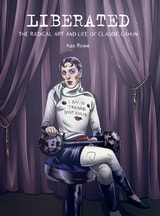
Liberated
The Radical Art and Life of Claude CahunKaz Rowe
J. Paul Getty Trust, The, 2023
At the turn of the twentieth century in Nantes, France, Lucy Schwob met Suzanne Malherbe, and lightning struck. The two became partners both artistically and romantically and transformed themselves into the creative personas Claude Cahun and Marcel Moore. Together, the couple embarked on a radical journey of Surrealist collaboration that would take them from conservative provincial France to the vibrancy of 1920s Paris to the oppression of Nazi-occupied Jersey during World War II, where they used art to undermine the Nazi regime.
Cahun and Moore challenged gender roles and championed freedom at a time when strict societal norms meant that the truth of their relationship had to remain secret. Featuring ten photographs by Cahun and Moore, this graphic biography by cartoonist Kaz Rowe brings Cahun’s inspiring story to life.
Ages thirteen to eighteen
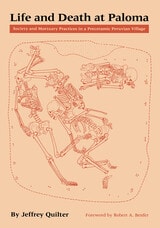
Life And Death At Paloma
Practices In Peruvian VillageJeffrey Quilter
University of Iowa Press, 1989
Life And Death In Intensive Care
Joan Cassell
Temple University Press, 2005
Life Death
Jacques Derrida
University of Chicago Press, 2020
One of Jacques Derrida’s most provocative works, Life Death deconstructs a deeply rooted dichotomy of Western thought: life and death. In rethinking the relationship between life and death, Derrida undertakes a multi-disciplinary analysis of a range of topics across philosophy, linguistics, and the life sciences. Derrida gave this seminar over fourteen sessions between 1975 and 1976 at the École normale supérieure in Paris to prepare students for the agrégation, a notoriously competitive exam. The theme for the exam that year was “Life and Death,” but Derrida made a critical modification to the title by dropping the coordinating conjunction. The resulting title of Life Death poses a philosophical question about the close relationship between life and death. Through close readings of Freudian psychoanalysis, the philosophy of Nietzsche and Heidegger, French geneticist François Jacob, and epistemologist Georges Canguilhem, Derrida argues that death must be considered neither as the opposite of life nor as the truth or fulfillment of it, but rather as that which both limits life and makes it possible. Derrida thus not only questions traditional understandings of the relationship between life and death but also ultimately develops a new way of thinking about what he calls “life death.”
Life and Acting
Techniques for the ActorJack Garfein
Northwestern University Press, 2010
Arriving in America as a teenage Holocaust refugee, Jack Garfein would soon rise to the top of his field. Life and Acting is the product of more than sixty years in the world of theater and film, offering the kind of insight only gained by experience as both a teacher and practitioner. In Garfein’s case, his experience is unparalleled—he has worked with a who’s who of twentieth-century acting, especially those associated with the Actors Studio, the West Coast arm of which Garfein cofounded.
In Life and Acting, Garfein distills his experience into a holistic technique for learning and teaching. “The Beginning” functions as a kind of memoir, focusing on Garfein’s own education in the theater. “The Art” describes how Garfein’s exposure to nontheater artists, particularly painters and writers, has contributed to his understanding of acting. “Basic Training” offers thirty-seven detailed lessons for teaching acting. In “Training for Film,” Garfein applies his principles to acting in front of a camera.
Like Uta Hagen’s Respect for Acting and other classics of this genre, Life and Acting will be an invaluable resource for teachers as well as students.
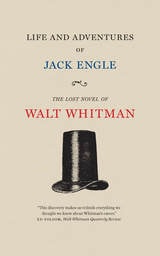
Life and Adventures of Jack Engle
An Auto-Biography; A Story of New York at the Present Time in which the Reader Will Find Some Familiar CharactersWalt Whitman
University of Iowa Press, 2017
Then it disappeared.
No one laid eyes on it until 2016, when literary scholar Zachary Turpin, University of Houston, followed a paper trail deep into the Library of Congress, where the sole surviving copy of Jack Engle has lain waiting for generations. Now, after more than 160 years, the University of Iowa Press is honored to reprint this lost work, restoring a missing piece of American literature by one of the world’s greatest authors, written as he verged on immortality.

Life and Death in Central Apulia
Burial Practices and Italic Communities Between the Sixth and Third Centuries BCEBice Peruzzi
University of Wisconsin Press, 2027
Long overshadowed in ancient historiography, the Peucetians of Central Apulia are brought into focus for the first time in Life and Death in Central Apulia. Carefully examining Peucetian burial assemblages, archaeologist Bice Peruzzi traces a social history of this Italic people from the sixth to the third centuries BCE. She demonstrates that, far from being passive recipients of the more “advanced” cultures of their Greek or Roman neighbors, the Peucetians made nuanced, deliberate, and informed choices in the preparation and treatment of their dead, reflecting the complexities of individual, social, and cultural identities of the deceased. This indicates a mature culture, in full interaction with other Mediterranean peoples, and is visible and worthy of scholarly attention in its own right. This detailed study offers a fresh look at ancient Italy beyond the historiographic dominance of Greece and Rome and represents the recovery of one thread of a vibrant, ancient Mediterranean cultural tapestry.
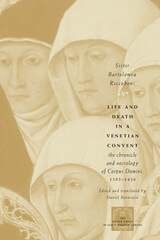
Life and Death in a Venetian Convent
The Chronicle and Necrology of Corpus Domini, 1395-1436Sister Bartolomea Riccoboni
University of Chicago Press, 2000
While the chronicle recounts the history of the nuns' collective life, the necrology provides highly individualized biographies of nearly fifty women who died in the convent between 1395 and 1436. We follow the fascinating stories that led these women, from adolescent girls to elderly widows, to join the convent; and we learn of their cultural backgrounds and intellectual accomplishments, their ascetic practices and mystical visions, their charity and devotion to each other and their fortitude in the face of illness and death.
The personal and social meaning of religious devotion comes alive in these texts, the first of their kind to be translated into English.
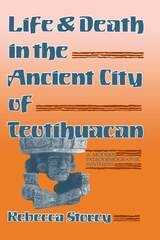
Life and Death in the Ancient City of Teotihuacan
A Modern Paleodemographic SynthesisRebecca Storey
University of Alabama Press, 1992
Cities arose independently in both the Old World and in the pre-Columbian New World. Lacking written records, many of these New World cities can be studied only through archaeology, including the earliest pre-Columbian city, Teotihuacan, Mexico, one of the largest cities of its time (150 B.C. to A.D. 750). Thus, an important question is how similar New World cities are to their Old World counterparts.
Before recent times, the dense populations of cities made them unhealthy places because of poor sanitation and inadequate food supplies. Storey's research shows clearly that although Teotihuacan was a very different environment and culture from 17th-century London, these two great cities are comparable in terms of health problems and similar death rates.

Life and Death in the Central Highlands
An American Sergeant in the Vietnam War, 1968-1970James T. Gillam
University of North Texas Press, 2010
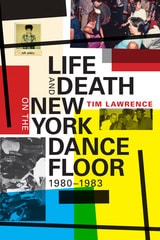
Life and Death on the New York Dance Floor, 1980–1983
Tim Lawrence
Duke University Press, 2016
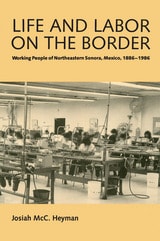
Life and Labor on the Border
Working People of Northeastern Sonora, Mexico, 1886–1986Josiah McC. Heyman
University of Arizona Press, 1991
Life and Labor on the Border traces the development of the urban working class in northern Sonora over the period of a century. Drawing on an extensive collection of life histories, Heyman describes what has happened to families over several generations as people have left the countryside to work for American-owned companies in northern Sonora or to cross the border to find other employment.
Heyman searches for the origins of "working classness" in these family histories, revealing aspects of life that strengthen people' s involvement with a consumer economy, including the role of everyday objects like sewing machines, cars, and stoves. He considers the consequences of changing political and economic tides, and also the effects on family life of the new role of women in the labor force. Within the broad sweep of family chronicles, key junctures in individual lives—both personal and historical crises—offer additional insights into social class dynamics.
Heyman's work dispels the notion that border inhabitants are uniformly impoverished or corrupted by proximity to the United States. These life stories instead convey the positive sense of people's goals in life and reveal the origins of a distinctive way of life in the Borderlands.
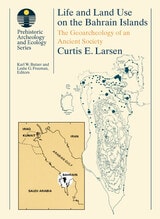
Life and Land Use on the Bahrain Islands
The Geoarchaeology of an Ancient SocietyCurtis E. Larsen
University of Chicago Press, 1983
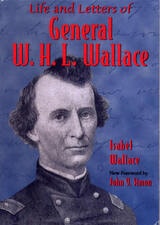
Life and Letters of General W. H. L. Wallace
Isabel Wallace. Foreword by John Y. Simon
Southern Illinois University Press, 2000
Originally published in 1909, this biography by Isabel Wallace recounts the life of her adoptive father, the little-recognized William Hervy Lamme Wallace, the highest-ranking Union officer to fall at the battle of Shiloh.
Born in 1821 in Ohio, Wallace and his family moved to Illinois in 1834, where he was educated at Rock Springs Seminary in Mount Morris. On his way to study law with Abraham Lincoln in Springfield in 1844, Wallace was persuaded by local attorney T. Lyle Dickey, a close friend of Lincoln, to join his practice in Ottawa instead. Wallace eventually married Dickey’s daughter, Martha Ann, in 1851.
When the Civil War broke out, both Wallace and Dickey immediately volunteered for service with the Eleventh Illinois, which assembled in Springfield. Wallace was elected as the unit’s colonel; a successful lawyer, a friend of President Lincoln, a generation older than most privates, and an officer with Mexican War experience, he was entirely suited for such command. Wallace was appointed brigadier general for his performance at Fort Donelson, the first notable Union victory in the Civil War. Wallace’s troops had saved the day, although the Eleventh Illinois had lost nearly two-thirds of its men. He then moved with his troops to Pittsburg Landing, Tennessee, where Confederates launched a surprise attack on the forces of Major General Ulysses S. Grant at Shiloh Church on Sunday, April 6, 1862. Wallace, who held only temporary command of one of Grant’s six divisions, fought bravely but was mortally wounded as he began to withdraw his men on the afternoon of the battle. His wife, who had arrived at Pittsburg Landing by steamer on the day of the battle, was at his side when he died three days later. Grant praised Wallace in 1868 as “the equal of the best, if not the very best, of the Volunteer Generals with me at the date of his death.”
Isabel Wallace traces her father’s life from his upbringing in Ottawa through his education, his service in the Mexican War, his law practice, his courtship of and marriage to her mother, and his service in the Eleventh Illinois until his mortal injury at Shiloh. She also details his funeral and her and her mother’s life in the postwar years. Based on the copious letters and family papers of the general and his wife, the biography also provides historical information on federal politics of the period, including commentary on Lincoln’s campaign and election and on state politics, especially regarding T. Lyle Dickey, Wallace’s father-in-law and law partner, prominent Illinois politician, and associate of Lincoln. It is illustrated with fifteen black-and-white halftones.
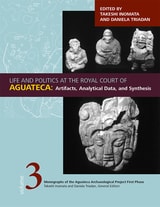
Life and Politics at the Royal Court of Aguateca
Artifacts, Analytical Data, and SynthesisTakeshi Inomata
University of Utah Press, 2014
Because of the surprise nature of the attack, most artifacts were left in their original locations, providing unprecedented views of the daily life of the Classic Maya. Detailed analyses of these objects and their distribution has shown that Mayan elites stored some of their food in their residences and that they also conducted various administrative duties there. The presence of numerous precious ornaments indicates that many of the Maya elite were also skilled craft producers.
Life and Politics at the Royal Court of Aguateca is the third and final volume of the monograph series on Aguateca. It presents the analyses of items not covered in the first two volumes, including figurines, ceramic laminates and masks, spindle whorls, ground stone, and bone artifacts, as well as hieroglyphic texts and plant and animal remains. It discusses the broad implications of this remarkable data set and provides a summation of the project.
Life and Research
A Survival Guide for Early-Career Biomedical ScientistsParis H. Grey and David G. Oppenheimer
University of Chicago Press, 2022
Building and maintaining a mentoring network, practicing self-care and having a life outside of the lab, understanding that what works perfectly for a labmate might not work for you—these are just a few of the strategies that lab manager and molecular biologist Paris H. Grey and PI and geneticist David G. Oppenheimer wished they had implemented far sooner in their careers. They also offer practical advice on managing research projects, sharing your work on social media, and attending conferences. Above all, they coach early-career scientists to avoid burnout and make the most of every lab experience to grow and learn.
Life and Thought in the Ancient Near East
Louis L. Orlin
University of Michigan Press, 2010
Intended for readers seeking insight into the day-to-day life of some of the world's most ancient peoples, Life and Thought in the Ancient Near East presents brief, fascinating explorations of key aspects of the civilizations of Egypt, Mesopotamia, Palestine, Asia Minor, and Iran. With vignettes on agriculture, architecture, crafts and industries, literature, religion, topography, and history, Orlin has created something refreshingly unique: a modern guidebook to an ancient world. The book also reaches out to students of the Ancient Near Eastern World with essays on decipherments, comparative cultural developments between Egypt and Mesopotamia, and language and literature.
In addition to general readers, the book will be useful in the classroom as a text supplementing a more conventional introduction to Near Eastern Studies.
"Well-written and accessible, Life and Thought in the Ancient Near East deftly connects the past with present experience by drawing out the differences between, for instance, modern churches and ancient temples, and frequently employing biblical references. This simplicity together with connecting contemporary to ancient experience makes the text ideal for freshmen and general readers."
---Marc Cooper, Professor of History, Missouri State University
Now Professor Emeritus, Louis L. Orlin taught in the department of Ancient Near Eastern History and Literature at the University of Michigan for more than thirty years. He is the author and editor of several books, including Assyrian Colonies in Cappadocia and Ancient Near Eastern Literature: A Bibliography of One Thousand Items on the Cuneiform Literatures of the Ancient World.

Life and Thought in the Middle Ages
Robert S. Hoyt, Editor
University of Minnesota Press, 1967
Life and Thought in the Middle Ages was first published in 1967. Minnesota Archive Editions uses digital technology to make long-unavailable books once again accessible, and are published unaltered from the original University of Minnesota Press editions.
The period of the early Middle Ages - from the fourth to the eleventh centuries—used to be commonly called "the dark ages." Now that term has been discarded by scholars, who reject its implications as they recognize increasingly, the historical importance of the period. In this volume eight historians, in as many essays, discuss various aspects of the life and thought which prevailed during the centuries which extended from the time of the establishment of Germanic "successor states" in the western provinces of the Roman Empire to the appearance of some of the economic and feudal institutions which provided a basis for the civilization of the high Middle Ages.
The essay, by showing that a process of assimilation and synthesis of the Roman, Christian, and barbarian elements characterized life in the early Middle Ages, demonstrate that the significance of the period is far better indicated by words like "transition" or "transformation" than by the term "dark ages."
An essay by the late Professor Adolf Katzenellenbogen, "The Image of Christ in the Early Middle Ages," is illustrated with eighteen halftones showing examples of art of the period.
The other essays are "The Barbarian Kings of Lawgivers and Judges" by Katherine Fischer Drew; "Of Towns and Trade" by Robert S. Lopez; "The Two Levels of Feudalism" by Joseph R. Strayer; "The Life of the Silent Majority" by Lynn White, Jr; "Beowulf and Bede" by John C. McGalliard; "Viking - Tunnit - Eskimo" by the late T. J. Oleson; "The Church, Reform, and Renaissance in the Early Middle Ages" by Karl F. Morrison.
Life and Times of Cultural Studies
The Politics and Transformation of the Structures of KnowledgeRichard E. Lee
Duke University Press, 2003
Lee tracks the intellectual project of cultural studies as it developed over three decades, beginning with its institutional foundation at the University of Birmingham’s Centre for Contemporary Cultural Studies (CCCS). He links work at the CCCS to the events of 1968 and explores cultural studies’ engagement with theory in the debates on structuralism. He considers the shift within the discipline away from issues of working-class culture toward questions of identity politics in the fields of race and gender. He follows the expansion of the cultural studies project from Britain to Australia, Canada, South Africa, and the United States. Contextualizing the development and spread of cultural studies within the longue durée structures of knowledge in the modern world-system, Lee assesses its past and future as an agent of political and social change.
Life and Times of a Big River
An Uncommon Natural History of Alaska's Upper YukonPeter J. Marchand
University of Alaska Press, 2015
Life and Times of a Big River follows Peter J. Marchand and his team of biologists as they set out to explore the land that would ultimately become the Yukon-Charley Rivers National Preserve. Their encounters with strange plants, rare insects, and little-known mammals bring to life a land once thought to be static and monotonous. And their struggles to navigate and adapt to an unforgiving environment capture the rigorous demands of remote field work. Weaving in and out of Marchand's narrative is an account of the natural and cultural history of the area as it relates to the expedition and the region’s Native peoples. Life and Times of a Big River chorincles this riveting, one-of-a-kind journey of uncertainty and discovery from a disparate (and at one point desperate) group of biologists.
Life and Work of George Sylvester Morris
A Chapter in the History of American Thought in the Nineteenth CenturyR.M. Wenley
University of Michigan Press, 1917
Life and Works
Saint Gregory Thaumaturgus
Catholic University of America Press, 1998
Life in Kings
Reshaping the Royal Story in the Hebrew BibleA. Graeme Auld
SBL Press, 2017
Follow the words with an expert
Building on a lifetime of research and writing, A. Graeme Auld examines passages in Samuel, Kings, Chronicles, and Isaiah that recount the same stories or contain similar vocabulary. He advances his argument that Samuel and Kings were organic developments from a deftly crafted, prophetically interpreted, shared narrative he calls the Book of Two Houses—a work focused on the house of David and the house of Yahweh in Jerusalem. At the end of the study he reconstructs the synoptic material within Kings in Hebrew with an English translation.
Features
- aAcritique of the dominant approach to the narrative books in the Hebrew Bible
- A solid challenge to the widely accepted relationship between Deuteronomy, cultic centralization, and King Josiah’s reform
- Key evidence in the heated contemporary debate over the historical development of Biblical Hebrew
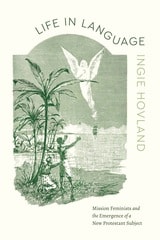
Life in Language
Mission Feminists and the Emergence of a New Protestant SubjectIngie Hovland
University of Chicago Press, 2025
The language of the Bible is a powerful lens through which many Protestants understand themselves and their world, and its prohibitions on women’s speech pose complicated challenges to women. Nevertheless, women frequently serve as vocal leaders in Protestant organizations, including the early twentieth-century Norwegian Mission Society. In Life in Language, Ingie Hovland offers a unique biography of Henny Dons, a leader of the society’s so-called mission feminists, that grapples with ways Protestant women crafted innovative, expansive self-understandings through Christian language. More than their male peers, the mission feminists turned to religious speech to express material, as well as heavenly, desires for paid work, voting rights, and more, and Hovland argues that these experiments in women speaking, reading, writing, and listening paved the way for a new way of being in the world.
Life in Laredo
A Documentary History from the Laredo ArchivesRobert D. Wood
University of North Texas Press, 2004
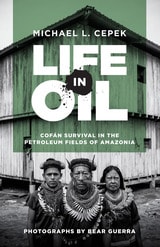
Life in Oil
Cofán Survival in the Petroleum Fields of AmazoniaBy Michael L. Cepek, Photographs by Bear Guerra
University of Texas Press, 2018
Oil is one of the world’s most important commodities, but few people know how its extraction affects the residents of petroleum-producing regions. In the 1960s, the Texaco corporation discovered crude in the territory of Ecuador’s indigenous Cofán nation. Within a decade, Ecuador had become a member of OPEC, and the Cofán watched as their forests fell, their rivers ran black, and their bodies succumbed to new illnesses. In 1993, they became plaintiffs in a multibillion-dollar lawsuit that aims to compensate them for the losses they have suffered. Yet even in the midst of a tragic toxic disaster, the Cofán have refused to be destroyed. While seeking reparations for oil’s assault on their lives, they remain committed to the survival of their language, culture, and rainforest homeland.
Life in Oil presents the compelling, nuanced story of how the Cofán manage to endure at the center of Ecuadorian petroleum extraction. Michael L. Cepek has lived and worked with Cofán people for more than twenty years. In this highly accessible book, he goes well beyond popular and academic accounts of their suffering to share the largely unknown stories that Cofán people themselves create—the ones they tell in their own language, in their own communities, and to one another and the few outsiders they know and trust. Their words reveal that life in oil is a form of slow, confusing violence for some of the earth’s most marginalized, yet resilient, inhabitants.
Life in Peacetime
Francesco Pecoraro
Seagull Books, 0
A close-up portrait of an ordinary existence, Life in Peacetime offers a new look at the postwar era in Italy and the fundamental contradictions of a secure, middle-class life.
Life in Plastic
Artistic Responses to PetromodernityCaren Irr
University of Minnesota Press, 2021
A vital contribution to environmental humanities that explores artistic responses to the plastic age
Since at least the 1960s, plastics have been a defining feature of contemporary life. They are undeniably utopian—wondrously innovative, cheap, malleable, durable, and convenient. Yet our proliferating use of plastics has also triggered catastrophic environmental consequences. Plastics are piling up in landfills, floating in oceans, and contributing to climate change and cancer clusters. They are derived from petrochemicals and enmeshed with the global oil economy, and they permeate our consumer goods and their packaging, our clothing and buildings, our bodies and minds. Plastic reshapes our cultural and social imaginaries.
With impressive breadth and compelling urgency, the essays in Life in Plastic examine the arts and literature of the plastic age. Focusing mainly on post-1960s North America, the collection spans a wide variety of genres, including graphic novels, superhero comics, utopic and dystopic science fiction, poetry, and satirical prose, as well as vinyl records and visual arts. Essays by a remarkable lineup of cultural theorists interrogate how plastic—as material and concept—has affected human sensibilities and expression. The collection reveals the place of plastic in reshaping how we perceive, relate to, represent, and re-imagine bodies, senses, environment, scale, mortality, and collective well-being.
Ultimately, the contributors to Life in Plastic think through plastic with an eye to imagining our way out of plastic, moving toward a postplastic future.
Contributors: Crystal Bartolovich, Syracuse U; Maurizia Boscagli, U of California, Santa Barbara; Christopher Breu, Illinois State U; Loren Glass, U of Iowa; Sean Grattan, U of Kent; Nayoung Kim, Brandeis U; Jane Kuenz, U of Southern Maine; Paul Morrison, Brandeis U; W. Dana Phillips, Towson U in Maryland and Rhodes U in Grahamstown, South Africa; Margaret Ronda, UC-Davis; Lisa Swanstrom, U of Utah; Jennifer Wagner-Lawlor, Pennsylvania State U; Phillip E. Wegner, U of Florida; Daniel Worden, Rochester Institute of Technology.
Life in Prairie Land
Eliza W. Farnham
University of Illinois Press, 1988
Life in Prairie Land is a complex portrait of the midwestern wilderness during the 1830s--beautiful and ugly, beneficent and threatening. Farnham's vivid recreation of her experiences on the Illinois frontier offers a realistic depiction of the harsh pioneer lifestyle as well as a romantic view of an Edenic landscape.
Life in Prairie Land includes descriptions of Farnham's encounters with early settlers and Native Americans, her eye-opening experiences with birth and death, the flora and fauna that surrounded her, and the developing towns she passed through in her travels. Farnham's years on the Illinois frontier showed her the possibilities of a less restrictive society and planted the seeds that would later grow into firmly held and eloquently expressed views on women's equality.
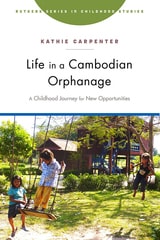
Life in a Cambodian Orphanage
A Childhood Journey for New OpportunitiesKathie Carpenter
Rutgers University Press, 2021
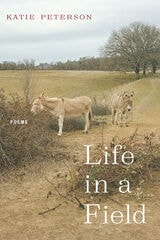
Life in a Field
PoemsKatie Peterson
Omnidawn, 2021
A lyric fable, Life in a Field intersperses Katie Peterson’s slow-moving, cinematic, and sensual writing with three folios of photographs by Young Suh. Introspection, wish, dream, and memory mark this tale, which is set in a location resembling twenty-first-century California—with vistas and orchards threatened by drought and fires. This is also a place of enchantment, a fairy-tale landscape where humans and animals live as equals. As the girl and the donkey grow up, they respond to the difficulties of contemporary civilization, asking a question that meets our existential moment: What do you do with the story you didn’t wish for? A narrator’s voice combines candor with distance, attempting to find a path through our familiar strife, toward a future that feels all but impossible, and into what remains of beauty and pleasure. Life in a Field tries to reverse our accelerating destruction of the natural world, reminding us of “the cold clarity we need to continue on this earth.”
Life in a Mississippian Warscape
Common Field, Cahokia, and the Effects of WarfareMeghan E. Buchanan
University of Alabama Press, 2022
Analyzes Mississippian daily life at Cahokia’s environs during wartime
In Life in a Mississippian Warscape: Common Field, Cahokia, and the Effects of Warfare Meghan E. Buchanan posits that to understand the big histories of warfare, political fragmentation, and resilience in the past archaeologists must also analyze and interpret the microscale actions of the past. These are the daily activities of people before, during, and after historical events. Within warscapes, battles take place in peoples’ front yards, family members die, and the impacts of violence in near and distant places are experienced on a daily basis. This book explores the microscale of daily lives of people living at Common Field, a large, palisaded mound center, during the period of Cahokia’s abandonment and the spread of violence and warfare throughout the Southeast.
Linking together ethnographic, historic, and archaeological sources, Buchanan discusses the evidence that the people of Common Field engaged in novel and hybrid practices in these dangerous times. At the microscale, they adopted new ceramic tempering techniques, produced large numbers of serving vessels decorated with warfare-related imagery, adapted their food practices, and erected a substantial palisade with specially prepared deposits. The overall picture that emerges at Common Field is of a people who engaged in risk-averse practices that minimized their exposure to outside of the palisade and attempted to seek intercession from otherworldly realms through public ceremonies involving warfare-related iconography.
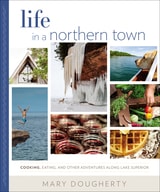
Life in a Northern Town
Cooking, Eating, and Other Adventures along Lake SuperiorMary Dougherty
Wisconsin Historical Society Press, 2017
—from the Introduction
In 2007, Mary Dougherty and her family moved from St. Paul to the tiny Bayfield Peninsula, surrounded by the waters of Lake Superior and Chequamegon Bay in far northwestern Wisconsin. There they set out to live their lives against a backdrop of waterfalls, beaches, farm stands, and a quintessential small town of 487 people. Through recipes, stories, and photos, this book explores what it means to nourish a family and a community. As Mary Dougherty incorporates what is grown and raised in northern Wisconsin into her family’s favorite dishes, she continues a cultural tradition begun by immigrants hundreds of years ago. The result is a one-of-a-kind collection of globally and regionally inspired recipes featuring local cheeses, meats, and produce from the farmers in and around Bayfield—pho made with beef bones from a farm in Mellen, Indian meatballs with curry powder made in Washburn, chowder with corn and potatoes from a farm stand in Ashland. As she knits herself into the Bayfield community, Dougherty comes to more fully grasp the intricate relationship between food and community.