Results by title
905 books match the query 'Literary' and 35 start with l
LOTE
Shola von Reinhold
Duke University Press, 2020
La Medusa
Vanessa Place
University of Alabama Press, 2008
La Medusa is a polyphonic novel of post-conceptual consciousness. At the heart of the whole floats Medusa, an androgynous central awareness that anchors the novel throughout. La Medusa is at once the city of Los Angeles, with its snaking freeways and serpentine shifts between reality and illusion, and a brain—a modern mind that is both expansive and penetrating in its obsessions and perceptions.
Vanessa Place’s characters—a trucker and his wife, a nine-year-old saxophonist, an ice cream vendor, a sex worker, and a corpse, among others—are borderless selves in a borderless city, a city impossible to contain. Her expert ventriloquism and explosive imagination anchor this epic narrative in language that is fierce and vibrant, a penetrating a cross-section of contemporary Los Angeles and a cross-section of the modern mind.
Ladders to Fire
Anaïs Nin
Ohio University Press, 2014
Anaïs Nin’s Ladders to Fire interweaves the stories of several women, each emotionally inhibited in her own way: through self-doubt, fear, guilt, moral drift, and distrust. The novel follows their inner struggles to overcome these barriers to happiness and wholeness. The author’s own experiences, as recorded in her famous diaries, supplied the raw material for her fiction. It was her intuitive, experimental, and always original style that transformed one into the other. Nin herself memorably claimed that “it was the fiction writer who edited the diary.”
Ladders to Fire is the first book of Nin’s continuous novel, Cities of the Interior, which also includes Children of the Albatross,The Four-Chambered Heart,A Spy in the House of Love, and Seduction of the Minotaur. These loosely interlinked stories develop the characters and themes established in the first volume, leading slowly toward a resolution of inner turmoil and conflict.
This Swallow Press reissue of Ladders to Fire includes a new introduction by Nin scholar Benjamin Franklin V, as well as Gunther Stuhlmann’s classic foreword to the 1995 edition.
Lake Song
A Novel in StoriesLesley Pratt Bannatyne
The Ohio State University Press, 2025
Selected by Deesha Philyaw as winner of the AWP Grace Paley Prize in Short Fiction
Shortlisted, 2026 Massachusetts Book Award, Fiction Category
The linked stories of Lake Song, set in the fictional town of Kinder Falls in New York’s Finger Lakes region, span decades to plumb the complexities, violence, and compassion of small-town life as the twentieth century hurtles forward. Against a backdrop of historical events—bootlegging, Klan attacks, gold smuggling, the Albany Ketchup Murders, the 1965 Northeast blackout—a generations-long mystery unwinds. In 1906 Mavis Staunch drowns in Okisee Lake days after she refuses to sell her land to a trio of brothers. The same night, one of the brothers, Angus Epps, doesn’t come home. Few suspect the two events are connected, and no one imagines the role that a ten-year-old boy, a canoe, and a pack of coyotes play in the tragedies. Spiritualists, grifters, sugar makers, arsonists, seekers, and saleswomen wind through each other’s lives and across decades to add layers of resonance to each captivating story. The mercurial lake that unites the people of Kinder Falls sustains as much as it haunts, both witness and diary.
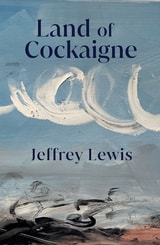
Land of Cockaigne
Jeffrey Lewis
Haus Publishing, 2023
In Jeffrey Lewis’s novel, the Land of Cockaigne, once an old medieval peasants’ vision of a sensual paradise on earth, is reimagined as a plot on the coast of Maine. In efforts to assuage their grief over their son’s death and to make meaning of his life, Walter Rath and Catherine Gray build what they hope will be a version of paradise for a group of young men from the Bronx. As Walter and Catherine work to reinvent this land, formerly a summer resort, the surrounding town of Sneeds Harbor proves resistant. The residents’ well-meaning doubts lead to well-hidden threats, and the Raths’ marriage unravels as Walter loses faith in democracy. Meanwhile, the Bronx boys, who have only ever known the city, try to navigate this new land that is completely alien to them. Written as a parable of contemporary American society, Land of Cockaigne is by turns furious, funny, subversive, tragic, and horrifying. Faced with the question of what to do amid disastrous times, Walter Rath offers a clue: Love is an action, not a feeling. Once you go down this path of faith, there is much to be done.
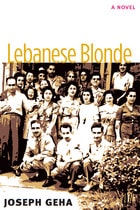
Lebanese Blonde
Joseph Geha
University of Michigan Press, 2012
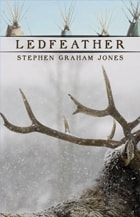
Ledfeather
Stephen Graham Jones
University of Alabama Press, 2008
A story of life, death, love, and the ties that bind us not only to what has been, but what will be.
After burning up the blacktop in New Mexico with The Fast Red Road and rewriting Indian history on the Great Plains with The Bird is Gone, Stephen Graham Jones now takes us to Montana. Set on a Blackfeet Indian reservation, Ledfeather lays bare the life of one Indian boy, Doby Saxon: his near-death experience, his suicide attempts, his brief glimpse of victory, and the unnecessary death of one of his best friends.
But through Doby emerges a connection to the past, to an Indian Agent who served the United States government over a century before. This revelation leads to another and another until it becomes clear that the decisions of this single Indian agent have impacted the lives of generations of Blackfeet Indians—and the life of Doby Saxon, a boy standing in the middle of the road at night, his hands balled into fists, the reservation wheeling all around him like the whole of Blackfeet history collapsing in on him.
Jones’s beautifully complex novel is a story of life, death, love, and the ties that bind us not only to what has been, but what will be: the power of one moment, the weight of one decision, the inevitability of one outcome, and the price of one life.
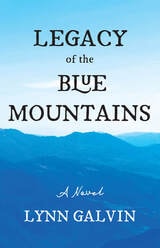
Legacy of the Blue Mountains
A NovelLynn Galvin
University of Nevada Press, 2025
In Legacy of the Blue Mountains, author Lynn Galvin asks: What might happen to a group of Apache children, born in present times, yet living as if in the past and marooned in the Sierra Madre mountains of Mexico when their last renegade adult dies? As they attempt to reach their nearest, last known family members, they embark on a journey to a place none of them has ever seen or visited before. Will they be able to remain undetected while following a memorized path laid out in previous centuries that will lead them into the modern world? As the last remaining Apache children confront the challenges of survival in unfamiliar lands, will they endure long enough to reunite with their remaining relatives?
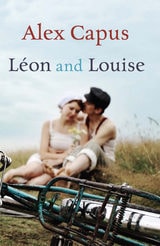
Leon and Louise
Alex Capus
Haus Publishing, 2011
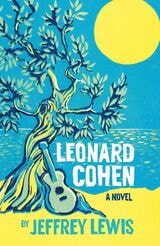
Leonard Cohen
A NovelJeffrey Lewis
Haus Publishing, 2025
The Leonard Cohen at the center of Leonard Cohen: A Novel is an everyman, a would-be artist, a would-be lover, a would-be tragic figure, yet a man haunted by the greatness of his namesake. He struggles to compete. He struggles to be more than a punchline in his own mind. He struggles, in particular, to write one song as great as the least of the great Leonard Cohen's songs.
At the center of Leonard's life is Daphne. In their meeting on a Greek island, a contemporary fable of Daphne and Apollo plays out. But even with Daphne, Leonard is shadowed by the other Leonard Cohen, whom he fears is the real Apollo. The ancient myth haunts the fated lovers, and the nobody Leonard Cohen’s life becomes at once a mystery, a miracle, and a myth on its own terms.
Once upon a time, Apollo fell hard for Daphne, who turned herself into a laurel tree. No less a fate awaits the protagonists of this slender yet universal novel, where art, love, and fame all fatefully intertwine.
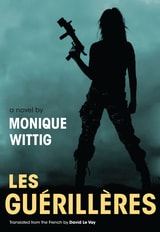
Les Guerilleres
Monique Wittig. Translated from the French by David Le Vay
University of Illinois Press, 2007
One of the most widely read feminist texts of the twentieth century, and Monique Wittig’s most popular novel, Les Guérillères imagines the attack on the language and bodies of men by a tribe of warrior women. Among the women’s most powerful weapons in their assault is laughter, but they also threaten literary and linguistic customs of the patriarchal order with bullets. In this breathtakingly rapid novel first published in 1969, Wittig animates a lesbian society that invites all women to join their fight, their circle, and their community. A path-breaking novel about creating and sustaining freedom, the book derives much of its energy from its vaunting of the female body as a resource for literary invention.
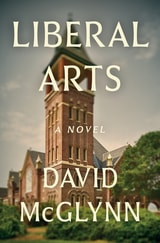
Liberal Arts
A NovelDavid McGlynn
Northwestern University Press, 2027
A kaleidoscopic novel-in-stories set at a fictional Midwest college
Two centuries old and covered in ivy, Wisconsin’s Buchanan College is populated by an eclectic mix of students, staff, and professors hailing from the nearby suburbs to the far corners of the globe. From the outside, Buchanan seems an idyllic world of higher learning. Yet behind its bucolic exterior, a series of interconnected dramas play out: a slew of first-year students mysteriously disappear within days of moving in; an injured hockey star discovers an unlikely fountain of youth; an alumna returns to campus after fifty years in the hope of reconnecting with a former love. And throughout the novel we follow the story of Jenny Ramirez, a social worker and the wife of a popular professor, who commits an act that alters how the college sees her, and how she sees herself. Over a span of four years, from orientation to graduation, the characters in Liberal Arts are forced to weigh their ideals and aspirations against the harsh and often ridiculous realities of the world, and are left asking what, if anything, a liberal arts education has left to teach them.
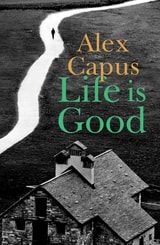
Life is Good
Alex Capus
Haus Publishing, 2018
Max, alone with his three teenage sons for the first time, is left contemplating life and the daily routine of the little bar of which he is the proprietor. As he spends more time with the regulars their problems begin to become his own. This new novel by Alex Capus is a hymn to trust, friendship and life’s small pleasures. Told with his trademark humor, Life is Good is a novel about finding contentment in rootedness as the world speeds up.
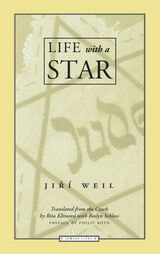
Life with a Star
Jiri Weil
Northwestern University Press, 1998
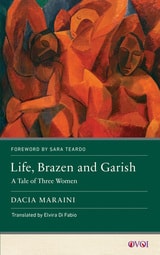
Life, Brazen and Garish
A Tale of Three WomenDacia Maraini
Rutgers University Press, 2024
Life, Brazen and Garish offers a fresh take on the epistolary novel, telling the story of a family through the fragmented and disparate perspectives of daughter, mother, and grandmother. Yet even as each woman endures her private struggles with love and betrayal, youth and maturity, knowledge and ignorance, reality and illusion, the Cascadeis forge a solidarity that transcends generations. In turns heartbreaking and laugh-out-loud funny, this novel is a triumph of narrative voice and literary style from one of Italy’s most renowned writers.
Questo libro è stato tradotto grazie a un contributo del Ministero degli Affari Esteri e della Cooperazione Internazionale italiano.
This book has been translated thanks to a contribution from the Italian Ministry of Foreign Affairs and International Cooperation.
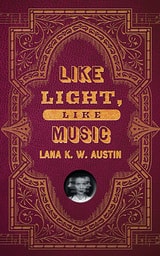
Like Light, Like Music
Lana K. W. Austin
West Virginia University Press, 2020
But to help her hometown’s haunted women, Emme must also face the things that haunt her, things she thought she had lost when she chose to move away: the majestic music of her family’s beloved hills and hollows, the mysterious old ways of her Appalachian kin, and the memory of her remarkable first love, Evan. Through it all, she must reckon with her magical “mountain gift”—is it real, or merely a unique synesthesia? And can she trust it to help heal her family and her town, a place still plagued by the social injustice that first drove her away? Can she trust it to help heal herself?
Linda Perdido
A NovelMac Wellman
University of Alabama Press, 2013
Lioness
A NovelMark Powell
West Virginia University Press, 2022
In the fall of 2018, a bomb goes off at a water-bottling plant in the mountains of southwest Virginia, an incident the FBI declares an act of ecoterrorism. Arrested at the scene is Chris Bright, a mountain hermit with a long history of activism. Unaccounted for—and presumed dead—is Mara Wood, an installation artist who in the last two years has lost her son and left her husband.
But Mara’s estranged husband David cannot quite believe she is dead, and as he goes about reconstructing the story of what happened, he begins to imagine an alternate narrative—one in which their son doesn’t die and his wife doesn’t leave him, one in which his wife doesn’t carry on a secret relationship with Chris Bright, a man bent on fighting back against the environmental despoliation of his Appalachian home. Lioness is a page-turning, heart-wrenching examination of extremism: What pushes people to act violently, and is that violence ever justified?
List
A NovelMatthew Roberson
University of Alabama Press, 2014
A suburban family of four—a man, woman, boy, and girl—struggle through claustrophobic days crowded with home improvement projects, conflicts at work and school, a job loss, illnesses, separation, and the wearying confrontation with aging. The accoutrements of modern life—electronic devices and vehicles—have ceased to be tools that support them and have become instead the central fulcrums around which their lives wheel as they chase “cleanliness” and other high virtues of middle American life.
In Matthew Roberson’s hands, the family’s list-making transcends the simple goal of planning. Their lists reveal the aspirations and anxieties that lie beneath the superficial clatter of everyday activities. Fearing the aimless chaos of unplanned days, the family compulsively compiles lists as maps to steer them away from uncertainty and failure, and yet at what point does a list stop being a map and become the final destination? The family creates an illusory cloud of meaningful activity but cannot stave off the mortal entropies that mark the suburban middle class.
Listen & Other Stories
Liam Callanan
Four Way Books, 2015
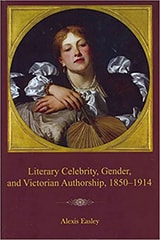
Literary Celebrity, Gender, and Victorian Authorship, 1850-1914
Alexis Easley
University of Delaware Press, 2011
This study examines literary celebrity in Britain from 1850 to 1914. Through lively analysis of rare cultural materials, Easley demonstrates the crucial role of the celebrity author in the formation of British national identity. As Victorians toured the homes and haunts of famous writers, they developed a sense of shared national heritage. At the same time, by reading sensational accounts of writers’ lives, they were able to reconsider conventional gender roles and domestic arrangements. As women were featured in interviews and profiles, they were increasingly associated with the ephemerality of the popular press and were often excluded from emerging narratives of British literary history, which defined great literature as having a timeless appeal. Nevertheless, women writers were able to capitalize on celebrity media as a way of furthering their own careers and retelling history on their own terms. Press attention had a more positive effect on men’s literary careers since they were expected to assume public identities; however, in some cases, media exposure had the effect of sensationalizing their lives, bodies, and careers. With the development of proto-feminist criticism and historiography, the life stories of male writers were increasingly used to expose unhealthy domestic relationships and imagine ideal forms of British masculinity.
The first section of Literary Celebrity explores the practice of literary tourism in Victorian Britain, focusing specifically on the homes and haunts of Charles Dickens, Christina Rossetti, George Eliot, Elizabeth Barrett Browning, and Harriet Martineau. This investigation incorporates analysis of fascinating cultural texts, including maps, periodicals, and tourist guidebooks. Easley links the practice of literary tourism to a variety of cultural developments, including nationalism, urbanization, spiritualism, the women’s movement, and the expansion of popular print culture. The second section provides fresh insight into the ways that celebrity culture informed the development of Victorian historiography. Easley demonstrates how women were able to re-tell history from a proto-feminist perspective by writing contemporary history, participating in architectural reform movements, and becoming active in literary societies. In this chapter she returns to the work of Harriet Martineau and introduces a variety of lesser-known contributors to the field, including Mary Gillies and Mary Ward. Literary Celebrity concludes with a third section focused on the expansion of celebrity media at the fin de siècle. These chapters and a brief coda link the popularization of celebrity news to the de-canonization of women writers, the professionalization of medicine, the development of the open space movement, and the institutionalization of English studies. These investigations elucidate the role of celebrity media in the careers of Charlotte Robinson, Marie Corelli, Mary Braddon, Harriet Martineau, Thomas Carlyle, Ernest Hart, and Octavia Hill.
Published by University of Delaware Press. Distributed worldwide by Rutgers University Press.
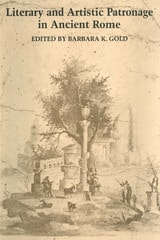
Literary and Artistic Patronage in Ancient Rome
Edited by Barbara K. Gold
University of Texas Press, 1982
Virgil, Horace, Catullus, Propertius—these are just a few of the poets whose work we would be without today were it not for the wealthy and powerful patrons upon whose support the Roman cultural establishment so greatly depended. Who were these patrons? What benefits did they give, to whom, and why? What effect did the support of such men as Maecenas and Pompey have on the lives and work of those who looked to them for aid?
These questions and others are addressed in this volume, which explores all the important aspects of patronage—a topic crucial to the study of literature and art from Homer to the present day. The subject is approached from various vantage points: literary, artistic, historical. The essayists reach conclusions that dispel the many misconceptions about Roman patronage derived from seventeenth- and eighteenth-century models in England and Europe.
An understanding of the workings of patronage is indispensable in helping us see how the Roman cultural establishment functioned in the four centuries of its flourishing and also in helping us read and enjoy specific poems and works of art. A book for all concerned with classical literature, art, and social history, Literary and Artistic Patronage in Ancient Rome not only deepens our understanding of the ancient world but also suggests important avenues for future exploration.
Little Jinx
Abram Tertz
Northwestern University Press, 1992
Little Lost River
A NovelPamela Johnston
University of Nevada Press, 2008
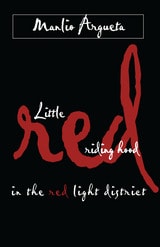
Little Red Riding Hood in the Red Light District
Manlio Argueta
Northwestern University Press, 1998
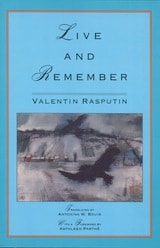
Live and Remember
Valentin Rasputin
Northwestern University Press, 1992
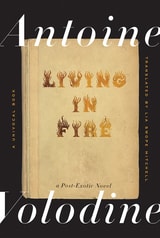
Living in Fire
A Post-Exotic NovelAntoine Volodine
University of Minnesota Press, 2026
A soldier engulfed in napalm suspends his death by composing a family saga in which he learns to live within the flames
Do not remain on the fire’s edge, find your way to the heart of the fire and do not leave. . . . Death does not exist as long as you reject it. A soldier watches an airplane dropping napalm on his position. In the instant before his fiery death, he does not see his life flash before his eyes. Instead, he improvises a novel, one that screams out of him at high speed.
In his story, Sam wanders a postapocalyptic landscape of broken cities and empty steppes for days, years, centuries. Through a series of blackly comic, dreamlike, bizarre scenes, he gleans lessons imparted by the weird and violent members of his family, including sorceress Aunt Yoanna, doomed Uncle Slutov, and two sharp-shooting cousins who try to persuade him to kill their mother. Sam’s clan teaches him how to accept his fate and live in the world of flames with no fear for the future.
The forty-ninth novel in the post-exotic series and the last to appear under the name Antoine Volodine, Living in Fire includes an interview with the writer about this book’s place in his overall project, its literary and cinematic influences, and its thematic connections with other works in the sequence. A triumphant conclusion to an epic experiment, Living in Fire cuts through a world aflame using dark humor, flights of fantasy, and radical acceptance.
Retail e-book files for this title are screen-reader friendly.

Lookalikes
Thomas Meinecke
Diaphanes, 2026
A literary tour de force through the symbolic landscapes of recent cultural history, Lookalikes is a text in which everything is as it seems and nothing is as it is.
Thomas Meinecke’s lookalikes resemble many people––Marlon Brando, Shakira, Justin Timberlake, or Josephine Baker to name a few––but never themselves. Illusion is their capital; imitation is their business. They stroll through Düsseldorf's posh Königsallee, reading, quoting, and plagiarizing their way through the history of pop culture and philosophy, exploring categories of realness in parallel worlds and digital chat forums. At the same time, yet another Thomas wanders Brazil in disguise, tracing the journey of Hubert Fichte and his doppelgänger Jäcki. In this endless play of similarities, all identity is lost.
Between literary and sexual genres, mimesis and authenticity, fiction and reality, these lookalikes only ever find the Other, just as Meinecke’s text duplicates itself in the furor of allusions and reference systems, constantly branching out anew, never remaining the same, always changing these so-called original signs.
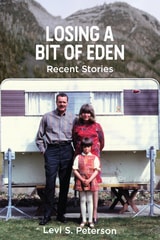
Losing a Bit of Eden
Recent StoriesLevi S. Peterson
Signature Books, 2021
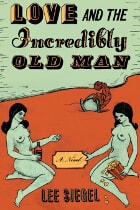
Love and the Incredibly Old Man
A NovelLee Siegel
University of Chicago Press, 2008
Summoned with cold hard cash and a pinch of flattery, a professor and novelist named Lee Siegel finds himself in Eagle Springs, Florida, attempting to give form to the life of the man who, contrary to popular and historical opinion, did indeed find the Fountain of Youth. Spending humid days listening to the romantic ramblings of the old man and sleepless nights doubting yet trying to craft these reminiscences into a narrative that will satisfy the literary aspirations of his subject, Siegel the ghostwriter spins an improbable tale filled with Native Americans, insatiable monarchs, philandering cantors, deliriously passionate nuns, delicate actresses, androgynous artists, and deceptions small and large. For de León, and for Siegel too, centuries of conquest and colonialism, fortune and identity, are all refracted through the memories of the conquistador’s lovers, each and every one of them adored “more than any other woman ever.”
Comic, melancholic, lusty, and fully engaged with the act of invention, whether in love or on the page, Love and the Incredibly Old Man continues the real Lee Siegel’s exuberant exploration of that sentiment which Ponce de León confesses has “transported me to the most joyous heights, plunged me to the most dismal depths, and dropped me willy-nilly and dumbfounded at all places in between.”
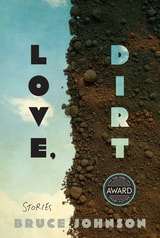
Love, Dirt
Bruce Johnson
University of Iowa Press, 2025
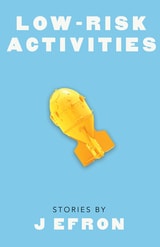
Low-Risk Activities
StoriesJ Efron
University of Alabama Press, 2025
Formally daring and emotionally disarming, Low-Risk Activities spins out twenty-two uncanny stories that feel like dispatches from a future already here—and already unraveling.
J Efron’s Low-Risk Activities is a genre-defying collection that slips between interview transcript, personal confession, government form, and speculative fable—told through the voices of orphans, immortals, office workers, digital nomads, and posthuman survivors. These are characters in limbo, each trying to make sense of a fractured world where logic doesn’t always follow law.
The book opens with Lan Caihe, a faux-memoir in which a gender-fluid, possibly immortal narrator navigates trauma, desire, and the politics of being unclassifiable—part myth, part autofiction, and entirely singular. Later entries mimic psychological evaluations, immigration interrogations, and philosophical questionnaires, inviting the reader not just to observe, but to participate.
Structured like a psychic excavation, Low-Risk Activities questions how we define personhood, how language shapes identity, and how systems reduce people to data—only to lose the meaning of what that data once held. Efron’s voice is intimate yet disorienting, full of humor, dread, and lyrical estrangement. Fans of Anne Carson, Jenny Boully, and Rivka Galchen will find familiar resonance in this work that refuses to resolve neatly—and in doing so, reveals something startlingly true.
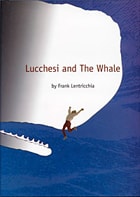
Lucchesi and The Whale
Frank Lentricchia
Duke University Press, 2001
Having become “a mad Ahab of reading,” who is driven to dissect the “artificial body of Melville’s behemothian book” to grasp its truth, Lucchesi allows his thoughts to wander and loop from theory to dream to reality to questionable memory. But his black humor-tinged musings are often as profoundly moving as they are intellectual, such as the section in which he ponders the life and philosophy of Ludwig Wittgenstein in relation to the significance of a name—and then attempts to share these thoughts with a sexy, middle-aged flight attendant—or another in which he describes a chance meeting with a similarly-named mafia don.
Despite apparent spiritual emptiness, Lucchesi in the end does find “a secret meaning” to Moby-Dick. And Lentricchia’s creations—both Lucchesi and The Whale and its main character—reveal this meaning through a series of ingeniously self-reflective metaphors, in much the way that Melville himself did in and through Moby-Dick. Vivid, humorous, and of unparalleled originality, this new work from Frank Lentricchia will inspire and console all who love and ponder both great literature and those who would write it.
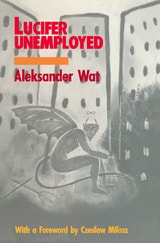
Lucifer Unemployed
Aleksander Wat
Northwestern University Press, 1990
The title story finds a superbly ironic Lucifer wandering the Europe of the late 1920s in search of a mission: what impact can a devil have in a godless time? What is his sorcery in a society far more diablical than the devil himself? Too idealistic for a world full of modern cruelties, the unemployable Lucifer finally finds the only means of guaranteed immortality. In "The Eternally Wandering Jew," steady Jewish conversion to Christianity results in Nathan the Talmudist reigning as Pope Urban IX. The hilarious satire on power, "Kings in Exile," unfolds with the dethroned monarchs of Europe meeting to found their own republic in an uninhabited island in the Indian Ocean.
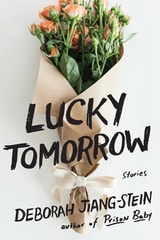
Lucky Tomorrow
StoriesDeborah Jiang-Stein
University of Minnesota Press, 2025
Lives of longing and resilience, searching and belonging in a debut story collection from a memoirist and renowned advocate for change
For a Lucky Tomorrow Buy a Flower Today. Is it true? a prospective customer asks. About the luck? “Absolutely!” Felma says. Flowers, she knows, are all that’s anchored in this world, even if not for long, and like others in these luminous stories, Felma knows what it is to be rootless. In Lucky Tomorrow, Deborah Jiang-Stein presents an unforgettable cast of characters dreaming of redemption, purpose, and connection in a wounded yet beautiful world.
A young girl stuck working at her family’s candy stand. A former priest trapped on a crowded train. A prisoner robbed of the book she’s been writing. A father haunted by his broken family. A woman confined to a psych ward. A reverend caring for her dying housemate. And Felma, a flower vendor, searching for the daughter she gave birth to while in prison, who was swiftly bundled away. Felma’s story leads us in, through, and around the others—a central beating heart for these lives on the fringes, where Jiang-Stein finds a singular, tenacious humanity.
The stories in Lucky Tomorrow move through settings drawn from the path of the author’s own life: Seattle, where she grew up after being born in an Appalachian prison; Tokyo, where she once lived; the Twin Cities, where she currently resides; and the American South, where she travels for much of her advocacy work with women in prison. Pushing the boundaries of genre, Jiang-Stein delicately layers the stories of these outcasts, eccentrics, and visionaries, gathering them in from the shadows with remarkable empathy and candor, laying bare our shared sorrows and joys.