Results by title
716 books match the query 'Literary Figures' and 36 start with l
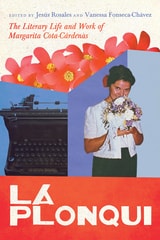
La Plonqui
The Literary Life and Work of Margarita Cota-CárdenasEdited by Jesús Rosales and Vanessa Fonseca-Chávez
University of Arizona Press, 2023
Nicknamed “La Plonky” by her family after a made-up childhood song, Cota-Cárdenas grew up in California, taught almost exclusively in Arizona, and produced five major works (two novels and three books of poetry) that offer an expansive literary production spanning from the 1960s to today. Her perspectives on Chicana identity, the Chicanx movement, and the sociopolitical climate of Arizona and the larger U.S.-Mexico border region represent a significant contribution to the larger body of Chicanx literature. Additionally, the volume explores her perspectives on issues of gender, sexuality, and identity related to the Chicanx experience over time.
Divided into three major parts, this collection begins with an introduction, followed by two testimonial essays written by the author herself and a longtime colleague, as well as an interview with the author. The second section contains nine essays by well-established literary critics that analyze Cota-Cárdenas’s literary output within a Chicano Movement literary context and offer new readings of Cota-Cárdenas’s fiction and poetry. The third part presents poetry and fiction from Cota-Cárdenas, including an excerpt from a work in progress. As a whole, the collection aims to affirm Margarita Cota-Cárdenas’s significant role in shaping the field of Chicana literature and emphasizes the importance of honoring a celebrated author who wrote a majority of her works in Spanish—one of the few Chicana writers to do so.
Contributors
Laura Elena Belmonte
Margarita Cota-Cárdenas
José R. Flores
Vanessa Fonseca-Chávez
Carolyn González
Gabriella Gutiérrez y Muhs
Manuel M. Martín-Rodríguez
Kirsten F. Nigro
Margarita E. Pignataro
Tey Diana Rebolledo
Jesús Rosales
Charles St-Georges
Javier Villarreal
La littérature est un voyage de découverte
Tom Bishop en conversation avec Donatien GrauTom Bishop and Donatien Grau
Diaphanes, 2021
La vida de Lazarillo de Tormes y de sus fortunas y adversidades
Edited by Everett W. Hesse and Harry F. Williams
University of Wisconsin Press, 1961
First published in 1554 and banned by the Inquisition, the anonymous Lazarillo de Tormes begat a whole new genre—the picaresque novel. This classic has had enduring popularity as a literary expression of Spanish identity and emotion. Through its daring autobiographical form the reader observes the magnificent, conquering Spain of Charles the Fifth through the inner consciousness of the humble Lazarillo.
This editon includes the annotated Spanish-language text and prologue (with modernized and regularized spelling) , a full vocabulary, and concise footnotes explaining allusions and translating phrases of varying difficulty.
Spanish-language with introductions in English
Landscapes of a Distant Mother
SAID
University of Chicago Press, 2004
There wasn't one.
You never smiled.
Born in Tehran but living in Germany, the eminent writer SAID has suffered two forms of exile. Forced to leave Iran for political reasons, he was also separated from his mother shortly after his birth when his parents divorced. At the age of forty-three, however, SAID received word that his mother was traveling abroad and wanted to see him. Landscapes of a Distant Mother is the account of their wrenching reunion. A memoir of longing and loss, the book offers a haunting portrait of a son's broken relationship with his mother and the Islamic dictatorship that shadows both their lives.
Landscapes of a Distant Mother gives English-speaking readers an introduction to one of Europe's most important immigrant writers. Unsentimental and spare, the book chronicles the discomfiting sensation of viewing one's mother as a stranger and all the psychological implications of their mutual disappointment. SAID's distance from his mother—whom he describes almost clinically, with her "particular way of speaking, the style laced with religious formulas, inclined to emotionalism, self-pity and expletives"—becomes a measure of the alienation he feels from everything around him. His book gives voice to the full meaning of modern exile—its political force, profound sadness, and perpetual yearning.
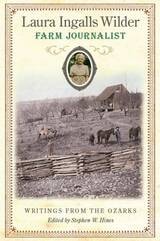
Laura Ingalls Wilder, Farm Journalist
Writings from the OzarksEdited by Stephen W. Hines
University of Missouri Press, 2007
Before Laura Ingalls Wilder found fame with her Little House books, she made a name for herself with short nonfiction pieces in magazines and newspapers. Read today, these pieces offer insight into her development as a writer and depict farm life in the Ozarks—and also show us a different Laura Ingalls Wilder from the woman we have come to know.
This volume collects essays by Wilder that originally appeared in the Missouri Ruralist between 1911 and 1924. Building on the initial compilation of these articles under the title Little House in the Ozarks, this revised edition marks a more comprehensive collection by adding forty-two additional Ruralist articles and restoring passages previously omitted from other articles.
Writing as “Mrs. A. J. Wilder” about modern life in the early twentieth-century Ozarks, Laura lends her advice to women of her generation on such timeless issues as how to be an equal partner with their husbands, how to support the new freedoms they’d won with the right to vote, and how to maintain important family values in their changing world. Yet she also discusses such practical matters as how to raise chickens, save time on household tasks, and set aside time to relax now and then.
New articles in this edition include “Making the Best of Things,” “Economy in Egg Production,” and “Spic, Span, and Beauty.” “Magic in Plain Foods” reflects her cosmopolitanism and willingness to take advantage of new technologies, while “San Marino Is Small but Mighty” reveals her social-political philosophy and her interest in cooperation and community as well as in individualism and freedom. Mrs. Wilder was firmly committed to living in the present while finding much strength in the values of her past.
A substantial introduction by Stephen W. Hines places the essays in their biographical and historical context, showing how these pieces present Wilder’s unique perspective on life and politics during the World War I era while commenting on the challenges of surviving and thriving in the rustic Ozark hill country. The former little girl from the little house was entering a new world and wrestling with such issues as motor cars and new “labor-saving” devices, but she still knew how to build a model small farm and how to get the most out of a dollar.
Together, these essays lend more insight into Wilder than do even her novels and show that, while technology may have improved since she wrote them, the key to the good life hasn’t changed much in almost a century. Laura Ingalls Wilder, Farm Journalist distills the essence of her pioneer heritage and will delight fans of her later work as it sheds new light on a vanished era.
Learning to Be Everyone and No One
Interviews with Twelve Contemporary PoetsChard deNiord
University of Alabama Press, 2026
Intimate, unfiltered conversations with major contemporary poets that reveal how craft, conscience, and lived experience shape poetry
Learning to Be Everyone and No One is a compelling collection of intimate interviews that captures poets speaking with uncommon candor about the making of their art. Through lively, unguarded conversations, Chard deNiord draws out moments of insight, humor, struggle, and revelation, revealing how poetry grows from lived experience and sustained attention. The result is an experience that feels immediate and alive, offering readers a sense of presence inside the creative act as it unfolds in real time.
Gathering voices that have helped shape contemporary poetry, the book features conversations with Robert Hass, T. R. Hummer, Major Jackson, Ali Kinsella, Halyna Kruk, Li-Young Lee, Ada Limón, Dennis Nurske, Dzvinia Orlowsky, Robert Pinsky, Charles Simic, Bruce Smith, Gerald Stern, Ruth Stone, and Chase Twichell. Together, these poets reflect on identity, politics, race, gender, memory, and the natural world with wit, urgency, and precision. More than a record of distinguished careers, this volume forms a chorus of perspectives that affirms poetry’s enduring power to challenge, console, and remain “the news that stays the news.”
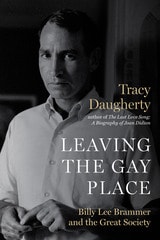
Leaving the Gay Place
Billy Lee Brammer and the Great SocietyBy Tracy Daugherty
University of Texas Press, 2018
Acclaimed by critics as a second F. Scott Fitzgerald, Billy Lee Brammer was once one of the most engaging young novelists in America. “Brammer’s is a new and major talent, big in scope, big in its promise of even better things to come,” wrote A. C. Spectorsky, a former staffer at the New Yorker. When he published his first and only novel, The Gay Place, in 1961, literary luminaries such as David Halberstam, Willie Morris, and Gore Vidal hailed his debut. Morris deemed it “the best novel about American politics in our time.” Halberstam called it “a classic . . . [a] stunning, original, intensely human novel inspired by Lyndon Johnson. . . . It will be read a hundred years from now.” More recently, James Fallows, Gary Fisketjon, and Christopher Lehmann have affirmed The Gay Place’s continuing relevance, with Lehmann asserting that it is “the one truly great modern American political novel.”
Leaving the Gay Place tells a sweeping story of American popular culture and politics through the life and work of a writer who tragically exemplifies the highs and lows of the country at mid-century. Tracy Daugherty follows Brammer from the halls of power in Washington, DC, where he worked for Senate majority leader Johnson, to rock-and-roll venues where he tripped out with Janis Joplin, and ultimately to back alleys of self-indulgence and self-destruction. Constantly driven to experiment with new ways of being and creating—often fueled by psychedelics—Brammer became a cult figure for an America on the cusp of monumental change, as the counterculture percolated through the Eisenhower years and burst out in the sixties. In Daugherty’s masterful recounting, Brammer’s story is a quintessential American story, and Billy Lee is our wayward American son.
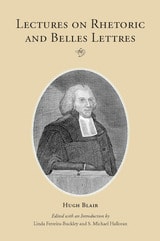
Lectures on Rhetoric and Belles Lettres
Hugh Blair. Edited by Linda Ferreira-Buckley and S. Michael Halloran
Southern Illinois University Press, 2005
This new edition of Hugh Blair’s Lectures on Rhetoric and Belles Lettres, edited by Linda Ferreira-Buckley and S. Michael Halloran, answers the need for a complete, reliable text. The book seeks to generate a renewed interest in Blair by provoking new inquiries into the tradition of belletristic rhetoric and by serving as both aid and incentive to others who may join in the project of improving understanding of this landmark rhetorical scholarship.
This editioncontains forty-seven lectures and remains faithful to the text of the 1785 London edition. The editors contextualize Hugh Blair’s motivations and thinking by providing in their introduction an extended account of Blair’s life and era. The bibliography of works by and about Blair is an invaluable aid, surpassing previous research on Blair.
Although the extent of its influence cannot be measured fully, Blair’s Lectures on Rhetoric and Belles Lettres was undoubtedly a primary vehicle for introducing many eighteenth- and nineteenth-century scholars to classical rhetoric and French belletristic rhetoric—its success due in part to the ease with which the lectures combine neoclassical and Enlightenment thought, accommodating emerging social concerns. Ferreira-Buckley and Halloran’s extensive treatment revives the tradition of belletristic rhetoric, improving the understanding of Blair’s place in the study of eighteenth- and nineteenth-century discourse, while finding him relevant in the twenty-first century.
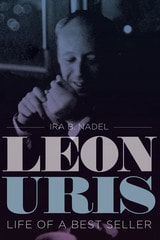
Leon Uris
Life of a Best SellerBy Ira B. Nadel
University of Texas Press, 2010
As the best-selling author of Exodus, Mila 18, QB VII, and Trinity, Leon Uris blazed a path to celebrity with books that readers could not put down. Uris's thirteen novels sold millions of copies, spent months on the best-seller lists, appeared in fifty languages, and have been adapted into equally popular movies and TV miniseries. Few other writers equaled Uris's fame in the mid-twentieth century. His success fueled the rise of mass-market paperbacks, movie tie-ins, and celebrity author tours. Beloved by the public, Uris was, not surprisingly, dismissed by literary critics. Until now, his own life—as full of drama as his fiction—has never been the subject of a book.
In Leon Uris: Life of a Best Seller, Ira Nadel traces Uris from his disruptive youth to his life-changing experiences as a marine in World War II. These experiences, coupled with Uris's embrace of his Judaism and desire to write, led to his unprecedented success and the lavish excesses of a career as a best-selling author. Nadel reveals that Uris lived the adventures he described, including his war experiences in the Pacific (Battle Cry), life-threatening travels in Israel (Exodus), visit to Communist Poland (Mila 18), libel trial in Britain (QB VII), and dangerous sojourn in fractious Northern Ireland and the Irish Republic (Trinity). Nadel also demonstrates that Uris's talent for writing action-packed, yet thoroughly researched, novels meshed perfectly with the public's desire to revisit and understand the tumultuous events of recent history. This made him far more popular (and wealthy) than more literary authors, while paving the way for writers such as Irving Wallace and Tom Clancy.
Letters around a Garden
Rainer Maria Rilke
Seagull Books, 2024
In July 1921, displaced European poet Rainer Maria Rilke sequestered himself in the chateau of Muzot, a thirteenth-century medieval tower perched in the vineyards above the town of Sierre in the Canton Valais, Switzerland. In this sun-flooded landscape of the Rhone Valley, he found beguiling echoes of Spain and his beloved Provence. Here, the Duino Elegies were famously completed and the Sonnets to Orpheus followed.
During this time, Rilke’s correspondence also bloomed, and Letters around a Garden collects some of those letters together into English for the first time. One intriguing exchange from 1924 to 1926 was with a young aristocratic Swiss woman Antoinette de Bonstetten, a passionate horticulturist who had been recommended as a potential advisor for the redesign and upkeep of the Muzot rose garden. In twenty-two precious letters originally written in French, Rilke relishes the prospect of their elusive meeting, keenly discusses the plans for his garden, and wittily laments the trials of his plants. Beyond the encomium for Paul Valéry and poignant memory of place are passages of exquisite writing, in which Rilke evokes with trademark sensitivity the delicate relationship between the changing seasons and the natural world of his adopted region. We also witness the loving relationship evolve between these sometime-fugitive correspondents and how questions of solitariness and companionship impinge on one who faces unaccustomed challenges as his health tragically declines.
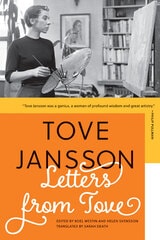
Letters from Tove
Tove Jansson
University of Minnesota Press, 2021
A virtual memoir in letters by the beloved creator of the Moomins
Tove Jansson’s works, even her famed Moomin books, fairly teem with letters of one kind or another, from messages bobbing in bottles to whole epistolary novels. Fortunately for her countless readers, her life was no different, unfolding as it did in the letters to family, friends, and lovers that make up this volume, a veritable autobiography over the course of six decades—and the only one Jansson ever wrote. And just as letters carry a weight of significance in Jansson’s writing, those she wrote throughout her life reflect the gravity of her circumstances, the depth of her thoughts and feelings, and the critical moments of humor, sadness, and grace that mark an artist’s days.
These letters, penned with characteristic insight and wit, provide an almost seamless commentary on Jansson’s life within Helsinki’s bohemian circles and on her island home. Shifting between hope and despair, yearning and happiness, they describe her immersion in art studies and her ascension to fame with the Moomins. They speak frankly of friendship and love, loneliness and solidarity, and also of politics, art, literature, and society. They summon a particular place and time reflected through a mind finely attuned to her culture, her world, and her own nature—all clearly put into biographical and historical context by the volume’s editors, both longtime friends of Tove Jansson—and, in the end, draw a complex, intimate self-portrait of one of the world’s most beloved authors.
Letters to J. D. Salinger
Edited by Chris Kubica and Will Hochman
University of Wisconsin Press, 2014
Salinger continues to maintain his silence, but Holden Caulfield, Franny and Zooey, and Seymour Glass—the unforgettable characters of his novel and short stories—continue to speak to generations of readers and writers. Letters to Salinger includes more than 150 personal letters addressed to Salinger from well-known writers, editors, critics, journalists, and other luminaries, as well as from students, teachers, and readers around the world, some of whom have just discovered Salinger for the first time. Their voices testify to the lasting impressions Salinger’s ideas and emotions have made on so many diverse lives.
Contributors include Marvin Bell, Frederick Busch, Stephen Collins, Nicholas Delbanco, Warren French, Herbert Gold, W. P. Kinsella, Molly McQuade, Stewart O’Nan, Robert O’Connor, Ellis Paul, Molly Peacock, Sanford Pinsker, George Plimpton, Gerald Rosen, Sid Salinger, David Shields, Joseph Skibell, Melanie Rae Thon, Alma Luz Villanueva, Katharine Weber, and many others
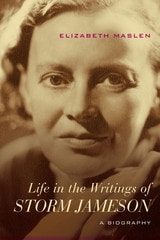
Life in the Writings of Storm Jameson
A BiographyElizabeth Maslen
Northwestern University Press, 2014
Margaret Storm Jameson (1891–1986) is primarily known as a compelling essayist; her stature as a novelist and champion of the dispossessed is largely forgotten. In Life in the Writings of Storm Jameson, Elizabeth Maslen reveals a figure who held her own beside fellow British women writers, including Virginia Woolf; anticipated the Angry Young Women, such as Doris Lessing; and was an early champion of such European writers as Arthur Koestler and Czesław Miłosz. Jameson was a complex character whose politics were grounded in social justice; she was passionately antifascist—her novel In the Second Year (1936) raised the alarm about Nazism—but always wary of communism. An eloquent polemicist, Jameson was, as president of the British P.E.N. during the 1930s and 1940s, of invaluable assistance to refugee writers. Elizabeth Maslen’s biography introduces a true twentieth century hedgehog, whose essays and subtly experimental fiction were admired in Europe and the States.

Life of Henry David Thoreau
Henry S. SaltEdited by George Hendrick, Willene Hendrick, and Fritz Oehlschlaeger
University of Illinois Press, 1993
In 1890 Salt published the initial version of Thoreau's Life. With the help of American friends, he revised the book and published it anew six years later. The present volume is the third version of the biography, completed in 1908 but never published in Salt's lifetime.
Combining a concise narrative of Thoreau's life with a perceptive treatment of his ideas and writings, it stands as a penetrating study of Thoreau, stressing his distinctive individuality. Through an astute analysis of the text and a concise biography, the editors illustrate Salt's growth as a scholar and his changing views on Thoreau and Thoreau's philosophy.
Life of a Poet
Rainer Maria RilkeRalph Freedman
Northwestern University Press, 1998
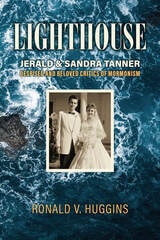
Lighthouse
Jerald and Sandra Tanner, Despised and Beloved Critics of MormonismRonald V. Huggins
Signature Books, 2022
The Tanners consistently challenged the church’s position on many historical issues. Utah Lighthouse was long the only source for Mormon scholars to obtain crucial historical reprints, which they still happily or begrudgingly purchase; for others, the Tanners’ writings have been the source of disillusionment with the church. Despised or beloved, the influence of Jerald and Sandra Tanner cannot be underestimated or ignored.
Lillie Devereux Blake
Retracing a Life ErasedGrace Farrell
University of Massachusetts Press, 2002
Yet for all her remarkable accomplishments, Lillie Blake's story has been all but forgotten. As Grace Farrell reveals in this richly textured biography, Blake's creative writings did not survive the canonical purges of women authors at the turn of the twentieth century, and her contributions to the suffrage movement were simply ignored in the official histories sanctioned by Susan B. Anthony. From the traces that remain, Farrell reconstructs an extraordinary life of passion and purpose. She chronicles Blake's literary career from Civil War correspondent to novelist and provides an inside view of suffrage politics, correcting some long held misconceptions perpetuated by Anthony and her supporters.
At the same time, Farrell expands the generic boundaries of biography by recounting not only a life and the causes of its erasure but also her own process of recovering that life. She brings the reader along with her as she follows Blake's path in the world, touches her diary, reads her letters, and campaigns to prevent Yale University from demolishing Blake's childhood home in New Haven.
Lingua Cosmica
Science Fiction from around the WorldEdited by Dale Knickerbocker
University of Illinois Press, 2018

Linus Pauling
Clifford Mead
Oregon State University Press, 2001
Lionel Trilling and the Fate of Cultural Criticism
Mark Krupnick
Northwestern University Press, 1986
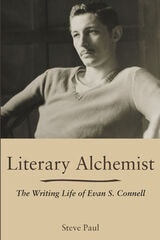
Literary Alchemist
The Writing Life of Evan S. ConnellSteve Paul
University of Missouri Press, 2021
Winner, 2022 Society of Midland Authors award for Biography/Memoir
Evan S. Connell (1924–2013) emerged from the American Midwest determined to become a writer. He eventually made his mark with attention-getting fiction and deep explorations into history. His linked novels Mrs. Bridge (1959) and Mr. Bridge (1969) paint a devastating portrait of the lives of a prosperous suburban family not unlike his own that, more than a half century later, continue to haunt readers with their minimalist elegance and muted satire. As an essayist and historian, Connell produced a wide range of work, including a sumptuous body of travel writing, a bestselling epic account of Custer at the Little Bighorn, and a singular series of meditations on history and the human tragedy.
This first portrait and appraisal of an under-recognized American writer is based on personal accounts by friends, relatives, writers, and others who knew him; extensive correspondence in library archives; and insightful literary and cultural analysis of Connell’s work and its context. It also illuminates aspects of American publishing, Hollywood, male anxieties, and the power of place.
Literary Couplings
Writing Couples, Collaborators, and the Construction of AuthorshipEdited by Marjorie Stone and Judith Thompson
University of Wisconsin Press, 2007
This innovative collection challenges the traditional focus on solitary genius by examining the rich diversity of literary couplings and collaborations from the early modern to the postmodern period. Literary Couplings explores some of the best-known literary partnerships—from the Sidneys to Boswell and Johnson to Sylvia Plath and Ted Hughes—and also includes lesser-known collaborators such as Daphne Marlatt and Betsy Warland. The essays place famous authors such as Samuel Coleridge, Oscar Wilde, and William Butler Yeats in new contexts; reassess overlooked members of writing partnerships; and throw new light on texts that have been marginalized due to their collaborative nature. By integrating historical studies with authorship theory, Literary Couplings goes beyond static notions of the writing "couple" to explore literary couplings created by readers, critics, historians, and publishers as well as by writers themselves, thus expanding our understanding of authorship.
Literary Sisters
Dorothy West and Her Circle, A Biography of the Harlem RenaissanceMitchell, Verner D
Rutgers University Press, 2012
Harlem Renaissance writer Dorothy West led a charmed life in many respects. Born into a distinguished Boston family, she appeared in Gershwin’s Porgy and Bess, then lived in the Soviet Union with a group that included Langston Hughes, to whom she proposed marriage. She later became friends with Jacqueline Kennedy Onassis, who encouraged her to finish her second novel, The Wedding, which became the octogenarian author’s first bestseller.
Literary Sisters reveals a different side of West’s personal and professional lives—her struggles for recognition outside of the traditional literary establishment, and her collaborations with talented African American women writers, artists, and performers who faced these same problems. West and her “literary sisters”—women like Zora Neale Hurston and West’s cousin, poet Helene Johnson—created an emotional support network that also aided in promoting, publishing, and performing their respective works. Integrating rare photos, letters, and archival materials from West’s life, Literary Sisters is not only a groundbreaking biography of an increasingly important author but also a vivid portrait of a pivotal moment for African American women in the arts.
Literature Is a Voyage of Discovery
Tom Bishop in Conversation with Donatien GrauTom Bishop and Donatien Grau
Diaphanes, 2021
Tom Bishop has, for over sixty years, helped shape the literary, philosophical, cultural, artistic, and political conversation between Paris and New York. As professor and director of the Center for French Civilization and Culture at New York University, he made the Washington Square institution one of the great bridges between French innovation and a New York scene in full transformation. Bishop was close to Beckett, championed Robbe-Grillet in the United States, befriended Marguerite Duras and Hélène Cixous, and organized historic public encounters—such as the one between James Baldwin and Toni Morrison. He was also a scholar, a recognized specialist in the avant-garde, notably the Nouveau Roman and the Nouveau Théâtre.
In 2012, Bishop invited Donatien Grau to give a talk at NYU. This invitation led to conversations—many of which are presented in this book—and a friendship. Literature Is a Voyage of Discovery gathers their dialogues, retracing Bishop’s career, his own history, his departure from Vienna, his studies, his meetings, his choices, his conception of literature and life, his relationship to the political and economic world, and the way he helped define the profession of “curator” as it is practiced today, offering a thought-provoking look into one of the leading minds of our time.

Little Magazines - American Writers 32
University of Minnesota Pamphlets on American WritersReed Whittemore
University of Minnesota Press, 1963
Little Magazines - American Writers 32 was first published in 1963. Minnesota Archive Editions uses digital technology to make long-unavailable books once again accessible, and are published unaltered from the original University of Minnesota Press editions.
Living At The Edge
Biography Of D H Lawrence & Frieda Von RichthofenMichael Squires
University of Wisconsin Press, 2002
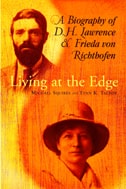
Living at the Edge follows the separate lives of Lawrence and Frieda up to their first meeting in 1912. Tracing their new life together, it depicts their grateful escape from the English Midlands; their discovery of exotic places where they made temporary homes—Italy, Cornwall, Australia, New Mexico, and Mexico; Lawrence’s courageous battle against illness; and, after his death in 1930, Frieda’s success in recreating the simple life on ranches near Taos, New Mexico, where she died in 1956.
At the center of their story is Lawrence’s literary career. Biographers Squires and Talbot see Lawrence’s major novels—The Rainbow, Women in Love, Lady Chatterley’s Lover—as a fresh way to understand his turbulent and conflicted life. They reveal the extreme care with which he rewrote his personal experience to satisfy his deepest needs, and they introduce the many influential people who entered the Lawrences’ lives and work. The rich materials from Frieda’s letters reveal a different Lawrence—more difficult as a man but more interesting as an artist; they also reveal a different Frieda—more vibrant as a woman, more substantial as a companion. This superb biography gives both Lawrence and Frieda striking new dimensions.
Lois McMaster Bujold
Edward James
University of Illinois Press, 2015
Acclaimed science fiction scholar Edward James traces Bujold's career, showing how Bujold emerged from fanzine culture to win devoted male and female readers despite working in genres--military SF, space opera--perceived as solely by and for males. Devoted to old-school ideas such as faith in humanity and the desire to probe and do good in the universe, Bujold simultaneously subverted genre conventions and experimented with forms that led her in bold creative directions. As James shows, her iconic hero Miles Vorkosigan--unimposing, physically impaired, self-conscious to a fault--embodied Bujold's thematic concerns. The sheer humanity of her characters, meanwhile, gained her a legion of fans eager to provide her with feedback, expand her vision through fan fiction, and follow her into fantasy.
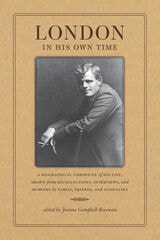
London in His Own Time
A Biographical Chronicle of His Life, Drawn from Recollections, Interviews, and Memoirs by Family, Friends, and AssociatesJeanne Reesman
University of Iowa Press, 2020
Everyone knows Jack London for his tales of adventure in Alaska and the Canadian Yukon. With his work translated into more than 100 languages, London is one of the most popular American writers in the world, alongside Mark Twain. Yet for the reader tackling The Call of the Wild or White Fang, or perhaps his most often-anthologized short story “To Build a Fire,” many misconceptions about his life confuse his legacy.
London in His Own Time is based on Jeanne Reesman’s nearly thirty-five years of archival research. The book offers surprising perspectives on Jack London’s many sides by family, friends, fellow struggling young writers, business associates, high school and college classmates, interviewers, editors, coauthors, visitors to his Sonoma Valley Beauty Ranch in Glen Ellen, California, and more.
People who have commented on and discussed the mercurial genius include Joseph Conrad, Theodore Dreiser, Upton Sinclair, Sinclair Lewis, Ambrose Bierce, and Mary Austin, as well as his half-sister, Eliza London Shepard, and his first wife, Elizabeth Bess “Bessie” Maddern London. There are a few Klondike pals he kept in touch with, and some fellow writers such as Cloudesley Johns, but many of those closest to him truly demonstrate his wide range of friends: barman Johnny Heinold; his second wife, Charmian, whom he called “Mate Woman”; his daughters, Joan and Becky; his lover, Anna Strunsky; his closest friends, especially the poet George Sterling; his former crewmate on the Snark, Martin Johnson; and his valet/memoirist, Yoshimatsu Nakata. Reesman also includes dozens of entries from Bay-area socialists, friends in Hawai’i and the South Seas, fellow war correspondents, neighbors like Luther Burbank, and his long-time editor at Macmillan, George Brett.
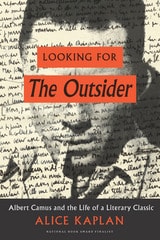
Looking for The Outsider
Albert Camus and the Life of a Literary ClassicAlice Kaplan
University of Chicago Press, 2016
How did a young man in his twenties who had never written a novel turn out a masterpiece that still grips readers more than seventy years later? With Looking for “The Outsider”, Alice Kaplan tells that story. In the process, she reveals Camus’s achievement to have been even more impressive—and more unlikely—than even his most devoted readers knew.
Born in poverty in colonial Algeria, Camus started out as a journalist covering the criminal courts. The murder trials he attended, Kaplan shows, would be a major influence on the development and themes of The Outsider. She follows Camus to France, and, making deft use of his diaries and letters, re-creates his lonely struggle with the novel in Montmartre, where he finally hit upon the unforgettable first-person voice that enabled him to break through and complete The Outsider.
Even then, the book’s publication was far from certain. France was straining under German occupation, Camus’s closest mentor was unsure of the book’s merit, and Camus himself was suffering from near-fatal tuberculosis. Yet the book did appear, thanks in part to a resourceful publisher, Gaston Gallimard, who was undeterred by paper shortages and Nazi censorship.
The initial critical reception of The Outsider was mixed, and it wasn’t until after liberation that The Outsider began its meteoric rise. As France and the rest of the world began to move out of the shadow of war, Kaplan shows, Camus’s book— with the help of an aggressive marketing campaign by Knopf for their 1946 publication of the first English translation—became a critical and commercial success, and Camus found himself one of the most famous writers in the world. Suddenly, his seemingly modest tale of alienation was being seen for what it really was: a powerful parable of the absurd, an existentialist masterpiece.
Few books inspire devotion and excitement the way The Outsider does. And it couldn’t have a better biographer than Alice Kaplan, whose books about twentieth-century French culture and history have won her legions of fans. No reader of Camus will want to miss this brilliant exploration.
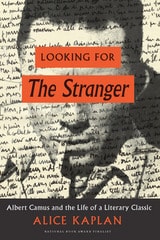
Looking for The Stranger
Albert Camus and the Life of a Literary ClassicAlice Kaplan
University of Chicago Press, 2016
How did a young man in his twenties who had never written a novel turn out a masterpiece that still grips readers more than seventy years later? With Looking for “The Stranger”, Alice Kaplan tells that story. In the process, she reveals Camus’s achievement to have been even more impressive—and more unlikely—than even his most devoted readers knew.
Born in poverty in colonial Algeria, Camus started out as a journalist covering the criminal courts. The murder trials he attended, Kaplan shows, would be a major influence on the development and themes of The Stranger. She follows Camus to France, and, making deft use of his diaries and letters, re-creates his lonely struggle with the novel in Montmartre, where he finally hit upon the unforgettable first-person voice that enabled him to break through and complete The Stranger.
Even then, the book’s publication was far from certain. France was straining under German occupation, Camus’s closest mentor was unsure of the book’s merit, and Camus himself was suffering from near-fatal tuberculosis. Yet the book did appear, thanks in part to a resourceful publisher, Gaston Gallimard, who was undeterred by paper shortages and Nazi censorship.
The initial critical reception of The Stranger was mixed, and it wasn’t until after liberation that The Stranger began its meteoric rise. As France and the rest of the world began to move out of the shadow of war, Kaplan shows, Camus’s book— with the help of an aggressive marketing campaign by Knopf for their 1946 publication of the first English translation—became a critical and commercial success, and Camus found himself one of the most famous writers in the world. Suddenly, his seemingly modest tale of alienation was being seen for what it really was: a powerful parable of the absurd, an existentialist masterpiece.
Few books inspire devotion and excitement the way The Stranger does. And it couldn’t have a better biographer than Alice Kaplan, whose books about twentieth-century French culture and history have won her legions of fans. No reader of Camus will want to miss this brilliant exploration.
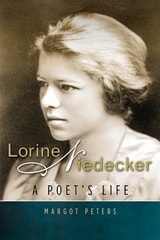
Lorine Niedecker
A Poet’s LifeMargot Peters
University of Wisconsin Press, 2011
Lorine Niedecker (1903–70) was a poet of extraordinary talent whose life and work were long enveloped in obscurity. After her death in 1970, poet Basil Bunting wrote that she was “the most interesting woman poet America has yet produced . . . only beginning to be appreciated when she died.” Her poverty and arduous family life, the isolated home in Wisconsin that provided rich imagery for her work, and her unusual acquaintances have all contributed to Niedecker’s enigmatic reputation.
Margot Peters brings Lorine Niedecker’s life out of the shadows in this first full biography of the poet. She depicts Niedecker’s watery world on Blackhawk Island (near Fort Atkinson, Wisconsin), where she was born and spent most of her life. A brief college career cut short by family obligations and an equally brief marriage were followed in 1931 by the start of a life-changing correspondence and complicated thirty-five-year friendship with modernist poet Louis Zukofsky, who connected Niedecker to a literary lifeline of distant poets and magazines. Supporting herself by turns as a hospital scrubwoman and proofreader for a dairy journal, Niedecker made a late marriage to an industrial painter, which gave her time to write and publish her work in the final decades of her life.
During her lifetime, Niedecker’s poetry was praised by a relatively small literary circle, including Zukofsky, William Carlos Williams, Robert Creeley, Denise Levetov, and Allen Ginsberg. Since her death much more of her surviving writings have been published, including a comprehensive edition of collected works and two volumes of correspondence. Through Margot Peters’s compelling biography, readers will discover Lorine Niedecker as a poet of spare and brilliant verse and a woman whose talent and grit carried her through periods of desperation and despair.
Best Special Interest Books, selected by the American Association of School Librarians
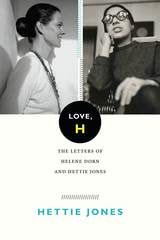
Love, H
The Letters of Helene Dorn and Hettie JonesHettie Jones
Duke University Press, 2016
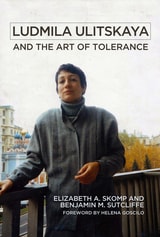
Ludmila Ulitskaya and the Art of Tolerance
Elizabeth Skomp and Benjamin M. Sutcliffe, Foreword by Helena Goscilo
University of Wisconsin Press, 2015
Drawing on interviews with Ulitskaya and sources not readily available to Western scholars, Elizabeth A. Skomp and Benjamin M. Sutcliffe explore the ethical ideals that make Ulitskaya’s novels resonate in today’s Russia—tolerance, sincerity, and diversity—and examine how she uses innovative imagery to personalize history through a focus on body and kinship. This is essential reading for anyone interested in contemporary Russian literature and society.
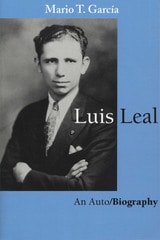
Luis Leal
An Auto/BiographyBy Mario T. García
University of Texas Press, 2000
Professor Luis Leal is one of the most outstanding scholars of Mexican, Latin American, and Chicano literatures and the dean of Mexican American intellectuals in the United States. He was one of the first senior scholars to recognize the viability and importance of Chicano literature, and, through his perceptive literary criticism, helped to legitimize it as a worthy field of study. His contributions to humanistic learning have brought him many honors, including Mexico's Aquila Azteca and the United States' National Humanities Medal.
In this testimonio or oral history, Luis Leal reflects upon his early life in Mexico, his intellectual formation at Northwestern University and the University of Chicago, and his work and publications as a scholar at the Universities of Illinois and California, Santa Barbara. Through insightful questions, Mario García draws out the connections between literature and history that have been a primary focus of Leal's work. He also elicits Leal's assessment of many of the prominent writers he has known and studied, including Mariano Azuela, William Faulkner, Octavio Paz, Carlos Fuentes, Juan Rulfo, Gabriel García Márquez, Jorge Luis Borges, Tomás Rivera, Rolando Hinojosa, Rudolfo Anaya, Elena Poniatowska, Sandra Cisneros, Richard Rodríguez, and Ana Castillo.
Lunch With a Bigot
The Writer in the WorldAmitava Kumar
Duke University Press, 2015
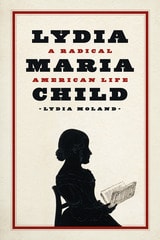
Lydia Maria Child
A Radical American LifeLydia Moland
University of Chicago Press, 2022
By 1830, Lydia Maria Child had established herself as something almost unheard of in the American nineteenth century: a beloved and self-sufficient female author. Best known today for the immortal poem “Over the River and through the Wood,” Child had become famous at an early age for spunky self-help books and charming children’s stories. But in 1833, Child shocked her readers by publishing a scathing book-length argument against slavery in the United States—a book so radical in its commitment to abolition that friends abandoned her, patrons ostracized her, and her book sales plummeted. Yet Child soon drew untold numbers to the abolitionist cause, becoming one of the foremost authors and activists of her generation.
Lydia Maria Child: A Radical American Life tells the story of what brought Child to this moment and the extraordinary life she lived in response. Through Child’s example, philosopher Lydia Moland asks questions as pressing and personal in our time as they were in Child’s: What does it mean to change your life when the moral future of your country is at stake? When confronted by sanctioned evil and systematic injustice, how should a citizen live? Child’s lifetime of bravery, conviction, humility, and determination provides a wealth of spirited guidance for political engagement today.