Results by title
914 books match the query 'Medieval' and 27 start with l
Language and Power in the Early Middle Ages
Patrick J. Geary
Brandeis University Press, 2013
Latin Classics in Medieval Hungary
Eleventh CenturyElod Nemerkényi
Central European University Press, 2004
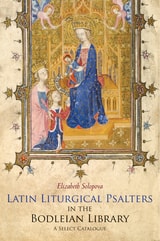
Latin Liturgical Psalters in the Bodleian Library
A Select CatalogueElizabeth Solopova
Bodleian Library Publishing, 2013
Latin Liturgical Psalters in the Bodleian Library describes more than one hundred psalters from Britain, France, the Netherlands, Germany, Austria, Italy, and Spain, ranging from the ninth to the sixteenth century and reflecting a wide range of requirements and interests. Each entry includes a description of the psalter’s contents, physical makeup, and provenance, alongside full-color images of pages, a bibliography, and tables to assist in the study of illumination and the liturgical use of psalms.
Bringing together important information on a stunning selection of little-known manuscripts held by the Bodleian Library, this volume will prove a valuable resource.
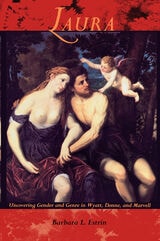
Laura
Uncovering Gender and Genre in Wyatt, Donne and MarvellBarbara L. Estrin
Duke University Press, 1994
Through close readings of the Rime sparse and the works of Wyatt, Donne, and Marvell, Estrin uncovers three Lauras: Laura-Daphne, who denies sexuality; Laura-Eve, who returns the poet’s love; and Laura-Mercury, who reinvents her own life. Estrin claims that in these three guises Laura subverts both genre and gender, thereby introducing multiple desires into the many layers of the poems. Drawing upon genre and gender theories advanced by Jean-François Lyotard and Judith Butler to situate female desire in the poem’s framework, Estrin shows how genre and gender in the Petrarchan tradition work together to undermine the stability of these very concepts.
Estrin’s Laura constitutes a fundamental reconceptualization of the Petrarchan tradition and contributes greatly to the postmodern reassessment of the Renaissance period. In its descriptions of how early modern poets formulate questions about sexuality, society and poetry, Laura will appeal to scholars of the English and Italian Renaissance, of gender studies, and of literary criticism and theory generally.
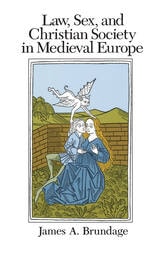
Law, Sex, and Christian Society in Medieval Europe
James A. Brundage
University of Chicago Press, 1990
"Brundage's book is consistently learned, enormously useful, and frequently entertaining. It is the best we have on the relationships between theological norms, legal principles, and sexual practice."—Peter Iver Kaufman, Church History
Laws of Early Iceland
Gragas IAndrew Dennis
University of Manitoba Press, 2007
Laws of Early Iceland
Gragas IIAndrew Dennis
University of Manitoba Press, 2000

Legal Norms, Proceures, and Exchanges in the Early Modern <i>ius commune</i?
Damian Smith
Catholic University of America Press, 2026
Letters and Orations
Cassandra Fedele
University of Chicago Press, 2000
Letters of Peter Abelard, Beyond the Personal
Peter Abelard
Catholic University of America Press, 2008
Libri Annales Pontificum Maximorum
The Origins of the Annalistic TraditionBruce W. Frier
University of Michigan Press, 1999
When first published, the volume sparked a lively debate among classicists and historians of the ancient world. Previous scholarship had often assigned the pontifical chronicle a central role not only in preserving the history of the early Republic, but also in shaping the form of the annalistic tradition. But the author showed that these assumptions rested on insecure foundations; to a large extent, they misrepresented the historiographic development of the annalistic tradition as we know it from, above all, Livy and Dionysius of Halicarnassus.
Perhaps the book's most controversial contention was that the final eighty-book edition of the chronicle, which previous scholars had dated to the later second century BCE, is more probably a massive reworking of materials in the Augustan period. This finding will likely require a considerable revision in our understanding of the development of the annalistic tradition. In the course of making these innovative arguments, the author offers extensive information about the origins of the annalistic tradition and about the early history and historiography of Rome.
Bruce W. Frier is Professor of Classics and Roman Law, and Henry King Ransom Professor of Law, University of Michigan. He has published numerous books and articles on classical and legal topics, and has won the Charles J. Goodwin Award of Merit from the American Philological Association.

Life and Thought in the Middle Ages
Robert S. Hoyt, Editor
University of Minnesota Press, 1967
Life and Thought in the Middle Ages was first published in 1967. Minnesota Archive Editions uses digital technology to make long-unavailable books once again accessible, and are published unaltered from the original University of Minnesota Press editions.
The period of the early Middle Ages - from the fourth to the eleventh centuries—used to be commonly called "the dark ages." Now that term has been discarded by scholars, who reject its implications as they recognize increasingly, the historical importance of the period. In this volume eight historians, in as many essays, discuss various aspects of the life and thought which prevailed during the centuries which extended from the time of the establishment of Germanic "successor states" in the western provinces of the Roman Empire to the appearance of some of the economic and feudal institutions which provided a basis for the civilization of the high Middle Ages.
The essay, by showing that a process of assimilation and synthesis of the Roman, Christian, and barbarian elements characterized life in the early Middle Ages, demonstrate that the significance of the period is far better indicated by words like "transition" or "transformation" than by the term "dark ages."
An essay by the late Professor Adolf Katzenellenbogen, "The Image of Christ in the Early Middle Ages," is illustrated with eighteen halftones showing examples of art of the period.
The other essays are "The Barbarian Kings of Lawgivers and Judges" by Katherine Fischer Drew; "Of Towns and Trade" by Robert S. Lopez; "The Two Levels of Feudalism" by Joseph R. Strayer; "The Life of the Silent Majority" by Lynn White, Jr; "Beowulf and Bede" by John C. McGalliard; "Viking - Tunnit - Eskimo" by the late T. J. Oleson; "The Church, Reform, and Renaissance in the Early Middle Ages" by Karl F. Morrison.
Light of the Everlasting Life
Disability and Crip Eschatology in Old English LiteratureLeah Pope Parker
University of Michigan Press, 2025
From disability metaphors to narratives structured around bodies presented as aberrant, early medieval English thoughtworlds conveyed the promise of resurrection and the hope of salvation through crip and disabled bodies. Light of the Everlasting Life argues that early medieval Christian eschatology, as manifested in Old English literary texts, was a crip eschatology: a theology of the afterlife that relied upon disabled bodies and concepts related to disability in order to convey promises of resurrection and salvation. In addition to demonstrating how literature manifested theological approaches to the afterlife, Leah Pope Parker articulates the ways of thinking about bodies and disability that were available to ordinary early medieval people, many of whom experienced their bodies in ways that resonate with what we call disability today, but who rarely appear in the historical record.
By analyzing Old English texts, including Alfredian translations, Ælfric’s saints’ lives, and poetry from the Exeter and Vercelli Books, Parker introduces novel ways of characterizing disability’s effects in literature. “Spiritual prosthesis” reveals rhetorical, narrative, and theological reliance upon disability to convey the promise of a Christian afterlife. “Systems of aberrance” emerge as a result, in which bodies marked as deviant—including disabled, monstrous, heroic, saintly, and dead bodies—form a network of embodiments that reinforce the narratives they inhabit and that of Christian salvation history. Locating crip eschatology in early medieval literature, Light of the Everlasting Life rewrites standard histories of disability, of the body, and of medieval Christian eschatology.
Likeness and Presence
A History of the Image before the Era of ArtHans Belting
University of Chicago Press, 1993
Likeness and Presence looks at the beliefs, superstitions, hopes, and fears that come into play as people handle and respond to sacred
images, and presents a compelling interpretation of the place of the image in Western history.
"A rarity within its genre—an art-historical analysis of iconography which is itself iconoclastic. . . . One of the most intellectually exciting and historically grounded interpretations of Christian iconography." —Graham Howes, Times Literary Supplement
"Likeness and Presence offers the best source to survey the facts of what European Christians put in their churches. . . . An impressively detailed contextual analysis of medieval objects." —Robin Cormack, New York Times Book Review
"I cannot begin to describe the richness or the imaginative grandeur of Hans Belting's book. . . . It is a work that anyone interested in art, or in the history of thought about art, should regard as urgent reading. It is a tremendous achievement."—Arthur C. Danto, New Republic
Lines of Thought
Branching Diagrams and the Medieval MindAyelet Even-Ezra
University of Chicago Press, 2021
These diagrams not only allow a glimpse into the thinking practices of the past but also constitute a chapter in the history of how people learned to rely on external devices—from stone to parchment to slide rules to smartphones—for recording, storing, and processing information. Beautifully illustrated throughout with previously unstudied and unedited diagrams, Lines of Thought is a historical overview of an important cognitive habit, providing a new window into the world of medieval scholars and their patterns of thinking.
Literary Speech Acts of the Medieval North
Essays Inspired by the Works of Thomas A. ShippeyEric Shane Bryan
Arizona Center for Medieval and Renaissance Studies, 2020
Lives of the Great Languages
Arabic and Latin in the Medieval MediterraneanKarla Mallette
University of Chicago Press, 2021
In this ambitious book, Karla Mallette studies the nature and behaviors of the medieval cosmopolitan languages of learning—classical Arabic and medieval Latin—as they crossed the Mediterranean. Through anecdotes of relationships among writers, compilers, translators, commentators, and copyists, Mallette tells a complex story about the transmission of knowledge in the period before the emergence of a national language system in the late Middle Ages and early modernity.
Mallette shows how the elite languages of learning and culture were only tenuously related to the languages of everyday life. These languages took years of study to master, marking the passage from intellectual childhood to maturity. In a coda to the book, Mallette speculates on the afterlife of cosmopolitan languages in the twenty-first century, the perils of monolingualism, and the ethics of language choice. The book offers insight for anyone interested in rethinking linguistic and literary tradition, the transmission of ideas, and cultural expression in an increasingly multilingual world.
Living in the Future
Sovereignty and Internationalism in the Canterbury TalesSusan Nakley
University of Michigan Press, 2017
Chaucer uses two extant national ideals, sovereignty and domesticity, to introduce the concept of an English nation into the contemporary popular imagination and reinvent an idealized England as a hallowed homeland. For nationalist thinkers, sovereignty governs communities with linguistic, historical, cultural, and religious affinities. Chaucerian sovereignty appears primarily in romantic and household contexts that function as microcosms of the nation, reflecting a pseudo-familial love between sovereign and subjects and relying on a sense of shared ownership and judgment. This notion also has deep affinities with popular and political theories flourishing throughout Europe. Chaucer’s internationalism, matched with his artistic use of the vernacular and skillful distortions of both time and space, frames a discrete sovereign English nation within its diverse interconnected world.
As it opens up significant new points of resonance between postcolonial theories and medieval ideas of nationhood, Living in the Future marks an important contribution to medieval literary studies. It will be essential for scholars of Middle English literature, literary history, literary political and postcolonial theory, and literary transnationalism.
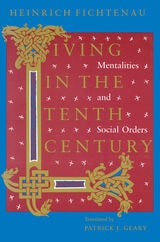
Living in the Tenth Century
Mentalities and Social OrdersHeinrich Fichtenau
University of Chicago Press, 1991
"Living in the Tenth Century resembles an anthropological field study more than a conventional historical monograph, and represents a far more ambitious attempt to see behind the surface of avowals and events than others have seriously attempted even for much more voluminously documented periods. . . . It is remarkably rich and readable."—R.I. Moore, Times Higher Education Supplement
"Fichtenau offers a magnificent survey of all the main spheres of life: the social order, the rural economy, schooling and religious belief and practice in both the secular and monastic church. His command, especially of the narrative sources, their fine nuances of attitude emotion and underlying norms, is masterly and he employs them here with all the sensitiveness and feel for the subject that have always been the hallmarks of his work."—Karl Leyser, Francia
Local Production, Administration, and Reception of Medieval Canon Law
Steven A. Schoenig
Catholic University of America Press, 2026
London
The Selden Map and the Making of a Global City, 1549-1689Robert K. Batchelor
University of Chicago Press, 2013
Lost Maps of the Caliphs
Yossef Rapoport
Bodleian Library Publishing, 2018
Love and Ethics in Gower's Confessio Amantis
Peter Nicholson
University of Michigan Press, 2005
Intended for both specialists and non-specialists, Love and Ethics addresses many of the specific concerns of current Gower criticism, provides complete translations of all foreign quotation, and guides the novice reader through Gower's Middle English.
Love and Friendship in the Western Tradition
From Plato to PostmodernityJames McEvoy
Catholic University of America Press, 2023
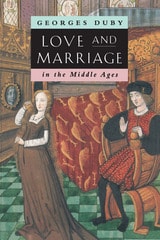
Love and Marriage in the Middle Ages
Georges Duby
University of Chicago Press, 1993
Beautifully written in Duby's characteristically nuanced and powerful style, this collection is an ideal entree into Duby's thinking about marriage and the diversities of love, spousal decorum, family structure, and their cultural context in bodily and spiritual values. Love and Marriage in the Middle Ages will be of great interest to students in social and cultural history, medieval and early modern history, and women's studies, as well as those interested in the nature of social life in the Middle Ages.
Georges Duby (1919-1996) was a member of the Académie française and for many years held the distinguished chair in medieval history at the Collège de France. His books include The Three Orders; The Age of Cathedrals; The Knight, the Lady, and the Priest; Love and Marriage in the Middle Ages; and History Continues, all published by the University of Chicago Press.
Lucian and the Latins
Humor and Humanism in the Early RenaissanceDavid Marsh
University of Michigan Press, 1998
Until now, no study has attempted to connect the Latin translators and imitators of Lucian with his wider European influence. In Lucian and the Latins, David Marsh describes how Renaissance authors rediscovered the comic writings of Lucian. He traces how Lucianic themes and structures made an essential contribution to European literature beginning with a survey of Latin translations and imitations, which gave new direction to European letters in the fifteenth and sixteenth centuries. The Lucianic dialogues of the dead and dialogues of the gods were immensely popular, despite the religious backlash of the sixteenth century. The paradoxical encomium, represented by Lucian's "The Fly" and "The Parasite," inspired so-called serious humanists like Leonardo Bruni and Guarino of Verona. Lucian's "True Story" initiated the genre of the fantastic journey, which enjoyed considerable popularity during the Renaissance age of discovery. Humanist descendants of this work include Thomas More's Utopia and much of Rabelais' Pantagruel.
Lucian and the Latins will attract readers interested in a wide variety of subjects: the classical tradition, the early Italian Renaissance, the origins of modern European literature, and the uses of humor and satire as instruments of cultural critique.
David Marsh is Professor of Italian, Rutgers University.
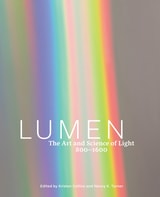
Lumen
The Art and Science of Light, 800–1600Kristen Collins
J. Paul Getty Trust, The, 2024
Through the manipulation of materials, such as gold, crystal, and glass, medieval artists created dazzling light-filled environments, evoking, in the everyday world, the layered realms of the divine. While contemporary society separates science and spirituality, the medieval world harnessed the science of light to better perceive and understand the sacred. From 800 to 1600, the study of astronomy, geometry, and optics emerged as a framework that was utilized by theologians and artists to comprehend both the sacred realm and the natural world.
Through essays written by contributors from the fields of art history, the history of science, and neuroscience, and with more than two hundred illustrations, including glimmering golden reliquaries, illuminated manuscripts, rock crystal vessels, astronomical instruments, and more, Lumen cuts across religious, political, and geographic boundaries to reveal the ways medieval Christian, Jewish, and Islamic artists, theologians, and thinkers studied light. To convey the sense of wonder created by moving light on precious materials, a number of contemporary artworks are placed in dialogue with historic objects.
This volume is published to accompany an exhibition on view at the J. Paul Getty Museum at the Getty Center from September 10 to December 8, 2024.