Results by title
138 books match the query 'Minority Studies' and 7 start with l
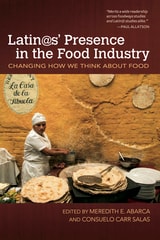
Latin@s' Presence in the Food Industry
Changing How We Think about FoodMeredith E. Abarca
University of Arkansas Press, 2016
The networks Latin@s create, the types of identities they fashion through food, and their relationship to the US food industry are analyzed to understand Latin@s as active creators of food-based communities, as distinctive cultural representations, and as professionals. This vibrant new collection acknowledges issues of labor conditions, economic politics, and immigration laws—structural vulnerabilities that certainly cannot be ignored—and strives to understand more fully the active and conscious ways that Latina@s create spaces to maneuver global and local food systems.

LatinX
Claudia Milian
University of Minnesota Press, 2019
Nationality is not enough to understand “Latin”-descended populations in the United States
LatinX has neither country nor fixed geography. LatinX, according to Claudia Milian, is the most powerful conceptual tool of the Latino/a present, an itinerary whose analytic routes incorporate the Global South and ecological devastation. Milian’s trailblazing study deploys the indeterminate but thunderous “X” as intellectual armor, a speculative springboard, and a question for our times that never stops being asked. LatinX sorts out and addresses issues about the unknowability of social realities that exceed our present knowledge.
Forerunners: Ideas First
Short books of thought-in-process scholarship, where intense analysis, questioning, and speculation take the lead
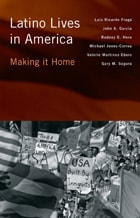
Latino Lives in America
Making It HomeLuis R. Fraga, John A. Garcia, Rodney E. Hero, Michael Jones-Correa, Valerie Martinez-Ebers and Gary Segura
Temple University Press, 2010
Latinos are the largest and fastest growing ethnic group in the United States, with increased levels of political mobilization and influence. In the timely and thoroughgoing Latino Lives in America, six prominent Latino scholars explore the profound implications of Latinos’ population growth and geographic dispersion for American politics and society, tracking key changes and continuities in Latinos' attitudes, behavior, and social experiences.
Utilizing a unique set of “narratives” from focus group interviews, supplemented with quantitative findings from the 2006 Latino National Survey, the authors provide a snapshot of Latino life in America. The Latinos interviewed provide their thoughts regarding their sense of belonging and group identification, assimilation and transnationalism, housing, education, civic engagement, and perceptions of discrimination, as well as their experiences in new destinations, where they are trying to realize the “Americano” dream.
Latino Lives in America uses these conversations and the survey data to offer both a micro and macro look at how Latinos are transforming various aspects of American politics, culture, and life and how their experiences in the United States are changing them and their families.
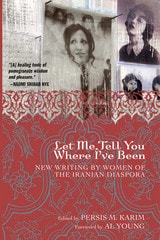
Let Me Tell You Where I've Been
New Writing by Women of the Iranian DiasporaPersis M. Karim
University of Arkansas Press, 2006
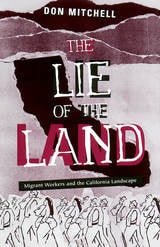
Lie Of The Land
Migrant Workers and the California LandscapeDon Mitchell
University of Minnesota Press, 1996
A hard-hitting look at the story behind California's famous scenery.
The beauty of the California landscape is integral to its place in the imagination of generations of people around the world. In The Lie of the Land, geographer Don Mitchell looks at the human costs associated with this famous scenery. Through an account of the labor history of the state, Mitchell examines the material and ideological struggles over living and working conditions that played a large part in the construction of the contemporary California landscape.
The Lie of the Land examines the way the California landscape was built on the backs of migrant workers, focusing on migratory labor and agribusiness before World War II. The book relates the historical geography of California to the processes of labor that made it, discussing not only significant strikes but also on the everyday existence of migrant workers in the labor camps, fields, and “Hoovervilles” where they lived. Mitchell places class struggle at the heart of social development, demonstrating concretely how farm workers affected their social and material environment, as well as exploring how farm owners responded to their workers’ efforts to improve their living and working conditions. Mitchell also places “reformers” in context, revealing the actual nature of their role in relation to migrant workers’ efforts—that of undermining the struggle for genuine social change. In addition, this volume captures the significance of the changing composition of the agricultural workforce, particularly in racial terms, as the class struggle evolved over a period of decades. Mitchell has written a narrative history that describes the intimate connection between landscape representations and the material form of geography. The Lie of the Land places people squarely in the middle of the landscapes they inhabit, shedding light on the complex and seemingly contradictory interactions between progressive state agents, radical workers, and California growers as they seek to remake the land in their own image.
Living Color
Race and Television in the United StatesSasha Torres, ed.
Duke University Press, 1998
Ranging across television genres, historical periods, and racial formations, Living Color—as it positions race as a key element of television’s cultural influence—moves the discussion out of a black-and-white binary and illustrates how class, gender, and sexuality interact with images of race. In addition to essays on representations of "Oriental" performers and African Americans in the early years of television, this collection also examines how the celebrity of the late MTV star Pedro Zamora countered racist and homophobic discourses; reveals how news coverage on drug use shifted from the white middle-class cocaine user in the early 1980s to the black "crack mother" of the 1990s; and takes on TV coverage of the Rodney King beating and the subsequent unrest in Los Angeles. Other essays consider O.J. Simpson’s murder trial, comparing television’s treatment of Simpson to that of Michael Jackson, Magic Johnson, Michael Jordan, and Clarence Thomas and look at the racism directed at Asian Americans by the recurring "Dancing Itos" on Jay Leno’s Tonight Show.
Living beyond the Pale
Environmental Justice and the Roma MinorityRichard Filcák
Central European University Press, 2012