Results by title
337 books match the query 'North America' and 14 start with l
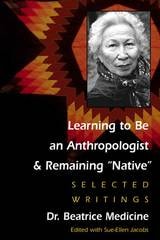
LEARNING TO BE AN ANTHROPOLOGIST
SELECTED WRITINGSDr. Beatrice Medicine
University of Illinois Press, 2001
For half a century, Dr. Medicine has defied stereotypes, racism, and sexism in her life and work while combating the reductive, patronizing views of Native Americans perpetuated by mainstream anthropologists. This retrospective collection reflects her unswerving commitment to furthering Native Americans' ability to speak for themselves and deal with the problems of contemporary life.
Learning to Be an Anthropologist and Remaining "Native" includes Medicine's clear-eyed views of assimilation, bilingual education, and the adaptive strategies by which Native Americans have conserved and preserved their ancestral languages. Her discussions of sex roles in contemporary Native American societies encompass homosexual orientation among males and females and the "warrior woman" role among Plains Indians as one of several culturally accepted positions according power and prestige to women. The volume also includes Medicine's thoughtful assessments of kinship and family structures, alcoholism and sobriety, the activism implicit in the religious ritual of the Lakota Sioux Sun Dance, and the ceremonial uses of Lakota star quilts.
"The Native American is possibly the least understood ethnic minority in contemporary American society," Medicine observes. Her decades of deliberate, generous, dedicated work have done much to reveal the workings of Native culture while illuminating the effects of racism and oppression on Indian families, kinship units, and social and cultural practices.
Labor's Outcasts
Migrant Farmworkers and Unions in North America, 1934-1966Andrew J. Hazelton
University of Illinois Press, 2022
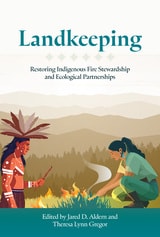
Landkeeping
Restoring Indigenous Fire Stewardship and Ecological PartnershipsJared D. Aldern
Oregon State University Press, 2026
With rising temperatures, longer summers, drought, and more wildfires occurring in the United States and Canada, there is growing interest in the impact and efficacy of Indigenous fire and cultural burning practices. Indigenous communities throughout this region known as Turtle Island have long used fire to manage their homelands. An interdisciplinary anthology that includes extensive Native views, Landkeeping provides engaging perspectives on the role of Indigenous fire and its importance to our ecological health, cultural continuity, and land-based kinship.
Indigenous-identified and non-Indigenous allies and researchers in ecology, natural resource management, forestry, ethnobotany, and Native American/Indigenous Studies demonstrate how Indigenous knowledge offers sustainable, relational approaches to land care and resilience. Each chapter builds on the idea that fire stewardship is a manifestation of Traditional Ecological Knowledge (TEK)—a system of knowledge that is rooted in place, transmitted through oral traditions and embodied practices, and guided by values such as reciprocity, responsibility, and interdependence with more-than-humans. By recognizing that fire is part of a larger cosmology, Landkeeping contributors share how fire stewardship is a path toward ecological balance, cultural revitalization, and just climate futures.

Large Carnivore Conservation
Integrating Science and Policy in the North American WestEdited by Susan G. Clark and Murray B. Rutherford
University of Chicago Press, 2014
In combining real-world examples with discussions of conservation and policy theory, Large Carnivore Conservation not only explains how traditional management approaches have failed to meet the needs of all parties, but also highlights examples of innovative, successful strategies and provides practical recommendations for improving future conservation efforts.
Las yerbas de la gente
A Study of Hispano-American Medicinal PlantsKaren Cowan Ford
University of Michigan Press, 1975
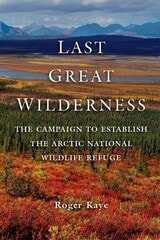
Last Great Wilderness
The Campaign to Establish the Arctic National Wildlife RefugeRoger Kaye
University of Alaska Press, 2006
Last Great Wilderness chronicles their fight and that of their compatriots, tracing the transformation of this little-known expanse of mountains, forest, and tundra into a symbolic landscape embodying the ideals and aspirations that led to passage of the Wilderness Act in 1964.
Literacy and Historical Development
A ReaderEdited by Harvey J. Graff
Southern Illinois University Press, 2007
Representing three decades of research, Literacy and Historical Development: A Reader presents some of the most important historical scholarship on literacy in Europe and the United States. The approaches, research, and conclusions reflected in this collection of fifteen essays has changed how historians and many others conceptualize literacy and represents a body of scholarship that is transforming both contemporary and historical literacy theories.
In this revised and expanded edition of the groundbreaking volume Literacy and Social Development in the West, editor Harvey J. Graff provides a new introduction and nine new essays by nationally and internationally renowned contributors from a range of disciplines. Replacing an unquestioned certainty that literacy’s powers are universal, independent, and determinative, Graff brings together studies that support new concepts, contending that the importance and influences of literacy depend on specific social and historical contexts, the impacts of literacy are mediated and restricted, the effects of literacy are social and particular, and the role of literacy must be understood within the burgeoning array of communication technologies.
Lithic Analysis and Cultural Inference
A Paleo-Indian CaseEdwin N. Wilmsen
University of Arizona Press, 1970

Logical Empiricism in North America
Gary L. Hardcastle
University of Minnesota Press, 2003
This latest volume in the longest-standing and most influential series in the field of the philosophy of science extends and expands on the discipline’s recent historical turn. These essays take up the historical, sociological, and philosophical questions surrounding the particular intellectual movement of logical empiricism—both its emigration from Europe to North America in the 1930s and 1940s and its development in North America through the 1940s and 1950s. With an introduction placing them in their philosophical and historical context, these essays bear witness to the fact that the history of the philosophy of science, far more than a mere repository of anecdote and chronology, might be able to produce a decisive transformation in the philosophy of science itself.
Contributors: Richard Creath, Arizona State U; Michael Friedman, Stanford U; Rudolf Haller, U of Graz; Don Howard, Notre Dame; Diederick Raven, U of Utrecht; George Reisch; Thomas Ricketts, Northwestern U; Friedrich K. Stadler, U of Vienna; Thomas E. Uebel, U of Manchester.
Long-Term Factors in American Economic Growth
Edited by Stanley L. Engerman and Robert E. Gallman
University of Chicago Press, 1986
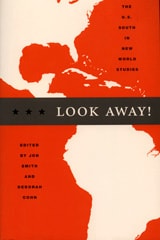
Look Away!
The U.S. South in New World StudiesJon Smith and Deborah Cohn, eds.
Duke University Press, 2004
Look Away! presents work by respected scholars in comparative literature, American studies, and Latin American studies. The contributors analyze how writers—including the Martinican Edouard Glissant, the Cuban-American Gustavo Pérez Firmat, and the Trinidad-born, British V. S. Naipaul—have engaged with the southern United States. They explore William Faulkner’s role in Latin American thought and consider his work in relation to that of Gabriel García Márquez and Jorge Luis Borges. Many essays re-examine major topics in southern U.S. culture—such as race, slavery, slave resistance, and the legacies of the past—through the lens of postcolonial theory and postmodern geography. Others discuss the South in relation to the U.S.–Mexico border. Throughout the volume,the contributors consistently reconceptualize U.S. southern culture in a way that acknowledges its postcolonial status without diminishing its distinctiveness.
Contributors. Jesse Alemán, Bob Brinkmeyer, Debra Cohen, Deborah Cohn, Michael Dash, Leigh Anne Duck, Wendy Faris, Earl Fitz, George Handley, Steve Hunsaker, Kirsten Silva Gruesz, Dane Johnson, Richard King, Jane Landers, John T. Matthews, Stephanie Merrim, Helen Oakley, Vincent Pérez, John-Michael Rivera, Scott Romine, Jon Smith, Ilan Stavans, Philip Weinstein, Lois Parkinson Zamora
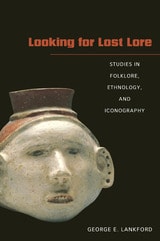
Looking for Lost Lore
Studies in Folklore, Ethnology, and IconographyGeorge E. Lankford
University of Alabama Press, 2008
Lulu Linear Punctated
Essays in Honor of George Irving QuimbyEdited by Robert C. Dunnell, Donald K. Grayson, and Walter N. Koelz
University of Michigan Press, 1983
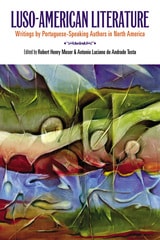
Luso-American Literature
Writings by Portuguese-Speaking Authors in North AmericaMoser, Robert H
Rutgers University Press, 2011