Results by title
212 books match the query 'Peru' and 9 start with l
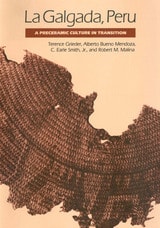
La Galgada, Peru
A Preceramic Culture in TransitionBy Terence E. Grieder, Alberto Bueno Mendoza, C. Earle Smith, Jr., and Robert M. Malina
University of Texas Press, 1988
Excavations over many years in the Peruvian Andes and coastal regions have revealed that the village settlements on the west coast of South America were one of the early centers of world civilization. One of these settlements, La Galgada, flourished from 3000 B.C. to 1700 B.C. Its extraordinarily complete cultural remains help to reconstruct a picture of human life, health, activities, and trade relations as they were 4,000 years ago and allow us to enter the mental and artistic life of this early civilization.
The location of La Galgada on Peru’s Tablachaca River midway between the highlands and the coast caused it to be influenced by the culture of both those regions. The remains found at La Galgada tie together important textile collections from the coastal region with important architectural remains from the Andean highland to give a picture of a complete preceramic culture in ancient Peru. Numerous illustrations provide an exciting visual catalog of the finds at La Galgada. What also makes La Galgada such a significant site are the changes in art and architecture that can be documented in considerable detail from about 2500 B.C. to about 1700 B.C. During that period, La Galgada and the other preceramic communities in northern Peru were transformed with a rapidity that must have seemed shocking and revolutionary to their inhabitants. These changes record the first appearance of the powerful and intimidating Chavín culture that was to dominate the region for the next thousand years. They also allow us to watch a people change and adapt as they try to cope with the powerful pressure of technical and social development in their region.
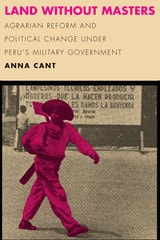
Land without Masters
Agrarian Reform and Political Change under Peru's Military GovernmentBy Anna Cant
University of Texas Press, 2021
In 1969, Juan Velasco Alvarado’s military government began an ambitious land reform program in Peru, transferring holdings from large estates to peasant cooperatives. Fifty years later this reform remains controversial: critics claim it unjustly expropriated land and ruined the Peruvian economy, while supporters emphasize its success in addressing rural inequality and exploitation.
Moving beyond agricultural policy to offer a fresh perspective on the agrarian reform, Land without Masters shows how ideological assumptions and state interventions surrounding the reform transformed Peru’s political culture and social fabric. Drawing on fieldwork in three different regions, Anna Cant shows how the government adapted its discourse and interventions to the local context while using the reform as a platform for nation-building. This comparative approach reveals how local actors shaped the regional impact of the agrarian reform and highlights the new forms of agency that emerged, including that of marginalized peasants who helped forge a new social, cultural, and political landscape.
Making novel use of both visual and cultural sources, this book is a fascinating look at how the agrarian reform process permanently altered the relationship between rural citizens and the national government—and how it continues to resonate in Peruvian politics today.
Landowners in Colonial Peru
By Keith A. Davies
University of Texas Press, 1984
In 1540 a small number of Spaniards founded the city of Arequipa in southwestern Peru. These colonists, later immigrants, and their descendants devoted considerable energy to exploiting the surrounding area. At first, like many other Spaniards in the Americas, they relied primarily on Indian producers; by the late 1500s they had acquired land and established small farms and estates. This, the first study to examine the agrarian history of a region in South America from the mid-sixteenth through late-seventeenth century, demonstrates that colonials exploited the countryside as capitalists. They ran their rural enterprises as efficiently as possible, expanded their sources of credit and labor, tapped widespread markets, and lobbied strenuously to influence the royal government. The reasons for such behavior have seldom been explored beyond the colonists’ evident need to sustain themselves and their dependents.
Arequipa’s case suggests another fundamental cause of capitalist behavior in colonial South America: rural wealth was inextricably tied to the colonists’ desire to reinforce and improve their stature. Arequipa’s Spanish families of the upper and middle social levels consistently employed land and its proceeds to attract prominent spouses, to acquire prestigious political and military posts, and to enhance their standing by becoming benefactors of the Church. They rarely lost sight of the crucial role that wealth played in their lives. Thus, when the region’s economy flourished, as it did during the late 1500s, they expanded and improved their holdings. When it faltered at the beginning of the next century, they made every effort to retain properties, even fragmenting land to accommodate family members and new spouses. Unlike patterns sometimes suggested for Spanish America, many Arequipan colonial families possessed land and retained it over many generations. Neither the increasingly rich Church nor a few powerful persons managed to build up extensive estates.
Landowners in Colonial Peru explains how and why rural property became so important. It emphasizes both the capitalist bent of Hispanics and the manner in which wealth served social aspirations. The approach makes clear that many of the economic and social characteristics so often attributed to eighteenth- and nineteenth-century Latin Americans were present from the early Colonial period.
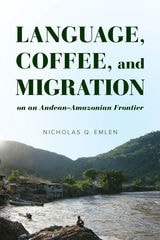
Language, Coffee, and Migration on an Andean-Amazonian Frontier
Nicholas Q. Emlen
University of Arizona Press, 2020
The rich-tasting Peruvian coffee in your cup is the distillate of an intensely dynamic Amazonian frontier, where native Matsigenkas, state agents, and migrants from the rural highlands are carving the forest into farms. Language, Coffee, and Migration on an Andean-Amazonian Frontier shows how people of different backgrounds married together and blended the Quechua, Matsigenka, and Spanish languages in their day-to-day lives. This frontier relationship took place against a backdrop of deforestation, cocaine trafficking, and destructive natural gas extraction.
Nicholas Q. Emlen’s rich account—which takes us to remote Amazonian villages, dusty frontier towns, roadside bargaining sessions, and coffee traders’ homes—offers a new view of settlement frontiers as they are negotiated in linguistic interactions and social relationships. This interethnic encounter was not a clash between distinct groups but rather an integrated network of people who adopted various stances toward each other as they spoke.
The book brings together a fine-grained analysis of multilingualism with urgent issues in Latin America today, including land rights, poverty, drug trafficking, and the devastation of the world’s largest forest. It offers a timely on-the-ground perspective on the agricultural colonization of the Amazon, which has triggered an environmental emergency threatening the future of the planet.
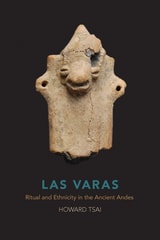
Las Varas
Ritual and Ethnicity in the Ancient AndesHoward Tsai
University of Alabama Press, 2020
Recent popular discourse on nationalism and ethnicity assumes that humans by nature prefer “tribalism,” as if people cannot help but divide themselves along lines of social and ethnic difference. Research from anthropology, history, and archaeology, however, shows that individuals actively construct cultural and social ideologies to fabricate the stereotypes, myths, and beliefs that separate “us” from “them.” Archaeologist Howard Tsai and his team uncovered a thousand-year-old village in northern Peru where rituals were performed to recognize and reinforce ethnic identities.
This site—Las Varas—is located near the coast of Peru in a valley leading into the Andes. Excavations revealed a western entrance to Las Varas for those arriving from the coast and an eastern entryway for those coming from the highlands. Rituals were performed at both of these entrances, indicating that the community was open to exchange and interaction, yet at the same time controlled the flow of people and goods through ceremonial protocols. Using these checkpoints and associated rituals, the villagers of Las Varas were able to maintain ethnic differences between themselves and visitors from foreign lands.
Las Varas: Ritual and Ethnicity in the Ancient Andes reveals a rare case of finding ethnicity relying solely on archaeological remains. In this monograph, data from the excavation of Las Varas are analyzed within a theoretical framework based on current understandings of ethnicity. Tsai’s method, approach, and inference demonstrate the potential for archaeologists to discover how ethnic identities were constructed in the past, ultimately making us question the supposed naturalness of tribal divisions in human antiquity.
Late Intermediate Occupation at Cerro Azul, Perú, A Preliminary Report
Joyce Marcus
University of Michigan Press, 1987
Legacies of War
Violence, Ecologies, and KinKimberly Theidon
Duke University Press, 2022
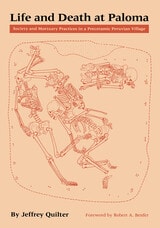
Life And Death At Paloma
Practices In Peruvian VillageJeffrey Quilter
University of Iowa Press, 1989
Living with the Dead in the Andes
Edited by Izumi Shimada and James L. Fitzsimmons
University of Arizona Press, 2015
Living with the Dead in the Andes considers recent research by archaeologists, bioarchaeologists, ethnographers, and ethnohistorians whose work reveals the diversity and complexity of the dead-living interaction. The book’s contributors reap the salient results of this new research to illuminate various conceptions and treatments of the dead: “bad” and “good” dead, mummified and preserved, the body represented by art or effigies, and personhood in material and symbolic terms.
Death does not end or erase the emotional bonds established in life, and a comprehensive understanding of death requires consideration of the corpse, the soul, and the mourners. Lingering sentiment and memory of the departed seems as universal as death itself, yet often it is economic, social, and political agendas that influence the interactions between the dead and the living.
Nine chapters written by scholars from diverse countries and fields offer data-rich case studies and innovative methodologies and approaches. Chapters include discussions on the archaeology of memory, archaeothanatology (analysis of the transformation of the entire corpse and associated remains), a historical analysis of postmortem ritual activities, and ethnosemantic-iconographic analysis of the living-dead relationship. This insightful book focuses on the broader concerns of life and death.