Results by title
1148 books match the query 'Political Ideologies' and 33 start with l
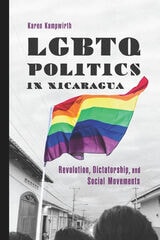
LGBTQ Politics in Nicaragua
Revolution, Dictatorship, and Social MovementsKaren Kampwirth
University of Arizona Press, 2022
Karen Kampwirth is a renowned scholar of the Nicaraguan Revolution, who has been writing at the intersection of gender and politics for decades. In this chronological telling of the last fifty years of political history in Nicaragua, Kampwirth deploys a critical new lens: understanding politics from the perspective of the country’s LGBTQ community. Kampwirth details the gay and lesbian guerrillas in the 1960s and 1970s, Nicaragua’s first openly gay television wizard in the 1980s, and the attempts by LGBTQ revolutionaries to create a civil rights movement and the subsequent squashing of that movement by the ruling Sandinista party. She analyzes the shifting political alliances, the rise of strong feminist and LGBTQ movements in Nicaragua, and the attempts by the administration of Daniel Ortega to co-opt and control these movements.
Ultimately, this is a story of struggle and defeat, progress and joy. This timely book provides a well-documented review of LGBTQ politics in modern Nicaragua, helping us to see the Sandinista Revolution and its ongoing aftermath in a new light.
La Grande Italia
The Rise and Fall of the Myth of the Nation in the Twentieth CenturyEmilio Gentile
University of Wisconsin Press, 2008
Gentile’s definition of “Italians” encompasses the whole range of political, cultural, and social actors: Liberals and Catholics, Monarchists and Republicans, Fascists and Socialists. La Grande Italia presents a sweeping study of the development of Italian national identity in all its incarnations throughout the twentieth century. This important contribution to the study of modern Italian nationalism and the ambition to achieve a “great Italy” between the unification of Italy and the advent of the Italian Republic will appeal to anyone interested in modern European history, Fascism, and nationalism.
Best Books for Special Interests, selected by the American Association of School Librarians, and Best Books for Regional General Interests, selected by the Public Library Association

Labor and Democracy in Namibia, 1971–1996
Gretchen Bauer
Ohio University Press, 1998
In this compelling study of labor and nationalism during and after Namibia's struggle for liberation, Gretchen Bauer addresses the very difficult task of consolidating democracy in an independent Namibia. Labor and Democracy in Namibia, 1971-1996 argues that a vibrant and autonomous civil society is crucial to the consolidation of new democracies, and it identifies trade unions, in particular, as especially important organizations of civil society. In Namibia, however, trade unions have emerged from the liberation struggle and the first years of independence in a weakened state. Dr. Bauer gives a lucid explanation for this phenomenon by tracing the origins and evolution of the trade unions in Namibia and discusses the implications thereof for the future of democracy in Namibia.
Based on material not widely available before independence in 1990, this study takes a critical look at the nationalist movement in Namibia. Through the use of dozens of interviews with political leaders, trade unionists, community activists, and others, Bauer offers the controversial suggestion that there are many within the nationalist movement (now the ruling party in government) who would rather not see a strong trade union movement (or any other potential rival) emerge in independent Namibia.
Labor in State-Socialist Europe, 1945–1989
Contributions to a History of WorkMarsha Siefert
Central European University Press, 2020
Labor regimes under communism in East-Central Europe were complex, shifting, and ambiguous. This collection of sixteen essays offers new conceptual and empirical ways to understand their history from the end of World War II to 1989, and to think about how their experiences relate to debates about labor history, both European and global.
The authors reconsider the history of state socialism by re-examining the policies and problems of communist regimes and recovering the voices of the workers who built them. The contributors look at work and workers in Albania, Bulgaria, Czechoslovakia, the German Democratic Republic, Hungary, Poland, Romania, and Yugoslavia. They explore the often contentious relationship between politics and labor policy, dealing with diverse topics including workers’ safety and risks; labor rights and protests; working women’s politics and professions; migrant workers and social welfare; attempts to control workers’ behavior and stem unemployment; and cases of incomplete, compromised, or even abandoned processes of proletarianization. Workers are presented as active agents in resisting and supporting changes in labor policies, in choosing allegiances, and in defining the very nature of work.
Labour's Civil Wars
How Infighting has Kept the Left from Power (and What Can Be Done About It)Patrick Diamond and Giles Radice
Haus Publishing, 2023
The biblical adage that “if a house be divided against itself, that house cannot stand” remains sound theological advice. It is also essential counsel for any political party that aspires to win elections. When a party is riven with division, the public does not know what it stands for. Though both major UK parties have been subject to internal conflict over the years, the Labour Party has been more prone to damaging splits. The divide exposed by the Corbyn insurgency is only the most recent example in almost a century of destructive infighting. Indeed, it has often seemed as though Labour has been more adept at fighting itself than in defeating the Tory party. This book examines the history of Labour’s civil wars and the underlying causes of the party’s schisms, from the first split of 1931, engineered by Ramsay MacDonald, to the ongoing battle for the future between the incumbent, Keir Starmer, and those who fundamentally altered the party’s course under his predecessor, Jeremy Corbyn.
Late Enlightenment
Emergence of the Modern 'National Idea'Marius Turda
Central European University Press, 2006
Law and Illiberalism
Edited by Austin Sarat, Lawrence Douglas, and Martha Merrill Umphrey
University of Massachusetts Press, 2022
Does the law shield citizens from authoritarian regimes? Are the core beliefs of classical liberalism—namely the rights of all individuals and constraints on state power—still protected by law? Liberalism and its expansion of rights could not exist without the legal system, and unsurprisingly, many scholars have explored the relationship between law and liberalism. However, the study of law and illiberalism is a relatively recent undertaking, a project that takes on urgency in light of the rise of authoritarian powers, among them Donald Trump’s administration, Viktor Orban’s Hungary, Recep Erdogan’s Turkey, and Jair Bolsanoro’s Brazil.
In this volume, six penetrating essays explore the dynamics of the law and illiberal quests for power, examining the anti-liberalism of neoliberalism; the weaponization of “free speech”; the role of the administrative state in current crises of liberal democracy; the broad and unstoppable assault on facts, truth, and reality; and the rise of conspiracism leading up to the Capitol insurrection. In addition to the editors, contributors include Sharon Krause, Elizabeth Anker, Jeremy Kessler, Lee McIntyre, and Nancy Rosenblum.
Law and the Economy in a Young Democracy
India 1947 and BeyondTirthankar Roy and Anand V. Swamy
University of Chicago Press, 2022
Economists have long lamented how the inefficiency of India's legal system undermines the country’s economic capacity. How has this come to be? The prevailing explanation is that the postcolonial legal system is understaffed and under-resourced, making adjudication and contract enforcement slow and costly.
Taking this as given, Law and the Economy in a Young Democracy examines the contents and historical antecedents of these laws, including how they have stifled economic development. Economists Roy and Swamy argue that legal evolution in independent India has been shaped by three factors: the desire to reduce inequality and poverty; the suspicion that market activity, both domestic and international, can be detrimental to these goals; and the strengthening of Indian democracy over time, giving voice to a growing fraction of society, including the poor.
Weaving the story of India's heralded economic transformation with its social and political history, Roy and Swamy show how inadequate legal infrastructure has been a key impediment to the country's economic growth during the last century. A stirring and authoritative history of a nation rife with contradictions, Law and the Economy in a Young Democracy is essential reading for anyone seeking to understand India's current crossroads—and the factors that may keep its dreams unrealized.
Learning to Change
The Experience of Transforming Education in South East EuropeTerrice Bassler
Central European University Press, 2005

Leave Me Alone and I'll Make You Rich
How the Bourgeois Deal Enriched the WorldDeirdre Nansen McCloskey and Art Carden
University of Chicago Press, 2020
For readers looking for a distillation of McCloskey’s magisterial work, Leave Me Alone and I’ll Make You Rich is what you’ve been waiting for. In this lively volume, McCloskey and the economist and journalist Carden bring together the trilogy’s key ideas and its most provocative arguments. The rise of the west, and now the rest, is the story of the rise of ordinary people to a dignity and liberty inspiring them to have a go. The outcome was an explosion of innovation after 1800, and a rise of real income by an astounding 3,000 percent. The Great Enrichment, well beyond the conventional Industrial Revolution, did not, McCloskey and Carden show, come from the usual suspects, capital accumulation or class struggle. It came from the idea of economic liberty in Holland and the Anglosphere, then Sweden and Japan, then Italy and Israel and China and India, an idea that bids fair in the next few generations to raise up the wretched of the earth. The original shift to liberalism arose from 1517 to 1789 from theological and political revolutions in northwest Europe, upending ancient hierarchies. McCloskey and Carden contend further that liberalism and “innovism” made us better humans as well as richer ones. Not matter but ideas. Not corruption but improvement.
Leave Me Alone and I’ll Make You Rich draws in entertaining fashion on history, economics, literature, philosophy, and popular culture, from growth theory to the Simpsons. It is the perfect introduction for a broad audience to McCloskey’s influential explanation of how we got rich. At a time when confidence in the economic system is under challenge, the book mounts an optimistic and persuasive defense of liberal innovism, and of the modern world it has wrought.
Left Populism in Europe
Lessons from Jeremy Corbyn to PodemosMarina Prentoulis
Pluto Press, 2021
Legacies of Losing in American Politics
Jeffrey K. Tulis and Nicole Mellow
University of Chicago Press, 2017
With Legacies of Losing in American Politics, Jeffrey K. Tulis and Nicole Mellow rethink three pivotal moments in American political history: the founding, when anti-Federalists failed to stop the ratification of the Constitution; the aftermath of the Civil War, when President Andrew Johnson’s plan for restoring the South to the Union was defeated; and the 1964 presidential campaign, when Barry Goldwater’s challenge to the New Deal order was soundly defeated by Lyndon B. Johnson. In each of these cases, the very mechanisms that caused the initial failures facilitated their eventual success. After the dust of the immediate political defeat settled, these seemingly discredited ideas and programs disrupted political convention by prevailing, often subverting, and occasionally enhancing constitutional fidelity. Tulis and Mellow present a nuanced story of winning and losing and offer a new understanding of American political development as the interweaving of opposing ideas.
Legitimating Nationalism
Political Identity in Russia's Ethnic RepublicsKatie L. Stewart
University of Wisconsin Press, 2024
Even in the current autocratic system, however, Russia’s multiethnic nature and fractured political history mean that not all political symbols work the same way everywhere; not every story finds the same audience in the same way. The message may emanate from Moscow, but regional actors—including local governments, civic organizations, and cultural institutions—have some agency in how they spread the message: some regionalization of identity work is permitted to ensure that Russian national symbols and narratives resonate with people, and to avoid protest. This book investigates how nation building works on the ground through close studies of three of Russia’s ethnic republics: Karelia, Tatarstan, and Buryatia. Understanding how the project of legitimating nationalism, in support of a unified country and specifically Putin’s regime, works in practice offers crucial context in understanding the shape and story of contemporary Russia.
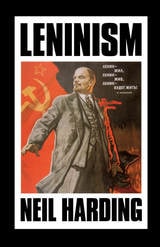
Leninism
Neil Harding
Duke University Press, 1996
Rather than tracing the roots of Leninism to the details of Lenin’s biography, Harding shows how it emerged as a revolutionary Marxist response to the First World War and to the perceived treachery—the support of that war—by social democratic leaders. The economics, politics, and philosophy of Leninism, he argues, were rapidly theorized between 1914 and 1918 and deeply imprinted with the peculiarities of the wartime experience. Its complementary metaphysics of history and science was as intrinsic to its confidence and sureness of purpose as it was to its contempt for democratic practice and tolerance. But, as Harding also shows, although Leninism articulated a complex and coherent critique of capitalist civilization and held a powerful appeal to a variety of constituencies, it was itself caught in a timewarp that fatally limited its capacity to adapt. This book will engage not only Russian and Soviet specialists, but also readers concerned with the varieties of twentieth-century socialism.

Leon Trotsky
Writings in ExileLeon Trotsky
Pluto Press, 2012
Leon Trotsky was a key political figure of the twentieth century – a leader of the Russian Revolution, founder of the Red Army, author of books on literature, history, morality and politics.
Leon Trotsky: Writings in Exile contains some of his most insightful and penetrating works. Exiled and isolated by Stalin, Trotsky used the only weapon he had left – words. In these writings he defends the 1917 revolution, warns prophetically of fascism and analyses anti-colonial movements in the global south.
This collection gives a sense of the real Trotsky – passionate, humanist, Marxist. It will introduce the writings of one of history's great revolutionaries to a new generation.
Letterpress Revolution
The Politics of Anarchist Print CultureKathy E. Ferguson
Duke University Press, 2023
Liberal Education and Citizenship in a Free Society
Justin Buckley Dyer
University of Missouri Press, 2023
With Liberal Education and Citizenship in a Free Society, a collection of 19 original essays, editors Justin Dyer and Constantine Vassiliou present the work of a diverse group of scholars to assess the value of a liberal arts education in the face of market, technological, cultural, and political forces shaping higher learning today.
Liberalism After Communism
The Implications of the 1993 Elections to the Federal AssemblyJerzy Szacki
Central European University Press, 1995
Liberalism in Modern Times
Ernest Gellner
Central European University Press, 1996
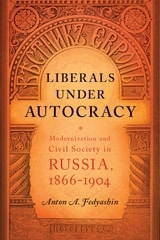
Liberals under Autocracy
Modernization and Civil Society in Russia, 1866–1904Anton A. Fedyashin
University of Wisconsin Press, 2012
With its rocky transition to democracy, post-Soviet Russia has made observers wonder whether a moderating liberalism could ever succeed in such a land of extremes. But in Liberals under Autocracy, Anton A. Fedyashin looks back at the vibrant Russian liberalism that flourished in the country’s late imperial era, chronicling its contributions to the evolution of Russia’s rich literary culture, socioeconomic thinking, and civil society.
For five decades prior to the revolutions of 1917, The Herald of Europe (Vestnik Evropy) was the flagship journal of Russian liberalism, garnering a large readership. The journal articulated a distinctively Russian liberal agenda, one that encouraged social and economic modernization and civic participation through local self-government units (zemstvos) that defended individual rights and interests—especially those of the peasantry—in the face of increasing industrialization. Through the efforts of four men who turned The Herald into a cultural nexus in the imperial capital of St. Petersburg, the publication catalyzed the growing influence of journal culture and its formative effects on Russian politics and society.
Challenging deep-seated assumptions about Russia’s intellectual history, Fedyashin’s work casts the country’s nascent liberalism as a distinctly Russian blend of self-governance, populism, and other national, cultural traditions. As such, the book stands as a contribution to the growing literature on imperial Russia's nonrevolutionary, intellectual movements that emphasized the role of local politics in both successful modernization and the evolution of civil society in an extraparliamentary environment.
Liberty and the Search for Identity
Ivan Zoltan Denes
Central European University Press, 2006
Lies, Passions, and Illusions
The Democratic Imagination in the Twentieth CenturyFrançois Furet
University of Chicago Press, 2014
This conversation would be, sadly, Furet’s last—he died while Ricoeur was completing his edits. Ricoeur did not want to publish his half without Furet’s approval, so what remains is Furet’s alone, an astonishingly cohesive meditation on the political passions of the twentieth century. With strokes at once broad and incisive, he examines the many different trajectories that nations of the West have followed over the past hundred years. It is a dialogue with history as it happened but also as a form of thought. It is a dialogue with his critics, with himself, and with those major thinkers—from Tocqueville to Hannah Arendt—whose ideas have shaped our understanding of the tragic dramas and upheavals of the modern era. It is a testament to the crucial role of the historian, a reflection on how history is made and lived, and how the imagination is a catalyst for political change. Whether new to Furet or deeply familiar with his work, readers will find thought-provoking assessments on every page, a deeply moving look back at one of the most tumultuous periods of history and how we might learn and look forward from it.
Limited Government and the Bill of Rights
Patrick M. Garry
University of Missouri Press, 2012
What was the intended purpose and function of the Bill of Rights? Is the modern understanding of the Bill of Rights the same as that which prevailed when the document was ratified? In Limited Government and the Bill of Rights, Patrick Garry addresses these questions. Under the popular modern view, the Bill of Rights focuses primarily on protecting individual autonomy interests, making it all about the individual. But in Garry’s novel approach, one that tries to address the criticisms of judicial activism that have resulted from the Supreme Court’s contemporary individual rights jurisprudence, the Bill of Rights is all about government—about limiting the power of government. In this respect, the Bill of Rights is consistent with the overall scheme of the original Constitution, insofar as it sought to define and limit the power of the newly created federal government.
Garry recognizes the desire of the constitutional framers to protect individual liberties and natural rights, indeed, a recognition of such rights had formed the basis of the American campaign for independence from Britain. However, because the constitutional framers did not have a clear idea of how to define natural rights, much less incorporate them into a written constitution for enforcement, they framed the Bill of Rights as limited government provisions rather than as individual autonomy provisions. To the framers, limited government was the constitutional path to the maintenance of liberty. Moreover, crafting the Bill of Rights as limited government provisions would not give the judiciary the kind of wide-ranging power needed to define and enforce individual autonomy.
With respect to the application of this limited government model, Garry focuses specifically on the First Amendment and examines how the courts in many respects have already used a limited government model in their First Amendment decision-making. As he discusses, this approach to the First Amendment may allow for a more objective and restrained judicial role than is often applied under contemporary First Amendment jurisprudence.
Limited Government and the Bill of Rights will appeal to anyone interested in the historical background of the Bill of Rights and how its provisions should be applied to contemporary cases, particularly First Amendment cases. It presents an innovativetheory about the constitutional connection between the principle of limited government and the provisions in the Bill of Rights.
Linkages of Financial Groups in the European Union
Financial Conglomeration Developments in the Old and New Member StatesIngrid Ulst
Central European University Press, 2005
Lithuanian Social Democracy in Perspective, 1893-1914
Leonas Sabaliunas
Duke University Press, 1990
But Sabaliunas also considers such partners and rivals as the Jewish Bund, the Polish Socialist Party, the Social Democracy of the Kingdom of Poland and Lithuania, and the Russian Social Democratic Labor Party. He focuses on the appearance of socialist parties at the local level, the politics of assertive behavior during the Russian Revolution of 1905–1906, the nature of interparty relations, and efforts to promote party unity. In particular, he investigates the projected relationship between Russia and its subject nationalities—a cardinal concern today as the Baltic peoples attempt to distance themselves from their Russian neighbors.
Sabaliunas clarifies current massive Lithuanian opposition to Moscow and to its version of socialism. He stresses that in Lithuania the socialist movement from the beginning not only sought solutions to social and economic problems but also addressed issues of ethnic and national interest, especially the question of national sovereignty.
Living Ideology in Cuba
Socialism in Principle and PracticeKatherine A. Gordy
University of Michigan Press, 2015
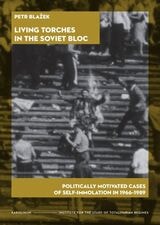
Living Torches in the Soviet Bloc
Politically Motivated Cases of Self-Immolation, 1966–1989Petr Blažek
Karolinum Press, 2025
Living Torches in the Soviet Bloc presents the lives of those who chose self-immolation as a radical form of protest against the political oppression of Communist regimes in the Soviet Bloc between 1966–1989. While more than fifty such cases were identified during the relevant period, Petr Blažek focuses here on the twenty-one cases in which at least partial political motivation is apparent from historical sources.
Many of the cases of the “living torches” were a radical response to the August 1968 occupation of Czechoslovakia by the armies of five Warsaw Pact member states and the suppression of the Prague Spring. After January 1969, the self-immolation of Jan Palach evoked a large wave of followers not only in Czechoslovakia, but also abroad, and greatly influenced other cases of “living torches” which continued to appear in the Soviet Bloc until the end of the 1980s.
Although the conditions in the Soviet Bloc states were sometimes fundamentally different, these cases of self-immolation across states share a common disapproval of the totalitarian form of rule. They were often drastic responses from members of occupied nations, most of whom were Czechs, Lithuanians, Ukrainians, and Poles, who rejected the enforced Communist regime and Soviet military presence. Some decided to sacrifice their lives to wake others from indifference and resignation. Even several decades later, their shocking acts not only provoke, but also lead us to reflect on fundamental questions of human life.

Living the High Life in Minsk
Russian Energy Rents, Domestic Populism and Belarus' Impending CrisisMargarita M. Balmaceda
Central European University Press, 2014
Living the High Life in Minsk looks at the sources of stability and instability in post-Soviet authoritarian states through the case study of President Lukashenka’s firm hold on power in Belarus. In particular, it seeks to understand the role of energy relations, policies, and discourses in the maintenance of this power. The central empirical question Balmaceda seeks to answer is what has been the role of energy policies in the maintenance of Lukashenka’s power in Belarus? In particular, it analyzes the role of energy policies in the management of Lukashenka’s relationship with three constituencies crucial to his hold on power: Russian actors, the Belarusian nomenklatura, and the Belarusian electorate.
In terms of foreign relations, the book focuses on the factors explaining Lukashenka’s ability to project Belarus’ power in its relationship with Russia in such a way as to compensate for its objective high level of dependency, assuring high levels of energy subsidies and rents continuing well beyond the initial worsening of the relationship in c. 2004. In terms of domestic relations, Balmaceda examines Lukashenka’s specific use of those energy rents in such a way as to assure the continuing support of both the Belarusian nomenklatura and the Belarusian electorate.
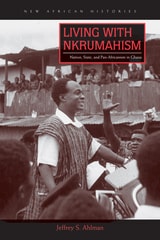
Living with Nkrumahism
Nation, State, and Pan-Africanism in GhanaJeffrey S. Ahlman
Ohio University Press, 2017
Love, Anarchy, & Emma Goldman
A BiographyFalk, Candace
Rutgers University Press, 1990
Love, Anarchy, & Emma Goldman
A BiographyCandace Serena Falk
Rutgers University Press, 2019
“Fascinating …With marvelous clarity and depth, Candace Falk illuminates for us an Emma Goldman shaped by her time yet presaging in her life the situation and conflicts of women in our time.” —Tillie Olsen
One of the most famous political activists of all time, Emma Goldman was also infamous for her radical anarchist views and her “scandalous” personal life. In public, Goldman was a firebrand, confidently agitating for labor reform, anarchism, birth control, and women’s independence. But behind closed doors she was more vulnerable, especially when it came to the love of her life.
Love, Anarchy, & Emma Goldman is an account of Goldman’s legendary career as a political activist. But it is more than that—it is a biography that offers an intimate look at how Goldman’s passion for social reform dovetailed with her passion for one man: Chicago activist, hobo king, and red-light district gynecologist Ben Reitman. Candace Falk takes us into the heart of their tumultuous love affair, finding that even as Goldman lectured on free love, she confronted her own intense jealousy.
As director of the Emma Goldman papers, Falk had access to over 40,000 writings by Goldman—including her private letters and notes—and she draws upon these archives to give us a rare insight into this brilliant, complex woman’s thoughts. The result is both a riveting love story and a primer on an exciting, explosive era in American politics and intellectual life.

Loyalty and Liberty
American Countersubversion from World War 1 to the McCarthy EraAlex Goodall
University of Illinois Press, 2013
Identifying varied interest groups such as business tycoons, Christian denominations, and Southern Democrats, Goodall demonstrates how countersubversive politics was far from unified: groups often pursued clashing aims while struggling to balance the competing pulls of loyalty to the nation and liberty of thought, speech, and action. Meanwhile, the federal government pursued its own course, which alternately converged with and diverged from the paths followed by private organizations. By the end of World War II, alliances on the left and right had largely consolidated into the form they would keep during the Cold War. Anticommunists on the right worked to rein in the supposedly dictatorial ambitions of the Roosevelt administration, while New Deal liberals divided into several camps: the Popular Front, civil liberties activists, and embryonic Cold Warriors who struggled with how to respond to communist espionage in Washington and communist influence in politics more broadly.
Rigorous in its scholarship yet accessible to a wide audience, Goodall's masterful study shows how opposition to radicalism became a defining ideological question of American life.
L’anarchie – pour ainsi dire
Conversations avec Mehdi Belhaj Kacem, Nika Dubrovsky et Assia Turquier ZaubermanDavid Graeber
Diaphanes, 2020
Se revendiquant depuis toujours anarchiste, dans ce livre d'entretiens avec Assia Turquier Zauberman et Mehdi Belhaj Kacem, Graeber parle tant sur l’histoire de l’anarchie que sur sa pertinence contemporaine et sur son avenir; tant sur les liens qui unissent l’anthropologie à l’anarchisme qu’aux « traces ADN » de celui-ci dans le mouvement d’OWS ou dans celui des gilets jaunes; sur la signification de l’éthique anarchiste non seulement dans sa portée politique, mais esthétique et artistique, sexuelle et amoureuse, etc.
Avec une verve étonnante de vivacité, de drôlerie et d’érudition, le présent livre contribue à redéfinir les contours de ce que pourrait être, comme le disait Kropotkine, une « morale anarchiste » aujourd’hui.