Results by title
272 books match the query 'Presidents' and 32 start with l
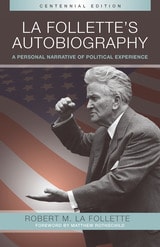
La Follette’s Autobiography
A Personal Narrative of Political ExperiencesRobert M. La Follette; Foreword by Matthew Rothschild
University of Wisconsin Press, 2013
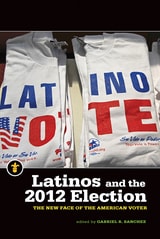
Latinos and the 2012 Election
The New Face of the American VoterGabriel R. Sanchez
Michigan State University Press, 2015
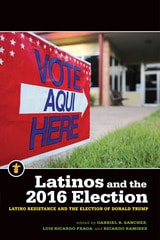
Latinos and the 2016 Election
Latino Resistance and the Election of Donald TrumpGabriel R. Sanchez
Michigan State University Press, 2020

Learning by Voting
Sequential Choices in Presidential Primaries and Other ElectionsRebecca B. Morton and Kenneth C. Williams
University of Michigan Press, 2001
Does the movement to a large number of early presidential primaries reduce the ability of voters to learn about the candidates? Do voters who vote early miss important information by not following the entire campaign, or are they, as some argue, more partisan? In a unique study Rebecca B. Morton and Kenneth C. Williams investigate the impact these changes have on the choices voters make. The authors combine a formal, theoretical model to derive hypotheses with experiments, elections conducted in labs, to test the hypotheses.
Their analysis finds that sequence in voting does matter. In simultaneous voting elections well-known candidates are more likely to win, even if that candidate is the first preference of only a minority of the voters and would be defeated by another candidate, if that candidate were better known. These results support the concerns of policy makers that front-loaded primaries prevent voters from learning during the primary process. The authors also find evidence that in sequential elections those who vote on election day have the benefit of information received throughout the whole course of the campaign, thus supporting concerns with mail-in ballots and other early balloting procedures.
This book will interest scholars interested in elections, the design of electoral systems, and voting behavior as well as the use of formal modeling and experiments in the study of politics. It is written in a manner that can be easily read by those in the public concerned with presidential elections and voting.
Rebecca B. Morton is Associate Professor of Political Science, University of Iowa. Kenneth C. Williams is Associate Professor of Political Science, Michigan State University.
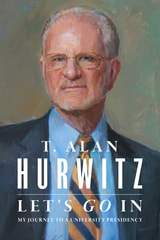
Let’s Go In
My Journey to a University PresidencyT. Alan Hurwitz
Gallaudet University Press, 2020
Additional images, videos, and supplemental readings are available at the Gallaudet University Press/Manifold online platform.
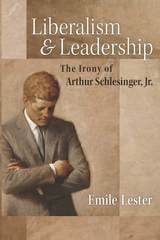
Liberalism and Leadership
The Irony of Arthur Schlesinger, Jr.Emile Lester
University of Michigan Press, 2019
Most scholars and pundits today view Franklin Delano Roosevelt and John F. Kennedy as aggressive liberal leaders, while viewing Schlesinger’s famous histories of their presidencies as celebrations of their steadfast progressive leadership. A more careful reading of Schlesinger’s work demonstrates that he preferred an ironic political outlook emphasizing the virtues of restraint, patience, and discipline. For Schlesinger, Roosevelt and Kennedy were liberal heroes and models as much because they respected the constraints on their power and ideals as because they tested traditional institutions and redefined the boundaries of presidential power.
Aggressive liberalism involves the use of inspirational rhetoric and cunning political tactics to expand civil liberties and insure economic equality. Schlesinger’s emphasis on the crucial role that irony has played and should play in liberalism poses a challenge to the aggressive liberalism advocated by liberal activists, political thinkers, and pundits. That his counsel was grounded in conservative insights as well as liberal values makes it accessible to leaders across the political spectrum.
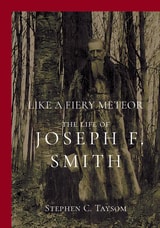
Like a Fiery Meteor
The Life of Joseph F. SmithStephen C. Taysom
University of Utah Press, 2023
Joseph F. Smith was born in 1838 to Hyrum Smith and Mary Fielding Smith. Six years later both his father and his uncle, Joseph Smith Jr., the founding prophet of the Church of Jesus Christ of Latter-day Saints, were murdered in Carthage, Illinois. The trauma of that event remained with Joseph F. for the rest of his life, affecting his personal behavior and public tenure in the highest tiers of the LDS Church, including the post of president from 1901 until his death in 1918. Joseph F. Smith laid the theological groundwork for modern Mormonism, especially the emphasis on temple work. This contribution was capped off by his “revelation on the redemption of the dead,” a prophetic glimpse into the afterlife. Taysom’s book traces the roots of this vision, which reach far more deeply into Joseph F. Smith’s life than other scholars have previously identified.
In this first cradle-to-grave biography of Joseph F. Smith, Stephen C. Taysom uses previously unavailable primary source materials to craft a deeply detailed, insightful story of a prominent member of a governing and influential Mormon family. Importantly, Taysom situates Smith within the historical currents of American westward expansion, rapid industrialization, settler colonialism, regional and national politics, changing ideas about family and masculinity, and more. Though some writers tend to view the LDS Church and its leaders through a lens of political and religious separatism, Taysom does the opposite, pushing Joseph F. Smith and the LDS Church closer to the centers of power in Washington, DC, and elsewhere.
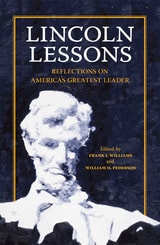
Lincoln Lessons
Reflections on America's Greatest LeaderEdited by Frank J. Williams and William D. Pederson
Southern Illinois University Press, 2009
In Lincoln Lessons, seventeen of today’s most respected academics, historians, lawyers, and politicians provide candid reflections on the importance of Abraham Lincoln in their intellectual lives. Their essays, gathered by editors Frank J. Williams and William D. Pederson, shed new light on this political icon’s remarkable ability to lead and inspire two hundred years after his birth.
Collected here are glimpses into Lincoln’s unique ability to transform enemies into steadfast allies, his deeply ingrained sense of morality and intuitive understanding of humanity, his civil deification as the first assassinated American president, and his controversial suspension of habeas corpus during the Civil War. The contributors also discuss Lincoln’s influence on today’s emerging democracies, his lasting impact on African American history, and his often-overlooked international legend—his power to instigate change beyond the boundaries of his native nation. While some contributors provide a scholarly look at Lincoln and some take a more personal approach, all explore his formative influence in their lives. What emerges is the true history of his legacy in the form of first-person testaments from those whom he has touched deeply.
Lincoln Lessons brings together some of the best voices of our time in a unique combination of memoir and history. This singular volume of original essays is a tribute to the enduring inspirational powers of an extraordinary man whose courage and leadership continue to change lives today.
Contributors
Jean H. Baker
Mario M. Cuomo
Joan L. Flinspach
Sara Vaughn Gabbard
Doris Kearns Goodwin
Harold Holzer
Harry V. Jaffa
John F. Marszalek
James M. McPherson
Edna Greene Medford
Sandra Day O’Connor
Mackubin Thomas Owens
William D. Pederson
Edward Steers Jr.
Craig L. Symonds
Thomas Reed Turner
Frank J. Williams
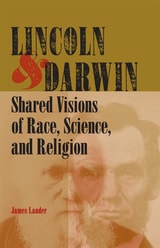
Lincoln and Darwin
Shared Visions of Race, Science, and ReligionJames Lander
Southern Illinois University Press, 2010
Born on the same day in 1809, Abraham Lincoln and Charles Darwin were true contemporaries. Though shaped by vastly different environments, they had remarkably similar values, purposes, and approaches. In this exciting new study, James Lander places these two iconic men side by side and reveals the parallel views they shared of man and God.
While Lincoln is renowned for his oratorical prowess and for the Emancipation Proclamation, as well as many other accomplishments, his scientific and technological interests are not widely recognized; for example, many Americans do not know that Lincoln is the only U.S. president to obtain a patent. Darwin, on the other hand, is celebrated for his scientific achievements but not for his passionate commitment to the abolition of slavery, which in part drove his research in evolution. Both men took great pains to avoid causing unnecessary offense despite having abandoned traditional Christianity. Each had one main adversary who endorsed scientific racism: Lincoln had Stephen A. Douglas, and Darwin had Louis Agassiz.
With graceful and sophisticated writing, Lander expands on these commonalities and uncovers more shared connections to people, politics, and events. He traces how these two intellectual giants came to hold remarkably similar perspectives on the evils of racism, the value of science, and the uncertainties of conventional religion.
Separated by an ocean but joined in their ideas, Lincoln and Darwin acted as trailblazers, leading their societies toward greater freedom of thought and a greater acceptance of human equality. This fascinating biographical examination brings the mid-nineteenth-century discourse about race, science, and humanitarian sensibility to the forefront using the mutual interests and pursuits of these two historic figures.
Lincoln and Religion
Ferenc Morton Szasz with Margaret Connell Szasz
Southern Illinois University Press, 2014
Abraham Lincoln’s faith has commanded more broad-based attention than that of any other American president. Although he never joined a denomination, Baptists, Presbyterians, Quakers, Episcopalians, Disciples of Christ, Spiritualists, Jews, and even atheists claim the sixteenth president as one of their own. In this concise volume, Ferenc Morton Szasz and Margaret Connell Szasz offer both an accessible survey of the development of Lincoln’s religious views and an informative launch pad for further academic inquiry. A singular key to Lincoln’s personality, especially during the presidential years, rests with his evolving faith perspective.
After surveying Lincoln’s early childhood as a Hard-Shell Baptist in Kentucky and Indiana, the authors chronicle his move from skepticism to participation in Episcopal circles during his years in Springfield, and, finally, after the death of son Eddie, to Presbyterianism. They explore Lincoln’s relationship with the nation’s faiths as president, the impact of his son Willie’s death, his adaptation of Puritan covenant theory to a nation at war, the role of prayer during his presidency, and changes in his faith as reflected in the Emancipation Proclamation and his state papers and addresses. Finally, they evaluate Lincoln’s legacy as the central figure of America’s civil religion, an image sharpened by his prominent position in American currency.
A closing essay by Richard W. Etulain traces the historiographical currents in the literature on Lincoln and religion, and the volume concludes with a compilation of Lincoln’s own words about religion.
In assessing the enigma of Lincoln’s Christianity, the authors argue that despite his lack of church membership, Lincoln lived his life through a Christian ethical framework. His years as president, dominated by the Civil War and personal loss, led Lincoln to move into a world beholden to Providence.
Lincoln and the Civil War
Michael Burlingame
Southern Illinois University Press, 2011
When war erupted in 1861, the North—despite its superior economic resources and manpower—was considered the underdog of the conflict. The need to invade the South brought no advantage to the inefficient, poorly led Union Army. In contrast, Southerners’ knowledge of their home terrain, access to railroads, familiarity with firearms, and outdoor lifestyles, along with the presumed support of foreign nations, made victory over the North seem a likely outcome. In the face of such daunting obstacles, only one person could unite disparate Northerners and rally them to victory in the darkest moments of the war: Abraham Lincoln.
While Lincoln is often remembered today as one of America’s wisest presidents, he was not always considered so sage. Burlingame demonstrates how, long before the rigors of his presidency and the Civil War began to affect him, Lincoln wrestled with the demons of midlife to ultimately emerge as arguably the most self-aware, humble, and confident leader in American history. This metamorphosis from sarcastic young politician to profound statesman uniquely prepared him for the selfless dedication the war years would demand. Whereas his counterpart, Jefferson Davis, became mired in personal power plays, perceived slights, and dramas, Lincoln rose above personal concerns to always place the preservation of the Union first. Lincoln’s ability, along with his eloquence, political savvy, and grasp of military strategy made him a formidable leader whose honesty and wisdom inspired undying loyalty.
In addition to offering fresh perspectives on Lincoln’s complex personality and on the other luminaries of his administration, Lincoln and the Civil War takes readers on a brief but thorough tour of the war itself, from the motivations and events leading to Southern secession and the first shots at Fort Sumter to plans for Reconstruction and Lincoln’s tragic assassination. Throughout the journey, Burlingame demonstrates how Lincoln’s steady hand at the helm navigated the Union through the most perilous events of the war and held together the pieces of an unraveling nation.
Lincoln and the Election of 1860
Michael S. Green
Southern Illinois University Press, 2011
Although Lincoln rose to national prominence in 1858 during his debates with Stephen Douglas, he was unable to publicly stump for the presidency in a time when personal campaigning for the office was traditionally rejected. This limitation did nothing to check Lincoln’s ambitions, however, as he consistently endeavored to place himself in the public eye while stealthily pulling political strings behind the scenes. Green demonstrates how Lincoln drew upon his considerable communication abilities and political acumen to adroitly manage allies and enemies alike, ultimately uniting the Republican Party and catapulting himself from his status as one of the most unlikely of candidates to his party’s nominee at the national convention.
As the general election campaign progressed, Lincoln continued to draw upon his experience from three decades in Illinois politics to unite and invigorate the Republican Party. Democrats fell to divisions between North and South, setting the stage for a Republican victory in November—and for the most turbulent times in U.S. history.
Moving well beyond a study of the man to provide astute insight into the era’s fiery political scene and its key players, Green offers perceptive analysis of the evolution of American politics and Lincoln’s political career, the processes of the national and state conventions, how political parties selected their candidates, national developments of the time and their effects on Lincoln and his candidacy, and Lincoln’s own sharp—and often surprising—assessments of his opponents and colleagues. Green frequently employs Lincoln’s own words to afford an intimate view into the political savvy of the future president.
The pivotal election of 1860 previewed the intelligence, patience, and shrewdness that would enable Lincoln to lead the United States through its greatest upheaval. This exciting new book brings to vivid life the cunning and strength of one of America’s most intriguing presidents during his journey to the White House.
Lincoln as Hero
Frank J. Williams
Southern Illinois University Press, 2012
Lincoln as Hero shows how—whether it was as president, lawyer, or schoolboy—Lincoln extolled the foundational virtues of American society. Williams describes the character and leadership traits that define American heroism, including ideas and beliefs, willpower, pertinacity, the ability to communicate, and magnanimity. Using both celebrated episodes and lesser-known anecdotes from Lincoln’s life and achievements, Williams presents a wide-ranging analysis of these traits as they were demonstrated in Lincoln’s rise, starting with his self-education as a young man and moving on to his training and experience as a lawyer, his entry onto the political stage, and his burgeoning grasp of military tactics and leadership.
Williams also examines in detail how Lincoln embodied heroism in standing against secession and fighting to preserve America’s great democratic experiment. With a focused sense of justice and a great respect for the mandates of both the Declaration of Independence and the Constitution, Lincoln came to embrace freedom for the enslaved, and his Emancipation Proclamation led the way for the Thirteenth Amendment, which abolished slavery. Lincoln’s legacy as a hero and secular saint was secured when his lifeended by assassination as the Civil War was drawing to a close
Touching on Lincoln’s humor and his quest for independence, justice, and equality, Williams outlines the path Lincoln took to becoming a great leader and an American hero, showing readers why his heroism is still relevant. True heroes, Williams argues, are successful not just by the standards of their own time but also through achievements that transcend their own eras and resonate throughout history—with their words and actions living on in our minds, if we are imaginative, and in our actions, if we are wise.
Univeristy Press Books for Public and Secondary Schools 2013 edition
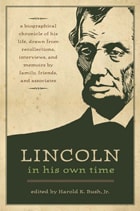
Lincoln in His Own Time
A Biographical Chronicle of His Life, Drawn from Recollections, Interviews, and Memoirs by Family, Friends, and AssociatesHarold K. Bush
University of Iowa Press, 2011
More than any other American before or since, Abraham Lincoln had a way with words that has shaped our national idea of ourselves. Actively disliked and even vilified by many Americans for the vast majority of his career, this most studied, most storied, and most documented leader still stirs up controversy. Showing not only the development of a powerful mind but the ways in which our sixteenth president was perceived by equally brilliant American minds of a decidedly literary and political bent, Harold K. Bush’s Lincoln in His Own Time provides some of the most significant contemporary meditations on the Great Emancipator’s legacy and cultural significance.
The forty-two entries in this spirited collection present the best reflections of Lincoln as thinker, reader, writer, and orator by those whose lives intertwined with his or those who had direct contact with eyewitnesses. Bush focuses on Lincoln’s literary interests, reading, and work as a writer as well as the evolving debate about his religious views that became central to his memory. Along with a star-struck Walt Whitman writing of Lincoln’s “inexpressibly sweet” face and manner, Elizabeth Keckly’s description of a bereaved Lincoln, “genius and greatness weeping over love’s idol lost,” and William Stoddard’s report of the “cheery, hopeful, morning light” on Lincoln’s face after a long night debating the fate of the nation, the volume includes selections from works by famous contemporary figures such as Hawthorne, Douglass, Stowe, Lowell, Twain, and Lincoln himself in addition to lesser-known selections that have been nearly lost to history. Each entry is introduced by a headnote that places the selection in historical and cultural context; explanatory endnotes provide information about people and places. A comprehensive introduction and a detailed chronology of Lincoln’s eventful life round out the volume.
Bush’s thoughtful collection reveals Lincoln as a man of letters who crafted some of the most memorable lines in our national vocabulary, explores the striking mythologization of the martyred president that began immediately upon his death, and then combines these two themes to illuminate Lincoln’s place in public memory as the absolute embodiment of America’s mythic civil religion. Beyond providing the standard fare of reminiscences about the rhetorically brilliant backwoodsman from the “Old Northwest,” Lincoln in His Own Time also maps a complex genealogy of the cultural work and iconic status of Lincoln as quintessential scribe and prophet of the American people.
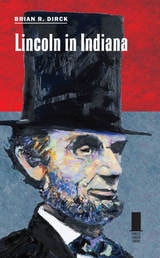
Lincoln in Indiana
Brian R. Dirck
Southern Illinois University Press, 2017
Lincoln in Indiana tells the story of Lincoln’s life in Indiana, from his family’s arrival to their departure. Dirck explains the Lincoln family’s ancestry and how they and their relatives came to settle near Pigeon Creek. He shows how frontier families like the Lincolns created complex farms out of wooded areas, fashioned rough livelihoods, and developed tight-knit communities in the unforgiving Indiana wilderness. With evocative prose, he describes the youthful Lincoln’s relationship with members of his immediate and extended family. Dirck illuminates Thomas Lincoln by setting him into his era, revealing the concept of frontier manhood, and showing the increasingly strained relationship between father and son. He illustrates how pioneer women faced difficulties as he explores Nancy Lincoln’s work and her death from milk sickness; how Lincoln’s stepmother, Sarah Bush, fit into the family; and how Lincoln’s sister died in childbirth. Dirck examines Abraham’s education and reading habits, showing how a farming community could see him as lazy for preferring book learning over farmwork. While explaining how he was both similar to and different from his peers, Dirck includes stories of Lincoln’s occasional rash behavior toward those who offended him. As Lincoln grew up, his ambitions led him away from the family farm, and Dirck tells how Lincoln chafed at his father’s restrictions, why the Lincolns decided to leave Indiana in 1830, and how Lincoln eventually broke away from his family.
In a triumph of research, Dirck cuts through the myths about Lincoln’s early life, and along the way he explores the social, cultural, and economic issues of early nineteenth-century Indiana. The result is a realistic portrait of the youthful Lincoln set against the backdrop of American frontier culture.
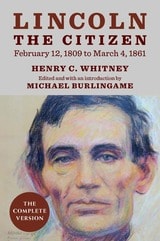
Lincoln the Citizen, February 12, 1809 to March 4, 1861
The Complete VersionHenry C. Whitney. Edited and with an introduction by Michael Burlingame
University of Illinois Press, 2025
Whitney’s work reveals the legal and political spheres where Lincoln moved while providing eyewitness accounts and intimate stories shared by Lincoln himself. Whitney’s unique vantage point informs analyses of everything from Lincoln’s melancholic temperament to his colorful early career to views on his marriage and family life. Burlingame places Whitney’s singular contributions within Lincoln studies but also weighs criticisms of the book and disputes over what information the author may or may not have invented.
A restored edition of an invaluable memoir, Lincoln the Citizen presents a wealth of overlooked biographical detail by one of the people who knew Lincoln best.
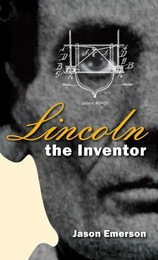
Lincoln the Inventor
Jason Emerson
Southern Illinois University Press, 2009
In Lincoln the Inventor, Jason Emerson offers the first treatment of Abraham Lincoln’s invention of a device to buoy vessels over shoals and its subsequent patent as more than mere historical footnote.
In this book, Emerson shows how, when, where, and why Lincoln created his invention; how his penchant for inventions and inventiveness was part of his larger political belief in internal improvements and free labor principles; how his interest in the topic led him to try his hand at scholarly lecturing; and how Lincoln, as president, encouraged and even contributed to the creation of new weapons for the Union during the Civil War.
During his extensive research, Emerson also uncovered previously unknown correspondence between Lincoln’s son, Robert, and his presidential secretary, John Nicolay, which revealed the existence of a previously unknown draft of Abraham Lincoln’s lecture “Discoveries and Inventions.” Emerson not only examines the creation, delivery, and legacy of this lecture, but also reveals for the first time how Robert Lincoln owned this unknown version, how he lost and later tried to find it, the indifference with which Robert and Nicolay both held the lecture, and their decision to give it as little attention as possible when publishing President Lincoln’s collected works.
The story of Lincoln’s invention extends beyond a boat journey, the whittling of some wood, and a trip to the Patent Office; the invention had ramifications for Lincoln’s life from the day his flatboat got stuck in 1831 until the day he died in 1865. Besides giving a complete examination of this important—and little known—aspect of Lincoln’s life, Lincoln the Inventor delves into the ramifications of Lincoln’s intellectual curiosity and inventiveness, both as a civilian and as president, and considers how it allows a fresh insight into his overall character and contributed in no small way to his greatness. Lincoln the Inventor is a fresh contribution to the field of Lincoln studies about a topic long neglected. By understanding Lincoln the inventor, we better understand Lincoln the man.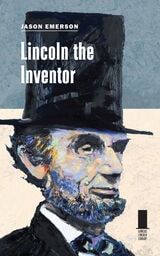
Lincoln the Inventor
Jason Emerson
Southern Illinois University Press, 2009
The book that inspired the popular Concise Lincoln Library series
In April 1831, on a flatboat grounded on the Rutledge milldam below the town of New Salem, Abraham Lincoln worked to pry the boat loose, directed the crew, and ran into the village to borrow an augur to bore a hole in the end hanging over the dam, causing the water to drain and the boat to float free. Seventeen years later, while traveling home from a round of political speeches, Lincoln witnessed another similar occurrence. For the rest of his journey, he considered how to construct a device to free stranded boats from shallow waters.
In this first thorough examination of Abraham Lincoln’s mechanical mind, Jason Emerson brings forth the complete story of Lincoln’s invention and patent as more than mere historical footnote. Emerson shows how, when, where, and why Lincoln developed his invention; how his penchant for inventions and innovation was part of his larger political belief in internal improvements and free labor principles; how his interest in the topic led him to try his hand at scholarly lecturing; and how Lincoln, as president, encouraged and even contributed to the creation of new weapons for the Union during the Civil War.
Lincoln the Inventor delves into the ramifications of Lincoln’s intellectual curiosity and inventiveness, both as a civilian and as president, and considers how they allow a fresh insight into his overall character and contributed in no small way to his greatness. By understanding Lincoln the inventor, we better understand Lincoln the man.
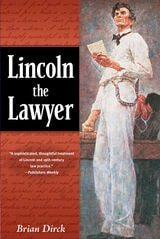
Lincoln the Lawyer
Brian Dirck
University of Illinois Press, 2006
Despite historians' focus on the man as president and politician, Abraham Lincoln lived most of his adult life as a practicing lawyer. It was as a lawyer that he fed his family, made his reputation, bonded with Illinois, and began his political career. Lawyering was also how Lincoln learned to become an expert mediator between angry antagonists, as he applied his knowledge of the law and of human nature to settle one dispute after another. Frontier lawyers worked hard to establish respect for the law and encourage people to resolve their differences without intimidation or violence. These were the very skills Lincoln used so deftly to hold a crumbling nation together during his presidency.
The growth of Lincoln's practice attests to the trust he was able to inspire, and his travels from court to court taught him much about the people and land of Illinois. Lincoln the Lawyer explores the origins of Lincoln's desire to practice law, his legal education, his partnerships with John Stuart, Stephen Logan, and William Herndon, and the maturation of his far-flung practice in the 1840s and 1850s. Brian Dirck provides a context for law as it was practiced in mid-century Illinois and evaluates Lincoln's merits as an attorney by comparison with his peers. He examines Lincoln's clientele, his circuit practice, his views on legal ethics, and the supposition that he never defended a client he knew to be guilty. This approach allows readers not only to consider Lincoln as he lived his life--it also shows them how the law was used and developed in Lincoln's lifetime, how Lincoln charged his clients, how he was paid, and how he addressed judge and jury.
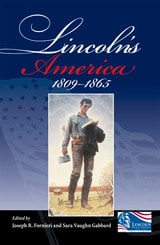
Lincoln's America
1809 - 1865Edited by Joseph R. Fornieri and Sara Vaughn Gabbard
Southern Illinois University Press, 2008
To fully understand and appreciate Abraham Lincoln’s legacy, it is important to examine the society that influenced the life, character, and leadership of the man who would become the Great Emancipator. Editors Joseph R. Fornieri and Sara Vaughn Gabbard have done just that in Lincoln’s America: 1809–1865, a collection of original essays by ten eminent historians that place Lincoln within his nineteenth-century cultural context.
Among the topics explored in Lincoln’s America are religion, education, middle-class family life, the antislavery movement, politics, and law. Of particular interest are the transition of American intellectual and philosophical thought from the Enlightenment to Romanticism and the influence of this evolution on Lincoln's own ideas.
By examining aspects of Lincoln’s life—his personal piety in comparison with the beliefs of his contemporaries, his success in self-schooling when frontier youths had limited opportunities for a formal education, his marriage and home life in Springfield, and his legal career—in light of broader cultural contexts such as the development of democracy, the growth of visual arts, the question of slaves as property, and French visitor Alexis de Tocqueville’s observations on America, the contributors delve into the mythical Lincoln of folklore and discover a developing political mind and a changing nation.
As Lincoln’s America shows, the sociopolitical culture of nineteenth-century America was instrumental in shaping Lincoln’s character and leadership. The essays in this volume paint a vivid picture of a young nation and its sixteenth president, arguably its greatest leader.
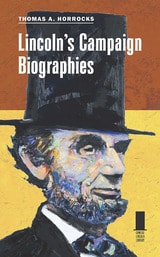
Lincoln's Campaign Biographies
Thomas A. Horrocks
Southern Illinois University Press, 2014
During the 1860 and 1864 presidential campaigns, Abraham Lincoln was the subject of over twenty campaign biographies. In this innovative study, Thomas A. Horrocks examines the role that these publications played in shaping an image of Lincoln that would resonate with voters and explores the vision of Lincoln that the biographies crafted, the changes in this vision over the course of four years, and the impact of these works on the outcome of the elections.
Horrocks investigates Lincoln’s campaign biographies within the context of the critical relationship between print and politics in nineteenth-century America and compares the works about Lincoln with other presidential campaign biographies of the era. Horrocks shows that more than most politicians of his day, Lincoln deeply appreciated and understood the influence and the power of the printed word.
The 1860 campaign biographies introduced to America “Honest Abe, the Rail Splitter,” a trustworthy, rugged candidate who appealed to rural Americans. When Lincoln ran for reelection in 1864, the second round of campaign biographies complemented this earlier portrait of Lincoln with a new, paternal figure, “Father Abraham,” more appropriate for Americans enduring a bloody civil war. Closing with a consideration of the influence of these publications on Lincoln’s election and reelection, Lincoln’s Campaign Biographies provides a new perspective for those seeking a better understanding of the sixteenth president and two of the most critical elections in American history.
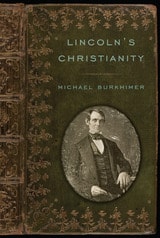
Lincoln's Christianity
Michael Burkhimer
Westholme Publishing, 2007
After listening to Abraham Lincoln’s second inaugural address, many in the audience were stunned. Instead of a positive message about the coming Union victory, the president implicated the entire country in the faults and responsibility for slavery. Using Old Testament references, Lincoln explained that God was punishing all Americans for their role in the calamity with a bloody civil war.
These were surprising words from a man who belonged to no church, did not regularly attend services, and was known to have publicly and privately questioned some of Christianity’s core beliefs. But Lincoln’s life was one with supreme sadness—the death of his first fiancee, the subsequent loss of two of his sons—and these events, along with the chance encounter with a book in Mary Todd’s father’s library, The Christian’s Defense, are all part of the key to understanding Lincoln’s Christianity. Biblical quotations soon entered his speeches—a point noted by Stephen Douglas in their debates—but it is unclear whether Lincoln’s use of scripture was a signal that American politicians should openly embrace religion in their public lives, or a rhetorical tool to manipulate his audience, or a result of a personal religious transformation. After his death both secular and religious biographers claimed Lincoln as one of their own, touching off a controversy that remains today.
In Lincoln’s Christianity, Michael Burkhimer examines the entire history of the president’s interaction with religion—accounts from those who knew him, his own letters and writings, the books he read—to reveal a man who did not believe in orthodox Christian precepts (and might have had a hard time getting elected today) yet, by his example, was a person and president who most truly embodied Christian teachings.
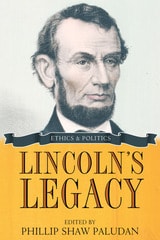
Lincoln's Legacy
Ethics and PoliticsEdited by Phillip Shaw Paludan
University of Illinois Press, 2007
The four new essays in Lincoln's Legacy describe major ethical problems that the sixteenth president navigated what can be learned from how he did so. The distinguished and award-winning Lincoln scholars William Miller, Mark E. Neely Jr., Phillip Shaw Paludan, and Mark Summers describe Lincoln’s attitudes and actions during encounters with questions of politics, law, constitutionalism, patronage, and democracy. The remarkably focused essays include an assessment of Lincoln's virtues in the presidency, the first study on Lincoln and patronage in more than a decade, a challenge to the cliché of Lincoln the democrat, and a study of habeas corpus, Lincoln, and state courts. On the eve of the bicentennial celebration of Lincoln’s birth, Lincoln’s Legacy highlights his enduring importance in contemporary conversations about law, politics, and democracy.
Lincoln's Preparation for Greatness
THE ILLINOIS LEGISLATIVE YEARSPaul Simon
University of Illinois Press, 1971
"Abraham Lincoln was a member of the Illinois Legislature from
1834 to 1842 -- one of the Long Nine, as the Sangamon County delegation
was known, all its members being more than six feet tall. It was during
these eight years that he came as close to scandal as he was ever to come
in his public or private life. Did he, or did he not, engage in shameless
logrolling to get the state capital moved to Springfield? This and other
aspects of Lincoln's apprenticeship in the legislator . . . are thoroughly
investigated."
-- Chicago Sun-Times
"The wealth of detail it contains makes it a worthwhile addition
to the study of Lincoln's legislative career."
-- Los Angeles Times
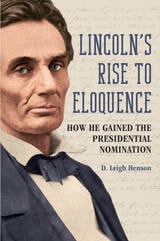
Lincoln's Rise to Eloquence
How He Gained the Presidential NominationD. Leigh Henson
University of Illinois Press, 2024
Insightful and revealing, Lincoln’s Rise to Eloquence follows Lincoln from his early career through the years-long clashes with Stephen A. Douglas to trace the future president’s evolution as a communicator and politician.
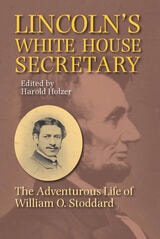
Lincoln's White House Secretary
The Adventurous Life of William O.StoddardEdited by Harold Holzer
Southern Illinois University Press, 2007

Lincoln's Youth
Indiana Years, 1816-1830Louis A. Warren
Indiana Historical Society Press, 1991
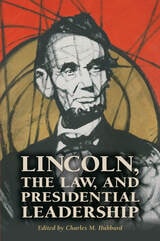
Lincoln, the Law, and Presidential Leadership
Edited by Charles M. Hubbard
Southern Illinois University Press, 2015
The volume’s contributors not only address specific situations and issues that assisted in Lincoln’s development of a new understanding of law and its application but also show Lincoln’s remarkable presidential leadership. Among the topics covered are civil liberties during wartime; presidential pardons; the law and Lincoln’s decision-making process; Lincoln’s political ideology and its influence on his approach to citizenship; Lincoln’s defense of the Constitution, the Union, and popular government; constitutional restraints on Lincoln as he dealt with slavery and emancipation; the Lieber codes, which set forth how the military should deal with civilians and with prisoners of war; the loyalty (or treason) of government employees, including Lincoln’s domestic staff; and how Lincoln’s image has been used in presidential rhetoric. Although varied in their strategies and methodologies, these essays expand the understanding of Lincoln’s vision for a united nation grounded in the Constitution.
Lincoln, the Law, and Presidential Leadership shows how the sixteenth president’s handling of complicated legal issues during the Civil War, which often put him at odds with the Supreme Court and Congress, brought the nation through the war intact and led to a transformation of the executive branch and American society.
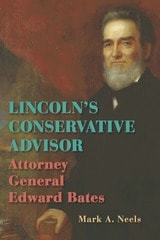
Lincoln’s Conservative Advisor
Attorney General Edward BatesMark A. Neels
Southern Illinois University Press, 2025
How a traditionalist became part of Lincoln's volatile team of rivals
Edward Bates, a founding father of Missouri and leader of the Missouri Whig Party, served as Abraham Lincoln’s attorney general during the American Civil War. The first full biography of Bates in nearly sixty years, Lincoln’s Conservative Advisor reveals a striking portrait of this complex figure in Lincoln’s cabinet.
Author Mark A. Neels begins with Bates’s youth in Virginia and follows him through his political and judicial career, his candidacy as a Republican presidential nominee in 1860, and his appointment to Abraham Lincoln’s cabinet as attorney general. Bates became an essential advisor to the president on key legal, military, and political matters from emancipation to civil liberties and equal rights, and his official opinion on Habeas Corpus would have a permanent effect on presidential authority and separation of powers. When Lincoln drafted the Emancipation Proclamation, Bates found himself at odds with the president and the radical anti-slavery members of the cabinet. But more than simply highlighting the conflict within Lincoln’s administration, Bates’s example lays bare the strong philosophical divisions within the Republican Party during the Civil War era. These divisions were present at the party’s inception, crystallized during the war, and ultimately sparked a political realignment during Reconstruction. Bates was at the center of this divide for most of its existence, and in some cases assisted in its promulgation.
Bates, a fierce opponent of radical Republicanism, embodies the conflict among Republicans over issues of slavery and citizenship. In both judicial and elective office, he was compelled by a sense of duty to defy the populism of President Andrew Jackson and Senator Thomas Hart Benton, and, later, the proslavery forces that threatened to tear the nation apart. Though he had owned slaves, Bates represented at least one enslaved woman’s suit for freedom, released from bondage the people he had enslaved, and aided Lincoln in his efforts to end slavery nationwide. Bates’s opinion on citizenship as attorney general helped pave the way for equal rights. His opinions were not always popular with either his colleagues or the greater populace, but Bates remained true to his conservative principles—a set of values shared by a large swath of Lincoln’s Republican Party—which positioned him as a leading opponent of radical Republicanism during the Reconstruction Era.
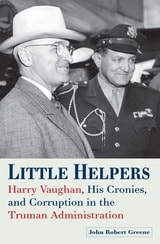
Little Helpers
Harry Vaughan, His Cronies, and Corruption in the Truman AdministrationJohn Robert Greene
University of Missouri Press, 2024
Greene begins with the story of how Truman and Vaughan met during World War I, then examines Vaughan’s support for Truman for the Senate and later as President. The majority of the book, however, considers the various cronies that surrounded Vaughan and illustrates the significance of his relationship with Truman—and the president’s inability to rein him in.
Drawing from primary and archival sources, many never before published, Little Helpers is further distinguished by its use of the correspondence between Vaughan and Truman. Greene also provides a dramatic narrative account of the inner workings of the Truman administration, making the book accessible to the general reader as well as the specialist.
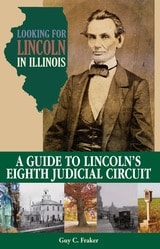
Looking for Lincoln in Illinois
A Guide to Lincoln's Eighth Judicial CircuitGuy C. Fraker
Southern Illinois University Press, 2017
For twenty-three years Abraham Lincoln practiced law on the Eighth Judicial Circuit in east central Illinois, and his legal career is explored in Looking for Lincoln in Illinois: A Guide to Lincoln’s Eighth Judicial Circuit. Guy C. Fraker directs readers and travelers through the prairies to the towns Lincoln visited regularly. Twice a year, spring and fall, Lincoln’s work took him on a journey covering more than four hundred miles. As his stature as a lawyer grew, east central Illinois grew in population and influence, and the Circuit provided Lincoln with clients, friends, and associates who became part of the network that ultimately elevated him to the presidency.
This guidebook to the Circuit features Illinois courthouses, Looking for Lincoln Wayside Exhibits, and other Lincoln points of interest. Fraker guides travelers down the long stretches of quiet country roads that gave Lincoln time to read and think to the locations where Lincoln’s broad range of cases expanded his sense of the economic and social forces changing America.
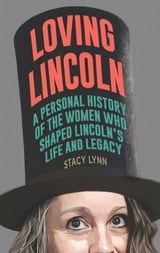
Loving Lincoln
A Personal History of the Women Who Shaped Lincoln's Life and LegacyStacy Lynn
Southern Illinois University Press, 2025
WINNER, 2026 Illinois State Historical Society Russell P. Strange Book of the Year Award!
Rediscovering Lincoln through the female gaze
Abraham Lincoln belongs to everybody. The women he interacted with helped forge the outstanding moral character of America's greatest president. This unique Abraham Lincoln biography features thirty historical and personal essays, and within them, the stories of more than ninety women, each with their own mini biographies in an appendix. Among them are Lincoln’s friends, clients, and extended family, as well as writers, artists, and—blurring the lines between history and memoir—author Stacy Lynn herself.
As a professional Lincoln scholar and editor, Lynn was often frustrated that male historians often overlooked Lincoln’s love for and friendship with women. Here, she posits a new paradigm—one that, instead of downplaying women, lifts up their interactions with Lincoln.
Lincoln understood the importance of the women in his life, and he put women’s wellbeing at the center of his personal, professional, and political ethos. He was loved by two strong pioneer mothers as well as sisters, friends, nieces, friends’ daughters, and his wife. He served women clients during his long legal career. As president, he met with women, dedicating time to hear their concerns despite the burdens of office. He replied to letters women wrote him. He believed in their capabilities and revolutionized the role of women in the workforce. After Lincoln’s death, women continued to shape his legacy. Mary Lincoln ensured his burial among friends, artist Vinnie Ream sculpted his statue in the US Capitol, and biographer Ida Tarbell provided a nuanced portrayal of his life. Harriet Monroe and Ruth Painter Randall further cemented his place in literature and history.
Lynn presents a fresh perspective on Lincoln, connecting his story to the stories of women and showcasing his kindness, sensitivity, and moral center. She explores how women shaped Lincoln’s inspirational legacy and pays homage to all the women who gave Lincoln to the world. Lynn’s unique blending of history, biography, and her own story reveals the ways in which an emotional connection to the historical figures one studies opens the door to richer human and historical understanding. By inviting readers to feel the past as well as read it, Lynn demonstrates that history matters most when it engages our minds and hearts.