Results by title
1095 books match the query 'Rhetoric' and 23 start with l
Lacan in Public
Psychoanalysis and the Science of RhetoricChristian Lundberg
University of Alabama Press, 2012
Lacan in Public argues that Lacan’s contributions to the theory of rhetoric are substantial and revolutionary and that rhetoric is, in fact, the central concern of Lacan’s entire body of work.
Lacan’s conception of rhetoric, Christian Lundberg argues in Lacan in Public, upsets and extends the received wisdom of American rhetorical studies—that rhetoric is a science, rather than an art; that rhetoric is predicated not on the reciprocal exchange of meanings, but rather on the impossibility of such an exchange; and that rhetoric never achieves a correspondence with the real-world circumstances it attempts to describe.
As Lundberg shows, Lacan’s work speaks directly to conversations at the center of current rhetorical scholarship, including debates regarding the nature of the public and public discourses, the materiality of rhetoric and agency, and the contours of a theory of persuasion.
Language Diversity in the Classroom
From Intention to PracticeEdited by Geneva Smitherman and Victor Villanueva. Foreword by Suresh Canagarajah
Southern Illinois University Press, 2003
It’s no secret that, in most American classrooms, students are expected to master standardized American English and the conventions of Edited American English if they wish to succeed. Language Diversity in the Classroom: From Intention to Practice works to realign these conceptions through a series of provocative yet evenhanded essays that explore the ways we have enacted and continue to enact our beliefs in the integrity of the many languages and Englishes that arise both in the classroom and in professional communities.
Edited by Geneva Smitherman and Victor Villanueva, the collection was motivated by a survey project on language awareness commissioned by the National Council of Teachers of English and the Conference on College Composition and Communication.
All actively involved in supporting diversity in education, the contributors address the major issues inherent in linguistically diverse classrooms: language and racism, language and nationalism, and the challenges in teaching writing while respecting and celebrating students’ own languages. Offering historical and pedagogical perspectives on language awareness and language diversity, the essays reveal the nationalism implicit in the concept of a “standard English,” advocate alternative training and teaching practices for instructors at all levels, and promote the respect and importance of the country’s diverse dialects, languages, and literatures.
Contributors include Geneva Smitherman, Victor Villanueva, Elaine Richardson, Victoria Cliett, Arnetha F. Ball, Rashidah Jammi` Muhammad, Kim Brian Lovejoy, Gail Y. Okawa, Jan Swearingen, and Dave Pruett.
The volume also includes a foreword by Suresh Canagarajah and a substantial bibliography of resources about bilingualism and language diversity.
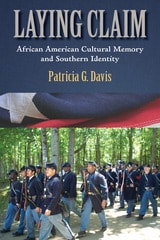
Laying Claim
African American Cultural Memory and Southern IdentityPatricia G. Davis
University of Alabama Press, 2016
Reclaiming Southern history through the voices, memories, and experiences of African Americans.
In Laying Claim: African American Cultural Memory and Southern Identity, Patricia Davis identifies the Civil War as the central narrative around which official depictions of southern culture have been defined. Because that narrative largely excluded African American points of view, the resulting southern identity was monolithically white. Davis traces how the increasing participation of black public voices in the realms of Civil War memory—battlefields, museums, online communities—has dispelled the mirage of “southernness” as a stolid cairn of white culture and has begun to create a more fluid sense of southernness that welcomes contributions by all of the region’s peoples.
Laying Claim offers insightful and penetrating examinations of African American participation in Civil War reenactments; the role of black history museums in enriching representations of the Civil War era with more varied interpretations; and the internet as a forum within which participants exchange and create historical narratives that offer alternatives to unquestioned and dominant public memories. From this evolving cultural landscape, Davis demonstrates how simplistic caricatures of African American experiences are giving way to more authentic, expansive, and inclusive interpretations of southernness.
As a case-study and example of change, Davis cites the evolution of depictions of life at Thomas Jefferson’s Monticello. Where visitors to the site once encountered narratives that repeated the stylized myth of Monticello as a genteel idyll, modern accounts of Jefferson’s day offer a holistic, inclusive, and increasingly honest view of Monticello as the residents on every rung of the social ladder experienced it.
Contemporary violence and attacks about or inspired by the causes, outcomes, and symbols of the Civil War, even one hundred and fifty years after its end, add urgency to Davis’s argument that the control and creation of public memories of that war is an issue of concern not only to scholars but all Americans. Her hopeful examination of African American participation in public memory illuminates paths by which this enduring ideological impasse may find resolutions.
Lazy Virtues
Teaching Writing in the Age of WikipediaRobert E. Cummings
Vanderbilt University Press, 2008
Focusing largely on the controversial website Wikipedia, the author explores the challenges confronting teachers of college writing in the increasingly electronic and networked writing environments their students use every day. Rather than praising or condemning that site for its role as an encyclopedia, Cummings instead sees it as a site for online collaboration between writers and a way to garner audience for student writing.
Applying an understanding of Commons-Based Peer Production theory, as developed by Yochai Benkler, this text is arranged around the following propositions:
-- Commons-Based Peer Production is a novel economic phenomenon which informs our current teaching model and describes a method for making sense of future electronic developments.
-- College writers are motivated to do their best work when they write for an authentic audience, external to the class.
-- Writing for a networked knowledge community invites students to participate in making knowledge, rather than only consuming it.
-- A plan for integrating networked writing for an external audience helps students understand the transition from high school to college writing.
-- Allowing students to review and self-select points of entry into electronic discourse fosters "laziness," or a new work dynamic where writers seek to better understand their own creativity in terms of a project's demands.
Lazy Virtues offers networked writing assignments to foster development of student writers by exposing them to the demands of professional audiences, asking them to identify and assess their own creative impulses in terms of a project's needs, and removing the writing teacher from the role of sole audience.
Learning from the Mess
Method/ological Praxis in Rhetoric and Writing StudiesAshley J. Holmes
University Press of Colorado, 2024
Lectures on Rhetoric and Belles Lettres
Hugh Blair. Edited by Linda Ferreira-Buckley and S. Michael Halloran
Southern Illinois University Press, 2005
This new edition of Hugh Blair’s Lectures on Rhetoric and Belles Lettres, edited by Linda Ferreira-Buckley and S. Michael Halloran, answers the need for a complete, reliable text. The book seeks to generate a renewed interest in Blair by provoking new inquiries into the tradition of belletristic rhetoric and by serving as both aid and incentive to others who may join in the project of improving understanding of this landmark rhetorical scholarship.
This editioncontains forty-seven lectures and remains faithful to the text of the 1785 London edition. The editors contextualize Hugh Blair’s motivations and thinking by providing in their introduction an extended account of Blair’s life and era. The bibliography of works by and about Blair is an invaluable aid, surpassing previous research on Blair.
Although the extent of its influence cannot be measured fully, Blair’s Lectures on Rhetoric and Belles Lettres was undoubtedly a primary vehicle for introducing many eighteenth- and nineteenth-century scholars to classical rhetoric and French belletristic rhetoric—its success due in part to the ease with which the lectures combine neoclassical and Enlightenment thought, accommodating emerging social concerns. Ferreira-Buckley and Halloran’s extensive treatment revives the tradition of belletristic rhetoric, improving the understanding of Blair’s place in the study of eighteenth- and nineteenth-century discourse, while finding him relevant in the twenty-first century.
Legible Sovereignties
Rhetoric, Representations, and Native American MuseumsLisa King
Oregon State University Press, 2017
King tracks the exhibit spaces at the Saginaw Chippewa Indian Tribe of Michigan’s Ziibiwing Center, Haskell Indian Nation University’s Cultural Center and Museum, and the Smithsonian’s Washington, DC branch of the National Museum of the American Indian over their first ten years, from their opening until the summer of 2014. Far from formulaic, each site has developed its own rhetorical approaches to reaching its public, revealing multiple challenges and successes in making Native self-representation legible and accessible.
Through documentation and analysis of the inaugural exhibits and recent installations, interviews with curators and staff, and investigation into audience reception of these spaces, Legible Sovereignties argues that there can be no single blanket solution for effective Indigenous self-representation. Instead, Legible Sovereignties demonstrates the nuanced ways in which each site must balance its rhetorical goals and its audience's needs, as well as its material constraints and opportunities, in order to reach its visitors and have Indigenous voices heard.
Lend Me Your Ear
Brenda Jo Brueggemann
Gallaudet University Press, 1999
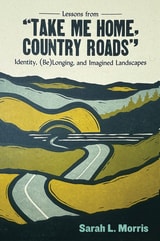
Lessons from "Take Me Home, Country Roads"
Identity, (Be)Longing, and Imagined LandscapesSarah L. Morris
West Virginia University Press, 2025
This book examines “Country Roads” as it illuminates a universal sense of belonging to place even as it obscures the literality of the place it names. In examining “Country Roads” as anthem, text, artifact, and rhetoric, this work untangles ideas related to place, belonging, identity, and pedagogy. Sarah L. Morris uses the Welsh term hiraeth, which is an existential longing for an idealized, sometimes imaginary home, as a governing framework for this work. She explores the song in various contexts, such as how it pertains to West Virginia geography and heritage and the diversity of these beliefs, external perceptions of the state, concepts of home and belonging, and the song as a phenomenon across different media platforms. “Take Me Home, Country Roads,” while being about West Virginia, has registered as a global phenomenon.
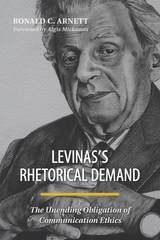
Levinas's Rhetorical Demand
The Unending Obligation of Communication EthicsRonald C. Arnett. Foreword by Algis Mickunas
Southern Illinois University Press, 2017
Distinguished Book Award, Philosophy of Communication Division, National Communication Association, 2017
Top Book Award, Communication Ethics Division, National Communication Association, 2017
Philosopher Emmanuel Levinas’s ethics as first philosophy explicates a human obligation and responsibility to and for the Other that is an unending and imperfect commitment. In Levinas’s Rhetorical Demand: The Unending Obligation of Communication Ethics, Ronald C. Arnett underscores the profundity of Levinas’s insights for communication ethics.Arnett outlines communication ethics as a primordial call of responsibility central to Levinas’s writing and mission, analyzing it through a Levinasian lens with examination of social artifacts ranging from the Heidegger-Cassirer debate to Rupert Murdoch’s News of the World story concerning illicit possession of information.
Levinas’s Rhetorical Demand offers an account of Levinas’s project and the pragmatic implications of attending to a call of responsibility to and for the Other. This book yields a rich and nuanced understanding of Levinas’s work, revealing the practical importance of his insights, and including a discussion of related theorists and thinkers.
Liberalism and the Culture of Security
The Nineteenth-Century Rhetoric of ReformKatherine Henry
University of Alabama Press, 2011
Rethinking the language of liberty, protection, and citizenship in nineteenth-century America.
Figures of protection and security are everywhere in American public discourse, from the protection of privacy or civil liberties to the protection of marriage or the unborn, and from social security to homeland security. Liberalism and the Culture of Security traces a crucial paradox in historical and contemporary notions of citizenship: in a liberal democratic culture that imagines its citizens as self-reliant, autonomous, and inviolable, the truth is that claims for citizenship—particularly for marginalized groups such as women and slaves—have just as often been made in the name of vulnerability and helplessness.
Katherine Henry traces this turn back to the eighteenth-century opposition of liberty and tyranny, which imagined our liberties as being in danger of violation by the forces of tyranny and thus in need of protection. She examines four particular instances of this rhetorical pattern. The first chapters show how women’s rights and antislavery activists in the antebellum era exploited the contradictions that arose from the liberal promise of a protected citizenry: first by focusing primarily on arguments over slavery in the 1850s that invoke the Declaration of Independence, including Harriet Beecher Stowe’s fiction and Frederick Douglass’s “Fourth of July” speech; and next by examining Angelina Grimké’s brief but intense antislavery speaking career in the 1830s.
New conditions after the Civil War and Emancipation changed the way arguments about civic inclusion and exclusion could be advanced. Henry considers the issue of African American citizenship in the 1880s and 1890s, focusing on the mainstream white Southern debate over segregation and the specter of a tyrannical federal government, and then turning to Frances E. W. Harper’s fictional account of African American citizenship in Iola Leroy. Finally, Henry examines Henry James’s 1886 novel The Bostonians, in which arguments over the appropriate role of women and the proper place of the South in post–Civil War America are played out as a contest between Olive Chancellor and Basil ransom for control over the voice of the eloquent girl Verena Tarrant.
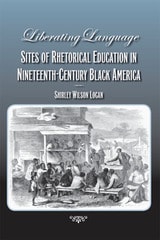
Liberating Language
Sites of Rhetorical Education in Nineteenth-Century Black AmericaShirley Wilson Logan
Southern Illinois University Press, 2008
Liberating Language identifies experiences of nineteenth-century African Americans—categorized as sites of rhetorical education—that provided opportunities to develop effective communication and critical text-interpretation skills. Author Shirley Wilson Logan considers how nontraditional sites, which seldom involved formal training in rhetorical instruction, proved to be effective resources for African American advancement.
Logan traces the ways that African Americans learned lessons in rhetoric through language-based activities associated with black survival in nineteenth-century America, such as working in political organizations, reading and publishing newspapers, maintaining diaries, and participating in literary societies. According to Logan, rhetorical training was manifested through places of worship and military camps, self-education in oratory and elocution, literary societies, and the black press. She draws on the experiences of various black rhetors of the era, such as
Frederick Douglass, Frances Harper, Fanny Coppin, Charles Chesnutt, Ida B. Wells, and the lesser-known Oberlin-educated Mary Virginia Montgomery, Virginia slave preacher "Uncle Jack," and former slave "Mrs. Lee."
Liberating Language addresses free-floating literacy, a term coined by scholar and writer Ralph Ellison, which captures the many settings where literacy and rhetorical skills were acquired and developed, including slave missions, religious gatherings, war camps, and even cigar factories. In Civil War camp- sites, for instance, black soldiers learned to read and write, corresponded with the editors of black newspapers, edited their own camp-based papers, and formed literary associations.
Liberating Language outlines nontraditional means of acquiring rhetorical skills and demonstrates how African Americans, faced with the lingering consequences of enslavement and continuing oppression, acquired rhetorical competence during the late eighteenth century and throughout the nineteenth century.
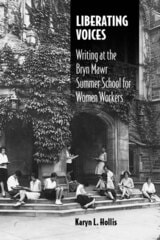
Liberating Voices
Writing at the Bryn Mawr Summer School for Women WorkersKaryn L. Hollis
Southern Illinois University Press, 2004
During the 1920s and 1930s at the Bryn Mawr Summer School for Women Workers, working-class women were educated in the liberal arts and instructed in writing to assume more powerful roles in the industrial workplace. In Liberating Voices: Writing at the Bryn Mawr Summer School for Women Workers, Karyn L. Hollis tells the remarkable story of how this multiclass, multiethnic American institution rooted in composition pedagogy, literary history, and leftist thought emerged from the broad social, economic, and ideological trends of the era. The summer school curriculum, Hollis shows, enhanced the individual and collective self-confidence of the 1,800 women who studied there between 1921 and 1938.
Drawing heavily on the women’s writings—including autobiography, poetry, labor drama, humor, and economic reporting—Liberating Voices adds significantly to the small oeuvre of published writing by working-class women, who were, in this case, mostly nontraditional students, immigrants, and minorities. Outlining a materialist pedagogy that centers on the women’s daily economic struggles as well as their family and community experiences, Hollis reveals the tensions that stemmed from differences in race, ethnicity, class, and religion. She also shows how the students exploited cultural scripts and drew strength from their diversity, eventually insisting on a democratic sharing of power with faculty and administrators at the Summer School.
Hollis provides a thorough ethnography of the Summer School with respect to its place in the social and political history of the 1920s and 1930s, and then situates the school’s pedagogy within the history of American education and composition instruction. Concepts from literary criticism and composition theory provide the framework for an analysis of the working women’s autobiographical writing, revealing how the narrative voice of their prose grew from weak and individualized to empowered and collective as the women described their families, childhood, work, unions, and education over time. The volume is complemented by sixteen illustrations.
Additional analysis of the women’s poetry points to their skill as both producers and consumers of literature. The common theme of body versus a powerful machine in the workplace bears witness to the industrial exploitation the women endured. Taking up postmodern questions of agency and voice, Hollis argues that the women used a variety of cultural texts to construct discourses that reflected their needs and desires. Liberating Voices not only provides a previously untold chapter in the history of American worker education, it also showcases a liberating pedagogy that has salient implications for contemporary classrooms.
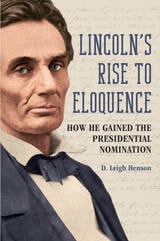
Lincoln's Rise to Eloquence
How He Gained the Presidential NominationD. Leigh Henson
University of Illinois Press, 2024
Insightful and revealing, Lincoln’s Rise to Eloquence follows Lincoln from his early career through the years-long clashes with Stephen A. Douglas to trace the future president’s evolution as a communicator and politician.
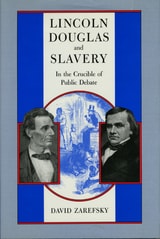
Lincoln, Douglas, and Slavery
In the Crucible of Public DebateDavid Zarefsky
University of Chicago Press, 1990
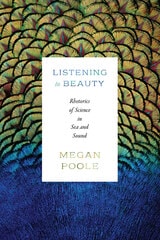
Listening to Beauty
Rhetorics of Science in Sea and SoundMegan Poole
University of Chicago Press, 2025
Our attempts to understand the world are always more than simply rational. Our bodies learn through lived experience, our natural environments challenge what we think we know, and we take lessons from our nonhuman kin. Even scientists, often considered paragons of rationality, frequently describe their findings in the language of beauty. For rhetorician Megan Poole, beauty is integral to how scientific research works.
Drawing on interviews with leading biologists, Poole explores what happens when scientists set aside objectivity and listen for beauty around them. The wonder we feel at the plumage of birds, the melodies of whales, or the caretaking of elephants may not help us (on its own) to isolate a given fact, but such encounters may teach us to open ourselves to a different way of knowing entirely. Through stories about researchers’ encounters with wonder, Listening to Beauty reveals how scientific discovery happens sometimes unsystematically, sometimes incoherently, often beautifully.
Literacy, Sexuality, Pedagogy
Theory and Practice for Composition StudiesJonathan Alexander
Utah State University Press, 2008
In Literacy, Sexuality, Pedagogy, Jonathan Alexander argues for the development of students' "sexual literacy." Such a literacy is not just concerned with developing fluency with sexuality as a "hot" topic, but with understanding the intimate interconnectedness of sexuality and literacy in Western culture. Using the work of scholars in queer theory, sexuality studies, and the New Literacy Studies, Alexander unpacks what he sees as a crucial--if often overlooked--dimension of literacy: the fundamental ways in which sexuality has become a key component of contemporary literate practice, of the stories we tell about ourselves, our communities, and our political investments.
Alexander then demonstrates through a series of composition exercises and writing assignments how we might develop students' understanding of sexual literacy. Examining discourses of gender, heterosexuality, and marriage allows students (and instructors) a critical opportunity to see how the languages we use to describe ourselves and our communities are saturated with ideologies of sexuality. Understanding how sexuality is constructed and deployed as a way to "make meaning" in our culture gives us a critical tool both to understand some of the fundamental ways in which we know ourselves and to challenge some of the norms that govern our lives. In the process, we become more fluent with the stories that we tell about ourselves and discover how normative notions of sexuality enable (and constrain) narrations of identity, culture, and politics. Such develops not only our understanding of sexuality, but of literacy, as we explore how sexuality is a vital, if vexing, part of the story of who we are.
Literature, Law, and Rhetorical Performance in the Anticolonial Atlantic
Anne W. Gulick
The Ohio State University Press, 2016
Responses to this question take shape across the black Atlantic from Haiti to South Africa, in texts ranging from Haiti’s Declaration of Independence and work by C. L. R. James to South Africa’s Freedom Charter, Aimé Césaire’s poem Notebook of a Return to the Native Land, and Ngugi wa Thiong’o’s A Grain of Wheat. These texts constitute a robust transatlantic tradition of challenging colonial and imperial authority through rhetorical performance. Drawing on the cosmopolitan aspirations and emancipatory energies of the political declaration, this tradition aims to radically reinvent the possibilities for law and political belonging in the postcolonial future.
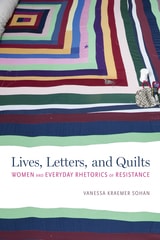
Lives, Letters, and Quilts
Women and Everyday Rhetorics of ResistanceVanessa Kraemer Sohan
University of Alabama Press, 2020
In Lives, Letters, and Quilts: Women and Everyday Rhetorics of Resistance, Vanessa Kraemer Sohan applies a translingual and transmodal framework informed by feminist rhetorical practice to three distinct case studies that demonstrate women using unique and effective rhetorical strategies in political, religious, and artistic contexts. These case studies highlight a diverse set of actors uniquely situated by their race, gender, class, or religion, but who are nevertheless connected by their capacity to envision and recontextualize the seemingly ordinary means and materials available to them in order to effectively persuade others.
The Great Depression provides the backdrop for the first case study, a movement whereby thousands of elderly citizens proselytized and fundraised for a monthly pension plan dreamt up by a California doctor in the hopes of lifting themselves out of poverty. Sohan investigates how the Townsend Plan’s elderly supporters—the Townsendites—worked within and across language, genre, mode, and media to enable them for the first time to be recognized by others, and themselves, as a viable political constituency.
Next, Sohan recounts the story of Quaker minister Eliza P. Kirkbride Gurney who met President Abraham Lincoln in 1862. Their subsequent epistolary exchanges concerning conscientious objectors made such an impression on him that one of her letters was rumored to be in his pocket the night of his assassination. Their exchanges and Gurney’s own accounts of her transnational ministry in her memoir provide useful examples of how, throughout history, women rhetors have adopted and transformed typically underappreciated forms of rhetoric—such as the epideictic—for their particular purposes.
The final example focuses on the Gee’s Bend quiltmakers—a group of African American women living in rural Alabama who repurpose discarded work clothes and other cast-off fabrics into the extraordinary quilts for which they are known. By drawing on the means and materials at hand to create celebrated works of art in conditions of extreme poverty, these women show how marginalized artisans can operate both within and outside the bounds of established aesthetic traditions and communicate the particulars of their experience across cultural and economic divides.
Living Chronic
Agency and Expertise in the Rhetoric of DiabetesLora Arduser
The Ohio State University Press, 2017
Diabetes, referred to as an epidemic for more than a decade, remains one of our most significant health issues in the twenty-first century. Because self-management is an important component of living with the disease, the biomedical concept of patient agency has long stressed notions of individual responsibility and autonomy. However, dramatic shifts in both health care and cultural practices call for a reassessment of traditional definitions of patient agency.
Lora Arduser’s Living Chronic: Agency and Expertise in the Rhetoric of Diabetes answers this call with a unique rhetorical examination of one of the most critical issues in contemporary health: how we live and work with being chronic. Through her perceptive analysis of the discourse of both people with diabetes and health care providers, Arduser presents a new model for patient agency—one that advocates for a relational, fluid concept of agency that blurs the boundaries between medical experts and patients. Her thought-provoking use of bodily and rhetorical plasticity crafts a multidimensional picture of patient agency that profoundly affects how rhetorical scholars, people living with chronic illness, and health care providers can forge patient-centered discourse and practices.
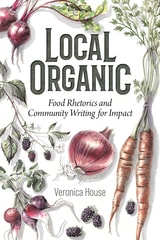
Local Organic
Food Rhetorics and Community Writing for ImpactVeronica House
Utah State University Press, 2025
Local Organic offers writing and rhetoric faculty and graduate students an ecological methodology to produce, teach, and theorize writing to help communities engage with a wide array of social issues and to work toward individual and community-level impacts.
Logic as a Liberal Art
An Introduction to Rhetoric and ReasoningR. E. Houser
Catholic University of America Press, 2020
Loving the World Appropriately
Persuasion and the Transformation of SubjectivityJames L. Kastely
University of Chicago Press, 2022
What is persuasion? For some, it is the ideal alternative to violence. For others, persuasion is simply a neutral instrumentality—a valued source of soft power. Both positions rest on a fundamental belief: persuasion is a power that resides in a speaker acting on an audience. Loving the World Appropriately asks a different, more fundamental, question: why does an audience need persuasion? In shifting our focus, James Kastely delivers a provocative new history of rhetoric and philosophy, one that describes rhetoric as more than a matter of effective communication and recasts persuasion as a philosophical concern central to notions of human subjectivity. Ultimately, Kastely insists, persuasion enables us to love the world appropriately.