Results by title
587 books match the query 'Short Stories (single author)' and 17 start with l
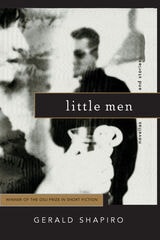
LITTLE MEN
NOVELLAS AND STORIESGERALD SHAPIRO
The Ohio State University Press, 2004
Ira Mittelman, the middle-aged hero of “A Box of Ashes,” one of two novellas in Little Men, is wrestling with a dilemma: should he fulfill his late father’s dying wish by taking the old man’s ashes back to Missouri, to scatter them on the grounds of Camp HaHaTonka, the Boy Scout camp where Ira spent several summers as a boy? It’s a long way to go just to dump some ashes, and if Ira makes this pilgrimage, his absence might jeopardize the fragile relationship he’s managed to maintain with his ex-wife (they’re still having sex every Friday night).
In “Spivak in Babylon,” Little Men’s other novella, it’s 1982, and Leo Spivak, an ambitious 30-year-old copywriter at a large Chicago advertising agency, is about to get his big break: a chance to go to Hollywood to participate for the first time in the filming of a television commercial. A week in Hollywood, on the company’s expense account! A room at the fabled Chateau Marmont (Garbo’s old suite, in fact)! The only problem is the subject of the commercial itself: a new feminine hygiene spray to be marketed to pre-adolescent girls. Hovering over all the proceedings in “Spivak in Babylon” is the genial, befuddled presence of President Ronald Reagan, the Leader of the Free World, who haunts Leo’s dreams.
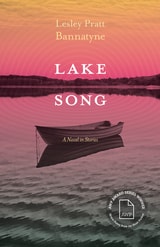
Lake Song
A Novel in StoriesLesley Pratt Bannatyne
The Ohio State University Press, 2025
Selected by Deesha Philyaw as winner of the AWP Grace Paley Prize in Short Fiction
Shortlisted, 2026 Massachusetts Book Award, Fiction Category
The linked stories of Lake Song, set in the fictional town of Kinder Falls in New York’s Finger Lakes region, span decades to plumb the complexities, violence, and compassion of small-town life as the twentieth century hurtles forward. Against a backdrop of historical events—bootlegging, Klan attacks, gold smuggling, the Albany Ketchup Murders, the 1965 Northeast blackout—a generations-long mystery unwinds. In 1906 Mavis Staunch drowns in Okisee Lake days after she refuses to sell her land to a trio of brothers. The same night, one of the brothers, Angus Epps, doesn’t come home. Few suspect the two events are connected, and no one imagines the role that a ten-year-old boy, a canoe, and a pack of coyotes play in the tragedies. Spiritualists, grifters, sugar makers, arsonists, seekers, and saleswomen wind through each other’s lives and across decades to add layers of resonance to each captivating story. The mercurial lake that unites the people of Kinder Falls sustains as much as it haunts, both witness and diary.
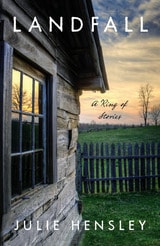
Landfall
A Ring of StoriesJulie Hensley
The Ohio State University Press, 2016
Late Fire, Late Snow
New and Uncollected PoemsRobert Francis
University of Massachusetts Press, 1992
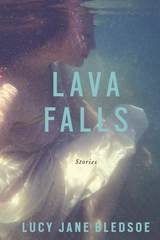
Lava Falls
Lucy Jane Bledsoe
University of Wisconsin Press, 2020
Refusing to buckle under the pressures of family and political traumas, the sojourners in this collection are unified by themes of creative expression and of love—how we define it, how we are impelled by it, and how we are lifted by it.
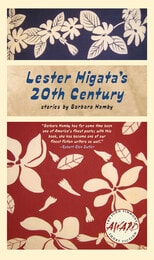
Lester Higata's 20th Century
Barbara Hamby
University of Iowa Press, 2010
“Lester Higata knew his life was about to end when he walked out on the lanai behind his house in Makiki and saw his long-dead father sitting in a lawn chair near the little greenhouse where Lester kept his orchids.” Thus begins Barbara Hamby’s magical narrative of the life of a Japanese American man in Honolulu. The quietly beautiful linked stories in Lester Higata’s 20th Century bring us close to people who could be, and should be, our friends and neighbors and families.
Starting in 1999 with his conversation with his father, continuing backward in time throughout his life with his wife, Katherine, and their children in Hawai‘i, and ending with his days in the hospital in 1946, as he heals from a wartime wound and meets the woman he will marry, Hamby recreates not just one but any number of the worlds that have shaped Lester. The world of his mother, as stubbornly faithful to Japan and Buddhism as Katherine’s mother is to Ohio and conservative Christianity; the world of his children, whose childhoods and adulthoods are vastly different from his own; the world after Pearl Harbor and Vietnam; the world of a professional engineer and family man: the worlds of Lester Higata’s 20th Century are filled with ordinary people living extraordinary lives, moving from farms to classrooms and offices, from racism to acceptance and even love, all in a setting so paradisal it should be heaven on earth.
Never forgetting the terrors of wartime—“We wake one morning with the wind racing toward us like an animal, and nothing is ever the same”—but focusing on the serene joys of peacetime, Lester populates his worlds with work, faith, and family among the palm trees and blue skies of the island he loves.
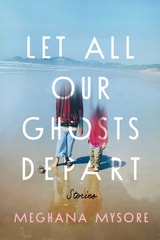
Let All Our Ghosts Depart
StoriesMeghana Mysore
West Virginia University Press, 2026
In this powerful debut collection, present-day women of the South Asian diaspora grapple with belonging and are haunted by intergenerational inheritances. Meghana Mysore, herself the daughter of Indian immigrants, spins her stories around narrators struggling to assimilate into the surreal world around them. At times, this disorientation skews speculative, where deceased mothers reappear as chiding, broken-down cars. At turns absurd and darkly humorous, the women in Mysore’s stories all experience transformation, be it small or monumental, where they find spaces of freedom and delight within their circumstances.
Letters of Transit
Theodore Worozbyt
University of Massachusetts Press, 2008
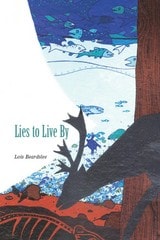
Lies to Live By
Lois Beardslee
Michigan State University Press, 2003
Lies To Live By brings together two selections of stories by Ojibwe storyteller Lois Beardslee. “Lies to Live By,” a series of interdependent tales, reflects the storyteller’s role in interpreting traditional stories for contemporary audiences, while preserving traditions based not in mysticism but in pragmatism. In “Calm Days,” three generations—the narrator, her grandfather, and her son—spend a week together on a remote island during the course of which they demonstrate the continuity of Ojibwe life. Together these stories weave the contemporary and the traditional to show how cultural diversity can be preserved even as cultural boundaries are transcended.

Life-Like
Toby Litt
Seagull Books, 2014
The twenty-six stories begin with Paddy and Agatha, an English couple last seen in Litt’s Ghost Story. Following the stillbirth of their second child, their marriage has gently begun to collapse. Paddy and Agatha both meet someone else. First, Paddy meets Kavita, and Agatha meets John. Then each of these four engages with a different new person—and so on, through a doubling and redoubling of intimately interconnected stories. The remaining short stories exemplify Litt’s impressive, unflinching prose.
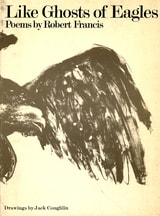
Like Ghosts of Eagles
Robert Francis
University of Massachusetts Press, 1974
Marianne Moore said of Robert Francis's poetry, “He is so penetrating, delicate, and wise, one goes away without having said a word, merely grateful to have received so much.”
Francis readers will welcome this new volume of verse which features poems in the whole technical gamut of Francis styles, including word count, with which he first delighted critics in Come out into the Sun.
Like Ghosts of Eagles also presents for the first time entirely new Francis styles and techniques. Such poems as “Bloodstains,” “Going to the Funeral,” and “Silent Poem” are distinguished by “fragmented surface,” a technique in which single words or short phrases are delivered without connecting tissue. Also new to his work are poems in which sentences are fused together in one continuous stream, as in “The Mountain,” “The Righteous,” and “The Peacock.”
The works are equally diversified in mood, ranging from the bitterly satirical through the elegiac, lyrical and playful, to poems of pure celebration. “Few others writing today work with such fragile sounds and with such delicate, almost pastel perceptions,” wrote David Clark upon first reading the manuscript of Like Ghosts of Eagles.
Listen & Other Stories
Liam Callanan
Four Way Books, 2015
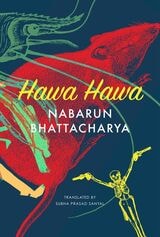
Long Live the Counter-Revolution
Hawa Hawa' and Other StoriesNabarun Bhattacharya
Seagull Books, 2022
In this wildly inventive collection of Nabarun Bhattacharya’s stories, we meet characters such as a trigger-happy cop in an authoritarian police state, a man who holds on to a piece of rope from a deadly noose, a retired revolutionary thrilled by delusions of grandeur, and people working for a corporation that arranges lavish suicides for a price. Ranging from scathing satires of society to surreal investigations of violence and love, these stories are also a window onto the political and social climate in Bengal, tracing both pan-Indian developments like the 1975 Emergency and local ones like militant-leftist Naxalism and the decades-long Communist reign in the state. Expertly translated from the Bengali, Hawa Hawa and Other Stories is a journey through the mind of one of the most daring countercultural writers of India, one with particular resonance in these chaotic times.
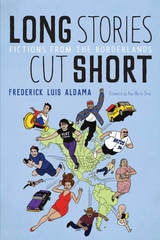
Long Stories Cut Short
Fictions from the BorderlandsFrederick Luis Aldama; Foreword by Ana María Shua
University of Arizona Press, 2017
Xbox videogamer cholo cyberpunks. Infants who read before they talk. Vatos locos, romancing abuelos, border crossers and border smugglers, drug kingpins, Latina motorbike riders, philosophically musing tweens, and so much more.
The stories in this dynamic bilingual prose-art collection touch on the universals of romance, family, migration and expulsion, and everyday life in all its zany configurations. Each glimpse into lives at every stage—from newborns and children to teens, young adults, and the elderly—further submerges readers in psychological ups and downs. In a world filled with racism, police brutality, poverty, and tensions between haves and have-nots, these flashes of fictional insight bring gleaming clarity to life lived where all sorts of borders meet and shift.
Frederick Luis Aldama and graphic artists from Mapache Studios give shape to ugly truths in the most honest way, creating new perceptions, thoughts, and feelings about life in the borderlands of the Américas. Each bilingual prose-art fictional snapshot offers an unsentimentally complex glimpse into what it means to exist at the margins of society today. These unflinching and often brutal fictions crisscross spiritual, emotional, and physical borders as they give voice to all those whom society chooses not to see.
Love, Dirt
Bruce Johnson
University of Iowa Press, 2025
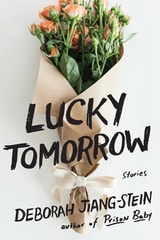
Lucky Tomorrow
StoriesDeborah Jiang-Stein
University of Minnesota Press, 2025
Lives of longing and resilience, searching and belonging in a debut story collection from a memoirist and renowned advocate for change
For a Lucky Tomorrow Buy a Flower Today. Is it true? a prospective customer asks. About the luck? “Absolutely!” Felma says. Flowers, she knows, are all that’s anchored in this world, even if not for long, and like others in these luminous stories, Felma knows what it is to be rootless. In Lucky Tomorrow, Deborah Jiang-Stein presents an unforgettable cast of characters dreaming of redemption, purpose, and connection in a wounded yet beautiful world.
A young girl stuck working at her family’s candy stand. A former priest trapped on a crowded train. A prisoner robbed of the book she’s been writing. A father haunted by his broken family. A woman confined to a psych ward. A reverend caring for her dying housemate. And Felma, a flower vendor, searching for the daughter she gave birth to while in prison, who was swiftly bundled away. Felma’s story leads us in, through, and around the others—a central beating heart for these lives on the fringes, where Jiang-Stein finds a singular, tenacious humanity.
The stories in Lucky Tomorrow move through settings drawn from the path of the author’s own life: Seattle, where she grew up after being born in an Appalachian prison; Tokyo, where she once lived; the Twin Cities, where she currently resides; and the American South, where she travels for much of her advocacy work with women in prison. Pushing the boundaries of genre, Jiang-Stein delicately layers the stories of these outcasts, eccentrics, and visionaries, gathering them in from the shadows with remarkable empathy and candor, laying bare our shared sorrows and joys.
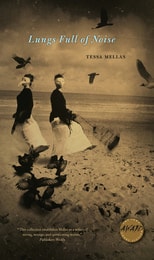
Lungs Full of Noise
Tessa Mellas
University of Iowa Press, 2013
Figure skaters screw skate blades into the bones of their feet to master elusive jumps. A divorcee steals the severed arm of her ex to reclaim the fragments of a dissolved marriage. Following the advice of a fashion magazine, teenaged girls binge on grapes to dye their skin purple and attract prom dates. And a college freshman wages war on her roommate from Jupiter, who has inadvertently seduced all the boys in their dorm with her exotic hermaphroditic anatomy.
But it isn’t just the characters who are in crisis. In Lungs Full of Noise, personal disasters mirror the dissolution of the natural world. Written in lyrical prose with imagination and humor, Tessa Mellas’s collection is an aviary of feathered stories that are rich, emotive, and imbued with the strength to suspend strange new worlds on delicate wings.