Results by title
3064 books match the query 'Social conditions' and 121 start with l
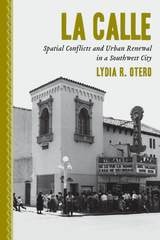
La Calle
Spatial Conflicts and Urban Renewal in a Southwest CityLydia R. Otero
University of Arizona Press, 2010
Otero examines conflicting claims to urban space, place, and history as advanced by two opposing historic preservationist groups: the La Placita Committee and the Tucson Heritage Foundation. Otero gives voice to those who lived in, experienced, or remembered this contested area, and analyzes the historical narratives promoted by Anglo American elites in the service of tourism and cultural dominance.
La Calle explores the forces behind the mass displacement: an unrelenting desire for order, a local economy increasingly dependent on tourism, and the pivotal power of federal housing policies. To understand how urban renewal resulted in the spatial reconfiguration of downtown Tucson, Otero draws on scholarship from a wide range of disciplines: Chicana/o, ethnic, and cultural studies; urban history, sociology, and anthropology; city planning; and cultural and feminist geography.
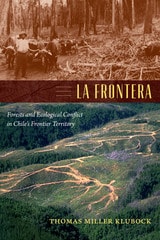
La Frontera
Forests and Ecological Conflict in Chile's Frontier TerritoryThomas Miller Klubock
Duke University Press, 2014
La Nouvelle France
The Making of French Canada - A Cultural HistoryPeter N. Moogk
Michigan State University Press, 2000
On one level, Peter Moogk's latest book, La Nouvelle France: The Making of French Canada—A Cultural History, is a candid exploration of the troubled historical relationship that exists between the inhabitants of French- and English- speaking Canada. At the same time, it is a long- overdue study of the colonial social institutions, values, and experiences that shaped modern French Canada. Moogk draws on a rich body of evidence—literature; statistical studies; government, legal, and private documents in France, Britain, and North America— and traces the roots of the Anglo-French cultural struggle to the seventeenth century. In so doing, he discovered a New France vastly different from the one portrayed in popular mythology. French relations with Native Peoples, for instance, were strained. The colony of New France was really no single entity, but rather a chain of loosely aligned outposts stretching from Newfoundland in the east to the Illinois Country in the west.
Moogk also found that many early immigrants to New France were reluctant exiles from their homeland and that a high percentage returned to Europe. Those who stayed, the Acadians and Canadians, were politically conservative and retained Old Régime values: feudal social hierarchies remained strong; one's individualism tended to be familial, not personal; Roman Catholicism molded attitudes and was as important as language in defining Acadian and Canadian identities. It was, Moogk concludes, the pre-French Revolution Bourbon monarchy and its institutions that shaped modern French Canada, in particular the Province of Quebec, and set its people apart from the rest of the nation.
La Patria del Criollo
An Interpretation of Colonial GuatemalaSevero Martínez Peláez
Duke University Press, 2009
Martínez Peláez asserts that “the coffee dictatorships were the full and radical realization of criollo notions of the patria.” This patria, or homeland, was one that criollos had wrested from Spaniards in the name of independence and taken control of based on claims of liberal reform. He contends that since labor is needed to make land productive, the exploitation of labor, particularly Indian labor, was a necessary complement to criollo appropriation. His depiction of colonial reality is bleak, and his portrayal of Spanish and criollo behavior toward Indians unrelenting in its emphasis on cruelty and oppression. Martínez Peláez felt that the grim past he documented surfaces each day in an equally grim present, and that confronting the past is a necessary step in any effort to improve Guatemala’s woes. An extensive introduction situates La Patria del Criollo in historical context and relates it to contemporary issues and debates.
La Raza Cosmética
Beauty, Identity, and Settler Colonialism in Postrevolutionary MexicoNatasha Varner
University of Arizona Press, 2020
Critically examining beauty pageants, cinema, tourism propaganda, photography, murals, and more, Natasha Varner shows how postrevolutionary understandings of mexicanidad were fundamentally structured by legacies of colonialism, as well as shifting ideas about race, place, and gender. This interdisciplinary study smartly weaves together cultural history, Indigenous and settler colonial studies, film and popular culture analysis, and environmental and urban history. It also traces a range of Indigenous interventions in order to disrupt top-down understandings of national identity construction and to “people” this history with voices that have all too often been entirely ignored.
Labor Journalism, Labor Feminism
Women at the Federated PressVictoria M. Grieve
University of Illinois Press, 2026
These journalists wrote women into labor news by shedding light on essential issues like the need for equal pay and an end to discrimination. Their work increased women’s visibility in unions and the workforce while revealing that not only class but gender and race shaped their on-the-job experiences. Grieve also examines labor feminism within the larger stories of links between the Old Left and New Left and the FP’s pioneering role in articulating early iterations of intersectional feminism.
A compelling portrait of four women and a movement, Labor Journalism, Labor Feminism looks at an essential labor press organization and profiles politically active, leftist women who created relationships, established networks, and worked for social change.
Labor, Loyalty, and Rebellion
Southwestern Illinois Coal Miners & World War ICarl R. Weinberg
Southern Illinois University Press, 2005
On April 5, 1918, as American troops fought German forces on the Western Front, German American coal miner Robert Prager was hanged from a tree outside Collinsville, Illinois, having been accused of disloyal utterances about the United States and chased out of town by a mob. In Labor, Loyalty, and Rebellion: Southwestern Illinois Coal Miners and World War I, Carl R. Weinberg offers a new perspective on the Prager lynching and confronts the widely accepted belief among labor historians that workers benefited from demonstrating loyalty to the nation.
The first published study of wartime strikes in southwestern Illinois is a powerful look at a group of people whose labor was essential to the war economy but whose instincts for class solidarity spawned a rebellion against mine owners both during and after the war. At the same time, their patriotism wreaked violent working-class disunity that crested in the brutal murder of an immigrant worker. Weinberg argues that the heightened patriotism of the Prager lynching masked deep class tensions within the mining communities of southwestern Illinois that exploded after the Great War ended.
Ladies of the Canyons
A League of Extraordinary Women and Their Adventures in the American SouthwestLesley Poling-Kempes
University of Arizona Press, 2015
Educated, restless, and inquisitive, Natalie Curtis, Carol Stanley, Alice Klauber, and Mary Cabot Wheelwright were plucky, intrepid women whose lives were transformed in the first decades of the twentieth century by the people and the landscape of the American Southwest. Part of an influential circle of women that included Louisa Wade Wetherill, Alice Corbin Henderson, Mabel Dodge Luhan, Mary Austin, and Willa Cather, these ladies imagined and created a new home territory, a new society, and a new identity for themselves and for the women who would follow them.
Their adventures were shared with the likes of Theodore Roosevelt and Robert Henri, Edgar Hewett and Charles Lummis, Chief Tawakwaptiwa of the Hopi, and Hostiin Klah of the Navajo. Their journeys took them to Monument Valley and Rainbow Bridge, into Canyon de Chelly, and across the high mesas of the Hopi, down through the Grand Canyon, and over the red desert of the Four Corners, to the pueblos along the Rio Grande and the villages in the mountains between Santa Fe and Taos.
Although their stories converge in the outback of the American Southwest, the saga of Ladies of the Canyons is also the tale of Boston’s Brahmins, the Greenwich Village avant-garde, the birth of American modern art, and Santa Fe’s art and literary colony.
Ladies of the Canyons is the story of New Women stepping boldly into the New World of inconspicuous success, ambitious failure, and the personal challenges experienced by women and men during the emergence of the Modern Age.
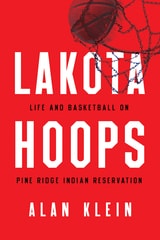
Lakota Hoops
Life and Basketball on Pine Ridge Indian ReservationAlan Klein
Rutgers University Press, 2020
In Lakota Hoops, anthropologist Alan Klein trains his experienced eye on the ways that Lakota traditions find a seamless expression in the sport. In a variety of way such as weaving time-honored religious practices into the game or extending the warrior spirit of Crazy Horse to the players on the court, basketball has become a preferred way of finding continuity with the past. But the game is also well suited to the present and has become the largest regular gathering for all Lakota, promoting national pride as well as a venue for the community to creatively and aggressively confront white bigotry when needed.
Richly researched and filled with interviews with Pine Ridge residents, including both male and female players, Lakota Hoops offers a compelling look at the highs and lows of a community that has made basketball its own.
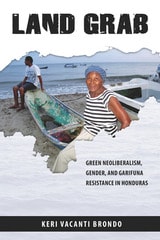
Land Grab
Green Neoliberalism, Gender, and Garifuna Resistance in HondurasKeri Vacanti Brondo
University of Arizona Press, 2013
Employing approaches from feminist political ecology, critical race studies, and ethnic studies,Keri Vacanti Brondo illuminates three contemporary development paradoxes in Honduras: the recognition of the rights of indigenous people at the same time as Garifuna are being displaced in the name of development; the privileging of foreign research tourists in projects that promote ecotourism but result in restricting Garifuna from traditional livelihoods; and the contradictions in Garifuna land-rights claims based on native status when mestizos are reserving rights to resources as natives themselves.
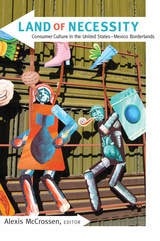
Land of Necessity
Consumer Culture in the United States–Mexico BorderlandsAlexis McCrossen, ed.
Duke University Press, 2009
In Land of Necessity, historians and anthropologists unravel the interplay of the national and transnational and of scarcity and abundance in the region split by the 1,969-mile boundary line dividing Mexico and the United States. This richly illustrated volume, with more than 100 images including maps, photographs, and advertisements, explores the convergence of broad demographic, economic, political, cultural, and transnational developments resulting in various forms of consumer culture in the borderlands. Though its importance is uncontestable, the role of necessity in consumer culture has rarely been explored. Indeed, it has been argued that where necessity reigns, consumer culture is anemic. This volume demonstrates otherwise. In doing so, it sheds new light on the history of the U.S.-Mexico borderlands, while also opening up similar terrain for scholarly inquiry into consumer culture.
The volume opens with two chapters that detail the historical trajectories of consumer culture and the borderlands. In the subsequent chapters, contributors take up subjects including smuggling, tourist districts and resorts, purchasing power, and living standards. Others address home décor, housing, urban development, and commercial real estate, while still others consider the circulation of cinematic images, contraband, used cars, and clothing. Several contributors discuss the movement of people across borders, within cities, and in retail spaces. In the two afterwords, scholars reflect on the U.S.-Mexico borderlands as a particular site of trade in labor, land, leisure, and commodities, while also musing about consumer culture as a place of complex political and economic negotiations. Through its focus on the borderlands, this volume provides valuable insight into the historical and contemporary aspects of the big “isms” shaping modern life: capitalism, nationalism, transnationalism, globalism, and, without a doubt, consumerism.
Contributors. Josef Barton, Peter S. Cahn, Howard Campbell, Lawrence Culver, Amy S. Greenberg, Josiah McC. Heyman, Sarah Hill, Alexis McCrossen, Robert Perez, Laura Isabel Serna, Rachel St. John, Mauricio Tenorio-Trillo, Evan R. Ward
Land of Opportunity
One Family's Quest for the American Dream in the Age of CrackWilliam M. Adler
University of Michigan Press, 2021
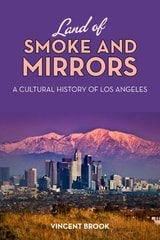
Land of Smoke and Mirrors
A Cultural History of Los AngelesBrook, Vincent
Rutgers University Press, 2013
Unlike the more forthrightly mythic origins of other urban centers—think Rome via Romulus and Remus or Mexico City via the god Huitzilopochtli—Los Angeles emerged from a smoke-and-mirrors process that is simultaneously literal and figurative, real and imagined, material and metaphorical, physical and textual. Through penetrating analysis and personal engagement, Vincent Brook uncovers the many portraits of this ever-enticing, ever-ambivalent, and increasingly multicultural megalopolis. Divided into sections that probe Los Angeles’s checkered history and reflect on Hollywood’s own self-reflections, the book shows how the city, despite considerable remaining challenges, is finally blowing away some of the smoke of its not always proud past and rhetorically adjusting its rear-view mirrors.
Part I is a review of the city’s history through the early 1900s, focusing on the seminal 1884 novel Ramona and its immediate effect, but also exploring its ongoing impact through interviews with present-day Tongva Indians, attendance at the 88th annual Ramona pageant, and analysis of its feature film adaptations.
Brook deals with Hollywood as geographical site, film production center, and frame of mind in Part II. He charts the events leading up to Hollywood’s emergence as the world’s movie capital and explores subsequent developments of the film industry from its golden age through the so-called New Hollywood, citing such self-reflexive films as Sunset Blvd.,Singin’ in the Rain, and The Truman Show.
Part III considers LA noir, a subset of film noir that emerged alongside the classical noir cycle in the 1940s and 1950s and continues today. The city’s status as a privileged noir site is analyzed in relation to its history and through discussions of such key LA noir novels and films as Double Indemnity, Chinatown, and Crash.
In Part IV, Brook examines multicultural Los Angeles. Using media texts as signposts, he maps the history and contemporary situation of the city’s major ethno-racial and other minority groups, looking at such films as Mi Familia (Latinos), Boyz N the Hood (African Americans), Charlotte Sometimes (Asians), Falling Down (Whites), and The Kids Are All Right (LGBT).
Land, Labor, and Capital in Modern Yucatan
Essays in Regional History and Political EconomyJeffrey T. Brannon
University of Alabama Press, 1991
Owing to Yucatan’s relative isolation, many assume that the history and economy of the peninsula have evolved in a distinctive way, apart from the central government in Mexico City and insulated from world social and economic factors. The essays in this volume suggest that this has not been the case: the process of development in Yucatan has been linked firmly to national and global forces of change over the past two centuries. The essays are by U.S., Mexican, Canadian, and Belizean social scientists representing both well-established and younger scholars. The result is a perspective on Yucatan’s historical development that is at once international, interdisciplinary, and intergenerational.
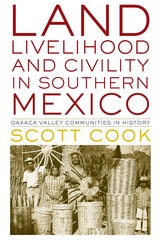
Land, Livelihood, and Civility in Southern Mexico
Oaxaca Valley Communities in HistoryBy Scott Cook
University of Texas Press, 2014
In the Valley of Oaxaca in Mexico’s Southern Highland region, three facets of sociocultural life have been interconnected and interactive from colonial times to the present: first, community land as a space to live and work; second, a civil-religious system managed by reciprocity and market activity wherein obligations of citizenship, office, and festive sponsorships are met by expenditures of labor-time and money; and third, livelihood. In this book, noted Oaxacan scholar Scott Cook draws on thirty-five years of fieldwork (1965–1990) in the region to present a masterful ethnographic historical account of how nine communities in the Oaxaca Valley have striven to maintain land, livelihood, and civility in the face of transformational and cumulative change across five centuries.
Drawing on an extensive database that he accumulated through participant observation, household surveys, interviews, case studies, and archival work in more than twenty Oaxacan communities, Cook documents and explains how peasant-artisan villagers in the Oaxaca Valley have endeavored over centuries to secure and/or defend land, worked and negotiated to subsist and earn a living, and striven to meet expectations and obligations of local citizenship. His findings identify elements and processes that operate across communities or distinguish some from others. They also underscore the fact that landholding is crucial for the sociocultural life of the valley. Without land for agriculture and resource extraction, occupational options are restricted, livelihood is precarious and contingent, and civility is jeopardized.

Landbridge
Life in FragmentsY-Dang Troeung
Duke University Press, 2024

Landscape of Modernity
Essays on New York City, 1900-1940David Ward
Russell Sage Foundation, 1992
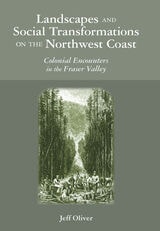
Landscapes and Social Transformations on the Northwest Coast
Colonial Encounters in the Fraser ValleyJeff Oliver
University of Arizona Press, 2010
The Fraser Valley has long been a scene of natural resource appropriation—furs and fish, timber and agriculture—with settlement patterns and land claims centering on the use of these materials. Oliver demonstrates how social change and cultural understanding are tied to the way that people use and remake the landscape. Drawing on ethnographic texts, archaeological evidence, cartography, and historical writing, he has created a deep history of the valley that enables us to view how human entanglements with landscape were creative of a variety of contentious issues. By capturing the multiple dynamics that were operating in the past, Oliver shows us not only how landscape transformations were implicated in constructing different perceptions of place but also how such changes influenced peoples’ understanding of history and identity.
This groundbreaking work examines engagement between people and the environment across a variety of themes, from aboriginal appropriation of nature to colonists’ reworking of physical and conceptual geographies, demonstrating the consequences of these interactions as they permeated various social and cultural spheres. It offers a new lens for viewing a region as it provides fresh insight into such topics as landscape change, perceptions of place, and Indigenous-white relations.
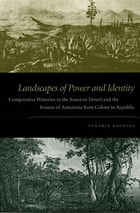
Landscapes of Power and Identity
Comparative Histories in the Sonoran Desert and the Forests of Amazonia from Colony to RepublicCynthia Radding
Duke University Press, 2005
Radding’s comparative approach illuminates what happened when similar institutions of imperial governance, commerce, and religion were planted in different physical and cultural environments. She draws on archival documents, published reports by missionaries and travelers, and previous histories as well as ecological studies and ethnographies. She also considers cultural artifacts, including archaeological remains, architecture, liturgical music, and religious dances. Radding demonstrates how colonial encounters were conditioned by both the local landscape and cultural expectations; how the colonizers and colonized understood notions of territory and property; how religion formed the cultural practices and historical memories of the Sonoran and Chiquitano peoples; and how the conflict between the indigenous communities and the surrounding creole societies developed in new directions well into the nineteenth century.
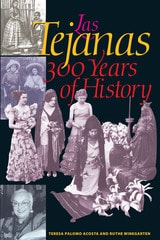
Las Tejanas
300 Years of HistoryBy Teresa Palomo Acosta and Ruthe Winegarten
University of Texas Press, 2003
Winner, Texas Reference Source Award, Reference Round Table, Texas Library Association, 2003
T.R. Fehrenbach Award, Texas Historical Commission, 2004
Since the early 1700s, women of Spanish/Mexican origin or descent have played a central, if often unacknowledged, role in Texas history. Tejanas have been community builders, political and religious leaders, founders of organizations, committed trade unionists, innovative educators, astute businesswomen, experienced professionals, and highly original artists. Giving their achievements the recognition they have long deserved, this groundbreaking book is at once a general history and a celebration of Tejanas' contributions to Texas over three centuries.
The authors have gathered and distilled a wide range of information to create this important resource. They offer one of the first detailed accounts of Tejanas' lives in the colonial period and from the Republic of Texas up to 1900. Drawing on the fuller documentation that exists for the twentieth century, they also examine many aspects of the modern Tejana experience, including Tejanas' contributions to education, business and the professions, faith and community, politics, and the arts. A large selection of photographs, a historical timeline, and profiles of fifty notable Tejanas complete the volume and assure its usefulness for a broad general audience, as well as for educators and historians.
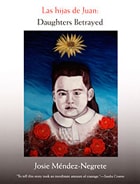
Las hijas de Juan
Daughters BetrayedJosie Méndez-Negrete
Duke University Press, 2006
Méndez-Negrete was born in Mexico, in the state of Zacatecas. She recalls a joyous childhood growing up in the midst of Tabasco, a vibrant town filled with extended family. Her father, though, had dreams of acquiring wealth in el norte. He worked sun-up to sun-down in the fields of south Texas. Returning home to Mexico, his pockets full of dollars, he spent evenings drinking and womanizing.
When Méndez-Negrete was eleven, her father moved the family to the United States, where they eventually settled in California’s Santa Clara Valley. There her father began molesting his daughters, viciously beating them and their mother. Within the impoverished immigrant family, the abuse continued for years, until a family friend brought it to the attention of child welfare authorities. Méndez-Negrete’s father was tried, convicted, and imprisoned.
Las hijas de Juan is told chronologically, from the time Méndez-Negrete was a child until she was a young adult trying, along with the rest of her family, to come to terms with her father’s brutal legacy. It is a harrowing story of abuse and shame compounded by cultural and linguistic isolation and a system of patriarchy that devalues the experiences of women and girls. At the same time, Las hijas de Juan is an inspiring tale, filled with strong women and hard-won solace found in traditional Mexican cooking, songs, and storytelling.
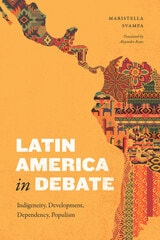
Latin America in Debate
Indigeneity, Development, Dependency, PopulismMaristella Svampa
Duke University Press, 2025
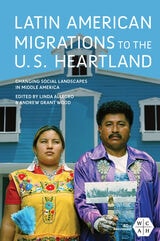
Latin American Migrations to the U.S. Heartland
Changing Social Landscapes in Middle AmericaEdited by Linda Allegro and Andrew Grant Wood
University of Illinois Press, 2019
Filled with varied and eye-opening perspectives, Latin American Migrations to the U.S. Heartland reveals how identities, economies, and geographies are changing as Latin Americans adjust to their new homes, jobs, and communities.
Contributors: Linda Allegro, Tisa M. Anders, Scott Carter, Caitlin Didier, Miranda Cady Hallett, Edmund Hamann, Albert Iaroi, Errol D. Jones, Jane Juffer, László J. Kulcsár, Janelle Reeves, Jennifer F. Reynolds, Sandi Smith-Nonini, and Andrew Grant Wood.
Latin American Politics
A Theoretical ApproachBy Torcuato S. Di Tella
University of Texas Press, 2001
First published in English in 1990 as Latin American Politics: A Theoretical Framework, a translation of Torcuato S. Di Tella's original Sociología de los procesos políticos, this new edition also focuses on the prerequisites for democracy in any society and on the role of the popular classes in social change. Di Tella draws on the work of Montesquieu, Burke, Tocqueville, Marx, Weber, and Durkheim in formulating his explanatory theories. These theories are then tested against crucial events in Latin American history—from the rebellions of the eighteenth century to the caudillos of the nineteenth century and the militarism of the twentieth century.
This edition is more attuned to an English-speaking audience, with a new chapter addressing the historical process in Argentina from the 1930s to 2000. Latin American Politics is written in a style easily accessible to the general reader or student, while its emphasis on the growth of democracy in Latin America makes it particularly timely.
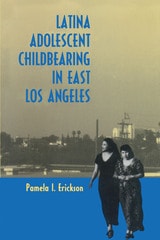
Latina Adolescent Childbearing in East Los Angeles
By Pamela I. Erickson
University of Texas Press, 1998
Preventing teen pregnancy has become a national goal, but a one-size-fits-all strategy for achieving it may never be found. Because varying social and cultural factors lead to pregnancy among different ethnic/class groups, understanding these factors is essential in designing pregnancy prevention programs that work. This book explores the factors that lead to childbearing among Latina adolescents.
Pamela Erickson draws on both quantitative data and case histories to trace the pathways to motherhood for Latina teens. After situating her study within current research on teen pregnancy, she looks specifically at teen mothers enrolled in programs at Women's Hospital in East L.A. She describes the teens' relationships to their babies' fathers and their own families and discusses how these relationships affect whether teen mothers want to become pregnant, their use of prenatal, postpartum, and family planning services, and their ability to prevent a repeat pregnancy. Erickson describes culturally appropriate intervention efforts and assesses the limitations of prevention programs in institutional settings such as schools and clinics.
Latina Lives in Milwaukee
Theresa Delgadillo
University of Illinois Press, 2015
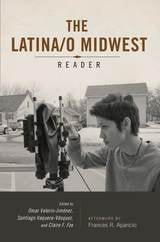
Latina/o Midwest Reader
Omar Valerio-Jimenez , Santiago Vaquera-Vasquez
University of Illinois Press, 2017
Eye-opening and provocative, The Latina/o Midwest Reader rewrites the conventional wisdom on today's Latina/o community and how it faces challenges—and thrives—in the heartland.
Contributors: Aidé Acosta, Frances R. Aparicio, Jay Arduser, Jane Blocker, Carolyn Colvin, María Eugenia Cotera, Theresa Delgadillo, Lilia Fernández, Claire F. Fox, Felipe Hinojosa, Michael D. Innis-Jiménez, José E. Limón, Marta María Maldonado, Louis G. Mendoza, Amelia María de la Luz Montes, Kim Potowski, Ramón H. Rivera-Servera, Rebecca M. Schreiber, Omar Valerio-Jiménez, Santiago Vaquera-Vásquez, Darrel Wanzer-Serrano, Janet Weaver, and Elizabeth Willmore
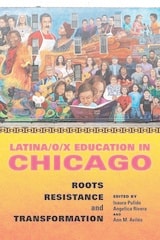
Latina/o/x Education in Chicago
Roots, Resistance, and TransformationEdited by Isaura Pulido, Angelica Rivera, and Ann M. Aviles
University of Illinois Press, 2022
Insightful and enlightening, Latina/o/x Education in Chicago brings to light the ongoing struggle for educational equity in the Chicago Public Schools.
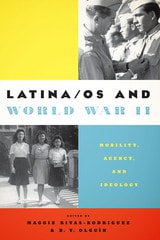
Latina/os and World War II
Mobility, Agency, and IdeologyEdited by Maggie Rivas-Rodriguez and B.V. Olguín
University of Texas Press, 2014
The first book-length study of Latina/o experiences in World War II over a wide spectrum of identities and ancestries—from Cuban American, Spanish American, and Mexican American segments to the under-studied Afro-Latino experience—Latina/os and World War II probes the controversial aspects of Latina/o soldiering and citizenship in the war, the repercussions of which defined the West during the twentieth century. The editors also offer a revised, more accurate tabulation of the number of Latina/os who served in the war.
Spanning imaginative productions, such as vaudeville and the masculinity of the soldado razo theatrical performances; military segregation and the postwar lives of veterans; Tejanas on the homefront; journalism and youth activism; and other underreported aspects of the wartime experience, the essays collected in this volume showcase rarely seen recollections. Whether living in Florida in a transformed community or deployed far from home (including Mexican Americans who were forced to endure the Bataan Death March), the men and women depicted in this collection yield a multidisciplinary, metacritical inquiry. The result is a study that challenges celebratory accounts and deepens the level of scholarly inquiry into the realm of ideological mobility for a unique cultural crossroads. Taking this complex history beyond the realm of war narratives, Latina/os and World War II situates these chapters within the broader themes of identity and social change that continue to reverberate in postcolonial lives.
Latinamericanism after 9/11
John Beverley
Duke University Press, 2011
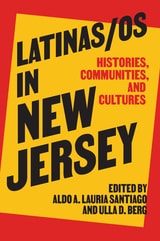
Latinas/os in New Jersey
Histories, Communities, and CulturesAldo A. Lauria Santiago
Rutgers University Press, 2025
Contributors: Yamil Avivi; Jennifer Ayala; Ulla D. Berg; Giovani Burgos; Elsa Candelario; Laura Curran; Lilia Fernández; Ismael García Colón; Olga Jiménez de Wagenheim; Benjamin Lapidus; Aldo A. Lauria Santiago; Johana Londoño; Kathleen Lopez; Giancarlo Muschi; Melanie Z. Plasencia; Ana Y. Ramos-Zayas; Elena Sabogal; Raymond Sanchez Mayers; William Suárez Gómez; Alex F. Trillo; Daniela Valdez; Anil Venkatesh; Lyna L. Wiggins
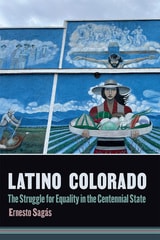
Latino Colorado
The Struggle for Equality in the Centennial StateErnesto Sagás
University Press of Colorado, 2026
Author Ernesto Sagás also explores the ways in which Latinos—as a racialized, subordinate group—have historically interacted with Colorado’s Anglo society in carving out their own spaces while struggling for social and legal equality. He presents a demographic and socioeconomic profile of Latinos in Colorado based on field research and the latest US Census data to dispel common stereotypes while also pointing out areas of concern for state policymakers.
Latino Colorado sheds light on this marginalized community and advances the understanding of the state’s racialized dynamics. It is about everyone in the American West—Anglos, Latinos, and others—and how they interact with and continue to (re)define one another in real and imagined ways in the most mythologized of American regions.
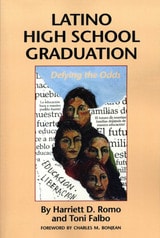
Latino High School Graduation
Defying the OddsBy Harriett D. Romo and Toni Falbo
University of Texas Press, 1996
While high school drop-out rates have steadily declined among white and African American students over the 1970s and 1980s a constant 35 percent of Latino students continued to quit school before graduation. In this pioneering work, Harriett Romo and Toni Falbo reveal how a group of at-risk Latino students defied the odds and earned a high school diploma.
Romo and Falbo tracked the progress of 100 students in Austin, Texas, from 1989 to 1993. Drawing on interviews with the students and their parents, school records, and fieldwork in the schools and communities, the authors identify both the obstacles that caused many students to drop out and the successful strategies that other students and their parents pursued to ensure high school graduation.
The authors conclude with seven far-reaching recommendations for changes in the public schools. Sure to provoke debate among all school constituencies, this book will be required reading for school administrators, teachers, parents, legislators, and community leaders.
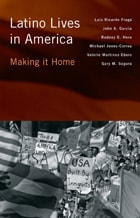
Latino Lives in America
Making It HomeLuis R. Fraga, John A. Garcia, Rodney E. Hero, Michael Jones-Correa, Valerie Martinez-Ebers and Gary Segura
Temple University Press, 2010
Latinos are the largest and fastest growing ethnic group in the United States, with increased levels of political mobilization and influence. In the timely and thoroughgoing Latino Lives in America, six prominent Latino scholars explore the profound implications of Latinos’ population growth and geographic dispersion for American politics and society, tracking key changes and continuities in Latinos' attitudes, behavior, and social experiences.
Utilizing a unique set of “narratives” from focus group interviews, supplemented with quantitative findings from the 2006 Latino National Survey, the authors provide a snapshot of Latino life in America. The Latinos interviewed provide their thoughts regarding their sense of belonging and group identification, assimilation and transnationalism, housing, education, civic engagement, and perceptions of discrimination, as well as their experiences in new destinations, where they are trying to realize the “Americano” dream.
Latino Lives in America uses these conversations and the survey data to offer both a micro and macro look at how Latinos are transforming various aspects of American politics, culture, and life and how their experiences in the United States are changing them and their families.
Latino Los Angeles
Transformations, Communities, and ActivismEdited by Enrique C. Ochoa and Gilda L. Ochoa
University of Arizona Press, 2005
Latino Urban Ethnography and the Work of Elena Padilla
Merida M. Rua
University of Illinois Press, 2010
Latinos in Chicago
Quest for a Political VoiceWilfredo Cruz
Southern Illinois University Press, 2022
The path to political power for Latinos in Chicago
In the Midwest’s largest city, Latinos have been fighting for political representation for more than half a century. In this exploration of urban politics in Chicago, Wilfredo Cruz shows for the first time how Latinos went from being ignored by the Irish-controlled political machine to becoming a respected constituency.
Beginning with the Latino community’s first attempt to acquire a political voice in Chicago politics in 1911 and continuing through Latino officeholders of the early twenty-first century, Cruz surveys not only the struggles of this community—specifically the two largest Latino groups in the city, Mexicans and Puerto Ricans—but also the ways in which Chicago’s Latinos overcame those challenges to gain their political voice.
For most of the twentieth century, Chicago politicians ignored the growing Latino community. This disregard changed with the 1983 election of Mayor Harold Washington, an African American who defied the political machine and actively recruited Latinos to his administration and helped them win city and statewide political offices. His actions opened the doors of government for Latinos in Chicago. Subsequent mayors, seeing the political success of Washington’s move, continued his policies.
Many up-and-coming Latino politicians making strides in Chicago, including state representative Aarón Ortíz, Alderman Andre Vasquez, and Alderman Rossana Rodríguez-Sanchez, contribute their takes on the struggle for political power and the challenges facing the rising new generation of elected officials. With this book, Cruz asks and answers this question: What does the future hold for Latinos politically in Chicago?
Latinos in Michigan
David A. Badillo
Michigan State University Press, 2003
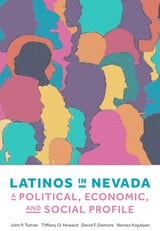
Latinos in Nevada
A Political, Economic, and Social ProfileJohn P. Tuman
University of Nevada Press, 2021
This extensive study by a distinguished and multidisciplinary team of scholars discusses the impact of the Latinx population from the early development of the state of Nevada and highlights their roles in society, as well as the specific implications of their growing presence in the state. It also contemplates the future of the Latinx population and the role they will continue to play in politics and the economy.
This in-depth examination of a large and relatively understudied population will be of interest to scholars and students who study disparities in health and education opportunities as well as the political and economic climate among Latinos and other groups in Nevada and beyond. A political, economic, and demographic profile, this book:
- Explores the history, growth, and diversity of the Latinx population.
- Draws on an array of census data, voter surveys, statistics, interviews, and health, education, employment, wages, and immigration statistics.
- Evaluates key trends in employment, education, religion, and health.
- Analyzes the dynamics of political participation, including implications of a growing Latino political electorate in a western swing state.
- Assesses key determinants of health disparities, educational inequities, and civic engagement among Latinos in the state.
- Demonstrates the impact of the Great Recession of 2008 and provides a preliminary assessment of the COVID-19 pandemic on Latino employment.
Latinos in New England
edited by Andrés Torres
Temple University Press, 2006
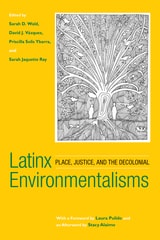
Latinx Environmentalisms
Place, Justice, and the DecolonialSarah D. Wald
Temple University Press, 2019
The whiteness of mainstream environmentalism often fails to account for the richness and variety of Latinx environmental thought. Building on insights of environmental justice scholarship as well as critical race and ethnic studies, the editors and contributors to Latinx Environmentalisms map the ways Latinx cultural texts integrate environmental concerns with questions of social and political justice.
Original interviews with creative writers, including Cherríe Moraga, Helena María Viramontes, and Héctor Tobar, as well as new essays by noted scholars of Latinx literature and culture, show how Latinx authors and cultural producers express environmental concerns in their work. These chapters, which focus on film, visual art, and literature—and engage in fields such as disability studies, animal studies, and queer studies—emphasize the role of racial capitalism in shaping human relationships to the more-than-human world and reveal a vibrant tradition of Latinx decolonial environmentalism.
Latinx Environmentalisms accounts for the ways Latinx cultures are environmental, but often do not assume the mantle of “environmentalism.”
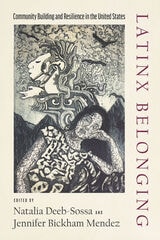
Latinx Belonging
Community Building and Resilience in the United StatesEdited by Natalia Deeb-Sossa and Jennifer Bickham Mendez
University of Arizona Press, 2022
What does it mean to be Latinx? This pressing question forms the core of Latinx Belonging, which brings together cutting-edge research to discuss the multilayered ways this might be answered.
Latinx Belonging is anchored in the claim that Latinx people are not defined by their marginalization but should instead be understood as active participants in their communities and contributors to U.S. society. The volume’s overarching analytical approach recognizes the differences, identities, and divisions among people of Latin American origin in the United States, while also attending to the power of mainstream institutions to shape their lives and identities. Contributors to this volume view “belonging” as actively produced through struggle, survival, agency, resilience, and engagement.
This work positions Latinxs’ struggles for recognition and inclusion as squarely located within intersecting power structures of gender, race, sexuality, and class and as shaped by state-level and transnational forces such as U.S. immigration policies and histories of colonialism. From the case of Latinxs’ struggles for recognition in the arts, to queer Latinx community resilience during COVID-19 and in the wake of mass shootings, to Indigenous youth’s endurance and survival as unaccompanied minors in Los Angeles, the case studies featured in this collection present a rich and textured picture of the diversity of the U.S. Latinx experience in the twenty-first century.
Contributors
Andrés Acosta
Jack “Trey” Allen
Jennifer Bickham Mendez
Stephanie L. Canizales
Christopher Cuevas
Natalia Deeb-Sossa
Yvette G. Flores
Melanie Jones Gast
Monika Gosin
Pierrette Hondagneu-Sotelo
Nolan Kline
Verónica Montes
Yvonne Montoya
Michael De Anda Muñiz
Suzanne Oboler
Gilda L. Ochoa
Dina G. Okamoto
Marco Antonio Quiroga
Michelle Téllez
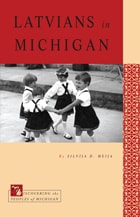
Latvians in Michigan
Silvija D. Meija
Michigan State University Press, 2005
Latvians have contributed to the cultural mosaic and economy of Michigan far more than one might imagine. There are three large Latvian communities in Michigan—Kalamazoo, Detroit, and Grand Rapids—with several smaller enclaves elsewhere in the state. An underlying goal of Latvians who now live in Michigan, as well as other parts of the United States and Canada, is to maintain their language and culture. More than five thousand Latvians came to Michigan after World War II, found gainful employment, purchased homes, and became a part of the Michigan population. Most sought to reeducate themselves and struggled to educate their children in Michigan’s many colleges and universities. Latvians in Michigan examines Latvia and its history, and describes how World War II culminated in famine, death, and eventual flight from their homeland by many Latvian refugees. After the war ended, most Latvian emigrants eventually made their way to Sweden or Germany, where they lived in displaced persons camps. From there, the emigrants were sponsored by individuals or organizations and they moved once again to other parts of the world. Many came to the United States, where they established new roots and tried to perpetuate their cultural heritage while establishing new lives.
Lavender Fields
Black Women Experiencing Fear, Agency, and Hope in the Time of COVID-19Edited by Julia S. Jordan-Zachery
University of Arizona Press, 2023
Black women and girls in the United States are among the hardest hit by the pandemic in terms of illnesses, deaths, evictions, and increasing economic inequality. Riffing off Alice Walker’s telling of her search for Zora Neal Hurston, the authors of these essays and reflections offer raw tellings of Black girls’ and women’s experiences written in real time, as some of the contributors battled COVID-19 themselves.
The essays center Black girls and women and their testimonies in hopes of moving them from the margin to the center. With a diversity of voices and ages, this volume taps into the Black feminine interior, that place where Audre Lorde tells us that feelings lie, to access knowledge—generational, past, and contemporary—to explore how Black women navigate COVID-19. Using womanism and spirituality, among other modalities, the authors explore deep feelings, advancing Black feminist theorizing on Black feminist praxis and methodology.
In centering the stories of Black girls and women’s experiences with COVID-19, this work brings much-needed justice and equity to conversations about the pandemic. Just as Walker worked diligently to find Hurston, Lavender Fields attempts to “find” Black women amid all we are experiencing, ensuring visibility and attention.
Contributors
Tamaya Bailey
reelaviolette botts-ward
Kyrah K. Brown
Brianna Y. Clark
Kenyatta Dawson
LeConté J. Dill
Maryam O. Funmilayo
Brandie Green
Courtney Jackson
Sara Jean-Francois
Julia S. Jordan-Zachery
Angela K. Lewis-Maddox
Annet Matebwe
Mbali Mazibuko
Radscheda Nobles
Nimot Ogunfemi
J. Mercy Okaalet
Chizoba Uzoamaka Okoroma
Peace Ossom-Williamson
Elizabeth Peart
Law and Disorder in the Postcolony
Edited by Jean Comaroff and John L. Comaroff
University of Chicago Press, 2006
Are postcolonies haunted more by criminal violence than other nation-states? The usual answer is yes. In Law and Disorder in the Postcolony, Jean and John Comaroff and a group of respected theorists show that the question is misplaced: that the predicament of postcolonies arises from their place in a world order dominated by new modes of governance, new sorts of empires, new species of wealth—an order that criminalizes poverty and race, entraps the “south” in relations of corruption, and displaces politics into the realms of the market, criminal economies, and the courts.
As these essays make plain, however, there is another side to postcoloniality: while postcolonies live in states of endemic disorder, many of them fetishize the law, its ways and itsmeans. How is the coincidence of disorder with a fixation on legalities to be explained? Law and Disorder in the Postcolony addresses this question, entering into critical dialogue with such theorists as Benjamin, Agamben, and Bayart. In the process, it also demonstrates how postcolonies have become crucial sites for the production of contemporary theory, not least because they are harbingers of a global future under construction.
Law and the Conditions of Freedom in the Nineteenth-Century United States
James Willard Hurst
University of Wisconsin Press, 1964
In these essays J. Willard Hurst shows the correlation between the conception of individual freedom and the application of law in the nineteenth-century United States—how individuals sought to use law to increase both their personal freedom and their opportunities for personal growth. These essays in jurisprudence and legal history are also a contribution to the study of social and intellectual history in the United States, to political science, and to economics as it concerns the role of public policy in our economy. The nonlawyer will find in them demonstration of how "technicalities" express deep issues of social values.
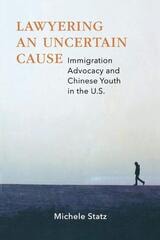
Lawyering an Uncertain Cause
Immigration Advocacy and Chinese Youth in the USMichele Statz
Vanderbilt University Press, 2018
In and beyond the legal realm, the figure of the "vulnerable Chinese child" powerfully legitimates legal claims and attorneys' efforts. At the same time, the transnational ambitions and obligations of Chinese youth implicitly unsettle this figure. The maneuvers of these youth not only belie attorneys' reliance on racialized discourses of childhood and the Chinese family, but they also reveal more broad uncertainties around legal frameworks, institutional practices, health and labor rights—and cause lawyering itself.
Based on three years of fieldwork across the United States, Lawyering an Uncertain Cause is a novel study of the complex and often contradictory rights, responsibilities, and expectations that motivate global youth and the American attorneys who work on their behalf.
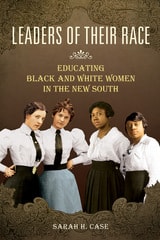
Leaders of Their Race
Educating Black and White Women in the New SouthSarah Case
University of Illinois Press, 2017
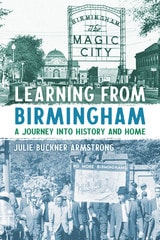
Learning from Birmingham
A Journey into History and HomeJulie Buckner Armstrong
University of Alabama Press, 2023
A steel town daughter’s search for truth and beauty in Birmingham, Alabama
“As Birmingham goes, so goes the nation,” Fred Shuttlesworth observed when he invited Martin Luther King Jr. to the city for the transformative protests of 1963. From the height of the Civil Rights Movement through its long aftermath, images of police dogs, fire hoses and four girls murdered when Ku Klux Klan members bombed the Sixteenth Street Baptist Church have served as an uncomfortable racial mirror for the nation. Like many white people who came of age in the Civil Rights Movement’s wake, Julie Buckner Armstrong knew little about this history. Only after moving away and discovering writers like Toni Morrison and Alice Walker did she realize how her hometown and family were part of a larger, ongoing story of struggle and injustice.
When Armstrong returned to Birmingham decades later to care for her aging mother, Shuttlesworth’s admonition rang in her mind. By then an accomplished scholar and civil rights educator, Armstrong found herself pondering the lessons Birmingham holds for a twenty-first century America. Those lessons extended far beyond what a 2014 Teaching Tolerance report describes as the common distillation of the Civil Rights Movement into “two names and four words: Martin Luther King Jr, Rosa Parks, and ‘I have a dream.’” Seeking to better understand a more complex local history, its connection to broader stories of oppression and resistance, and her own place in relation to it, Armstrong embarked on a journey to unravel the standard Birmingham narrative to see what she would find.
Beginning at the center, with her family’s 1947 arrival to a housing project near the color line, within earshot of what would become known as Dynamite Hill, Armstrong works her way over time and across the map. Weaving in stories of her white working-class family, classmates, and others not traditionally associated with Birmingham’s civil rights history, including members of the city’s LGBTQ community, she forges connections between the familiar and lesser-known. The result is a nuanced portrait of Birmingham--as seen in public housing, at old plantations, in segregated neighborhoods, across contested boundary lines, over mountains, along increasingly polluted waterways, beneath airport runways, on highways cutting through town, and under the gaze of the iconic statue of Vulcan.
In her search for truth and beauty in Birmingham, Armstrong draws on the powers of place and storytelling to dig into the cracks, complicating easy narratives of civil rights progress. Among the discoveries she finds in America’s racial mirror is a nation that has failed to recognize itself in the horrific images from Birmingham’s past and to acknowledge the continuing inequalities that make up the Civil Right’s Movement’s unfinished business. Learning from Birmingham reminds us that stories of civil rights, structural oppression, privilege, abuse, race and gender bias, and inequity are difficult and complicated, but their telling, especially from multiple stakeholder perspectives, is absolutely necessary.
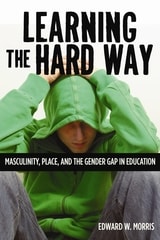
Learning the Hard Way
Masculinity, Place, and the Gender Gap in EducationMorris, Edward
Rutgers University Press, 2012
An avalanche of recent newspapers, weekly newsmagazines, scholarly journals, and academic books has helped to spark a heated debate by publishing warnings of a “boy crisis” in which male students at all academic levels have begun falling behind their female peers. In Learning the Hard Way, Edward W. Morris explores and analyzes detailed ethnographic data on this purported gender gap between boys and girls in educational achievement at two low-income high schools—one rural and predominantly white, the other urban and mostly African American. Crucial questions arose from his study of gender at these two schools. Why did boys tend to show less interest in and more defiance toward school? Why did girls significantly outperform boys at both schools? Why did people at the schools still describe boys as especially “smart”?
Morris examines these questions and, in the process, illuminates connections of gender to race, class, and place. This book is not simply about the educational troubles of boys, but the troubled and complex experience of gender in school. It reveals how particular race, class, and geographical experiences shape masculinity and femininity in ways that affect academic performance. His findings add a new perspective to the “gender gap” in achievement.