Results by title
1861 books match the query 'Social life and customs' and 73 start with l

LITTLE MEN
NOVELLAS AND STORIESGERALD SHAPIRO
The Ohio State University Press, 2004
Ira Mittelman, the middle-aged hero of “A Box of Ashes,” one of two novellas in Little Men, is wrestling with a dilemma: should he fulfill his late father’s dying wish by taking the old man’s ashes back to Missouri, to scatter them on the grounds of Camp HaHaTonka, the Boy Scout camp where Ira spent several summers as a boy? It’s a long way to go just to dump some ashes, and if Ira makes this pilgrimage, his absence might jeopardize the fragile relationship he’s managed to maintain with his ex-wife (they’re still having sex every Friday night).
In “Spivak in Babylon,” Little Men’s other novella, it’s 1982, and Leo Spivak, an ambitious 30-year-old copywriter at a large Chicago advertising agency, is about to get his big break: a chance to go to Hollywood to participate for the first time in the filming of a television commercial. A week in Hollywood, on the company’s expense account! A room at the fabled Chateau Marmont (Garbo’s old suite, in fact)! The only problem is the subject of the commercial itself: a new feminine hygiene spray to be marketed to pre-adolescent girls. Hovering over all the proceedings in “Spivak in Babylon” is the genial, befuddled presence of President Ronald Reagan, the Leader of the Free World, who haunts Leo’s dreams.
La Consentida
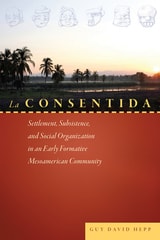
Settlement, Subsistence, and Social Organization in an Early Formative Mesoamerican CommunityGuy David Hepp
University Press of Colorado, 2019
La Consentida explores Early Formative period transitions in residential mobility, subsistence, and social organization at the site of La Consentida in coastal Oaxaca, Mexico. Examining how this site transformed during one of the most fundamental moments of socioeconomic change in the ancient Americas, the book provides a new way of thinking about the social dynamics of Mesoamerican communities of the period.
Guy David Hepp summarizes the results of several seasons of fieldwork and laboratory analysis under the aegis of the La Consentida Archaeological Project, drawing on various forms of evidence—ground stone tools, earthen architecture, faunal remains, human dental pathologies, isotopic indicators, ceramics, and more— to reveal how transitions in settlement, subsistence, and social organization at La Consentida were intimately linked. While Mesoamerica is too diverse for research at a single site to lay to rest ongoing debates about the Early Formative period, evidence from La Consentida should inform those debates because of the site’s unique ecological setting, its relative lack of disturbance by later occupations, and because it represents the only well-documented Early Formative period village in a 300-mile stretch of Mexico’s Pacific coast.
One of the only studies to closely document multiple lines of evidence of the transition toward a sedentary, agricultural society at an individual settlement in Mesoamerica, La Consentida is a key resource for understanding the transition to settled life and social complexity in Mesoamerican societies.

La Partera
Story of a MidwifeFran Leeper Buss
University of Michigan Press, 2001
This is Jesusita's story, told in her own words. She describes her early training as a midwife, her forced departure from home due to two unmarried pregnancies, and her solitary struggle to support her children. La Partera tells how she gradually emerged as a leader in her community, painstakingly building by hand a small maternity center for her patients while gaining the respect of the Anglo medical community.
As Jesusita's story unfolds, so too does the story of the women of the region. Supplemental sections by the author illuminate Jesusita's culture and past, along with a historical account of the network of medical care provided by Hispanic and Anglo female healers. Illustrated with photographs of both people and places, La Partera reflects the culture of an era through the prism of Jesusita's hard and useful life.
Fran Leeper Buss lives and teaches in Tucson, Arizona.
La Partera
Story of a MidwifeFran Leeper Buss
University of Michigan Press, 1980
Laboring to Play
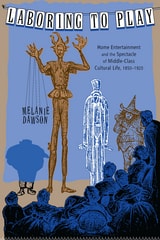
Home Entertainment and the Spectacle of Middle-Class Cultural Life, 1850-1920Melanie Dawson
University of Alabama Press, 2005
Where Leisure Became Labor and the Parlor Became a Stage for American Middle-Class Identity.
The changing styles of middle-class home entertainments, Melanie Dawson argues, point to evolving ideas of class identity in U.S. culture. Drawing from 19th- and early-20th-century fiction, guidebooks on leisure, newspaper columns, and a polemical examination of class structures, Laboring to Play interrogates the ways that leisure performances (such as parlor games, charades, home dramas, and tableaux vivants) encouraged participants to test out the boundaries that were beginning to define middle-class lifestyles.
From 19th-century parlor games involving grotesque physical contortions to early-20th-century recitations of an idealized past, leisure employments mediated between domestic and public spheres, individuals and class-based affiliations, and ideals of egalitarian social life and visible hierarchies based on privilege. Negotiating these paradigms, home entertainments provided their participants with unique ways of performing displays of individual ambitions within a world of polite social interaction.
Laboring to Play deals with subjects as wide ranging as social performances, social history (etiquette and gentility), literary history, representations of childhood, and the history of the book.

Ladders To Fire
New Expanded EditionAnaïs Nin
Ohio University Press, 1959
After struggling with her own press and printing her own works, Anaïs Nin succeeded in getting Ladders to Fire accepted and published in 1946. This recognition marked a milestone in her life and career. Admitted into the fellowship of American novelists, she maintained the individuality of her literary style. She resisted realistic writing and drew on the experience and intuitions of her diary to forge a novelistic style emphasizing free association, the language of emotion, spontaneity, and improvisation.
Ladders to Fire is the first volume of Nin’s celebrated series of novels called Cities of the Interior
For Anaïs Nin, her writing and her life were not separable, they were both part of the same experience. She claimed that “is it the fiction writer who edited the diary.”
Anaïs Nin continues to find an audience, whether for her fiction, her diaries, or her own life story, which has enjoyed the attention of biographers and filmmakers. This 1995 reissue of Ladders to Fire has a new cover and foreword.

Ladders to Fire
Anaïs Nin
Ohio University Press, 2014
Anaïs Nin’s Ladders to Fire interweaves the stories of several women, each emotionally inhibited in her own way: through self-doubt, fear, guilt, moral drift, and distrust. The novel follows their inner struggles to overcome these barriers to happiness and wholeness. The author’s own experiences, as recorded in her famous diaries, supplied the raw material for her fiction. It was her intuitive, experimental, and always original style that transformed one into the other. Nin herself memorably claimed that “it was the fiction writer who edited the diary.”
Ladders to Fire is the first book of Nin’s continuous novel, Cities of the Interior, which also includes Children of the Albatross,The Four-Chambered Heart,A Spy in the House of Love, and Seduction of the Minotaur. These loosely interlinked stories develop the characters and themes established in the first volume, leading slowly toward a resolution of inner turmoil and conflict.
This Swallow Press reissue of Ladders to Fire includes a new introduction by Nin scholar Benjamin Franklin V, as well as Gunther Stuhlmann’s classic foreword to the 1995 edition.

Lagos Never Spoils
Nollywood and Nigerian City LifeConnor Ryan
University of Michigan Press, 2023
Winner of the Society for Cinema and Media Studies, Media Industries Scholarly Interest Group Outstanding Book Award
The slogan “Lagos shall not spoil,” found in print media, political campaigns, and common conversation, represents a shared expression of the optimism the city embodies. However, on city streets the phrase also appears scrawled in irreverent variations—“Lagos cannot spoil more than this!”—that meet the frustrations of city life with irony. In both cases, the slogan captures the resilience and persistence with which residents of Lagos live on, despite it all. This book examines the circumstances that make it possible for residents to persist in pursuing their various projects and for the city to remain a platform that supports these projects and creates space for even more to emerge. Author Connor Ryan argues that residents continually work to combine contingency and endurance in opportunistic ways that make the city work for them, and as such, Lagos never spoils: it endures.
What makes Lagos remarkable is what residents have made of it, and Nollywood—the industry and the body of films—both embodies and represents this continual urban transformation. Lagos Never Spoils traces how Nollywood arose from the social milieu of Lagos and, in turn, generates a repertoire of stories, images, styles, and sentiments with which audiences come to grips with city life. The book traces the evolution of the screen media industry in Lagos and explores how this corresponds with historical phases in the city’s representation onscreen. It discusses important urban spaces of production and consumption, including historic movie halls, video marketplaces, film sets, and multiplex cinemas. Across six chapters, it attends to celluloid films about oil-boom wealth, television sitcoms about urban tricksters, video melodramas about urban crisis, glossy romantic comedies about young professionals, and dark thrillers on streaming platforms about the pleasure of moral transgression. In this fashion, the book offers new approaches to the interpretation of screen texts produced in and about Lagos, a place that is today the most influential image of West African city life.

Lake Superior
Grace Lee Nute
University of Minnesota Press, 2000
The captivating history of the world’s largest freshwater lake.
This classic history of Lake Superior, from the earliest explorations to the explosion of industry on its shores, takes the reader on a tour from Duluth to Isle Royale, from Thunder Bay to Sault Ste. Marie, from Pictured Rocks to the Apostle Islands. Grace Lee Nute tells the fascinating stories of the Native Americans, voyageurs, missionaries, and others who created the way of life that many generations have known on the edge of this magnificent body of water.
Lakota Hoops
Life and Basketball on Pine Ridge Indian ReservationAlan Klein
Rutgers University Press, 2020
In Lakota Hoops, anthropologist Alan Klein trains his experienced eye on the ways that Lakota traditions find a seamless expression in the sport. In a variety of way such as weaving time-honored religious practices into the game or extending the warrior spirit of Crazy Horse to the players on the court, basketball has become a preferred way of finding continuity with the past. But the game is also well suited to the present and has become the largest regular gathering for all Lakota, promoting national pride as well as a venue for the community to creatively and aggressively confront white bigotry when needed.
Richly researched and filled with interviews with Pine Ridge residents, including both male and female players, Lakota Hoops offers a compelling look at the highs and lows of a community that has made basketball its own.
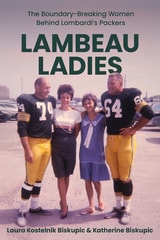
Lambeau Ladies
The Boundary-Breaking Women Behind Lombardi’s PackersLaura Kostelnik Biskupic
Wisconsin Historical Society Press, 2026
A book for anyone who thinks they know everything there is to know about the Green Bay Packers!
Long before NFL players had teams of trainers, nutritionists, therapists, agents, and other specialists, the dynastic Green Bay Packers of the 1960s relied on a different kind of support staff: their wives. In Lambeau Ladies, mother and daughter Laura Kostelnik Biskupic and Katherine Biskupic tell the remarkable, largely untold story of the women who helped to keep the Lombardi-era Packers performing at a championship level. From preparing game-day sandwiches, nursing injuries, and reviewing game film to managing households, hosting social gatherings, and providing emotional strength to their spouses, these women were a driving force behind one of the greatest teams in football history.
Through intimate interviews and vivid storytelling, the authors bring to life the experiences of Cherry Starr, Vicky Aldridge, Barbara Gregg, Ruth Pitts, Peggy Kostelnik, and many other wives who formed deep friendships and carved out lives of meaning far from their hometowns, often in the face of social and racial barriers. With humor and candor, they describe making ends meet on modest salaries, feeding hungry young players who wandered into their kitchens, boosting their husbands’ confidence, and coming up with ingenious strategies for staying warm—and stylish—on the sidelines during Green Bay’s frigid winters.
Their stories reach far beyond football. Some of these women helped integrate Green Bay during the civil rights movement. One became one of the district’s first Black teachers; another was half of one of the NFL’s first interracial marriages. Others made contributions in their own singular ways—fostering children, launching a business and a community organization, becoming a voice in local media. And at the center of it all was Marie Lombardi, the coach’s wife and the de facto mentor of the entire wives’ cohort, whose influence extended from locker-room culture to community life.
Lambeau Ladies paints a rich portrait of midcentury Green Bay—a place where championship football, small-town rhythms, and national social change converged—and reveals how the Packers’ dynasty was shaped as much in living rooms, kitchens, and carpool lanes as on the frozen turf of Lambeau Field.
Warm, funny, and deeply inspiring, Lambeau Ladies celebrates the extraordinary women who helped build a dynasty—and, in the process, changed their town, their team, and each other.
Landkeeping
Restoring Indigenous Fire Stewardship and Ecological PartnershipsJared D. Aldern
Oregon State University Press, 2026
With rising temperatures, longer summers, drought, and more wildfires occurring in the United States and Canada, there is growing interest in the impact and efficacy of Indigenous fire and cultural burning practices. Indigenous communities throughout this region known as Turtle Island have long used fire to manage their homelands. An interdisciplinary anthology that includes extensive Native views, Landkeeping provides engaging perspectives on the role of Indigenous fire and its importance to our ecological health, cultural continuity, and land-based kinship.
Indigenous-identified and non-Indigenous allies and researchers in ecology, natural resource management, forestry, ethnobotany, and Native American/Indigenous Studies demonstrate how Indigenous knowledge offers sustainable, relational approaches to land care and resilience. Each chapter builds on the idea that fire stewardship is a manifestation of Traditional Ecological Knowledge (TEK)—a system of knowledge that is rooted in place, transmitted through oral traditions and embodied practices, and guided by values such as reciprocity, responsibility, and interdependence with more-than-humans. By recognizing that fire is part of a larger cosmology, Landkeeping contributors share how fire stewardship is a path toward ecological balance, cultural revitalization, and just climate futures.
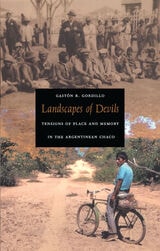
Landscapes of Devils
Tensions of Place and Memory in the Argentinean ChacoGastón R. Gordillo
Duke University Press, 2004
As Gordillo explains, the bush is the result of social, cultural, and political processes that intertwine this place with other geographies. Labor exploitation, state violence, encroachment by settlers, and the demands of Anglican missionaries all transformed this land. The Toba’s lives have been torn between alienating work in sugar plantations and relative freedom in the bush, between moments of domination and autonomy, abundance and poverty, terror and healing. Part of this contradictory experience is culturally expressed in devils, evil spirits that acquire different features in different places. The devils are sources of death and disease in the plantations, but in the bush they are entities that connect with humans as providers of bush food and healing power. Enacted through memory, the experiences of the Toba have produced a tense and shifting geography. Combining extensive fieldwork conducted over a decade, historical research, and critical theory, Gordillo offers a nuanced analysis of the Toba’s social memory and a powerful argument that geographic places are not only objective entities but also the subjective outcome of historical forces.
Landscapes of Social Transformation in the Salinas Province and the Eastern Pueblo World
Edited by Katherine A. Spielmann
University of Arizona Press, 2017
Landscapes of Social Transformation in the Salinas Province and the Eastern Pueblo World investigates relationships between diverse regional and local changes in the Rio Grande and Salinas areas from 1100 to 1500 C.E. The contributing authors draw on the results of sixteen seasons of archaeological survey and excavation in the Salinas Province of central New Mexico. The chapters offer cross-scale analyses to compare broad perspectives in well-researched southwestern culture changes to the finer details of stability and transformation in Salinas. This stability—which was unusual in the Pueblo Southwest—from the 1100s until its abandonment in the 1670s provides an interesting contrast to migration-based transformations studied elsewhere in the Rio Grande region.
CONTRIBUTORS
Patricia Capone
Matthew Chamberlin
Tiffany C. Clark
William M. Graves
Cynthia L. Herhahn
Deborah Huntley
Keith Kintigh
Ann Kinzig
Jeannette L. Mobley-Tanaka
Alison E. Rautman
Jonathan Sandor
Grant Snitker
Julie Solometo
Katherine A. Spielmann
Colleen Strawhacker
Maryann Wasiolek
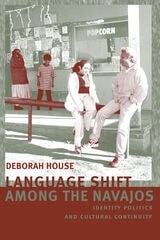
Language Shift among the Navajos
Identity Politics and Cultural ContinuityDeborah House
University of Arizona Press, 2002
Language Shift among the Navajos provides a close look at the ideological factors that intervene between the desire of the Navajos to maintain their language as an important aspect of their culture and their actual linguistic practice. Based on more than ten years of fieldwork within a Navajo institution and community, it points to ideologies held by Navajo people about their unequal relationship with the dominant American society as a primary factor in the erosion of traditional language use. House suggests that the Navajos employ their own paradigm—Sa’ah Naagháí Bik’eh Hózhóón—to learn both Western language and culture and their own without denigrating either perspective. By building on the traditional Navajo belief in harmony and balance, she advocates that those who value the language should use and teach it not just in school but also in the home, in the ceremonial hogans, and among those who cherish their heritage. Now is the time when language choices and behavior will influence whether the Navajo language lives or dies. House's book carries important lessons for anyone concerned with cultural continuity. It is a wake-up call for educators, youth, politicians, or family and community members who value Native language and culture. It remains to be seen in what language that call will be answered.
Last Mountain Dancer
Hard-Earned Lessons in Love, Loss, and Honky-Tonk Outlaw LifeChuck Kinder
West Virginia University Press, 2018
This gonzo-style metamemoir follows Chuck Kinder on a wild tour of the back roads of his home state of West Virginia, where he encounters Mountain State legends like Sid Hatfield, Dagmar, Robert C. Byrd, the Mothman, Chuck Yeager, Soupy Sales, Don Knotts, and Jesco White, the “Dancing Outlaw.”
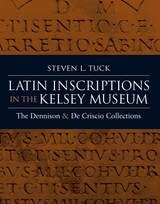
Latin Inscriptions in the Kelsey Museum
The Dennison and De Criscio CollectionsSteven L. Tuck
University of Michigan Press, 2006
The 400 entries in this volume include all of the Latin inscriptions on stone or metal in the Kelsey Museum of Archaeology at the University of Michigan; they represent the largest, and arguably the most important, collection of Latin inscriptions in the Western Hemisphere. The collection is notable not just for its size but for the fact that almost all the inscriptions were acquired by purchase for their scholarly and educational value to the members of the university community. Because of this, the collection is also an important testimony to a seminal phase in the development of the study of Classics at the University of Michigan. For the first time ever, this project makes the Latin inscriptions of the Kelsey available in one volume and has provided an opportunity to reexamine some texts that have not been edited in over a century. The commentaries for this edition have benefited from a wealth of recent scholarship resulting in some amended readings and reidentification of texts.
Steven L. Tuck is Assistant Professor of Classics at Miami University of Ohio.
The Kelsey Museum Studies series, edited by University of Michigan professors Elaine Gazda, Margaret Cool Root, and John Pedley, is designed to publish unusual material in the Museum's collections, together with reports of current and past archaeological expeditions sponsored by the University of Michigan.

Latina Lives in Milwaukee
Theresa Delgadillo
University of Illinois Press, 2015

Laws of Chance
Brazil's Clandestine Lottery and the Making of Urban Public LifeAmy Chazkel
Duke University Press, 2011

Legends and Life in Texas
Folklore from the Lone Star State, in Stories and SongKenneth L. Untiedt
University of North Texas Press, 2017
Legends and Lore of Southern Illinois
John W. Allen
Southern Illinois University Press, 1963
In the 1950s and ‘60s, John W. Allen told the people of southern Illinois about themselves—about their region, its history, and its folkways—in his series of newspaper articles, “It Happened in Southern Illinois.” Each installment of the series depicted a single item of interest—a town, a building, an enterprise, a person, an event, a custom. Originally published in 1963, Legends & Lore of Southern Illinois brings together a selection of these articles preserving a valuable body of significant local history and cultural lore.
During territorial times and early statehood, southern Illinois was the most populous and most influential part of the state. But the advent of the steamboat and the building of the National Road made the lands to the west and north more easily accessible, and the later settlers struck out for the more expansive and fertile prairies. The effect of this movement was to isolate that section of the state known as Egypt and halt its development, creating what Allen termed “an historical eddy.” Bypassed as it was by the main current of westward expansion and economic growth, its culture changed very slowly. Methods, practices, and the tools of the pioneer continued in use for a long time. The improved highways and better means of communication of the twentieth century brought a marked change upon the region, and daily life no longer differed materially from that of other areas.
Against such a cultural and historical backdrop, Mr. Allen wrote these sketches of the people of southern Illinois—of their folkways and beliefs, their endeavors, successes, failures, and tragedies, and of the land to which they came. There are stories here of slaves and their masters, criminals, wandering peddlers, politicians, law courts and vigilantes, and of boat races on the rivers. Allen also looks at the region’s earlier history, describing American Indian ruins, monuments, and artifacts as well as the native population’s encounters with European settlers.
Many of the vestiges of the region’s past culture have all but disappeared, surviving only in museums and in the written record. This new paperback edition of Legends & Lore of Southern Illinois brings that past culture to life again in Allen’s descriptive, engaging style.
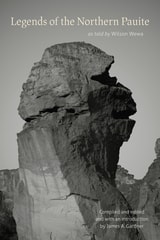
Legends of the Northern Paiute
as told by Wilson WewaWilson Wewa
Oregon State University Press, 2017
The legends in this volume were recorded, transcribed, reviewed, and edited by Wilson Wewa and James Gardner. Each legend was recorded, then read and edited out loud, to respect the creativity, warmth, and flow of Paiute storytelling. The stories selected for inclusion include familiar characters from native legends, such as Coyote, as well as intriguing characters unique to the Northern Paiute, such as the creature embodied in the Smith Rock pinnacle, now known as Monkey Face, but known to the Paiutes in Central Oregon as Nuwuzoho the Cannibal.
Wewa’s apprenticeship to Northern Paiute culture began when he was about six years old. These legends were passed on to him by his grandmother and other tribal elders. They are now made available to future generations of tribal members, and to students, scholars, and readers interested in Wewa’s fresh and authentic voice. These legends are best read and appreciated as they were told—out loud, shared with others, and delivered with all of the verve, cadence, creativity, and humor of original Paiute storytellers on those clear, cold winter nights in the high desert.
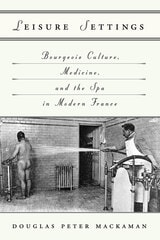
Leisure Settings
Bourgeois Culture, Medicine, and the Spa in Modern FranceDouglas P. Mackaman
University of Chicago Press, 1998
Taking us into the vibrant social world of France's great spas, Mackaman explores the links between class identity and vacationing. Mackaman shows how, after 1800, physicians and entrepreneurs zealously tried to break their milieu's strong association with aristocratic excess and indecency by promoting spas as a rational, ordered equivalent to the busy lives of the bourgeoisie. Rather than seeing leisure time as slothful, Mackaman argues, the bourgeoisie willingly became patients at spas and viewed this therapeutic vacation as a sensible, even productive, way of spending time. Mackaman analyzes this transformation, and ultimately shows how the premier vacation of an era made and was made by the bourgeoisie.

Let Jasmine Rain Down
Song and Remembrance among Syrian JewsKay Kaufman Shelemay
University of Chicago Press, 1998
Shelemay views the intersection of music, individual remembrances, and collective memory through the pizmonim. Reconstructing a century of pizmon history in America based on research in New York, Mexico, and Israel, she explains how verbal and musical memories are embedded in individual songs and how these songs perform both what has been remembered and what otherwise would have been forgotten. In confronting issues of identity and meaning in a postmodern world, Shelemay moves ethnomusicology into the domain of memory studies.

Let Us Now Praise Famous Women
A MemoirFrank Sikora
University of Alabama Press, 2005
An affectionate, humorous account of small town Alabama during the civil rights era.
When Frank Sikora's six-year-old daughter contracted pneumonia in 1962, his wife Millie vowed that would be the last winter she would spend in Ohio. Despite their misgivings about the racial tensions erupting there, they moved their family of six south, where Frank hoped to fulfill his dream of becoming a newspaper reporter. But when those dreams didn't materialize immediately, mounting bills, repossession, and eviction forced them to move in with Millie's parents, Dan and Minnie Belle Helms, in rural Wellington, Alabama.
With even slimmer prospects for employment in impoverished Calhoun County, the Sikoras came to depend heavily upon the Helmses and extended family members and all their lives became closely intertwined. The Helmses were uneducated, unpolished people, but Sikora's narration of his life with them—often humorous but never condescending—provides a compelling portrait of the attitudes and lifestyle of poor whites in Alabama during the second half of the 20th century, just as James Agee's monumental work, Let Us Now Praise Famous Men, illuminated the Depression years in Hale County, Alabama. Sikora illustrates how resourceful, southern women, in particular, held their families together through trying times.
Interwoven with this commentary on rural white culture in the Deep South is the story of Sikora's developing career as a newsman. Determined to succeed, he finally lands a job with the Gadsden Times reporting the news of black citizens. From that introduction to journalism, Sikora becomes one of Alabama's most acclaimed chroniclers of the civil rights movement, eventually writing some of the acknowledged masterpieces about the subject. Like his landmark book, Selma, Lord, Selma, Sikora's newest work tells the stories of ordinary Alabamians and their perspectives on extraordinary times.

Let's Do
Rebecca Meacham
University of North Texas Press, 2004
Letters From Side Lake
A Chronicle of Life in the North WoodsPeter M. Leschak
University of Minnesota Press, 1992
After a brief taste of urban life, and convinced that nothing equaled the formidable challenge of life in the heart of the vast woods, Peter M. Leschak returned to northern Minnesota. Letters from Side Lake chronicles the marvelous range of adventures and reflections-described with thoughtfulness and humor-springing from his pioneer-like existence. In Leschak's unique voice and beautifully crafted style, Letters from Side Lake captures the great pleasures and rugged feats and hardships of North Woods living.
"Letters from Side Lake is a celebration. Leschak revels in what he loves the best: the beauty of the north woods; the sweep of Andromeda across a black sky; the sleek thrust of his canoe slicing across a mirror-flat lake; and the simplicity of small-town life." -Washington Post Book World"A vivid, engaging book by a talented writer." -New York Times Book Review
Letters from Spain
A Seventeenth-Century French Noblewoman at the Spanish Royal CourtMarie Gigault de Bellefonds
Iter Press, 2021
This volume includes her surviving letters from Madrid to her friend Madame de Coulanges and an appendix of her letters sent from Paris and Turin. The letters from Spain, written between 1679 and 1681, paint a vivid and engaging picture of the royal court and its new queen.

Letters from Togo
Susan Blake
University of Iowa Press, 1991
With her delightful prose and insight for detail Blake introduces us to Mahouna, her housekeeper, who runs a cold drink business from his refrigerator in a country where electricity is unreliable; to American Lee Ann and her Togolese family, who works at the American school to earn the fees for a private education for her children; and to the suave René, wearing silk shirts and a most seductive smile, who teeters on the edge of the Togolese and expatriate worlds.
Since Lomé is both an overgrown village and a cosmopolitan city, Blake's exhilarating, often humorous experiences range from buying a car to attending a traditional tom-tom funeral, from visiting people who hunt with bows and arrows to enduring faculty meetings, from negotiating the politics of buying produce to lecturing on Afro-American literature at the English Club. Together, her enlivening letters trace the pattern of adjusting to a foreign environment and probe the connections between Africa and this curious, energetic American. Not "out of Africa" but within it, they take advantage of time and perspective to penetrate the universal experience of being a stranger in a strange land.

Letters from the Leelanau
Essays of People and PlaceKathleen Stocking
University of Michigan Press, 1990
Lies to Live By
Lois Beardslee
Michigan State University Press, 2003
Lies To Live By brings together two selections of stories by Ojibwe storyteller Lois Beardslee. “Lies to Live By,” a series of interdependent tales, reflects the storyteller’s role in interpreting traditional stories for contemporary audiences, while preserving traditions based not in mysticism but in pragmatism. In “Calm Days,” three generations—the narrator, her grandfather, and her son—spend a week together on a remote island during the course of which they demonstrate the continuity of Ojibwe life. Together these stories weave the contemporary and the traditional to show how cultural diversity can be preserved even as cultural boundaries are transcended.
Life Stages and Native Women
Memory, Teachings, and Story MedicineKim Anderson
University of Manitoba Press, 2011

Life at Swift Water Place
Northwest Alaska at the Threshold of European ContactEdited by Doug D. Anderson and Wanni W. Anderson
University of Alaska Press, 2019
Life in Prairie Land
Eliza W. Farnham
University of Illinois Press, 1988
Life in Prairie Land is a complex portrait of the midwestern wilderness during the 1830s--beautiful and ugly, beneficent and threatening. Farnham's vivid recreation of her experiences on the Illinois frontier offers a realistic depiction of the harsh pioneer lifestyle as well as a romantic view of an Edenic landscape.
Life in Prairie Land includes descriptions of Farnham's encounters with early settlers and Native Americans, her eye-opening experiences with birth and death, the flora and fauna that surrounded her, and the developing towns she passed through in her travels. Farnham's years on the Illinois frontier showed her the possibilities of a less restrictive society and planted the seeds that would later grow into firmly held and eloquently expressed views on women's equality.
Life in a Northern Town
Cooking, Eating, and Other Adventures along Lake SuperiorMary Dougherty
Wisconsin Historical Society Press, 2017
—from the Introduction
In 2007, Mary Dougherty and her family moved from St. Paul to the tiny Bayfield Peninsula, surrounded by the waters of Lake Superior and Chequamegon Bay in far northwestern Wisconsin. There they set out to live their lives against a backdrop of waterfalls, beaches, farm stands, and a quintessential small town of 487 people. Through recipes, stories, and photos, this book explores what it means to nourish a family and a community. As Mary Dougherty incorporates what is grown and raised in northern Wisconsin into her family’s favorite dishes, she continues a cultural tradition begun by immigrants hundreds of years ago. The result is a one-of-a-kind collection of globally and regionally inspired recipes featuring local cheeses, meats, and produce from the farmers in and around Bayfield—pho made with beef bones from a farm in Mellen, Indian meatballs with curry powder made in Washburn, chowder with corn and potatoes from a farm stand in Ashland. As she knits herself into the Bayfield community, Dougherty comes to more fully grasp the intricate relationship between food and community.
Life in the Leatherwoods
New EditionJohn Quincy Wolf
University of Arkansas Press, 2000
Originally published by Memphis State University Press in 1974, this new edition includes additional writings of John Q. Wolf and a continuation of the autobiographical narrative after his 1887 move to Batesville. Wolf’s writings are valuable resources for southern historians, folklorists, general readers, and scholars of Ozarkiana because they provide a rare glimpse into the social and family life of a largely misunderstood and stereotyped people—the independent hill farmers of the Arkansas Ozarks of the 1870s and 1880s. With Life in the Leatherwoods, Wolf bestows a benediction upon a society that existed vibrantly and humorously in his memory—one that has now forever disappeared from the American countryside.

Life's Journey—Zuya
Oral Teachings from RosebudAlbert White Hat Sr
University of Utah Press, 2012
“Our people are very lucky to be here,” says Albert White Hat Sr. He has lived through a time when Indians were sent to boarding schools and were not permitted to practice their own rituals. Although the Lakota people can practice their beliefs openly once again, things have changed and old ways have been forgotten. As a teacher at Sinte Gleska University in South Dakota, White Hat seeks to preserve the link the Lakota people have with their past. In Life’s Journey—Zuya, White Hat has collected and translated the stories of medicine men, retaining the simplicity of their language so as not to interpret their words through a Western lens. This is Zuya, oral history that is lived and handed down over the generations.
White Hat also shares stories from his own experience. Using anecdotes he shows not only how the Lakota lifestyle has been altered but also how Lakota words have begun to take on new meanings that lack their original connotations and generate a different picture of Lakota philosophy. Language, interwoven with history, tells the people where they came from and who they are. By gathering the traditions and ceremonies in a single volume, with the history of how they evolved, he has secured the meaning of these practices for futre generations. Filled with warmth and humor, Life’s Journey—Zuya is an enjoyable and enlightening read.
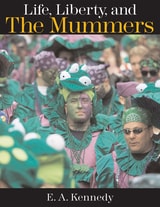
Life, Liberty, and the Mummers
Ed Kennedy
Temple University Press, 2007
Noted photographer E. A. Kennedy spent four years documenting the Mummers and their parade. He has personally selected the striking images included here -- more than 150 in all -- and he has written an engaging history of the parade itself. As Kennedy explains, and as his photos make clear, "mummery" is a way of life for Mummers, who have deep attachments to their clubs, associations, and brigades.
For all its glitz, the Mummers Parade remains a folk parade. This is the captivating story of the folks behind the parade.
Like Beads on a String
A Culture History of the Seminole Indians in North Peninsular FloridaBrent Richards Weisman
University of Alabama Press, 1989
Florida's Seminole Indians are exerting an ever increasing influence on crucial issues in state politics, economy, and law. From a position of near obscurity less than a century ago, these Native Americans have staged a remarkable comeback to take an active hand in shaping Florida society, present and future. Anthropologists have long been fascinated with the Seminoles and have often remarked upon their ability to adapt to new circumstances while preserving the core features of their traditional culture. Early observers of the Seminoles also commented on the dynamic tension that existed for the individual, clan, and tribe, that drew them together, "like beads on a string," into a resilient and viable society. This study traces the emergence of these qualities in the late prehistoric and early historic period in the Southeast and demonstrates their influence on the course of Seminole culture history.
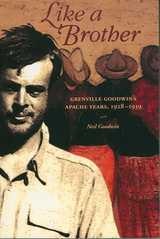
Like a Brother
Grenville Goodwin’s Apache Years, 1928-1939Neil Goodwin
University of Arizona Press, 2004
Assembled by Goodwin's son Neil, who never knew his father, these writings are gathered in thematic chapters that extend Neil Goodwin's earlier work, The Apache Diaries, and shed light on Grenville Goodwin's deepening understanding of the Apache people and their culture, and of the wrenching problems which reservation life forced on them. In two of the chapters Neil tells how he retraced his father's search for the Sierra Madre Apache, re-discovering abandoned Apache campsites and conveying even more personally than his father's diaries what was for both father and son the adventure of a lifetime. Other chapters trace Goodwin's interest in children of the Sierra Madre Apaches who were captured in Mexican raids on these camps during the early decades of the twentieth century. The full stories of the lives of three of these children are for the first time pieced together from newly gathered research.
Grenville was quiet, self-effacing and rarely revealed his inner life, but one chapter affords a closer look: a portrait of his marriage to Neil's mother, Jan. Her diary entries, juxtaposed with her vivid poetry and her paintings and drawings, illuminate her relationship with Grenville and throw his elusive personality into deeper relief than his own writings do. Here too are letters from Goodwin's Apache friends that paint a powerful and poignant portrait of their daily lives and of their relationship with him. Goodwin's daily diary excerpts relate his own experiences on the San Carlos Apache reservation from 1928 to 1936: what was happening at the store, how the cattle were doing, who was in jail, and thousands of other details that give readers a sharp sense of what the reservation was like in the 1930s. As these writings also show, Goodwin was powerfully drawn to Apache spirituality and became steeped in their sacred knowledge. His simple description of a day in the life of an Apache family captures the expression of this spirituality in the rhythms of everyday life, whether greeting the rising sun, curing an injury, plowing the earth, or simply being good to one's family.
More than half a century after his death, Grenville Goodwin continues to be regarded as one of the most enigmatic and romantic figures in American anthropology. Like a Brother gives us a fuller understanding of the man and his work as it broadens our knowledge of Apache history and culture.
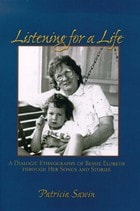
Listening For a Life
A Dialogic Ethnography of Bessie Eldreth through Her Songs and StoriesPatricia Sawin
Utah State University Press, 2004
Drawing on Bahktinian and feminist theory, Sawin pushes forward our understanding of the interactive roles of ethnographer and subject and in the process gives us a deeper understanding of folk singer and storyteller Bessie Eldreth and her greatest art, herself.
Listening to Laredo
A Border City in a Globalized AgeMehnaaz Momen
University of Arizona Press, 2023
Bringing together issues of growth, globalization, and identity, Mehnaaz Momen traces Laredo’s trajectory through the voices of its people. In contrast to the many studies of border cities defined by the outside—and seldom by the people who live at the border—this volume collects oral histories from seventy-five in-depth interviews that collectively illuminate the evolution of the city’s cultural and economic infrastructure, its interdependence with its sister city across the national boundary, and, above all, the strength of its community as it adapts to and even challenges the national narrative regarding the border. The resonant and lively voices of Laredo’s people convey proud ownership of an archetypal border city that has time and again resurrected itself.
Lisu
Far from the RulerMichele Zack
University Press of Colorado, 2017
This book brings the ironic worldview of the Lisu to life through vivid, often amusing accounts of individuals, communities, regions, and practices. One of the smallest and last groups of stateless people, and the most egalitarian of all Southeast Asian highland minorities, the Lisu have not only survived extremes at the crossroads of civil wars, the drug trade, and state-sponsored oppression but adapted to modern politics and technology without losing their identity.
The Lisu weaves a lively narrative that condenses humanity’s transition from border-free tribal groupings into today’s nation-states and global market economy. Journalist and historian Michele Zack first encountered the Lisu in the 1980s and conducted research and fieldwork among them in the 1990s. In 2014 she again traveled extensively in tribal areas of Thailand, Myanmar, and China, when she documented the transformative changes of globalization. Some Lisu have adopted successful new urban occupations in business and politics, while most continue to live as agriculturists “far from the ruler.”
The cohesiveness of Lisu culture has always been mysterious—they reject hierarchical political organization and traditionally had no writing system—yet their culture provides a particular skillset that has helped them navigate the terrain of the different religious and political systems they have recently joined. They’ve made the transition from living in lawless, self-governing highland peripheries to becoming residents and citizens of nation-states in a single generation.
Ambitious and written with journalist’s eye for detail and storytelling, The Lisu introduces the unique and fascinating culture of this small Southeast Asian minority. Their path to national and global citizenship illustrates the trade-offs all modern people have made, and their egalitarian culture provides insight into current political choices in a world turning toward authoritarianism.
Lithuanians in Michigan
Marius K. Grazulis
Michigan State University Press, 2009
In Lithuanians in Michigan Marius Grazulis recounts the history of an immigrant group that has struggled to maintain its identity. Grazulis estimates that about 20 percent of the 1.6 million Lithuanians who immigrated to the United States arrived on American shores between 1860 and 1918.
While first-wave immigrants stayed mostly on the east coast, by 1920 about one-third of newly immigrated Lithuanians lived in Michigan, working in heavy industry and mining.
With remarkable detail, Grazulis traces the ways these groups have maintained their ethnic identity in Michigan in the face of changing demographics in their neighborhoods and changing interests among their children, along with the challenges posed by newly arriving "modern" Lithuanian immigrants, who did not read the same books, sing the same songs, celebrate the same holidays, or even speak the same language that previous waves of Lithuanian immigrants had preserved in America. Anyone interested in immigrant history will find Lithuanians in Michigan simultaneously familiar, fascinating, and moving.

Little Big World
Collecting Louis Marx and the American FiftiesJeffrey Hammond
University of Iowa Press, 2010
Jeffrey Hammond’s Little Big World: Collecting Louis Marx and the American Fifties is the story of a middle-aged man’s sudden compulsion to collect the toys of his childhood: specifically themed playsets produced by the Louis Marx Toy Company. Hammond never made a conscious decision to become a collector of any kind, so he was surprised when his occasional visits to web sites turned into hours spent gazing at, and then impulsively purchasing, the tiny plastic people and animals in the Civil War set, the Fort Apache set, Roy Rogers Ranch, and Happi-Time Farm—just a few of the dozens of playsets the Marx Company produced.
Hammond interweaves childhood memories with reflections on what they reveal about the culture and values of cold war America, offering an extended meditation on toys as powerful catalysts for the imagination of both children and adults. Never sentimentalizing his childhood in an effort to get his old toys back, Hammond exposes the dangers of nostalgia by casting an unsettling light on the culture of the fifties and the era’s lasting impact on those who grew up in it.
Writing in a lovably quirky voice, Hammond not only attempts to understand his personal connection to the Marx toys but also examines the psychology of his fellow eBay denizens. In this warm, funny, and contemplative work, the reader encounters an online community of serious adult collectors who, as the author suspects, are driven to obsession by middle-aged nostalgia. When Hammond questions this preoccupation with the past, he comes to realize that his own collecting has prevented him from moving forward. With this insight, he offers an insider’s take on the culture and psychology of collecting.

Little Hawk and the Lone Wolf
A MemoirRaymond Kaquatosh
Wisconsin Historical Society Press, 2014
After his father’s death, eight-year-old Ray was sent to an Indian boarding school in Keshena. There he experienced isolation and despair, but also comfort and kindness. Upon his return home, Ray remained a lonely boy in a full house until he met and befriended a lone timber wolf. The unusual bond they formed would last through both their lifetimes. As Ray grew into a young man, he left the reservation more frequently. Yet whenever he returned—from school and work, from service in the Marines, and finally from postwar Wausau with his future wife—the wolf waited.
In this rare first-person narrative of a Menominee Indian’s coming of age, Raymond Kaquatosh shares a story that is wise and irreverent, often funny, and in the end, deeply moving.

Live and Be Well
A Celebration of Yiddish Culture in AmericaVicki Gold Levi
Rutgers University Press, 2000
Like a warm family album, this lively book heralds and documents the rich and vibrant traditions of Yiddish-speaking immigrants and their children in “the golden land,” from the first arrivals to the Second World War.
Meet the famous, the infamous, and the unknown—from hotelier Jenny Grossinger to mobster Jake “Greasy Thumb” Guzik to Moses Solomon, the would-be “Jewish Babe Ruth;” from anarchist Emma Goldman to entertainer Eddie Cantor.
Share the struggles and the triumphs of the labor unions, of Yiddish playwrights and poets. Enter the sweatshops of New York’s Lower East Side and the first Jewish settlements in Los Angeles and Chicago. Taste pastrami from Canter’s Deli in Los Angeles, knishes from Yonah Shimmel’s in New York City, and the famous “smookmit” of the Montreal ghetto.
Lavishly illustrated with photos, cartoons, theater posters, and song sheets, here is a book to delight and inform. It is a joyous celebration of life.
Living Through the Generations
Continuity and Change in Navajo Women’s LivesJoanne McCloskey
University of Arizona Press, 2007
Drawing on ethnographic interviews with 77 women in Crownpoint, New Mexico, and surrounding chapters in the Eastern Navajo Agency, Joanne McCloskey examines the cultural traditions evident in Navajo women’s lives. Navajo women balance the demands of Western society with the desire to preserve Navajo culture for themselves and their families.
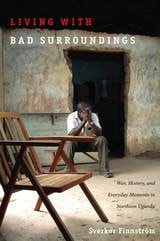
Living with Bad Surroundings
War, History, and Everyday Moments in Northern UgandaSverker Finnström
Duke University Press, 2008
Finnström draws on fieldwork conducted in northern Uganda between 1997 and 2006 to describe how the Acholi—especially the younger generation, those born into the era of civil strife—understand and attempt to control their moral universe and material circumstances. Structuring his argument around indigenous metaphors and images, notably the Acholi concepts of good and bad surroundings, he vividly renders struggles in war and the related ills of impoverishment, sickness, and marginalization. In this rich ethnography, Finnström provides a clear-eyed assessment of the historical, cultural, and political underpinnings of the civil war while maintaining his focus on Acholi efforts to achieve “good surroundings,” viable futures for themselves and their families.

Living with Pottery
Ethnoarchaeology among the Gamo of Southwest EthiopiaArthur, John W
University of Utah Press, 2006
The southwestern region of Ethiopia is one of the few places in the world where locally made pottery is still the dominant choice for everyday domestic use. The Gamo people continue to produce and use pottery for transporting water, cooking, storing, and serving. Ethnoarchaeology undertaken in a society where people still use low-fired ceramics in daily life provides a powerful framework for archaeological inferences, especially since little behavioral information exists concerning the relationship between status, wealth, and household pottery.
Based on John Arthur’s extensive fieldwork, this study sheds light on some of the puzzles common to archaeology in any region. It also helps decipher evidence of inter- and intravillage social and economic organization and offers insight on markers for pottery-producing and nonproducing villages and socioeconomic variability.