Results by title
661 books match the query 'South America' and 26 start with l
La Florida del Inca and the Struggle for Social Equality in Colonial Spanish America
Jonathan D. Steigman
University of Alabama Press, 2005
A cross-disciplinary view of an important De Soto chronicle.
Among the early Spanish chroniclers who contributed to popular images of the New World was the Amerindian-Spanish (mestizo) historian and literary writer, El Inca Garcilaso de la Vega (1539-1616). He authored several works, of which La Florida del Inca (1605) stands out as the best because of its unique Amerindian and European perspectives on the De Soto expedition (1539-1543). As the child of an Indian mother and a Spanish father, Garcilaso lived in both worlds--and saw value in each. Hailed throughout Europe for his excellent contemporary Renaissance writing style, his work was characterized as literary art. Garcilaso revealed the emotions, struggles, and conflicts experienced by those who participated in the historic and grandiose adventure in La Florida. Although criticized for some lapses in accuracy in his attempts to paint both the Spaniards and the Amerindians as noble participants in a world-changing event, his work remains the most accessible of all the chronicles.
In this volume, Jonathan Steigman explores El Inca’s rationale and motivations in writing his chronicle. He suggests that El Inca was trying to influence events by influencing discourse; that he sought to create a discourse of tolerance and agrarianism, rather than the dominant European discourse of intolerance, persecution, and lust for wealth. Although El Inca's purposes went well beyond detailing the facts of De Soto’s entrada, his skill as a writer and his dual understanding of the backgrounds of the participants enabled him to paint a more complete picture than most--putting a sympathetic human face on explorers and natives alike.
La Frontera
Forests and Ecological Conflict in Chile's Frontier TerritoryThomas Miller Klubock
Duke University Press, 2014
La Galgada, Peru
A Preceramic Culture in TransitionBy Terence E. Grieder, Alberto Bueno Mendoza, C. Earle Smith, Jr., and Robert M. Malina
University of Texas Press, 1988
Excavations over many years in the Peruvian Andes and coastal regions have revealed that the village settlements on the west coast of South America were one of the early centers of world civilization. One of these settlements, La Galgada, flourished from 3000 B.C. to 1700 B.C. Its extraordinarily complete cultural remains help to reconstruct a picture of human life, health, activities, and trade relations as they were 4,000 years ago and allow us to enter the mental and artistic life of this early civilization.
The location of La Galgada on Peru’s Tablachaca River midway between the highlands and the coast caused it to be influenced by the culture of both those regions. The remains found at La Galgada tie together important textile collections from the coastal region with important architectural remains from the Andean highland to give a picture of a complete preceramic culture in ancient Peru. Numerous illustrations provide an exciting visual catalog of the finds at La Galgada. What also makes La Galgada such a significant site are the changes in art and architecture that can be documented in considerable detail from about 2500 B.C. to about 1700 B.C. During that period, La Galgada and the other preceramic communities in northern Peru were transformed with a rapidity that must have seemed shocking and revolutionary to their inhabitants. These changes record the first appearance of the powerful and intimidating Chavín culture that was to dominate the region for the next thousand years. They also allow us to watch a people change and adapt as they try to cope with the powerful pressure of technical and social development in their region.
La Patria del Criollo
An Interpretation of Colonial GuatemalaSevero Martínez Peláez
Duke University Press, 2009
Martínez Peláez asserts that “the coffee dictatorships were the full and radical realization of criollo notions of the patria.” This patria, or homeland, was one that criollos had wrested from Spaniards in the name of independence and taken control of based on claims of liberal reform. He contends that since labor is needed to make land productive, the exploitation of labor, particularly Indian labor, was a necessary complement to criollo appropriation. His depiction of colonial reality is bleak, and his portrayal of Spanish and criollo behavior toward Indians unrelenting in its emphasis on cruelty and oppression. Martínez Peláez felt that the grim past he documented surfaces each day in an equally grim present, and that confronting the past is a necessary step in any effort to improve Guatemala’s woes. An extensive introduction situates La Patria del Criollo in historical context and relates it to contemporary issues and debates.
Labor Justice across the Americas
Leon Fink, Juan Palacio
University of Illinois Press, 2018
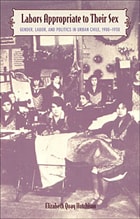
Labors Appropriate to Their Sex
Gender, Labor, and Politics in Urban Chile, 1900–1930Elizabeth Quay Hutchison
Duke University Press, 2001
In addition to population and industrial censuses, Hutchison culls published and archival sources to illuminate such misconceptions and to reveal how women’s paid labor became a locus of anxiety for a society confronting social problems—both real and imagined—that were linked to industrialization and modernization. The limited options of working women were viewed by politicians, elite women, industrialists, and labor organizers as indicative of a society in crisis, she claims, yet their struggles were also viewed as the potential springboard for reform. Labors Appropriate to Their Sex thus demonstrates how changing norms concerning gender and work were central factors in conditioning the behavior of both male and female workers, relations between capital and labor, and political change and reform in Chile.
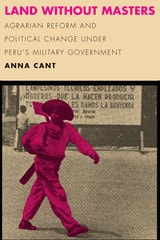
Land without Masters
Agrarian Reform and Political Change under Peru's Military GovernmentBy Anna Cant
University of Texas Press, 2021
In 1969, Juan Velasco Alvarado’s military government began an ambitious land reform program in Peru, transferring holdings from large estates to peasant cooperatives. Fifty years later this reform remains controversial: critics claim it unjustly expropriated land and ruined the Peruvian economy, while supporters emphasize its success in addressing rural inequality and exploitation.
Moving beyond agricultural policy to offer a fresh perspective on the agrarian reform, Land without Masters shows how ideological assumptions and state interventions surrounding the reform transformed Peru’s political culture and social fabric. Drawing on fieldwork in three different regions, Anna Cant shows how the government adapted its discourse and interventions to the local context while using the reform as a platform for nation-building. This comparative approach reveals how local actors shaped the regional impact of the agrarian reform and highlights the new forms of agency that emerged, including that of marginalized peasants who helped forge a new social, cultural, and political landscape.
Making novel use of both visual and cultural sources, this book is a fascinating look at how the agrarian reform process permanently altered the relationship between rural citizens and the national government—and how it continues to resonate in Peruvian politics today.
Landowners in Colonial Peru
By Keith A. Davies
University of Texas Press, 1984
In 1540 a small number of Spaniards founded the city of Arequipa in southwestern Peru. These colonists, later immigrants, and their descendants devoted considerable energy to exploiting the surrounding area. At first, like many other Spaniards in the Americas, they relied primarily on Indian producers; by the late 1500s they had acquired land and established small farms and estates. This, the first study to examine the agrarian history of a region in South America from the mid-sixteenth through late-seventeenth century, demonstrates that colonials exploited the countryside as capitalists. They ran their rural enterprises as efficiently as possible, expanded their sources of credit and labor, tapped widespread markets, and lobbied strenuously to influence the royal government. The reasons for such behavior have seldom been explored beyond the colonists’ evident need to sustain themselves and their dependents.
Arequipa’s case suggests another fundamental cause of capitalist behavior in colonial South America: rural wealth was inextricably tied to the colonists’ desire to reinforce and improve their stature. Arequipa’s Spanish families of the upper and middle social levels consistently employed land and its proceeds to attract prominent spouses, to acquire prestigious political and military posts, and to enhance their standing by becoming benefactors of the Church. They rarely lost sight of the crucial role that wealth played in their lives. Thus, when the region’s economy flourished, as it did during the late 1500s, they expanded and improved their holdings. When it faltered at the beginning of the next century, they made every effort to retain properties, even fragmenting land to accommodate family members and new spouses. Unlike patterns sometimes suggested for Spanish America, many Arequipan colonial families possessed land and retained it over many generations. Neither the increasingly rich Church nor a few powerful persons managed to build up extensive estates.
Landowners in Colonial Peru explains how and why rural property became so important. It emphasizes both the capitalist bent of Hispanics and the manner in which wealth served social aspirations. The approach makes clear that many of the economic and social characteristics so often attributed to eighteenth- and nineteenth-century Latin Americans were present from the early Colonial period.
Landscapes of Devils
Tensions of Place and Memory in the Argentinean ChacoGastón R. Gordillo
Duke University Press, 2004
As Gordillo explains, the bush is the result of social, cultural, and political processes that intertwine this place with other geographies. Labor exploitation, state violence, encroachment by settlers, and the demands of Anglican missionaries all transformed this land. The Toba’s lives have been torn between alienating work in sugar plantations and relative freedom in the bush, between moments of domination and autonomy, abundance and poverty, terror and healing. Part of this contradictory experience is culturally expressed in devils, evil spirits that acquire different features in different places. The devils are sources of death and disease in the plantations, but in the bush they are entities that connect with humans as providers of bush food and healing power. Enacted through memory, the experiences of the Toba have produced a tense and shifting geography. Combining extensive fieldwork conducted over a decade, historical research, and critical theory, Gordillo offers a nuanced analysis of the Toba’s social memory and a powerful argument that geographic places are not only objective entities but also the subjective outcome of historical forces.
Landscapes of Freedom
Building a Postemancipation Society in the Rainforests of Western ColombiaClaudia Leal
University of Arizona Press, 2018
After emancipation in 1851, the African descendants living in the extra-humid rainforests of the Pacific coast of Colombia attained levels of autonomy hardly equaled anywhere else in the Americas. This autonomy rested on their access to a diverse environment—including small strips of fertile soils, mines, forests, rivers, and wetlands—that contributed to their subsistence and allowed them to procure gold, platinum, rubber, and vegetable ivory for export.
Afro-Colombian slave labor had produced the largest share of gold in the colony of New Granada. After the abolishment of slavery, some free people left the mining areas and settled elsewhere along the coast, making this the largest area of Latin America in which black people predominate into the present day. However, this economy and society, which lived off the extraction of natural resources, was presided over by a very small white commercial elite living in the region’s ports, where they sought to create an urban environment that would shelter them from the jungle.
Landscapes of Freedom reconstructs a nonplantation postemancipation trajectory that sheds light on how environmental conditions and management influenced the experience of freedom. It also points at the problematic associations between autonomy and marginality that have shaped the history of Afro-America. By focusing on racialized landscapes, Leal offers a nuanced and important approach to understanding the history of Latin America.
Late Intermediate Occupation at Cerro Azul, Perú, A Preliminary Report
Joyce Marcus
University of Michigan Press, 1987
Latent Memory
Human Rights and Jewish Identity in ChileMaxine Lowy
University of Wisconsin Press, 2022
Maxine Lowy draws upon hundreds of first-person testimonials and archival resources to explore Chilean Jewish identity in the wake of Pinochet's coup, exposing the complex and sometimes contradictory development of collective traumatic memory and political sensibilities in an oppressive new context. Latent Memory points to processes of community gestures of moral reparation and signals the pathways to justice and healing associated with Shoah and the Jewish experience. Lowy asks how individuals and institutions may overcome fear, indifference, and convenience to take a stand even under intense political duress, posing questions applicable to any nation emerging from state repression.
Latin American Women and the Search for Social Justice
Francesca Miller
University Press of New England, 1991
Laws of Chance
Brazil's Clandestine Lottery and the Making of Urban Public LifeAmy Chazkel
Duke University Press, 2011
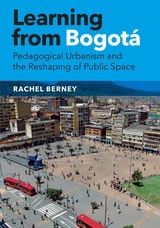
Learning from Bogotá
Pedagogical Urbanism and the Reshaping of Public SpaceBy Rachel Berney
University of Texas Press, 2017
Once known as a “drug capital” and associated with kidnappings, violence, and excess, Bogotá, Colombia, has undergone a transformation that some have termed “the miracle of Bogotá.” Beginning in the late 1980s, the city emerged from a long period of political and social instability to become an unexpected model of urban development through the redesign and revitalization of the public realm—parks, transportation, and derelict spaces—under the leadership of two “public space mayors,” Antanas Mockus and Enrique Peñalosa (the latter reelected in 2015). In Learning from Bogotá, Rachel Berney analyzes how these mayors worked to reconfigure the troubled city into a pedagogical one whose public spaces and urban policy have helped shape a more tolerant and aware citizenry.
Berney examines the contributions of Mockus and Peñalosa through the lenses of both spatial/urban design and the city’s history. She shows how, through the careful intertwining of new public space and transportation projects, the reclamation of privatized public space, and the refurbishment of dilapidated open spaces, the mayors enacted an ambitious urban vision for Bogotá without resorting to the failed method of the top-down city master plan. Illuminating the complex interplay between formal politics, urban planning, and improvised social strategies, as well as the negative consequences that accompanied Bogotá’s metamorphosis, Learning from Bogotá offers significant lessons about the possibility for positive and lasting change in cities around the world.
Learning from Madness
Brazilian Modernism and Global Contemporary ArtKaira M. Cabañas
University of Chicago Press, 2018
Kaira M. Cabañas shows that at the center of this advocacy stood such significant proponents as psychiatrists Osório César and Nise da Silveira, who championed treatments that included painting and drawing studios; and the art critic Mário Pedrosa, who penned Gestaltist theses on aesthetic response. Cabañas examines the lasting influence of this unique era of Brazilian modernism, and how the afterlife of this “outsider art” continues to raise important questions. How do we respect the experiences of the mad as their work is viewed through the lens of global art? Why is this art reappearing now that definitions of global contemporary art are being contested?
Learning from Madness offers an invigorating series of case studies that track the parallels between psychiatric patients’ work in Western Europe and its reception by influential artists there, to an analogous but altogether distinct situation in Brazil.
Legacies of War
Violence, Ecologies, and KinKimberly Theidon
Duke University Press, 2022

Liberalism in the Jungle
Race, Rubber, and the State in the Ecuadorian AmazonMatthew Ford
University of Texas Press, 0
The untold story of how liberal reform, Indigenous resistance, and the rubber trade transformed Ecuador’s Amazon.
Ecuador’s 1895 Liberal Revolution was a turning point for the nation. Along with crippling the power of the Catholic Church, the new Liberal government expanded the ranks of political participation, spearheaded projects to soften endemic regionalism, integrated the national economy into global markets through an export-oriented economic strategy, and launched a program of “Indian Redemption” aimed at “civilizing” what elites deemed as the “backward” Indigenous masses. The cacao economy was essential to the Liberal state reform, as it facilitated infrastructure modernizatoin and the ability to provide unprecedented public goods and services.
East of the Andes, the Liberal state launched the first attempt to incorporate the Amazonian frontier (the “Oriente”) and expand state power into the region. But, as Matthew Ford shows, a very different global commodity was transforming the Oriente. Unlike most economic booms, the global demand for rubber debilitated state efforts in the region. Liberalism in the Jungle traces how local, national, and global forces shaped the contours of Liberal efforts in the Amazon. By the end, readers will understand how the region transformed from an isolated outpost to the heart of the national economy and home to one of the world’s most powerful social movements.
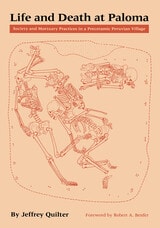
Life And Death At Paloma
Practices In Peruvian VillageJeffrey Quilter
University of Iowa Press, 1989
Linked Labor Histories
New England, Colombia, and the Making of a Global Working ClassAviva Chomsky
Duke University Press, 2008
Chomsky examines labor and management at two early-twentieth-century Massachusetts factories: one that transformed the global textile industry by exporting looms around the world, and another that was the site of a model program of labor-management collaboration in the 1920s. She follows the path of the textile industry from New England, first to the U.S. South, and then to Puerto Rico, Japan, Mexico, Central America, the Caribbean, and Colombia. She considers how towns in Rhode Island and Massachusetts began to import Colombian workers as they struggled to keep their remaining textile factories going. Most of the workers eventually landed in service jobs: cleaning houses, caring for elders, washing dishes.
Focusing on Colombia between the 1960s and the present, Chomsky looks at the Urabá banana export region, where violence against organized labor has been particularly acute, and, through a discussion of the AFL-CIO’s activities in Colombia, she explores the thorny question of U.S. union involvement in foreign policy. In the 1980s, two U.S. coal mining companies began to shift their operations to Colombia, where they opened two of the largest open-pit coal mines in the world. Chomsky assesses how different groups, especially labor unions in both countries, were affected. Linked Labor Histories suggests that economic integration among regions often exacerbates regional inequalities rather than ameliorating them.
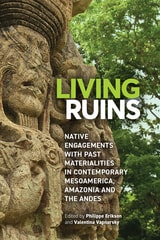
Living Ruins
Native Engagements with Past Materialities in Contemporary Mesoamerica, Amazonia, and the AndesPhilippe Erikson
University Press of Colorado, 2022
Ten case studies from the Maya region, Amazonia, and the Andes detail and contextualize narratives, rituals, and a range of practices and attitudes toward different kinds of vestiges. The chapters engage with recently debated issues such as regimes of historicity and knowledge, cultural landscapes, conceptions of personhood and ancestrality, artifacts, and materiality. They focus on Indigenous perspectives rather than mainstream narratives such as those mediated by UNESCO, Hollywood, travel agents, and sometimes even academics. The contributions provide critical analyses alongside a multifaceted account of how people relate to the place/time nexus, expanding our understanding of different ontological conceptualizations of the past and their significance in the present.
Living Ruins adds to the lively body of work on the invention of tradition, Indigenous claims on their lands and history, “retrospective ethnogenesis,” and neo-Indianism in a world where tourism, NGOs, and Western essentialism are changing Indigenous attitudes and representations. This book is significant to anyone interested in cultural heritage studies, Amerindian spirituality, and Indigenous engagement with archaeological sites in Latin America.
Contributors: Cedric Becquey, Laurence Charlier Zeineddine, Marie Chosson, Pablo Cruz, Philippe Erikson, Antoinette Molinié, Fernando Santos-Granero, Emilie Stoll, Valentina Vapnarsky, Pirjo Kristiina Virtanen
Living and Dying in São Paulo
Immigrants, Health, and the Built Environment in BrazilJeffrey Lesser
Duke University Press, 2025
Living in the Crossfire
Favela Residents, Drug Dealers, and Police Violence in Rio de JaneiroAuthored by Maria Helena Moreira Alves and Philip Evanson
Temple University Press, 2011
For all of Brazil's efforts to reduce poverty-and its progress-the favelas in Rio de Janeiro still house one-third of the city's poor, and violence permeates every aspect of the city. As urban drug gangs and police wage war in the streets, favela residents who are especially vulnerable live in fear of being caught in the crossfire. Politicians, human rights activists, and security authorities have been working to minimize the social and economic problems at the root of this "war."
Living in the Crossfire presents impassioned testimony from officials, residents, and others in response to the ongoing crisis. Maria Helena Moreira Alves and Philip Evanson provide vivid accounts from grieving mothers and members of the police working to stop the war and, among officials, from Brazil's President Luis Inácio Lula da Silva, who discusses his efforts to improve public security.
Llamas beyond the Andes
Untold Histories of Camelids in the Modern WorldMarcia Stephenson
University of Texas Press, 2023
Camelids are vital to the cultures and economies of the Andes. The animals have also been at the heart of ecological and social catastrophe: Europeans overhunted wild vicuña and guanaco and imposed husbandry and breeding practices that decimated llama and alpaca flocks that had been successfully tended by Indigenous peoples for generations. Yet the colonial encounter with these animals was not limited to the New World. Llamas beyond the Andes tells the five-hundred-year history of animals removed from their native habitats and transported overseas.
Initially Europeans prized camelids for the bezoar stones found in their guts: boluses of ingested matter that were thought to have curative powers. Then the animals themselves were shipped abroad as exotica. As Europeans and US Americans came to recognize the economic value of camelids, new questions emerged: What would these novel sources of protein and fiber mean for the sheep industry? And how best to cultivate herds? Andeans had the expertise, but knowledge sharing was rarely easy. Marcia Stephenson explores the myriad scientific, commercial, and cultural interests that have attended camelids globally, making these animals a critical meeting point for diverse groups from the North and South.
Long Live Atahualpa
Indigenous Politics, Justice, and Democracy in the Northern AndesEmma Cervone
Duke University Press, 2012
Cervone describes how the Inca Atahualpa contested racial subordination by intervening in matters of resource distribution, justice, and cultural politics. Considering local indigenous politics and indigenous mobilization at the national and international levels, she explains how, beginning in the 1960s, state-led modernization created political openings by generating new economic formations and social categories. Long Live Atahualpa sheds new light on indigenous peoples operating at the crossroads of global capitalism and neoliberal reforms as they redefine historically rooted relationships of subordination.
Loss and Wonder at the World’s End
Laura A. Ogden
Duke University Press, 2021