Results by title
265 books match the query 'To 1500' and 13 start with l
Landscape and Interaction. The Troodos Archaeological and Environmental Survey Project, Cyprus. Volume 1. Methodology, Analysis and Interpretation
Michael Given
Council for British Research in the Levant, 2013
Landscapes in Transition
B. Finlayson
Council for British Research in the Levant, 2010
Language, Sign and Gender in Beowulf
Gillian R. Overing
Southern Illinois University Press, 1990
Not a book about what Beowulf means but how it means, and how the reader participates in the process of meaning construction.
Overing’s primary aim is to address the poem on its own terms, to trace and develop an interpretive strategy consonant with the extent of its difference. Beowulf’s arcane structure describes cyclical repetitions and patterned intersections of themes which baffle a linear perspective, and suggest instead the irresolution and dynamism of the deconstructionist free play of textual elements.
Chapter 1 posits the self/reader as a function of the text/language, examining the ways in which the text "speaks" the reader. Chapter 2 develops an interactive semiotic strategy in an attempt to describe an isomorphic relation between poem and reader, between text and self. Chapter 3 addresses the notions of text and self as more complex functions or formulations of desire, and thus complicates and expands the arguments of the two preceding chapters. The final chapter examines the issue of desire in the poem, and, to a lesser extent, desire in the reader (insofar as these may legitimately be viewed as distinct from each other).
Latin Classics in Medieval Hungary
Eleventh CenturyElod Nemerkényi
Central European University Press, 2004
Law and Transaction Costs in the Ancient Economy
Dennis P. Kehoe, David M. Ratzan, and Uri Yiftach, editors
University of Michigan Press, 2015
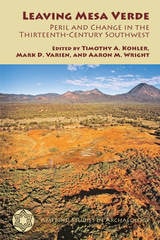
Leaving Mesa Verde
Peril and Change in the Thirteenth-Century SouthwestEdited by Timothy A. Kohler, Mark D. Varien, and Aaron M. Wright
University of Arizona Press, 2012
Much new paleoenvironmental data, and a great deal of archaeological survey and excavation, permit the fifteen scientists represented here much greater precision in determining the timing of the depopulation, the number of people affected, and the ways in which northern Pueblo peoples coped—and failed to cope—with the rapidly changing environmental and demographic conditions they encountered throughout the 1200s. In addition, some of the scientists in this volume use models to provide insights into the processes behind the patterns they find, helping to narrow the range of plausible explanations.
What emerges from these investigations is a highly pertinent story of conflict and disruption as a result of climate change, environmental degradation, social rigidity, and conflict. Taken as a whole, these contributions recognize this era as having witnessed a competition between differing social and economic organizations, in which selective migration was considerably hastened by severe climatic, environmental, and social upheaval. Moreover, the chapters show that it is at least as true that emigration led to the collapse of the northern Southwest as it is that collapse led to emigration.
Leo Strauss and the Rediscovery of Maimonides
Kenneth Hart Green
University of Chicago Press, 2013
An invaluable companion to Green’s comprehensive collection of Strauss’s writings on Maimonides, this volume shows how Strauss confronted the commonly accepted approaches to the medieval philosopher, resulting in both a new understanding of Maimonides and a new depth and direction for his own thought. It will be welcomed by anyone engaged with the work of either philosopher.
Lessons from the Past
The Moral Use of History in Fourth-Century ProseFrances Pownall
University of Michigan Press, 2003
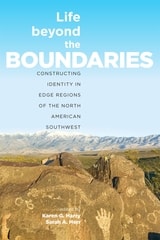
Life beyond the Boundaries
Constructing Identity in Edge Regions of the North American SouthwestKaren Harry
University Press of Colorado, 2018
Life beyond the Boundaries explores identity formation on the edges of the ancient Southwest. Focusing on some of the more poorly understood regions, including the Jornada Mogollon, the Gallina, and the Pimería Alta, the authors use methods drawn from material culture science, anthropology, and history to investigate themes related to the construction of social identity along the perimeters of the American Southwest.
Through an archaeological lens, the volume examines the social experiences of people who lived in edge regions. Through mobility and the development of extensive social networks, people living in these areas were introduced to the ideas and practices of other cultural groups. As their spatial distances from core areas increased, the degree to which they participated in the economic, social, political, and ritual practices of ancestral core areas increasingly varied. As a result, the social identities of people living in edge zones were often—though not always—fluid and situational.
Drawing on an increase of available information and bringing new attention to understudied areas, the book will be of interest to scholars of Southwestern archaeology and other researchers interested in the archaeology of low-populated and decentralized regions and identity formation. Life beyond the Boundaries considers the various roles that edge regions played in local and regional trajectories of the prehistoric and protohistoric Southwest and how place influenced the development of social identity.
Contributors: Lewis Borck, Dale S. Brenneman, Jeffery J. Clark, Severin Fowles, Patricia A. Gilman, Lauren E. Jelinek, Myles R. Miller, Barbara J. Mills, Matthew A. Peeples, Kellam Throgmorton, James T. Watson
Light and Glory
The Transfiguration of Christ in Early Franciscan and Dominican TheologyAaron Canty
Catholic University of America Press, 2011
Listening to Homer
Tradition, Narrative, and AudienceRuth Scodel
University of Michigan Press, 2002
---Greece & Rome
---Irene J.F. de Jong, Gnomon

Lost Property
The Woman Writer and English Literary History, 1380-1589Jennifer Summit
University of Chicago Press, 2000
Lost Property traces the representation of women writers from Margery Kempe and Christine de Pizan to Elizabeth I and Mary Queen of Scots, exploring how the woman writer became a focal point for emerging theories of literature and authorship in English precisely because of her perceived alienation from tradition. Through original archival research and readings of key literary texts, Summit writes a new history of the woman writer that reflects the impact of such developments as the introduction of printing, the Reformation, and the rise of the English court as a literary center.
A major rethinking of the place of women writers in the histories of books, authorship, and canon-formation, Lost Property demonstrates that, rather than being an unimaginable anomaly, the idea of the woman writer played a key role in the invention of English literature.
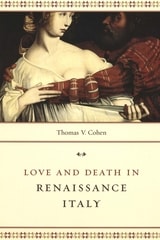
Love and Death in Renaissance Italy
Thomas V. Cohen
University of Chicago Press, 2004
Each of the chapters in this history chronicles a domestic drama around which the lives of ordinary Romans are suddenly and violently altered. You might read the gruesome murder that opens the book—when an Italian noble takes revenge on his wife and her bastard lover as he catches them in delicto flagrante—as straight from the pages of Boccaccio. But this tale, like the other stories Cohen recalls here, is true, and its recounting in this scintillating work is based on assiduous research in court proceedings kept in the state archives in Rome.
Love and Death in Renaissance Italy contains stories of a forbidden love for an orphan nun, of brothers who cruelly exact a will from their dying teenage sister, and of a malicious papal prosecutor who not only rapes a band of sisters, but turns their shambling father into a pimp! Cohen retells each cruel episode with a blend of sly wit and warm sympathy and then wraps his tales in ruminations on their lessons, both for the history of their own time and for historians writing today. What results is a book at once poignant and painfully human as well as deliciously entertaining.