Results by title
28164 books match the query 'History' and 932 start with l
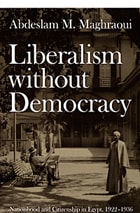
Liberalism without Democracy
Nationhood and Citizenship in Egypt, 1922–1936Abdeslam M. Maghraoui
Duke University Press, 2006
In the 1920s and 1930s, Egypt’s reformers equated liberal notions of nationhood and citizenship with European civilization and culture. As Maghraoui demonstrates, in their efforts to achieve liberalization, they sought to align Egypt with the West and to dissociate it from the Arab and Islamic worlds. Egypt’s professionals and leading cultural figures attempted to replace the fez with European-style hats; they discouraged literary critics from studying Arabic poetry, claiming it was alien to Egyptian culture. Why did they feel compelled to degrade local cultures in order to accommodate liberal principles?
Drawing on the thought of Lacan, Fanon, Said, and Bhabha, as well as contemporary political theory, Maghraoui points to liberalism’s inherent contradiction: its simultaneous commitments to individual liberty and colonial conquest. He argues that when Egypt’s reformers embraced the language of liberalism as their own, they adopted social prejudices built into that language. Efforts to achieve liberalization played out—and failed—within the realm of culture, not just within the political arena. Opinions voiced through literary works, cartoons, newspaper articles on controversial social issues, and other forms of cultural expression were ultimately more important to the fate of liberalism in Egypt than were questions of formal political participation and representation. Liberalism without Democracy demonstrates the powerful—and under appreciated—role of language and culture in defining citizenship and political community.
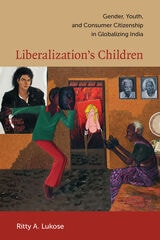
Liberalization's Children
Gender, Youth, and Consumer Citizenship in Globalizing IndiaRitty A. Lukose
Duke University Press, 2009
Moving beyond elite figurations of globalizing Indian youth, Lukose draws on ethnographic research to examine how non-elite college students in the southern state of Kerala mediate region, nation, and globe. Kerala sits at the crossroads of development and globalization. Held up as a model of left-inspired development, it has also been transformed through an extensive and largely non-elite transnational circulation of labor, money, and commodities to the Persian Gulf and elsewhere. Focusing on fashion, romance, student politics, and education, Lukose carefully tracks how gender, caste, and class, as well as colonial and postcolonial legacies of culture and power, affect how students navigate their roles as citizens and consumers. She explores how mass-mediation and an expanding commodity culture have differentially incorporated young people into the structures and aspirational logics of globalization.
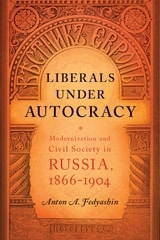
Liberals under Autocracy
Modernization and Civil Society in Russia, 1866–1904Anton A. Fedyashin
University of Wisconsin Press, 2012
With its rocky transition to democracy, post-Soviet Russia has made observers wonder whether a moderating liberalism could ever succeed in such a land of extremes. But in Liberals under Autocracy, Anton A. Fedyashin looks back at the vibrant Russian liberalism that flourished in the country’s late imperial era, chronicling its contributions to the evolution of Russia’s rich literary culture, socioeconomic thinking, and civil society.
For five decades prior to the revolutions of 1917, The Herald of Europe (Vestnik Evropy) was the flagship journal of Russian liberalism, garnering a large readership. The journal articulated a distinctively Russian liberal agenda, one that encouraged social and economic modernization and civic participation through local self-government units (zemstvos) that defended individual rights and interests—especially those of the peasantry—in the face of increasing industrialization. Through the efforts of four men who turned The Herald into a cultural nexus in the imperial capital of St. Petersburg, the publication catalyzed the growing influence of journal culture and its formative effects on Russian politics and society.
Challenging deep-seated assumptions about Russia’s intellectual history, Fedyashin’s work casts the country’s nascent liberalism as a distinctly Russian blend of self-governance, populism, and other national, cultural traditions. As such, the book stands as a contribution to the growing literature on imperial Russia's nonrevolutionary, intellectual movements that emphasized the role of local politics in both successful modernization and the evolution of civil society in an extraparliamentary environment.
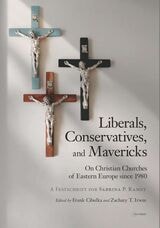
Liberals, Conservatives, and Mavericks
On Christian Churches of Eastern Europe since 1980. A Festschrift for Sabrina P. RametFrank Cibulka
Central European University Press, 2025
No Church is monolithic—this is the preliminary premise of this volume on the public place of religion in a representative number of post-communist countries. The studies confirm that within any religious organization we can expect to find fissures, factions, theological or ideological quarrels, and perhaps even competing interest groups, such as missionary workers, regular clergy versus secular clergy, and sometimes even competing ecclesiastical hierarchies. The main focus of the book rests on the divisions arising within select Christian Churches, as they confront the processes of secularization and atheization. The coverage area includes Russia and the Ukraine, East-Central Europe and South-Eastern Europe. Some chapters focus on individual clergy who challenge the mainstream of their given Church either from a more liberal or from a more conservative perspective, while others deal with the divisive forces impacting the religious organizations.
This festschrift to honor Sabrina Ramet’s seminal contribution to the study of religion in the politics of the communist and post-communist world, brings together several generations of scholars from a variety of countries, both those well established in their fields of study as well as young promising academics.
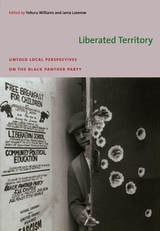
Liberated Territory
Untold Local Perspectives on the Black Panther PartyYohuru Williams and Jama Lazerow, eds.
Duke University Press, 2008
The histories and character of the party branches vary as widely as their locations. The Cape Verdeans of New Bedford, Massachusetts, were initially viewed as a particular challenge for the local Panthers but later became the mainstay of the Boston-area party. In the early 1970s, the Winston-Salem, North Carolina, chapter excelled at implementing the national Black Panther Party’s strategic shift from revolutionary confrontation to mainstream electoral politics. In Detroit, the Panthers were defined by a complex relationship between their above-ground activities and an underground wing dedicated to armed struggle. While the Milwaukee chapter was born out of a rising tide of black militancy, it ultimately proved more committed to promoting literacy and health care and redressing hunger than to violence. The Alabama Black Liberation Front did not have the official imprimatur of the national party, but it drew heavily on the Panthers’ ideas and organizing strategies, and its activism demonstrates the broad resonance of many of the concerns articulated by the national party: the need for jobs, for decent food and housing, for black self-determination, and for sustained opposition to police brutality against black people. Liberated Territory reveals how the Black Panther Party’s ideologies, goals, and strategies were taken up and adapted throughout the United States.
Contributors: Devin Fergus, Jama Lazerow, Ahmad A. Rahman, Robert W. Widell Jr., Yohuru Williams
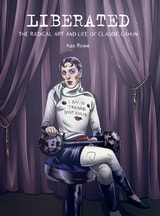
Liberated
The Radical Art and Life of Claude CahunKaz Rowe
J. Paul Getty Trust, The, 2023
At the turn of the twentieth century in Nantes, France, Lucy Schwob met Suzanne Malherbe, and lightning struck. The two became partners both artistically and romantically and transformed themselves into the creative personas Claude Cahun and Marcel Moore. Together, the couple embarked on a radical journey of Surrealist collaboration that would take them from conservative provincial France to the vibrancy of 1920s Paris to the oppression of Nazi-occupied Jersey during World War II, where they used art to undermine the Nazi regime.
Cahun and Moore challenged gender roles and championed freedom at a time when strict societal norms meant that the truth of their relationship had to remain secret. Featuring ten photographs by Cahun and Moore, this graphic biography by cartoonist Kaz Rowe brings Cahun’s inspiring story to life.
Ages thirteen to eighteen
Liberating Hollywood
Women Directors and the Feminist Reform of 1970s American CinemaSmukler, Maya M
Rutgers University Press, 2019
Liberating Hollywood examines the professional experiences and creative output of women filmmakers during a unique moment in history when the social justice movements that defined the 1960s and 1970s challenged the enduring culture of sexism and racism in the U.S. film industry. Throughout the 1970s feminist reform efforts resulted in a noticeable rise in the number of women directors, yet at the same time the institutionalized sexism of Hollywood continued to create obstacles to closing the gender gap. Maya Montañez Smukler reveals that during this era there were an estimated sixteen women making independent and studio films: Penny Allen, Karen Arthur, Anne Bancroft, Joan Darling, Lee Grant, Barbara Loden, Elaine May, Barbara Peeters, Joan Rivers, Stephanie Rothman, Beverly Sebastian, Joan Micklin Silver, Joan Tewkesbury, Jane Wagner, Nancy Walker, and Claudia Weill. Drawing on interviews conducted by the author, Liberating Hollywood is the first study of women directors within the intersection of second wave feminism, civil rights legislation, and Hollywood to investigate the remarkable careers of these filmmakers during one of the most mythologized periods in American film history.
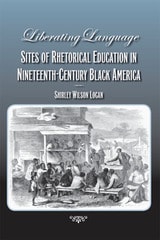
Liberating Language
Sites of Rhetorical Education in Nineteenth-Century Black AmericaShirley Wilson Logan
Southern Illinois University Press, 2008
Liberating Language identifies experiences of nineteenth-century African Americans—categorized as sites of rhetorical education—that provided opportunities to develop effective communication and critical text-interpretation skills. Author Shirley Wilson Logan considers how nontraditional sites, which seldom involved formal training in rhetorical instruction, proved to be effective resources for African American advancement.
Logan traces the ways that African Americans learned lessons in rhetoric through language-based activities associated with black survival in nineteenth-century America, such as working in political organizations, reading and publishing newspapers, maintaining diaries, and participating in literary societies. According to Logan, rhetorical training was manifested through places of worship and military camps, self-education in oratory and elocution, literary societies, and the black press. She draws on the experiences of various black rhetors of the era, such as
Frederick Douglass, Frances Harper, Fanny Coppin, Charles Chesnutt, Ida B. Wells, and the lesser-known Oberlin-educated Mary Virginia Montgomery, Virginia slave preacher "Uncle Jack," and former slave "Mrs. Lee."
Liberating Language addresses free-floating literacy, a term coined by scholar and writer Ralph Ellison, which captures the many settings where literacy and rhetorical skills were acquired and developed, including slave missions, religious gatherings, war camps, and even cigar factories. In Civil War camp- sites, for instance, black soldiers learned to read and write, corresponded with the editors of black newspapers, edited their own camp-based papers, and formed literary associations.
Liberating Language outlines nontraditional means of acquiring rhetorical skills and demonstrates how African Americans, faced with the lingering consequences of enslavement and continuing oppression, acquired rhetorical competence during the late eighteenth century and throughout the nineteenth century.
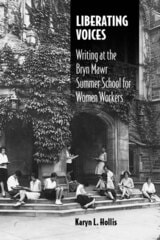
Liberating Voices
Writing at the Bryn Mawr Summer School for Women WorkersKaryn L. Hollis
Southern Illinois University Press, 2004
During the 1920s and 1930s at the Bryn Mawr Summer School for Women Workers, working-class women were educated in the liberal arts and instructed in writing to assume more powerful roles in the industrial workplace. In Liberating Voices: Writing at the Bryn Mawr Summer School for Women Workers, Karyn L. Hollis tells the remarkable story of how this multiclass, multiethnic American institution rooted in composition pedagogy, literary history, and leftist thought emerged from the broad social, economic, and ideological trends of the era. The summer school curriculum, Hollis shows, enhanced the individual and collective self-confidence of the 1,800 women who studied there between 1921 and 1938.
Drawing heavily on the women’s writings—including autobiography, poetry, labor drama, humor, and economic reporting—Liberating Voices adds significantly to the small oeuvre of published writing by working-class women, who were, in this case, mostly nontraditional students, immigrants, and minorities. Outlining a materialist pedagogy that centers on the women’s daily economic struggles as well as their family and community experiences, Hollis reveals the tensions that stemmed from differences in race, ethnicity, class, and religion. She also shows how the students exploited cultural scripts and drew strength from their diversity, eventually insisting on a democratic sharing of power with faculty and administrators at the Summer School.
Hollis provides a thorough ethnography of the Summer School with respect to its place in the social and political history of the 1920s and 1930s, and then situates the school’s pedagogy within the history of American education and composition instruction. Concepts from literary criticism and composition theory provide the framework for an analysis of the working women’s autobiographical writing, revealing how the narrative voice of their prose grew from weak and individualized to empowered and collective as the women described their families, childhood, work, unions, and education over time. The volume is complemented by sixteen illustrations.
Additional analysis of the women’s poetry points to their skill as both producers and consumers of literature. The common theme of body versus a powerful machine in the workplace bears witness to the industrial exploitation the women endured. Taking up postmodern questions of agency and voice, Hollis argues that the women used a variety of cultural texts to construct discourses that reflected their needs and desires. Liberating Voices not only provides a previously untold chapter in the history of American worker education, it also showcases a liberating pedagogy that has salient implications for contemporary classrooms.

Liberation Theology and Praxis in Contemporary Latin America
As It Was in the Beginning?Edited by Pablo Bradbury and Niall H.D. Geraghty
University of London Press, 2025
This highly interdisciplinary collection brings together diverse and complementary approaches from history, theology, cultural studies, architecture, sociology, and anthropology to reevaluate the legacy of liberation theology in Latin America.
Liberation theology was born in the 1960s at a time of Church renewal and socio-economic ferment, as many sought more radical solutions in the context of the exhaustion of developmentalist projects and the institutionalized violence of capitalism. The book’s central focus on the lived experiences and embodied practices of those engaged in social action in the region challenges the narrative that suggests that liberation theology had reached its decline by the end of the 1970s. It demonstrates that liberationist Christianity was at once more diverse and internally conflicted, more widely resonant outside ecclesial confines, and more interconnected over time than often allowed.
The chapters investigate a range of topics: the ecclesiology of a revolutionary movement of Argentine priests in the 1960s and ́1970s, the engagement of liberation theology with Participatory Action Research and its influence on architectural approaches and urbanism, 1980s feminist liberation theology, encounters with Western human rights at a time of Cold War repression and exile, and ecofeminist political theology in contemporary Latin America. Pulling these threads together, Liberation Theology and Praxis in Contemporary Latin America invites us to reconsider how we understand liberation theology’s history as well as its reach into the present day.
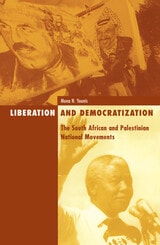
Liberation and Democratization
The South African and Palestinian National MovementsMona N. Younis
University of Minnesota Press, 2000
The first comprehensive comparison of two of the century’s most important liberation movements.
Arising in the 1910s and emerging as legitimate governing bodies in the 1990s, the South African and the Palestinian national liberation movements have exhibited remarkable parallels over the course of their development. The fortunes of the African National Congress and the Palestinian Liberation Organization, however, have proven strikingly different. How the movements, despite similar circumstances and experiences, have arrived at such dissimilar outcomes is described in Liberation and Democratization.
Younis traces the evolution of the movements, from early domination by elites to the ascendancy of mass-based forces in their last phases of expansion. She shows how this latest shift, accompanied by a democratization of the process of liberation, made the movements more effective in the 1980s. Liberation and Democratization also identifies dissimilarities—the balance of class forces and resources—that led to the A.N.C.’s greater success relative to the P.L.O.’s achievements. The first comprehensive comparison of two of the most significant liberation movements of this century, Younis’s work brings to light problems and dynamics that will remain at work well into the future.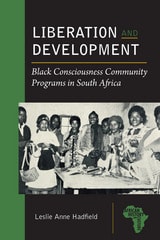
Liberation and Development
Black Consciousness Community Programs in South AfricaLeslie Anne Hadfield
Michigan State University Press, 2016
Liberation and Education
Perspectives on Black Educational ThoughtRonald E. Chennault
Rutgers University Press, 2026
Liberation and Education brings together a collection of essays about Black educators’ and organizations’ quests to cultivate and employ educational strategies for the liberation of Black people. The contributions examine the enduring nature of Black people’s thinking about education prior to and through enslavement to the present. It documents a variety of critical accounts of how Black people have developed ways to free themselves mentally from the legacies of slavery, the view of Black inferiority, and historical and systemic racism.
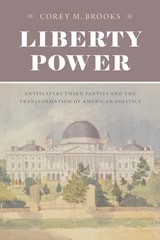
Liberty Power
Antislavery Third Parties and the Transformation of American PoliticsCorey M. Brooks
University of Chicago Press, 2015
As Corey M. Brooks explains, abolitionist trailblazers who organized first the Liberty Party and later the more moderate Free Soil Party confronted formidable opposition from a two-party system expressly constructed to suppress disputes over slavery. Identifying the Whigs and Democrats as the mainstays of the southern Slave Power’s national supremacy, savvy abolitionists insisted that only a party independent of slaveholder influence could wrest the federal government from its grip. A series of shrewd electoral, lobbying, and legislative tactics enabled these antislavery third parties to wield influence far beyond their numbers. In the process, these parties transformed the national political debate and laid the groundwork for the success of the Republican Party and the end of American slavery.
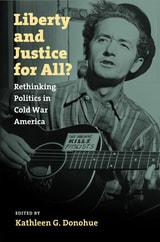
Liberty and Justice for All?
Rethinking Politics in Cold War AmericaKathleen G. Donohue
University of Massachusetts Press, 2012
From the congressional debate over the “fall of China” to the drama of the Army–McCarthy hearings to the kitchen faceoff between Richard Nixon and Nikita Khrushchev, the political history of the early Cold War was long dominated by studies of presidential administrations, anticommunism, and foreign policy. In Liberty and Justice for All? a group of distinguished historians representing a variety of disciplinary perspectives—social history, cultural history, intellectual history, labor history, urban history, women's history, African American studies, and media studies—expand on the political history of the early Cold War by rethinking the relationship between politics and culture. How, for example, did folk music help to keep movement culture alive throughout the 1950s? How did the new medium of television change fundamental assumptions about politics and the electorate? How did American experiences with religion in the 1950s strengthen the separation of church and state? How did race, class, and gender influence the relationship between citizens and the state? These are just some of the questions addressed in this wide-ranging set of essays.
In addition to volume editor Kathleen G. Donohue, contributors include Howard Brick, Kari Frederickson, Andrea Friedman, David Greenberg, Grace Elizabeth Hale, Jennifer Klein, Laura McEnaney, Kevin M. Schultz, Jason Scott Smith, Landon R. Y. Storrs, and Jessica Weiss.
Liberty and Law
Brian Tierney
Catholic University of America Press, 2014
Liberty and the Search for Identity
Ivan Zoltan Denes
Central European University Press, 2006
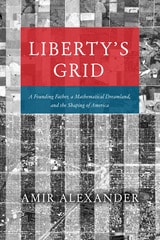
Liberty's Grid
A Founding Father, a Mathematical Dreamland, and the Shaping of AmericaAmir Alexander
University of Chicago Press, 2024
Seen from an airplane, much of the United States appears to be a gridded land of startling uniformity. Perpendicular streets and rectangular fields, all precisely measured and perfectly aligned, turn both urban and rural America into a checkerboard landscape that stretches from horizon to horizon. In evidence throughout the country, but especially the West, the pattern is a hallmark of American life. One might consider it an administrative convenience—an easy way to divide land and lay down streets—but it is not. The colossal grid carved into the North American continent, argues historian and writer Amir Alexander, is a plan redolent with philosophical and political meaning.
In 1784 Thomas Jefferson presented Congress with an audacious scheme to reshape the territory of the young United States. All western lands, he proposed, would be inscribed with a single rectilinear grid, transforming the natural landscape into a mathematical one. Following Isaac Newton and John Locke, he viewed mathematical space as a blank slate on which anything is possible and where new Americans, acting freely, could find liberty. And if the real America, with its diverse landscapes and rich human history, did not match his vision, then it must be made to match it.
From the halls of Congress to the open prairies, and from the fight against George III to the Trail of Tears, Liberty’s Grid tells the story of the battle between grid makers and their opponents. When Congress endorsed Jefferson’s plan, it set off a struggle over American space that has not subsided. Transcendentalists, urban reformers, and conservationists saw the grid not as a place of possibility but as an artificial imposition that crushed the human spirit. Today, the ideas Jefferson associated with the grid still echo through political rhetoric about the country’s founding, and competing visions for the nation are visible from Manhattan avenues and Kansan pastures to Yosemite’s cliffs and suburbia’s cul-de-sacs. An engrossing read, Liberty’s Grid offers a powerful look at the ideological conflict written on the landscape.

Liberty, Equality, and Justice
Civil Rights, Women’s Rights, and the Regulation of Business, 1865–1932Ross Evans Paulson
Duke University Press, 1997
Surveying a crucial period in the formation of the modern state and society, Paulson examines the prevailing conflicts of the time and the limitations of various attempts to institute reform, radical change, or ritualistic renewal of American society. His reading of existing scholarship highlights contested social constructs, clashing priorities, changing meanings of key terms, and shifting institutional dynamics in light of their contributions to a complex tragedy in which all parties fell short of the demands for democratic mutuality. Along with discussions of the movements and manipulations of presidential, congressional, and judicial politics, he integrates the experiences of diverse populations—including African Americans, women, Asian immigrants, Native Americans, and working people—and offers a new interpretation of the ways in which social change and political events interact to reframe the many possibilities of American society.

Libraries amid Protest
Books, Organizing, and Global ActivismSherrin Frances
University of Massachusetts Press, 2020
Libraries amid Protest unpacks how these protest libraries—labor-intensive, temporary installations in parks and city squares, poorly protected from the weather, at odds with security forces—continue to arise. In telling the stories of these surprising and inspiring spaces through interviews and other research, Sherrin Frances confronts the complex history of American public libraries. She argues that protest libraries function as the spaces of opportunity and resistance promised, but not delivered, by American public libraries.
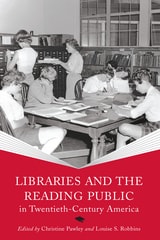
Libraries and the Reading Public in Twentieth-Century America
Edited by Christine Pawley and Louise S. Robbins
University of Wisconsin Press, 2013
Libri Annales Pontificum Maximorum
The Origins of the Annalistic TraditionBruce W. Frier
University of Michigan Press, 1999
When first published, the volume sparked a lively debate among classicists and historians of the ancient world. Previous scholarship had often assigned the pontifical chronicle a central role not only in preserving the history of the early Republic, but also in shaping the form of the annalistic tradition. But the author showed that these assumptions rested on insecure foundations; to a large extent, they misrepresented the historiographic development of the annalistic tradition as we know it from, above all, Livy and Dionysius of Halicarnassus.
Perhaps the book's most controversial contention was that the final eighty-book edition of the chronicle, which previous scholars had dated to the later second century BCE, is more probably a massive reworking of materials in the Augustan period. This finding will likely require a considerable revision in our understanding of the development of the annalistic tradition. In the course of making these innovative arguments, the author offers extensive information about the origins of the annalistic tradition and about the early history and historiography of Rome.
Bruce W. Frier is Professor of Classics and Roman Law, and Henry King Ransom Professor of Law, University of Michigan. He has published numerous books and articles on classical and legal topics, and has won the Charles J. Goodwin Award of Merit from the American Philological Association.
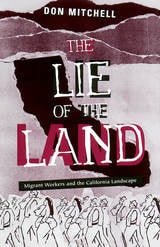
Lie Of The Land
Migrant Workers and the California LandscapeDon Mitchell
University of Minnesota Press, 1996
A hard-hitting look at the story behind California's famous scenery.
The beauty of the California landscape is integral to its place in the imagination of generations of people around the world. In The Lie of the Land, geographer Don Mitchell looks at the human costs associated with this famous scenery. Through an account of the labor history of the state, Mitchell examines the material and ideological struggles over living and working conditions that played a large part in the construction of the contemporary California landscape.
The Lie of the Land examines the way the California landscape was built on the backs of migrant workers, focusing on migratory labor and agribusiness before World War II. The book relates the historical geography of California to the processes of labor that made it, discussing not only significant strikes but also on the everyday existence of migrant workers in the labor camps, fields, and “Hoovervilles” where they lived. Mitchell places class struggle at the heart of social development, demonstrating concretely how farm workers affected their social and material environment, as well as exploring how farm owners responded to their workers’ efforts to improve their living and working conditions. Mitchell also places “reformers” in context, revealing the actual nature of their role in relation to migrant workers’ efforts—that of undermining the struggle for genuine social change. In addition, this volume captures the significance of the changing composition of the agricultural workforce, particularly in racial terms, as the class struggle evolved over a period of decades. Mitchell has written a narrative history that describes the intimate connection between landscape representations and the material form of geography. The Lie of the Land places people squarely in the middle of the landscapes they inhabit, shedding light on the complex and seemingly contradictory interactions between progressive state agents, radical workers, and California growers as they seek to remake the land in their own image.
Lieder in America
On Stages and In ParlorsHeather Platt
University of Illinois Press, 2023
Though viewed as quintessentially German, lieder became a centerpiece of nineteenth century song recitals in the United States. By the 1890s, these songs, which were often sung in English, were a sensation among tutored and untutored music lovers alike. Heather Platt examines the varied supporters and singers who both established the lied as a concert repertoire and shaped a new kind of recital dedicated to art songs. Lieder were embraced and spread by performers like Max Heinrich and advocates like John Sullivan Dwight, as well as by the women’s clubs that flourished nationwide. At the same time as examining the critical reception of the artists and songs, Platt reveals ways in which US recital programs anticipated trends in European recitals. She also places lieder against the backdrop of the time, when factors like the growth in the sheet music industry, the evolution of American art song, and emerging anti-German feeling had a profound impact on the genre’s popularity.
Lies, Passions, and Illusions
The Democratic Imagination in the Twentieth CenturyFrançois Furet
University of Chicago Press, 2014
This conversation would be, sadly, Furet’s last—he died while Ricoeur was completing his edits. Ricoeur did not want to publish his half without Furet’s approval, so what remains is Furet’s alone, an astonishingly cohesive meditation on the political passions of the twentieth century. With strokes at once broad and incisive, he examines the many different trajectories that nations of the West have followed over the past hundred years. It is a dialogue with history as it happened but also as a form of thought. It is a dialogue with his critics, with himself, and with those major thinkers—from Tocqueville to Hannah Arendt—whose ideas have shaped our understanding of the tragic dramas and upheavals of the modern era. It is a testament to the crucial role of the historian, a reflection on how history is made and lived, and how the imagination is a catalyst for political change. Whether new to Furet or deeply familiar with his work, readers will find thought-provoking assessments on every page, a deeply moving look back at one of the most tumultuous periods of history and how we might learn and look forward from it.
Life Among the Piutes
Their Wrongs and ClaimsSarah Winnemucca Hopkins
University of Nevada Press, 1994
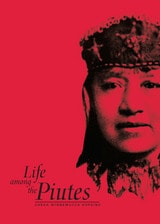
This autobiographical work was written by one of the country's most well-known Native American women, Sarah Winnemucca. She was a Paiute princess and a major figure in the history of Nevada; her tribe still resides primarily in the state. Life Among the Piutes deals with Winnemucca's life and the plight of the Paiute Indians. Life Among the Piutes is Winnemucca's powerful legacy to both white and Paiute cultures. Following the oral tradition of Native American people, she reaches out to readers with a deeply personal appeal for understanding. She also records historical events from a unique perspective. She managed to record the Native American viewpoint of whites settling the West, told in a language that was not her own and by a woman during the time when even white women were not allowed to vote. Sarah Winnemucca dedicated her life to improving the living and social conditions for her people. She gave more than 400 speeches across the United States and Europe to gain support for the Paiutes. She died of tuberculosis in 1891. Life Among the Piutes was originally published in 1883.
Life And Death At Paloma
Practices In Peruvian VillageJeffrey Quilter
University of Iowa Press, 1989

Life Atomic
A History of Radioisotopes in Science and MedicineAngela N. H. Creager
University of Chicago Press, 2013

Life Out of Balance
Homeostasis and Adaptation in a Darwinian WorldJoel B. Hagen
University of Alabama Press, 2021
Exploring how scientists came to understand life's balance between stability and adaptation.
Life Out of Balance focuses on a period in history when new ideas of self-regulation, adaptation, and fitness became central to a variety of biological disciplines. During the decades surrounding World War II, these ideas developed in several quite different contexts and led to greater debates about the merits of such models as applied to larger systems, including society at large. Particularly in its later cybernetic form, homeostasis seemed to provide new ways of discussing balance and regulation that avoided discredited approaches of earlier champions of vitalism and mechanism. It provided a common perspective and terminology for discussing self-regulating “systems,” whether biological, mechanical, or social. Although enormously fruitful and influential, homeostatic perspectives also generated numerous controversies when critics questioned the degree to which biological systems are characterized by balance and self-regulation. Resolving these controversies continues to be a challenge in modern biology.
If natural selection constitutes the first law of biology, scientists who champion homeostasis as a theoretical model claim that it is a second law, equally important and closely related to the first. Such claims notwithstanding, homeostasis has generated a series of controversies since it was formalized by Walter Cannon in the late 1920s. Critics contended that Cannon took a too-optimistic view of life, not only ignoring pathological deviations from normality but also failing to adequately explain the ability of living things to respond adaptively to environmental challenges.
Underlying these controversies was the unresolved problem of integrating physiology and other areas of functional biology with the emerging evolutionary synthesis of Mendelian genetics and Darwinian natural selection. The physiological idea of homeostasis as the adaptive “fit” between the organism and its environment and the Darwinian idea of adaptation and fitness in terms of reproductive success might seem to be complementary in an unproblematic way, but historically they have had an uneasy relationship.

Life Out of Sequence
A Data-Driven History of BioinformaticsHallam Stevens
University of Chicago Press, 2013
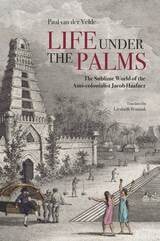
Life Under the Palms
The Sublime World of the Anti-colonialist Jacob HaafnerPaul van der Velde
National University of Singapore Press, 2019
With the help of generous excerpts from Haafner's own writings, including material newly translated into English, Paul van der Velde tells an affecting story of a young man who made a world for himself along the Coromandel Coast, in Ceylon and Calcutta, but who returned to Europe to live the last years of his life in Amsterdam, suffering an acute nostalgia for Asia. This will be compelling reading for anyone interested in European response to the cultures of Asia.
Life Within Limits
Well-being in a World of WantMichael Jackson
Duke University Press, 2011

Life after Guns
Reciprocity and Respect among Young Men in LiberiaHardgrove, Abby
Rutgers University Press, 2017
Download open access ebook here.

Life and Death in Central Apulia
Burial Practices and Italic Communities Between the Sixth and Third Centuries BCEBice Peruzzi
University of Wisconsin Press, 2027
Long overshadowed in ancient historiography, the Peucetians of Central Apulia are brought into focus for the first time in Life and Death in Central Apulia. Carefully examining Peucetian burial assemblages, archaeologist Bice Peruzzi traces a social history of this Italic people from the sixth to the third centuries BCE. She demonstrates that, far from being passive recipients of the more “advanced” cultures of their Greek or Roman neighbors, the Peucetians made nuanced, deliberate, and informed choices in the preparation and treatment of their dead, reflecting the complexities of individual, social, and cultural identities of the deceased. This indicates a mature culture, in full interaction with other Mediterranean peoples, and is visible and worthy of scholarly attention in its own right. This detailed study offers a fresh look at ancient Italy beyond the historiographic dominance of Greece and Rome and represents the recovery of one thread of a vibrant, ancient Mediterranean cultural tapestry.
Life and Death in a Venetian Convent
The Chronicle and Necrology of Corpus Domini, 1395-1436Sister Bartolomea Riccoboni
University of Chicago Press, 2000
While the chronicle recounts the history of the nuns' collective life, the necrology provides highly individualized biographies of nearly fifty women who died in the convent between 1395 and 1436. We follow the fascinating stories that led these women, from adolescent girls to elderly widows, to join the convent; and we learn of their cultural backgrounds and intellectual accomplishments, their ascetic practices and mystical visions, their charity and devotion to each other and their fortitude in the face of illness and death.
The personal and social meaning of religious devotion comes alive in these texts, the first of their kind to be translated into English.
Life and Death in the Ancient City of Teotihuacan
A Modern Paleodemographic SynthesisRebecca Storey
University of Alabama Press, 1992
Cities arose independently in both the Old World and in the pre-Columbian New World. Lacking written records, many of these New World cities can be studied only through archaeology, including the earliest pre-Columbian city, Teotihuacan, Mexico, one of the largest cities of its time (150 B.C. to A.D. 750). Thus, an important question is how similar New World cities are to their Old World counterparts.
Before recent times, the dense populations of cities made them unhealthy places because of poor sanitation and inadequate food supplies. Storey's research shows clearly that although Teotihuacan was a very different environment and culture from 17th-century London, these two great cities are comparable in terms of health problems and similar death rates.

Life and Death in the Central Highlands
An American Sergeant in the Vietnam War, 1968-1970James T. Gillam
University of North Texas Press, 2010
Life and Death on the New York Dance Floor, 1980–1983
Tim Lawrence
Duke University Press, 2016
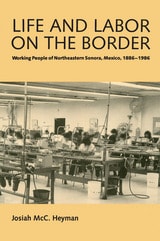
Life and Labor on the Border
Working People of Northeastern Sonora, Mexico, 1886–1986Josiah McC. Heyman
University of Arizona Press, 1991
Life and Labor on the Border traces the development of the urban working class in northern Sonora over the period of a century. Drawing on an extensive collection of life histories, Heyman describes what has happened to families over several generations as people have left the countryside to work for American-owned companies in northern Sonora or to cross the border to find other employment.
Heyman searches for the origins of "working classness" in these family histories, revealing aspects of life that strengthen people' s involvement with a consumer economy, including the role of everyday objects like sewing machines, cars, and stoves. He considers the consequences of changing political and economic tides, and also the effects on family life of the new role of women in the labor force. Within the broad sweep of family chronicles, key junctures in individual lives—both personal and historical crises—offer additional insights into social class dynamics.
Heyman's work dispels the notion that border inhabitants are uniformly impoverished or corrupted by proximity to the United States. These life stories instead convey the positive sense of people's goals in life and reveal the origins of a distinctive way of life in the Borderlands.
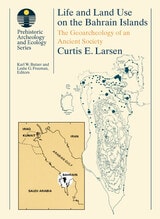
Life and Land Use on the Bahrain Islands
The Geoarchaeology of an Ancient SocietyCurtis E. Larsen
University of Chicago Press, 1983
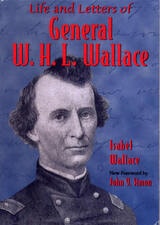
Life and Letters of General W. H. L. Wallace
Isabel Wallace. Foreword by John Y. Simon
Southern Illinois University Press, 2000
Originally published in 1909, this biography by Isabel Wallace recounts the life of her adoptive father, the little-recognized William Hervy Lamme Wallace, the highest-ranking Union officer to fall at the battle of Shiloh.
Born in 1821 in Ohio, Wallace and his family moved to Illinois in 1834, where he was educated at Rock Springs Seminary in Mount Morris. On his way to study law with Abraham Lincoln in Springfield in 1844, Wallace was persuaded by local attorney T. Lyle Dickey, a close friend of Lincoln, to join his practice in Ottawa instead. Wallace eventually married Dickey’s daughter, Martha Ann, in 1851.
When the Civil War broke out, both Wallace and Dickey immediately volunteered for service with the Eleventh Illinois, which assembled in Springfield. Wallace was elected as the unit’s colonel; a successful lawyer, a friend of President Lincoln, a generation older than most privates, and an officer with Mexican War experience, he was entirely suited for such command. Wallace was appointed brigadier general for his performance at Fort Donelson, the first notable Union victory in the Civil War. Wallace’s troops had saved the day, although the Eleventh Illinois had lost nearly two-thirds of its men. He then moved with his troops to Pittsburg Landing, Tennessee, where Confederates launched a surprise attack on the forces of Major General Ulysses S. Grant at Shiloh Church on Sunday, April 6, 1862. Wallace, who held only temporary command of one of Grant’s six divisions, fought bravely but was mortally wounded as he began to withdraw his men on the afternoon of the battle. His wife, who had arrived at Pittsburg Landing by steamer on the day of the battle, was at his side when he died three days later. Grant praised Wallace in 1868 as “the equal of the best, if not the very best, of the Volunteer Generals with me at the date of his death.”
Isabel Wallace traces her father’s life from his upbringing in Ottawa through his education, his service in the Mexican War, his law practice, his courtship of and marriage to her mother, and his service in the Eleventh Illinois until his mortal injury at Shiloh. She also details his funeral and her and her mother’s life in the postwar years. Based on the copious letters and family papers of the general and his wife, the biography also provides historical information on federal politics of the period, including commentary on Lincoln’s campaign and election and on state politics, especially regarding T. Lyle Dickey, Wallace’s father-in-law and law partner, prominent Illinois politician, and associate of Lincoln. It is illustrated with fifteen black-and-white halftones.
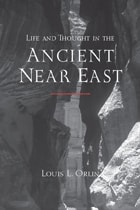
Life and Thought in the Ancient Near East
Louis L. Orlin
University of Michigan Press, 2010
Intended for readers seeking insight into the day-to-day life of some of the world's most ancient peoples, Life and Thought in the Ancient Near East presents brief, fascinating explorations of key aspects of the civilizations of Egypt, Mesopotamia, Palestine, Asia Minor, and Iran. With vignettes on agriculture, architecture, crafts and industries, literature, religion, topography, and history, Orlin has created something refreshingly unique: a modern guidebook to an ancient world. The book also reaches out to students of the Ancient Near Eastern World with essays on decipherments, comparative cultural developments between Egypt and Mesopotamia, and language and literature.
In addition to general readers, the book will be useful in the classroom as a text supplementing a more conventional introduction to Near Eastern Studies.
"Well-written and accessible, Life and Thought in the Ancient Near East deftly connects the past with present experience by drawing out the differences between, for instance, modern churches and ancient temples, and frequently employing biblical references. This simplicity together with connecting contemporary to ancient experience makes the text ideal for freshmen and general readers."
---Marc Cooper, Professor of History, Missouri State University
Now Professor Emeritus, Louis L. Orlin taught in the department of Ancient Near Eastern History and Literature at the University of Michigan for more than thirty years. He is the author and editor of several books, including Assyrian Colonies in Cappadocia and Ancient Near Eastern Literature: A Bibliography of One Thousand Items on the Cuneiform Literatures of the Ancient World.

Life and Thought in the Middle Ages
Robert S. Hoyt, Editor
University of Minnesota Press, 1967
Life and Thought in the Middle Ages was first published in 1967. Minnesota Archive Editions uses digital technology to make long-unavailable books once again accessible, and are published unaltered from the original University of Minnesota Press editions.
The period of the early Middle Ages - from the fourth to the eleventh centuries—used to be commonly called "the dark ages." Now that term has been discarded by scholars, who reject its implications as they recognize increasingly, the historical importance of the period. In this volume eight historians, in as many essays, discuss various aspects of the life and thought which prevailed during the centuries which extended from the time of the establishment of Germanic "successor states" in the western provinces of the Roman Empire to the appearance of some of the economic and feudal institutions which provided a basis for the civilization of the high Middle Ages.
The essay, by showing that a process of assimilation and synthesis of the Roman, Christian, and barbarian elements characterized life in the early Middle Ages, demonstrate that the significance of the period is far better indicated by words like "transition" or "transformation" than by the term "dark ages."
An essay by the late Professor Adolf Katzenellenbogen, "The Image of Christ in the Early Middle Ages," is illustrated with eighteen halftones showing examples of art of the period.
The other essays are "The Barbarian Kings of Lawgivers and Judges" by Katherine Fischer Drew; "Of Towns and Trade" by Robert S. Lopez; "The Two Levels of Feudalism" by Joseph R. Strayer; "The Life of the Silent Majority" by Lynn White, Jr; "Beowulf and Bede" by John C. McGalliard; "Viking - Tunnit - Eskimo" by the late T. J. Oleson; "The Church, Reform, and Renaissance in the Early Middle Ages" by Karl F. Morrison.
Life and Times of Cultural Studies
The Politics and Transformation of the Structures of KnowledgeRichard E. Lee
Duke University Press, 2003
Lee tracks the intellectual project of cultural studies as it developed over three decades, beginning with its institutional foundation at the University of Birmingham’s Centre for Contemporary Cultural Studies (CCCS). He links work at the CCCS to the events of 1968 and explores cultural studies’ engagement with theory in the debates on structuralism. He considers the shift within the discipline away from issues of working-class culture toward questions of identity politics in the fields of race and gender. He follows the expansion of the cultural studies project from Britain to Australia, Canada, South Africa, and the United States. Contextualizing the development and spread of cultural studies within the longue durée structures of knowledge in the modern world-system, Lee assesses its past and future as an agent of political and social change.

Life and Times of a Big River
An Uncommon Natural History of Alaska's Upper YukonPeter J. Marchand
University of Alaska Press, 2015
Life and Times of a Big River follows Peter J. Marchand and his team of biologists as they set out to explore the land that would ultimately become the Yukon-Charley Rivers National Preserve. Their encounters with strange plants, rare insects, and little-known mammals bring to life a land once thought to be static and monotonous. And their struggles to navigate and adapt to an unforgiving environment capture the rigorous demands of remote field work. Weaving in and out of Marchand's narrative is an account of the natural and cultural history of the area as it relates to the expedition and the region’s Native peoples. Life and Times of a Big River chorincles this riveting, one-of-a-kind journey of uncertainty and discovery from a disparate (and at one point desperate) group of biologists.
Life and Works
Saint Gregory Thaumaturgus
Catholic University of America Press, 1998

Life at Swift Water Place
Northwest Alaska at the Threshold of European ContactEdited by Doug D. Anderson and Wanni W. Anderson
University of Alaska Press, 2019
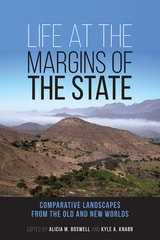
Life at the Margins of the State
Comparative Landscapes from the Old and New WorldsAlicia M. Boswell
University Press of Colorado, 2022
Case studies from the New and Old Worlds—including historic California, medieval Iceland, ancient Mesoamerica, ancient Nubia, colonial El Salvador, the prehistoric Levant, pre-Columbian Amazon, Africa’s historic central Sahel, and ancient Peru—offer novel perspectives on how borderland societies adapted to the unique human and natural environments of these liminal spaces. Contributors draw on archaeological evidence as well as historical documents and linguistic data to facilitate the documentation of local histories and the strategies employed by communities living in or near ancient states and empires.
This close study of groups on the margins shows that peripheral polities are not simply the by-products of complexity emanating from a political core and demonstrates that traditional assumptions and models need to be reconsidered.
Contributors:
Tara D. Carter, Mikael Fauvelle, Elena A.A. Garcea, Esteban Gomez, Scott MacEachern, Claire Novotny, Bradley J Parker, Erin Smith, John H. Walker
Life between Two Deaths, 1989-2001
U.S. Culture in the Long NinetiesPhillip E. Wegner
Duke University Press, 2009
Wegner shows how phenomena including the debate on globalization, neoliberal notions of the end of history, the explosive growth of the Internet, the efflorescence of new architectural and urban planning projects, developments in literary and cultural production, new turns in theory and philosophy, and the rapid growth of the antiglobalization movement came to characterize the long nineties. He offers readings of some of the most interesting cultural texts of the era: Don DeLillo’s White Noise; Joe Haldeman’s Forever trilogy; Octavia Butler’s Parable novels; the Terminator films; the movies Fight Club, Independence Day, Cape Fear, and Ghost Dog; and the television series Buffy the Vampire Slayer. In so doing, he illuminates fundamental issues concerning narrative, such as how beginnings and endings are recognized and how relationships between events are constructed.

Life beyond the Boundaries
Constructing Identity in Edge Regions of the North American SouthwestKaren Harry
University Press of Colorado, 2018
Life beyond the Boundaries explores identity formation on the edges of the ancient Southwest. Focusing on some of the more poorly understood regions, including the Jornada Mogollon, the Gallina, and the Pimería Alta, the authors use methods drawn from material culture science, anthropology, and history to investigate themes related to the construction of social identity along the perimeters of the American Southwest.
Through an archaeological lens, the volume examines the social experiences of people who lived in edge regions. Through mobility and the development of extensive social networks, people living in these areas were introduced to the ideas and practices of other cultural groups. As their spatial distances from core areas increased, the degree to which they participated in the economic, social, political, and ritual practices of ancestral core areas increasingly varied. As a result, the social identities of people living in edge zones were often—though not always—fluid and situational.
Drawing on an increase of available information and bringing new attention to understudied areas, the book will be of interest to scholars of Southwestern archaeology and other researchers interested in the archaeology of low-populated and decentralized regions and identity formation. Life beyond the Boundaries considers the various roles that edge regions played in local and regional trajectories of the prehistoric and protohistoric Southwest and how place influenced the development of social identity.
Contributors: Lewis Borck, Dale S. Brenneman, Jeffery J. Clark, Severin Fowles, Patricia A. Gilman, Lauren E. Jelinek, Myles R. Miller, Barbara J. Mills, Matthew A. Peeples, Kellam Throgmorton, James T. Watson