Results by title
28167 books match the query 'History' and 932 start with l
Lost in a Labyrinth of Red Tape
The Story of an Immigration that FailedArmin Schmid and Renate Schmid
Northwestern University Press, 1996
Lost in the Customhouse
Authorship in the American RenaissanceJerome Loving
University of Iowa Press, 1993
Lost in the Fifties
Recovering Phantom HollywoodWheeler Winston Dixon
Southern Illinois University Press, 2005
Lost in the Fifties: Recovering Phantom Hollywood reveals two 1950s: an era glorified in Hollywood movies and a darker reality reflected in the esoteric films of the decade. Renowned film scholar Wheeler Winston Dixon turns to the margins—the television shows and films of a hidden Hollywood—to offer an authentic view of the 1950s that counters the Tinsel-town version. Dixon examines the lost films and directors of the decade. Contrasting traditional themes of love, marriage, and family, Dixon’s 1950s film world unveils once-taboo issues of rape, prostitution, and gangs. Television shows such as Captain Midnight and Ramar of the Jungle are juxtaposed with the cheerful world of I Love Lucy and Howdy Doody. Highlighting directors including Herbert L. Strock, Leslie Martinson, Arnold Laven, and Charles Haas, Dixon provides new insights on the television series Racket Squad, Topper, and The Rifleman and the teen films I Was a Teenage Werewolf and High School Confidential.
Geared for scholars and students of film and pop culture, Lost in the Fifties includes twenty-five photos—many previously unpublished—and draws on rare interviews with key directors, actors, and producers. The volume provides the first detailed profile of the most prolific producer in Hollywood history, Sam Katzman, and his pop culture classics Rock Around the Clock and Earth vs. The Flying Saucers. Dixon profiles, for the first time, B-movie phenomenon Fred F. Sears, who directed more than fifty touchstone films of a generation, including the noir thriller Chicago Syndicate, the criminal career story Cell 2455 Death Row, and the 3-D color western The Nebraskan. Also profiled is Ida Lupino, the only woman to direct in Hollywood in the 1950s, who tackled issues of bigamy, teenage pregnancy, and sports corruption in The Bigamist, The Hitch-Hiker, Outrage, Never Fear, Not Wanted, and Hard, Fast and Beautiful, when no major studio would touch such controversial topics. Dixon also looks at the era’s social guidance films, which instructed adolescents in acceptable behavior, proper etiquette, and healthy hygiene.
Lost in the USA
American Identity from the Promise Keepers to the Million Mom MarchDeborah Gray White
University of Illinois Press, 2017
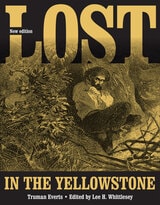
Lost in the Yellowstone
"Thirty-Seven Days of Peril" and a Handwritten Account of Being LostTruman Everts; Edited by Lee H. Whittlesey
University of Utah Press, 2015
In 1870, Truman Everts visited what would two years later become Yellowstone National Park, traveling with an exploration party intent on mapping and investigating that mysterious region. Scattered reports of a mostly unexplored wilderness filled with natural wonders had caught the public’s attention and the fifty-four-year-old Everts, near-sighted and an inexperienced woodsman, had determined to join the expedition. He was soon separated from the rest of the party and from his horse, setting him on a grueling quest for survival. For over a month he wandered Yellowstone alone and injured, with little food, clothing, or other equipment. In “Thirty-seven Days of Peril” he recounted his experiences for the readers of Scribner’s Monthly.
In June 1996, Everts’s granddaughter arrived at Mammoth Hot Springs in Yellowstone National Park to meet with park archivist Lee Whittlesey. She brought two documents that her father had kept hidden and both were handwritten by Everts. One was a brief autobiography that gave new insight into his early life. The other was a never-published alternative account of his confused 1870 journey through Yellowstone. Both have been added to this volume, further enhancing Everts’s unlikely tale of survival.
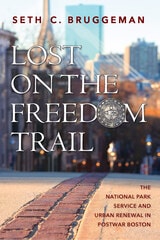
Lost on the Freedom Trail
The National Park Service and Urban Renewal in Postwar BostonSeth C. Bruggeman
University of Massachusetts Press, 2022
Boston National Historical Park is one of America's most popular heritage destinations, drawing in millions of visitors annually. Tourists flock there to see the site of the Boston Massacre, to relive Paul Revere's midnight ride, and to board Old Ironsides—all of these bound together by the iconic Freedom Trail, which traces the city's revolutionary saga.
Making sense of the Revolution, however, was never the primary aim for the planners who reimagined Boston's heritage landscape after the Second World War. Seth C. Bruggeman demonstrates that the Freedom Trail was always largely a tourist gimmick, devised to lure affluent white Americans into downtown revival schemes, its success hinging on a narrow vision of the city's history run through with old stories about heroic white men. When Congress pressured the National Park Service to create this historical park for the nation's bicentennial celebration in 1976, these ideas seeped into its organizational logic, precluding the possibility that history might prevail over gentrification and profit.
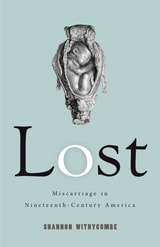
Lost
Miscarriage in Nineteenth-Century AmericaWithycombe, Shannon
Rutgers University Press, 2019
In Lost, medical historian Shannon Withycombe weaves together women’s personal writings and doctors’ publications from the 1820s through the 1910s to investigate the transformative changes in how Americans conceptualized pregnancy, understood miscarriage, and interpreted fetal tissue over the course of the nineteenth century. Withycombe’s pathbreaking research reveals how Americans construed, and continue to understand, miscarriage within a context of reproductive desires, expectations, and abilities. This is the first book to utilize women’s own writings about miscarriage to explore the individual understandings of pregnancy loss and the multiple social and medical forces that helped to shape those perceptions. What emerges from Withycombe’s work is unlike most medicalization narratives.
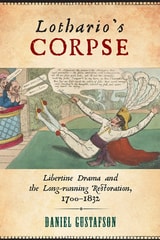
Lothario's Corpse
Libertine Drama and the Long-Running Restoration, 1700-1832Daniel Gustafson
Bucknell University Press, 2020
Published by Bucknell University Press. Distributed worldwide by Rutgers University Press.
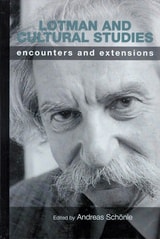
Lotman and Cultural Studies
Encounters and ExtensionsEdited by Andreas Schonle
University of Wisconsin Press, 2006
In this volume, edited by Andreas Schönle, contributors extend Lotman's theories to a number of fields. Focusing on his less frequently studied later period, Lotman and Cultural Studies engages with such ideas as the "semiosphere," the fluid, dynamic semiotic environment out of which meaning emerges; "auto-communication," the way in which people create narratives about themselves that in turn shape their self-identity; change, as both gradual evolution and an abrupt, unpredictable "explosion"; power; law and mercy; Russia and the West; center and periphery.
As William Mills Todd observes in his afterword, the contributors to this volume test Lotman's legacy in a new context: "Their research agendas-Iranian and American politics, contemporary Russian and Czech politics, sexuality and the body-are distant from Lotman's own, but his concepts and awareness yield invariably illuminating results."
Louie Louie
The History and Mythology of the World's Most Famous Rock 'n Roll Song; Including the Full Details of Its Torture and Persecution at the Hands of the Kingsmen, J. Edgar Hoover's FBI, and a Cast of Millions; and Introducing for the First Time Anywhere, theDave Marsh
University of Michigan Press, 2004
"A tale as compelling as any John Grisham thriller."
-Rolling Stone
"Dave Marsh's Louie Louie is part rant, part rock criticism and part cultural analysis, with a good dose of Ripley's Believe It or Not! thrown in."
-The New York Times Book Review
"Marsh keeps the story of one trashy song interesting by revealing how 'three chords and a cloud of dust' contains within it the history and future of rock 'n' roll."
-Booklist
"What you don't know about 'Louie Louie' probably won't hurt you. But everything you need to know is in Marsh's book, including the lyrics-the real ones and the ones people thought they heard. If there is a better measure of your pop-cultural IQ, I don't know where to find it."
-USA Today
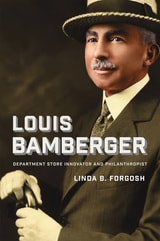
Louis Bamberger
Department Store Innovator and PhilanthropistLinda B. Forgosh
Brandeis University Press, 2016

Louis Bolduc and the French Colonial Settlement at Ste. Genevieve
Carl J. Ekberg
University of Missouri Press, 0
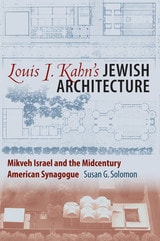
Louis I. Kahn’s Jewish Architecture
Mikveh Israel and the Midcentury American SynagogueSusan G. Solomon
University Press of New England, 2009
Louis Sébastien Mercier
Revolution and Reform in Eighteenth-Century ParisMichael J. Mulryan
Bucknell University Press, 2023
Louise Thompson Patterson
A Life of Struggle for JusticeKeith Gilyard
Duke University Press, 2017
Louisiana Place Names of Indian Origin
A Collection of WordsWilliam A. Read, edited and with an introduction by George M. Riser
University of Alabama Press, 2008
His writings spanned five decades and have been instrumental across a wide range of academic disciplines. Most importantly, Read devoted a good portion of his research to the meaning of place names in the southeastern United States—especially as they related to Indian word adoption by Europeans.
This volume includes his three Louisiana articles combined: Louisiana: Louisiana Place-Names of Indian Origin (1927), More Indian Place-Names in Louisiana (1928), and Indian Words (1931). Joining Alabama's reprint of Indian Places Names in Alabama and Florida Place Names of Indian Origin and Seminole Personal Names, this volume completes the republication of the southern place name writings of William A. Read.
Louisianians in the Civil War
Edited & Intro by Lawrence Lee Hewitt & Arthur W. Bergeron, Jr.
University of Missouri Press, 2002
Lovable Racists, Magical Negroes, and White Messiahs
David Ikard
University of Chicago Press, 2017
In the book, Ikard explodes the fiction of a postracial society while awakening us to the sobering reality that we must continue to fight for racial equality or risk losing the hard-fought gains of the Civil Rights movement. Through his close reading of novels, films, journalism, and political campaigns, he analyzes willful white blindness and attendant master narratives of white redemption—arguing powerfully that he who controls the master narrative controls the perception of reality. The book sounds the alarm about seemingly innocuous tropes of white redemption that abound in our society and generate the notion that blacks are perpetually indebted to whites for liberating, civilizing, and enlightening them. In Lovable Racists, Magical Negroes, and White Messiahs, Ikard expertly and unflinchingly gives us a necessary critical historical intervention.
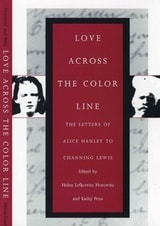
Love Across the Color Line
Helen Lefkowitz Horowitz
University of Massachusetts Press, 1996
Love Between Women
Early Christian Responses to Female HomoeroticismBernadette J. Brooten
University of Chicago Press, 1996
"An extraordinary accomplishment. . . . A definitive source for all future discussion of homoeroticism and the Bible."—Mary Rose D'Angelo, Harvard Gay & Lesbian Review
"[Brooten's] convincing analysis . . . not only profoundly reshapes our understanding of the past, but it should also shape the way in which that past, particularly the early Christian texts with their immense normative weight, will be used for the future."—Anne L. Clark, Journal of Lesbian Studies
"Love Between Women gives contemporary debates on sexuality a carefully delineated past. It boldly insists upon a different future, one informed by history but not tyrannized by it."—Susan Ackerman, Lambda Book Report
"Fascinating, provocative and lucid. . . . Brooten has made a fundamental contribution to women's and gender studies, gay and lesbian studies, and classics."—Elizabeth A. Castelli, Women's Review of Books
Winner of the Lambda Literary Award for Best Lesbian Studies Book, 1997
Love Game
A History of Tennis, from Victorian Pastime to Global PhenomenonElizabeth Wilson
University of Chicago Press, 2016
No one is better equipped to tell this story than novelist and historian Elizabeth Wilson. With a penchant for tennis’s inherent drama, she finds its core: a psychological face off between flamboyant personalities navigating the ebbs and flows of fortune in the confines of a 78 x 36–foot box—whether of clay, grass, or DecoTurf. Walking the finely kempt lawns of Victorian England, she shows how tennis’s early role as a social pastime that included both men and women—and thus, lots of sexual tension—set it apart from most other sports and their dominant masculine appeal. Even today, when power and endurance are more important than ever, tennis still demands that the body behave gracefully and with finesse. In this way, Wilson shows, tennis has retained the vibrant spectacle of human drama and beauty that have always made it special, not just to sports fans but to popular culture.
Telling the stories of all the greats, from the Renshaw brothers to Novak Djokovic, and of all the advances, from wooden racquets to network television schedules, Wilson offers a tennis book like no other, keeping the court square in our sights as history is illuminated around it.

Love In A Time Of Hate
Hollander, Nancy Caro
Rutgers University Press, 1997

Love Is My Favorite Flavor
A Midwestern Dining Critic Tells AllWini Moranville
University of Iowa Press, 2024
Amidst the vast changes that have occurred over the years, Love Is My Favorite Flavor underscores the timelessness of what it is we seek when we entrust restaurateurs with our hard-earned money and our hard-won leisure time. Dining out may have changed dramatically since the 1970s, but the joys of being in the hands of people who care deeply about our time at their tables have not.
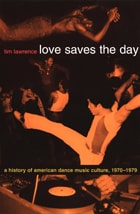
Love Saves the Day
A History of American Dance Music Culture, 1970-1979Tim Lawrence
Duke University Press, 2003
Tales of nocturnal journeys, radical music making, and polymorphous sexuality flow through the arteries of Love Saves the Day like hot liquid vinyl. They are interspersed with a detailed examination of the era’s most powerful djs, the venues in which they played, and the records they loved to spin—as well as the labels, musicians, vocalists, producers, remixers, party promoters, journalists, and dance crowds that fueled dance music’s tireless engine.
Love Saves the Day includes material from over three hundred original interviews with the scene's most influential players, including David Mancuso, Nicky Siano, Tom Moulton, Loleatta Holloway, Giorgio Moroder, Francis Grasso, Frankie Knuckles, and Earl Young. It incorporates more than twenty special dj discographies—listing the favorite records of the most important spinners of the disco decade—and a more general discography cataloging some six hundred releases. Love Saves the Day also contains a unique collection of more than seventy rare photos.
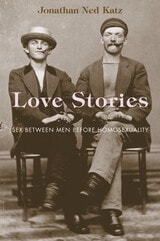
Love Stories
Sex between Men before HomosexualityJonathan Ned Katz
University of Chicago Press, 2001

Love Valley
An American UtopiaConrad Ostwalt
University of Wisconsin Press, 1998
The town boasts a saloon, general store, hitching posts, and rodeos. Yet, above all of this stands a little church—the heart of what Barker conceived as his Christian utopia. This unique combination has led to more than forty years of philanthropic ventures, controversial events such as the Love Valley Rock Festival, stories and legends, and political ambition. Love Valley: An American Utopia captures the history of this town in narrative form while arguing that Love Valley’s founders were motivated by utopian goals.
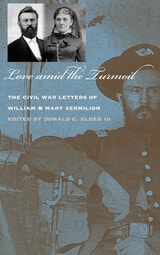
Love amid the Turmoil
The Civil War Letters of William and Mary VermilionDonald C. Elder, III
University of Iowa Press, 2003
William Vermilion (1830-1894) served as a captain in Company F of the 36th Iowa Infantry from October 1862 until September 1865. Although he was a physician in Iconium in south central Iowa at the start of the war, after it ended he became a noted lawyer in nearby Centerville; he was also a state senator from 1869 to 1872. Mary Vermilion (1831-1883) was a schoolteacher who grew up in Indiana; she and William married in 1858. In this volume historian Donald Elder provides a careful selection from the hundreds of supportive, informative, and heart-wrenching letters that they wrote each other during the war—the most complete collection of letters exchanged between a husband and a wife during the Civil War.
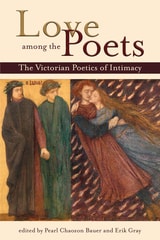
Love among the Poets
The Victorian Poetics of IntimacyPearl Chaozon Bauer; Erik Gray
Ohio University Press, 2024
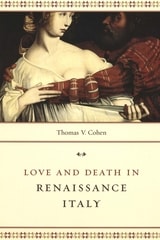
Love and Death in Renaissance Italy
Thomas V. Cohen
University of Chicago Press, 2004
Each of the chapters in this history chronicles a domestic drama around which the lives of ordinary Romans are suddenly and violently altered. You might read the gruesome murder that opens the book—when an Italian noble takes revenge on his wife and her bastard lover as he catches them in delicto flagrante—as straight from the pages of Boccaccio. But this tale, like the other stories Cohen recalls here, is true, and its recounting in this scintillating work is based on assiduous research in court proceedings kept in the state archives in Rome.
Love and Death in Renaissance Italy contains stories of a forbidden love for an orphan nun, of brothers who cruelly exact a will from their dying teenage sister, and of a malicious papal prosecutor who not only rapes a band of sisters, but turns their shambling father into a pimp! Cohen retells each cruel episode with a blend of sly wit and warm sympathy and then wraps his tales in ruminations on their lessons, both for the history of their own time and for historians writing today. What results is a book at once poignant and painfully human as well as deliciously entertaining.
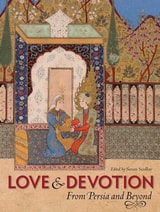
Love and Devotion
From Persia and BeyondEdited by Susan Scollay
Bodleian Library Publishing, 2012
Yusuf and Zulaykha. Khusrau and Shirin. Layla and Majnun. For hundreds of years, Persian poets have captivated audiences with recitations and reinterpretations of timeless tales of earthly and spiritual love. These tales were treasured not only in Iran, but also across the neighboring Mughal and Ottoman Empires.
In Love and Devotion, leading specialists in literature, art history, and philosophy reveal new perspectives on these evocative stories and the exquisite illustrated manuscripts that convey them. Particularly in courtly settings, poetry was a key component of Persian cultural life from the fourteenth through the eighteenth century, and elite patrons commissioned copies of lyrical poems and epics told in verse. Beautifully presented here in full-page reproductions are more than one hundred folios from these illustrated manuscripts, representing masterful works from Hafiz, Rumi, and many others. Echoes of works by Persian poets are manifest across European literature from Dante and Shakespeare to the present, and this lavishly illustrated book reveals new perspectives on the universal theme of love.
Love and Friendship in the Western Tradition
From Plato to PostmodernityJames McEvoy
Catholic University of America Press, 2023
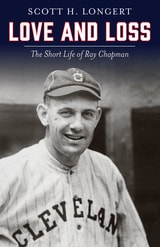
Love and Loss
The Short Life of Ray ChapmanScott H. Longert
Ohio University Press, 2024
The son of a coal miner from a small Illinois town, Cleveland Indians shortstop Ray Chapman lived the American dream until his untimely death at age twenty-nine. In his brief life, he reached the pinnacle of baseball success as the best shortstop in the American League. While many professional ballplayers struggled with meager salaries, the handsome Chapman had married heiress Kathleen Daly, one of Cleveland’s wealthiest women. With a child on the way and an executive job in the offseason, Chapman was moving toward a privileged place in society until an errant fastball fractured his skull and ended his life the next day. Late in the 1920 pennant race, the Indians were in New York for a key series against the Yankees. New York pitcher Carl Mays threw a high hard one that Chapman could not evade. He was taken to a nearby hospital, where doctors tried in vain to save his life. The tragedy did not end there. His widow took her own life eight years later, and their daughter, Rae, subsequently died from meningitis. Today, people visit Chapman’s impressive grave in Cleveland’s Lake View Cemetery, leaving baseballs and gloves in his memory. Though gone over a hundred years, he is well remembered as a Cleveland icon. This book goes far beyond the well-worn accounts of Chapman’s untimely death to illustrate the fullness of his short life.
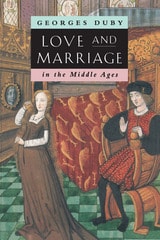
Love and Marriage in the Middle Ages
Georges Duby
University of Chicago Press, 1993
Beautifully written in Duby's characteristically nuanced and powerful style, this collection is an ideal entree into Duby's thinking about marriage and the diversities of love, spousal decorum, family structure, and their cultural context in bodily and spiritual values. Love and Marriage in the Middle Ages will be of great interest to students in social and cultural history, medieval and early modern history, and women's studies, as well as those interested in the nature of social life in the Middle Ages.
Georges Duby (1919-1996) was a member of the Académie française and for many years held the distinguished chair in medieval history at the Collège de France. His books include The Three Orders; The Age of Cathedrals; The Knight, the Lady, and the Priest; Love and Marriage in the Middle Ages; and History Continues, all published by the University of Chicago Press.
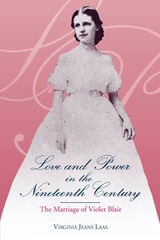
Love and Power in the Nineteenth Century
The Marriage of Violet BlairVirginia Jeans Laas
University of Arkansas Press, 1998
Winner, 1999 Missouri Conference on History Book Award
This fascinating biography of a marriage in the Gilded Age closely examines the dynamic flow of power, control, and love between Washington blue blood Violet Blair and New Orleans attorney Albert Janin. Based on their voluminous correspondence as well as Violet’s extensive diaries, it offers a thoroughly intimate portrait of a fifty-four-year union which, in many ways, conformed to societal strictures, yet always created its own definition of itself in order to fit the flux of needs of both husband and wife.
Central to their story is Violet’s fierce determination to maintain her autonomy within the patriarchic institution of marriage. An enduring belle who thought, talked, and acted with the assurance and self-confidence of one whose wishes demanded obedience, she rejected the Victorian ideal of women as silent, submissive consorts. Yet her feminism was a private one, not played out on a public stage but kept to the confines of her own daily life and marriage.
With abundant documentary evidence to draw upon, Laas ties this compelling story to broader themes of courtiship behavior, domesticity, gender roles, extended family bonds, elitism, and societal stereotyping. Deeply researched and beautifully written, Love and Power in the Nineteenth Century has the dual virtue of making an important historical contribution while also appealing to a broad popular audience.
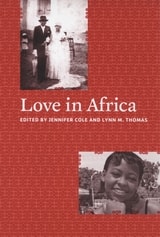
Love in Africa
Edited by Jennifer Cole and Lynn M. Thomas
University of Chicago Press, 2009
In recent years, scholarly interest in love has flourished. Historians have addressed the rise of romantic love and marriage in Europe and the United States, while anthropologists have explored the ways globalization has reshaped local ideas about those same topics. Yet, love in Africa has been peculiarly ignored, resulting in a serious lack of understanding about this vital element of social life—a glaring omission given the intense focus on sexuality in Africa in the wake of HIV/AIDS.
Love in Africa seeks both to understand this failure to consider love and to begin to correct it. In a substantive introduction and eight essays that examine a variety of countries and range in time from the 1930s to the present, the contributors collectively argue for the importance of paying attention to the many different cultural and historical strands that constitute love in Africa. Covering such diverse topics as the reception of Bollywood movies in 1950s Zanzibar, the effects of a Mexican telenovela on young people’s ideas about courtship in Niger, the models of romance promoted by South African and Kenyan magazines, and the complex relationship between love and money in Madagascar and South Africa, Love in Africa is a vivid and compelling look at love’s role in African society.
Love in the Lav
A Social Biography of Same-Sex Desire in Ireland, 1922-1972Averill Earls
Temple University Press, 2025
Earls uses courtroom testimonies, police records, and family history archives as well as “educated speculation” to show how structures governing male same-sex desire in Ireland played out on the bodies of the men who desired men, the teen boys who sold sex to men, and the way the Catholic-nationalist ethos shaped the Gardaí who policed them.
Love in the Lav examines the experiences of people such as cabbie James Hand, who was put on trial for gross indecency, to provide a window into the queer working-class subculture of 1930s Dublin. Earls also focuses on issues of consent, especially with teens, and the unregulated queer Irish world of public figures, including Micheál Mac Liammóir, Hilton Edwards, Ronald Brown, and John Broderick.
By examining twentieth-century Ireland through the lived experiences of ordinary same-sex-desiring Irish men who were relegated to obscurity by Irish society, Earls reveals the contradictions, possibilities, and magnitude of postcolonial Irish Catholic nationalism.
In the series Sexuality Studies
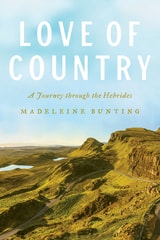
Love of Country
A Journey through the HebridesMadeleine Bunting
University of Chicago Press, 2017
After years of hearing about Scotland as a place deeply interwoven with the story of her family, Madeleine Bunting was driven to see for herself this place so symbolic and full of history. Most people travel in search of the unfamiliar, to leave behind the comfort of what’s known to explore some suitably far-flung corner of the globe. From the first pages, it’s clear that Madeleine Bunting’s Love of Country marks a different kind of journey—one where all paths lead to a closer understanding of home, but a home bigger than Bunting’s corner of Britain, the drizzly, busy streets of London with their scream of sirens and high-rise developments crowding the sky. Over six years, Bunting returned again and again to the Hebrides, fascinated by the question of what it means to belong there, a question that on these islands has been fraught with tenacious resistance and sometimes tragedy. With great sensitivity, she takes readers through the Hebrides’ history of dispossession and displacement, a history that can be understand only in the context of Britain’s imperial past, and she shows how the Hebrides have been repeatedly used to define and imagine Britain. In recent years, the relationship between Britain and Scotland has been subject to its most testing scrutiny, and Bunting’s travels became a way to reflect on what might be lost and what new possibilities might lie ahead.
For all who have wondered how it might feel to stand face-out at the edge of home, Love of Country is a revelatory journey through one of the world’s most remote, beautiful landscapes that encourages us to think of the many identities we wear as we walk our paths, and how it is possible to belong to many places while at the same time not wholly belonging to any.
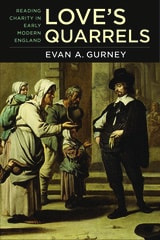
Love's Quarrels
Reading Charity in Early Modern EnglandEvan Gurney
University of Massachusetts Press, 2018
Early modern English writers often complained that “charity had grown cold,” lamenting the dissolution of society's communal bonds. But far from diminishing in scope or influence, charity generated heated debates, animated by social, political, and religious changes that prompted urgent questions about the virtue's powers and functions. Charity was as much a problem as it was a solution, a sure sign of trouble even when invoked on behalf of peace and community.
Love's Quarrels charts charity's complex history from the 1520s to the 1640s and details the ways in which it can be best understood in biblical translations of the early sixteenth century, in Elizabethan polemic and satire, and in the political and religious controversies arriving at the outset of civil war. As key works from Edmund Spenser, Ben Jonson, and John Milton reveal, “reading charity” was fraught with difficulty as early modern England reconsidered its deepest held convictions in the face of mounting social disruption and spiritual pressure.
Love, Anarchy, & Emma Goldman
A BiographyFalk, Candace
Rutgers University Press, 1990
Love, Anarchy, & Emma Goldman
A BiographyCandace Serena Falk
Rutgers University Press, 2019
“Fascinating …With marvelous clarity and depth, Candace Falk illuminates for us an Emma Goldman shaped by her time yet presaging in her life the situation and conflicts of women in our time.” —Tillie Olsen
One of the most famous political activists of all time, Emma Goldman was also infamous for her radical anarchist views and her “scandalous” personal life. In public, Goldman was a firebrand, confidently agitating for labor reform, anarchism, birth control, and women’s independence. But behind closed doors she was more vulnerable, especially when it came to the love of her life.
Love, Anarchy, & Emma Goldman is an account of Goldman’s legendary career as a political activist. But it is more than that—it is a biography that offers an intimate look at how Goldman’s passion for social reform dovetailed with her passion for one man: Chicago activist, hobo king, and red-light district gynecologist Ben Reitman. Candace Falk takes us into the heart of their tumultuous love affair, finding that even as Goldman lectured on free love, she confronted her own intense jealousy.
As director of the Emma Goldman papers, Falk had access to over 40,000 writings by Goldman—including her private letters and notes—and she draws upon these archives to give us a rare insight into this brilliant, complex woman’s thoughts. The result is both a riveting love story and a primer on an exciting, explosive era in American politics and intellectual life.
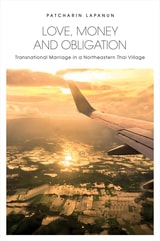
Love, Money and Obligation
Transnational Marriage in a Northeastern Thai VillagePatcharin Lapanun
National University of Singapore Press, 2019
Northeast Thailand has seen an increase in marriages between Thai women and farang (Western) men. Often the women are less well off and from rural areas in the country, while the men largely come from the United States and Europe and settle permanently in Thailand. These unions have created a new social class, with distinctive consumption patterns and lifestyles. And they are challenging gender relations and local perceptions of sexuality, marriage, and family.
In Love, Money and Obligation, Patcharin Lapanun offers an exploration of these marriages and their larger effect on Thai communities. Her interviews with women and men engaging in these transnational relationships highlight the complexities of the associations, as they are shaped by love, money, and gender obligations on the one hand and the dynamics of socio-cultural and historical contexts on the other. Her in-depth and even-handed examination highlights the importance of women’s agency and the strength and creativity of people seeking to forge meaningful lives in the processes of social transition and in the face of local and global encounters.
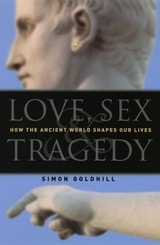
Love, Sex & Tragedy
How the Ancient World Shapes Our LivesSimon Goldhill
University of Chicago Press, 2004
Marx, Clark Gable, George W. Bush, Oscar Wilde, and Freud—Goldhill's range here is enormous, and he takes great delight in tracing both follies and fundamental philosophical questions through the centuries and continents to the birthplace of Western civilization as we know it. Underlying his brisk and learned excursions through history and art is the foundational belief, following Cicero, that learning about the classics makes a critical difference to our self-understanding. Whether we are considering the role of religion in contemporary society, our expectations about the boundaries between public and private life, or even how we spend our free time, recognizing the role of the classics is integral to our comprehension of modern life and our place in it.
When Goldhill asks "Who do you think you are?" he presents us with the rarest of opportunities: the chance to let him lead us, firmly but with a wink, back two thousand years to where we are.
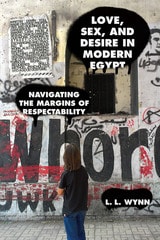
Love, Sex, and Desire in Modern Egypt
Navigating the Margins of RespectabilityBy L. L. Wynn
University of Texas Press, 2018
Cairo is a city obsessed with honor and respectability—and love affairs. Sara, a working-class woman, has an affair with a married man and becomes pregnant, only to be abandoned by him; Ayah and Zeid, a respectably engaged couple, argue over whether Ayah’s friend is a prostitute or a virgin; Malak, a European belly dancer who sometimes gets paid for sex, wants to be loved by a man who won’t treat her like a whore just because she’s a dancer; and Alia, a Christian banker who left her abusive husband, is the mistress of a wealthy Muslim man, Haroun, who encourages business by hosting risqué parties for other men and their mistresses.
Set in transnational Cairo over two decades, Love, Sex, and Desire in Modern Egypt is an ethnography that explores female respectability, male honor, and Western theories and fantasies about Arab society. L. L. Wynn uses stories of love affairs to interrogate three areas of classic anthropological theory: mimesis, kinship, and gift. She develops a broad picture of how individuals love and desire within a cultural and political system that structures the possibilities of, and penalties for, going against sexual and gender norms. Wynn demonstrates that love is at once a moral horizon, an attribute that “naturally” inheres in particular social relations, a social phenomenon strengthened through cultural concepts of gift and kinship, and an emotion deeply felt and desired by individuals.
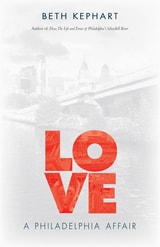
Love
A Philadelphia AffairBeth Kephart
Temple University Press, 2017
Philadelphia has been at the heart of many books by award-winning author Beth Kephart, but none more so than the affectionate collection Love. This volume of personal essays and photographs celebrates the intersection of memory and place. Kephart writes lovingly, reflectively about what Philadelphia means to her. She muses about meandering on SEPTA trains, spending hours among the armor in the Philadelphia Museum of Art, and taking shelter at Independence Mall during a downpour.
In Love, Kephart shares her loveof Reading Terminal Market at Thanksgiving: “This abundant, bristling market is, in November, the most unlonesome place around.” She waxes poetic about the shoulder-to-shoulder crowds, the mustard in a Salumeria sandwich, and the “coins slipped between the lips of Philbert the pig.”
Kephart also extends her journeys to the suburbs, Glenside and Ardmore—and beyond, to Lancaster County, Pennsylvania; Stone Harbor, New Jersey; and Wilmington, Delaware. What emerges is a valentine to the City of Brotherly Love and its environs. In Love, Philadelphia is “more than its icons, bigger than its tagline.”
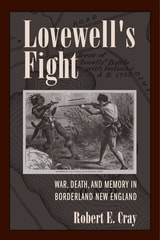
Lovewell's Fight
War, Death, and Memory in Borderland New EnglandRobert E. Cray
University of Massachusetts Press, 2014
In May 1725, during a three-year conflict between English colonists and the Eastern Abenaki Nation, a thirty-four-man expedition led by Captain John Lovewell set out to ambush their adversaries, acquire some scalp bounties, and hasten the end of the war. Instead, the Abenakis staged a surprise attack of their own at Pigwacket, Maine, that left more than a third of the New Englanders dead or severely wounded. Although Lovewell himself was slain in the fighting, he emerged a martyred hero, celebrated in popular memory for standing his ground against a superior enemy force.
In this book, Robert E. Cray revisits the clash known as “Lovewell's Fight” and uses it to illuminate the themes of war, death, and memory in early New England. He shows how a military operation plagued from the outset by poor decision-making, and further marred by less-than-heroic battlefield behavior, came to be remembered as early America's version of the Alamo. The government of Massachusetts bestowed payouts, pensions, and land on survivors and widows of the battle, while early chroniclers drafted a master narrative for later generations to emboss. William Henry Longfellow, Nathaniel Hawthorne, and Henry David Thoreau kept the story alive for later generations. Although some nineteenth-century New Englanders disapproved of Lovewell's notoriety as a scalp hunter, it did not prevent the dedication of a monument in his honor at the Fryeburg, Maine, battlesite in 1904.
Even as the actual story of “Lovewell's Fight” receded into obscurity—a bloody skirmish in a largely forgotten war—it remained part of New England lore, one of those rare military encounters in which defeat transcends an opponent's victory to assume the mantle of legend.
Loving Dr. Johnson
Helen Deutsch
University of Chicago Press, 2005
Loving Dr. Johnson uses the enormous popularity of Johnson to understand a singular case of author love and to reflect upon what the love of authors has to do with the love of literature. Helen Deutsch's work is driven by several impulses, among them her affection for both Johnson's work and Boswell's biography of him, and her own distance from the largely male tradition of Johnsonian criticism—a tradition to which she remains indebted and to which Loving Dr. Johnson is ultimately an homage. Limning sharply Johnson's capacious oeuvre, Deutsch's study is also the first of its kind to examine the practices and rituals of Johnsonian societies around the world, wherein Johnson's literary work is now dwarfed by the figure of the writer himself.
An absorbing look at one iconic author and his afterlives, Loving Dr. Johnson will be of enormous value to students of English literature and literary scholars keenly interested in canon formation.
Loving Faster than Light
Romance and Readers in Einstein's UniverseKaty Price
University of Chicago Press, 2012
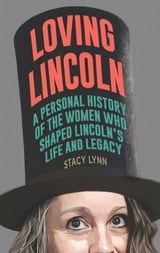
Loving Lincoln
A Personal History of the Women Who Shaped Lincoln's Life and LegacyStacy Lynn
Southern Illinois University Press, 2025
WINNER, 2026 Illinois State Historical Society Russell P. Strange Book of the Year Award!
Rediscovering Lincoln through the female gaze
Abraham Lincoln belongs to everybody. The women he interacted with helped forge the outstanding moral character of America's greatest president. This unique Abraham Lincoln biography features thirty historical and personal essays, and within them, the stories of more than ninety women, each with their own mini biographies in an appendix. Among them are Lincoln’s friends, clients, and extended family, as well as writers, artists, and—blurring the lines between history and memoir—author Stacy Lynn herself.
As a professional Lincoln scholar and editor, Lynn was often frustrated that male historians often overlooked Lincoln’s love for and friendship with women. Here, she posits a new paradigm—one that, instead of downplaying women, lifts up their interactions with Lincoln.
Lincoln understood the importance of the women in his life, and he put women’s wellbeing at the center of his personal, professional, and political ethos. He was loved by two strong pioneer mothers as well as sisters, friends, nieces, friends’ daughters, and his wife. He served women clients during his long legal career. As president, he met with women, dedicating time to hear their concerns despite the burdens of office. He replied to letters women wrote him. He believed in their capabilities and revolutionized the role of women in the workforce. After Lincoln’s death, women continued to shape his legacy. Mary Lincoln ensured his burial among friends, artist Vinnie Ream sculpted his statue in the US Capitol, and biographer Ida Tarbell provided a nuanced portrayal of his life. Harriet Monroe and Ruth Painter Randall further cemented his place in literature and history.
Lynn presents a fresh perspective on Lincoln, connecting his story to the stories of women and showcasing his kindness, sensitivity, and moral center. She explores how women shaped Lincoln’s inspirational legacy and pays homage to all the women who gave Lincoln to the world. Lynn’s unique blending of history, biography, and her own story reveals the ways in which an emotional connection to the historical figures one studies opens the door to richer human and historical understanding. By inviting readers to feel the past as well as read it, Lynn demonstrates that history matters most when it engages our minds and hearts.
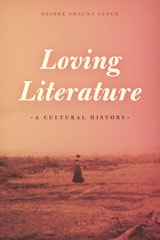
Loving Literature
A Cultural HistoryDeidre Shauna Lynch
University of Chicago Press, 2014
That question led Deidre Shauna Lynch into the historical and cultural investigation of Loving Literature. How did it come to be that professional literary scholars are expected not just to study, but to love literature, and to inculcate that love in generations of students? What Lynch discovers is that books, and the attachments we form to them, have played a vital role in the formation of private life—that the love of literature, in other words, is deeply embedded in the history of literature. Yet at the same time, our love is neither self-evident nor ahistorical: our views of books as objects of affection have clear roots in eighteenth- and nineteenth-century publishing, reading habits, and domestic history.
While never denying the very real feelings that warm our relationship to books, Loving Literature nonetheless serves as a riposte to those who use the phrase “the love of literature” as if its meaning were transparent. Lynch writes, “It is as if those on the side of love of literature had forgotten what literary texts themselves say about love’s edginess and complexities.” With this masterly volume, Lynch restores those edges and allows us to revel in those complexities.
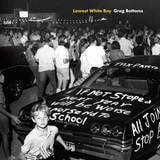
Lowest White Boy
Greg Bottoms
West Virginia University Press, 2019
An innovative, hybrid work of literary nonfiction, Lowest White Boy takes its title from Lyndon Johnson’s observation during the civil rights era: “If you can convince the lowest white man he’s better than the best colored man, he won’t notice you’re picking his pocket.”
Greg Bottoms writes about growing up white and working class in Tidewater, Virginia, during school desegregation in the 1970s. He offers brief stories that accumulate to reveal the everyday experience of living inside complex, systematic racism that is often invisible to economically and politically disenfranchised white southerners—people who have benefitted from racism in material ways while being damaged by it, he suggests, psychologically and spiritually. Placing personal memories against a backdrop of documentary photography, social history, and cultural critique, Lowest White Boy explores normalized racial animus and reactionary white identity politics, particularly as these are collected and processed in the mind of a child.