Results by title
4030 books match the query 'Language Arts & Disciplines' and 224 start with l
Latter-day Eloquence
Two Centuries of Mormon OratoryEdited by Richard Benjamin Crosby and Isaac James Richards
University of Illinois Press, 2026
Essential and one-of-a-kind, Latter-day Eloquence provides a foundational reference for the study of Latter-day Saint rhetoric and oratory.

Launching Large-Scale Library Initiatives
Innovation and CollaborationValerie Horton
American Library Association, 2021
The necessity for library leaders to demonstrate that libraries are innovative, collaborative, and can provide eye-catching, transformational services and programs to their communities cannot be understated. But libraries do not suffer from a lack of big ideas. What library workers really need is a roadmap for making those impactful ideas become reality. Based in part on her extensive experience coordinating large-scale initiatives, this guide from ASCLA Leadership and Professional Achievement Award-winning consultant Horton will walk you through formulating and shaping your ideas into sellable, actionable projects. You’ll learn
- techniques drawn from project management experts and researchers from many fields;
- why Big Hairy Audacious Goals (BHAG) are worth your time and effort;
- guidance on upscaling your idea into a project or service that can be launched at a statewide, community wide, or library consortium level;
- several case studies of large-scale library projects, with analysis of why they were successful;
- how to successfully combine foundational principles of innovation with practical methods for collaboration;
- methods for extending your reach beyond your usual sphere to partner with other libraries and organizations;
- how to sharpen your skills of persuasion;
- no-nonsense advice on leading teams of disparate individuals; and
- evaluative tips for affirming the project is on the right track and then correcting course as needed.
Laurence Nowell's Vocabularium Saxonicum
Edited by Albert H. Marckwardt
University of Michigan Press, 1952
Laurent Clerc
The Story of His Early YearsCathryn Carroll
Gallaudet University Press, 1991
Laurent Clerc won lasting renown as the deaf teacher who helped Thomas Hopkins Gallaudet establish schools to educate deaf Americans in the 19th century. Now, his character as a young boy growing up in Paris has been captured in the novel Laurent Clerc.
In his own voice, Clerc vividly relates the experiences that led to his later progressive teaching methods. Especially influential was his long stay at the Royal National Institute for the Deaf in Paris, where he encountered sharply distinct personalities — the saintly, inspiring deaf teacher Massieu, the vicious Dr. Itard and his heartless “experiments” on deaf boys, and the “Father of the Deaf,” Abbe Sicard, who could hardly sign.
Young adult readers will find his story richly entertaining as well as informative.
Law Librarianship in the Age of AI
Ellyssa Kroski
American Library Association, 2019
Futurists predict that in the next ten years the profession of “lawyer” will splinter into job titles like “legal process analyst” or “legal knowledge engineer.” And some in the field are already taking a proactive approach — in fact, more than two dozen law schools have developed innovation centers to explore artificial intelligence (AI) and the law. In a competitive marketplace, both firms and individuals need to familiarize themselves with the dazzling array of new products and enhanced features capable of improving efficiency. Written by leading practitioners and visionaries like Robert Ambrogi, this groundbreaking survey of current practices and future trends offers an incisive examination of the evolving roles for law librarians. Readers will learn how AI technology is changing law school curricula, lawyer practice, marketing, and other key aspects of the field through coverage of such topics as
- the benefits of AI to law librarianship, including areas like legal research, contract review, compliance, and administration, and their associated risks;
- four professional ethics rules that apply to the use or (non-use) of AI;
- how lawyers and staff work side by side with AI, utilizing intelligence like RAVN ACE or FastCase to attack the drudgery of due diligence and document review;
- surprising machine-learning insights from tokenizing, stemming, and lemmatizing the text of Shakespeare’s plays;
- the potential for chatbots and new natural language processing products to improve access to justice; and
- ways to develop sought-after skills through new technology departments, practice management groups, and legal innovation labs.
Reading this collection will give you a firm grasp of the innovations, tools, benefits, and risks of AI in law librarianship.
Layers of Aspect
Patricia Cabredo Hofherr and Brenda Laca
CSLI, 2010
The eight articles in this volume reexamine the syntactic and semantic analyses of aspect that have been proposed mainly on the basis of aspectual expressions in English. The authors contrast expressions sharing an analogous morpho-syntactic make-up and some core distributional and semantic properties, drawing on a wide range of new empirical data from languages as diverse as Syrian Arabic, Urdu, Brazilian Portuguese, Russian, Indonesian, and German. The papers address four aspect-related problems in particular: the grammatical and semantic constraints on the different readings of the present perfect, the semantic and syntactic analysis of auxiliaries, the impact of adverbial expressions on the aspectual properties of the sentence, and morphology-semantics mapping.
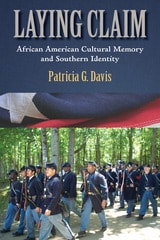
Laying Claim
African American Cultural Memory and Southern IdentityPatricia G. Davis
University of Alabama Press, 2016
Reclaiming Southern history through the voices, memories, and experiences of African Americans.
In Laying Claim: African American Cultural Memory and Southern Identity, Patricia Davis identifies the Civil War as the central narrative around which official depictions of southern culture have been defined. Because that narrative largely excluded African American points of view, the resulting southern identity was monolithically white. Davis traces how the increasing participation of black public voices in the realms of Civil War memory—battlefields, museums, online communities—has dispelled the mirage of “southernness” as a stolid cairn of white culture and has begun to create a more fluid sense of southernness that welcomes contributions by all of the region’s peoples.
Laying Claim offers insightful and penetrating examinations of African American participation in Civil War reenactments; the role of black history museums in enriching representations of the Civil War era with more varied interpretations; and the internet as a forum within which participants exchange and create historical narratives that offer alternatives to unquestioned and dominant public memories. From this evolving cultural landscape, Davis demonstrates how simplistic caricatures of African American experiences are giving way to more authentic, expansive, and inclusive interpretations of southernness.
As a case-study and example of change, Davis cites the evolution of depictions of life at Thomas Jefferson’s Monticello. Where visitors to the site once encountered narratives that repeated the stylized myth of Monticello as a genteel idyll, modern accounts of Jefferson’s day offer a holistic, inclusive, and increasingly honest view of Monticello as the residents on every rung of the social ladder experienced it.
Contemporary violence and attacks about or inspired by the causes, outcomes, and symbols of the Civil War, even one hundred and fifty years after its end, add urgency to Davis’s argument that the control and creation of public memories of that war is an issue of concern not only to scholars but all Americans. Her hopeful examination of African American participation in public memory illuminates paths by which this enduring ideological impasse may find resolutions.
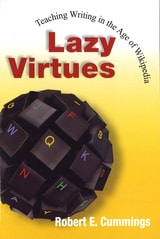
Lazy Virtues
Teaching Writing in the Age of WikipediaRobert E. Cummings
Vanderbilt University Press, 2008
Focusing largely on the controversial website Wikipedia, the author explores the challenges confronting teachers of college writing in the increasingly electronic and networked writing environments their students use every day. Rather than praising or condemning that site for its role as an encyclopedia, Cummings instead sees it as a site for online collaboration between writers and a way to garner audience for student writing.
Applying an understanding of Commons-Based Peer Production theory, as developed by Yochai Benkler, this text is arranged around the following propositions:
-- Commons-Based Peer Production is a novel economic phenomenon which informs our current teaching model and describes a method for making sense of future electronic developments.
-- College writers are motivated to do their best work when they write for an authentic audience, external to the class.
-- Writing for a networked knowledge community invites students to participate in making knowledge, rather than only consuming it.
-- A plan for integrating networked writing for an external audience helps students understand the transition from high school to college writing.
-- Allowing students to review and self-select points of entry into electronic discourse fosters "laziness," or a new work dynamic where writers seek to better understand their own creativity in terms of a project's demands.
Lazy Virtues offers networked writing assignments to foster development of student writers by exposing them to the demands of professional audiences, asking them to identify and assess their own creative impulses in terms of a project's needs, and removing the writing teacher from the role of sole audience.
Le Roman de Vrai Amour and Le Pleur de Sainte Ame
Edited by Arthur S. Bates
University of Michigan Press, 1958
Leadership
Strategic Thinking, Decision Making, Communication, and Relationship BuildingAnn M. Martin
American Library Association, 2022
Leading And Managing Archives And Manuscripts Programs
Peter Gottlieb
American Library Association, 2019

Leading Change In Academic Libraries
Colleen Boff
Assoc of College & Research Libraries, 2020
Leading Kids to Books Through Crafts
American Library Association, 2000
Leading Kids to Books Through Magic
American Library Association, 1996
Leading Libraries
How to Create a Service CultureWyoma vanDuinkerken
American Library Association, 2015
Leading Together
Irene M.H. Herold
Assoc of College & Research Libraries, 2021
Leading and Managing Archives and Records Programs
Bruce W. Dearstyne
American Library Association, 2008
Leading for School Librarians
There Is No Other OptionHilda K. Weisburg
American Library Association, 2017
Leading the Reference Renaissance
Marie L. Radford
American Library Association, 2011
Learnable Classes of Categorial Grammars
Makoto Kanazawa
CSLI, 1998
Learner-Centered Pedagogy
Principles and PracticeKevin Michael Klipfel
American Library Association, 2017
Today's emphasis on metrics and personalization make evidence-based instruction an imperative. In this practice-based handbook, the authors draw on the research of the humanistic psychologist and educator Carl Rogers to present an empathetic approach to information literacy sessions, reference service, and outreach. With an eye on everyday library work, they offer concrete, empirically-based strategies to connect with learners at all levels. Offering plentiful examples of pedagogy in action, this book covers:
- 6 cognitive principles for organizing information literacy instruction, with sample worksheets and organization tools for instruction planning;
- how to establish rapport and kindle learners' motivation;
- tactics for transcending "cite 5 sources" and other uninspiring research assignments;
- educational evidence debunking the mythical perception that because students are skilled at computers and mobile technology, they already know how to do research;
- questions to keep in mind for inspiring autonomous learning;
- the power of story, as described by Joan Didion, Brené Brown's Ted Talk, and educational psychology research;
- the science behind information overload; and
- a balanced framework for evaluating specific educational technology tools.
Fusing theory with practice, this handbook is a valuable resource to help every practitioner connect with learners more effectively.
Learning American Sign Language in High School
Motivation, Strategies, and AchievementRussell S. Rosen
Gallaudet University Press, 2015
Author Russell S. Rosen begins with the history of ASL as a foreign language in high schools, including debates about the foreign language status of ASL, the situation of deaf and hard of hearing students in classes, and governmental recognition of ASL as a language. Based on his study of five high school ASL programs, he defines the factors that motivate students, including community and culture, and analyzes strategies for promoting language processing and learning. Learning American Sign Language in High School provides strategies for teaching ASL as a second language to students with learning disabilities as well. Its thorough approach ensures the best opportunity for high school students to attain high levels of achievement in learning ASL.
Learning Beyond The Classroom
Engaging Stud In Info LiteracySilvia Vong
Assoc of College & Research Libraries, 2020
Learning Centers for School Libraries
Maura Madigan
American Library Association, 2021
This book offers
- Step-by-step directions for both the educator and learner and all necessary handouts, including directions and worksheets. The reader can use the book to quickly and easily set up centers. Some centers require only photocopies and basic materials to get started.
- Guidance on how to create cross-curricular centers that target the AASL Standards and other content-area standards. A table is provided to enable educators to create centers that address specific standards or content areas. Centers for distance learning are also identified.
- Suggested modifications for both struggling and advanced learners, plus ideas for collaborating with other educators. These features broaden the potential audience beyond elementary school learners.
Learning To See
American Sign Language as a Second LanguageSherman Wilcox
Gallaudet University Press, 1997
Learning to See lays solid groundwork for teaching and studying ASL by outlining the structure of this unique visual language. Myths and misconceptions about ASL are laid to rest at the same time that the fascinating, multifaceted elements of Deaf culture are described. Students will be able to study ASL and gain a thorough understanding of the cultural background, which will help them to grasp the language more easily. An explanation of the linguistic basis of ASL follows, leading into the specific, and above all, useful information on teaching techniques.
This practical manual systematically presents the steps necessary to design a curriculum for teaching ASL, including the special features necessary for training interpreters. The new Learning to See again takes its place at the forefront of texts on teaching ASL as a second language, and it will prove to be indispensable to educators and administrators in this special discipline.
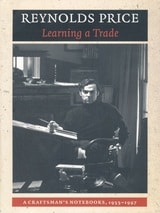
Learning a Trade
A Craftsman's Notebooks: 1955-1997Reynolds Price
Duke University Press, 1998
Whether Price is reflecting on the rhythm of his day-to-day writing process or ruminating about the central character in what would become, for instance, Kate Vaiden—should she be a woman, what would be her name, why would the story be told in the first person?—he envelops the reader in the task at hand, in the trade being practiced. Instead of personal memoir or a collection of literary fragments, Learning a Trade presents what Price has called the “ongoing minutes” of his effort to learn his craft. Equally enlightening as an overview of a career of developing prominence or as a perspective on the building of individual literary works, this volume not only allows the reader to hear the author’s internal dialogue on the hundreds of questions that must be turned and mulled during the planning and writing of a novel but, in an unplanned way, creates its own compelling narrative.
These notebooks begin in “that distant summer in dazed Eisenhower America,” a month after Price’s graduation from Duke University, and conclude in “the raucous millennial present” with plans for his most recent novel, Roxanna Slade. Revealing the genesis and resolution of such works as The Surface of Earth, The Source of Light, Kate Vaiden, Clear Pictures, and Blue Calhoun, Learning a Trade offers a rich reward to those seeking to enter the guild of writers, as well as those intrigued by the process of the literary life or captured by the work of Reynolds Price.
Learning from Libraries that Use WordPress
Content-Management System Best Practices and Case StudiesKyle M. Jones
American Library Association, 2012
Learning from the Lived Experiences of Graduate Student Writers
Shannon Madden
Utah State University Press, 2020
Learning from the Lived Experiences of Graduate Student Writers is a timely resource for understanding and resolving some of the issues graduate students face, particularly as higher education begins to pay more critical attention to graduate student success. Offering diverse approaches for assisting this demographic, the book bridges the gap between theory and practice through structured examination of graduate students’ narratives about their development as writers, as well as researched approaches for enabling these students to cultivate their craft.
The first half of the book showcases the voices of graduate student writers themselves, who describe their experiences with graduate school literacy through various social issues like mentorship, access, writing in communities, and belonging in academic programs. Their narratives illuminate how systemic issues significantly affect graduate students from historically oppressed groups. The second half accompanies these stories with proposed solutions informed by empirical findings that provide evidence for new practices and programming for graduate student writers.
Learning from the Lived Experiences of Graduate Student Writers values student experience as an integral part of designing approaches that promote epistemic justice. This text provides a fresh, comprehensive, and essential perspective on graduate writing and communication support that will be useful to administrators and faculty across a range of disciplines and institutional contexts.
Contributors: Noro Andriamanalina, LaKela Atkinson, Daniel V. Bommarito, Elizabeth Brown, Rachael Cayley, Amanda E. Cuellar, Kirsten T. Edwards, Wonderful Faison, Amy Fenstermaker, Jennifer Friend, Beth Godbee, Hope Jackson, Karen Keaton Jackson, Haadi Jafarian, Alexandria Lockett, Shannon Madden, Kendra L. Mitchell, Michelle M. Paquette, Shelley Rodrigo, Julia Romberger, Lisa Russell-Pinson, Jennifer Salvo-Eaton, Richard Sévère, Cecilia D. Shelton, Pamela Strong Simmons, Jasmine Kar Tang, Anna K. Willow Treviño, Maurice Wilson, Anne Zanzucchi
Learning from the Mess
Method/ological Praxis in Rhetoric and Writing StudiesAshley J. Holmes
University Press of Colorado, 2024
Learning in Action
Designing Successful Graduate Student Work Experiences in Academic LibrariesArianne Hartsell-Gundy
Assoc of College & Research Libraries, 2022
How do you supervise a graduate student working in a library—and not just adequately, but well? What is a valuable and meaningful work experience? How can libraries design more equitable and ethical positions for students?
Learning in Action: Designing Successful Graduate Student Work Experiences in Academic Libraries provides practical, how-to guidance on creating and managing impactful programs as well as meaningful personal experiences for students and library staff in academic libraries. Fourteen chapters are divided into four thorough sections:
- Creating Access Pathways
- Developing, Running, and Evolving Programs for LIS Students
- Working with Graduate Students without an LIS Background: Mutual Opportunities for Growth
- Centering the Person
Learning in Action brings together a range of topics and perspectives from authors of diverse backgrounds and institutions to offer practical inspiration and a framework for creating meaningful graduate student work experiences at your institutions.
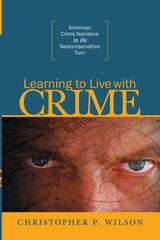
Learning to Live with Crime
American Crime Narrative in the Neoconservative TurnChristopher P. Wilson
The Ohio State University Press, 2010
Since the mid-1960s, the war on crime has reshaped public attitudes about state authority, criminal behavior, and the responsibilities of citizenship. But how have American writers grappled with these changes? What happens when a journalist approaches the workings of organized crime not through its legendary Godfathers but through a workaday, low-level figure who informs on his mob? Why is it that interrogation scenes have become so central to prime-time police dramas of late? What is behind writers’ recent fascination with “cold case” homicides, with private security, or with prisons?
In Learning to Live with Crime, Christopher P. Wilson examines this war on crime and how it has made its way into cultural representation and public consciousness. Under the sway of neoconservative approaches to criminal justice and public safety, Americans have been urged to see crime as an inevitable risk of modern living and to accept ever more aggressive approaches to policing, private security, and punishment. The idea has been not simply to fight crime but to manage its risks; to inculcate personal vigilance in citizens; and to incorporate criminals’ knowledge through informants and intelligence gathering. At its most scandalous, this study suggests, contemporary law enforcement has even come to mimic crime’s own operations.
Lectures on Contemporary Syntactic Theories
An Introduction to Government-Binding Theory, Generalized Phrase Structure Grammar, and Lexical-Function GrammarPeter Sells
CSLI, 1985
Lectures on Deixis
Charles Fillmore
CSLI, 1997
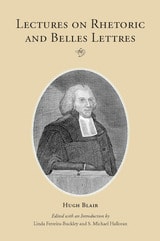
Lectures on Rhetoric and Belles Lettres
Hugh Blair. Edited by Linda Ferreira-Buckley and S. Michael Halloran
Southern Illinois University Press, 2005
This new edition of Hugh Blair’s Lectures on Rhetoric and Belles Lettres, edited by Linda Ferreira-Buckley and S. Michael Halloran, answers the need for a complete, reliable text. The book seeks to generate a renewed interest in Blair by provoking new inquiries into the tradition of belletristic rhetoric and by serving as both aid and incentive to others who may join in the project of improving understanding of this landmark rhetorical scholarship.
This editioncontains forty-seven lectures and remains faithful to the text of the 1785 London edition. The editors contextualize Hugh Blair’s motivations and thinking by providing in their introduction an extended account of Blair’s life and era. The bibliography of works by and about Blair is an invaluable aid, surpassing previous research on Blair.
Although the extent of its influence cannot be measured fully, Blair’s Lectures on Rhetoric and Belles Lettres was undoubtedly a primary vehicle for introducing many eighteenth- and nineteenth-century scholars to classical rhetoric and French belletristic rhetoric—its success due in part to the ease with which the lectures combine neoclassical and Enlightenment thought, accommodating emerging social concerns. Ferreira-Buckley and Halloran’s extensive treatment revives the tradition of belletristic rhetoric, improving the understanding of Blair’s place in the study of eighteenth- and nineteenth-century discourse, while finding him relevant in the twenty-first century.
Legacy
A Step-By-Step Guide To Writing Personal HistoryLinda Spence
Ohio University Press, 1997
When Linda Spence asked her aging mother to write her life story, her mother stared at a blank sheet of paper and asked—“How? Where do I begin?” In this practical guide to capturing those memories that have been stored away, Linda Spence provides the questions that are the keys to unlocking the memories that make up a life.
Beyond the vital statistics are the personal stories that tell what it was like, what we did, and why we did it, how we feel about our choices, and what our circumstances were. Through encouraging coaching, shared memories, and open-ended questions, the process of producing a personal history becomes intriguing and engaging.
With Legacy the possibilities expand: a personal record is preserved—with its myths, traditions, joys, pains, gains, and losses; a family opens a potential dialogue that will last for generations; the writer has an opportunity for insight and resolution; the culture of a time and place is noted; the tradition of personal story is revitalized, and our present and future find nourishment and knowledge in the past.
Either as a gift that can act as a shared experience as the memories are recounted or as a personal way to take account of one’s experiences, often long since forgotten, Legacy is indeed a way to get one’s story down.
Legal Interpreting
Teaching, Research, and PracticeJeremy L. Brunson
Gallaudet University Press, 2022
Each chapter features discussion questions and prompts that interpreter educators can use in the classroom. While intended as a foundational text for use in courses, this body of work also provides insight into the current state of the legal interpreting field and will be a valuable resource for scholars, practitioners, and consumers.
Legal Reference for Librarians
How and Where to Find the AnswersPaul D. Healey
American Library Association, 2014
Legal Writing in Plain English, Second Edition
A Text with ExercisesBryan A. Garner
University of Chicago Press, 2013
Accessible and witty, Legal Writing in Plain English draws on real-life writing samples that Garner has gathered through decades of teaching experience. Trenchant advice covers all types of legal materials, from analytical and persuasive writing to legal drafting, and the book’s principles are reinforced by sets of basic, intermediate, and advanced exercises in each section.
In this new edition, Garner preserves the successful structure of the original while adjusting the content to make it even more classroom-friendly. He includes case examples from the past decade and addresses the widespread use of legal documents in electronic formats. His book remains the standard guide for producing the jargon-free language that clients demand and courts reward.
Legal Writing in Plain English, Third Edition
A Text with ExercisesBryan A. Garner
University of Chicago Press, 2023
Admirably clear, concise, down-to-earth, and powerful—all too often, legal writing embodies none of these qualities. Its reputation for obscurity and needless legalese is widespread. Since 2001, Bryan A. Garner’s Legal Writing in Plain English has helped address this problem by providing lawyers, judges, paralegals, law students, and legal scholars with sound advice and practical tools for improving their written work. Now the leading guide to clear writing in the field, this indispensable volume encourages legal writers to challenge conventions and offers valuable insights into the writing process: how to organize ideas, create and refine prose, and improve editing skills.
Accessible and witty, Legal Writing in Plain English draws on real-life writing samples that Garner has gathered through decades of teaching experience. Trenchant advice covers all types of legal materials, from analytical and persuasive writing to legal drafting, and the book’s principles are reinforced by sets of basic, intermediate, and advanced exercises in each section.
For this third edition, Garner has retained the structure of the previous versions, with updates and new material throughout. There are new sections on making your writing vivid and concrete and on using graphics to enhance your argument. The coverage and examples of key topics such as achieving parallelism, avoiding legalese, writing effective openers and summaries, and weaving quotations into your text have also been expanded. And the sample legal documents and exercises have been updated, while newly added checklists provide quick summaries of each section.
Altogether, this new edition will be the most useful yet for legal professionals and students seeking to improve their prose.
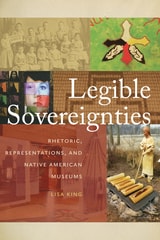
Legible Sovereignties
Rhetoric, Representations, and Native American MuseumsLisa King
Oregon State University Press, 2017
King tracks the exhibit spaces at the Saginaw Chippewa Indian Tribe of Michigan’s Ziibiwing Center, Haskell Indian Nation University’s Cultural Center and Museum, and the Smithsonian’s Washington, DC branch of the National Museum of the American Indian over their first ten years, from their opening until the summer of 2014. Far from formulaic, each site has developed its own rhetorical approaches to reaching its public, revealing multiple challenges and successes in making Native self-representation legible and accessible.
Through documentation and analysis of the inaugural exhibits and recent installations, interviews with curators and staff, and investigation into audience reception of these spaces, Legible Sovereignties argues that there can be no single blanket solution for effective Indigenous self-representation. Instead, Legible Sovereignties demonstrates the nuanced ways in which each site must balance its rhetorical goals and its audience's needs, as well as its material constraints and opportunities, in order to reach its visitors and have Indigenous voices heard.
Legislative Advocacy and Public Policy Work for Academic and Research Library Workers
Perspectives and StrategiesRaymond Pun
Assoc of College & Research Libraries, 2025
Legislative Advocacy and Public Policy Work for Academic and Research Library Workers is a comprehensive resource addressing our specific roles in influencing the various legislative and public policies that directly impact academic libraries, our academic communities, and the library community at large. It explores the ways academic and research library workers are engaging in advocacy, from testifying at governmental levels to collaborating with diverse constituents and legislators to bringing our academic advocacy efforts to discussions within state and regional library associations.
As educators and researchers, library workers bring invaluable expertise to the legislative table. We can help ensure that decisions affecting academic and research libraries and their communities are informed, equitable, and aligned with the values of intellectual freedom and lifelong learning. Legislative Advocacy and Public Policy Work for Academic and Research Library Workers offers ways to make meaningful legislative and policy impacts.
Lend Me Your Ear
Brenda Jo Brueggemann
Gallaudet University Press, 1999
Less Is More
A Practical Guide to Weeding School Library CollectionsDonna J. Baumbach
American Library Association, 2006
Lessons Inspired by Picture Books for Primary Grades
Maureen Schlosser
American Library Association, 2019
Drawing on compelling picture books that can be used to directly support the AASL National School Library Standards for Learners, School Librarians, and School Libraries, this ready-to-go toolkit of lessons, worksheets, anchor charts, assessments, and rubrics is specifically designed to build learner competencies while examining big ideas inspired by picture books. An invaluable timesaver, this resource provides
- 21 lesson units that cover the six Shared Foundations, each utilizing a formatted template that’s easy to follow and incorporates the four Domains (Think, Create, Share, Grow);
- a picture book synopsis for each unit, followed by lesson objectives, essential questions, materials, and duration;
- worksheets, anchor charts, and exit slips tailored for each picture book and lesson;
- “Quick Tips” that offer helpful ideas and suggestions to consider during the lesson; and
- an appendix that includes rubrics to facilitate assessment in all six foundations.
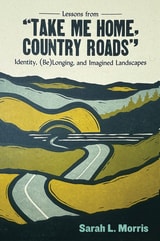
Lessons from "Take Me Home, Country Roads"
Identity, (Be)Longing, and Imagined LandscapesSarah L. Morris
West Virginia University Press, 2025
This book examines “Country Roads” as it illuminates a universal sense of belonging to place even as it obscures the literality of the place it names. In examining “Country Roads” as anthem, text, artifact, and rhetoric, this work untangles ideas related to place, belonging, identity, and pedagogy. Sarah L. Morris uses the Welsh term hiraeth, which is an existential longing for an idealized, sometimes imaginary home, as a governing framework for this work. She explores the song in various contexts, such as how it pertains to West Virginia geography and heritage and the diversity of these beliefs, external perceptions of the state, concepts of home and belonging, and the song as a phenomenon across different media platforms. “Take Me Home, Country Roads,” while being about West Virginia, has registered as a global phenomenon.
Let the Games Begin!
Engaging Students with Interactive Information Literacy InstructionTheresa R. McDevitt
American Library Association, 2011
Let's Pretend
50 Start-To-Finish Preschooler Programs for the Busy Librarian That Foster ImaginationAmerican Library Association, 2010
Let's Speak Twi
A Proficiency Course in Akan Language and CultureAdams Bodomo, Charles Marfo, and Lauren Hall-Lew
CSLI, 2010
Let’s Speak Twi is an introductory language-learning textbook for speakers of English and other languages who seek proficiency in Akan Twi, the most widely used and understood native language of Ghana. Included in the book are several practice exercises and activities; an extensive range of culturally relevant topics and dialogues; lists of idiomatic, colloquial, and euphemistic expressions; a reference glossary; and tips on culturally appropriate behavior.
Letters and Orations
Cassandra Fedele
University of Chicago Press, 2000
Letters from the Editor
Lessons on Journalism and LifeWilliam F. Woo & Philip Meyer
University of Missouri Press, 2007
William F. Woo, born in China, was the first person outside the Pulitzer family to edit the St. Louis Post-Dispatch and the first Asian American to edit a major American newspaper. After forty years in the newsroom, Woo embarked on a second career in 1996 teaching journalism at Stanford University, where he wrote weekly informal essays to his students in the same personal style that characterized his columns for the Post-Dispatch. Each made a philosophical point about journalism and society and their delicate relationship over the last half of the twentieth century.
Woo was revered as both a writer and a reporter, and this volume collects some of the best of those essays to the next generation of journalists on their craft’s high purpose. As inspiration for students from someone who knew the ropes, it distills the essence of the values that define independent journalism while offering them invaluable food for thought about their future professions.
The essays touch on a wide range of subjects. Woo reflects on journalism as a public trust, requiring the publication of stories that give readers a better understanding of society and equip them to change it for the better. He also ponders print journalism conducted in the face of broadcast and online competition along with the transformation of newspapers from privately owned to publicly traded companies. Here too are personal reflections on the Pulitzer family’s impact on journalism and on the tensions between a journalist’s personal and professional life, as well as the conflicts posed by political advocacy versus free speech or a reporter’s expertise versus a newspaper’s credibility.
Woo’s idealistic spirit conveys the virtues of his era’s newspaper journalism to the next generation of journalists—and most likely to the next generation of news media as well. Even as new students of journalism have an eye on an electronic future, Woo’s essays come straight from a newsman’s heart and soul to remind them of values worth preserving.