Results by title
998 books match the query 'Life' and 107 start with l
Life in and against the Odds
Debts of Freedom and the Speculative Roots of U.S. CultureHeidi Hoechst
Temple University Press, 2015
Somehow people continue to imagine a world of justice against the odds of a deck that has been stacked against them. In her urgent and perceptive book, Life in and against the Odds, Hoechst focuses on the particular circumstances and conditions of different phases of speculative expansion in the United States. She traces the roots of the nation-state to nineteenth-century land markets and slave exchanges. Hoechst also chronicles how these racial foundations extend through corporate capitalism from the 1920s and ´30s to the present era of financialized capitalism and the recent housing bubble.
Life in and against the Odds identifies where and how speculative nationalism creates roadblocks to freedom. Hoechst retells the history of the United States with a perspective on how human lives are made, destroyed, reconfigured, and claimed under the systemic violence of a nation that is rooted in the racializing futurity of speculative capitalism.
Life in the Age of Drone Warfare
Lisa Parks and Caren Kaplan, editors
Duke University Press, 2017
Contributors. Peter Asaro, Brandon Wayne Bryant, Katherine Chandler, Jordan Crandall, Ricardo Dominguez, Derek Gregory, Inderpal Grewal, Lisa Hajjar, Caren Kaplan, Andrea Miller, Anjali Nath, Jeremy Packer, Lisa Parks, Joshua Reeves, Thomas Stubblefield, Madiha Tahir
Life in the Balance
Procedural Safeguards in Capital CasesWelsh S. White. Foreword by Hugo Adam Bedau
University of Michigan Press, 1984
Life in the Cold
An Introduction to Winter Ecology, fourth editionPeter J. Marchand
University Press of New England, 2014
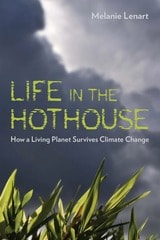
Life in the Hothouse
How a Living Planet Survives Climate ChangeMelanie Lenart
University of Arizona Press, 2010
Life in the Hothouse incorporates Lenart’s extensive knowledge of climate science—including the latest research in climate change—and the most current scientific theories, including Gaia theory, which holds that the Earth has some degree of climate control “built in.” As Lenart points out, scientists have been documenting stronger hurricanes and larger floods for many years. There is a good reason for this, she notes. Hurricanes help cool the ocean surface and clear the air of carbon dioxide, the main greenhouse gas responsible for global warming. From the perspective of Gaia theory, these responses are helping to slow the ongoing global warming and Lenart expounds upon this in a clear and understandable fashion.
There is hope, Lenart writes. If we help sustain Earth's natural defense systems, including wetlands and forests, perhaps Mother Earth will no longer need to rely as much on the cooling effects of what we call "natural disasters"—many of which carry a human fingerprint. At a minimum, she argues, these systems can help us survive the heat.
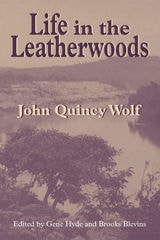
Life in the Leatherwoods
New EditionJohn Quincy Wolf
University of Arkansas Press, 2000
Originally published by Memphis State University Press in 1974, this new edition includes additional writings of John Q. Wolf and a continuation of the autobiographical narrative after his 1887 move to Batesville. Wolf’s writings are valuable resources for southern historians, folklorists, general readers, and scholars of Ozarkiana because they provide a rare glimpse into the social and family life of a largely misunderstood and stereotyped people—the independent hill farmers of the Arkansas Ozarks of the 1870s and 1880s. With Life in the Leatherwoods, Wolf bestows a benediction upon a society that existed vibrantly and humorously in his memory—one that has now forever disappeared from the American countryside.

Life in the Shadows of the Crystal Palace, 1910–1927
Ford Workers in the Model T EraClarence Hooker
University of Wisconsin Press, 1997
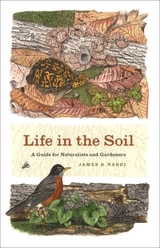
Life in the Soil
A Guide for Naturalists and GardenersJames B. Nardi
University of Chicago Press, 2007
Leonardo da Vinci once mused that “we know more about the movement of celestial bodies than about the soil underfoot,” an observation that is as apt today as it was five hundred years ago. The biological world under our toes is often unexplored and unappreciated, yet it teems with life. In one square meter of earth, there lives trillions of bacteria, millions of nematodes, hundreds of thousands of mites, thousands of insects and worms, and hundreds of snails and slugs. But because of their location and size, many of these creatures are as unfamiliar and bizarre to us as anything found at the bottom of the ocean.
Lavishly illustrated with nearly three hundred color illustrations and masterfully-rendered black and white drawings throughout, Life in the Soil invites naturalists and gardeners alike to dig in and discover the diverse community of creatures living in the dirt below us. Biologist and acclaimed natural history artist James B. Nardibegins with an introduction to soil ecosystems, revealing the unseen labors of underground organisms maintaining the rich fertility of the earth as they recycle nutrients between the living and mineral worlds. He then introduces readers to a dazzling array of creatures: wolf spiders with glowing red eyes, snails with 120 rows of teeth, and 10,000-year-old fungi, among others. Organized by taxon, Life in the Soil covers everything from slime molds and roundworms to woodlice and dung beetles, as well as vertebrates from salamanders to shrews. The book ultimately explores the crucial role of soil ecosystems in conserving the worlds above and below ground.
A unique and illustrative introduction to the many unheralded creatures that inhabit our soils and shape our environment aboveground, Life in the Soil will inform and enrich the naturalist in all of us.
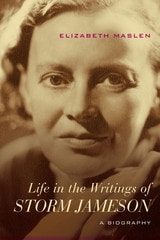
Life in the Writings of Storm Jameson
A BiographyElizabeth Maslen
Northwestern University Press, 2014
Margaret Storm Jameson (1891–1986) is primarily known as a compelling essayist; her stature as a novelist and champion of the dispossessed is largely forgotten. In Life in the Writings of Storm Jameson, Elizabeth Maslen reveals a figure who held her own beside fellow British women writers, including Virginia Woolf; anticipated the Angry Young Women, such as Doris Lessing; and was an early champion of such European writers as Arthur Koestler and Czesław Miłosz. Jameson was a complex character whose politics were grounded in social justice; she was passionately antifascist—her novel In the Second Year (1936) raised the alarm about Nazism—but always wary of communism. An eloquent polemicist, Jameson was, as president of the British P.E.N. during the 1930s and 1940s, of invaluable assistance to refugee writers. Elizabeth Maslen’s biography introduces a true twentieth century hedgehog, whose essays and subtly experimental fiction were admired in Europe and the States.
Life of Aesop the Philosopher
Grammatiki A. Karla
SBL Press, 2024
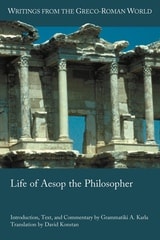
The Life of Aesop the Philosopher, an anonymous Greek literary work, presents one version of the novelistic biography of Aesop, which dates to the fourth to fifth century CE. In this volume, Grammatiki A. Karla offers an extended introduction to the Life of Aesop in general, the history of the textual tradition, and the MORN manuscript family and its relationship to other versions and papyrus fragments. She then presents a new edition of the late antique version (MORN) alongside David Konstan’s English translation. A commentary addresses editorial choices and focuses on words and phrases that are of interest for the history of the Greek language.
Life of Black Hawk
A New EditionDonald L. Fixico
Westholme Publishing, 2026
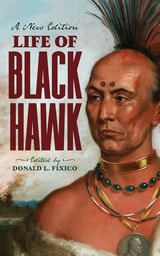
Born in 1767 at Saukenuk on the Rock River in western Illinois, Black Hawk of the Sauk and Fox Nation rose from young warrior to fierce defender of his people as the United States pushed relentlessly westward. His autobiography, originally dictated in 1833, is one of the earliest Native American life narratives recorded: a warrior’s unfiltered account of betrayal, resistance, and the patriotic fight to protect his homeland. In 1832, Black Hawk led his people to reclaim Saukenuk. Settlers had destroyed their homes and crops and illegally occupied their land that had been recognized as Sauk and Fox by treaty. After winning the first two battles against the U.S. military and volunteer militia in Wisconsin, Black Hawk’s band lost the final one at Bad Axe. Black Hawk’s people were forced to accept permanent removal to the west, and he became a prisoner of war at the Fort Jefferson barracks near St. Louis. It was there that he dictated his autobiography to an interpreter.
Introduced and edited by historian Donald L. Fixico, this new edition of Life of Black Hawk brings fresh context and cultural depth to Black Hawk’s words, illuminating the Sauk and Fox worldview, the sacred traditions of the Thunder Clan, and the spiritual life that shaped this remarkable leader. Black Hawk's account conveys what it was like to be a Sauk warrior in the early 1800s. He explains the Medicine Way of his people and how the traditional worldview of Black Hawk was quickly changing from a harmonious relationship with nature to unavoidable frontier hostilities with an expanding United States. You feel the frustrating dilemma of Black Hawk, who knows that defending his people and fighting to save his homeland is morally right. Timely, intimate, and essential, this volume is both a vivid window into the Indigenous experience on the frontier and a testament to a man who stands alongside the great Native patriots. For readers of Native American history, military history, and American biography, this is an extraordinary story that has never been more important to hear.

Life of Henry David Thoreau
Henry S. SaltEdited by George Hendrick, Willene Hendrick, and Fritz Oehlschlaeger
University of Illinois Press, 1993
In 1890 Salt published the initial version of Thoreau's Life. With the help of American friends, he revised the book and published it anew six years later. The present volume is the third version of the biography, completed in 1908 but never published in Salt's lifetime.
Combining a concise narrative of Thoreau's life with a perceptive treatment of his ideas and writings, it stands as a penetrating study of Thoreau, stressing his distinctive individuality. Through an astute analysis of the text and a concise biography, the editors illustrate Salt's growth as a scholar and his changing views on Thoreau and Thoreau's philosophy.
Life of Lidian Jackson Emerson
Delores Bird Carpenter
Michigan State University Press, 2012
Life of a Poet
Rainer Maria RilkeRalph Freedman
Northwestern University Press, 1998

Life of the 381st Bomb Group
The World War II Diary of Eighth Air Force Chaplain James Good BrownBob Korkuc
University of Missouri Press, 2026
While working on his first book, Bob Korkuc became intimately familiar with the 381st Bombardment Group of the Mighty Eighth Air Force and met the group’s chaplain, James Good Brown. Brown kept a diary during his time with the bomb group (1943 to 1945) in which he chronicled the daily experiences of the men.
Years after the war, Brown self-published his diary, which today is hard to find. Through his friendship with Brown, Korkuc gained access to and chose to edit the original docu - ment so that more readers might appreciate this insightful wartime eyewitness account.
Serving in his early forties alongside men twenty years his junior—whom he called the “Mighty Men of the 381st”—Brown took part in morning briefings, shared meals with crews, and anxiously awaited their return from dangerous daylight bombing missions. Flying as a noncombatant, an unnecessary eleventh crewmember, Brown describes his own observations of a Flying Fortress combat mission over Germany. Writing with extraordinary candor, Brown documents the inner workings of a bomb group that flew 297 combat missions over Europe, providing vivid character assessments of his fellow airmen and capturing both their victories and devastating losses.
In addition to judiciously editing Brown’s original diary for readability, Korkuc created a unique appendix, which reveals the fate of every airman who served with Brown. The immediacy of Brown’s narration combined with Korkuc’s meticulous editing make this a promising new resource for scholars and general readers alike.

Life of the Marlows
A True Story of Frontier Life of Early DaysWilliam Rathmell
University of North Texas Press, 2004
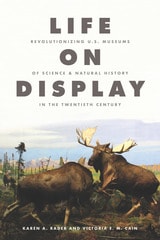
Life on Display
Revolutionizing U.S. Museums of Science and Natural History in the Twentieth CenturyKaren A. Rader and Victoria E. M. Cain
University of Chicago Press, 2014
Rader and Cain explain why science and natural history museums began to welcome new audiences between the 1900s and the 1920s and chronicle the turmoil that resulted from the introduction of new kinds of biological displays. They describe how these displays of life changed dramatically once again in the 1930s and 1940s, as museums negotiated changing, often conflicting interests of scientists, educators, and visitors. The authors then reveal how museum staffs, facing intense public and scientific scrutiny, experimented with wildly different definitions of life science and life science education from the 1950s through the 1980s. The book concludes with a discussion of the influence that corporate sponsorship and blockbuster economics wielded over science and natural history museums in the century’s last decades.
A vivid, entertaining study of the ways science and natural history museums shaped and were shaped by understandings of science and public education in the twentieth-century United States, Life on Display will appeal to historians, sociologists, and ethnographers of American science and culture, as well as museum practitioners and general readers.
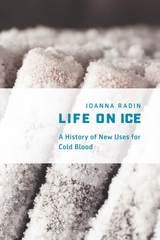
Life on Ice
A History of New Uses for Cold BloodJoanna Radin
University of Chicago Press, 2017
The Cold War projects Radin tracks were meant to form an enduring total archive of indigenous blood before it was altered by the polluting forces of modernity. Freezing allowed that blood to act as a time-traveling resource. Radin explores the unique cultural and technical circumstances that created and gave momentum to the phenomenon of life on ice and shows how these preserved blood samples served as the building blocks for biomedicine at the dawn of the genomic age. In an era of vigorous ethical, legal, and cultural debates about genetic privacy and identity, Life on Ice reveals the larger picture—how we got here and the promises and problems involved with finding new uses for cold human blood samples.
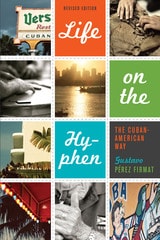
Life on the Hyphen
The Cuban-American WayBy Gustavo Pérez Firmat
University of Texas Press, 2012
An expanded, updated edition of the classic study of Cuban-American culture, this engaging book, which mixes the author’s own story with his reflections as a trained observer, explores how both famous and ordinary members of the “1.5 Generation” (Cubans who came to the United States as children or teens) have lived “life on the hyphen”—neither fully Cuban nor fully American, but a fertile hybrid of both. Offering an in-depth look at Cuban-Americans who have become icons of popular and literary culture—including Desi Arnaz, Oscar Hijuelos, musician Pérez Prado, and crossover pop star Gloria Estefan, as well as poets José Kozer and Orlando González Esteva, performers Willy Chirino and Carlos Oliva, painter Humberto Calzada, and others—Gustavo Pérez Firmat chronicles what it means to be Cuban in America.
The first edition of Life on the Hyphen won the Eugene M. Kayden National University Press Book Award and received honorable mentions for the Modern Language Association’s Katherine Singer Kovacs Prize and the Latin American Studies Association’s Bryce Wood Book Award.
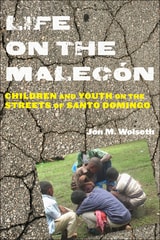
Life on the Malecón
Children and Youth on the Streets of Santo DomingoJon M. Wolseth
Rutgers University Press, 2013
Life on the Malecón is a narrative ethnography of the lives of street children and youth living in Santo Domingo, Dominican Republic, and the non-governmental organizations that provide social services for them. Writing from the perspective of an anthropologist working as a street educator with a child welfare organization, Jon M. Wolseth follows the intersecting lives of children, the institutions they come into contact with, and the relationships they have with each other, their families, and organization workers.
Often socioeconomic conditions push these children to move from their homes to the streets, but sometimes they themselves may choose the allure of the perceived freedoms and opportunities that street life has to offer. What they find, instead, is violence, disease, and exploitation—the daily reality through which they learn to maneuver and survive. Wolseth describes the stresses, rewards, and failures of the organizations and educators who devote their resources to working with this population.
The portrait of Santo Domingo’s street children and youth population that emerges is of a diverse community with variations that may be partly related to skin color, gender, and class. The conditions for these youth are changing as the economy of the Dominican Republic changes. Although the children at the core of this book live and sleep on avenues and plazas and in abandoned city buildings, they are not necessarily glue- and solvent-sniffing beggars or petty thieves on the margins of society. Instead, they hold a key position in the service sector of an economy centered on tourism.
Life on the Malecón offers a window into the complex relationships children and youth construct in the course of mapping out their social environment. Using a child-centered approach, Wolseth focuses on the social lives of the children by relating the stories that they themselves tell as well as the activities he observes.
Life on the Periphery
Economic Change in Late Prehistoric Southeastern New MexicoEdited by John D. Speth
University of Michigan Press, 2004
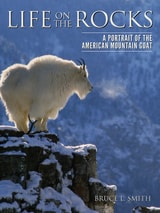
Life on the Rocks
A Portrait of the American Mountain GoatBruce L. Smith
University Press of Colorado, 2014
Color photographs and accounts of Smith's personal experiences living in Montana's Selway-Bitterroot Wilderness Area accompany descriptions of the American mountain goat's natural history. Smith explores their treacherous habitat, which spans the perilous cliffs and crags of the Rocky, Cascade, and Coast mountain ranges. The physical and behavioral adaptations of these alpine athletes enable them to survive a host of dangers, including six-month-long winters, scarce food sources, thunderous avalanches, social strife, and predators like wolves, bears, lions, wolverines, and eagles. Smith also details the challenges these animals face as their territory is threatened by expanding motorized access, industrial activities, and a warming climate.
Life on the Rocks showcases the elegance and charm of this little-known creature, thriving in some of North America's harshest wilderness. Smith's volume will appeal to wildlife enthusiasts, wildland travelers, and conservationists interested in the future of the American mountain goat.
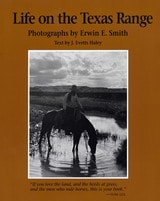
Life on the Texas Range
Photographs by Erwin E. SmithText by J. Evetts Haley
University of Texas Press, 1952
First published in 1953, this photographic record of the real life and work of cowboys remains a perennial favorite. Erwin E. Smith was the outstanding cowboy photographer of the West, and these eighty photographs were among those he chose for an exhibit of his best work at the 1936 Texas Centennial. The text by J. Evetts Haley, a noted historian of the range, skillfully complements Smith's visual record of a vanishing way of life.

Life with AIDS
Rose Weitz
Rutgers University Press, 1991
Weitz describes how these people are affected by and respond to the changes in their bodies and their social relationships, from the time when they realize that they are at risk of infection to the time when death approaches. It covers such issues as how individuals obtain diagnoses, develop their initial ideas about what the future will bring, and come to terms with their impending deaths. To put this into a broader context, she also explores the moral status of illness in general and looks at why some illnesses, including HIV disease, have become especially stigmatized.
The author also explores how doctors are affected by and cope with the unique pressures of treating persons with HIV disease. The concluding chapter theorizes about how changes in the social construction, demographic distribution, and treatment of HIV disease are changing the lives of people with AIDS.
Life with a Star
Jiri Weil
Northwestern University Press, 1998
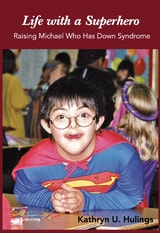
Life with a Superhero
Raising Michael Who Has Down SyndromeKathryn U. Hulings
University of North Texas Press, 2013
Life, Brazen and Garish
A Tale of Three WomenDacia Maraini
Rutgers University Press, 2024
Life, Brazen and Garish offers a fresh take on the epistolary novel, telling the story of a family through the fragmented and disparate perspectives of daughter, mother, and grandmother. Yet even as each woman endures her private struggles with love and betrayal, youth and maturity, knowledge and ignorance, reality and illusion, the Cascadeis forge a solidarity that transcends generations. In turns heartbreaking and laugh-out-loud funny, this novel is a triumph of narrative voice and literary style from one of Italy’s most renowned writers.
Questo libro è stato tradotto grazie a un contributo del Ministero degli Affari Esteri e della Cooperazione Internazionale italiano.
This book has been translated thanks to a contribution from the Italian Ministry of Foreign Affairs and International Cooperation.
Life, Death, and Archaeology at Fort Blue Mounds
A Settlers’ Fortification of the Black Hawk WarRobert A. Birmingham
Wisconsin Historical Society Press, 2012
Life, Death, and Archaeology at Fort Blue Mounds is an archaeological detective story illuminating the lives of white settlers in the lead-mining region during the tragic events of the historically important conflict known as the Black Hawk War.
Focusing on the strategically located Fort Blue Mounds in southwestern Wisconsin, Robert A. Birmingham summarizes the 1832 conflict and details the history of the fort, which played a major role not only in U.S. military and militia operations but also in the lives of the white settlers who sought refuge there. Birmingham then transports us to the site decades later, when he and fellow Wisconsin Historical Society archaeologists and dedicated volunteers began their search for the fort. The artifacts they unearthed provide fascinating—and sometimes surprising—insights into the life, material culture, and even the food of the frontier.
Recommended for readers interested in the Black Hawk War, frontier life, Native American history, military history, and archaeology, Life, Death, and Archaeology at Fort Blue Mounds is grounded by a sense of place and the discovery of what a careful examination of our surroundings can tell us about the past.
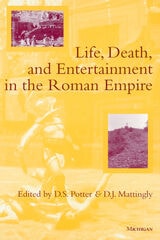
Life, Death, and Entertainment in the Roman Empire
D. S. Potter and D. J. Mattingly, Editors
University of Michigan Press, 1999
D. J. Mattingly is Professor of Roman Archaeology, University of Leicester.
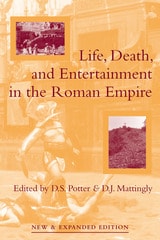
Life, Death, and Entertainment in the Roman Empire
D. S. Potter and D. J. Mattingly, Editors
University of Michigan Press, 2010
"[T]his handsomely-produced volume performs admirably as a series of introductions to sources, approaches, and the state of scholarship on major topics in Roman social history . . . Collections of essays come and go, but this one will stay in wide use. Each essay can stand alone but, tied together by the theme of dominance, the whole is greater than the sum of its parts."
---Donald Kyle, Bryn Mawr Classical Review
"This collection of essays is intended to serve as a coursebook for introductory lecture series on Roman civilization; the essays are concentrated on fundamental aspects of Roman society, and no prior knowledge of antiquity on the reader's part is assumed. . . . The book as a whole is entirely successful in its projected aim: an immense range of detailed information about antiquity is presented in readable and largely sophisticated discussion. . . . Increasingly we need to be able to suggest to our students reading that is introductory but also in-depth and challenging, and this book is one possible reading that we can offer."
---Ellen O'Gorman, Classical Review
Life, Death, and Entertainment gives those with a general interest in Roman antiquity a starting point, informed by the latest developments in scholarship, for understanding the extraordinary range of Roman society. Family structure, slavery, gender identity, food supply, religion, and entertainment---all crucial parts of the Roman world---are discussed here, in a single volume that offers an approachable guide for readers of all backgrounds. The collection unites a series of general introductions on each of these topics, bringing readers in touch with a broad range of evidence, as well as with a wide variety of approaches to basic questions about the Roman world.
The newly expanded edition includes historian Keith Hopkins' pathbreaking article on Roman slaves. Volume editor David Potter has contributed two new translations of documents from emperors Hadrian and Marcus Aurelius. Hadrian's letters document a reorganization of the festival cycle in the Empire and reassert the importance of the Olympic Games; the letter to Marcus provides the most important surviving evidence for how gladiatorial games were actually organized.
Contributors to the volume include Greg S. Aldrete, Hazel Dodge, Bruce W. Frier, Maud W. Gleason, Ann E. Hanson, Keith Hopkins, David J. Mattingly, and David S. Potter.
D.S. Potter is Professor of Classics and Arthur F. Thurnau Professor, University of Michigan.
D.J. Mattingly is Professor of Roman Archaeology, University of Leicester, and a Fellow of the British Academy.
Cover illustrations: top left, Karanis Excavation, courtesy Kelsey Museum; bottom right, Monte Testacchio, courtesy David J. Mattingly; center, Pollice Verso by Jean-Léon Gérôme, courtesy Phoenix Art Museum, Museum Purchase.
Life, Earth, Colony
Friedrich Ratzel's Necropolitical GeographyIan Klinke
University of Michigan Press, 2023
Life, Earth, Colony finds that there is an as yet unexplored necropolitical impulse at the heart of Ratzel’s entire oeuvre, a preoccupation with death and dying, which had a profound impact on twentieth-century history.
Life, Emergent
The Social in the Afterlives of ViolenceYasmeen Arif
University of Minnesota Press, 2016
How does an inquiry into life as it lives (or dies) amid mass violence look like from the perspective of the “social”? Taking us from Sierra Leone to India to Lebanon, Life, Emergent challenges conventional understandings of biopolitics, weaving a politics of life through the lens of life, not death.
Arguing that the “letting die” element of biopolitics has been overemphasized, Yasmeen Arif zeros in on biopolitics’ other pole: “making live.” She does so by highlighting the various means and the forms of life configured in the aftermath—or afterlives—of violent events in contexts of law, justice, community, and identity. Her analysis of the social repercussions is both global and local in scope. Arif examines the convictions made in the Special Court of Sierra Leone, the first hybrid court of its nature under international criminal law. Next, she explores the making of a justice movement in the context of Hindu–Muslim violence in 2002 in the state of Gujarat, India. From there she revisits the Sikh carnage in Delhi of 1984. Finally, she explores a span of civil violence in Lebanon, and particularly, its effects on the city of Beirut.
This rigorously argued book brings together the various strands of life and the social that each chapter has disentangled—and in doing so it begins to frame a politics of, and in, life.
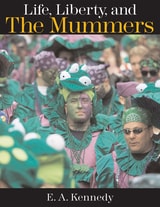
Life, Liberty, and the Mummers
Ed Kennedy
Temple University Press, 2007
Noted photographer E. A. Kennedy spent four years documenting the Mummers and their parade. He has personally selected the striking images included here -- more than 150 in all -- and he has written an engaging history of the parade itself. As Kennedy explains, and as his photos make clear, "mummery" is a way of life for Mummers, who have deep attachments to their clubs, associations, and brigades.
For all its glitz, the Mummers Parade remains a folk parade. This is the captivating story of the folks behind the parade.
Life, War, Earth
Deleuze and the SciencesJohn Protevi
University of Minnesota Press, 2013
A deep exploration of the many possibilities inherent in linking Gilles Deleuze’s philosophy to contemporary science, John Protevi’s Life, War, Earth demonstrates how Deleuze’s ontology of the virtual, intensive, and actual can enhance our understanding of important issues in cognitive science, biology, and geography. Protevi illustrates how a Deleuzian approach can illuminate a wide range of concerns and subjects, including ancient and contemporary warfare, human individuation processes, the “granularity problem,” panpsychism, the E. coli bacterium, the assassination attempt on U.S. representative Gabrielle Giffords, and the affective dimensions of the Occupy movement.
Frequently ambitious but always rooted in the empirical, Life, War, Earth shows how the social and the somatic are not opposed to each other but are interwoven on three time scales—the evolutionary, the developmental, and the behavioral—and on three political scales—the geopolitical, the bio-neuro-political, and the technopolitical.
Deeply attuned to the internalities of the thought of Deleuze, the book offers a unique reading of his corpus and a useful method for applying Deleuzian techniques to the natural sciences, the social sciences, political phenomena, and contemporary events.
Life, Work, and Rebellion in the Coal Fields
The Southern West Virginia Miners, 1880-1922 2nd EditionDavid Corbin
West Virginia University Press, 2015
Between 1880 and 1922, the coal fields of southern West Virginia witnessed two bloody and protracted strikes, the formation of two competing unions, and the largest armed conflict in American labor history—a week-long battle between 20,000 coal miners and 5,000 state police, deputy sheriffs, and mine guards. These events resulted in an untold number of deaths, indictments of over 550 coal miners for insurrection and treason, and four declarations of martial law. Corbin argues that these violent events were collective and militant acts of aggression interconnected and conditioned by decades of oppression. His study goes a long way toward breaking down the old stereotypes of Appalachian and coal mining culture. This second edition contains a new preface and afterword by author David A. Corbin.

Life
A Modern InventionDavide Tarizzo
University of Minnesota Press, 2017
The word “biology” was first used to describe the scientific study of life in 1802, and as Davide Tarizzo demonstrates in his reconstruction of the genealogy of the concept of life, our understanding of what being alive means is an equally recent invention. Focusing on the histories of philosophy, science, and biopolitics, he contends that biological life is a metaphysical concept, not a scientific one, and that this notion has gradually permeated both European and Anglophone traditions of thought over the past two centuries.
Building on the work undertaken by Foucault in the 1960s and ‘70s, Tarizzo analyzes the slow transformation of eighteenth-century naturalism into a nineteenth-century science of life, exploring the philosophical landscape that engendered biology and precipitated the work of such foundational figures as Georges Cuvier and Charles Darwin.
Tarizzo tracks three interrelated themes: first, that the metaphysics of biological life is an extension of the Kantian concept of human will in the field of philosophy; second, that biology and philosophy share the same metaphysical assumptions about life originally advanced by F. W. J. Schelling and adopted by Darwin and his intellectual heirs; and third, that modern biopolitics is dependent on this particularly totalizing view of biological life.
Circumventing tired debates about the validity of science and the truth of Darwinian evolution, this book instead envisions and promotes a profound paradigm shift in philosophical and scientific concepts of biological life.
Like Grass before the Scythe
The Life and Death of Sgt. William Remmel 121st New York InfantryWilliam Remmel
University of Alabama Press, 2007
Sergeant William Remmel was a German immigrant who had settled with his parents and family in far upstate New York. His letters collected in Like Grass before the Scythe cover more than two full years of his service and provide details on military and social history in the eastern theater of operations and on the experience of the home front in upstate New York among a largely immigrant, working-class family and community.
Remmel wrote in English and apparently his parents responded in German. In addition to the important material on an immigrant family’s experience, Remmel also deals with the question of slavery, illness and hospital care (when he was wounded), the problem of hard war/total war, as well as the campaigns of Chancellorsville, Gettysburg, and the Shenandoah Valley in 1864.
Like a Fiery Meteor
The Life of Joseph F. SmithStephen C. Taysom
University of Utah Press, 2023
Joseph F. Smith was born in 1838 to Hyrum Smith and Mary Fielding Smith. Six years later both his father and his uncle, Joseph Smith Jr., the founding prophet of the Church of Jesus Christ of Latter-day Saints, were murdered in Carthage, Illinois. The trauma of that event remained with Joseph F. for the rest of his life, affecting his personal behavior and public tenure in the highest tiers of the LDS Church, including the post of president from 1901 until his death in 1918. Joseph F. Smith laid the theological groundwork for modern Mormonism, especially the emphasis on temple work. This contribution was capped off by his “revelation on the redemption of the dead,” a prophetic glimpse into the afterlife. Taysom’s book traces the roots of this vision, which reach far more deeply into Joseph F. Smith’s life than other scholars have previously identified.
In this first cradle-to-grave biography of Joseph F. Smith, Stephen C. Taysom uses previously unavailable primary source materials to craft a deeply detailed, insightful story of a prominent member of a governing and influential Mormon family. Importantly, Taysom situates Smith within the historical currents of American westward expansion, rapid industrialization, settler colonialism, regional and national politics, changing ideas about family and masculinity, and more. Though some writers tend to view the LDS Church and its leaders through a lens of political and religious separatism, Taysom does the opposite, pushing Joseph F. Smith and the LDS Church closer to the centers of power in Washington, DC, and elsewhere.
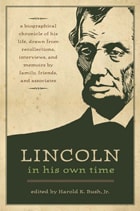
Lincoln in His Own Time
A Biographical Chronicle of His Life, Drawn from Recollections, Interviews, and Memoirs by Family, Friends, and AssociatesHarold K. Bush
University of Iowa Press, 2011
More than any other American before or since, Abraham Lincoln had a way with words that has shaped our national idea of ourselves. Actively disliked and even vilified by many Americans for the vast majority of his career, this most studied, most storied, and most documented leader still stirs up controversy. Showing not only the development of a powerful mind but the ways in which our sixteenth president was perceived by equally brilliant American minds of a decidedly literary and political bent, Harold K. Bush’s Lincoln in His Own Time provides some of the most significant contemporary meditations on the Great Emancipator’s legacy and cultural significance.
The forty-two entries in this spirited collection present the best reflections of Lincoln as thinker, reader, writer, and orator by those whose lives intertwined with his or those who had direct contact with eyewitnesses. Bush focuses on Lincoln’s literary interests, reading, and work as a writer as well as the evolving debate about his religious views that became central to his memory. Along with a star-struck Walt Whitman writing of Lincoln’s “inexpressibly sweet” face and manner, Elizabeth Keckly’s description of a bereaved Lincoln, “genius and greatness weeping over love’s idol lost,” and William Stoddard’s report of the “cheery, hopeful, morning light” on Lincoln’s face after a long night debating the fate of the nation, the volume includes selections from works by famous contemporary figures such as Hawthorne, Douglass, Stowe, Lowell, Twain, and Lincoln himself in addition to lesser-known selections that have been nearly lost to history. Each entry is introduced by a headnote that places the selection in historical and cultural context; explanatory endnotes provide information about people and places. A comprehensive introduction and a detailed chronology of Lincoln’s eventful life round out the volume.
Bush’s thoughtful collection reveals Lincoln as a man of letters who crafted some of the most memorable lines in our national vocabulary, explores the striking mythologization of the martyred president that began immediately upon his death, and then combines these two themes to illuminate Lincoln’s place in public memory as the absolute embodiment of America’s mythic civil religion. Beyond providing the standard fare of reminiscences about the rhetorically brilliant backwoodsman from the “Old Northwest,” Lincoln in His Own Time also maps a complex genealogy of the cultural work and iconic status of Lincoln as quintessential scribe and prophet of the American people.
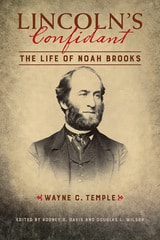
Lincoln's Confidant
The Life of Noah BrooksWayne C. Temple, Edited by Douglas L. Wilson and Rodney O. Davis: Introduction by Michael Burlingame
University of Illinois Press, 2019
Best remembered as one of the president's few true intimates, Brooks was also a nationally recognized man of letters, who mingled with the likes of Mark Twain and Bret Harte. Temple draws on archives and papers long thought lost to re-create Brooks's colorful life and relationship with Lincoln. Brooks's closeness to the president made him privy to Lincoln's thoughts on everything from literature to spirituality. Their frank conversations contributed to the wealth of journalism and personal observations that would make Brooks's writings a much-quoted source for historians and biographers of Lincoln.
A carefully researched and well-documented scholarly resource, Lincoln's Confidant is the story of an extraordinary friendship by one of the luminaries of Lincoln scholarship.
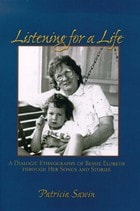
Listening For a Life
A Dialogic Ethnography of Bessie Eldreth through Her Songs and StoriesPatricia Sawin
Utah State University Press, 2004
Drawing on Bahktinian and feminist theory, Sawin pushes forward our understanding of the interactive roles of ethnographer and subject and in the process gives us a deeper understanding of folk singer and storyteller Bessie Eldreth and her greatest art, herself.
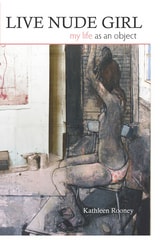
Live Nude Girl
My Life as an ObjectKathleen Rooney
University of Arkansas Press, 2008
Living in the Sweet Spot
Preparing for Performance in Sport and LifeAmy L. Baltzell
FiT Publishing, 2011
Living in the Sweet Spot: Preparing for Performance in Sport and Life inspires readers to prepare for life’s big performances. The author integrates the principles of positive psychology and sport psychology, relating techniques to strengthen daily fulfillment to get the most out of the experience when those big moments take place. The issues performers face when under pressure come to life through examples from top athletes, musicians, and the author's experiences as an Olympian and America's Cup sailor. Every chapter contains practical, effective, reflective exercises that help readers rise to the challenge of performing their best when it counts.
“What I learned in this book is that if you focus on the positives and what actually brings you joy, it will change your perspective, and maybe most importantly, give you more energy. Everyone, not just athletes, can benefit from reading Living in the Sweet Spot—we can learn how to accept ourselves, our endeavors, our sport, or our profession.”
— from the foreword by Phil Simms, Super Bowl XXI MVP
Living the Faith
A Life of Tom MonaghanJames Leonard
University of Michigan Press, 2012
Who is Tom Monaghan?
Is he the four-year-old kid whose father died on Christmas Eve and whose mother sent him to an orphanage and then a juvenile detention home?
Is he the entrepreneurial genius who built Domino's Pizza from a hole-in-the-wall pizzeria in Michigan into an American brand as world-conquering as Ford or Coke?
Is he the religious visionary who sold Domino's for $1 billion to create an orthodox Catholic university, law school, and special interest law firm with the goal of transforming America to reflect his conservative values?
He's all that and more. With extensive interviews with friends and enemies plus unprecedented access to the man himself, but wholly without his authorization, Living the Faith illuminates Tom Monaghan, the man and the myth.
Living the Faithis the much-needed, definitive biography of one of the most fascinating and controversial figures in the realms of American business and religion. Through eighteen hard-boiled chapters, journalist James Leonard follows Monaghan on his path from a heartbroken kid who climbed into his father's coffin to the business tycoon who purchased the world-champion Detroit Tigers and spent a fortune on his own air force, navy, and island to the religious visionary who founded a university to make saints and a public interest law firm to overturn evolution.
A sympathetic but critical perspective of the man and his works, this book is for believers, nonbelievers, and agnostics; for conservatives, liberals, and independents; for the rich, the poor, and the shrinking middle class. Mainly, however, this book is for those who want the facts about Tom Monaghan—and the truth about the effect religion had on one man and the effect that man had on the world.
London in His Own Time
A Biographical Chronicle of His Life, Drawn from Recollections, Interviews, and Memoirs by Family, Friends, and AssociatesJeanne Reesman
University of Iowa Press, 2020
Everyone knows Jack London for his tales of adventure in Alaska and the Canadian Yukon. With his work translated into more than 100 languages, London is one of the most popular American writers in the world, alongside Mark Twain. Yet for the reader tackling The Call of the Wild or White Fang, or perhaps his most often-anthologized short story “To Build a Fire,” many misconceptions about his life confuse his legacy.
London in His Own Time is based on Jeanne Reesman’s nearly thirty-five years of archival research. The book offers surprising perspectives on Jack London’s many sides by family, friends, fellow struggling young writers, business associates, high school and college classmates, interviewers, editors, coauthors, visitors to his Sonoma Valley Beauty Ranch in Glen Ellen, California, and more.
People who have commented on and discussed the mercurial genius include Joseph Conrad, Theodore Dreiser, Upton Sinclair, Sinclair Lewis, Ambrose Bierce, and Mary Austin, as well as his half-sister, Eliza London Shepard, and his first wife, Elizabeth Bess “Bessie” Maddern London. There are a few Klondike pals he kept in touch with, and some fellow writers such as Cloudesley Johns, but many of those closest to him truly demonstrate his wide range of friends: barman Johnny Heinold; his second wife, Charmian, whom he called “Mate Woman”; his daughters, Joan and Becky; his lover, Anna Strunsky; his closest friends, especially the poet George Sterling; his former crewmate on the Snark, Martin Johnson; and his valet/memoirist, Yoshimatsu Nakata. Reesman also includes dozens of entries from Bay-area socialists, friends in Hawai’i and the South Seas, fellow war correspondents, neighbors like Luther Burbank, and his long-time editor at Macmillan, George Brett.
Longing
Poems of a LifeMerle Feld
Central Conference of American Rabbis, 2023
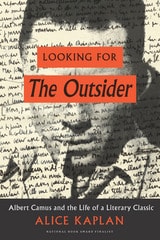
Looking for The Outsider
Albert Camus and the Life of a Literary ClassicAlice Kaplan
University of Chicago Press, 2016
How did a young man in his twenties who had never written a novel turn out a masterpiece that still grips readers more than seventy years later? With Looking for “The Outsider”, Alice Kaplan tells that story. In the process, she reveals Camus’s achievement to have been even more impressive—and more unlikely—than even his most devoted readers knew.
Born in poverty in colonial Algeria, Camus started out as a journalist covering the criminal courts. The murder trials he attended, Kaplan shows, would be a major influence on the development and themes of The Outsider. She follows Camus to France, and, making deft use of his diaries and letters, re-creates his lonely struggle with the novel in Montmartre, where he finally hit upon the unforgettable first-person voice that enabled him to break through and complete The Outsider.
Even then, the book’s publication was far from certain. France was straining under German occupation, Camus’s closest mentor was unsure of the book’s merit, and Camus himself was suffering from near-fatal tuberculosis. Yet the book did appear, thanks in part to a resourceful publisher, Gaston Gallimard, who was undeterred by paper shortages and Nazi censorship.
The initial critical reception of The Outsider was mixed, and it wasn’t until after liberation that The Outsider began its meteoric rise. As France and the rest of the world began to move out of the shadow of war, Kaplan shows, Camus’s book— with the help of an aggressive marketing campaign by Knopf for their 1946 publication of the first English translation—became a critical and commercial success, and Camus found himself one of the most famous writers in the world. Suddenly, his seemingly modest tale of alienation was being seen for what it really was: a powerful parable of the absurd, an existentialist masterpiece.
Few books inspire devotion and excitement the way The Outsider does. And it couldn’t have a better biographer than Alice Kaplan, whose books about twentieth-century French culture and history have won her legions of fans. No reader of Camus will want to miss this brilliant exploration.
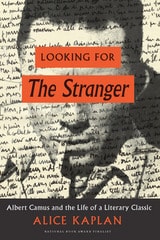
Looking for The Stranger
Albert Camus and the Life of a Literary ClassicAlice Kaplan
University of Chicago Press, 2016
How did a young man in his twenties who had never written a novel turn out a masterpiece that still grips readers more than seventy years later? With Looking for “The Stranger”, Alice Kaplan tells that story. In the process, she reveals Camus’s achievement to have been even more impressive—and more unlikely—than even his most devoted readers knew.
Born in poverty in colonial Algeria, Camus started out as a journalist covering the criminal courts. The murder trials he attended, Kaplan shows, would be a major influence on the development and themes of The Stranger. She follows Camus to France, and, making deft use of his diaries and letters, re-creates his lonely struggle with the novel in Montmartre, where he finally hit upon the unforgettable first-person voice that enabled him to break through and complete The Stranger.
Even then, the book’s publication was far from certain. France was straining under German occupation, Camus’s closest mentor was unsure of the book’s merit, and Camus himself was suffering from near-fatal tuberculosis. Yet the book did appear, thanks in part to a resourceful publisher, Gaston Gallimard, who was undeterred by paper shortages and Nazi censorship.
The initial critical reception of The Stranger was mixed, and it wasn’t until after liberation that The Stranger began its meteoric rise. As France and the rest of the world began to move out of the shadow of war, Kaplan shows, Camus’s book— with the help of an aggressive marketing campaign by Knopf for their 1946 publication of the first English translation—became a critical and commercial success, and Camus found himself one of the most famous writers in the world. Suddenly, his seemingly modest tale of alienation was being seen for what it really was: a powerful parable of the absurd, an existentialist masterpiece.
Few books inspire devotion and excitement the way The Stranger does. And it couldn’t have a better biographer than Alice Kaplan, whose books about twentieth-century French culture and history have won her legions of fans. No reader of Camus will want to miss this brilliant exploration.

Lord Selkirk
A LifeJ.M. Bumsted
University of Manitoba Press, 2008
The product of three decades of research, this is the definitive biography of Lord Selkirk. Bumsted’s passionate prose and thoughtful analysis illuminate not only the man, but also the political and economic realities of the British empire at the turn of the nineteenth century. He analyzes Selkirk’s position within these realities, showing how his paternalistic attitudes informed his “social experiments” in colonization and translated into unpredictable, and often tragic, outcomes. Bumsted also provides extensive detail on the complexities of colonization, the Scottish Enlightenment, Scottish peerage, the fur trade, the Red River settlement, and early British-Canadian politics.

Lorenzo Da Ponte
The Life and Times of Mozart’s LibrettistSheila Hodges
University of Wisconsin Press, 2002
Three of the greatest operas ever written—The Marriage of Figaro, Don Giovanni, and Così fan tutte—join the exquisite music of Wolfgang Amadeus Mozart with the perfectly matched libretti of Lorenzo Da Ponte. Da Ponte’s own long life (1749–1838), however, was more fantastic than any opera plot. A poor Jew who became a Catholic priest; a priest who became a young gambler and rake; a teacher, poet, and librettist of genius who became a Pennsylvania greengrocer; an impoverished immigrant to America who became professor of Italian at Columbia University—wherever Da Ponte went, he arrived a penniless fugitive and made a new and eventful life. Sheila Hodges follows him from the last glittering years of the Venetian Republic to the Vienna of Mozart and Salieri, and from George III’s London to New York City.