Results by title
3785 books match the query 'Poetry' and 131 start with l
Letters from Limbo
Jeanne Marie Beaumont
CavanKerry Press, 2016

Letters from the Black Ark
D.S. Marriott
Omnidawn, 2023
The poems in this collection center on the word “dub,” which accrues a subtle lyrical connotation throughout its various forms and meanings—to bestow, vest, crown, and also to suspend, reverb, echo, and sever. Dub poetry plays with revealing and concealing, while also pointing the way to the conditions that produce black poetic music. In D.S. Marriott’s poetry, tragic catastrophes of current black existence—London knife crime, the Windrush scandal, Grenfell, and deadly race violence—are portrayed as questions of language. To speak this language, as Marriott’s poem show, is to take on the forces that cause rupture. Throughout these poems of loss, exile, and obliteration, the poet foresees his downfall and metamorphosis, ultimately realizing too late that he cannot transcend the reverberations and echoes laden with black social death.
Letters of Transit
Theodore Worozbyt
University of Massachusetts Press, 2008
Letters to Jargon
The Correspondence between Larry Eigner and Jonathan WilliamsEdited and Introduced by Andrew Rippeon
University of Alabama Press, 2019
Celebrated by both the Black Mountain poets in the 1950s and 1960s and the Language poets in the 1970s and 1980s, Larry Eigner’s poems occupy an important place in American poetry and poetics, and his reputation and legacy grow seemingly stronger with each passing year. Letters to Jargon collects all of the known correspondence between Larry Eigner and Jonathan Williams, the influential publisher of Jargon Society Press and himself a poet.
Eigner’s correspondence with Williams began in the early 1950s, as the two were in conversation over the manuscript of On My Eyes, published by Jargon in 1960. Their correspondence continued for many years thereafter, extending into the period when Eigner’s work started to gain recognition from the nascent movement that would become known as “Language” writing.
The letters are quite broad in their range of reference and provide a fuller context for Eigner’s poetry and thinking. Eigner and Williams discuss their own poetic practices, including the source material for specific poems, general writing practices, and small press and little magazine publication. This volume offers considerable insight into their shared literary communities as Eigner reports on his readings in contemporary poetry and poetics, as well as his correspondence and contact with other poets including Charles Olson, Vincent Ferrini, Robert Duncan, Denise Levertov, Robert Grenier, and Barrett Watten.
Also recorded are Eigner’s reactions to current events and explications of his own poems, including the contexts for appropriated lines and distinctions of character spacing. Eigner also shares with Williams details of his home life, his financial difficulties and the daily challenges of his cerebral palsy. Finally, the book features a series of images of the original letters, enabling readers to see Eigner’s specific material-textual practices.
Levee
Paul Otremba
Four Way Books, 2019

Li Bai Rides a Celestial Dolphin Home
Tom Sexton
University of Alaska Press, 2018
The day after their wedding, Tom and Sharyn Sexton set off on the more than 4,500-mile journey from Massachusetts to Alaska. Now, more than fifty years later, Tom Sexton is retracing those steps through his exceptional poetry. He describes the communities they passed through and ruminates on the changes, good and bad, that have taken place in the decades since. He still finds hope in the country and draws transformative hope from the land that connects all of us.
Appropriate for a journey that moves from east to west, the Sexton’s real-life voyage is embedded in the imaginary journey of the ancient Chinese poet, Li Bai, from Broad Pass to Polychrome Pass in the Alaska Range.
Life Pig
Alan Shapiro
University of Chicago Press, 2016
Outside is inside now.
The pyramid whose point
we are is weightless
and invisible
and has become itself the night
in which alone
together
on a high plateau
we go on shouting
out whatever name
those winds keep blowing back
into the mouth that’s shouting it.
Alan Shapiro’s newest book of poetry is situated at the intersection between private and public history, as well as individual life and the collective life of middle-class America in the twentieth and twenty-first centuries. Whether writing about an aged and dying parent or remembering incidents from childhood and adolescence, Shapiro attends to the world in ways that are as deeply personal as they are recognizable and freshly social—both timeless and utterly of this particular moment.
Life in a Field
PoemsKatie Peterson
Omnidawn, 2021
A lyric fable, Life in a Field intersperses Katie Peterson’s slow-moving, cinematic, and sensual writing with three folios of photographs by Young Suh. Introspection, wish, dream, and memory mark this tale, which is set in a location resembling twenty-first-century California—with vistas and orchards threatened by drought and fires. This is also a place of enchantment, a fairy-tale landscape where humans and animals live as equals. As the girl and the donkey grow up, they respond to the difficulties of contemporary civilization, asking a question that meets our existential moment: What do you do with the story you didn’t wish for? A narrator’s voice combines candor with distance, attempting to find a path through our familiar strife, toward a future that feels all but impossible, and into what remains of beauty and pleasure. Life in a Field tries to reverse our accelerating destruction of the natural world, reminding us of “the cold clarity we need to continue on this earth.”
Light As Light
PoemsSimon J. Ortiz
University of Arizona Press, 2023
The poems in Light As Light travel far across both space and memory, landing everywhere from the New Mexico of the speaker’s childhood, to California, Tucson, and present-day Beijing, and many airports, highways, and way stations in between. The central concern uniting this collection is language itself: the weight and significance of English and Keres, as well as the nature and power of poetry as a way of life. No collection of Indigenous literature is complete without the work of Simon Ortiz, and this book is a powerful journey through the poet’s life—both a love letter to the future, and a sentimental, authentic celebration of the past.
Lighting the Shadow
Rachel Eliza Griffiths
Four Way Books, 2015
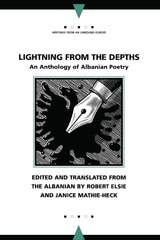
Lightning from the Depths
An Anthology of Albanian PoetryRobert Elsie and Janice Mathie-Heck
Northwestern University Press, 2008
If a people
Have no poets
And no poetry of their own
For a National Anthology
Then treachery and barking
Will do the trick
With these words, a challenge is laid down in this new volume of Albanian poetry. Albania, however, has a dynamic tradition of literature. Lightning from the Depths is the first English collection to present the full range of Albanian verse. Albanian literature has had many lives. The early Christian traditions disappeared as Islam and the Ottoman Empire took over. Muslim literature, too, withered when the nation strove to become an independent European country. The beginnings of a modern tradition were quashed by the Stalinists. All along this rocky path, poets have turned the political strife, poverty, and isolation their nation has often experienced into culture, both celebrating and questioning the society in which they live. Lightning from the Depths opens readers’ eyes to a new political and cultural world populated artists who can spin despair into poetry.
Like Bits of Wind
Selected Poetry and Poetic Prose, 1974-2014Pierre Chappuis
Seagull Books, 2016
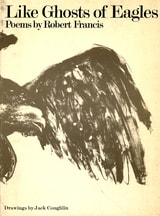
Like Ghosts of Eagles
Robert Francis
University of Massachusetts Press, 1974
Marianne Moore said of Robert Francis's poetry, “He is so penetrating, delicate, and wise, one goes away without having said a word, merely grateful to have received so much.”
Francis readers will welcome this new volume of verse which features poems in the whole technical gamut of Francis styles, including word count, with which he first delighted critics in Come out into the Sun.
Like Ghosts of Eagles also presents for the first time entirely new Francis styles and techniques. Such poems as “Bloodstains,” “Going to the Funeral,” and “Silent Poem” are distinguished by “fragmented surface,” a technique in which single words or short phrases are delivered without connecting tissue. Also new to his work are poems in which sentences are fused together in one continuous stream, as in “The Mountain,” “The Righteous,” and “The Peacock.”
The works are equally diversified in mood, ranging from the bitterly satirical through the elegiac, lyrical and playful, to poems of pure celebration. “Few others writing today work with such fragile sounds and with such delicate, almost pastel perceptions,” wrote David Clark upon first reading the manuscript of Like Ghosts of Eagles.
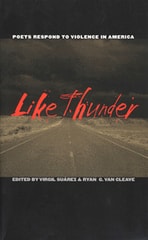
Like Thunder
Poets Respond to Violence in AmericaVirgil & Ryan G. Suarez & Van Cleave
University of Iowa Press, 2002
More than 140 poems by 120 of America's best poets that focus on the effects of violence in contemporary America.
From Waco to Columbine, from Oklahoma City to New York City, from domestic abuse and drive-by shootings to religious fanaticism and acts of terrorism, the poems in Like Thunder are for those who have perished and those who have survived. More than 140 poems by 120 poets focus, in the editors' words, on “the violence in the news, the violence in our schools, the violence in our homes, as well as the violence in our own minds.”
The poets gathered here articulate terror and suffering but also present images of hope and redemption; they write of individual menaces and individual victims and the melding of the two that potentially exists in everyone. By transforming horrifying details into larger truths, they create a poetry of witness, of survival, and of remembrance.
Like We Still Speak
Danielle Badra
University of Arkansas Press, 2021
Conversation and memory are at the heart of Danielle Badra’s Like We Still Speak, winner of the 2021 Etel Adnan Poetry Prize. In her elegiac and formally inventive debut, Badra carries on talking with the sister and father she has lost, often setting her words alongside theirs and others’ in polyphonic poems that can be read in multiple directions. Badra invites the reader to engage in this communal space where she investigates inheritance, witnessing, intimacy, and survival.
“This is a deeply spiritual book, all the more so because of its clarity and humility. Yet, we cannot walk away from the addictive command that so many of these poems ask us to follow: to read them along plural paths whose order changes while their immeasurable spirit remains unbound. Each poem is a singular vessel—of narratives, embodiments that correspond with memories, memories that recollect passion. . . . Like We Still Speak is a sanctum. Inside it, we are enthralled by beauty, consoled by light, sustained by making.”
—Fady Joudah and Hayan Charara, from the Preface
Like a Misunderstood Salvation and Other Poems
Aime Cesaire
Northwestern University Press, 2013
Annette Smith and Dominic Thomas’s new translations of Aimé Césaire’s Like a Misunderstood Salvation and Solar Throat Slashed (poems deleted) expose to a new audience a pivotal figure in twentieth-century French literature. This collection presents the early and last stages of a poet’s course, encapsulating in one volume Césaire’s entire literary career and creative evolution as perhaps the only French poet writing simultaneously at the crossroads of the avant-garde and classical movements.
This volume’s inclusion of previously deleted poems from Solar Throat Slashed is politically important; despite their initial exclusion from a French republication of Soleil Cou Coupé in 1961, these thirty-one poems are crucial to understanding Césaire’s legacy and remain of tremendous pertinence today as they provide helpful ways of thinking about and contextualizing discussions on race, identity, global identities, and the links between “black consciousness” and “social consciousness.”
Like a Sea
Samuel Amadon
University of Iowa Press, 2010
Drawing equally from Wallace Stevens, Gertrude Stein, John Berryman, and Robert Frost, Samuel Amadon’s award-winning Like a Sea is a collection of poems where personality is foregrounded and speech is both bizarre and familiar. Central to this weirdly talky work is “Each H,” a sequence of eleven monologues and dialogues wherein an unknown number of speakers examine their collective and singular identities while simultaneously distorting them. From a sequence of pared-down sonnets to a more traditional lyric to a procedural collage inspired by J. D. Salinger, Ezra Pound, Robert Lowell, Walter Benjamin, Jane Kenyon, Joris-Karl Huysmans, Primo Levi, Eugenio Montale, and Edwin Arlington Robinson, Like a Sea is a book of significant variation and originality.
Amadon’s electric collection begins with the line “I could not sound like anyone but me,” and through a wide range of forms and styles and voices he tests the true limits of that statement. The image of a half-abandoned Hartford, Connecticut, remains in the background of these poems, casting a tone of brokenness and haplessness. Ultimately Amadon’s poems present the confusion and fear of the current moment, of Stevens’s “river that flows nowhere, like a sea,” equally alongside its joyful ridiculousness and possibility. Rather than create worlds, they point out what a strange world already exists.
Lincoln's Poetry
The Creative Life of a LeaderChristopher Sullivan
University of Illinois Press, 2026
Christopher Sullivan’s engaging exploration focuses on the role of poetry in Lincoln’s life and thought. As Sullivan shows, the poetic prose of Lincoln’s most famous writings and oratory drew on an ear for verse he began to cultivate during his frontier youth. Full versions of Lincoln’s own published and unpublished poetry provide fascinating context for his work before and during his political career while shedding light on his state of mind during the crisis of an existential war. Sullivan also considers Lincoln’s relationship with poetry against a backdrop of what poetry is, how it operates, and how it may resurface in prose.
A journalistic look at the crossroads of art and leadership, Lincoln’s Poetry adds a surprising yet vital dimension to our perceptions of the sixteenth president.
Line Break
Poetry as Social PracticeJames Scully
Northwestern University Press, 2005
Line Drives
100 Contemporary Baseball PoemsEdited by Brooke Horvath and Tim Wiles. Foreword by Elinor Nauen
Southern Illinois University Press, 2002
“We wait for baseball all winter long,” Bill Littlefield wrote in Boston Magazine a decade ago, “or rather, we remember it and anticipate it at the same time. We re-create what we have known and we imagine what we are going to do next. Maybe that’s what poets do, too.”
Poetry and baseball are occasions for well-put passion and expressive pondering, and just as passionate attention transforms the prose of everyday life into poetry, it also transforms this game we write about, play, or watch. Editors Brooke Horvath and Tim Wiles unite their own passion for baseball and poetry in this collection, Line Drives: 100 Contemporary Baseball Poems, providing a forum for ninety-two poets. Line after line, like baseball itself game after game and season after season, these poems manage to make the old and the familiar new and surprising.
The poems in these pages invite interrogation, and the reader—like the true baseball fan—must be willing to play the game, for these poems are fun, fresh, angry, nostalgic, meditative, and meant to be read aloud. They are keen on taking us deeply into baseball as sport and intent on offering countless metaphors for exploring history, religion, love, family, and self-identity. Each poem delivers images of pure beauty as the poets speak of murder and ghost runners and old ball gloves, of baseball as a tie that binds families—and indeed the nation—together, of the game as a stage upon which no-nonsense grit and skill are routinely displayed, and of the delight experienced in being one amid a mindlessly happy crowd. This book is true to the game’s long season and to the lives of those the game engages.
Listening through the Bone
Collected PoemsWilly Conley
Gallaudet University Press, 2018
In Listening through the Bone, Willy Conley bears witness to life’s moments and renders them into poems that are at once irreverent and tender. His poetry examines life cycles, the natural world, and his experiences as a Deaf individual. It is presented in five parts:
- Inaudibles
- Existentials
- Quizzicals
- Irrevocables
- Environmentals
Listening to Homer
Tradition, Narrative, and AudienceRuth Scodel
University of Michigan Press, 2002
---Greece & Rome
---Irene J.F. de Jong, Gnomon
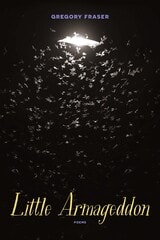
Little Armageddon
PoemsGregory Fraser
Northwestern University Press, 2021
It is our everyday explorations—the small explosions within life, family, and “ordinary” survival—that make up Gregory Fraser’s fourth collection of poetry, Little Armageddon. Fraser writes at eye level, detailing the experiences of fatherhood, love, and the quiet of daily life, poised at the brink of abrupt upheaval.
These poems are an exercise in precision and reflection. Free verse and prose show readers the life within the landscape. In “My Daughter and the Lizard,” the speaker reflects on grace, meditating on the reptile his child is inspecting: “I scissor-jab three holes through the lid / of a Mason jar and tell her to be gentle, / ‘It’s a living thing,’ I say, ‘not a toy.’”
We are how we live. These poems balance imagination and truth telling with rich verse that brings the reader’s ear closer to the quiet—and how intense it truly is.
Little Kisses
Lloyd Schwartz
University of Chicago Press, 2017
Little River
New and Selected PoemsLinda McCarriston
Northwestern University Press, 2002
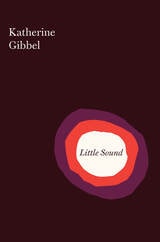
Little Sound
Katherine Gibbel
University of Chicago Press, 2026
Attentive to echo and resonance, this debut collection ranges across and makes connections among natural, musical, and literary histories.
The title for Katherine Gibbel’s debut collection plays with the etymology of the sonnet, or sonnetto in Italian: a little song or little sound. Exploring the possibility of words and the limits inherent in both language and form, Little Sound asks its reader, “Did you hear that?” and tunes in to what echoes when we listen.
Divided into three long poems, Little Sound explores language, gossip, reading practices, love, and death, tracing webs of meaning across a range of seemingly disparate topics. Gibbel’s speaker interrogates partial histories and turns them into meditations on the literary, the natural, and the personal, including the subdivided memorial prairies of the Midwest, family history, pipe organs, and medieval theology. Associative, funny, curious, bell-like, and elaborately architectural, Gibbel’s poems offer a study in emotional nuance, knowing winks, and sonic attentiveness.
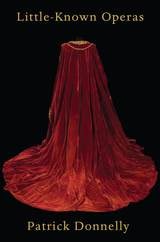
Little-Known Operas
Patrick Donnelly
Four Way Books, 2019
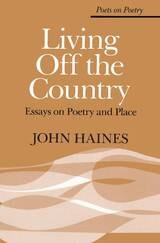
Living Off the Country
Essays on Poetry and PlaceJohn Haines
University of Michigan Press, 1981
We live on the surface, he discovered. It is the land that makes people. If a poet will see, will feel, will interpret his place and then relate that experience to what he knows of the world at large, he will have a life in imagination, a vitality beyond appearances.
John Haines is author of At the End of Summer: Poems 1948-1954; Fables and Distances: New and Selected Essays; and The Owl in the Mask of the Dreamer. He received the Lenore Marshall Poetry Prize in 1991.

Living Wages
PoemsMichael Chitwood
Tupelo Press, 2014
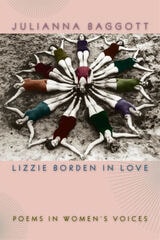
Lizzie Borden in Love
Poems in Women's VoicesJulianna Baggott
Southern Illinois University Press, 2006
Women’s voices offering an intimate view into women’s lives
Lizzie Borden in Love, a collection of poems by national bestselling author Julianna Baggott, offers poignant commentary in the voices of women as varied as Mary Todd Lincoln and Monica Lewinsky. The poems often focus on a particular moment in life: Katherine Hepburn discovers the dead body of her brother in an attic, or painter Mary Cassatt mourns the failure of her eyesight. Sometimes heartbreaking, sometimes ecstatic, the poems in this collection never fail the trust of the subjects of their intimate portrayals
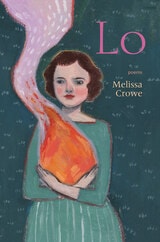
Lo
Melissa Crowe
University of Iowa Press, 2023
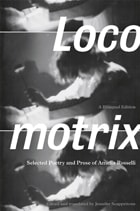
Locomotrix
Selected Poetry and Prose of Amelia Rosselli, a Bilingual EditionAmelia Rosselli
University of Chicago Press, 2012
A musician, musicologist, and self-defined “poet of research,” Amelia Rosselli (1930–96) was one of the most important poets to emerge from Europe in the aftermath of World War II. Following a childhood and adolescence spent in exile from Fascist Italy between France, England, and the United States, Rosselli was driven to express the hopes and devastations of the postwar epoch through her demanding and defamiliarizing lines. Rosselli’s trilingual body of work synthesizes a hybrid literary heritage stretching from Dante and the troubadours through Ezra Pound and John Berryman, in which playful inventions across Italian, English, and French coexist with unadorned social critique. In a period dominated by the confessional mode, Rosselli aspired to compose stanzas characterized by a new objectivity and collective orientation, “where the I is the public, where the I is things, where the I is the things that happen.” Having chosen Italy as an “ideal fatherland,” Rosselli wrote searching and often discomposing verse that redefined the domain of Italian poetics and, in the process, irrevocably changed the Italian language.
This collection, the first to bring together a generous selection of her poems and prose in English and in translation, is enhanced by an extensive critical introduction and notes by translator Jennifer Scappettone. Equipping readers with the context for better apprehending Rosselli’s experimental approach to language, Locomotrix seeks to introduce English-language readers to the extraordinary career of this crucial, if still eclipsed, voice of the twentieth century.
Locus
Jason Bayani
Omnidawn, 2019
Lofty Dogmas
Poets on PoeticsDeborah Brown
University of Arkansas Press, 2005
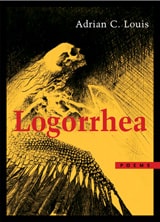
Logorrhea
PoemsAdrian C. Louis
Northwestern University Press, 2006
In a torrent of rage, love, and irony, Adrian C. Louis explodes all the myths and hypocrisy of Middle America in the twenty-first century. This is how Walt Whitman or Allen Ginsburg might have written about our post-9/11 world--where the realities of poverty on Indian reservations and the plight of Hurricane Katrina victims come in second place to the vagaries of Homeland Security. For Louis, both he and our nation face an uncertain future. Like many of us he is trapped in a surreal void of the present, where he is faced with middle age and isolation, the death of loved ones, an unsatisfying job, and the battle against loneliness and self-destruction. He writes as if he has nothing left to lose but then fills the page with bittersweet sorrow for everything that has been lost. Armed with unforgettable images, relentless rhythms, and a dark and scathing humor, Louis takes aim at this American life.
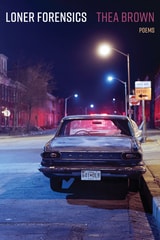
Loner Forensics
PoemsThea Brown
Northwestern University Press, 2023
In Loner Forensics, Thea Brown dreams up and dissects a city beset by unexplained disappearances, roving silences, and climate collapse. This sprawling collection comprises a series of interviews with denizens of the shifting city, each mediated through the lonely lens of the Detective, a character whose refractive investigation atomizes the scene. As much a study of complicity as a critique of capitalism’s distortive effects on human emotional response, Loner Forensics questions what happens when our innermost terrains become newly unfamiliar in an unraveling natural world.
Dark, fractured, and canny, Brown’s shimmering third collection draws on parallel universes, 1980s video games, social media pop-speak, and ghost towns to immerse the reader in grief, utopia, disaster—and, ultimately, love.
Long Division
Alan Michael Parker
Tupelo Press, 2012
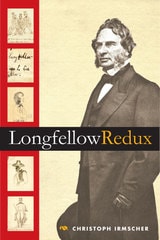
Longfellow Redux
Christoph Irmscher
University of Illinois Press, 2005
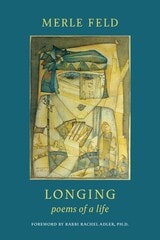
Longing
Poems of a LifeMerle Feld
Central Conference of American Rabbis, 2023
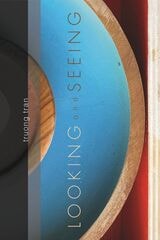
Looking and Seeing/Seeing and Looking
Damon Potter and Truong Tran
Omnidawn, 2023
This book brings together different perspectives under two titles, considering the lives and experiences of two friends, one Vietnamese American and one white. Looking And Seeing is a poetic work of yearning, regret, and righteous indignation. In Truong Tran’s poetry, what is said and what is written reveal our complexities. Composed as an investigation of his own being and body as a brown person moving through white spaces, this collection moves alongside Tran’s friend and collaborator Damon Potter. Seeing and Looking offers a record of Potter’s perspective as a white man examining who he is and wants to be and the complications of trying to be good while also benefiting from histories of oppression. Potter considers death—both his own future death and the deaths of his friends—while grappling with how to witness horrors, wonders, and his self.
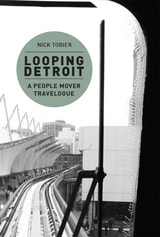
Looping Detroit
A People Mover TravelogueNick Tobier
Michigan Publishing Services, 2016
Looping Detroit invites artists and writers to ride the small loop as an explorer, mining the environs around each station as a poetic ramble, a psycho geographic wander, a cultural inquiry that simultaneously ponders the poetics of circulating above the city streets while probing the greater narrative of Detroit’s public transit conundrum.
Contributors include award-winning Detroit novelists Lolita Hernandez and Michael Zardoorian, poets Gloria House and Walter Lacy, music producer Cornelius Harris, Chace MicWrite Morris, frontman of the Detroit hip-hop trio Coldmen Young, and radio producer Zak Rosen.
Loose Change
Sam Magavern
Tupelo Press, 2026
A luminous, darkly playful collection of poems that moves with equal ease through myth, scripture, history, domestic life, and the surreal textures of contemporary existence.
In three interwoven sections—”King David,” “Loose Change,” and “Life with Atropos”—Sam Magavern’s Loose Change reimagines biblical figures, philosophers, ordinary laborers, animals, and dreamers with a voice that is by turns comic, tender, metaphysical, and elegiac. These poems assemble a mosaic of loss, desire, absurdity, memory, and endurance, finding flashes of beauty and meaning in the discarded, the humble, and the half-forgotten. With formal agility and a distinctive wit, Loose Change affirms poetry’s power to transfigure the everyday while confronting time, mortality, and longing with both gravity and radiance.
Lord Byron's Cain
Twelve essays and a text with variants and annotationsEdited by Truman Guy Steffan
University of Texas Press, 1968
Cain has been ranked as one of the two best dramatic poems written in England in the nineteenth century. Because of its religious heterodoxy, which veiled a political iconoclasm, and also because of Byron’s notoriety, Cain stirred up a storm among Tories and clergymen “from Kentish town to Pisa.” From 1821 to 1830 more was printed about its eighteen hundred alarming lines than about the twenty thousand of Don Juan. One solemn Frenchman even translated the work in order to supply his countrymen with a text that he could then rewrite and confute.
After the initial controversy, readers began to regard Cain not merely as revolutionary propaganda but as a fictional portrait of common youthful experience: a sequence of aspiration, discontent, uncertainty, confusion, misunderstood isolation, fear, frustration, anger, and finally a rash, inevitable, but futile revolt that led to a future of hopeless regret.
Truman Guy Steffan here presents a text, arrived at by collation of the first and several later editions with the original manuscript (presently in the Stark Collection of the Miriam Lutcher Stark Library at the Harry Ransom Center, the University of Texas at Austin).
The first eight essays, which comprise Part I, cover a number of literary topics: Byron’s defense of his purposes in Cain and the relevance of his dramatic theory to the poem; the characterization that is an ideological confrontation, a revelation of personal conflict, as well as a rendering of individuals who have an existence independent of the author; the principles that controlled Byron’s absorption and expansion of biblical materials; the integration of the imagery with the dramatic substance; the incongruities of the language; the metrical heterodoxy; and a description of the manuscript and of Byron’s insertions.
Part II contains the text of Cain, accompanied by notes on the variants, the manuscript cancellations and additions, certain linguistic details, and the scansion of some unusual verses. Then follow annotations on allusions, sources, and analogues, and on a few passages of the play that have elicited unusual conflict over interpretation.
Part III provides a history of Cain criticism, from the opinions of Byron’s social and literary circle and of the major periodicals and pamphlets to the more complicated contribution of the twentieth century.
This important work stands not only as a valuable addition to Byron scholarship but also as an illuminating record of the changing critical and cultural attitudes from the early nineteenth century to the 1960s. Steffan has done a remarkable job in bringing together and synthesizing an enormous body of material.
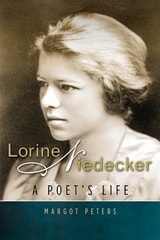
Lorine Niedecker
A Poet’s LifeMargot Peters
University of Wisconsin Press, 2011
Lorine Niedecker (1903–70) was a poet of extraordinary talent whose life and work were long enveloped in obscurity. After her death in 1970, poet Basil Bunting wrote that she was “the most interesting woman poet America has yet produced . . . only beginning to be appreciated when she died.” Her poverty and arduous family life, the isolated home in Wisconsin that provided rich imagery for her work, and her unusual acquaintances have all contributed to Niedecker’s enigmatic reputation.
Margot Peters brings Lorine Niedecker’s life out of the shadows in this first full biography of the poet. She depicts Niedecker’s watery world on Blackhawk Island (near Fort Atkinson, Wisconsin), where she was born and spent most of her life. A brief college career cut short by family obligations and an equally brief marriage were followed in 1931 by the start of a life-changing correspondence and complicated thirty-five-year friendship with modernist poet Louis Zukofsky, who connected Niedecker to a literary lifeline of distant poets and magazines. Supporting herself by turns as a hospital scrubwoman and proofreader for a dairy journal, Niedecker made a late marriage to an industrial painter, which gave her time to write and publish her work in the final decades of her life.
During her lifetime, Niedecker’s poetry was praised by a relatively small literary circle, including Zukofsky, William Carlos Williams, Robert Creeley, Denise Levetov, and Allen Ginsberg. Since her death much more of her surviving writings have been published, including a comprehensive edition of collected works and two volumes of correspondence. Through Margot Peters’s compelling biography, readers will discover Lorine Niedecker as a poet of spare and brilliant verse and a woman whose talent and grit carried her through periods of desperation and despair.
Best Special Interest Books, selected by the American Association of School Librarians
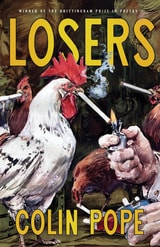
Losers
Colin Pope
University of Wisconsin Press, 2026
Class consciousness and contradictions percolate throughout Colin Pope’s third collection. Highly personal, these poems acknowledge the damage wrought on underprivileged populations while celebrating a working-class background. Dishwasher, delivery guy, ne’er-do-well, paper boy—the characters who populate this volume are caught within societally imposed definitions; infused with dignity, humanity, and compassion, Losers thumbs its nose at other folks’ labels. A celebration of postindustrial, rural America, this book is a paean to anyone thought undesirable and highlights the advantages (and disadvantages) imposed by geography, beauty, status, wealth, and opportunity.
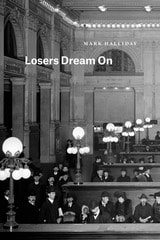
Losers Dream On
Mark Halliday
University of Chicago Press, 2018
Halliday’s poetry exploits the vast array of dictions, idioms, rhetorical maneuvers, and tones available to real-life speakers (including speakers talking to themselves). Often Halliday gives a poem to a speaker who is distressed, angry, confused, defensive, self-excusing, or driven by yearning, so that the poem may dramatize the speaker’s state of mind while also implying the poet’s ironic perspective on the speaker. Meanwhile, a few other poems (for instance “A Gender Theory” and “Thin White Shirts” and “First Wife” and “You Lament”) try to push beyond irony into earnestness and wholehearted declaration. The tension between irony and belief is the engine of Halliday’s poetry.
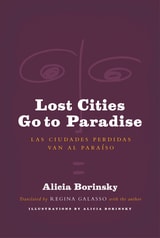
Lost Cities Go to Paradise
Las Ciudades Perdidas Van al ParaísoAlicia Borinsky
Swan Isle Press, 2014
At the center of Borinsky’s work are the cities, which are a masquerade of disaster and spectacle that moves through space and time. Within these cities reside a man with two bills who gives three out of generosity, a woman who hides her face so that she may be better seen, cheating lovers who betray only to end up entwined in a tango, and immigrants who borrow each other’s accents. Filled with energy and irreverence, Lost Cities Go to Paradise captures the indignities and excitement of living among others in a society and discovering what is valued—and all that is not.
Lost and
Jeff Griffin
University of Iowa Press, 2013

Lotería
Nocturnal SweepstakesElizabeth Torres
University of Arizona Press, 2023
The vision begins with a river. From this river, you can see a village, marine life, and ancestral rituals. It is here that you recognize origins, and a poison beginning to spread through paradise. Suddenly, a premonition: a wounded animal. The certainty of war cries. What you take with you is what you become, each movement a gamble, a lottery of life that transforms you until this moment, when uncertainty becomes an ally.
Lotería: Nocturnal Sweepstakes is a collection of deeply evocative coming-of-age poems that take the reader on a voyage through the intimate experiences of displacement. Conjuring dreamlike visions of extravagant fruits and rivers animated by the power of divination, these poems follow the speaker from the lash of war’s arrival through an urgent escape and reinvention in a land that saves with maternal instinct but also smothers its children.
In this bilingual collection, Colombian American poet Elizabeth Torres threads together the stories of family dynamics and the realities of migration with the archetypes of tarot and the traditional Lotería game, used for centuries as an object of divination and entertainment. Through these themes and images, the poems in Lotería narrate intimate moments in the lives and journeys of migrants, refugees, and all who have been forced into metamorphosis in order to reach the other side of the river.
Winner of the 2022 Ambroggio Prize of the Academy of American Poets, this collection showcases masterfully crafted and translated poems.
Love After the Riots
Juan Felipe Herrera
Northwestern University Press, 1996