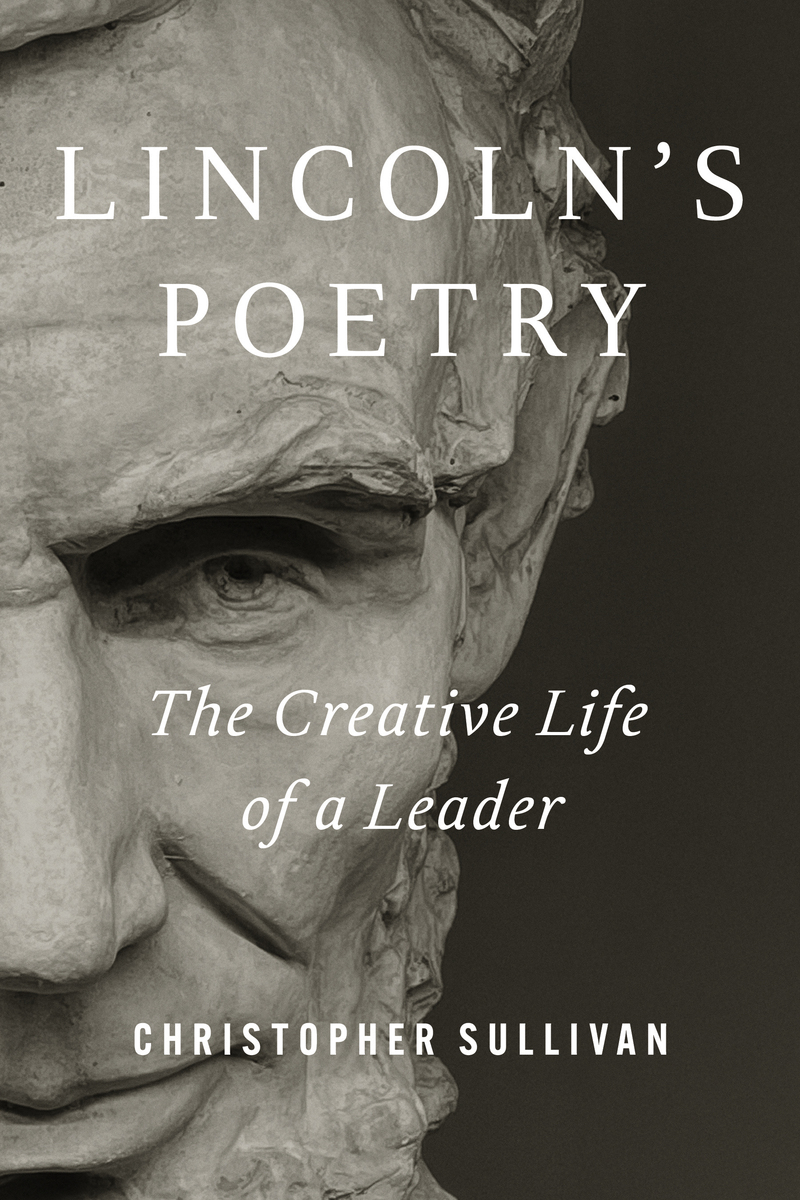
Lincoln's Poetry: The Creative Life of a Leader
University of Illinois Press, 2026
Cloth: 978-0-252-04992-7 | eISBN: 978-0-252-04909-5 (standard)
See other books on: American | Creative Life | Leader | Poetry | Presidents & Heads of State
See other titles from University of Illinois Press
Cloth: 978-0-252-04992-7 | eISBN: 978-0-252-04909-5 (standard)
ABOUT THIS BOOK | AUTHOR BIOGRAPHY | TOC
ABOUT THIS BOOK
Drawn to poetry throughout his life, Abraham Lincoln read verse for comfort and pleasure, used it in his writings and speeches, and looked to it for insights into spiritual matters and politics, and spontaneously recited it in dark moments to lift his spirits.
Christopher Sullivan’s engaging exploration focuses on the role of poetry in Lincoln’s life and thought. As Sullivan shows, the poetic prose of Lincoln’s most famous writings and oratory drew on an ear for verse he began to cultivate during his frontier youth. Full versions of Lincoln’s own published and unpublished poetry provide fascinating context for his work before and during his political career while shedding light on his state of mind during the crisis of an existential war. Sullivan also considers Lincoln’s relationship with poetry against a backdrop of what poetry is, how it operates, and how it may resurface in prose.
A journalistic look at the crossroads of art and leadership, Lincoln’s Poetry adds a surprising yet vital dimension to our perceptions of the sixteenth president.
Christopher Sullivan’s engaging exploration focuses on the role of poetry in Lincoln’s life and thought. As Sullivan shows, the poetic prose of Lincoln’s most famous writings and oratory drew on an ear for verse he began to cultivate during his frontier youth. Full versions of Lincoln’s own published and unpublished poetry provide fascinating context for his work before and during his political career while shedding light on his state of mind during the crisis of an existential war. Sullivan also considers Lincoln’s relationship with poetry against a backdrop of what poetry is, how it operates, and how it may resurface in prose.
A journalistic look at the crossroads of art and leadership, Lincoln’s Poetry adds a surprising yet vital dimension to our perceptions of the sixteenth president.
See other books on: American | Creative Life | Leader | Poetry | Presidents & Heads of State
See other titles from University of Illinois Press