Results by title
3027 books match the query 'Sociology' and 106 start with l
Letters from Lockdown
Sustaining Public Service Values During the Covid-19 PandemicClaire Foster-Gilbert
Haus Publishing, 2020
Letters from the Lockdown presents the twelve original letters alongside new, deeply personal accounts from public servants on the job. Together, this collection provides an opportunity to reflect on how public values meet practice as the global crisis unfolds.
Letters, Kinship, and Social Mobility in Nigeria
Olufemi Vaughan
University of Wisconsin Press, 2023
Letter writing was a dominant form of communication for Western-educated elites in colonial Africa, especially in Nigeria. Exposure to the modern world and a growing sense of nationalism were among the factors that led people to begin exchanging letters, particularly in their interactions with British colonial authorities. Through careful textual analysis and broad contextualization, Vaughan reconstructs dominant storylines, including themes such as kinship, social mobility, Western education, modernity, and elite consolidation in colonial and post-colonial Nigeria. Vaughan brings his prodigious skills as an interdisciplinary scholar to bear on this wealth of information, bringing to life a portrait, at once intimate and expansive, of a community during a transformative period in African history.
Letting Go
Feminist and Social Justice Insight and ActivismDonna King
Vanderbilt University Press, 2015
There is a huge difference between letting go and "chilling out." In a lean-in society, self-care is promoted as something women and men should do to learn how to "relax" and find a comfortable work-life balance. By contrast, a feminist letting-go and its attendant self-care have the potential to be a radical act of awakening to social and environmental injustice and a call to activism.
Letting Stories Breathe
A Socio-NarratologyArthur W. Frank
University of Chicago Press, 2010
Stories accompany us through life from birth to death. But they do not merely entertain, inform, or distress us—they show us what counts as right or wrong and teach us who we are and who we can imagine being. Stories connect people, but they can also disconnect, creating boundaries between people and justifying violence. In Letting Stories Breathe, Arthur W. Frank grapples with this fundamental aspect of our lives, offering both a theory of how stories shape us and a useful method for analyzing them. Along the way he also tells stories: from folktales to research interviews to remembrances.
Frank’s unique approach uses literary concepts to ask social scientific questions: how do stories make life good and when do they endanger it? Going beyond theory, he presents a thorough introduction to dialogical narrative analysis, analyzing modes of interpretation, providing specific questions to start analysis, and describing different forms analysis can take. Building on his renowned work exploring the relationship between narrative and illness, Letting Stories Breathe expands Frank’s horizons further, offering a compelling perspective on how stories affect human lives.
Liberalism
John Gray
University of Minnesota Press, 1995
Since the publication in 1986 of the first edition of Liberalism, both the world and the author’s views have changed significantly. In this new edition, John Gray argues that whereas liberalism was the political theory of modernity, it is ill-equipped to cope with the dilemmas of the postmodern condition. The task now, as Gray sees it, is to develop a pluralist theory, in which the liberal problem of finding a modus vivendi among rival communities and worldviews is solved in postliberal terms.
Copublished with Open University Press
Liberating Economics
Feminist Perspectives on Families, Work, and GlobalizationDrucilla K. Barker and Susan F. Feiner
University of Michigan Press, 2004
Rooted in the two disciplines, this book draws on the rich tradition of interdisciplinary work in feminist social science scholarship to construct a parallel between the notions that the "personal is political" and "the personal is economic."
Drucilla K. Barker is Professor of Economics and Women's Studies, Hollins University.
Susan F. Feiner is Associate Professor of Economics and Women's Studies, University of Southern Maine.
Life Undocumented
Latinx Youth Navigating Place and BelongingEdelina M. Burciaga
University of Arizona Press, 2025
The book is about how undocumented young adults in these two contexts navigate the pathway to and through adulthood, and the powerful role state laws and policies play in shaping their prospects for social mobility and their sense of belonging. Edelina M. Burciaga examines how state laws and policies in California and Georgia shape the pathways to adulthood for these individuals. California, with its supportive legal frameworks, contrasts sharply with Georgia’s restrictive environment, highlighting the significant impact of state-level immigration policies.
The book highlights the complexities and contradictions that emerge from these distinct legal ecologies, which include the intersections of federal, state, local, familial, and individual dynamics, and shape the daily lives and future orientations of undocumented young adults. This book underscores the resilience and agency of undocumented youth as they confront and resist the structural constraints imposed by immigration laws, offering a vivid portrayal of their emotional and social journeys. This book is a vital resource for anyone committed to creating equitable and inclusive systems for undocumented students.
Life in and against the Odds
Debts of Freedom and the Speculative Roots of U.S. CultureHeidi Hoechst
Temple University Press, 2015
Somehow people continue to imagine a world of justice against the odds of a deck that has been stacked against them. In her urgent and perceptive book, Life in and against the Odds, Hoechst focuses on the particular circumstances and conditions of different phases of speculative expansion in the United States. She traces the roots of the nation-state to nineteenth-century land markets and slave exchanges. Hoechst also chronicles how these racial foundations extend through corporate capitalism from the 1920s and ´30s to the present era of financialized capitalism and the recent housing bubble.
Life in and against the Odds identifies where and how speculative nationalism creates roadblocks to freedom. Hoechst retells the history of the United States with a perspective on how human lives are made, destroyed, reconfigured, and claimed under the systemic violence of a nation that is rooted in the racializing futurity of speculative capitalism.
Life in the Age of Drone Warfare
Lisa Parks and Caren Kaplan, editors
Duke University Press, 2017
Contributors. Peter Asaro, Brandon Wayne Bryant, Katherine Chandler, Jordan Crandall, Ricardo Dominguez, Derek Gregory, Inderpal Grewal, Lisa Hajjar, Caren Kaplan, Andrea Miller, Anjali Nath, Jeremy Packer, Lisa Parks, Joshua Reeves, Thomas Stubblefield, Madiha Tahir
Life in the Leatherwoods
New EditionJohn Quincy Wolf
University of Arkansas Press, 2000
Originally published by Memphis State University Press in 1974, this new edition includes additional writings of John Q. Wolf and a continuation of the autobiographical narrative after his 1887 move to Batesville. Wolf’s writings are valuable resources for southern historians, folklorists, general readers, and scholars of Ozarkiana because they provide a rare glimpse into the social and family life of a largely misunderstood and stereotyped people—the independent hill farmers of the Arkansas Ozarks of the 1870s and 1880s. With Life in the Leatherwoods, Wolf bestows a benediction upon a society that existed vibrantly and humorously in his memory—one that has now forever disappeared from the American countryside.
Light on the Devils
Coming of Age on the KlamathLouise Wagenknecht
Oregon State University Press, 2011
When Louise Wagenknecht’s family arrived in the remote logging town of Happy Camp in 1962, a boundless optimism reigned. Whites and Indians worked together in the woods and the lumber mills of northern California’s Klamath country. Logging and lumber mills, it seemed, would hold communities together forever.
But that booming prosperity would come to an end. Looking back on her teenage years spent along the Klamath River, Louise Wagenknecht recounts a vanishing way of life. She explores the dynamics of family relationships and the contradictions of being female in a western logging town in the 1960s. And she paints an evocative portrait of the landscape and her relationship with it.
Light on the Devils is a captivating memoir of place. It will appeal to general readers interested in the rural West, personal memoir, history, and natural history.
Like Family
Narratives of Fictive KinshipMargaret K. Nelson
Rutgers University Press, 2020
Lineages of Despotism and Development
British Colonialism and State PowerMatthew Lange
University of Chicago Press, 2009
Traditionally, social scientists have assumed that past imperialism hinders the future development prospects of colonized nations. Challenging this widespread belief, Matthew Lange argues in Lineages of Despotism and Development that countries once under direct British imperial control have developed more successfully than those that were ruled indirectly.
Combining statistical analysis with in-depth case studies of former British colonies, this volume argues that direct rule promoted cogent and coherent states with high levels of bureaucratization and inclusiveness, which contributed to implementing development policy during late colonialism and independence. On the other hand, Lange finds that indirect British rule created patrimonial, weak states that preyed on their own populations. Firmly grounded in the tradition of comparative-historical analysis while offering fresh insight into the colonial roots of uneven development, Lineages of Despotism and Development will interest economists, sociologists, and political scientists alike.
Liquidated
An Ethnography of Wall StreetKaren Ho
Duke University Press, 2009
Ho, who worked at an investment bank herself, argues that bankers’ approaches to financial markets and corporate America are inseparable from the structures and strategies of their workplaces. Her ethnographic analysis of those workplaces is filled with the voices of stressed first-year associates, overworked and alienated analysts, undergraduates eager to be hired, and seasoned managing directors. Recruited from elite universities as “the best and the brightest,” investment bankers are socialized into a world of high risk and high reward. They are paid handsomely, with the understanding that they may be let go at any time. Their workplace culture and networks of privilege create the perception that job insecurity builds character, and employee liquidity results in smart, efficient business. Based on this culture of liquidity and compensation practices tied to profligate deal-making, Wall Street investment bankers reshape corporate America in their own image. Their mission is the creation of shareholder value, but Ho demonstrates that their practices and assumptions often produce crises instead. By connecting the values and actions of investment bankers to the construction of markets and the restructuring of U.S. corporations, Liquidated reveals the particular culture of Wall Street often obscured by triumphalist readings of capitalist globalization.

Liquor and Labor in Southern Africa
Jonathan Crush
Ohio University Press, 1992
In June 1976 political demonstrations in the black township of Soweto exploded into an insurrection that would continue sporadically and spread to urban areas across South Africa. In their assault on apartheid the youths who spearheaded the rebellion attacked and often destroyed the state institutions that they linked to their oppression: police stations, government offices, schools, and state-owned liquor outlets. In Soweto alone during the first days of the revolt protestors smashed and burned eighteen beerhalls and a similar number of bottle stores; as the rebellion spread more were destroyed. This study sets out to demonstrate that liquor outlets were not simply convenient symbols of oppression. The anger that launched gasoline bombs into beerhalls across South Africa had specific origins in deep and complicated struggles over the control of alcohol production and consumption in South Africa.
Conflict over alcohol has continuously intruded upon the lives of the black residents of southern African towns, cities, and labor compounds and upon the rural communities to which these people traced their origins. Yet the subject has received little systematic scholarly attention until now. In Liquor and Labor in Southern Africa scholars explore the complex relationship between alcohol use and the emergence of the modern urban-industrial system. In examining the role of alcohol in social control and the state, they also reveal the vibrant subcultures nurtured in beerhalls and underground shebeens and expose the bitter conflicts over alcohol that run along the fault lines of age, gender, class, and ethnicity.
Listening to People
A Practical Guide to Interviewing, Participant Observation, Data Analysis, and Writing It All UpAnnette Lareau
University of Chicago Press, 2021
In-depth interviews and close observation are essential to the work of social scientists, but inserting one’s researcher-self into the lives of others can be daunting, especially early on. Esteemed sociologist Annette Lareau is here to help. Lareau’s clear, insightful, and personal guide is not your average methods text. It promises to reduce researcher anxiety while illuminating the best methods for first-rate research practice.
As the title of this book suggests, Lareau considers listening to be the core element of interviewing and observation. A researcher must listen to people as she collects data, listen to feedback as she describes what she is learning, listen to the findings of others as they delve into the existing literature on topics, and listen to herself in order to sift and prioritize some aspects of the study over others. By listening in these different ways, researchers will discover connections, reconsider assumptions, catch mistakes, develop and assess new ideas, weigh priorities, ponder new directions, and undertake numerous adjustments—all of which will make their contributions clearer and more valuable.
Accessibly written and full of practical, easy-to-follow guidance, this book will help both novice and experienced researchers to do their very best work. Qualitative research is an inherently uncertain project, but with Lareau’s help, you can alleviate anxiety and focus on success.
Literature and Social Practice
Edited by Philippe Desan, Priscilla Parkhurst Ferguson, and Wendy Griswold
University of Chicago Press, 1989
Convinced that literature and society are essentially related to each other, the contributors to this collection attempt to define the various sociological practices of literature and to give expression to this enterprise and the commitments of its partisans. In various ways, the essays assembled here seek to integrate text, institution, and individual (both author and critic) as necessary parts of the analysis of literature. Diverse, sometimes contradictory approaches to literature (Marxism, publishing history, new historicism, and others) are utilized as the contributors explore such topics as text, author-function, and appropriation; the reality of representation; the sociology of exchange; the uses of "serious" fiction; poetry and politics; publishing history; and the literary field.
Lively Cities
Reconfiguring Urban EcologyMaan Barua
University of Minnesota Press, 2023
A journey through unexplored spaces that foreground new ways of inhabiting the urban
One of the fundamental dimensions of urbanization is its radical transformation of nature. Today domestic animals make up more than twice the biomass of people on the planet, and cities are replete with nonhuman life. Yet current accounts of the urban remain resolutely anthropocentric. Lively Cities departs from conventions of urban studies to argue that cities are lived achievements forged by a multitude of entities, drawing attention to a suite of beings—human and nonhuman—that make up the material politics of city making.
From macaques and cattle in Delhi to the invasive parakeet colonies in London, Maan Barua examines the rhythms, paths, and agency of nonhumans across the city. He reconceptualizes several key themes in urban thought, including infrastructure, the built environment, design, habitation, and everyday practices of dwelling and provides a critical intervention in animal and urban studies. Generating fresh conversations between posthumanism, postcolonialism, and political economy, Barua reveals how human and nonhuman actors shape, integrate, subsume, and relate to urban space in fascinating ways.
Through novel combinations of ethnography and ethology, and focusing on interlocutors that are not the usual suspects animating urban theory, Barua’s work considers nonhuman lifeworlds and the differences they make in understanding urbanicity. Lively Cities is an agenda-setting intervention, ultimately proposing a new grammar of urban life.
Lives in Science
How Institutions Affect Academic CareersJoseph C. Hermanowicz
University of Chicago Press, 2009
What can we learn when we follow people over the years and across the course of their professional lives? Joseph C. Hermanowicz asks this question specifically about scientists and answers it here by tracking fifty-five physicists through different stages of their careers at a variety of universities across the country. He explores these scientists’ shifting perceptions of their jobs to uncover the meanings they invest in their work, when and where they find satisfaction, how they succeed and fail, and how the rhythms of their work change as they age. His candid interviews with his subjects, meanwhile, shed light on the ways career goals are and are not met, on the frustrations of the academic profession, and on how one deals with the boredom and stagnation that can set in once one is established.
An in-depth study of American higher education professionals eloquently told through their own words, Hermanowicz’s keen analysis of how institutions shape careers will appeal to anyone interested in life in academia.
Lives in Two Languages
An Exploration of Identity and CultureLinda Watkins-Goffman
University of Michigan Press, 2001
Lives in Two Languages focuses on the experience of multicultural authors--like Richard Rodriguez, Amy Tan, Eva Hoffman, Chang-rae Lee, and Julia Alvarez--whose experiences can be related to anyone who has moved from one culture or subculture to another. As such, this text is an excellent comprehensive introduction to the multicultural experience for teachers and educators in all disciplines, as well as of interest to anyone interested in language culture and psychological process of identity.
Livestock/Deadstock
Working with Farm Animals from Birth to SlaughterAuthored by Rhoda M. Wilkie
Temple University Press, 2010
The connection between people and companion animals has received considerable attention from scholars. In her original and provocative ethnography Livestock/Deadstock, sociologist Rhoda Wilkie asks, how do the men and women who work on farms, in livestock auction markets, and slaughterhouses, interact with—or disengage from—the animals they encounter in their jobs?
Wilkie provides a nuanced appreciation of how those men and women who breed, rear, show, fatten, market, medically treat, and slaughter livestock, make sense of their interactions with the animals that constitute the focus of their work lives. Using a sociologically informed perspective, Wilkie explores their attitudes and behaviors to explain how agricultural workers think, feel, and relate to food animals.
Livestock/Deadstock looks at both people and animals in the division of labor and shows how commercial and hobby productive contexts provide male and female handlers with varying opportunities to bond with and/or distance themselves from livestock. Exploring the experiences of stockpeople, hobby farmers, auction workers, vets and slaughterers, she offers timely insight into the multifaceted, gendered, and contradictory nature of human roles in food animal production.
Living Black
Social Life in an African American NeighborhoodMark S. Fleisher
University of Wisconsin Press, 2015
Mark S. Fleisher offers a window into daily life in this neighborhood, particularly through the stories of Mo and Memphis Washington, who fight to sustain a stable home for their children, and of Burpee, a local man who has returned to the North End to rebuild his life after years of crime and punishment in Chicago.
“Outstanding” books for public & secondary school libraries from university presses, American Library Association
Living Class in Urban India
Dickey, Sara
Rutgers University Press, 2016
Many Americans still envision India as rigidly caste-bound, locked in traditions that inhibit social mobility. In reality, class mobility has long been an ideal, and today globalization is radically transforming how India’s citizens perceive class. Living Class in Urban India examines a nation in flux, bombarded with media images of middle-class consumers, while navigating the currents of late capitalism and the surges of inequality they can produce.
This book is also freely available online as an open-access digital edition, published with the support of the National Endowment for the Humanities.
Living Faith
Everyday Religion and Mothers in PovertySusan Crawford Sullivan
University of Chicago Press, 2012

Living Metal
Metal Scenes around the WorldEdited by Bryan Bardine and Jerome Stueart
Intellect Books, 2021
This edited volume expands the research in the field of metal studies by examining metal music communities around the world, from Dayton, Ohio, to Estonia to post-apartheid South Africa and beyond. The chapters are detailed, richly embedded in local histories and contexts, and provide important analyses of their respective scenes. The diversity of the chapters connects metal to other disciplines in the music field and a foreword by Henkka Seppälä, former bassist of the Finnish extreme metal band Children of Bodom, accompanies the essays. Living Metal is a groundbreaking contribution to the field, with much appeal for fans and scholars of metal music as well as those in the fields of anthropology, musicology, and history.
Living Rome
Space, Identity, and the Politics of BelongingEdited by Isabella Clough Marinaro and Will Haynes
Lever Press, 2026
Living Rome: Space, Identity, and the Politics of Belonging looks beyond the romanticized image of Rome, towards a kaleidoscopic view of the city shaped by inequalities, socio-political challenges, and acts of resistance and solidarity. In the wake of urban developments related to migration, housing shortages, COVID-19, crime, and other social changes, this volume offers a grounded approach, mapping the contemporary realities of Italy’s capital from a variety of methodological standpoints. Contributors argue that the unseen fringes, both geographically peripheral and those embedded within the very heart of Rome, are crucial for understanding its social dynamics. These ‘hidden’ geographies foster vibrant communities, challenge ideas of home and belonging, and act as key sites of creativity, resistance and everyday life.
Bringing together urban sociologists, anthropologists, geographers, demographers, criminologists, decolonizing and feminist scholars, this study contributes to a growing body of research on the city and its social movements, aiming to inform policy and contribute to a more just and sustainable Rome. Using a variety of methods, from quantitative cartography and policy analysis to (auto)ethnography and creative methodologies, this volume speaks well beyond Rome, to conversations about cities worldwide.
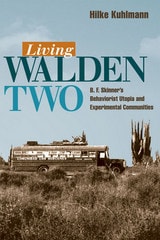
Living Walden Two
B. F. Skinner's Behaviorist Utopia and Experimental CommunitiesHilke Kuhlmann
University of Illinois Press, 2004
In the novel, behavioral engineers use positive reinforcement in organizing and "gently guiding" all aspects of society, leaving the rest of the citizens "free" to lead happy and carefree lives. Among the real-world communities, a recurrent problem in moving past the planning stages was the nearly ubiquitous desire among members to be gentle guides, coupled with strong resistance to being guided.
In an insightful and often hilarious narrative, Hilke Kuhlmann explores the dynamics of the communities, with an in-depth examination of the two surviving Skinnerian communities: Comunidad Los Horcones in Mexico, and Twin Oaks in Virginia. Drawing on extensive interviews with the founders and key players in the Walden Two communities, Kuhlmann redefines the criteria for their success by focusing on the tension between utopian blueprints for a new society and communal experiments' actual effects on individual lives.
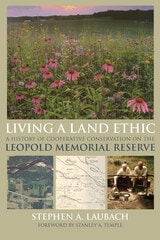
Living a Land Ethic
A History of Cooperative Conservation on the Leopold Memorial ReserveStephen A. Laubach
University of Wisconsin Press, 2014
Living a Land Ethic chronicles the formation of the 1,600-acre reserve surrounding the Shack. When the Leopold Memorial Reserve was founded in 1967, five neighboring families signed an innovative agreement to jointly care for their properties in ways that honored Aldo Leopold's legacy. In the ensuing years, the Reserve's Coleman and Leopold families formed the Sand County Foundation and the Aldo Leopold Foundation. These organizations have been the primary stewards of the Reserve, carrying on a tradition of ecological restoration and cooperative conservation. Author Stephen A. Laubach draws from the archives of both foundations, including articles of incorporation, correspondence, photos, managers' notes, and interviews to share with readers the Reserve's untold history and its important place in the American conservation movement.
Living on the Edge in Suburbia
From Welfare to WorkfareTerese Lawinski
Vanderbilt University Press, 2010
In contrast to accounts of inner-city poor families, these suburban parents' stories reveal a broad array of precipitating circumstances leading to their downward economic slide and to welfare. They also provide insight into the bureaucratic machinations, rigid rules and mandates, disciplining techniques, and catch-22s that create an insecure environment for many families today. Many of these stories show that the need for welfare over time extends well beyond the federal government's five-year lifetime limit on welfare. Policies emphasizing work first also restrict access to education and further hinder parents' ability to gain a toehold in the economy.
In this tale of people and policies, the author shows how the interests of governments are often at variance with those of vulnerable families, and how some government actions place more pressure on lives replete with stress.
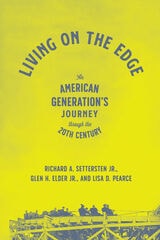
Living on the Edge
An American Generation’s Journey through the Twentieth CenturyRichard A. Settersten Jr., Glen H. Elder Jr., and Lisa D. Pearce
University of Chicago Press, 2021
Drawing from the iconic longitudinal Berkeley Guidance Study, Living on the Edge reveals the hopes, struggles, and daily lives of the 1900 generation. Most surprising is how relevant and relatable the lives and experiences of this generation are today, despite the gap of a century. From the reorganization of marriage and family roles and relationships to strategies for adapting to a dramatically changing economy, the challenges faced by this earlier generation echo our own time. Living on the Edge offers an intimate glimpse into not just the history of our country, but the feelings, dreams, and fears of a generation remarkably kindred to the present day.
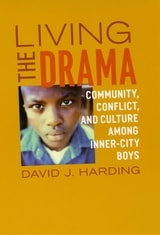
Living the Drama
Community, Conflict, and Culture among Inner-City BoysDavid J. Harding
University of Chicago Press, 2010
David J. Harding studied sixty adolescent boys growing up in two very poor areas and one working-class area. In the first two, violence and neighborhood identification are inextricably linked as rivalries divide the city into spaces safe, neutral, or dangerous. Consequently, Harding discovers, social relationships are determined by residential space. Older boys who can navigate the dangers of the streets serve as role models, and friendships between peers grow out of mutual protection. The impact of community goes beyond the realm of same-sex bonding, Harding reveals, affecting the boys’ experiences in school and with the opposite sex. A unique glimpse into the world of urban adolescent boys, Living the Drama paints a detailed, insightful portrait of life in the inner city.

Living with His Camera
Jane Gallop
Duke University Press, 2003
Living with His Camera is Gallop’s nuanced meditation on photography and the place it has in her private life and in her family. A reflection on family, it attempts—like Blau’s photographs themselves—to portray the realities of family life beyond the pieties of conventional representations. Living with His Camera is about some of the most pressing issues of visuality and some of the most basic issues of daily life. Gallop considers intimate photographs of moments both dramatic and routine: of herself giving birth to son Max or crying in the midst of an argument with Blau, pouring herself cereal as Max colors at the breakfast table, or naked, sweeping the floor. With her trademark candor, humor, and critical acumen, Gallop mixes personal reflection with close readings of Roland Barthes’s Camera Lucida, Susan Sontag’s On Photography, Kathryn Harrison’s novel Exposure, and Pierre Bourdieu’s Photography.
Presenting his photographs and her text, Living with His Camera is a portrait of a couple whose professional activity is part of their private lives and whose private life is viewed through their professional gazes. While most of us set aside rigorous thought when we turn to the sentimental realm of home life, Gallop and Blau look at each other not only with great affection but also with the keen focus of a sharp, critical gaze.
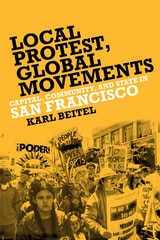
Local Protests, Global Movements
Capital, Community, and State in San FranciscoKarl Beitel
Temple University Press, 2013
Using San Francisco as an illuminating case study, Beitel analyzes the innovative ways urban social movements have organized around issues regarding land use, housing, urban ecology, and health care on the local level to understand the changing nature of protest formation around the world.
Reconciling the passing of New Left Ideals and the emergence of mobilization on a global scale, he assesses the limits of contemporary urban movements as conduits for advancing a radical political program. Beitel argues these limits reflect recurrent problems of internal fragmentation, and the manner in which liberal democratic institutions structure processes of political participation and interest representation.
Loft Living
Culture and Capital in Urban ChangeZukin, Sharon
Rutgers University Press, 2014
London's Urban Landscape
Another Way of TellingEdited by Christopher Tilley
University College London, 2019
London’s Urban Landscape returns us to the everyday lives of people and the manner in which they understand their lives. The embodied experience of the city is invoked in the descriptions of entangled relationships between people and places and the paths of movement between them.
Lone Pursuit
Distrust and Defensive Individualism Among the Black PoorSandra Susan Smith
Russell Sage Foundation, 2007
Looking for America on the New Jersey Turnpike, Second Edition
Angus Kress Gillespie
Rutgers University Press, 2024
When Angus Gillespie and Michael Rockland wrote Looking for America on the New Jersey Turnpike in 1989, they simply wanted to express their fascination with a road that many commuters regarded with annoyance or indifference. Little did they expect that it would be hailed as a classic, listed by the state library alongside works by Whitman and Fitzgerald as one of the ten best books ever written about New Jersey or by a New Jerseyan.
Now Looking for America on the New Jersey Turnpike is back in a special updated and expanded edition, examining how this great American motorway has changed over the past thirty-five years. You’ll learn how the turnpike has become an icon inspiring singers and poets. And you’ll meet the many people it has affected, including the homeowners displaced by its construction, the highway patrol and toll-takers who work on it, and the drivers who speed down its lanes every day.
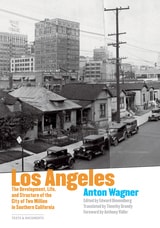
Los Angeles
The Development, Life, and Structure of the City of Two Million in Southern CaliforniaAnton Wagner
J. Paul Getty Trust, The, 2022
No book on the emergence of Los Angeles, today a metropolis of more than four million people, has been more influential or elusive than this volume by Anton Wagner. Originally published in German in 1935 as Los Angeles: Werden, Leben und Gestalt der Zweimillionenstadt in Südkalifornien, it is one of the earliest geographical investigations of a city understood as a series of layered landscapes. Wagner demonstrated that despite its geographical disadvantages, Los Angeles grew rapidly into a dominant urban region, bolstered by agriculture, real estate development, transportation infrastructure, tourism, the oil and automobile industries, and the film business. Although widely reviewed upon its initial publication, his book was largely forgotten until reintroduced by architectural historian Reyner Banham in his 1971 classic Los Angeles: The Architecture of Four Ecologies.
This definitive translation is annotated by Edward Dimendberg and preceded by his substantial introduction, which traces Wagner's biography and intellectual formation in 1930s Germany and contextualizes his work among that of other geographers. It is an essential work for students, scholars, and curious readers interested in urban geography and the rise of Los Angeles as a global metropolis.
“This fine new translation by Timothy Grundy of Anton Wagner's Los Angeles with Edward Dimendberg's lucidly probing introduction constitutes a major contribution to urban history and our understanding of one of the world's most enigmatic and significant cities.”
—Thomas S. Hines, Research Professor of History and Architecture and Urban Design, UCLA
“Edward Dimendberg has done a remarkable job bringing Anton Wagner's classic study of Los Angeles to a wider readership. This landmark publication will enable many strands of urban scholarship to enter into dialogue for the first time.”
—Matthew Gandy, Professor of Geography, University of Cambridge, and author of Natura Urbana: Ecological Constellations in Urban Space (2022)
“Anton Wagner was a prescient and troubling historical figure. Nearly a century ago, with his camera in hand, he walked Los Angeles in fervent exploration of metropolitan growth. This beautiful and expert book takes Wagner every bit as seriously as he took Los Angeles.”
—William Deverell, Director, Huntington-USC Institute on California and the West
"Anton Wagner’s geographic and ethnographic history of the urbanization of Los Angeles has long been unavailable to English-speaking readers. This early study, accompanied by Edward Dimendberg’s comprehensive introduction, will be of interest to all who, like Reyner Banham, admire its impressive scholarship and firsthand account of a city and ecology already in the throes of dynamic transformation."
—Joan Ockman, Vincent Scully Visiting Professor of Architectural History, Yale School of Architecture
"Encompassing copious photographs, insightful commentary, and thorough reconstruction of Wagner’s life and times, this new translation of Anton Wagner’s Los Angeles provides the missing link in scholarship about the metropolis during the early twentieth century. Its continuing relevance and controversial edge will appeal to urban researchers and college students beyond Southern California."
—Michael Dear, Professor Emeritus of City & Regional Planning, University of California, Berkeley
"Scholars of Los Angeles, or any city, must rejoice at this first proper English-language publication of Wagner's brilliant, if problematic, urban studies masterpiece. The edition is made accessible and relevant by Edward Dimendberg's indispensable prefatory material and contextualization."
—Roger Keil, Professor of Environmental and Urban Change, York University
“Finally translating this fascinating book into English fills an important gap in our historical knowledge of Los Angeles and its interpretation. Edward Dimendberg's invaluable introduction situates Anton Wagner in a comprehensive intellectual context. Of more than merely historical interest, this in-depth picture of Los Angeles in 1933 is essential reading for anyone interested in cities.”
—Margaret Crawford, Professor of Architecture, University of California, Berkeley
“This key text from 1935 for understanding Los Angeles urbanism is finally available in an excellent English translation by Timothy Grundy. Revelatory introductory essays by Anthony Vidler and Edward Dimendberg explain how German geographer (and later Nazi Party member) Anton Wagner was able to map and conceptualize the radical originality of this archetypal American metropolis in ways that deeply influenced Reyner Banham and so many subsequent writers on the city.”
—Robert Fishman, Taubman College of Architecture and Planning, University of Michigan
"Expertly annotated by Edward Dimendberg, Anton Wagner’s book on the growth of Los Angeles, which first appeared in German in 1935, is a landmark study in the history of urbanization. At the same time, it can be read as an example of transnational and comparative history, in which an observer from one country commented on developments in another. This volume will interest historians of the modern city, both in America and in Germany."
—Andrew Lees, Distinguished Professor of History Emeritus, Rutgers University
“Blending his wide knowledge and his acute wit, Edward Dimendberg has meticulously reconstructed the genesis of a forgotten doctoral thesis, which had remained unread for more than eighty years, despite its acknowledgement by Reyner Banham. This pioneering scholarly study of the Southern Californian metropolis is now available for the first time in English, inscribed with subtlety in both its German and its American contexts on the basis of thorough investigations.”
—Jean-Louis Cohen, Sheldon H. Solow Professor in the History of Architecture, Institute of Fine Arts, New York University
"This is the odyssey of a book written and published in 1930s Nazi Germany, forgotten after the war, and rediscovered by Reyner Banham in the ‘70s. Los Angeles is a seminal text of modern architectural history and confronts readers in the present with the paradox of an unknown classic.“
—Wolfgang Schivelbusch, author of The Railway Journey
“Finally, a translation of Anton Wagner’s Los Angeles, with extensive notes and a superb and deeply researched introduction by Edward Dimendberg, has arrived. It turns out that it was worth the wait. This volume is not only an important historic document, but a still-unrivaled portrait of a great city.”
—Robert Bruegmann, Distinguished Professor Emeritus of Art History, Architecture, and Urban Planning at the University of Illinois at Chicago and author of Sprawl: A Compact History
"Scholars of Los Angeles can rejoice that Anton Wagner’s legendary study of early 1930s Los Angeles is at last available in a masterful translation, with a luminous introduction by Edward Dimendberg that captures Wagner’s analytical brilliance as well as his troubling politics and racial views. An essential addition to any library of Southern California."
—Louis S. Warren, W. Turrentine Jackson Professor of Western U.S. History, University of California, Davis
“Anton Wagner’s study provides an invaluable and frequently perceptive window into the evolution of Los Angeles during the early twentieth century, showing how human agency transformed regional resources into a booming major city. The translation is immensely enhanced by Edward Dimendberg’s skillful provision of context, including fascinating intellectual history.”
—Stephen Bell, Professor of Geography and History, UCLA
"Los Angeles: The Development, Life, and Structure of the City of Two Million in Southern California has always had an elusive presence in the conversation about the explosive growth of the Southern California metropolis at the beginning of the twentieth century: an arcane text known to exist, but only accessible to very few. This expert first translation in English almost ninety years after it originally appeared in German is prefaced by a complex and engaging introduction by Edward Dimendberg that situates the original study in a multidisciplinary conversation. It elucidates the many ways this landmark essay on Los Angeles’s urban geography was not only filtered into subsequent scholarship on the city—Reyner Banham’s iconic Los Angeles: The Architecture of Four Ecologies in particular—but also how it resonates with contemporary debates about cities as complex social organisms. This book will be essential reading not only for historians of Los Angeles but for those interested in the theorization of the modern metropolis more broadly. That the volume editor addresses Wagner’s problematic views on race and territorial conquest front and center, within their historic context, only adds to the significance of this undertaking."
—Martino Stierli, The Philip Johnson Chief Curator of Architecture and Design, The Museum of Modern Art, New York
Lost on the Freedom Trail
The National Park Service and Urban Renewal in Postwar BostonSeth C. Bruggeman
University of Massachusetts Press, 2022
Boston National Historical Park is one of America's most popular heritage destinations, drawing in millions of visitors annually. Tourists flock there to see the site of the Boston Massacre, to relive Paul Revere's midnight ride, and to board Old Ironsides—all of these bound together by the iconic Freedom Trail, which traces the city's revolutionary saga.
Making sense of the Revolution, however, was never the primary aim for the planners who reimagined Boston's heritage landscape after the Second World War. Seth C. Bruggeman demonstrates that the Freedom Trail was always largely a tourist gimmick, devised to lure affluent white Americans into downtown revival schemes, its success hinging on a narrow vision of the city's history run through with old stories about heroic white men. When Congress pressured the National Park Service to create this historical park for the nation's bicentennial celebration in 1976, these ideas seeped into its organizational logic, precluding the possibility that history might prevail over gentrification and profit.
Louis Sébastien Mercier
Revolution and Reform in Eighteenth-Century ParisMichael J. Mulryan
Bucknell University Press, 2023
Love Apocalypse
New Intimacies and the Decline of Marriage and FertilityAlex J. Nelson
Rutgers University Press, 2026
Marriage and fertility rates are falling around the world, upending social security planning and threatening economic growth. In Love Apocalypse, anthropologists present their insights into this society-altering demographic shift, drawing on their research into the ways love, romantic relationships, and family are being transformed by cultural, social, and economic forces. Each case study in this volume examines a unique cultural context from either Asia (China, South Korea, Japan, India), Europe (Germany, Lithuania), or Latin America (Cuba, Peru), grounded in years of ethnographic research into how communities’ experiences and perceptions of love, marriage, and family are changing in response to economic precarity, shifting gender relations, status competition, and diversifying cultural norms. It is increasingly clear that marriage and two-parent nuclear families will not be the universal norm of the twenty-first century even if this arrangement was largely idealized a mere generation ago. However, this does not mean the end of love, intimacy, or family but rather its transformation and the emergence of new intimate relationships and adaptations to the challenges and opportunities of life in the twenty-first century.
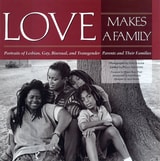
Love Makes a Family
Portraits of Lesbian, Gay, Bisexual, and Transgendered Parents and Their FamiliesGigi Kaeser
University of Massachusetts Press, 1999
This handsome volume combines interviews and photographs to document the experiences of lesbian, gay, bisexual, and transgendered parents and their children. It allows all of the family members to speak candidly about their lives, their relationships, and the ways in which they have dealt with the pressures of homophobia. Included in the book are people from a diverse array of racial, ethnic, and economic backgrounds, representing a wide range of family structures. Together, they provide clear evidence that family roles and responsibilities need not be based on gender, and that children thrive in an atmosphere in which understanding, respect, and love transcend the prejudices of the day.
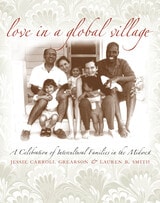
Love in a Global Village
A Celebration of Intercultural Families in the MidwestJessie Carroll Grearson
University of Iowa Press, 2000
In praise of diversity, Jessie Grearson and Lauren Smith offer Love in a Global Village: A Celebration of Intercultural Families in the Midwest, an account of the triumphs of fifteen intercultural families and the perseverance of their relationships in midwestern America. The couples recount their courtships, their adventures and difficulties, and their individual choices to create families and build lives together despite differences of race, language, religion, and culture.
Welcomed into homes in towns like Kalona, Iowa, and Springfield, Missouri, Grearson and Smith introduce readers to unexpected fusions of culture in middle America. By focusing on small communities where intercultural relationships are exceptions rather than the norm, Smith and Grearson offer affirmation that multicultural households can endure and flourish almost anywhere.
Love, Marriage, and Jewish Families
Paradoxes of a Social RevolutionEdited by Sylvia Barack Fishman
Brandeis University Press, 2015
Love, Money and Obligation
Transnational Marriage in a Northeastern Thai VillagePatcharin Lapanun
National University of Singapore Press, 2019
Northeast Thailand has seen an increase in marriages between Thai women and farang (Western) men. Often the women are less well off and from rural areas in the country, while the men largely come from the United States and Europe and settle permanently in Thailand. These unions have created a new social class, with distinctive consumption patterns and lifestyles. And they are challenging gender relations and local perceptions of sexuality, marriage, and family.
In Love, Money and Obligation, Patcharin Lapanun offers an exploration of these marriages and their larger effect on Thai communities. Her interviews with women and men engaging in these transnational relationships highlight the complexities of the associations, as they are shaped by love, money, and gender obligations on the one hand and the dynamics of socio-cultural and historical contexts on the other. Her in-depth and even-handed examination highlights the importance of women’s agency and the strength and creativity of people seeking to forge meaningful lives in the processes of social transition and in the face of local and global encounters.
Love, Sorrow, And Rage
Alisse Waterston
Temple University Press, 1999
From drug addiction and the spread of AIDS to the growing gap between rich and poor in the U.S., the topics in this book get front-page coverage in daily newspapers across the country. Waterston seeks to understand, to explain, and to solve the human crisis that surrounds us. Towards this end, she challenges us to look at the ways in which our society and the workings of our political, economic, and popular culture contribute to the suffering experienced by our most vulnerable citizens. An important corrective to popular depictions of the urban poor, Love, Sorrow, and Rage provides a penetrating analysis of the causes and consequences of poverty. It offers a deeper understanding of what leads to and perpetuates poverty and of the human complex of love, sorrow, and rage felt by those who experience it.
Love, Sorrow, and Rage will engage readers interested in urban studies, women's studies, social issues and policies, anthropology, sociology, political economy, and New York City life.
Love
A Philadelphia AffairBeth Kephart
Temple University Press, 2017
Philadelphia has been at the heart of many books by award-winning author Beth Kephart, but none more so than the affectionate collection Love. This volume of personal essays and photographs celebrates the intersection of memory and place. Kephart writes lovingly, reflectively about what Philadelphia means to her. She muses about meandering on SEPTA trains, spending hours among the armor in the Philadelphia Museum of Art, and taking shelter at Independence Mall during a downpour.
In Love, Kephart shares her loveof Reading Terminal Market at Thanksgiving: “This abundant, bristling market is, in November, the most unlonesome place around.” She waxes poetic about the shoulder-to-shoulder crowds, the mustard in a Salumeria sandwich, and the “coins slipped between the lips of Philbert the pig.”
Kephart also extends her journeys to the suburbs, Glenside and Ardmore—and beyond, to Lancaster County, Pennsylvania; Stone Harbor, New Jersey; and Wilmington, Delaware. What emerges is a valentine to the City of Brotherly Love and its environs. In Love, Philadelphia is “more than its icons, bigger than its tagline.”
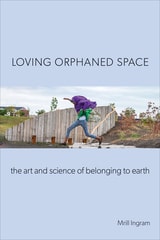
Loving Orphaned Space
The Art and Science of Belonging to EarthMrill Ingram
Temple University Press, 2022
How we relate to orphaned space matters. Voids, marginalia, empty spaces—from abandoned gas stations to polluted waterways—are created and maintained by politics, and often go unquestioned. In Loving Orphaned Space, Mrill Ingram provides a call to action to claim and to cherish these neglected spaces and make them a source of inspiration through art and/or remuneration.
Ingram advocates not only for “urban greening” and “green planning,” but also for “radical caring.” These efforts create awareness and understanding of ecological connectivity and environmental justice issues—from the expropriation of land from tribal nations, to how race and class issues contribute to creating orphaned space. Case studies feature artists, scientists, and community collaborations in Chicago, New York, and Fargo, ND, where grounded and practical work of a fundamentally feminist nature challenges us to build networks of connection and care.
The work of environmental artists who venture into and transform these disconnected sites of infrastructure allow us to rethink how to manage the enormous amount of existing overlooked and abused space. Loving Orphaned Space provides new ways humans can negotiate being better citizens of Earth.
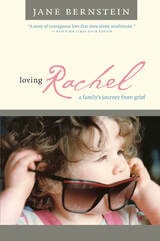
Loving Rachel
A Family's Journey from GriefJane Bernstein
University of Illinois Press, 2007
In 1983, Jane Bernstein had everything she ever wanted: a healthy four-year-old daughter, Charlotte; a happy marriage; a highly praised first novel; and a brand new baby, Rachel. But by the time Rachel was six weeks old,
a neuro-ophthalmologist told Jane and her husband that their baby was blind. Although there was some hope that Rachel might gain partial vision as she grew, her condition was one that often resulted in seizure disorders and intellectual impairment. So began a series of medical and emotional setbacks that were to plague Rachel and her parents and strain their marriage to the breaking point. Spanning the first four years of Rachel’s life, Loving Rachel is a heartbreaking chronicle of a marriage and a compelling story of parental love told with searing honesty and surprising humor.
Low-Wage America
How Employers Are Reshaping Opportunity in the WorkplaceEileen Appelbaum
Russell Sage Foundation, 2003