Results by title
4030 books match the query 'Language Arts & Disciplines' and 224 start with l
Let’s Talk About Race in Storytimes
Jessica Anne Bratt
American Library Association, 2021
Foreword by Kirby McCurtis
With the help of this book’s adaptable storytime activities, tools for self-reflection, and discussion starters, children’s librarians will learn how to put anti-racism work into their professional practice while fostering an environment that celebrates all identities.As the weekly lists of best-sellers demonstrate, many people want to engage with racial issues. But when it comes to talking about race, they often don’t know how or are hesitant to take the first steps. This includes children's librarians, who are taking seriously our profession’s calls for diversity, equity, and inclusion. They already know that popular storytimes can be an effective way to increase community representation and belonging at the library. Incorporating race into storytimes is an ideal way to foster inclusion by normalizing conversations about these issues. This book will help public and school librarians face their own biases, showing them how to have honest discussions with children, their caregivers, and storytime attendees, as well as their colleagues. In this book, you will discover
- several ready-to-use library storytimes that incorporate racial themes, complete with sample activities and booklists;
- an anti-oppression framework, based on the author’s own real-world practice, that is customizable for different settings and situations;
- concrete suggestions for overcoming fears and awkwardness when it comes to talking about race, with advice on practicing new language, making space to connect around appropriate cultural books for read alouds, and evaluating books for storytime;
- interactive self-reflecting worksheets which explore planning picture book introductions and songs for inclusive storytimes, providing age-appropriate glimpses into history, and suggested affirmations in describing skin tone, hair, and language;
- advocacy talking points centered on social justice that will encourage discussion with co-workers and other library staff; and
- guidance on community engagement, relationship building, and intentionally trying to diversify your world in order to truly become an anti-bias practitioner.
Leveraging Wikipedia
Connecting Communities of KnowledgeMerrilee Proffitt
American Library Association, 2018
Levinas's Rhetorical Demand
The Unending Obligation of Communication EthicsRonald C. Arnett. Foreword by Algis Mickunas
Southern Illinois University Press, 2017
Distinguished Book Award, Philosophy of Communication Division, National Communication Association, 2017
Top Book Award, Communication Ethics Division, National Communication Association, 2017
Philosopher Emmanuel Levinas’s ethics as first philosophy explicates a human obligation and responsibility to and for the Other that is an unending and imperfect commitment. In Levinas’s Rhetorical Demand: The Unending Obligation of Communication Ethics, Ronald C. Arnett underscores the profundity of Levinas’s insights for communication ethics.Arnett outlines communication ethics as a primordial call of responsibility central to Levinas’s writing and mission, analyzing it through a Levinasian lens with examination of social artifacts ranging from the Heidegger-Cassirer debate to Rupert Murdoch’s News of the World story concerning illicit possession of information.
Levinas’s Rhetorical Demand offers an account of Levinas’s project and the pragmatic implications of attending to a call of responsibility to and for the Other. This book yields a rich and nuanced understanding of Levinas’s work, revealing the practical importance of his insights, and including a discussion of related theorists and thinkers.
Lexical Change and Variation in the Southeastern United States, 1930-1990
Ellen Johnson
University of Alabama Press, 1996
This book discusses words used in the Southeast and how they have changed
during the 20th century. It also describes how the lexicon varies according
to the speaker's age, race, education, sex, and place of residence
(urban versus rural; coastal versus piedmont versus mountain). Data collected
in the 1930s as part of the Linguistic Atlas of the Middle and South Atlantic
States project were compared with data collected in 1990 from similar speakers
in the same communities.
The results show that region was the most important
factor in differentiating dialects in the 1930s but that it is the least
important element in the 1990s, with age, education, race, and age all
showing about the same influence on the use of vocabulary. An appendix
contains a tally of the responses given by 78 speakers to 150 questions
about vocabulary items, along with speakers' commentary. Results
from the 1930s may be compared to those from 1990, making this a treasure
trove for anyone interested in regional terms or in how our speech is changing
as the South moves from an agricultural economy through industrialization
and into the information age.
Lexical Matters
Edited by Ivan A. Sag and Anna Szabolcsi
CSLI, 1992
Lexical Relations
Jean-Pierre Koenig
CSLI, 1999
Lexical Semantics in LFG
Edited by Miriam Butt and Tracy Holloway King
CSLI, 2006
Lexical and Constructional Aspects of Linguistic Explanation
Edited by Gert Webelhuth, Jean-Pierre Koenig, and Andreas Kathol
CSLI, 1999
Lexical and Semantic Aspects of Proverbs
František Cermák
Karolinum Press, 2019

Lexical-Functional Grammar
An Introduction to Parallel Constraint-Based SyntaxYehuda N. Falk
CSLI, 2001
Liberals under Autocracy
Modernization and Civil Society in Russia, 1866–1904Anton A. Fedyashin
University of Wisconsin Press, 2012
With its rocky transition to democracy, post-Soviet Russia has made observers wonder whether a moderating liberalism could ever succeed in such a land of extremes. But in Liberals under Autocracy, Anton A. Fedyashin looks back at the vibrant Russian liberalism that flourished in the country’s late imperial era, chronicling its contributions to the evolution of Russia’s rich literary culture, socioeconomic thinking, and civil society.
For five decades prior to the revolutions of 1917, The Herald of Europe (Vestnik Evropy) was the flagship journal of Russian liberalism, garnering a large readership. The journal articulated a distinctively Russian liberal agenda, one that encouraged social and economic modernization and civic participation through local self-government units (zemstvos) that defended individual rights and interests—especially those of the peasantry—in the face of increasing industrialization. Through the efforts of four men who turned The Herald into a cultural nexus in the imperial capital of St. Petersburg, the publication catalyzed the growing influence of journal culture and its formative effects on Russian politics and society.
Challenging deep-seated assumptions about Russia’s intellectual history, Fedyashin’s work casts the country’s nascent liberalism as a distinctly Russian blend of self-governance, populism, and other national, cultural traditions. As such, the book stands as a contribution to the growing literature on imperial Russia's nonrevolutionary, intellectual movements that emphasized the role of local politics in both successful modernization and the evolution of civil society in an extraparliamentary environment.
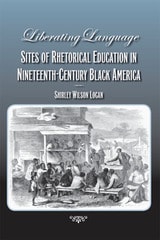
Liberating Language
Sites of Rhetorical Education in Nineteenth-Century Black AmericaShirley Wilson Logan
Southern Illinois University Press, 2008
Liberating Language identifies experiences of nineteenth-century African Americans—categorized as sites of rhetorical education—that provided opportunities to develop effective communication and critical text-interpretation skills. Author Shirley Wilson Logan considers how nontraditional sites, which seldom involved formal training in rhetorical instruction, proved to be effective resources for African American advancement.
Logan traces the ways that African Americans learned lessons in rhetoric through language-based activities associated with black survival in nineteenth-century America, such as working in political organizations, reading and publishing newspapers, maintaining diaries, and participating in literary societies. According to Logan, rhetorical training was manifested through places of worship and military camps, self-education in oratory and elocution, literary societies, and the black press. She draws on the experiences of various black rhetors of the era, such as
Frederick Douglass, Frances Harper, Fanny Coppin, Charles Chesnutt, Ida B. Wells, and the lesser-known Oberlin-educated Mary Virginia Montgomery, Virginia slave preacher "Uncle Jack," and former slave "Mrs. Lee."
Liberating Language addresses free-floating literacy, a term coined by scholar and writer Ralph Ellison, which captures the many settings where literacy and rhetorical skills were acquired and developed, including slave missions, religious gatherings, war camps, and even cigar factories. In Civil War camp- sites, for instance, black soldiers learned to read and write, corresponded with the editors of black newspapers, edited their own camp-based papers, and formed literary associations.
Liberating Language outlines nontraditional means of acquiring rhetorical skills and demonstrates how African Americans, faced with the lingering consequences of enslavement and continuing oppression, acquired rhetorical competence during the late eighteenth century and throughout the nineteenth century.
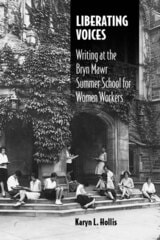
Liberating Voices
Writing at the Bryn Mawr Summer School for Women WorkersKaryn L. Hollis
Southern Illinois University Press, 2004
During the 1920s and 1930s at the Bryn Mawr Summer School for Women Workers, working-class women were educated in the liberal arts and instructed in writing to assume more powerful roles in the industrial workplace. In Liberating Voices: Writing at the Bryn Mawr Summer School for Women Workers, Karyn L. Hollis tells the remarkable story of how this multiclass, multiethnic American institution rooted in composition pedagogy, literary history, and leftist thought emerged from the broad social, economic, and ideological trends of the era. The summer school curriculum, Hollis shows, enhanced the individual and collective self-confidence of the 1,800 women who studied there between 1921 and 1938.
Drawing heavily on the women’s writings—including autobiography, poetry, labor drama, humor, and economic reporting—Liberating Voices adds significantly to the small oeuvre of published writing by working-class women, who were, in this case, mostly nontraditional students, immigrants, and minorities. Outlining a materialist pedagogy that centers on the women’s daily economic struggles as well as their family and community experiences, Hollis reveals the tensions that stemmed from differences in race, ethnicity, class, and religion. She also shows how the students exploited cultural scripts and drew strength from their diversity, eventually insisting on a democratic sharing of power with faculty and administrators at the Summer School.
Hollis provides a thorough ethnography of the Summer School with respect to its place in the social and political history of the 1920s and 1930s, and then situates the school’s pedagogy within the history of American education and composition instruction. Concepts from literary criticism and composition theory provide the framework for an analysis of the working women’s autobiographical writing, revealing how the narrative voice of their prose grew from weak and individualized to empowered and collective as the women described their families, childhood, work, unions, and education over time. The volume is complemented by sixteen illustrations.
Additional analysis of the women’s poetry points to their skill as both producers and consumers of literature. The common theme of body versus a powerful machine in the workplace bears witness to the industrial exploitation the women endured. Taking up postmodern questions of agency and voice, Hollis argues that the women used a variety of cultural texts to construct discourses that reflected their needs and desires. Liberating Voices not only provides a previously untold chapter in the history of American worker education, it also showcases a liberating pedagogy that has salient implications for contemporary classrooms.

Librarians Serving Diverse Populations
Challenges AndLori Mestre
Assoc of College & Research Libraries, 2011
Librarians Serving Diverse Populations
Challenges and OpportunitiesLori Mestre
Assoc of College & Research Libraries, 2011

Librarians and Instructional Designers
Collaboration and InnovationJoe Eshleman
American Library Association, 2016
Librarians as Community Partners
An Outreach HandbookCarol Smallwood
American Library Association, 2010
Libraries As Agencies Of Culture
(Volume 42, No. 3 Of American Studies)Thomas Augst
University of Wisconsin Press, 2002
Libraries Designed for Kids
Nolan Lushington
American Library Association, 2008
Libraries Got Game
Aligned Learning through Modern Board GamesBrian Mayer
American Library Association, 2009
Libraries Promoting Reflective Dialogue In A Time Of Political
Andrea Baer
Assoc of College & Research Libraries, 2019

Libraries amid Protest
Books, Organizing, and Global ActivismSherrin Frances
University of Massachusetts Press, 2020
Libraries amid Protest unpacks how these protest libraries—labor-intensive, temporary installations in parks and city squares, poorly protected from the weather, at odds with security forces—continue to arise. In telling the stories of these surprising and inspiring spaces through interviews and other research, Sherrin Frances confronts the complex history of American public libraries. She argues that protest libraries function as the spaces of opportunity and resistance promised, but not delivered, by American public libraries.
Libraries and Democracy
Nancy Kranich
American Library Association, 2001
Libraries and Sustainability
Programs and Practices for Community ImpactRené Tanner, Adrian K. Ho, Monika Antonelli, and Rebekkah Smith Aldrich
American Library Association, 2021
As a core value of librarianship, sustainability is not an end point but a mindset, a lens through which operational and outreach decisions can be made. And it extends beyond an awareness of the roles that libraries can play in educating and advocating for a sustainable future. As the programs and practices in this resource demonstrate, sustainability can also encompass engaging with communities in discussions about resilience, regeneration, and social justice. Inspiring yet assuredly pragmatic, the many topics explored in this book edited by members of ALA's Sustainability Round Table and ALA’s Special Task Force on Sustainability include
- a discussion of why sustainability matters to libraries and their user communities;
- real-life examples of sustainability programming, transformative community partnerships, collective responses for climate resilience, and green building practices;
- lessons learned and recommendations from library workers who have been active in putting sustainability into practice;
- the intersection of sustainability with the work of equity, diversity, and inclusion;
- suggestions regarding the revision of library and information science curriculum in light of the practical need to build community resilience;
- an examination of how libraries’ efforts to support Doughnut Economics can bolster the United Nations' work on the Sustainable Development Goals, which seek to address the global impacts of climate change; and
- potential collaborators for future sustainability-related initiatives.
Libraries and the Affordable Care Act
Helping the Community Understand Health-Care OptionsFrancisca American Library Association
American Library Association, 2015
Libraries and the Mobile Web
Cody Hanson
American Library Association, 0
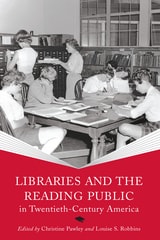
Libraries and the Reading Public in Twentieth-Century America
Edited by Christine Pawley and Louise S. Robbins
University of Wisconsin Press, 2013
Libraries and the Substance Abuse Crisis
Supporting Your CommunityCindy Grove
American Library Association, 2020
The opioid epidemic, and other behavioral health issues such as alcohol and drug abuse, directly impact every community across the nation; and, by extension, public libraries’ daily work. Because libraries are not only trusted guardians of information but also vital community centers, people struggling with addictive behaviors as well as their family members and friends often turn to the library for help. But many library workers feel overwhelmed, finding themselves unprepared for serving these patrons in an effective and empathetic way. This book encourages readers to turn their fears and uncertainty into strengths and empowerment, offering to-the-point guidance on welcoming people with substance use disorders and their loved ones through policy, materials, outreach, collaboration, programs, and services. Written by a frontline librarian whose personal experiences inform the book, this resource
- explores the library’s role in the fight against addiction and how to become part of the solution by combating stigma;
- provides background on understanding how substance abuse and related behaviors affect different age groups and populations;
- explains how to be proactive regarding library safety and security by carefully crafting library policies and effectively communicating them to staff;
- offers real world guidance on training library staff, including pointers on recognizing observable signs of drug abuse and responding appropriately and safely to uncomfortable or potentially dangerous situations;
- discusses safeguards such as a needle disposal unit, defibrillator, and Naloxone;
- gives tips on marketing, outreach, and programming, from putting together displays of materials and resources to partnering with local organizations; and
- recommends useful websites, documentaries, and additional resources for further learning.
Libraries that Learn
Keys to Managing Organizational KnowledgeJennifer A. Bartlett
American Library Association, 2019
Libraries, Leadership, and Scholarly Communication
Essays by Rick AndersonRick Anderson
American Library Association, 2016
Libraries, Mission, and Marketing
Linda Wallace
American Library Association, 2004
Libraries, Mission, and Marketing
Linda Wallace
American Library Association, 0
Library Camps and Unconferences
American Library Association, 2010
Library Collections for Teens
Manga and Graphic NovelsAmerican Library Association, 2010
Library Consortia
Models for Collaboration and SustainabilityValerie Horton
American Library Association, 2014
Library Improvement through Data Analytics
Lesley S. J. Farmer
American Library Association, 2016
Library Linked Data
Early Activity and DevelopmentErik T. Mitchell
American Library Association, 2016
Library Linked Data
Research and AdoptionErik T. American Library Association
American Library Association, 2013
Library Management 101
A Practical GuideDiane L. Velasquez
American Library Association, 2013
Library Management 101
A Practical GuideLisa K. Hussey
American Library Association, 2019
Just because a set of responsibilities isn’t formally called management doesn’t mean that it isn’t management. And this vital text speaks to a reality that all current professionals already know: that is, everyone studying to enter the profession needs an introduction to the topic of management. Because no matter what one’s role in an academic or public library context, it will involve decision-making, planning, and organization skills. Newly revised and updated, this book pulls together management best practices from library management experts teaching in LIS programs across the U.S. and Canada. Among the many topics discussed are
- classic and contemporary theories of management, and how they apply to the library;
- human resource planning;
- marketing and public relations;
- negotiations, mediation, and financial management of the library;
- facilities management;
- information technology management and future trends;
- change management, organizational culture; and
- ethics and confidentiality.
Library Management Tips that Work
Carol Smallwood
American Library Association, 2011
Library Marketing and Communications
Strategies to Increase Relevance and ResultsCordelia Anderson
American Library Association, 2020
Effectively marketing libraries by persuasively communicating their relevance is key to ensuring their future. Speaking directly to those in senior leadership positions, Anderson lays out the structural and organizational changes needed to help libraries answer the relevance question and maximize their marketing and communications efforts. Focusing on big-picture strategies, she shares lessons learned from her 20+ year career in library marketing and communications. No matter what type or size of library you help to lead, by reading this book you will
- gain insight into why libraries need to tell their stories more effectively than they are today;
- be able to craft a strategic roadmap for marketing your library and communicating its value in a variety of ways that resonate with key audiences;
- see why improvements to the structure of your marketing and communications team can lead to better results;
- learn practical methods for incorporating audience research into your planning;
- know how to remove customer barriers and discontinue practices that are thwarting your marketing efforts;
- receive guidance on preparing for potential crises;
- understand how to be more community-focused by forming and sustaining partnerships; and
- feel confident in engaging with stakeholders so that they become your library’s best ambassadors.
Library Marketing
From Passion to PracticeJill Stover Heinze
Against the Grain, LLC, 2017
The Charleston Briefings are written by authorities who provide an effective, readable overview of their topics—not an academic monograph. The intended audience is busy nonspecialist readers who want to be informed concerning important issues in our industry in an accessible and timely manner.
Why do librarians have so many problems with marketing?
At a time when universities and colleges demand that libraries demonstrate their value and users have so many other options to discover information, it seems bizarre that librarians would be so much against a tool that allows them to engage closely with the very users who are the lifeblood of libraries.
As Jill Heinze makes clear in this lively and passionate briefing, marketing is a tool that allows an institution to assess their place in a market and to communicate value to their users based on the users’ needs and problems. This marketing tool need have no relationship to traditional business concerns, and, indeed, mission- based marketing is now important even to for- profit institutions.
Embracing key marketing concepts and planning, says Heinze, can demand that libraries rethink organizational structures, operations, and missions, but she also demonstrates that this rethinking can be entirely commensurate with the mission of libraries within an educational context.
Library Next
Seven Action Steps for ReinventionCatherine Murray-Rust
American Library Association, 2021
After a career of more than 40 years, Murray-Rust, former Dean of Libraries at Georgia Tech and a self-proclaimed library disrupter, sees our profession’s central challenge as simply this: how to turn the library outward in order to make a difference in the lives of individuals and the community. In this book she encourages readers to look an uncertain library future square in the eye. She shares stories from her transformational years at Georgia Tech Libraries which present both inspiration and practical advice on how to stand up for values while changing the ways we act upon them. Organized around seven action steps for change, this book offers takeaways and activities you can adapt to your work style and organizational culture. You will learn from such stories and lessons as
- the three different kinds of information you need for measuring impact;
- using new frameworks, outside fragmented, risk-adverse library structures, to get the work done;
- the limitations of trying to manage your way through major cultural change;
- embedding in the community to develop visions and strategies for improvement;
- painful and challenging times that set Murray-Rust on a path of self-learning;
- how an uncomfortable assignment led to a sought-after seat at the table for a university-wide capital construction project;
- the bold promise that got the library onto the high-priority list for renovation;
- visiting a Toyota plant to learn how to encourage employee engagement and creativity; and
- learning to listen with the "turning outward" philosophy of Harwood Institute.
Library Partnerships in International Liberal Arts Education
Building Relationships Across Cultural and Institutional LinesJeff H. iroshi Gima
Assoc of College & Research Libraries, 2020
Library Programming for Autistic Children and Teens
Amelia Anderson and Barbara Klipper
American Library Association, 2021
Since the first edition of this landmark guide was published, there has been increased interest in services for library patrons on the autism spectrum; indeed, more people of all ages now self-identify as autistic. Those who understand the unique characteristics of autistic young people know that ordinary library programming guides are not up to the task of effectively serving these library users. Well qualified to speak to this need, Anderson is an educator, library researcher, and former public librarian who has helped to develop two IMLS funded initiatives that train library workers to better understand and serve autistic patrons. Here, she offers librarians who work with children and teens in both public library and K-12 educational settings an updated, comprehensive resource that includes
- an updated introduction to the basics of autism, including language, symbolism, and best practices in the library rooted in the principles of Universal Design;
- step-by-step programs from librarians across the country, adaptable for both public and school library settings, that are cost-effective and easy to replicate;
- contributions from autistic self-advocates throughout the text, demonstrating that the program ideas included are truly designed with their preferences in mind;
- suggestions for securing funding and establishing partnerships with community organizations; and
- many helpful appendices, with handy resources for training and education, building a collection, storytimes, sensory integration activities, and a “Tips for a Successful Library Visit” template.
Library Security
Better Communication, Safer FacilitiesSteve Albrecht
American Library Association, 2015
Library work is really all about people. And the inclusive, welcoming nature of the library means that all kinds of people pass through its doors. Not all difficult patrons are dangerous, but some frighten staff and other library users, which can lead to situations that are distracting, troubling, and fraught with liability. For more than a decade, Albrecht, a 15-year police veteran, has presented workshops for libraries on dealing with challenging patrons. His no-nonsense advice will empower library staff in their personal security and give them the tools to confidently communicate with their colleagues, patrons, and members of law enforcement regarding inappropriate behavior. In this book he addresses security issues important to all libraries, including
- Specific guidance for common situations, such as unruly teens, unwanted sexual advances, chronically homeless substance abusers, and more
- The elements of an effective Code of Conduct and how to enforce it
- Tips on how to manage internet usage to minimize potential problems
- How to align with patrons and use language that defuses the conflict
- Forming partnerships with service organizations, homeless shelters, mental health advocacy groups, and other community resources
- How to know when it's time to call the police, plus ideas for increasing law enforcement support
- Ways to make the library more secure through changes to facilities
Library Service And Learning
Empowering Students, InspiringTheresa McDevitt
American Library Association, 2018
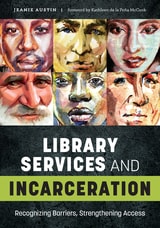
Library Services and Incarceration
Recognizing Barriers, Strengthening AccessJeanie Austin
American Library Association, 2021
As part of our mission to enhance learning and ensure access to information for all library patrons, our profession needs to come to terms with the consequences of mass incarceration, which have saturated the everyday lives of people in the United States and heavily impacts Black, Indigenous, and people of color; LGBTQ people; and people who are in poverty. Jeanie Austin, a librarian with San Francisco Public Library's Jail and Reentry Services program, helms this important contribution to the discourse, providing tools applicable in a variety of settings. This text covers practical information about services in public and academic libraries, and libraries in juvenile detention centers, jails, and prisons, while contextualizing these services for LIS classrooms and interdisciplinary scholars. It powerfully advocates for rethinking the intersections between librarianship and carceral systems, pointing the way towards different possibilities. This clear-eyed text
- begins with an overview of the convergence of library and information science and carceral systems within the United States, summarizing histories of information access and control such as book banning, and the ongoing work of incarcerated people and community members to gain more access to materials;
- examines the range of carceral institutions and their forms, including juvenile detention, jails, immigration detention centers, adult prisons, and forms of electronic monitoring;
- draws from research into the information practices of incarcerated people as well as individual accounts to examine the importance of information access while incarcerated;
- shares valuable case studies of various library systems that are currently providing both direct and indirect services, including programming, book clubs, library spaces, roving book carts, and remote reference;
- provides guidance on collection development tools and processes;
- discusses methods for providing reentry support through library materials and programming, from customized signage and displays to raising public awareness of the realities of policing and incarceration;
- gives advice on supporting community groups and providing outreach to transitional housing;
- includes tips for building organizational support and getting started, with advice on approaching library management, creating procedures for challenges, ensuring patron privacy, and how to approach partners who are involved with overseeing the functioning of the carceral facility; and
- concludes with a set of next steps, recommended reading, and points of reflection.
Library Services for Youth with Autism Spectrum Disorders
Lesley S. J. Farmer
American Library Association, 2013