Results by title
4917 books match the query 'Philosophy' and 152 start with l
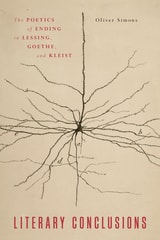
Literary Conclusions
The Poetics of Ending in Lessing, Goethe, and KleistOliver Simons
Northwestern University Press, 2022
Simons examines the interrelations of Lessing’s literary endings with modes of logical conclusion; he highlights how Goethe’s narrative closures are forestalled by an uncontrollable vital force that was discussed in the sciences of the time; and he reveals that Kleist conceived of literary genres themselves as forms of reasoning. Kleist’s endings, Simons demonstrates, mark the beginning of modernism. Through close readings of these authors and supplemental analyses of works by Walter Benjamin, Friedrich Hölderlin, and Georg Wilhelm Friedrich Hegel, he crafts an elegant theory of conclusions that revises established histories of literary genres and forms.
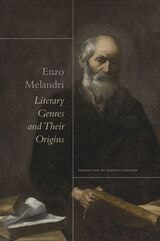
Literary Genres and Their Origins
Enzo Melandri
Seagull Books, 2026
A bold rethinking of genre as both form and philosophical problem.
Why do we have literary genres, and what problems do they solve? In this original engagement with the ancient problem of literary genres, Enzo Melandri begins by asking why literary genres exist in the first place. His investigation extends beyond literary history, as important as it is, to become a philosophical inquiry into the limits of language and the strategies language must employ to register the impossibility of fully grasping its relation to the world. In this light, tragedy, comedy, epic, elegy, and so on emerge as the musical and emotional traces language bears from its encounter with its own limits.
Literature and the Cognitive Revolution, Volume 23
Alan Richardson and Francis F. Steen
Duke University Press, 0
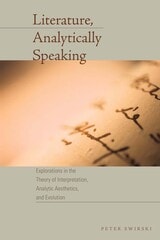
Literature, Analytically Speaking
Explorations in the Theory of Interpretation, Analytic Aesthetics, and EvolutionBy Peter Swirski
University of Texas Press, 2010
In a new approach to interdisciplinary literary theory, Literature, Analytically Speaking integrates literary studies with analytic aesthetics, girded by neo-Darwinian evolution. Scrutinizing narrative fiction through a lens provided by analytic philosophy, revered literary theorist Peter Swirski puts new life into literary theory while fashioning a set of practical guidelines for critics in the interpretive trenches.
Dismissing critical inquirers who deny intention its key role in the study of literary reception, Swirski extends the defense of intentionality to art and to human behavior in general. In the process, Swirski takes stock of the recent work in evolutionary theory, arguing that the analysis of narrative truth may be grounded in the neo-Darwinian paradigm which forms the empirical backbone behind his analytic approach. Literature, Analytically Speaking provides a series of precepts designed to capture the ways in which we do interpret (and ought to interpret) works of literature. Reflecting a resounding shift from the poststructuralist paradigm, Swirski's lively and colorful presentation, backed up by a dazzling variety of examples and case studies, reconceptualizes the aesthetics of literature and literary studies.
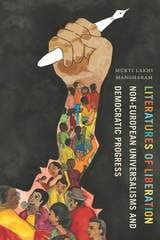
Literatures of Liberation
Non-European Universalisms and Democratic ProgressMukti Lakhi Mangharam
The Ohio State University Press, 2017
In this way, she posits that these universalisms reconceptualize democratic ideals not as Western imports into precolonial societies but as regional phenomena tied to local relations of power and resistance. In charting these alternative democratic trajectories, Mangharam examines oft-overlooked regional and vernacular literary forms and provides a fresh approach to current theorizations of postcolonial and world literatures.
Lived Time
Phenomenological and Psychopathological StudiesEugène Minkowski; translated by Nancy Metzel; with a new foreword by Dan Zahavi
Northwestern University Press, 2019
First published in French in 1933 as Le temps vécu, this edition of this classic work of phenomenological psychiatry and psychopathology includes a new foreword by Dan Zahavi that presents some of Minkowski’s main ideas and discusses his contemporary relevance.
Living On After Failure
Affective Structures of Modern LifeIrving Goh
Duke University Press, 2025
Living Up to Death
Paul Ricoeur
University of Chicago Press, 2009
When French philosopher Paul Ricoeur died in 2005, he bequeathed to the world a highly regarded, widely influential body of work which established him as one of the greatest thinkers of our time. He also left behind a number of unfinished projects that are gathered here and translated into English for the first time.
Living Up to Death consists of one major essay and nine fragments. Composed in 1996, the essay is the kernel of an unrealized book on the subject of mortality. Likely inspired by his wife’s approaching death, it examines not one’s own passing but one’s experience of others dying. Ricoeur notes that when thinking about death the imagination is paramount, since we cannot truly experience our own passing. But those we leave behind do, and Ricoeur posits that the idea of life after death originated in the awareness of our own end posthumously resonating with our survivors.
The fragments in this volume were written over the course of the last few months of Ricoeur’s life as his health failed, and they represent his very last work. They cover a range of topics, touching on biblical scholarship, the philosophy of language, and the idea of selfhood he first addressed in Oneself as Another. And while they contain numerous philosophical insights, these fragments are perhaps most significant for providing an invaluable look at Ricoeur’s mind at work.
As poignant as it is perceptive, Living Up to Death is a moving testimony to Ricoeur’s willingness to confront his own mortality with serious questions, a touching insouciance, and hope for the future.
Living in Problematicity
Jan Patocka
Karolinum Press, 2020
Living the Good Life
Steven J. Jensen
Catholic University of America Press, 2013
Living with Moral Disagreement
The Enduring Controversy about Affirmative ActionMichele S. Moses
University of Chicago Press, 2016
Central to Moses’s analysis is the argument that we need to understand disagreements about affirmative action as inherently moral, products of conflicts between deeply held beliefs that shape differing opinions on what justice requires of education policy. As she shows, differing opinions on affirmative action result from different conceptual values, for instance, between being treated equally and being treated as an equal or between seeing race-consciousness as a pernicious political force or as a necessary variable in political equality. As Moses shows, although moral disagreements about race-conscious policies and similar issues are often seen as symptoms of dysfunctional politics, they in fact create rich opportunities for discussions about diversity that nourish democratic thought and life.
Lockdown Cultures
The Arts and Humanities in the Year of the Pandemic, 2020–21Edited by Stella Bruzzi and Maurice Biriotti Biriotti
University College London, 2022
Lockdown Cultures is both a cultural response to our extraordinary times and a manifesto for the arts and humanities and their role in our post-pandemic society. This book offers a unique response to the question of how the humanities have responded to the dominant crisis of our times: the Covid-19 pandemic. While the roles of engineers, epidemiologists, and, of course, medics are assumed, this volume illustrates some of how the humanities understood and analyzed 2020–21, the year of lockdown and plague. Though the impulse behind the book was topical, underpinning the richly varied and individual essays is a lasting concern with the value of the humanities in the twenty-first century. Each contributor approaches this differently but there are two dominant strands: how art and culture can help us understand the Covid crisis; and how the value of the humanities can be demonstrated by engaging with cultural products from the past. The result is a book that serves as a testament to the humanities’ reinvigorated and reforged sense of identity. It bears witness to a globally impactful event while showcasing interdisciplinary thinking and examining how the pandemic has changed how we read, watch, write and educate. More than thirty individual contributions collectively reassert the importance of the arts and humanities for contemporary society.
Logic Colloquium '92
Edited by Lázló Csirmaz, Dov M. Gabbay, and Maarten de Rijke
CSLI, 1995
Logic and Pragmatism
Selected Essays by Giovanni VailatiClaudia Arrighi, Paola Cantu, Mauro de Zan, and Patrick Suppes
CSLI, 2009
Logic and Pragmatism features a number of the key writings of Giovanni Vailati (1863–1909), the Italian mathematician and philosopher renowned for his work in mechanics, geometry, logic, and epistemology. The selections in this book—many of which are available here for the first time in English—focus on Vailati’s significant contributions to the field of pragmatism. Accompanying these pieces are introductory essays by the volume’s editors that outline the traits of Vailati’s pragmatism and provide insights into the scholar’s life.
Logic and Representation
Robert C. Moore
CSLI, 1993

Logic and Sin in the Writings of Ludwig Wittgenstein
Philip R. Shields
University of Chicago Press, 1992
"Shields argues that the appearance throughout Wittgenstein's writings of such concepts as ritual, limit, transgression, a change of will, pride, temptation, and judgment implies a relation between religion and the logical aspects of Wittgenstein's philosophy."—Choice
"Of the many recent books about Wittgenstein, Logic and Sin is one of the very few that are well worth having"—Fergus Kerr, Modern Theology
"What Shields has uncovered in Wittgenstein's religious sensibility is something genuine and profound. . . . Shields has not just written an important book on Wittgenstein but an enlightening work that invites further reflection."—Eric O. Springsted, Cross Currents
Logic and the Art of Memory
The Quest for a Universal LanguagePaolo Rossi
University of Chicago Press, 2001
Based on comprehensive analyses of original texts, Rossi traces the development of this idea from late medieval thinkers such as Ramon Lull through Bruno, Bacon, Descartes, and finally Leibniz in the seventeenth century. The search for a symbolic mode of communication that would be intelligible to everyone was not a mere vestige of magical thinking and occult sciences, but a fundamental component of Renaissance and Enlightenment thought. Seen from this perspective, modern science and combinatorial logic represent not a break from the past but rather its full maturity.
Available for the first time in English, this book (originally titled Clavis Universalis) remains one of the most important contributions to the history of ideas ever written. In addition to his eagerly anticipated translation, Steven Clucas offers a substantial introduction that places this book in the context of other recent works on this fascinating subject. A rich history and valuable sourcebook, Logic and the Art of Memory documents an essential chapter in the development of human reason.
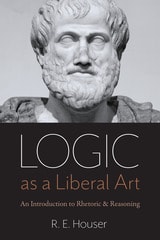
Logic as a Liberal Art
An Introduction to Rhetoric and ReasoningR. E. Houser
Catholic University of America Press, 2020
Logic, Convention, and Common Knowledge
A Conventionalist Account of LogicPaul F. Syverson
CSLI, 2002
Logic, Information and Agency
Johan van Benthem
CSLI, 2025
Everything we do is driven by information, but the dynamic process of acquiring information and adjusting our views based on it has seldom been put at the center place in logic, and there are few textbooks introducing readers to this line of work. The present book introduces the reader to major logical techniques for studying information dynamics and interaction between agents, based on a variety of intuitive scenarios as well as recent research. Readers will learn styles of modeling, as well as the basic features of the new logical systems emanating from this line of work. All the separate strands in the book are brought together in a comprehensive study of information flow and action in games, forming a logic-based complement to standard perspectives in game theory.
Logic, Langage and Computation, Volume 2
Edited by Lawrence S. Moss, Jonathan Ginzburg, and Maarten de Rijke
CSLI, 1999
Logic, Language and Computation
Edited by Jerry Seligman and Dag Westerståhl
CSLI, 1996
Logic, Language and Computation, Volume 3
Edited by Patrick Blackburn, Nick Braisby, Lawrence Cavedon, and Atsushi Shimoji
CSLI, 2001
The book contains contributions to a general theory of information, while also tackling specific problems from artificial intelligence, formal semantics, cognitive psychology, and the philosophy of mind. There is focus on the dynamics of information flow, and also a consideration of static approaches to information content; both quantitative and qualitative approaches are represented.
Logic, Language and Philosophy
An Introduction to Standard LogicFenrong Liu and Martin Stokhof
CSLI, 2024
This book explores the systematic and formal study of reasoning. It introduces the core systems of logic, discusses a portion of its extensions, and illustrates the application of logic in philosophy and linguistics utilizing classical and contemporary sources. In doing so, it provides the students with a rich set of tools along with first-hand experience regarding their applications in the study of rationality and meaning. With lots of exercises, and study and discussion questions, it provides a complete set of materials for courses for a variety of audiences at different levels.
Logic, Language, and Meaning, Volume 1
Introduction to LogicL. T. F. Gamut
University of Chicago Press, 1990
Volume 1, Introduction to Logic, begins with a historical overview and then offers a thorough introduction to standard propositional and first-order predicate logic. It provides both a syntactic and a semantic approach to inference and validity, and discusses their relationship. Although language and meaning receive special attention, this introduction is also accessible to those with a more general interest in logic.
In addition, the volume contains a survey of such topics as definite descriptions, restricted quantification, second-order logic, and many-valued logic. The pragmatic approach to non-truthconditional and conventional implicatures are also discussed. Finally, the relation between logic and formal syntax is treated, and the notions of rewrite rule, automation, grammatical complexity, and language hierarchy are explained.
Logic, Language, and Meaning, Volume 2
Intensional Logic and Logical GrammarL. T. F. Gamut
University of Chicago Press, 1990
Logics of History
Social Theory and Social TransformationWilliam H. Sewell Jr.
University of Chicago Press, 2005
Renowned for his work at the crossroads of history, sociology, political science, and anthropology, Sewell argues that only by combining a more sophisticated understanding of historical time with a concern for larger theoretical questions can a satisfying social theory emerge. In Logics of History, he reveals the shape such an engagement could take, some of the topics it could illuminate, and how it might affect both sides of the disciplinary divide.
Logics of Time and Computation
Robert Goldblatt
CSLI, 1992
Lonergan and Historiography
The Epistemological Philosophy of HistoryThomas J. McPartland
University of Missouri Press, 2010
Lonergan and the Philosophy of Historical Existence
Thomas J. McPartland
University of Missouri Press, 2001
Bernard Lonergan's ambitious study of human knowledge, based on his theory of consciousness, is among the major achievements of twentieth-century philosophy. He challenges the principles of contemporary intellectual culture by finding norms and standards not in external perceptions or reified concepts, but in the dynamism of consciousness itself.
Lonergan and the Philosophy of Historical Existence explores the implications of Lonergan's approach to the philosophy of history in a number of distinct but related contexts, covering a variety of intellectual disciplines. Each chapter can be read independently, but the series of chapters provides a coherent unfolding of Lonergan's case that the norms of inquiry endure as a standard of human thought and action amid continuous changes and fluctuations in politics, morals, religion, science, and scholarship. The book explains how Lonergan's idea of development follows from his theory of consciousness and how his treatment of human development inevitably focuses on historical development. The central theme of the book is that Lonergan's philosophy of history makes a pronounced distinction between historicity and historicism.
McPartland relates Lonergan's work to existentialist themes and, in the last chapters, to the work of Eric Voegelin. The book addresses the existentialist themes of dread, suffering, guilt, shame, and ressentiment—within overall themes of history, philosophy, and religion. McPartland argues that Lonergan's unique perspective on scientific method, epistemology, metaphysics, and critical theory can illuminate what seem to be the quite alien topics of reason as religious experience, the anxiety of existence, the existential roots of bias, and mythopoesis and mystery. Here there is a remarkable parallel to the philosophy of history of Eric Voegelin. The concluding chapters of the book show how the equivalence of the two philosophies offers a mutually enriching dialogue between Lonergan's critical realism and Voegelin's existential exegesis.
Look, A White!
Philosophical Essays on WhitenessGeorge Yancy
Temple University Press, 2012
Look, a White! returns the problem of whiteness to white people. Prompted by Eric Holder's charge, that as Americans, we are cowards when it comes to discussing the issue of race, noted philosopher George Yancy's essays map out a structure of whiteness.
He considers whiteness within the context of racial embodiment, film, pedagogy, colonialism, its "danger," and its position within the work of specific writers. Identifying the embedded and opaque ways white power and privilege operate, Yancy argues that the Black countergaze can function as a "gift" to whites in terms of seeing their own whiteness more effectively.
Throughout Look, a White! Yancy pays special attention to the impact of whiteness on individuals, as well as on how the structures of whiteness limit the capacity of social actors to completely untangle the way whiteness operates, thus preventing the erasure of racism in social life.
Loser Sons
Politics and AuthorityAvital Ronell
University of Illinois Press, 2013
Losing Culture
Nostalgia, Heritage, and Our Accelerated TimesDavid Berliner
Rutgers University Press, 2020
Such sentiments get echoed around the world, from aging Trump supporters in West Virginia to young villagers in West Africa. But what is triggering this sense of cultural loss, and to what ends does this rhetoric get deployed?
To answer these questions, anthropologist David Berliner travels around the world, from Guinea-Conakry, where globalization affects the traditional patriarchal structure of cultural transmission, to Laos, where foreign UNESCO experts have become self-appointed saviors of the nation’s cultural heritage. He also embarks on a voyage of critical self-exploration, reflecting on how anthropologists handle their own sense of cultural alienation while becoming deeply embedded in other cultures. This leads into a larger examination of how and why we experience exonostalgia, a longing for vanished cultural heydays we never directly experienced.
Losing Culture provides a nuanced analysis of these phenomena, addressing why intergenerational cultural transmission is vital to humans, yet also considering how efforts to preserve disappearing cultures are sometimes misguided or even reactionary. Blending anthropological theory with vivid case studies, this book teaches us how to appreciate the multitudes of different ways we might understand loss, memory, transmission, and heritage.
Love Seeking Understanding
Aquinas, Balthasar, and the Renewal of Sapiential TheologyMichael Altenburger
Catholic University of America Press, 2024
Love Song for the Life of the Mind
An Essay on the Purpose of ComedyGene Fendt
Catholic University of America Press, 2007
Love That Works
Art & Science Of GivingBruce Brander
Templeton Press, 2004
This original, highly readable book poses a clear distinction between our customary form of love, which almost guarantees failure, and higher, more generous ways of loving that can succeed and enrich both individuals and society as a whole. Love That Works draws on history, psychology, and the theology and science of love to offer a proposal on how to be successful in love and romance. It starts by showing why love fails to meet expectations, often ending sadly or even tragically.
Love and Friendship in the Western Tradition
From Plato to PostmodernityJames McEvoy
Catholic University of America Press, 2023
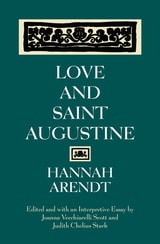
Love and Saint Augustine
Hannah Arendt
University of Chicago Press, 1995
In Love and Saint Augustine, Joanna Vecchiarelli Scott and Judith Chelius Stark make this important early work accessible for the first time. Here is a completely corrected and revised English translation that incorporates Arendt's own substantial revisions and provides additional notes based on letters, contracts, and other documents as well as the recollections of Arendt's friends and colleagues during her later years.
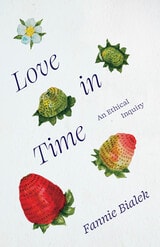
Love in Time
An Ethical InquiryFannie Bialek
University of Chicago Press, 2025
We live in time, and so we love in time. Our beloveds change, and we change beside them. Sometimes we change apart, but it is this very changeableness, the braving of an unknown future together, that endears us to our lovers. Far from an ideal of constancy and commitment, then, love is an endeavor fraught with uncertainty.
In this book, Fannie Bialek sketches a view of love that does not ignore the vagaries of life but embraces them. In contrast to philosophical and religious attempts to secure love against finitude, Bialek’s love embraces its susceptibility to change and accepts the ethical challenges such change introduces. Attentive to our deepest vulnerabilities, Bialek develops a fresh ethics of love grounded by our humility before time.
Loving Animals
Toward a New Animal AdvocacyKathy Rudy
University of Minnesota Press, 2013
The contemporary animal rights movement encompasses a wide range of sometimes-competing agendas from vegetarianism to animal liberation. For people for whom pets are family members—animal lovers outside the fray—extremist positions in which all human–animal interaction is suspect often discourage involvement in the movement to end cruelty to other beings. In Loving Animals, Kathy Rudy argues that in order to achieve such goals as ending animal testing and factory farming, activists need to be better attuned to the profound emotional, even spiritual, attachment that many people have with the animals in their lives.
Offering an alternative to both the acceptance of animal exploitation and radical animal liberation, Rudy shows that a deeper understanding of the nature of our feelings for and about animals can redefine the human–animal relationship in a positive way. Through extended interviews with people whose lives are intertwined with animals, analysis of the cultural representation of animals, and engaging personal accounts, she explores five realms in which humans use animals: as pets, for food, in entertainment, in scientific research, and for clothing. In each case she presents new methods of animal advocacy to reach a more balanced and sustainable relationship association built on reciprocity and connection.
Using this intense emotional bond as her foundation, Rudy suggests that the nearly universal stories we tell of living with and loving animals will both broaden the support for animal advocacy and inspire the societal changes that will improve the lives of animals—and humans—everywhere.
Loving the World Appropriately
Persuasion and the Transformation of SubjectivityJames L. Kastely
University of Chicago Press, 2022
What is persuasion? For some, it is the ideal alternative to violence. For others, persuasion is simply a neutral instrumentality—a valued source of soft power. Both positions rest on a fundamental belief: persuasion is a power that resides in a speaker acting on an audience. Loving the World Appropriately asks a different, more fundamental, question: why does an audience need persuasion? In shifting our focus, James Kastely delivers a provocative new history of rhetoric and philosophy, one that describes rhetoric as more than a matter of effective communication and recasts persuasion as a philosophical concern central to notions of human subjectivity. Ultimately, Kastely insists, persuasion enables us to love the world appropriately.
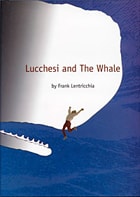
Lucchesi and The Whale
Frank Lentricchia
Duke University Press, 2001
Having become “a mad Ahab of reading,” who is driven to dissect the “artificial body of Melville’s behemothian book” to grasp its truth, Lucchesi allows his thoughts to wander and loop from theory to dream to reality to questionable memory. But his black humor-tinged musings are often as profoundly moving as they are intellectual, such as the section in which he ponders the life and philosophy of Ludwig Wittgenstein in relation to the significance of a name—and then attempts to share these thoughts with a sexy, middle-aged flight attendant—or another in which he describes a chance meeting with a similarly-named mafia don.
Despite apparent spiritual emptiness, Lucchesi in the end does find “a secret meaning” to Moby-Dick. And Lentricchia’s creations—both Lucchesi and The Whale and its main character—reveal this meaning through a series of ingeniously self-reflective metaphors, in much the way that Melville himself did in and through Moby-Dick. Vivid, humorous, and of unparalleled originality, this new work from Frank Lentricchia will inspire and console all who love and ponder both great literature and those who would write it.
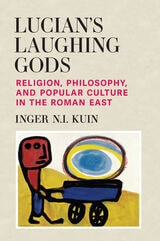
Lucian’s Laughing Gods
Religion, Philosophy, and Popular Culture in the Roman EastInger N.I. Kuin
University of Michigan Press, 2023
In Lucian's Laughing Gods, author Inger N. I. Kuin argues that in ancient Greek thought, comedic depictions of divinities were not necessarily desacralizing. In religion, laughter was accommodated to such an extent as to actually be constituent of some ritual practices, and the gods were imagined either to reciprocate or push back against human laughter—they were never deflated by it. Lucian uses the gods as comic characters, but in doing so, he does not automatically negate their power. Instead, with his depiction of the gods and of how they relate to humans—frivolous, insecure, callous—Lucian challenges the dominant theologies of his day as he refuses to interpret the gods as ethical models. This book contextualizes Lucian’s comedic performances in the intellectual life of the second century CE Roman East broadly, including philosophy, early Christian thought, and popular culture (dance, fables, standard jokes, etc.). His texts are analyzed as providing a window onto non-elite attitudes and experiences, and methodologies from religious studies and the sociology of religion are used to conceptualize Lucian’s engagement with the religiosity of his contemporaries.
Luckpilled
Compassion, Justice, and Hope in a World Nobody DeservesAaron Rabinowitz
Rutgers University Press, 2027
What if everything we experience comes down to luck? Humans have struggled with anxiety about the pervasiveness of luck since the concept first arose in ancient societies, and attempts to address the problem have shaped the modern world. Yet the problem of luck has persisted because resolving it requires letting go of a tenacious group of deeply rooted illusions centered on the need to feel that people mostly get what they deserve.
In Luckpilled: Compassion, Justice, and Hope in a World Nobody Deserves, Aaron Rabinowitz combines cutting-edge work on the philosophy, psychology, politics, and pedagogy of luck to argue that we are better off embracing the pervasiveness of luck and abandoning harmful illusions that preserve an unjust status-quo. Using the luckpilling techniques offered in this book can help readers to cultivate compassion, empathy, gratitude and humility, as well as a stronger connection to activities they find meaningful.
Ludwig Wittgenstein
Edward Kanterian
Reaktion Books, 2007
Ludwig Wittgenstein is generally considered as the greatest philosopher since Immanuel Kant, and his personal life, work, and his historical moment intertwined in a fascinating, complex web. Noted scholar Edward Kanterian explores these intersections in Ludwig Wittgenstein, the newest title in the acclaimed Critical Lives series.
Wittgenstein’s works—from Tractatus Logico-Philosophicus to the posthumously published Philosophical Investigations—are notoriously dense, and Kanterian carefully distills them here, proposing thought-provoking new interpretations. Yet the philosopher’s passions were not solely confined to theoretical musings, and the book explores Wittgenstein’s immersion in art and music and his social position as a member of the sophisticated Viennese upper class at the turn of the century. His personal and professional relationships also offer insights into his thoughts, as he was friends with the greatest thinkers of the twentieth century, including John Maynard Keynes, George Edward Moore, Bertrand Russell, and Gilbert Royle. The philosopher was also deeply tormented by ethical and religious questions, and his internal turmoil, Kanterian argues, gives us a deeper understanding of the important conflicts and tensions of his age. Ultimately, the author contends, Wittgenstein’s life reveals insights into the ethical quandaries of our own time.
A readable and concise account, Ludwig Wittgenstein is an informative, accessible introduction to the one of the greatest thinkers of our age.
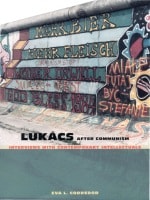
Lukács After Communism
Interviews with Contemporary IntellectualsEva L. Corredor
Duke University Press, 1997
The scholars featured in this collection—Etienne Balibar, Peter Bürger, Terry Eagleton, Fredric Jameson, Jacques Leenhardt, Michael Löwy, Roberto Schwarz, George Steiner, Susan Suleiman, and Cornel West—discuss a broad array of literary and political topics and present provocative views on gender, race, and economic relations. Corredor’s introduction provides a biographical synopsis of Lukács and discusses a number of his most important theoretical concepts. Maintaining the ongoing vitality of Lukács’s work, these interviews yield insights into Lukács as a philosopher and theorist, while offering anecdotes that capture him in his role as a teacher-mentor.
Lunar Voices
Of Tragedy, Poetry, Fiction, and ThoughtDavid Farrell Krell
University of Chicago Press, 1995
Krell pursues important philosophical motifs such as time, rhythm, and desire, through texts by Nietzsche, Trakl, Empedocles, Kafka, and Garcia Marquez. He surveys instances in which poets or novelists explicitly address philosophical questions, and philosophers confront literary texts—Heidegger's and Derrida's appropriations of Georg Trakl's poetry, Blanchot's obsession with Kafka's tortuous love affairs, and Garcia Marquez's use of Nietzsche's idea of the Eternal Return—all linked by the tragic hero Empedocles.
In his search to understand the insatiable desire for completeness that patterns so much art and philosophy, Krell investigates the identification of the lunar voice with woman in various roles—lover, friend, sister, shadow, and narrative voice.
Luther. The Origin of Modern Self-Consciousness
Reiner Schürmann Lecture NotesReiner Schürmann
Diaphanes, 2020
This volume in a planned twenty-nine-part series, Reiner Schuermann: Luther. The Origin of Modern Self-Consciousness sees Schuermann tracing Luther’s conception of the rise of self-consciousness as the subjective reference point. Schuermann then explores this conception in conversation with both the Cartesian cogito and Kantian apperception.
Lyric Personhood
On the Aesthetics of Being Someone in the WestDan Wang
University of Chicago Press, 2025
What does it mean to be a person? One might think of the possession of certain rights, having the capacity for love, or being self-determined. But if words like “person” or “love” seem to carry an internal meaning, where does this meaningfulness come from? Lyric Personhood contends that to be encultured in the modern West is to learn, on top of everything else, an unspoken and mostly felt sense of what it means to be someone, a sense transmitted not only in language but also through encounters with aesthetic form. Through close readings that span nineteenth-century European opera, commercial cinema, and amateur YouTube proposal videos, Dan Wang shows that a “person” has become an aesthetic concept—and not just a legal, moral, political, or philosophical one—in the last two hundred years of Western culture.
It’s hard to let go of the organizing promise of romantic love, the dream of therapeutic “health,” and the aspiration to belong to national culture, Wang argues, because these longings have been shaped by an archive of sentimental and melodramatic works that trains people's expectations for life, genre, and even the knowing promised in theory itself. Tracing a surprisingly continuous imagination of personhood through opera and film aesthetics, Lyric Personhood introduces modes of reading audiovisual works that allow a longer story to be told about the forms that make personhood sensible in the West.
Lyric Trade
Reading the Subject in the Postwar Long PoemJulia Bloch
University of Iowa Press, 2024
Engaging with poets such as Gwendolyn Brooks, H.D., Lorine Niedecker, Alice Notley, and Myung Mi Kim, this book asks: What does lyric mean, and why should it matter to poets and readers? Lyric Trade argues that lyric in the postwar long poem not only registers the ideological contradictions of modernism’s insistence on new forms, but that it also maps spaces for formal reimaginings of the subject.