Results by title
22279 books match the query 'Social Science' and 714 start with l
Landscapes of Origin in the Americas
Creation Narratives Linking Ancient Places and Present CommunitiesEdited and with an introduction by Jessica Joyce Christie
University of Alabama Press, 2009
By linking ancient places with present communities, Landscapes of Origin in the Americas explores how cultural landscapes sustain the continuity of origin narratives.
Landscape is a powerful factor in the operation of memory because of the associations narrators make between the local landscape and the events of the stories they tell. Ancestors and mythological events often become fixed in a specific landscape and act as timeless reference points.
In conventional anthropological literature, "landscape" is the term applied to the meaning local people bestow on their cultural and physical surroundings. In this work, the authors explore the cultural and physical landscapes an individual or cultural group has constructed to define the origins or beginnings of that cultural group as revealed through shared or traditional memory. The cultural landscapes of origins in diverse sites throughout the Americas are investigated through multidisciplinary research, not only to reveal the belief system and mythologies but also to place these origin beliefs in context and relationship to each other. In a continual interaction between the past, present, and future, time is subordinate to place, and history, as defined in Western academic terms, does not exist.
Landscapes of Power
Politics of Energy in the Navajo NationDana E. Powell
Duke University Press, 2018
Landscapes of Social Transformation in the Salinas Province and the Eastern Pueblo World
Edited by Katherine A. Spielmann
University of Arizona Press, 2017
Landscapes of Social Transformation in the Salinas Province and the Eastern Pueblo World investigates relationships between diverse regional and local changes in the Rio Grande and Salinas areas from 1100 to 1500 C.E. The contributing authors draw on the results of sixteen seasons of archaeological survey and excavation in the Salinas Province of central New Mexico. The chapters offer cross-scale analyses to compare broad perspectives in well-researched southwestern culture changes to the finer details of stability and transformation in Salinas. This stability—which was unusual in the Pueblo Southwest—from the 1100s until its abandonment in the 1670s provides an interesting contrast to migration-based transformations studied elsewhere in the Rio Grande region.
CONTRIBUTORS
Patricia Capone
Matthew Chamberlin
Tiffany C. Clark
William M. Graves
Cynthia L. Herhahn
Deborah Huntley
Keith Kintigh
Ann Kinzig
Jeannette L. Mobley-Tanaka
Alison E. Rautman
Jonathan Sandor
Grant Snitker
Julie Solometo
Katherine A. Spielmann
Colleen Strawhacker
Maryann Wasiolek
Landscapes of Warfare
Urartu and Assyria in the Ancient Middle EastTiffany Earley-Spadoni
University Press of Colorado, 2025
Tiffany Earley-Spadoni challenges traditional views by emphasizing warfare’s role in organizing ancient landscapes, suggesting that Urartu’s strength lay in its strategic optimization of terrain through fortified regional networks. Using an interdisciplinary approach that includes GIS-enabled studies and integrates archaeological, historical, and art-historical evidence, she illustrates how warfare was a generative force in structuring space and society in the ancient Middle East. Landscapes of Warfare situates Urartu’s developments within the broader context of regional empires, providing insights into the mechanisms of warfare, governance, and cultural identity formation.

Langston Hughes and the *Chicago Defender*
Essays on Race, Politics, and Culture, 1942-62Langston Hughes. Edited by Christopher C. De Santis
University of Illinois Press, 1995
But it was as a columnist for the famous African-American newspaper the Chicago Defender that Hughes chronicled the hopes and despair of his people. For twenty years, he wrote forcefully about international race relations, Jim Crow, the South, white supremacy, imperialism and fascism, segregation in the armed forces, the Soviet Union and communism, and African-American art and culture. None of the racial hypocrisies of American life escaped his searing, ironic prose.
This is the first collection of Hughes's nonfiction journalistic writings. For readers new to Hughes, it is an excellent introduction; for those familiar with him, it gives new insights into his poems and fiction.
Language Attitudes in the American Deaf Community
Joseph C. Hill
Gallaudet University Press, 2012
In a diverse signing community, it is not unusual to encounter a wide variety of expression in the types of signs used by different people. Perceptions of signing proficiency often vary within the community, however. Conventional wisdom intimates that those who learned at an early age at home or in school know true standard American Sign Language, while those who learned ASL later in life or use contact or coded signs are considered to be less skillful. Joseph Christopher Hill’s new study Language Attitudes in the American Deaf Community explores the linguistic and social factors that govern such stereotypical perceptions of social groups about signing differences.
Hill’s analysis focuses on affective, cognitive, and behavioral types of evaluative responses toward particular language varieties, such as ASL, contact signing, and Signed English. His work takes into account the perceptions of these signing types among the social groups of the American Deaf community that vary based on generation, age of acquisition, and race. He also gauges the effects of social information on these perceptions and the evaluations and descriptions of signing that results from their different concepts of a signing standard. Language Attitudes concludes that standard ASL’s value will continue to rise and the Deaf/Hearing cultural dichotomy will remain relevant without the occurrence of a dramatic cultural shift.
Language Machines
Cultural AI and the End of Remainder HumanismLeif Weatherby
University of Minnesota Press, 2025
How generative AI systems capture a core function of language
Looking at the emergence of generative AI, Language Machines presents a new theory of meaning in language and computation, arguing that humanistic scholarship misconstrues how large language models (LLMs) function. Seeing LLMs as a convergence of computation and language, Leif Weatherby contends that AI does not simulate cognition, as widely believed, but rather creates culture. This evolution in language, he finds, is one that we are ill-prepared to evaluate, as what he terms “remainder humanism” counterproductively divides the human from the machine without drawing on established theories of representation that include both.
To determine the consequences of using AI for language generation, Weatherby reads linguistic theory in conjunction with the algorithmic architecture of LLMs. He finds that generative AI captures the ways in which language is at first complex, cultural, and poetic, and only later referential, functional, and cognitive. This process is the semiotic hinge on which an emergent AI culture depends. Weatherby calls for a “general poetics” of computational cultural forms under the formal conditions of the algorithmic reproducibility of language.
Locating the output of LLMs on a spectrum from poetry to ideology, Language Machines concludes that literary theory must be the backbone of a new rhetorical training for our linguistic-computational culture.
Language Policy & Identity In The U.S.
Ronald Schmidt, Sr.
Temple University Press, 2000
This book lays out the two approaches to language policy -- linguistic assimilation and linguistic pluralism -- in clear and accessible terms. Filled with examples and narratives, it provides a readable overview of the U.S. "culture wars" and explains why the conflict has just now emerged as a major issue in the United States.
Professor Schmidt examines bilingual education in the public schools, "linguistic access" rights to public services, and the designation of English as the United States' "official" language. He illuminates the conflict by describing the comparative, theoretical, and social contexts for the debate. The source of the disagreement, he maintains, is not a disagreement over language per se but over identity and the consequences of identity for individuals, ethnic groups, and the country as a whole. Who are "the American people"? Are we one national group into which newcomers must assimilate? Or are we composed of many cultural communities, each of which is a unique but integral part of the national fabric? This fundamental point is what underlies the specific disputes over language policy. This way of looking at identity politics, as Professor Schmidt shows, calls into question the dichotomy between "material interest" politics and "symbolic" politics in relation to group identities.
Not limited to describing the nature and context of the language debate, Language Policy and Identity Politics in the United States reaches the conclusion that a policy of linguistic pluralism, coupled with an immigrant settlement policy and egalitarian economic reforms, will best meet the aims of justice and the common good. Only by attacking both the symbolic and material effects of racialization will the United States be able to attain the goals of social equality and national harmony.
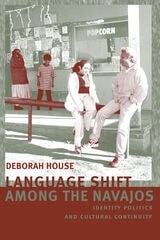
Language Shift among the Navajos
Identity Politics and Cultural ContinuityDeborah House
University of Arizona Press, 2002
Language Shift among the Navajos provides a close look at the ideological factors that intervene between the desire of the Navajos to maintain their language as an important aspect of their culture and their actual linguistic practice. Based on more than ten years of fieldwork within a Navajo institution and community, it points to ideologies held by Navajo people about their unequal relationship with the dominant American society as a primary factor in the erosion of traditional language use. House suggests that the Navajos employ their own paradigm—Sa’ah Naagháí Bik’eh Hózhóón—to learn both Western language and culture and their own without denigrating either perspective. By building on the traditional Navajo belief in harmony and balance, she advocates that those who value the language should use and teach it not just in school but also in the home, in the ceremonial hogans, and among those who cherish their heritage. Now is the time when language choices and behavior will influence whether the Navajo language lives or dies. House's book carries important lessons for anyone concerned with cultural continuity. It is a wake-up call for educators, youth, politicians, or family and community members who value Native language and culture. It remains to be seen in what language that call will be answered.
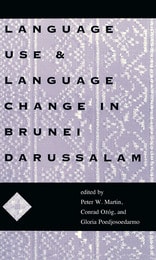
Language Use and Language Change in Brunei Darussalam
Mis Sea#100Peter W. Martin
Ohio University Press, 1996
The oil-rich sultanate of Brunei Darussalam is located on the northern coast of Borneo between the two Malaysian states of Sarawak and Sabah. Though the country is small in size and in population, the variety of language use there provides a veritable laboratory for linguists in the fields of Austronesian linguistics, bilingual studies, and sociolinguistic studies, particularly those dealing with language shift.
This useful reference is divided into three sections: one on varieties of the Malay language used in the country, one on other indigenous languages, and one on the role and form of the English used there. Contributors to the collection include Bruneian scholars as well as established experts in the fields of Austronesian linguistics, sociolinguistics studies, and the description of new varieties of English.
Language Variety in the South
Perspectives in Black and WhiteMichael B. Montgomery
University of Alabama Press, 1986
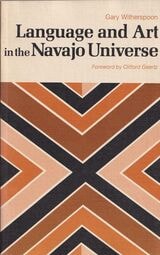
Language and Art in the Navajo Universe
Gary Witherspoon
University of Michigan Press, 1977
Language and Sexuality
Contesting Meaning in Theory and PracticeEdited by Kathryn Campbell-Kibler, Robert J. Podesva, Sarah Roberts, and Andrew
CSLI, 2001

Language of Tomorrow
Towards a Transcultural Visual Communication System in a Posthuman ConditionHaytham Nawar
Intellect Books, 2020
Language of Tomorrow is a comprehensive guide to the history, evolution, and current forms of pictographic communication, charting its course from ancient Egyptian writing systems to modern-day emojis. The book is a culmination of research combining visual communication, semiotic theory, cultural studies, linguistics, artificial intelligence, and new media.
Haytham Nawar presents a cohesive and comprehensive historical framework—covering pictographic, logographic, and ideographic writing systems and scripts—through which we can discuss the future of communication. In his analysis, he explores the possibility of developing a standardized universal pictographic communication system that fosters mutual understanding and bridges diverse cultures. Weaving practice and theory across disciplines and bringing together language, culture, art, and design, Language of Tomorrow aims to locate the direction for the research and development of a transcultural visual communication system for the posthuman era.

Language of the Gun
Youth, Crime, and Public PolicyBernard E. Harcourt
University of Chicago Press, 2006
Home to over 150 repeat offenders ranging in age from twelve to seventeen, the Catalina Mountain School is made up of a particular stratum of boys—those who have committed the most offenses but will still be released upon reaching adulthood. In an effort to understand the symbolic and emotional language of guns and gun carrying, Harcourt interviewed dozens of these incarcerated Catalina boys. What do these youths see in guns? What draws them to handguns? Why do some of them carry and others not? For Harcourt, their often surprising answers unveil many of the presuppositions that influence our laws and policies.
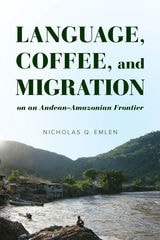
Language, Coffee, and Migration on an Andean-Amazonian Frontier
Nicholas Q. Emlen
University of Arizona Press, 2020
The rich-tasting Peruvian coffee in your cup is the distillate of an intensely dynamic Amazonian frontier, where native Matsigenkas, state agents, and migrants from the rural highlands are carving the forest into farms. Language, Coffee, and Migration on an Andean-Amazonian Frontier shows how people of different backgrounds married together and blended the Quechua, Matsigenka, and Spanish languages in their day-to-day lives. This frontier relationship took place against a backdrop of deforestation, cocaine trafficking, and destructive natural gas extraction.
Nicholas Q. Emlen’s rich account—which takes us to remote Amazonian villages, dusty frontier towns, roadside bargaining sessions, and coffee traders’ homes—offers a new view of settlement frontiers as they are negotiated in linguistic interactions and social relationships. This interethnic encounter was not a clash between distinct groups but rather an integrated network of people who adopted various stances toward each other as they spoke.
The book brings together a fine-grained analysis of multilingualism with urgent issues in Latin America today, including land rights, poverty, drug trafficking, and the devastation of the world’s largest forest. It offers a timely on-the-ground perspective on the agricultural colonization of the Amazon, which has triggered an environmental emergency threatening the future of the planet.
Language, History, and Identity
Ethnolinguistic Studies of the Arizona TewaPaul V. Kroskrity
University of Arizona Press, 1993

Language, Power, and Ideology in Brunei Darussalam
Mis Sea#99Geoffrey C. Gunn
Ohio University Press, 1996
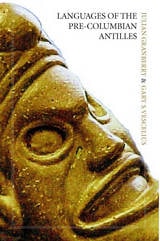
Languages of the Pre-Columbian Antilles
Julian Granberry and Gary Vescelius
University of Alabama Press, 2004
A linguistic analysis supporting a new model of the colonization of the Antilles before 1492
This work formulates a testable hypothesis of the origins and migration patterns of the aboriginal peoples of the Greater Antilles (Cuba, Jamaica, Hispaniola, and Puerto Rico), the Lucayan Islands (the Commonwealth of the Bahamas and the Crown Colony of the Turks and Caicos), the Virgin Islands, and the northernmost of the Leeward Islands, prior to European contact. Using archaeological data as corroboration, the authors synthesize evidence that has been available in scattered locales for more than 500 years but which has never before been correlated and critically examined.
Within any well-defined geographical area (such as these islands), the linguistic expectation and norm is that people speaking the same or closely related language will intermarry, and, by participating in a common gene pool, will show similar socioeconomic and cultural traits, as well as common artifact preferences. From an archaeological perspective, the converse is deducible: artifact inventories of a well-defined sociogeographical area are likely to have been created by speakers of the same or closely related language or languages.
Languages of the Pre-Columbian Antilles presents information based on these assumptions. The data is scant—scattered words and phrases in Spanish explorers' journals, local place names written on maps or in missionary records—but the collaboration of the authors, one a linguist and the other an archaeologist, has tied the linguistics to the ground wherever possible and allowed the construction of a framework with which to understand the relationships, movements, and settlement patterns of Caribbean peoples before Columbus arrived.
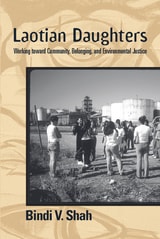
Laotian Daughters
Working toward Community, Belonging, and Environmental JusticeBindi V. Shah
Temple University Press, 2011
Laotian Daughters focuses on second-generation environmental justice activists in Richmond, California. Bindi Shah's pathbreaking book charts these young women's efforts to improve the degraded conditions in their community and explores the ways their activism and political practices resist the negative stereotypes of race, class, and gender associated with their ethnic group.
Using ethnographic observations, interviews, focus groups, and archival data on their participation in Asian Youth Advocates—a youth leadership development project—Shah analyzes the teenagers' mobilization for social rights, cross-race relations, and negotiations of gender and inter-generational relations. She also addresses issues of ethnic youth, and immigration and citizenship and how these shape national identities.
Shah ultimately finds that citizenship as a social practice is not just an adult experience, and that ethnicity is an ongoing force in the political and social identities of second-generation Laotians.

Lara Croft
Cyber HeroineAstrid Deuber-Mankowsky
University of Minnesota Press, 2005
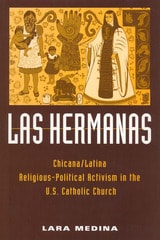
Las Hermanas
Chicana/Latina Religious-Political Activism in the U. S. Catholic ChurchLara Medina
Temple University Press, 2005
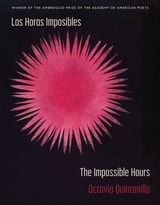
Las Horas Imposibles / The Impossible Hours
Octavio Quintanilla; Translated by Octavio Quintanilla and Natalia Treviño
University of Arizona Press, 2025
Presented in Spanish with English translations, this poetry collection comprises lyric and concrete poems—or frontextos—that explore intimacy and different shades of violence as a means to reconcile the speaker’s sense of belonging in the world. From the opening poem to the last in the first section, Quintanilla captures the perilous journeys that migrants undertake crossing borders as well as the paths that lovers forge to meet their endless longing. These themes are skillfully woven by Quintanilla, guiding us back and forth across the Rio Grande to encounter the apparitions of the disappeared and to witness the willingness of many to risk life and limb for a better life. The second half of the collection is one long poem, a letter addressed to a lost lover who will never get to read the speaker’s secret thoughts. Haunted by loss—of parents, of children, of the self—the speaker reaches an inevitable epiphany: “[A]nd sometimes it’s hard to know / on which side of the river I stand.” Stylistically, these poems destabilize our notions and expectations of genre and lyricism.
Las Horas Imposibles / The Impossible Hours is more than just an exercise in poetic virtuosity; it is an excavation into the complexities of what it means to be a human being in our contemporary world.

Las Raras
Feminine Style, Intellectual Networks, and Women Writers during Spanish-American ModernismoSarah Moody
Vanderbilt University Press, 2024
Premio al Mejor Libro en Humanidades, Latin American Studies Association–Nineteenth-Century Section, 2025
Premio Victoria Urbano de Monografía Crítica, Association of Gender and Sexuality Studies, 2025 (co-winner)
Segundo Premio, Adela Zamudio Prize, Feministas Unidas, 2025
Las Raras proposes that the Modernistas’ advocacy for a writing style they considered feminine helps us to understand why so few (and perhaps no) women were accepted as active participants in Modernismo. Author Sarah Moody studies how particular writers contributed to the idea of a feminine aesthetic and tracks the intellectual networks of Modernismo through periodicals and personal papers, such as albums and correspondence. Buenos Aires, Paris, and Montevideo figure prominently in this transatlantic study, which reexamines some of the most important period writers in Spanish, including Rubén Darío, Amado Nervo, and Enrique Gómez Carrillo.
This book also considers the critiques launched by women writers, such as Aurora Cáceres, Clorinda Matto de Turner, and María Eugenia Vaz Ferreira, who experienced Modernista exclusion firsthand, deconstructed the Modernista discourse of a modern, “feminine” style, and built literary success in alternative terms. These writers reoriented the discussion about women in modernity to address women’s education, professionalization, and advocacy for social and civic improvements. In this study, Modernismo emerges as both a literary style and an intellectual network, in which style and sociability are mutually determining and combine to form a system of prestige and validation that excluded women writers.
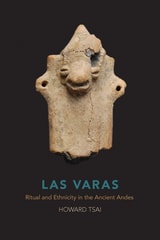
Las Varas
Ritual and Ethnicity in the Ancient AndesHoward Tsai
University of Alabama Press, 2020
Recent popular discourse on nationalism and ethnicity assumes that humans by nature prefer “tribalism,” as if people cannot help but divide themselves along lines of social and ethnic difference. Research from anthropology, history, and archaeology, however, shows that individuals actively construct cultural and social ideologies to fabricate the stereotypes, myths, and beliefs that separate “us” from “them.” Archaeologist Howard Tsai and his team uncovered a thousand-year-old village in northern Peru where rituals were performed to recognize and reinforce ethnic identities.
This site—Las Varas—is located near the coast of Peru in a valley leading into the Andes. Excavations revealed a western entrance to Las Varas for those arriving from the coast and an eastern entryway for those coming from the highlands. Rituals were performed at both of these entrances, indicating that the community was open to exchange and interaction, yet at the same time controlled the flow of people and goods through ceremonial protocols. Using these checkpoints and associated rituals, the villagers of Las Varas were able to maintain ethnic differences between themselves and visitors from foreign lands.
Las Varas: Ritual and Ethnicity in the Ancient Andes reveals a rare case of finding ethnicity relying solely on archaeological remains. In this monograph, data from the excavation of Las Varas are analyzed within a theoretical framework based on current understandings of ethnicity. Tsai’s method, approach, and inference demonstrate the potential for archaeologists to discover how ethnic identities were constructed in the past, ultimately making us question the supposed naturalness of tribal divisions in human antiquity.
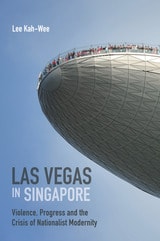
Las Vegas in Singapore
Violence, Progress and the Crisis of Nationalist ModernityLee Kah-Wee
National University of Singapore Press, 2018
The first history begins in colonial Singapore in the 1880s, when British administrators revised gambling laws in response to the political threat posed by Chinese-run gambling syndicates. Following the tracks of these punitive laws and practices, the book moves into the 1960s when the newly independent city-state created a national lottery while criminalizing both organized and petty gambling in the name of nation-building. The second history shifts the focus to corporate Las Vegas in the 1950s when digital technology and corporate management practices found each other on the casino floor. Tracing the emergence of the specialist casino designer, the book reveals how casino development evolved into a highly rationalized spatial template designed to maximize profits. Today an iconic landmark of Singapore, Marina Bay Sands is also an artifact of these two histories, an attempt by Singapore to normalize what was once criminalized in its nationalist history.
Lee Kah-Wee argues that the historical project of the control of vice is also about the control of space and capital. The result is an uneven landscape where the legal and moral status of gambling is contingent on where it is located. As the current wave of casino expansion spreads across Asia, he warns that these developments should not be seen as liberalization but instead as a continuation of the project of concentrating power by modern states and corporations.
Las Vegas
A Centennial HistoryEugene P. Moehring
University of Nevada Press, 2005
Las Vegas
The Great American PlaygroundRobert D. Mccracken
University of Nevada Press, 1996
Las Vegas: The Great American Playground, illustrated with many fine historical photographs, traces the city’s history from its first Native American occupants more than 10,000 years ago to its present status as a premier tourist destination. It is the story of a group of colorful, enterprising individuals who made the desert bloom with undreamed-of possibilities.
Las hijas de Juan
Daughters BetrayedJosie Méndez-Negrete
Duke University Press, 2006
Méndez-Negrete was born in Mexico, in the state of Zacatecas. She recalls a joyous childhood growing up in the midst of Tabasco, a vibrant town filled with extended family. Her father, though, had dreams of acquiring wealth in el norte. He worked sun-up to sun-down in the fields of south Texas. Returning home to Mexico, his pockets full of dollars, he spent evenings drinking and womanizing.
When Méndez-Negrete was eleven, her father moved the family to the United States, where they eventually settled in California’s Santa Clara Valley. There her father began molesting his daughters, viciously beating them and their mother. Within the impoverished immigrant family, the abuse continued for years, until a family friend brought it to the attention of child welfare authorities. Méndez-Negrete’s father was tried, convicted, and imprisoned.
Las hijas de Juan is told chronologically, from the time Méndez-Negrete was a child until she was a young adult trying, along with the rest of her family, to come to terms with her father’s brutal legacy. It is a harrowing story of abuse and shame compounded by cultural and linguistic isolation and a system of patriarchy that devalues the experiences of women and girls. At the same time, Las hijas de Juan is an inspiring tale, filled with strong women and hard-won solace found in traditional Mexican cooking, songs, and storytelling.
Las yerbas de la gente
A Study of Hispano-American Medicinal PlantsKaren Cowan Ford
University of Michigan Press, 1975

Last Best Gifts
Altruism and the Market for Human Blood and OrgansKieran Healy
University of Chicago Press, 2006
Last Best Gifts offers a fresh perspective on this ethical dilemma by examining the social organization of blood and organ donation in Europe and the United States. Gifts of blood and organs are not given everywhere in the same way or to the same extent—contrasts that allow Kieran Healy to uncover the pivotal role that institutions play in fashioning the contexts for donations. Procurement organizations, he shows, sustain altruism by providing opportunities to give and by producing public accounts of what giving means. In the end, Healy suggests, successful systems rest on the fairness of the exchange, rather than the purity of a donor’s altruism or the size of a financial incentive.

Last Cavalier
The Life and Times of John A. Lomax, 1867-1948Nolan Porterfield
University of Illinois Press, 1996

Last King of the Sports Page
The Life and Career of Jim MurrayTed Geltner
University of Missouri Press, 2012
Part crusader, part comedian, Jim Murray was a once-in-a-generation literary talent who just happened to ply his trade on newsprint, right near the box scores and race results. During his lifetime, Murray rose through the ranks of journalism, from hard-bitten 1940s crime reporter, to national Hollywood correspondent, to the top sports columnist in the United States. In Last King of the Sports Page: The Life and Career of Jim Murray, Ted Geltner chronicles Jim Murray’s experiences with twentieth-century American sports, culture, and journalism.
Last Rites for the Tipu Maya
Genetic Structuring in a Colonial CemeteryKeith Jacobi
University of Alabama Press, 2000
Jacobi's groundbreaking osteology study uncovers the history of the Tipu Maya of Belize and their subsequent contact with the Spanish conquistadores and missionaries.
Two cultures collided at Tipu, Belize, in the 1600s: that of the native Maya and that of the Spanish missionaries, who arrived with an agenda of religious subjugation and, ultimately, political control. Combining historical documentation with the results of an archaeological exploration of a Tipu cemetery, Keith Jacobi provides an account of the meshing of these two cultures and the assimilation of Catholic practices by the Tipu.
In particular, Jacobi focuses on the dental remains recovered at this site. A tooth may be the last tangible evidence of a living creature, so teeth can reveal information about an individual's health, diet, cosmetic alteration, trauma, and genetic structure. From the genetic structure the researcher can learn information about an individual's relationship to others in a particular population and between populations.
Jacobi's research reveals how these European and Spanish Catholic practices were assimilated by the Tipu Maya and enables the first description of the prevalent attitudes toward death and burial customs. Through this study of Tipu Maya dentition changes through time, Jacobi sheds light on Spanish intermarriage, Maya familial relationships, and the Tipu genetic affinity with other prehistoric, historic, and modern Maya.
Lasting Legacy to the Carolinas
The Duke Endowment, 1924–1994Robert F. Durden
Duke University Press, 1998
In this volume, Robert F. Durden explores how the propriety of linking together a tax-free foundation and an investor-owned, profit-seeking business like the Duke Power Company has significantly changed over the course of the century. Explaining the implications of the Tax Reform Act of 1969 for J. B. Duke’s dream, Durden shows how the philanthropist’s plan to have the Duke Endowment virtually own and ultimately control Duke Power (which, in turn, would supply most of the Endowment’s income) dissolved after the death of daughter Doris Duke in 1993, when the trustees of the Endowment finally had the unanimous votes needed to sever that tie. Although the Endowment’s philanthropic projects—higher education (including Duke University), hospitals and health care, orphan and child care in both North and South Carolina, and the rural Methodist church in North Carolina—continue to be served, this study explains the impact of a century of political and social change on one man’s innovative charitable intentions. It is also a testimony to the many staff members and trustees who have invested their own time and creative energies into further benefiting these causes, despite decades of inevitable challenges to the Endowment.
This third volume of Durden’s trilogy relating to the Dukes of Durham will inform not only those interested in the continuing legacy of this remarkable family but also those involved with philanthropic boards, charitable endowments, medical care, child-care institutions, the rural church, and higher education.

Late Derrida, Volume 106
Ian Balfour , ed.
Duke University Press, 0
The essays address a wide array of Derrida’s concerns: human rights, justice, religion, the performative, “the gift of death,” mourning, and sovereignty. They often put Derrida’s texts in conjunction with the works of others—Wordsworth, Agamben, Schelling, and Benjamin, to name a few—that resonate with and on occasion resist Derrida’s own thinking and writing. One essay offers a reading of Wordsworth’s elegy “Distressful gift!” as a dialogue with questions posed by Derrida, using as its frame the kind of nonnormative mourning that Derrida advocated, together with a haunting analysis of the character of survival. Other essays look at Derrida’s theory of performativity as advanced in his late works, continuing his emphasis on the power of language, and in general they emulate his vigilance in attending to force and violence everywhere.
Contributors. Ian Balfour, David L. Clark, Mary Jacobus, David E. Johnson, David Lloyd, J. Hillis Miller, Marc Redfield, Rei Terada, Elisabeth Weber
Late Enlightenment
Emergence of the Modern 'National Idea'Marius Turda
Central European University Press, 2006
Late Holocene Research on Foragers and Farmers in the Desert West
Barbara J. Roth and Maxine E. McBrinn
University of Utah Press, 2015
Three main themes link these papers: the role of the environment in shaping prehistoric behavior, flexibility in foraging and farming adaptations, and diversity in settlement strategies. Contributors cover a range of topics including the varied ways hunter-gatherers adapted to arid environments, the transition from hunting and gathering to farming and the reasons for it, the variation in early farmers across the Southwest and Great Basin, and the differing paths followed as they developed settled villages.
Late Intermediate Occupation at Cerro Azul, Perú, A Preliminary Report
Joyce Marcus
University of Michigan Press, 1987
Late Pleistocene Geochronology and the Paleo-Indian Penetration into the Lower Michigan Peninsula
Ronald J. Mason
University of Michigan Press, 1958
Late Prehistoric Bison Procurement in Southeastern New Mexico
The 1977 Season at the Garnsey SiteJohn D. Speth and William J. Parry
University of Michigan Press, 1978
Late Prehistoric Bison Procurement in Southeastern New Mexico
The 1978 Season at the Garnsey Site (LA-18399)John D. Speth and William J. Parry
University of Michigan Press, 1980
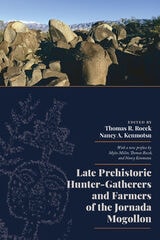
Late Prehistoric Hunter-Gatherers and Farmers of the Jornada Mogollon
Thomas R. Rocek
University Press of Colorado, 2023
The Jornada branch of the Mogollon culture and its inhabitants played a significant economic, political, and social role at multiple scales. This volume draws together results from recent large-scale CRM work that has amassed among the largest data sets in the Southwest with up-to-date chronological, architectural, faunal, ceramic, obsidian sourcing, and other specialized studies. Chapters by some of the most active researchers in the area address topics that reach beyond the American Southwest, such as mobility, forager adaptations, the transition to farming, responses to environmental challenges, and patterns of social interaction.
Late Prehistoric Hunter-Gatherers and Farmers of the Jornada Mogollon is an up-to-date summary of the major developments in the region and their implications for Southwest archaeology in particular and anthropological archaeological research more generally.
The publication of this book is supported in part by the Arizona Archaeological and Historical Society and the Center for Material Culture Studies at the University of Delaware.
Contributors: Rafael Cruz Antillón, Douglas H. M. Boggess, Peter C. Condon, Linda Scott Cummings, Moira Ernst, Tim Graves, David V. Hill, Nancy A. Kenmotsu, Shaun M. Lynch, Arthur C. MacWilliams, Mary Malainey, Timothy D. Maxwell, Myles R. Miller, John Montgomery, Jim A. Railey, Thomas R. Rocek, Matt Swanson, Christopher A. Turnbow, Javier Vasquez, Regge N. Wiseman, Chad L. Yost

Late Star Trek
The Final Frontier in the Franchise EraAdam Kotsko
University of Minnesota Press, 2025
How Star Trek’s twenty-first-century reinventions illuminate the unique challenges and opportunities of franchise-style corporate storytelling
Late Star Trek explores the beloved science fiction franchise’s repeated attempts to reinvent itself after the end of its 1990s golden age. Beginning with the prequel series Enterprise, Adam Kotsko analyzes the wealth of content set within Star Trek’s sprawling continuity—including authorized books, the three “Kelvin Timeline” films, and the streaming series Discovery, Picard, Lower Decks, Prodigy, and Strange New Worlds—along with fan discourse, to reflect on the perils and promise of the franchise as a unique form of storytelling.
Significantly including the licensed novels and comic books that fill out the Star Trek universe for its fans, Kotsko brings the multiple productions of the early twenty-first century together as a unified whole rather than analyzing them in their current stratified view. He argues that the variety of styles and approaches in this tumultuous era of Star Trek history provides the perfect opportunity to reflect on the nature of the franchise storyworlds that now dominate popular culture. By taking the spin-offs and tie-ins seriously as creative attempts to tell a new story within an established universe, Late Star Trek highlights creative triumphs as well as the tendency for franchise faithfulness to get in the way of creating engaging characters and ideas.
Arguing forcefully against the prevailing consensus that franchises are a sign of cultural decay, Kotsko contends that the Star Trek universe exemplifies an approach to storytelling that has been perennial across cultures. Instead, he finds that what limits creativity within franchises is not their reliance on the familiar but their status as modern myths, held not as common cultural heritage but rather owned as corporate intellectual property.
Retail e-book files for this title are screen-reader friendly with images accompanied by short alt text and/or extended descriptions.
Late Woodland Cultures of Southeastern Michigan
James E. Fitting
University of Michigan Press, 1965
Latent Destinies
Cultural Paranoia and Contemporary U.S. NarrativePatrick O Donnell
Duke University Press, 2000
O’Donnell argues that paranoia on the broadly cultural level is essentially a narrative process in which history and postmodern identity are negotiated simultaneously. The result is an erasure of historical temporality—the past and future become the all-consuming, self-aware present. To explain and exemplify this, O’Donnell looks at such books and films as Libra, JFK, The Crying of Lot 49, The Truman Show, Reservoir Dogs, Empire of the Senseless, Oswald’s Tale, The Executioner’s Song, Underworld, The Killer Inside Me, and Groundhog Day. Organized around the topics of nationalism, gender, criminality, and construction of history, Latent Destinies establishes cultural paranoia as consonant with our contradictory need for multiplicity and certainty, for openness and secrecy, and for mobility and historical stability.
Demonstrating how imaginative works of novels and films can be used to understand the postmodern historical condition, this book will interest students and scholars of American literature and cultural studies, postmodern theory, and film studies.
Latin America at 200
A New IntroductionBy Phillip Berryman
University of Texas Press, 2016
Between 2010 and 2025, most of the countries of Latin America will commemorate two centuries of independence, and Latin Americans have much to celebrate at this milestone. Most countries have enjoyed periods of sustained growth, while inequality is showing modest declines and the middle class is expanding. Dictatorships have been left behind, and all major political actors seem to have accepted the democratic process and the rule of law. Latin Americans have entered the digital world, routinely using the Internet and social media.
These new realities in Latin America call for a new introduction to its history and culture, which Latin America at 200 amply provides. Taking a reader-friendly approach that focuses on the big picture and uses concrete examples, Phillip Berryman highlights what Latin Americans are doing to overcome extreme poverty and underdevelopment. He starts with issues facing cities, then considers agriculture and farming, business, the environment, inequality and class, race and ethnicity, gender, and religion. His survey of Latin American history leads into current issues in economics, politics and governance, and globalization. Berryman also acknowledges the ongoing challenges facing Latin Americans, especially crime and corruption, and the efforts being made to combat them. Based on decades of experience, research, and travel, as well as recent studies from the World Bank and other agencies, Latin America at 200 will be essential both as a classroom text and as an introduction for general readers.
Latin America in Debate
Indigeneity, Development, Dependency, PopulismMaristella Svampa
Duke University Press, 2025
Latin American Documentary Filmmaking
Major WorksDavid William Foster
University of Arizona Press, 2013
Foster provides a series of detailed examinations of major texts of Latin American filmmaking, discussing their textual production and processes of meaning. His analysis delves deeply into the world of Latin American film and brings forth a discourse of structure that has previously been absent from the fields of filmmaking and Latin American studies. This volume provides perspective on diverse and methodological approaches, pulling from a wide scope of cinematic traditions. Using his own critical readings and research, Foster presents his findings in terms that are accessible to non-Spanish speakers and Latin American film enthusiasts.
A much-needed contribution to the field of Latin American documentary film, Foster’s research and perspective will be a valuable source for those interested in film studies, gender studies, and culture.
Latin American Immigration Ethics
Edited by Amy Reed-Sandoval Luis Rubén Díaz Cepeda
University of Arizona Press, 2021
Without eschewing relevant conceptual resources derived from European and Anglo-American philosophies, the essays in this book emphasize Latin American and Latinx philosophies, decolonial and feminist theories, and Indigenous philosophies of Latin America, in the pursuit of an immigration ethics. The contributors explore the moral challenges of immigration that either arise within Latin America, or when Latin Americans and Latina/o/xs migrate to and reside within the United States. Uniquely, some chapters focus on south to south migration. Contributors also examine Latina/o/x experiences in the United States, addressing the lacuna of philosophical writing on migration, maternity, and childhood.
Latin American Immigration Ethics advances philosophical conversations and debates about immigration by theorizing migration from the Latin American and Latinx context.
Contributors
Luis Rubén Díaz Cepeda, Lori Gallegos, Margaret Griesse, Eduardo Mendieta, José Jorge Mendoza, Amos Nascimento, Carlos Pereda, Silvana Rabinovich, Amy Reed-Sandoval, Raúl Villarroel, Allison B. Wolf