Results by title
4030 books match the query 'Language Arts & Disciplines' and 224 start with l

Library Technology Buying Strategies
Marshall Breeding
American Library Association, 2016
Library Web Development
Beyond Tips and TricksJason Bengtson
American Library Association, 2019
Library and Information Science
A Guide to Key Literature and SourcesMichael Bemis
American Library Association, 2014
Library as Publisher
New Models of Scholarly Communication for a New EraSarah Kalikman Lippincott
Against the Grain, LLC, 2017
The Charleston Briefings are written by authorities who provide an effective, readable overview of their topics—not an academic monograph. The intended audience is busy nonspecialist readers who want to be informed concerning important issues in our industry in an accessible and timely manner.
Why are so many libraries going into the publishing business at a time when scholarly publishing is facing so many challenges?
Publishing, after all, is a complex business, and the trend in the marketplace is to economies of scale and the consolidation of smaller publishers into the fold of the largest. It does not seem a propitious moment for a library to become a small independent publisher.
So why are libraries doing this? How is this similar or different from the services commercial publishers provide? Does it involve offering the same services, or are new models, types of content, and needs resulting in new solutions that suit new players?
This book will help the reader understand the context of library publishing. It also explores when a publishing program is a good fit for a library and provides guidance for defining, launching, or growing a publishing initiative.
Library as Safe Haven
Disaster Planning, Response, and Recovery; A How-To-Do-It Manual for LibrariansDeborah D. Halsted
American Library Association, 2014
Libraryland
It's All about the StoryBen Bizzle
American Library Association, 2020
Libraries are community connectors, places where people come together, think together, and learn together. Libraries support and nurture strong, resilient communities. Day in and day out, the library workers at these institutions are doing much more than ensuring equal and equitable access to information; and their impact stretches far beyond the books, programs, and services they facilitate. Featuring contributions from such library leaders as Rebekkah Smith Aldrich, the late Nicolette Sosulski, and Erica Freudenberger, this collection of inspiring first-hand stories from across libraryland spotlights the countless ways in which library staff are making a difference for their communities. A sharing of the hearts, minds, and spirits of library staff from across the country, the uplifting personal narratives in this book include
- when a routine reference query inspired a librarian to reach out to a senior patron;
- how a public library’s annual Diwali celebration has strengthened the social fabric of the surrounding community;
- the story of a library that burned down, was hit by a hurricane, got sued twice, and yet still reemerged stronger than ever;
- how the team at the Fayetteville Free Library (FFL) of New York has strategically nurtured a culture of innovation by integrating Syracuse University students into the staff, holding technology “open houses,” and developing other initiatives; and
- the intervention of a public library staff member that helped a mother keep her son enrolled in school and receive his diploma.
Library workers change and save lives every day, and this book is a powerful and nourishing reminder of exactly why libraries are essential.
Library’s Crisis Communications Planner
A PR Guide for Handling Every EmergencyJan Thenell
American Library Association, 2004

Licensing Digital Content
A Practical Guide for LibrariansLesley Ellen Harris
American Library Association, 2018
Life Writing in the Long Run
A Smith and Watson Autobiography Studies ReaderSidonie Smith and Julia Watson
Michigan Publishing Services, 2016
Available in print, eBook, and open access versions, this collection captures decades of exciting developments in the field, making it indispensable reading for courses on modes and media of self-presentation in cultural, gender, and literary studies and feminist theory.
Life and Work of George Sylvester Morris
A Chapter in the History of American Thought in the Nineteenth CenturyR.M. Wenley
University of Michigan Press, 1917
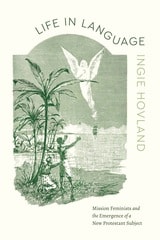
Life in Language
Mission Feminists and the Emergence of a New Protestant SubjectIngie Hovland
University of Chicago Press, 2025
The language of the Bible is a powerful lens through which many Protestants understand themselves and their world, and its prohibitions on women’s speech pose complicated challenges to women. Nevertheless, women frequently serve as vocal leaders in Protestant organizations, including the early twentieth-century Norwegian Mission Society. In Life in Language, Ingie Hovland offers a unique biography of Henny Dons, a leader of the society’s so-called mission feminists, that grapples with ways Protestant women crafted innovative, expansive self-understandings through Christian language. More than their male peers, the mission feminists turned to religious speech to express material, as well as heavenly, desires for paid work, voting rights, and more, and Hovland argues that these experiments in women speaking, reading, writing, and listening paved the way for a new way of being in the world.
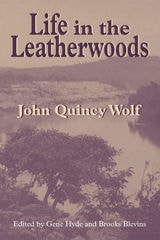
Life in the Leatherwoods
New EditionJohn Quincy Wolf
University of Arkansas Press, 2000
Originally published by Memphis State University Press in 1974, this new edition includes additional writings of John Q. Wolf and a continuation of the autobiographical narrative after his 1887 move to Batesville. Wolf’s writings are valuable resources for southern historians, folklorists, general readers, and scholars of Ozarkiana because they provide a rare glimpse into the social and family life of a largely misunderstood and stereotyped people—the independent hill farmers of the Arkansas Ozarks of the 1870s and 1880s. With Life in the Leatherwoods, Wolf bestows a benediction upon a society that existed vibrantly and humorously in his memory—one that has now forever disappeared from the American countryside.

Life-Writing in the History of Archaeology
Critical perspectivesEdited by Clare Lewis and Gabriel Moshenska
University College London, 2023
Travels and adventures of the “great archaeologists” have generated centuries worth of bestselling books that, in turn, have shaped the public perception of archaeology. The lives of archaeologists are entangled with histories of museums and collections, developments in science and scholarship, and narratives of nationalism and colonialism into the present. In recent years, life-writing has played an important role in the surge of new research in the history of archaeology, including ground-breaking studies of discipline formation, institutionalization, and social and intellectual networks. Sources such as diaries, wills, film, and the growing body of digital records are powerful tools for highlighting the contributions of hitherto marginalized archaeological lives including many pioneering women, hired laborers, and other “hidden hands.”
This book brings together critical perspectives on life-writing in the history of archaeology from leading figures in the field. These include studies of archive formation and use, the concept of “dig-writing” as a distinctive genre of archaeological creativity, and reviews of new sources for already well-known lives. Several chapters reflect on the experience of life-writing, review the historiography of the field, and assess the intellectual value and significance of life-writing as a genre. Together, they work to problematize underlying assumptions about this genre, foregrounding methodology, social theory, ethics, and other practice-focused frameworks in conscious tension with previous practices.
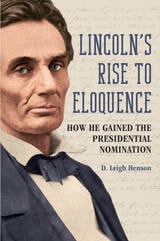
Lincoln's Rise to Eloquence
How He Gained the Presidential NominationD. Leigh Henson
University of Illinois Press, 2024
Insightful and revealing, Lincoln’s Rise to Eloquence follows Lincoln from his early career through the years-long clashes with Stephen A. Douglas to trace the future president’s evolution as a communicator and politician.
LingVis
Visual Analytics for LinguisticsEdited by Miriam Butt, Annette Hautli-Janisz, and Verena Lyding
CSLI, 2018

Linguistic Atlas of the Middle and South Atlantic States, Fascicle 2
Raven I. McDavid Jr. and Raymond K. O'Cain
University of Chicago Press, 1980
Linguistic Coping Strategies in Sign Language Interpreting
Jemina Napier
Gallaudet University Press, 2016
The concept of strategic omissions is explored here as a tool that is consciously used by interpreters as a coping strategy. Instead of being a mistake, omitting part of the source language can actually be part of an active decision-making process that allows the interpreter to convey the correct meaning when faced with challenges. For the first time, Napier found that omission potential existed within every interpretation and, furthermore, she proposed a new taxonomy of five different conscious and unconscious omission types. Her findings also indicate that Auslan/English interpreters use both a free and literal interpretation approach, but that those who use a free approach occasionally switch to a literal approach as a linguistic coping strategy to provide access to English terminology. Both coping strategies help negotiate the demands of interpretation, whether it be lack of subject-matter expertise, dealing with dense material, or the context of the situation.
Napier also analyzes the interpreters’ reflections on their decision-making processes as well as the university students’ perceptions and preferences of their interpreters’ linguistic choices and styles. Linguistic Coping Strategies in Sign Language Interpreting is a foundational text in interpretation studies that can be applied to interpreting in different contexts and to interpreter training.
Linguistic Databases
Edited by John Nerbonne
CSLI, 1998
Linguistic Diversity in Space and Time
Johanna Nichols
University of Chicago Press, 1992
"An awe-inspiring book, unequalled in scope, originality, and the range of language data considered."—Anna Siewierska, Linguistics
"Fascinating. . . . A brilliant pioneering study."—Journal of Indo-European Studies
"A superbly reasoned book."—John A. C. Greppin, Times Literary Supplement
Linguistic Form and Its Computation
Edited by Christian Rohrer, Antje Rossdeutscher, and Hans Kamp
CSLI, 2001
Linguistic Individuals
Almerindo E. Ojeda
CSLI, 1993
Linguistic Issues in Language Technology Vol 9
Perspectives on Semantic Representations for Textual InferenceEdited by Cleo Condoravdi, Valeria de Paiva, and Annie Zaenen
CSLI, 2014
Linguistics Across Cultures
Applied Linguistics for Language TeachersRobert Lado
University of Michigan Press, 1957
Linguistics and Computation
Edited by Jennifer S. Cole, Georgia M. Green, and Jerry L. Morgan
CSLI, 1995
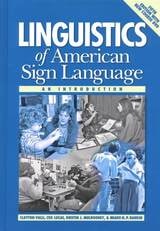
Linguistics of American Sign Language
An Introduction, 5th Ed.Clayton Valli
Gallaudet University Press, 2011
Completely reorganized to reflect the growing intricacy of the study of ASL linguistics, the 5th edition presents 26 units in seven parts. Part One: Introduction presents a revision of Defining Language and an entirely new unit, Defining Linguistics. Part Two: Phonology has been completely updated with new terminology and examples. The third part, Morphology, features units on building new signs, deriving nouns from verbs, compounds, fingerspelling, and numeral incorporation. Part Four: Syntax includes units on basic sentence types, lexical categories, word order, time and aspect, verbs, and the function of space. The fifth part, Semantics, offers updates on the meanings of individual signs and sentences.
Part Six: Language in Use showcases an entirely new section on Black ASL in the unit on Variation and Historical Change. The units on bilingualism and language and ASL discourse have been thoroughly revised and updated, and the Language as Art unit has been enhanced with a new section on ASL in film. Two new readings update Part Seven, and all text illustrations have been replaced by video stills from the expanded video content. Also, signs described only with written explanations in past editions now have both photographic samples in the text and full demonstrations in the video.
*** You can find the supplemental video content on the Gallaudet University Press YouTube channel. ***

Linguistics of American Sign Language
An Introduction, 6th Ed.Julie A. Hochgesang
Gallaudet University Press, 2026
Grounded in the scholarship and reflecting contemporary developments in the field of signed language linguistics, the sixth edition of Linguistics of American Sign Language provides a clear, comprehensive, and fresh introduction to the structure of ASL. Focusing on language in everyday contexts, this new edition treats ASL as a dynamic system shaped by the diversity of its communities.
Organized into two parts, Linguistics of American SignLanguage begins by exploring fundamental concepts of language within communities, addressing language features, registers, variation and historical change, multilingualism, ideologies, and discourse. This first section sets the stage for in-depth analysis into core areas of linguistic study: syntax, phonology, and morphology. New content provides depth, exploring topics such as the representation of signed languages in texts, corpus linguistics, heritage-language signers, and Black ASL. To show how language is used by multilingual and multimodal individuals within their communities, the book pairs discussion with “grounding texts,” videos of ASL within varied authentic settings.
Linguistics of American Sign Language is supported by a companion website that provides access to the grounding texts and supplementary materials, including downloadable resources for hands-on analysis such as annotated videos and readings. Designed for readers with no background in linguistics, each unit opens with guided questions to prompt reflection and concludes with exercises and recommended readings.
Refining the standard for sign language scholarship, the sixth edition of Linguistics of American Sign Language guides readers beyond technical analysis to explore ASL as a vibrant system rooted in community, culture, and language.
Linguistics, Philosophy, and Montague Grammar
Edited by Steven Davis and Marianne Mithun
University of Texas Press, 1979
This volume presents significant developments in the field of Montague Grammar and outlines its past and future contributions to philosophy and linguistics. The contents are as follows:
Introduction by Steven Davis and Marianne Mithun
Emmon Bach, "Montague Grammar and Classical Transformational Grammar"
Barbara H. Partee, "Constraining Transformational Montague Grammar: A Framework and a Fragment"
James D. McCawley, "Helpful Hints to the Ordinary Working Montague Grammarian"
Terence Parsons, "Type Theory and Ordinary Language"
David R. Dowty, "Dative 'Movement' and Thomason's Extensions of Montague Grammar"
Muffy E. A. Siegel, "Measure Adjectives in Montague Grammar"
Michael Bennett, "Mass Nouns and Mass Terms in Montague Grammar"
Jeroen Groenendijk and Martin Stokhof, "Infinitives and Context in Montague Grammar"
James Waldo, "A PTQ Semantics for Sortal Incorrectness"
Linked Data Tools
Connecting on the WebKaren American Library Association
American Library Association, 0
Linked Data for Cultural Heritage
Ed Jones
American Library Association, 2016

Linked Data for the Perplexed Librarian
Scott Carlson
American Library Association, 2020
Linked data has become a punchline in certain circles of the GLAM (galleries, libraries, archives, and museums) community, derided as a much-hyped project that will ultimately never come to fruition. But the fact is, linked data is already happening now, evident in projects from Big Tech and the Wikimedia Foundation as well as the web pages of library service platforms. The goal of exposing cultural institutions’ records to the web is as important as ever—but for the non-technically minded, linked data can feel like a confusing morass of abstraction, jargon, and acronyms. Get conversant in linked data with this basic introduction from the Association of Library Collections and Technical Services (ALCTS). The book’s expert contributors
- summarize the origins of linked data, from early computers and the creation of the World Wide Web through RDF;
- walk readers through the practical, everyday side of creating, identifying, and representing semantically rich linked data using as an example the funk classic Mothership Connection album from the band Parliament;
- explain the concept of ontologies;
- explore such linked data projects as Open Graph, DBpedia, BIBFRAME, and Schema.org’s Bib Extension;
- offer suggested solo and group entry-level projects for linked data-curious librarians who wish to dive deeper; and
- provide a handy glossary and links to additional resources.
This valuable primer on linked data will enable readers at any level of experience to get quickly up to speed on this important subject.
Linking Literacies
Perspectives on L2 Reading-Writing ConnectionsDiane Belcher and Alan Hirvela, Editors
University of Michigan Press, 2001
Linking Literacies provides the most up to date theoretical overview of the connection between reading and writing in second language acquisition. Belcher and Hirvela have brought together the definitive collection of developments in reading-writing relations research and pedagogy. Papers are organized into these parts:
Ground Practice: Theory, Research, and History
In the Classroom: Teaching Reading as Writing and Writing as Reading
(E)Merging Literacies and the Challenge of Textual Ownership
Technology-Assisted Reading and Writing.
In addition to examining the ways in which L1 influences have affected the development of L2 reading-writing theory and pedagogy, Linking Literacies looks at how L2 reading-writing scholarship has created an identity separate of an L1 framework. Linking Literacies examines a broad range of questions and concerns within the structure of L2 reading-writing connections and L2 academic literacy through discussions of theory, research, and
Linking by Types in the Hierarchical Lexicon
Anthony R. Davis
CSLI, 2001
Many previous approaches to this problem have employed a set of thematic roles, such as agent and patient, to classify varieties of participants. The alternative developed here fits within the framework of Head-Driven Phrase Structure Grammar while utilizing typed feature structures, certain basic features of verb meaning, a hierarchical classification of verb meanings, and constraints from more general to more specific word classes. Relying on no special mechanisms or components of grammar, this book is unique in its ability to account for the observed range of verb types in human languages with a simple yet widely applicable set of principles.
Listening to Beauty
Rhetorics of Science in Sea and SoundMegan Poole
University of Chicago Press, 2025
Our attempts to understand the world are always more than simply rational. Our bodies learn through lived experience, our natural environments challenge what we think we know, and we take lessons from our nonhuman kin. Even scientists, often considered paragons of rationality, frequently describe their findings in the language of beauty. For rhetorician Megan Poole, beauty is integral to how scientific research works.
Drawing on interviews with leading biologists, Poole explores what happens when scientists set aside objectivity and listen for beauty around them. The wonder we feel at the plumage of birds, the melodies of whales, or the caretaking of elephants may not help us (on its own) to isolate a given fact, but such encounters may teach us to open ourselves to a different way of knowing entirely. Through stories about researchers’ encounters with wonder, Listening to Beauty reveals how scientific discovery happens sometimes unsystematically, sometimes incoherently, often beautifully.
Listening to Learn
Sharon Grover
American Library Association, 2012
Listening to Our Elders
Working and Writing for ChangeSamantha Blackmon, Cristina Kirklighter, and Steve Parks, eds.
Utah State University Press, 2011
In 2011, the National Council of Teachers of English (NCTE) turned one hundred years old. But our profession is endlessly beginning, constantly transforming itself and its purpose as new voices and identities claim their rights in our classrooms and in our country. The recognition of such claims, however, does not occur without a struggle, without collective work.
Listening to our Elders attempts to capture the history of those collective moments where teachers across grade levels and institutions of higher education organized to insure that the voices, heritages, and traditions of their students and colleagues were recognized within our professional organizations as a vital part of our classrooms and our discipline. In doing so, Listening to Our Elders demonstrates this recognition was not always easily given. Instead, whether the issue was race, sexuality, class, or disability, committed activist organizations have often had to push against the existing limits of our field and its organizations to insure a broader sense of common responsibility and humanity was recognized.
Listening to Our Elders features interviews with Malea Powell (Native American Caucus), Joyce Rain Anderson (Native American Caucus), Jeffery Paul Chan (Asian/Asian American), James Hill (Black Caucus), James Dolmage (Committee for Disability Issue in College Composition), Geneva Smitherman (Language Policy Commitee), Carlota Cárdenas de Dwyer (Latino/a Caucus), Victor Villanueva (Latino/a Caucus), Louise Dunlap (Progressive Caucus), Karen Hollis (Progressive Caucus), Louie Crew (Queer Caucus), William Thelin (Working Class Culture and Pedagogy SIG), Bill Macauley (Working Class Culture and Pedagogy SIG).
Listening to People
A Practical Guide to Interviewing, Participant Observation, Data Analysis, and Writing It All UpAnnette Lareau
University of Chicago Press, 2021
In-depth interviews and close observation are essential to the work of social scientists, but inserting one’s researcher-self into the lives of others can be daunting, especially early on. Esteemed sociologist Annette Lareau is here to help. Lareau’s clear, insightful, and personal guide is not your average methods text. It promises to reduce researcher anxiety while illuminating the best methods for first-rate research practice.
As the title of this book suggests, Lareau considers listening to be the core element of interviewing and observation. A researcher must listen to people as she collects data, listen to feedback as she describes what she is learning, listen to the findings of others as they delve into the existing literature on topics, and listen to herself in order to sift and prioritize some aspects of the study over others. By listening in these different ways, researchers will discover connections, reconsider assumptions, catch mistakes, develop and assess new ideas, weigh priorities, ponder new directions, and undertake numerous adjustments—all of which will make their contributions clearer and more valuable.
Accessibly written and full of practical, easy-to-follow guidance, this book will help both novice and experienced researchers to do their very best work. Qualitative research is an inherently uncertain project, but with Lareau’s help, you can alleviate anxiety and focus on success.
Lit from Within
Contemporary Masters on the Art and Craft of WritingKevin Haworth; Dinty W. Moore
Ohio University Press, 2011
Lit to Lit
Composition/Rhetoric and the Literary ArtsEli Goldblatt
Utah State University Press, 2026
Lit to Lit examines the traditional split between the study of literature and composition and rhetoric programs, asking writing studies scholars to think critically and creatively about the role literature can play in the teaching of writing and the field’s conceptions of its own relation to writing. Grounded in diverse experiences and practices, contributors offer provocative but thoughtful analyses of how composition and literature can be brought together in the study and teaching of writing.
Complex forms of writing should not be the sole territory of one subfield or discipline but rather should benefit from multiple perspectives generated by those with keen and abiding interests in writing writ large. Many in the field of composition and rhetoric also have an active engagement in the literary arts, particularly the flowering of literature from diverse cultural experiences in the last decades. What new teaching and learning approaches could emerge from a synthesis of theoretical, literary, rhetorical, poetic, and compositional methods? This question becomes even more compelling when considering how English departments often house programs in journalism and creative writing, allowing robust opportunities for multiple ways of thinking about and studying complex texts.
Lit to Lit makes visible the generative overlap between subfields already present in the broad field of English, pointing to new ways forward that value each area’s separate endeavors while highlighting the possibilities for what could be built together.
Literacy & Libraries
Learning from Case StudiesAmerican Library Association, 2001
Literacy and Deaf Education
Toward a Global UnderstandingQiuying Wang
Gallaudet University Press, 2020
Literacy and Deaf Education: Toward a Global Understanding is organized by region and country, with the first part discussing writing systems that use alphabetic scripts, and the second part focusing on countries that use non-alphabetic scripts. Some examples of the wide spectrum of topics covered include communication methodologies, curriculum, bilingual education, reading interventions, script diversity, and sociocultural development, including Deaf cultural developments. The contributors provide the results from literacy projects in fifteen countries and regions.
This volume aims to widen the knowledge base, familiarize others in the field with these initiatives, and improve global understandings and outcomes of literacy teaching and learning in deaf education from birth to high school.
Signed chapter summaries are available on the Gallaudet University Press YouTube channel.
Literacy and Deaf People
Cultural and Contextual PerspectivesBrenda Jo Brueggemann
Gallaudet University Press, 2004
This compelling collection advocates for an alternative view of deaf people’s literacy, one that emphasizes recent shifts in Deaf cultural identity rather than a student’s past educational context as determined by the dominant hearing society. Divided into two parts, the book opens with four chapters by leading scholars Tom Humphries, Claire Ramsey, Susan Burch, and volume editor Brenda Jo Brueggemann. These scholars use diverse disciplines to reveal how schools where deaf children are taught are the product of ideologies about teaching, about how deaf children learn, and about the relationship of ASL and English.
Part Two features works by Elizabeth Engen and Trygg Engen; Tane Akamatsu and Ester Cole; Lillian Buffalo Tompkins; Sherman Wilcox and BoMee Corwin; and Kathleen M. Wood. The five chapters contributed by these noteworthy researchers offer various views on multicultural and bilingual literacy instruction for deaf students. Subjects range from a study of literacy in Norway, where Norwegian Sign Language recently became the first language of instruction for deaf pupils, to the difficulties faced by deaf immigrant and refugee children who confront institutional and cultural clashes. Other topics include the experiences of deaf adults who became bilingual in ASL and English, and the interaction of the pathological versus the cultural view of deafness. The final study examines literacy among Deaf college undergraduates as a way of determining how the current social institution of literacy translates for Deaf adults and how literacy can be extended to deaf people beyond the age of 20.
Literacy and Historical Development
A ReaderEdited by Harvey J. Graff
Southern Illinois University Press, 2007
Representing three decades of research, Literacy and Historical Development: A Reader presents some of the most important historical scholarship on literacy in Europe and the United States. The approaches, research, and conclusions reflected in this collection of fifteen essays has changed how historians and many others conceptualize literacy and represents a body of scholarship that is transforming both contemporary and historical literacy theories.
In this revised and expanded edition of the groundbreaking volume Literacy and Social Development in the West, editor Harvey J. Graff provides a new introduction and nine new essays by nationally and internationally renowned contributors from a range of disciplines. Replacing an unquestioned certainty that literacy’s powers are universal, independent, and determinative, Graff brings together studies that support new concepts, contending that the importance and influences of literacy depend on specific social and historical contexts, the impacts of literacy are mediated and restricted, the effects of literacy are social and particular, and the role of literacy must be understood within the burgeoning array of communication technologies.
Literacy and Racial Justice
The Politics of Learning after Brown v. Board of EducationCatherine Prendergast. Foreword by Gloria Ladson-Billings
Southern Illinois University Press, 2003
In anticipation of the fiftieth anniversary of the landmark Brown v. Board of Education decision, Catherine Prendergast draws on a combination of insights from legal studies and literacy studies to interrogate contemporary multicultural literacy initiatives, thus providing a sound historical basis that informs current debates over affirmative action, school vouchers, reparations, and high-stakes standardized testing.
As a result of Brown and subsequent crucial civil rights court cases, literacy and racial justice are firmly enmeshed in the American imagination—so much so that it is difficult to discuss one without referencing the other. Breaking with the accepted wisdom that the Brown decision was an unambiguous victory for the betterment of race relations, Literacy and Racial Justice: The Politics of Learning after Brown v. Board of Education finds that the ruling reinforced traditional conceptions of literacy as primarily white property to be controlled and disseminated by an empowered majority. Prendergast examines civil rights era Supreme Court rulings and immigration cases spanning a century of racial injustice to challenge the myth of assimilation through literacy. Advancing from Ways with Words, Shirley Brice Heath’s landmark study of desegregated communities, Prendergast argues that it is a shared understanding of literacy as white property which continues to impact problematic classroom dynamics and education practices.
To offer a positive model for reimagining literacy instruction that is truly in the service of racial justice, Prendergast presents a naturalistic study of an alternative public secondary school. Outlining new directions and priorities for inclusive literacy scholarship in America, Literacy and Racial Justice concludes that a literate citizen is one who can engage rather than overlook longstanding legacies of racial strife.
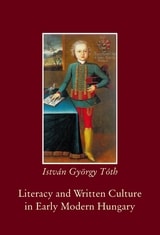
Literacy and Written Culture in Early Modern Central Europe
István György Tóth
Central European University Press, 2001
Literacy and Your Deaf Child
What Every Parent Should KnowDavid A. Stewart
Gallaudet University Press, 2003
In the modern world, success depends upon literacy, a fact especially true for deaf children who, if they read and write well, can take full advantage of e-mail, the Internet, and other communication innovations. Literacy and Your Deaf Child: What Every Parent Should Know provides parents with the means to ensure that their deaf or hard of hearing child becomes a proficient reader and writer. In nine chapters, parents will learn about the relationship of language to reading and writing, including the associated terminology, the challenges that deaf children face, and the role of schools. They’ll also learn activities that they can engage in at home that will strengthen their children’s reading and writing capabilities.
Literacy and Your Deaf Child begins by introducing some common concepts, among them the importance of parental involvement in a deaf child’s education. It outlines how children acquire language and describes the auditory and visual links to literacy. With this information, parents can make informed decisions regarding hearing aids, cochlear implants, speechreading, and sign communication, all of which can have a marked influence on their child’s language development. Parents will discover how to create environments at home and in their community for fostering their child’s literacy, especially in school by learning how to work closely with their child’s teachers. The book also refers throughout to the developmental link between American Sign Language and English literacy for children who use sign communication, making it the best guide available for all deaf children and their parents.
Literacy as Involvement
The Acts of Writers, Readers, and TextsDeborah Brandt
Southern Illinois University Press, 1990
In Literacy as Involvement, Deborah Brandt examines the cultural and social roots of the acts of reading and writing. The book asks, for example, whether literacy is a natural growth of or a radical shift from orality. It questions the contrary views that literacy is either the learning of the conventions of language or is better understood as heightened social ability. Finally, it raises the possibility that knowing how to read and write is actually understanding how we respond during the acts of reading and writing.
This examination of literacy as process is also offered as a critique of prevailing theories of literacy advanced by such scholars as Walter J. Ong, S.J., David Olson, and E. D. Hirsch. They depict literacy as a textual experience that is socially and linguistically detached. Brandt critically examines the underlying assumptions from research on writing processes and argues that they call for a major reformation of prevailing conceptions of literacy. Specifically, she analyzes several expository texts from a process perspective to establish the interaction of reader and writer in even the most seemingly formal and detached writing. In her conclusion, Brandt brings together the major findings of her study to address pressing literacy issues, including the problem of illiteracy in our schools.
Literacy in American Schools
Learning to Read and WriteEdited by Nancy L. Stein
University of Chicago Press, 1986
Literacy, Economy, and Power
Writing and Research after "Literacy in American Lives"Edited by John Duffy, Julie Nelson Christoph, Eli Goldblatt, Nelson Graff, Rebecca S. Nowacek, Bryan Trabold
Southern Illinois University Press, 2014
Following on the groundbreaking contributions of Deborah Brandt’s Literacy in American Lives—a literacy ethnography exploring how ordinary Americans have been affected by changes in literacy, public education, and structures of power—Literacy, Economy, and Power expands Brandt’s vision, exploring the relevance of her theoretical framework as it relates to literacy practices in a variety of current and historical contexts, as well as in literacy’s expanding and global future. Bringing together scholars from rhetoric, composition, and literacy studies, the book offers thirteen engrossing essays that extend and challenge Brandt’s commentary on the dynamics between literacy and power.
The essays cover many topics, including the editor of the first Native American newspaper, the role of a native Hawaiian in bringing literacy to his home islands, the influence of convents and academies on nineteenth-century literacy, and the future of globalized digital literacies. Contributors include Julie Nelson Christoph, Ellen Cushman, Kim Donehower, Anne Ruggles Gere, Eli Goldblatt, Harvey J. Graff, Gail E. Hawisher, Bruce Horner, David A. Jolliffe, Rhea Estelle Lathan, Min-Zhan Lu, Robyn Lyons-Robinson, Carol Mattingly, Beverly J. Moss, Paul Prior, Cynthia L. Selfe, Michael W. Smith, and Morris Young. Literacy, Economy, and Power also features an introduction exploring the scholarly impact of Brandt’s work, written by editors John Duffy, Julie Nelson Christoph, Eli Goldblatt, Nelson Graff, Rebecca Nowacek, and Bryan Trabold. An invaluable tool for literacy studies at the graduate or professional level, Literacy, Economy, and Power provides readers with a wide-ranging view of the work being done in literacy studies today and points to ways researchers might approach the study of literacy in the future.
Literacy, Sexuality, Pedagogy
Theory and Practice for Composition StudiesJonathan Alexander
Utah State University Press, 2008
In Literacy, Sexuality, Pedagogy, Jonathan Alexander argues for the development of students' "sexual literacy." Such a literacy is not just concerned with developing fluency with sexuality as a "hot" topic, but with understanding the intimate interconnectedness of sexuality and literacy in Western culture. Using the work of scholars in queer theory, sexuality studies, and the New Literacy Studies, Alexander unpacks what he sees as a crucial--if often overlooked--dimension of literacy: the fundamental ways in which sexuality has become a key component of contemporary literate practice, of the stories we tell about ourselves, our communities, and our political investments.
Alexander then demonstrates through a series of composition exercises and writing assignments how we might develop students' understanding of sexual literacy. Examining discourses of gender, heterosexuality, and marriage allows students (and instructors) a critical opportunity to see how the languages we use to describe ourselves and our communities are saturated with ideologies of sexuality. Understanding how sexuality is constructed and deployed as a way to "make meaning" in our culture gives us a critical tool both to understand some of the fundamental ways in which we know ourselves and to challenge some of the norms that govern our lives. In the process, we become more fluent with the stories that we tell about ourselves and discover how normative notions of sexuality enable (and constrain) narrations of identity, culture, and politics. Such develops not only our understanding of sexuality, but of literacy, as we explore how sexuality is a vital, if vexing, part of the story of who we are.
Literary Couplings
Writing Couples, Collaborators, and the Construction of AuthorshipEdited by Marjorie Stone and Judith Thompson
University of Wisconsin Press, 2007
This innovative collection challenges the traditional focus on solitary genius by examining the rich diversity of literary couplings and collaborations from the early modern to the postmodern period. Literary Couplings explores some of the best-known literary partnerships—from the Sidneys to Boswell and Johnson to Sylvia Plath and Ted Hughes—and also includes lesser-known collaborators such as Daphne Marlatt and Betsy Warland. The essays place famous authors such as Samuel Coleridge, Oscar Wilde, and William Butler Yeats in new contexts; reassess overlooked members of writing partnerships; and throw new light on texts that have been marginalized due to their collaborative nature. By integrating historical studies with authorship theory, Literary Couplings goes beyond static notions of the writing "couple" to explore literary couplings created by readers, critics, historians, and publishers as well as by writers themselves, thus expanding our understanding of authorship.