Results by title
8812 books match the query 'Political Science' and 280 start with l
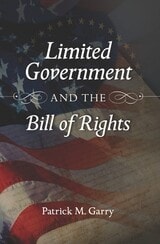
Limited Government and the Bill of Rights
Patrick M. Garry
University of Missouri Press, 2012
What was the intended purpose and function of the Bill of Rights? Is the modern understanding of the Bill of Rights the same as that which prevailed when the document was ratified? In Limited Government and the Bill of Rights, Patrick Garry addresses these questions. Under the popular modern view, the Bill of Rights focuses primarily on protecting individual autonomy interests, making it all about the individual. But in Garry’s novel approach, one that tries to address the criticisms of judicial activism that have resulted from the Supreme Court’s contemporary individual rights jurisprudence, the Bill of Rights is all about government—about limiting the power of government. In this respect, the Bill of Rights is consistent with the overall scheme of the original Constitution, insofar as it sought to define and limit the power of the newly created federal government.
Garry recognizes the desire of the constitutional framers to protect individual liberties and natural rights, indeed, a recognition of such rights had formed the basis of the American campaign for independence from Britain. However, because the constitutional framers did not have a clear idea of how to define natural rights, much less incorporate them into a written constitution for enforcement, they framed the Bill of Rights as limited government provisions rather than as individual autonomy provisions. To the framers, limited government was the constitutional path to the maintenance of liberty. Moreover, crafting the Bill of Rights as limited government provisions would not give the judiciary the kind of wide-ranging power needed to define and enforce individual autonomy.
With respect to the application of this limited government model, Garry focuses specifically on the First Amendment and examines how the courts in many respects have already used a limited government model in their First Amendment decision-making. As he discusses, this approach to the First Amendment may allow for a more objective and restrained judicial role than is often applied under contemporary First Amendment jurisprudence.
Limited Government and the Bill of Rights will appeal to anyone interested in the historical background of the Bill of Rights and how its provisions should be applied to contemporary cases, particularly First Amendment cases. It presents an innovativetheory about the constitutional connection between the principle of limited government and the provisions in the Bill of Rights.
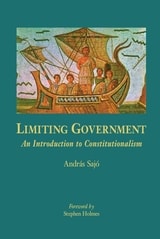
Limiting Government
An Introduction to ConstitutionalismAndrás Sajó
Central European University Press, 1999
Until the previous decade, constitutionalism in Eastern Europe was considered to be an outmoded concept of the nineteenth century. Changes in the region, however, have brought back the fundamental question of the need to restrict government power through social self-binding.
This book discusses the mechanisms of such restriction, including different forms of the separation of powers and constitutional review. It relates the theoretical and practical importance of the issue to the present world-wide discontent with majoritarian democracy and the growing disrepute of parliaments. Increasing executive efficiency is, however, a threat to fundamental rights, and the battlecry of efficiency is often only a means to new despotism and inefficiency. A careful re-evaluation of the concept of constitutionalism assists in the search for a useful balance between majoritarianism and rights, and in the avoidance of all forms of public tyranny.
Written in non-technical language and using the most important English, American, French, and German examples of constitutional history, the book also examines East European (in particular, Russian) and Latin American examples, in part to illustrate certain dead-ends in constitutional development. It is intended to be an introduction for all those concerned with liberty.

Limits and Possibilities
The Crisis of Yugoslav Socialism and State Socialist SystemsBogdan Denitch
University of Minnesota Press, 1990
Limits and Possibilities was first published in 1990. Minnesota Archive Editions uses digital technology to make long-unavailable books once again accessible, and are published unaltered from the original University of Minnesota Press editions.
The nature of the Eastern European Socialist state and its potential for transformation without sacrificing its specific identity is the subject of extensive current debate. Limits and Possibilities is the first book to be written that deals conceptually and historically with the myriad kinds of change a state might undergo. Bogdon Denitch has chosen the Yugoslavian model to frame his analysis because it initiated these "modernizing" changes in the 1960s and can therefore provide a case study of the limits of reforms possible in Communist regimes. In using the Yugoslav case paradigmatically, the volume addresses in a more general sense the issues of decentralization, autonomy for nonparty and nonstate institutions, multi-ethnicity, new social movements, including the "greens," and the role of women and women's movements.
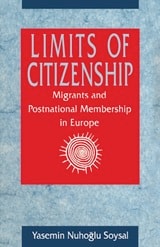
Limits of Citizenship
Migrants and Postnational Membership in EuropeYasemin Nuhoglu Soysal
University of Chicago Press, 1994
Soysal focuses on postwar international migration, paying particular attention to "guestworkers." Taking an in-depth look at France, Germany, the Netherlands, Sweden, Switzerland, and the United Kingdom, she identifies three major patterns that reflect the varying emphasis particular states place on individual versus corporate groups as the basis for incorporation. She finds that the global expansion and intensification of human rights discourse puts nation-states under increasing outside pressure to extend membership rights to aliens, resulting in an increasingly blurred line between citizen and noncitizen. Finally, she suggests a possible accommodation to these shifts: specifically, a model of post-national membership that derives its legitimacy from universal personhood, rather than national belonging.
This fresh approach to the study of citizenship, rights, and immigration will be invaluable to anyone involved in issues of human rights, international migration, and transnational cultural interactions, as well as to those who study the contemporary transformation of the nation-state, nationalism, and globalization.
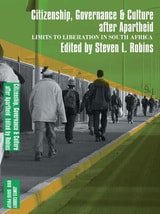
Limits to Liberation after Apartheid
Citizenship, Governance, & CultureSteven L. Robins
Ohio University Press, 2005
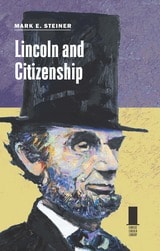
Lincoln and Citizenship
Mark E. Steiner
Southern Illinois University Press, 2021
At its most basic level, citizenship is about who belongs to a political community, and for Abraham Lincoln in nineteenth-century America, the answer was in flux. The concept of “fellow citizens,” for Lincoln, encompassed different groups at different times. In this first book focused on the topic, Mark E. Steiner analyzes and contextualizes Lincoln’s evolving views about citizenship over the course of his political career.
As an Illinois state legislator, Lincoln subscribed to the by-then-outmoded belief that suffrage must be limited to those who met certain obligations to the state. He rejected the adherence to universal white male suffrage that had existed in Illinois since statehood. In 1836 Lincoln called for voting rights to be limited to white people who had served in the militia or paid taxes. Surprisingly, Lincoln did not exclude women, though later he did not advocate giving women the right to vote and did not take women seriously as citizens. The women at his rallies, he believed, served as decoration.
For years Lincoln presumed that only white men belonged in the political and civic community, and he saw immigration through this lens. Because Lincoln believed that white male European immigrants had a right to be part of the body politic, he opposed measures to lengthen the time they would have to wait to become a citizen or to be able to vote. Unlike many in the antebellum north, Lincoln rejected xenophobia and nativism. He opposed black citizenship, however, as he made clear in his debates with Stephen Douglas. Lincoln supported Illinois’s draconian Black Laws, which prohibited free black men from voting and serving on juries or in the militia. Further, Lincoln supported sending free black Americans to Africa—the ultimate repudiation and an antithesis of citizenship.
Yet, as president, Lincoln came to embrace a broader vision of citizenship for African Americans. Steiner establishes how Lincoln’s meetings at the White House with Frederick Douglass and other black leaders influenced his beliefs about colonization, which he ultimately disavowed, and citizenship for African Americans, which he began to consider. Further, the battlefield success of black Union soldiers revealed to Lincoln that black men were worthy of citizenship. Lincoln publicly called for limited suffrage among black men, including military veterans, in his speech about Reconstruction on April 11, 1865. Ahead of most others of his era, Lincoln showed just before his assassination that he supported rights of citizenship for at least some African Americans.
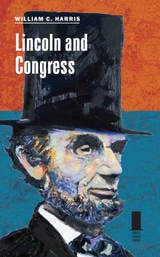
Lincoln and Congress
William C. Harris
Southern Illinois University Press, 2017
In Lincoln and Congress, William C. Harris reveals that the relationship between the president and Congress, though sometimes contentious, was cooperative rather than adversarial. During his time as president, Abraham Lincoln embodied his personal conviction that the nation’s executive should not interfere with the work of the legislature, and though often critical of him privately, in public congressional leaders compromised with and assisted the president to unite the North and minimize opposition to the war.
Despite the turbulence of the era and the consequent tensions within the government, the executive and legislative branches showed restraint in their dealings with each other. In fact, except in his official messages to Congress, Lincoln rarely lobbied for congressional action, and he vetoed only one important measure during his tenure as president. Many congressmen from Lincoln’s own party, although publicly supportive, doubted his leadership and sought a larger role for Congress in setting war policies. Though they controlled Congress, Republican legislators frequently differed among themselves in shaping legislation and in their reactions to events as well as in their relationships both with each other and with the president. Harris draws intriguing sketches of nineteenth-century congressional leaders and shows that, contrary to what historians have traditionally concluded, radical Republicans such as Representative Thaddeus Stevens and Senator Charles Sumner did not dominate their party or Congress. Harris includes the minority party’s role, showing that Northern Democrats and conservative Unionists of the border states generally opposed Republican policies but worked with them on support for the troops and on nonwar issues like the Pacific Railroad Bill.
Lincoln and Congress sheds new light on the influence of members of Congress and their relationship with Lincoln on divisive issues such as military affairs, finance, slavery, constitutional rights, reconstruction, and Northern political developments. Enjoyable both for casual Civil War readers and professional historians, this book provides an engaging narrative that helps readers redefine and understand the political partnership that helped the Union survive.
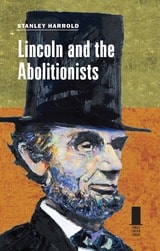
Lincoln and the Abolitionists
Stanley Harrold
Southern Illinois University Press, 2018
Abraham Lincoln has often been called the “Great Emancipator.” But he was not among those Americans who, decades before the Civil War, favored immediate emancipation of all slaves inside the United States. Those who did were the abolitionists—the men and women who sought freedom and equal rights for all African Americans. Stanley Harrold traces how, despite Lincoln’s political distance from abolitionists, they influenced his evolving political orientation before and during the Civil War.
While explaining how the abolitionist movement evolved, Harrold also clarifies Lincoln’s connections with and his separation from this often fiery group. For most of his life Lincoln regarded abolitionists as dangerous fanatics. Like many northerners during his time, Lincoln sought compromise with the white South regarding slavery, opposed abolitionist radicalism, and doubted that free black people could have a positive role in America. Yet, during the 1840s and 1850s, conservative northern Democrats as well as slaveholders branded Lincoln an abolitionist because of his sympathy toward black people and opposition to the expansion of slavery.
Lincoln’s election to the presidency and the onslaught of the Civil War led to a transformation of his relationship with abolitionists. Lincoln’s original priority as president had been to preserve the Union, not to destroy slavery. Nevertheless many factors—including contacts with abolitionists—led Lincoln to favor ending slavery. After Lincoln issued the Emancipation Proclamation in 1863 and raised black troops, many, though not all, abolitionists came to view him more favorably.
Providing insight into the stressful, evolving relationship between Lincoln and the abolitionists, and also into the complexities of northern politics, society, and culture during the Civil War era, this concise volume illuminates a central concern in Lincoln’s life and presidency.
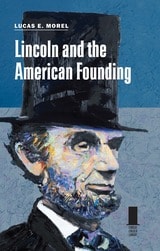
Lincoln and the American Founding
Lucas E. Morel
Southern Illinois University Press, 2020
In this persuasive work of intellectual history, Lucas E. Morel argues that the most important influence on Abraham Lincoln’s political thought and practice was what he learned from the leading figures of and documents from the birth of the United States. In this systematic account of those principles, Morel compellingly demonstrates that to know Lincoln well is to understand thoroughly the founding of America.
With each chapter describing a particular influence, Morel leads readers from the Founding Father, George Washington; to the founding documents, the Declaration of Independence and Constitution; to the founding compromise over slavery; and finally to a consideration of how the original intentions of the Founding Fathers should be respected in light of experience, progress, and improvements over time. Within these key discussions, Morel shows that without the ideals of the American Revolution, Lincoln’s most famous speeches would be unrecognizable, and the character of the nation would have lost its foundation on the universal principles of human equality, individual liberty, and government by the consent of the governed.
Lincoln thought that the principles of human equality and individual rights could provide common ground for a diverse people to live as one nation and that some old things, such as the political ideals of the American founding, were worth preserving. He urged Americans to be vigilant in maintaining the institutions of self-government and to exercise and safeguard the benefits of freedom for future generations. Morel posits that adopting the way of thinking and speaking Lincoln advocated, based on the country’s founding, could help mend our current polarized discourse and direct the American people to employ their common government on behalf of a truly common good.
Lincoln and the Election of 1860
Michael S. Green
Southern Illinois University Press, 2011
Although Lincoln rose to national prominence in 1858 during his debates with Stephen Douglas, he was unable to publicly stump for the presidency in a time when personal campaigning for the office was traditionally rejected. This limitation did nothing to check Lincoln’s ambitions, however, as he consistently endeavored to place himself in the public eye while stealthily pulling political strings behind the scenes. Green demonstrates how Lincoln drew upon his considerable communication abilities and political acumen to adroitly manage allies and enemies alike, ultimately uniting the Republican Party and catapulting himself from his status as one of the most unlikely of candidates to his party’s nominee at the national convention.
As the general election campaign progressed, Lincoln continued to draw upon his experience from three decades in Illinois politics to unite and invigorate the Republican Party. Democrats fell to divisions between North and South, setting the stage for a Republican victory in November—and for the most turbulent times in U.S. history.
Moving well beyond a study of the man to provide astute insight into the era’s fiery political scene and its key players, Green offers perceptive analysis of the evolution of American politics and Lincoln’s political career, the processes of the national and state conventions, how political parties selected their candidates, national developments of the time and their effects on Lincoln and his candidacy, and Lincoln’s own sharp—and often surprising—assessments of his opponents and colleagues. Green frequently employs Lincoln’s own words to afford an intimate view into the political savvy of the future president.
The pivotal election of 1860 previewed the intelligence, patience, and shrewdness that would enable Lincoln to lead the United States through its greatest upheaval. This exciting new book brings to vivid life the cunning and strength of one of America’s most intriguing presidents during his journey to the White House.
Lincoln and the Politics of Christian Love
Grant N. Havers
University of Missouri Press, 2009
In this provocative book, Grant Havers argues that charity is a central tenet of what Lincoln once called America’s “political religion.” He explores the implications of making Christian love the highest moral standard for American democracy, showing how Lincoln’s legacy demands that a true democracy be charitable toward all—and that only a people who lived according to such ideals could succeed in building democracy as Lincoln understood it.
Havers argues that it is simplistic to conflate Lincoln’s invocation of “with charity for all” with his abiding support for the ideal of human equality. The ethic of charity in his view also brought a uniquely Christian realism to the universalism of democracy. He also describes how, since World War I, intellectuals and political leaders have denied that there exists a necessary relation between democracy and Christian love, proposing that democracy is sufficiently ethical without reliance on a specific religious tradition. Today’s neoconservatives and liberals instead posit a universal yearning for democracy that requires no foundation in the ethic of charity. Havers shows that this democratic universalism, espoused by those who believe a “chosen people” should uphold the natural rights of humanity, is alien to the sober thought of both the founders and Lincoln.
This carefully argued work defends Lincoln’s understanding of charity as essential to democracy while emphasizing the difficulty of fusing this ethic with the desire to spread democracy to people who do not share America’s Christian heritage. In considering the prospect of America’s leaders rediscovering a moral foreign policy based on charity rather than the costly idolization of democracy, Lincoln and the Politics of Christian Love makes a timely contribution to the wider debate over both the meaning of religion in American politics and the mission of America in the world—and opens a new window on Lincoln’s lasting legacy.
Lincoln in the Illinois Legislature
Ron J Keller
Southern Illinois University Press, 2019
Due partly to Lincoln’s own reserve and partly to an unimpressive legislative tally, Lincoln’s time in the state legislature has been largely neglected by historians more drawn to other early hallmarks of his life, including his law career, his personal life, and his single term as a U.S. congressman in the 1840s. Of about sixteen hundred bills, resolutions, and petitions passed from 1834 to 1842, Lincoln introduced only about thirty of them. The issue he most ardently championed and shepherded through the legislature—the internal improvements system—left the state in debt for more than a generation.
Despite that spotty record, Keller argues, it was during these early years that Lincoln displayed and honed the traits that would allow him to excel in politics and ultimately define his legacy: honesty, equality, empathy, and leadership. Keller reanimates Lincoln’s time in the Illinois legislature to reveal the formation of Lincoln’s strong character and political philosophy in those early years, which allowed him to rise to prominence as the Whig party’s floor leader regardless of setbacks and to build a framework for his future.
Lincoln in the Illinois Legislature details Lincoln’s early political platform and the grassroots campaigning that put him in office. Drawing on legislative records, newspaper accounts, speeches, letters, and other sources, Keller describes Lincoln’s positions on key bills, highlights his colleagues’ perceptions of him, and depicts the relationships that grew out of his statehouse interactions. Keller’s research delves into Lincoln’s popularity as a citizen of New Salem, his political alliances and victories, his antislavery stirrings, and his personal joys and struggles as he sharpened his political shrewdness.
Keller argues Lincoln’s definitive political philosophies—economic opportunity and the right to rise, democratic equality, and to a lesser extent his hatred of slavery—took root during his legislative tenure in Illinois. Situating Lincoln’s tenure and viewpoints within the context of national trends, Keller demonstrates that understanding Lincoln’s four terms as a state legislator is vital to understanding him as a whole.
Lincoln's Campaign Biographies
Thomas A. Horrocks
Southern Illinois University Press, 2014
During the 1860 and 1864 presidential campaigns, Abraham Lincoln was the subject of over twenty campaign biographies. In this innovative study, Thomas A. Horrocks examines the role that these publications played in shaping an image of Lincoln that would resonate with voters and explores the vision of Lincoln that the biographies crafted, the changes in this vision over the course of four years, and the impact of these works on the outcome of the elections.
Horrocks investigates Lincoln’s campaign biographies within the context of the critical relationship between print and politics in nineteenth-century America and compares the works about Lincoln with other presidential campaign biographies of the era. Horrocks shows that more than most politicians of his day, Lincoln deeply appreciated and understood the influence and the power of the printed word.
The 1860 campaign biographies introduced to America “Honest Abe, the Rail Splitter,” a trustworthy, rugged candidate who appealed to rural Americans. When Lincoln ran for reelection in 1864, the second round of campaign biographies complemented this earlier portrait of Lincoln with a new, paternal figure, “Father Abraham,” more appropriate for Americans enduring a bloody civil war. Closing with a consideration of the influence of these publications on Lincoln’s election and reelection, Lincoln’s Campaign Biographies provides a new perspective for those seeking a better understanding of the sixteenth president and two of the most critical elections in American history.
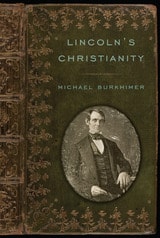
Lincoln's Christianity
Michael Burkhimer
Westholme Publishing, 2007
After listening to Abraham Lincoln’s second inaugural address, many in the audience were stunned. Instead of a positive message about the coming Union victory, the president implicated the entire country in the faults and responsibility for slavery. Using Old Testament references, Lincoln explained that God was punishing all Americans for their role in the calamity with a bloody civil war.
These were surprising words from a man who belonged to no church, did not regularly attend services, and was known to have publicly and privately questioned some of Christianity’s core beliefs. But Lincoln’s life was one with supreme sadness—the death of his first fiancee, the subsequent loss of two of his sons—and these events, along with the chance encounter with a book in Mary Todd’s father’s library, The Christian’s Defense, are all part of the key to understanding Lincoln’s Christianity. Biblical quotations soon entered his speeches—a point noted by Stephen Douglas in their debates—but it is unclear whether Lincoln’s use of scripture was a signal that American politicians should openly embrace religion in their public lives, or a rhetorical tool to manipulate his audience, or a result of a personal religious transformation. After his death both secular and religious biographers claimed Lincoln as one of their own, touching off a controversy that remains today.
In Lincoln’s Christianity, Michael Burkhimer examines the entire history of the president’s interaction with religion—accounts from those who knew him, his own letters and writings, the books he read—to reveal a man who did not believe in orthodox Christian precepts (and might have had a hard time getting elected today) yet, by his example, was a person and president who most truly embodied Christian teachings.
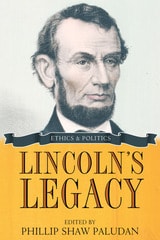
Lincoln's Legacy
Ethics and PoliticsEdited by Phillip Shaw Paludan
University of Illinois Press, 2007
The four new essays in Lincoln's Legacy describe major ethical problems that the sixteenth president navigated what can be learned from how he did so. The distinguished and award-winning Lincoln scholars William Miller, Mark E. Neely Jr., Phillip Shaw Paludan, and Mark Summers describe Lincoln’s attitudes and actions during encounters with questions of politics, law, constitutionalism, patronage, and democracy. The remarkably focused essays include an assessment of Lincoln's virtues in the presidency, the first study on Lincoln and patronage in more than a decade, a challenge to the cliché of Lincoln the democrat, and a study of habeas corpus, Lincoln, and state courts. On the eve of the bicentennial celebration of Lincoln’s birth, Lincoln’s Legacy highlights his enduring importance in contemporary conversations about law, politics, and democracy.
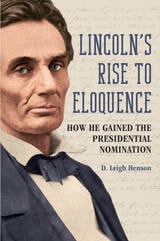
Lincoln's Rise to Eloquence
How He Gained the Presidential NominationD. Leigh Henson
University of Illinois Press, 2024
Insightful and revealing, Lincoln’s Rise to Eloquence follows Lincoln from his early career through the years-long clashes with Stephen A. Douglas to trace the future president’s evolution as a communicator and politician.
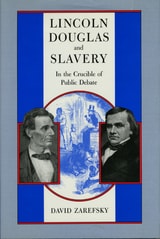
Lincoln, Douglas, and Slavery
In the Crucible of Public DebateDavid Zarefsky
University of Chicago Press, 1990
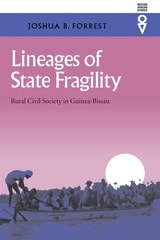
Lineages Of State Fragility
Rural Civil Society In Guinea-BissauJoshua B. Forrest
Ohio University Press, 2003
In Guinea-Bissau, as elsewhere in Africa, there is a disjuncture between the central state and rural civil society. It is this significant and overlooked aspect of Guinea-Bissau’s political evolution—the continuing ability of civil society to evade and thwart state power—that is at the heart of Joshua B. Forrest’s Lineages of State Fragility.
Professor Forrest argues that despite European influences, the contemporary fragility of African states can be fully appreciated only by examining the indigenous social context in which these states evolved. Focusing on Guinea-Bissau, Forrest exposes the emergence of a strong and adaptable “rural civil society” that can be traced back to precolonial times.
Lineages of State Fragility analyzes the social, political, and military experiences of this rural civil society to account for the origins of Guinea-Bissau’s soft state. For example, Forrest identifies interethnic social and military practices that became entrenched in rural social structures and continued to evolve through the colonial period, enabling Guinea-Bissauans to resist state predation.
Lineages of State Fragility offers an unorthodox explanation of African politics by tracing the direct social links among the precolonial, colonial, and postcolonial periods and affirms the role of rural actors in determining present-day political outcomes.
Based on remarkably extensive research conducted in archives in Guinea-Bissau, Senegal, and Portugal, Lineages of State Fragility represents both a new approach to the region’s past and present and an important synthesis of the political analysis that has come before.
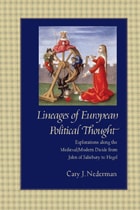
Lineages of European Political Thought
Explorations along the Medieval/Modern Divide from John of Salisbury to HegelCary J. Nederman
Catholic University of America Press, 2009
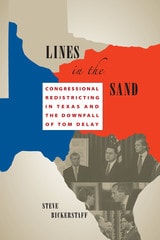
Lines in the Sand
Congressional Redistricting in Texas and the Downfall of Tom DeLayBy Steve Bickerstaff
University of Texas Press, 2007
The events of 2003 in Texas were important to the political history of this country. Congressman Tom DeLay led a Republican effort to gerrymander the state's thirty-two congressional districts to defeat all ten of the Anglo Democratic incumbents and to elect more Republicans; Democratic state lawmakers fled the state in an effort to defeat the plan. The Lone Star State uproar attracted attention worldwide. The Republicans won this showdown, gaining six additional seats from Texas and protecting the one endangered Republican incumbent. Some of the methods used by DeLay to achieve this result, however, led to his criminal indictment and ultimately to his downfall.
With its eye-opening research, readable style, and insightful commentary, Lines in the Sand provides a front-line account of what happened in 2003, often through the personal stories of members of both parties and of the minority activist groups caught in a political vortex. Law professor Steve Bickerstaff provides much-needed historical perspective and also probes the aftermath of the 2003 redistricting, including the criminal prosecutions of DeLay and his associates and the events that led to DeLay's eventual resignation from the U.S. House of Representatives. As a result, Bickerstaff graphically shows a dark underside of American politics—the ruthless use of public institutional power for partisan gain.
Linkages of Financial Groups in the European Union
Financial Conglomeration Developments in the Old and New Member StatesIngrid Ulst
Central European University Press, 2005
Lion and Lamb
A Portrait of British Moral DualityMihir Bose
Haus Publishing, 2018
In Britain’s Eternal Dilemma, Mihir Bose shows how those who voted to leave the E.U. want Britain to roar like a lion. In contrast, the Remainers saw Brexit as a self-inflicted wound, believing the only option is to live symbiotically with the rest of Europe for a common future. Writing from the unique perspective of an immigrant, Bose personifies this ongoing debate: He has experienced racism in his near half century in Britain, but he has also been provided unimaginable opportunities to become a writer, opportunities he would never have had in his native India. This timely book demonstrates that Britain is still wresting with its two-sided identity while also showing that Brexit is still the number one priority on the European political agenda.

Liquor and Labor in Southern Africa
Jonathan Crush
Ohio University Press, 1992
In June 1976 political demonstrations in the black township of Soweto exploded into an insurrection that would continue sporadically and spread to urban areas across South Africa. In their assault on apartheid the youths who spearheaded the rebellion attacked and often destroyed the state institutions that they linked to their oppression: police stations, government offices, schools, and state-owned liquor outlets. In Soweto alone during the first days of the revolt protestors smashed and burned eighteen beerhalls and a similar number of bottle stores; as the rebellion spread more were destroyed. This study sets out to demonstrate that liquor outlets were not simply convenient symbols of oppression. The anger that launched gasoline bombs into beerhalls across South Africa had specific origins in deep and complicated struggles over the control of alcohol production and consumption in South Africa.
Conflict over alcohol has continuously intruded upon the lives of the black residents of southern African towns, cities, and labor compounds and upon the rural communities to which these people traced their origins. Yet the subject has received little systematic scholarly attention until now. In Liquor and Labor in Southern Africa scholars explore the complex relationship between alcohol use and the emergence of the modern urban-industrial system. In examining the role of alcohol in social control and the state, they also reveal the vibrant subcultures nurtured in beerhalls and underground shebeens and expose the bitter conflicts over alcohol that run along the fault lines of age, gender, class, and ethnicity.
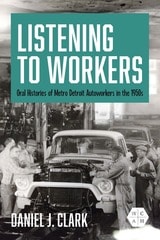
Listening to Workers
Oral Histories of Metro Detroit Autoworkers in the 1950sDaniel J. Clark
University of Illinois Press, 2024
Historians and readers alike often overlook the everyday experiences of workers. Drawing on years of interviews and archival research, Daniel J. Clark presents the rich, interesting, and sometimes confounding lives of men and women who worked in Detroit-area automotive plants in the 1950s.
In their own words, the interviewees frankly discuss personal matters like divorce and poverty alongside recollections of childhood and first jobs, marriage and working women, church and hobbies, and support systems and workplace dangers. Their frequent struggles with unstable jobs and economic insecurity upend notions of the 1950s as a golden age of prosperity while stories of domestic violence and infidelity open a door to intimate aspects of their lives. Taken together, the narratives offer seldom-seen accounts of autoworkers as complex and multidimensional human beings.
Compelling and surprising, Listening to Workers foregoes the union-focused strain of labor history to provide ground-level snapshots of a blue-collar world.
Literary Journalism on Trial
Masson v. New Yorker and the First AmendmentKathy Roberts Forde
University of Massachusetts Press, 2008
In November 1984, Jeffrey Masson filed a libel suit against writer Janet Malcolm and the New Yorker, claiming that Malcolm had intentionally misquoted him in a profile she wrote for the magazine about his former career as a Freud scholar and administrator of the Freud archives. Over the next twelve years the case moved up and down the federal judicial ladder, at one point reaching the U.S. Supreme Court, as lawyers and judges wrestled with questions about the representation of “truth” in journalism and, by extension, the limits of First Amendment protections of free speech. Had a successful Freudian scholar actually called himself an “intellectual gigolo” and “the greatest analyst who ever lived?" Or had a respected writer for the New Yorker knowingly placed false, self-damning words in her subject's mouth?
In Literary Journalism on Trial, Kathy Roberts Forde explores the implications of Masson v. New Yorker in the context of the history of American journalism. She shows how the case represents a watershed moment in a long debate between the advocates of traditional and literary journalism and explains how it reflects a significant intellectual project of the period: the postmodern critique of objectivity, with its insistence on the instability of language and rejection of unitary truth in human affairs. The case, Forde argues, helped widen the perceived divide between ideas of literary and traditional journalism and forced the resolution of these conflicting conceptions of truth in the constitutional arena of libel law. By embracing traditional journalism's emphasis on fact and objectivity and rejecting a broader understanding of truth, the Supreme Court turned away from the First Amendment theory articulated in previous rulings, opting to value less the free, uninhibited interchange of ideas necessary to democracy and more the “trustworthiness” of public expression. The Court's decision in this case thus had implications that reached beyond the legal realm to the values and norms expressed in the triangular relationship between American democracy, First Amendment principles, and the press.
Literature and Resistance in Guatemala
Textual Modes and Cultural Politics from El Señor Presidente to Rigoberta MenchúMarc Zimmerman
Ohio University Press, 1994
Lithuanian Social Democracy in Perspective, 1893-1914
Leonas Sabaliunas
Duke University Press, 1990
But Sabaliunas also considers such partners and rivals as the Jewish Bund, the Polish Socialist Party, the Social Democracy of the Kingdom of Poland and Lithuania, and the Russian Social Democratic Labor Party. He focuses on the appearance of socialist parties at the local level, the politics of assertive behavior during the Russian Revolution of 1905–1906, the nature of interparty relations, and efforts to promote party unity. In particular, he investigates the projected relationship between Russia and its subject nationalities—a cardinal concern today as the Baltic peoples attempt to distance themselves from their Russian neighbors.
Sabaliunas clarifies current massive Lithuanian opposition to Moscow and to its version of socialism. He stresses that in Lithuania the socialist movement from the beginning not only sought solutions to social and economic problems but also addressed issues of ethnic and national interest, especially the question of national sovereignty.

Little America
Australia, the 51st StateErik Paul
Pluto Press, 2006
Erik Paul dissects the relationship between Australia and the US. He explores how Australia has become a key player in maintaining American dominance in South East Asia, and looks critically at the contrast between the Australian wealth and the comparative poverty of surrounding nations.
Examining the influence of neoconservative imperialism on Australia's economic and military strategies, he draws some startling conclusions about future Australian relationships in East Asia, in particular, its relationship with China."

Live Stock and Dead Things
The Archaeology of Zoopolitics between Domestication and ModernityHannah Chazin
University of Chicago Press, 2024
In Live Stock and Dead Things, Hannah Chazin combines zooarchaeology and anthropology to challenge familiar narratives about the role of nonhuman animals in the rise of modern societies. Conventional views of this process tend to see a mostly linear development from hunter-gatherer societies, to horticultural and pastoral ones, to large-scale agricultural ones, and then industrial ones. Along the way, traditional accounts argue that owning livestock as property, along with land and other valuable commodities, introduced social inequality and stratification. Against this, Chazin raises a provocative question: What if domestication wasn’t the origin of instrumentalizing nonhuman animals after all?
Chazin argues that these conventional narratives are inherited from conjectural histories and ignore the archaeological data. In her view, the category of “domestication” flattens the more complex dimensions of humans’ relationship to herd animals. In the book’s first half, Chazin offers a new understanding of the political possibilities of pastoralism, one that recognizes the powerful role herd animals have played in shaping human notions of power and authority. In the second half, she takes readers into her archaeological fieldwork in the South Caucasus, which sheds further light on herd animals’ transformative effect on the economy, social life, and ritual. Appealing to anthropologists and archaeologists alike, this daring book offers a reconceptualization of human-animal relationships and their political significance.
Living Ideology in Cuba
Socialism in Principle and PracticeKatherine A. Gordy
University of Michigan Press, 2015
Living Legislation
Durability, Change, and the Politics of American LawmakingEdited by Jeffery A. Jenkins and Eric M. Patashnik
University of Chicago Press, 2012
Living Politics in South Africa’s Urban Shacklands
Kerry Ryan Chance
University of Chicago Press, 2018
Tracking everyday practices and interactions between poor residents and state agents in South Africa’s shack settlements, Chance investigates the rise of nationwide protests since the late 1990s. Based on ethnography in Durban, Cape Town, and Johannesburg, the book analyzes the criminalization of popular forms of politics that were foundational to South Africa’s celebrated democratic transition. Chance argues that we can best grasp the increasingly murky line between “the criminal” and “the political” with a “politics of living” that casts slum and state in opposition to one another. Living Politics shows us how legitimate domains of politics are redefined, how state sovereignty is forcibly enacted, and how the production of new citizen identities crystallize at the intersections of race, gender, and class.
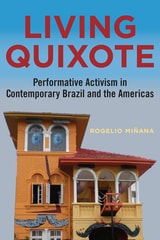
Living Quixote
Performative Activism in Contemporary Brazil and the AmericasRogelio Minana
Vanderbilt University Press, 2020
In this book, Cervantes scholar Rogelio Miñana examines long-term, Quixote-inspired activist efforts at the ground level. Through what the author terms performative activism, Quixote-inspired theater companies and nongovernmental organizations deploy a model for rewriting and enacting new social roles for underprivileged youth. Unique in its transatlantic, cross-historical, and community-based approach, Living Quixote offers both a new reading of Don Quixote and an applied model for cultural activism—a model based, in ways reminiscent of Paulo Freire, on the transformative potential of performance, literature, and art.
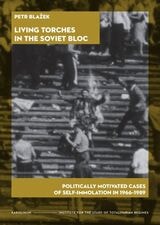
Living Torches in the Soviet Bloc
Politically Motivated Cases of Self-Immolation, 1966–1989Petr Blažek
Karolinum Press, 2025
Living Torches in the Soviet Bloc presents the lives of those who chose self-immolation as a radical form of protest against the political oppression of Communist regimes in the Soviet Bloc between 1966–1989. While more than fifty such cases were identified during the relevant period, Petr Blažek focuses here on the twenty-one cases in which at least partial political motivation is apparent from historical sources.
Many of the cases of the “living torches” were a radical response to the August 1968 occupation of Czechoslovakia by the armies of five Warsaw Pact member states and the suppression of the Prague Spring. After January 1969, the self-immolation of Jan Palach evoked a large wave of followers not only in Czechoslovakia, but also abroad, and greatly influenced other cases of “living torches” which continued to appear in the Soviet Bloc until the end of the 1980s.
Although the conditions in the Soviet Bloc states were sometimes fundamentally different, these cases of self-immolation across states share a common disapproval of the totalitarian form of rule. They were often drastic responses from members of occupied nations, most of whom were Czechs, Lithuanians, Ukrainians, and Poles, who rejected the enforced Communist regime and Soviet military presence. Some decided to sacrifice their lives to wake others from indifference and resignation. Even several decades later, their shocking acts not only provoke, but also lead us to reflect on fundamental questions of human life.
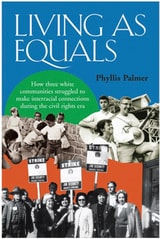
Living as Equals
How Three White Communities Struggled to Make Interracial Connections During the Civil Rights EraPhyllis Palmer
Vanderbilt University Press, 2008
Living in Problematicity
Jan Patocka
Karolinum Press, 2020
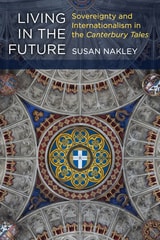
Living in the Future
Sovereignty and Internationalism in the Canterbury TalesSusan Nakley
University of Michigan Press, 2017
Chaucer uses two extant national ideals, sovereignty and domesticity, to introduce the concept of an English nation into the contemporary popular imagination and reinvent an idealized England as a hallowed homeland. For nationalist thinkers, sovereignty governs communities with linguistic, historical, cultural, and religious affinities. Chaucerian sovereignty appears primarily in romantic and household contexts that function as microcosms of the nation, reflecting a pseudo-familial love between sovereign and subjects and relying on a sense of shared ownership and judgment. This notion also has deep affinities with popular and political theories flourishing throughout Europe. Chaucer’s internationalism, matched with his artistic use of the vernacular and skillful distortions of both time and space, frames a discrete sovereign English nation within its diverse interconnected world.
As it opens up significant new points of resonance between postcolonial theories and medieval ideas of nationhood, Living in the Future marks an important contribution to medieval literary studies. It will be essential for scholars of Middle English literature, literary history, literary political and postcolonial theory, and literary transnationalism.
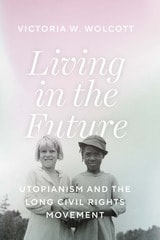
Living in the Future
Utopianism and the Long Civil Rights MovementVictoria W. Wolcott
University of Chicago Press, 2022
Utopian thinking is often dismissed as unrealistic, overly idealized, and flat-out impractical—in short, wholly divorced from the urgent conditions of daily life. This is perhaps especially true when the utopian ideal in question is reforming and repairing the United States’ bitter history of racial injustice. But as Victoria W. Wolcott provocatively argues, utopianism is actually the foundation of a rich and visionary worldview, one that specifically inspired the major figures of the Civil Rights Movement in ways that haven’t yet been fully understood or appreciated.
Wolcott makes clear that the idealism and pragmatism of the Civil Rights Movement were grounded in nothing less than an intensely utopian yearning. Key figures of the time, from Martin Luther King Jr. and Pauli Murray to Father Divine and Howard Thurman, all shared a belief in a radical pacificism that was both specifically utopian and deeply engaged in changing the current conditions of the existing world. Living in the Future recasts the various strains of mid-twentieth-century civil rights activism in a utopian light, revealing the power of dreaming in a profound and concrete fashion, one that can be emulated in other times that are desperate for change, like today.
Living in the Future
Utopianism and the Long Civil Rights MovementVictoria W. Wolcott
University of Chicago Press, 2022
This is an auto-narrated audiobook edition of this book.
Living in the Future reveals the unexplored impact of utopian thought on the major figures of the Civil Rights Movement.
Utopian thinking is often dismissed as unrealistic, overly idealized, and flat-out impractical—in short, wholly divorced from the urgent conditions of daily life. This is perhaps especially true when the utopian ideal in question is reforming and repairing the United States’ bitter history of racial injustice. But as Victoria W. Wolcott provocatively argues, utopianism is actually the foundation of a rich and visionary worldview, one that specifically inspired the major figures of the Civil Rights Movement in ways that haven’t yet been fully understood or appreciated.
Wolcott makes clear that the idealism and pragmatism of the Civil Rights Movement were grounded in nothing less than an intensely utopian yearning. Key figures of the time, from Martin Luther King Jr. and Pauli Murray to Father Divine and Howard Thurman, all shared a belief in a radical pacificism that was both specifically utopian and deeply engaged in changing the current conditions of the existing world. Living in the Future recasts the various strains of mid-twentieth-century civil rights activism in a utopian light, revealing the power of dreaming in a profound and concrete fashion, one that can be emulated in other times that are desperate for change, like today.
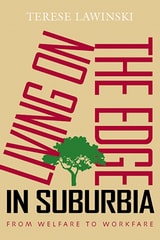
Living on the Edge in Suburbia
From Welfare to WorkfareTerese Lawinski
Vanderbilt University Press, 2010
In contrast to accounts of inner-city poor families, these suburban parents' stories reveal a broad array of precipitating circumstances leading to their downward economic slide and to welfare. They also provide insight into the bureaucratic machinations, rigid rules and mandates, disciplining techniques, and catch-22s that create an insecure environment for many families today. Many of these stories show that the need for welfare over time extends well beyond the federal government's five-year lifetime limit on welfare. Policies emphasizing work first also restrict access to education and further hinder parents' ability to gain a toehold in the economy.
In this tale of people and policies, the author shows how the interests of governments are often at variance with those of vulnerable families, and how some government actions place more pressure on lives replete with stress.
Living on the Edge of the Gulf
The West Florida and Alabama CoastDavid M. Bush, Norma J. Longo, William J. Neal, Luciana S. Esteves, Orrin H. Pilkey, Deborah F. Pilkey, Craig A. Webb
Duke University Press, 2001
The Gulf coast of Florida and Alabama is a fragile combination of barrier islands, low-lying marshes, and highly erodable mainland shores. In addition to sea-level rise, winter storms, and altered sediment supplies, hurricanes frequently damage or destroy the human developments and infrastructures that line this coast. Indeed, a single storm can cause billions of dollars in losses. Memories of such hurricanes as Camille, Frederic, Opal, and Andrew cause great concern for residents and property owners alike; events of equal magnitude are always just beyond the horizon and the uninformed have much to lose.
The authors of Living on the Edge of the Gulf seek to counteract potential loss by providing an illustrated introduction to coastal processes, a history of hazards for the region, and risk-reduction guidance in the form of site evaluations, community mitigation techniques, and storm-resistant construction practices. Risk maps that focus on individual coastal beaches are designed to assist property owners, community planners, and officials in prudent decision making, while a review of coastal regulations helps owners to understand and navigate various permit requirements.
This latest book in the Living with the Shore series replaces the earlier guide Living with the West Florida Shore and supplements the Alabama portion of Living with the Alabama/Mississippi Shore.
Living the High Life in Minsk
Russian Energy Rents, Domestic Populism and Belarus' Impending CrisisMargarita M. Balmaceda
Central European University Press, 2014
Living the High Life in Minsk looks at the sources of stability and instability in post-Soviet authoritarian states through the case study of President Lukashenka’s firm hold on power in Belarus. In particular, it seeks to understand the role of energy relations, policies, and discourses in the maintenance of this power. The central empirical question Balmaceda seeks to answer is what has been the role of energy policies in the maintenance of Lukashenka’s power in Belarus? In particular, it analyzes the role of energy policies in the management of Lukashenka’s relationship with three constituencies crucial to his hold on power: Russian actors, the Belarusian nomenklatura, and the Belarusian electorate.
In terms of foreign relations, the book focuses on the factors explaining Lukashenka’s ability to project Belarus’ power in its relationship with Russia in such a way as to compensate for its objective high level of dependency, assuring high levels of energy subsidies and rents continuing well beyond the initial worsening of the relationship in c. 2004. In terms of domestic relations, Balmaceda examines Lukashenka’s specific use of those energy rents in such a way as to assure the continuing support of both the Belarusian nomenklatura and the Belarusian electorate.
Living with Nkrumahism
Nation, State, and Pan-Africanism in GhanaJeffrey S. Ahlman
Ohio University Press, 2017
Lobbying and Policy Change
Who Wins, Who Loses, and WhyFrank R. Baumgartner, Jeffrey M. Berry, Marie Hojnacki, David C. Kimball, and Beth L. Leech
University of Chicago Press, 2009
During the 2008 election season, politicians from both sides of the aisle promised to rid government of lobbyists’ undue influence. For the authors of Lobbying and Policy Change, the most extensive study ever done on the topic, these promises ring hollow—not because politicians fail to keep them but because lobbies are far less influential than political rhetoric suggests.
Based on a comprehensive examination of ninety-eight issues, this volume demonstrates that sixty percent of recent lobbying campaigns failed to change policy despite millions of dollars spent trying. Why? The authors find that resources explain less than five percent of the difference between successful and unsuccessful efforts. Moreover, they show, these attempts must overcome an entrenched Washington system with a tremendous bias in favor of the status quo.
Though elected officials and existing policies carry more weight, lobbies have an impact too, and when advocates for a given issue finally succeed, policy tends to change significantly. The authors argue, however, that the lobbying community so strongly reflects elite interests that it will not fundamentally alter the balance of power unless its makeup shifts dramatically in favor of average Americans’ concerns.
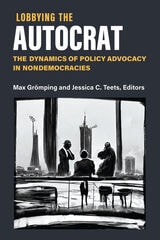
Lobbying the Autocrat
The Dynamics of Policy Advocacy in NondemocraciesMax Grömping and Jessica C. Teets, Editors
University of Michigan Press, 2023
Although authoritarian countries often repress independent citizen activity, lobbying by civil society organizations is actually a widespread phenomenon. Using case studies such as China, Russia, Belarus, Cambodia, Malaysia, Montenegro, Turkey, and Zimbabwe, Lobbying the Autocrat shows that citizen advocacy organizations carve out niches in the authoritarian policy process, even influencing policy outcomes. The cases cover a range of autocratic regime types (one-party, multi-party, personalist) on different continents, and encompass different systems of government to explore citizen advocacy ranging from issues such as social welfare, women’s rights, election reform, environmental protection, and land rights. They show how civil society has developed adaptive capacities to the changing levels of political repression and built resilience through ‘tactful contention’ strategies. Thus, within the bounds set by the authoritarian regimes, adaptive lobbying may still bring about localized responsiveness and representation.
However, the challenging conditions of authoritarian advocacy systems identified throughout this volume present challenges for both advocates and autocrats alike. The former are pushed by an environment of constant threat and uncertainty into a precarious dance with the dictator: just the right amount of acquiescence and assertiveness, private persuasion and public pressure, and the flexibility to change quickly to suit different situations. An adaptive lobbyist survives and may even thrive in such conditions, while others often face dire consequences. For the autocrat on the other hand, the more they stifle the associational sphere in an effort to prevent mass mobilization, the less they will reap the informational benefits associated with it. This volume synthesizes the findings of the comparative cases to build a framework for understanding how civil society effectively lobbies inside authoritarian countries.
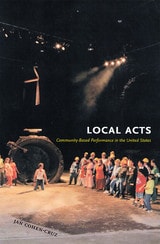
Local Acts
Community-Based Performance in the United StatesCohen-Cruz, Jan
Rutgers University Press, 2005
An eclectic mix of art, theatre, dance, politics, experimentation, and ritual,community-based performance has become an increasingly popular art movement in the United States. Forged by the collaborative efforts of professional artists and local residents, this unique field brings performance together with a range of political, cultural, and social projects, such as community-organizing, cultural self-representation, and education. Local Acts presents a long-overdue survey of community-based performance from its early roots, through its flourishing during the politically-turbulent 1960s, to present-day popular culture. Drawing on nine case studies, including groups such as the African American Junebug Productions, the Appalachian Roadside Theater, and the Puerto Rican Teatro Pregones, Jan Cohen-Cruz provides detailed descriptions of performances and processes, first-person stories, and analysis. She shows how the ritual side of these endeavors reinforces a sense of community identification while the aesthetic side enables local residents to transgress cultural norms, to question group habits, and to incorporate a level of craft that makes the work accessible to individuals beyond any one community. The book concludes by exploring how community-based performance transcends even national boundaries, connecting the local United States with international theater and cultural movements.
Local Government and Finance in Minnesota
William Anderson
University of Minnesota Press, 1935
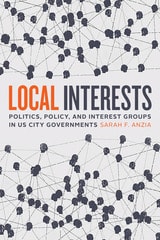
Local Interests
Politics, Policy, and Interest Groups in US City GovernmentsSarah F. Anzia
University of Chicago Press, 2022
Local politics in the United States once seemed tranquil compared to the divisiveness and dysfunction of the country’s national politics. Those days have passed. As multiple wide-ranging crises have thrust America’s local governments into the spotlight, they have also exposed policy failures and systemic problems that have mounted for years. While issues such as policing and the cost of housing are debated nationally, much of the policymaking surrounding these issues occurs locally. In Local Interests, Sarah F. Anzia explores how local governments—and the interest groups that try to influence them—create the policies that drive the national conversation: policing, economic development, housing, and challenges of taxing and spending.
Anzia examines local interest groups in terms of the specific policies they pursue, including how these groups get active in politics and what impact they have. By offering new perspectives on these issues, Anzia contributes to our knowledge of how interest groups function and the significant role they play in shaping broader social outcomes.

Local Interests
Politics, Policy, and Interest Groups in US City GovernmentsSarah F. Anzia
University of Chicago Press, 2022
A policy-focused approach to understanding the role of interest groups in US municipal governments.
Local politics in the United States once seemed tranquil compared to the divisiveness and dysfunction of the country’s national politics. Those days have passed. As multiple wide-ranging crises have thrust America’s local governments into the spotlight, they have also exposed policy failures and systemic problems that have mounted for years. While issues such as policing and the cost of housing are debated nationally, much of the policymaking surrounding these issues occurs locally. In Local Interests, Sarah F. Anzia explores how local governments—and the interest groups that try to influence them—create the policies that drive the national conversation: policing, economic development, housing, and challenges of taxing and spending.
Anzia examines local interest groups in terms of the specific policies they pursue, including how these groups get active in politics and what impact they have. By offering new perspectives on these issues, Anzia contributes to our knowledge of how interest groups function and the significant role they play in shaping broader social outcomes.
Local Justice in America
Jon Elster
Russell Sage Foundation, 1995