Results by title
18284 books match the query 'United States' and 698 start with l
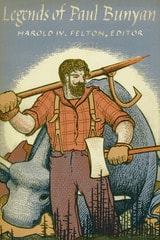
Legends of Paul Bunyan
Harold W. Felton
University of Minnesota Press, 2008
The collected lore of Minnesota's favorite lumberjack hero
Paul Bunyan is a true American folk character, created in logging camp bunkhouses by men who spun exaggerated stories that combined hard work and fantasy.
While the origins of Paul Bunyan and his sidekick Babe the Blue Ox are hazy, many storytellers have over the years contributed their own takes to produce an existing body of work--a true American legend--that matches the size of the lumberjack himself. Collected in colorful and engaging sections such as "Paul the Man," "Paul and the Animal Kingdom," and "The Wonderful Big Blue Ox, Babe," Legends of Paul Bunyan features more than thirty authors celebrating the largest lumberman, including stories by such Bunyan luminaries as James Stevens and W. B. Laughead, as well as such literary icons as Robert Frost and Carl Sandburg.
Legends of the Common Stream
John Hanson Mitchell
University of Massachusetts Press, 2021
While Mitchell never leaves the brook's shores, he draws from a range of traditions and takes readers on excursions to regions and cultures across the globe and across time, making the case that our contemporary separation from nature goes hand in hand with our alienation from the world of myth. This book seeks to restore these broken relationships and offers the reminder that while cultures may come and go, the stream goes on forever.
Legislating in the Dark
Information and Power in the House of RepresentativesJames M. Curry
University of Chicago Press, 2015
The answer? They aren’t. With Legislating in the Dark, James M. Curry reveals that the availability of information about legislation is a key tool through which Congressional leadership exercises power. Through a deft mix of legislative analysis, interviews, and participant observation, Curry shows how congresspersons—lacking the time and resources to study bills deeply themselves—are forced to rely on information and cues from their leadership. By controlling their rank-and-file’s access to information, Congressional leaders are able to emphasize or bury particular items, exploiting their information advantage to push the legislative agenda in directions that they and their party prefer.
Offering an unexpected new way of thinking about party power and influence, Legislating in the Dark will spark substantial debate in political science.
Legislative Entrepreneurship in the U.S. House of Representatives
Gregory Wawro
University of Michigan Press, 2001
Legislative Style
William Bernhard and Tracy Sulkin
University of Chicago Press, 2018
Bernhard and Sulkin have developed a systematic approach for looking at legislative style through a variety of criteria, including the number of the bills passed, number of speeches given, amount of money raised, and the percentage of time a legislator voted in line with his or her party. Applying this to ten congresses, representing twenty years of congressional data, from 1989 to 2009, they reveal that legislators’ activity falls within five predictable styles. These styles remain relatively consistent throughout legislators’ time in office, though a legislator’s style can change as career goals evolve, as well as with changes to individual or larger political interests, as in redistricting or a majority shift. Offering insight into a number of enduring questions in legislative politics, Legislative Style is a rich and nuanced account of legislators’ activity on Capitol Hill.
Legislators and Politicians
Iowa's Women LawmakersSuzanne O'Dea Schenken
University of Iowa Press, 1995
Legitimacy of Philanthropic Foundations
United States and European PerspectivesKenneth Prewitt
Russell Sage Foundation, 2006
Legitimizing Empire
Filipino American and U.S. Puerto Rican Cultural CritiqueFaye Caronan
University of Illinois Press, 2015
Faye Caronan's examination interprets the pivotal engagement of novels, films, performance poetry, and other cultural productions as both symptoms of and resistance against American military, social, economic, and political incursions. Though the Philippines became an independent nation and Puerto Rico a U.S. commonwealth, both remain subordinate to the United States. Caronan's juxtaposition reveals two different yet simultaneous models of U.S. neocolonial power and contradicts American exceptionalism as a reluctant empire that only accepts colonies for the benefit of the colonized and global welfare. Her analysis, meanwhile, demonstrates how popular culture allows for alternative narratives of U.S. imperialism, but also functions to contain those alternatives.
Lending Power
How Self-Help Credit Union Turned Small-Time Loans into Big-Time ChangeHoward E. Covington Jr.
Duke University Press, 2017
In Lending Power journalist and historian Howard E. Covington Jr. narrates the compelling story of Self-Help's founders and coworkers as they built a progressive and community-oriented financial institution. First established to assist workers displaced by closed furniture and textile mills, Self-Help created a credit union that expanded into providing home loans for those on the margins of the financial market, especially people of color and single mothers.
Using its own lending record, Self-Help convinced commercial banks to follow suit, extending its influence well beyond North Carolina. In 1999 its efforts led to the first state law against predatory lending. A decade later, as the Great Recession ravaged the nation's economy, its legislative victories helped influence the Dodd-Frank Wall Street Reform and Consumer Protection Act and the formation of the Consumer Financial Protection Bureau. Self-Help also created a federally chartered credit union to expand to California and later to Illinois and Florida, where it assisted ailing community-based credit unions and financial institutions.
Throughout its history, Self-Help has never wavered from its mission to use Dr. Martin Luther King Jr.'s vision of justice to extend economic opportunity to the nation's unbanked and underserved citizens. With nearly two billion dollars in assets, Self-Help also shows that such a model for nonprofits can be financially successful while serving the greater good. At a time when calls for economic justice are growing ever louder, Lending Power shows how hard-working and dedicated people can help improve their communities.
Lennie Tristano
His Life in MusicEunmi Shim
University of Michigan Press, 2007
“In Lennie Tristano: His Life in Music, Shim has provided a comprehensive biographical and analytical account of one of jazz’s most important and most frequently misunderstood figures. Her insights into Tristano’s personality are well nuanced, and the focus on his teaching makes a unique contribution to the history of jazz. This vividly written study is likely to become a standard work.”
—Brian Priestley, author of Chasin’ the Bird: The Life and Legacy of Charlie Parker and coauthor of The Rough Guide to Jazz
“Eunmi Shim’s book is clearly a labor of love. Her thorough examination of Tristano’s teaching is particularly important, for no one previously has assembled the thoughts of so many former students. Her illuminating transcriptions of, and commentaries on, Tristano’s solos are also valuable. Lennie Tristano is an important contribution to the literature on jazz.”
—Thomas Owens, author of Bebop: The Music and Its Players
“Comprehensive, objective, and acute in its judgments, this is the biography of Lennie Tristano we have been waiting for.”
—Larry Kart, author of Jazz in Search of Itself
Lennie Tristano occupies a rare position not only in jazz history but in the history of twentieth-century music. Emerging from an era when modernism was the guiding principle in art, Tristano explored musical avenues that were avant-garde even by modernism’s experimental standards. In so doing, he tested and transcended the boundaries of jazz.
In 1949, years before musicians such as Ornette Coleman and Cecil Taylor took credit for the movement, Tristano made the first recordings of “free jazz,” a new kind of group improvisation based on spontaneous interaction among band members without any regard for predetermined form, harmony, or rhythm. Then, in the 1950s, Tristano broke new ground by his use of multitracking.
Tristano was also a pioneer in the teaching of jazz, devoting the latter part of his career almost exclusively to music instruction. He founded a jazz school—the first of its kind—among whose students were saxophonists Warne Marsh and Lee Konitz, and pianist Sal Mosca.
With its blend of oral history, archival research, and musical analysis, Lennie Tristano sheds new light on the important role Tristano played in the jazz world and introduces this often-overlooked musician to a new generation of jazz aficionados.
Eunmi Shim received her Ph.D. in musicology from the University of Illinois at Urbana-Champaign and is now Assistant Professor of Music at Worcester Polytechnic Institute. This is her first book.
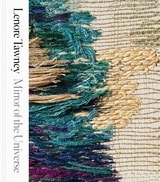
Lenore Tawney
Mirror of the UniverseEdited by Karen Patterson
University of Chicago Press, 2019
Raised and trained in Chicago before she moved to New York, Tawney had a storied career. She was known for employing an ancient Peruvian gauze weave technique to create a painterly effect that appeared to float in space rather than cling to the wall, as well as for being one of the first artists to blend sculptural techniques with weaving practices and, in the process, pioneered a new direction in fiber art. Despite her prominence on the New York art scene, however, she has only recently begun to receive her due from the greater art world. Accompanying a retrospective at the John Michael Kohler Arts Center, this catalog features a comprehensive biography of Tawney, additional essays on her work, and two hundred full-color illustrations, making it of interest to contemporary artists, art historians, and the growing audience for fiber art.
Copublished with the John Michael Kohler Arts Center.
Leo Sowerby
Joseph Sargent
University of Illinois Press, 2024
Leo Strauss and the Politics of Exile
The Making of a Political PhilosopherEugene Sheppard
Brandeis University Press, 2007
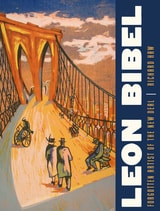
Leon Bibel
Forgotten Artist of the New DealRichard Haw
Rutgers University Press, 2025
Honorable Mention for the 2025 New Deal Book Award
Leon Bibel (1913–1995) was a prolific modern American artist who painted, printed, stamped, etched, sketched, and carved. He produced pieces that ranged from social realism to dreamy expressionism and was an aesthetic experimentalist, never working for too long in any medium or style. And despite Bibel's obvious talent, his work would have languished in obscurity were it not for the New Deal programs like the Federal Art Project and Public Works of Art Project.
Leon Bibel, the first biography of this eclectic artist, recounts his life from his birth in Szczebrzeszyn, Poland, in 1913, to his death in New Jersey in 1995. After immigrating to the United States in the 1920s, Bibel came of age during the Great Depression, when New Deal agencies recognized his abilities and supported his artistic endeavors. Working-class artists faced challenges after these programs folded, and Bibel would later spend twenty years as a New Jersey chicken farmer before resurrecting his art career in the 1960s.
Historian Richard Haw shows how Bibel's life was defined by the New Deal, his visionary artwork shaped by the era's commitment to social and economic justice. With reproductions of more than 240 of Bibel's works, most in vivid color, this book reveals how he depicted everything from the trauma of unemployment to the dignity of work, from the horrors of lynching to the pleasures of everyday life.
Leon Uris
Life of a Best SellerBy Ira B. Nadel
University of Texas Press, 2010
As the best-selling author of Exodus, Mila 18, QB VII, and Trinity, Leon Uris blazed a path to celebrity with books that readers could not put down. Uris's thirteen novels sold millions of copies, spent months on the best-seller lists, appeared in fifty languages, and have been adapted into equally popular movies and TV miniseries. Few other writers equaled Uris's fame in the mid-twentieth century. His success fueled the rise of mass-market paperbacks, movie tie-ins, and celebrity author tours. Beloved by the public, Uris was, not surprisingly, dismissed by literary critics. Until now, his own life—as full of drama as his fiction—has never been the subject of a book.
In Leon Uris: Life of a Best Seller, Ira Nadel traces Uris from his disruptive youth to his life-changing experiences as a marine in World War II. These experiences, coupled with Uris's embrace of his Judaism and desire to write, led to his unprecedented success and the lavish excesses of a career as a best-selling author. Nadel reveals that Uris lived the adventures he described, including his war experiences in the Pacific (Battle Cry), life-threatening travels in Israel (Exodus), visit to Communist Poland (Mila 18), libel trial in Britain (QB VII), and dangerous sojourn in fractious Northern Ireland and the Irish Republic (Trinity). Nadel also demonstrates that Uris's talent for writing action-packed, yet thoroughly researched, novels meshed perfectly with the public's desire to revisit and understand the tumultuous events of recent history. This made him far more popular (and wealthy) than more literary authors, while paving the way for writers such as Irving Wallace and Tom Clancy.

Leopold and Loeb
THE CRIME OF THE CENTURYHal Higdon
University of Illinois Press, 1975
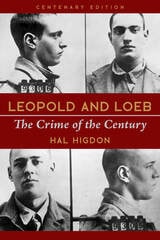
Leopold and Loeb
The Crime of the CenturyHal Higdon
University of Illinois Press, 2024
The 1924 murder of fourteen-year-old Bobby Franks by Nathan Leopold and Richard Loeb shocked the nation. One hundred years later, the killing and its aftermath still reverberate through popular culture and the history of American crime.
Hal Higdon’s true crime classic offers an unprecedented examination of the case. Higdon details Leopold and Loeb’s journey from privilege and promise to the planning and execution of their monstrous vision of the perfect crime. Drawing on secret testimony, Higdon follows the police investigation through the pair’s confessions of guilt and recreates the sensational hearing where Clarence Darrow, the nation’s most famous attorney, saved the pair from the death penalty.
In-depth and definitive, Leopold and Loeb tells the dramatic story of a notorious crime and its long afterlife in the American imagination.
Les Icariens
THE UTOPIAN DREAM IN EUROPE AND AMERICARobert P. Sutton
University of Illinois Press, 1994
Les Paul
Guitar WizardBob Jacobson
Wisconsin Historical Society Press, 2012
This addition to the Badger Biographies series for young readers tells the story of Les Paul, the legendary “Wizard of Waukesha,” who pioneered the solid body electric guitar, multi-track recording, and many other musical inventions. Fascinated since boyhood with musical technology, the young Les moved from experimenting with his mother’s player piano and phonograph to developing his own amplifier and tinkering with crystal radios.
After leaving his hometown of Waukesha at age 17 to pursue a musical career—a decision his mother supported—the budding jazz guitarist lived in Chicago, New York, and Los Angeles, in each city finding a new audience and new musical partnerships. A regular on the radio, Les became a fixture in early television, appearing on the Ed Sullivan Show, and later, a show of his own with partner Mary Ford. Along the way, he overcame numerous physical challenges, including recovery from electric shock and rehabilitation after a horrific car accident—both of which threatened his musical career. And yet, Les Paul pushed musical technology forward more than any other musician of the twentieth century. This Grammy Hall of Fame inductee died in 2009, making Les Paul: Guitar Wizard a timely addition to the series. This lively story is rounded out with sidebars on radio call letters and how an electric guitar works, a full discography, and over 60 historic photographs.
Lesbian Psychologies
EXPLORATIONS AND CHALLENGESEdited by the Boston Lesbian Psychologies Collective
University of Illinois Press, 1987
Less than Meets the Eye
Foreign Policy Making and the Myth of the Assertive CongressBarbara Hinckley
University of Chicago Press, 1994
What Hinckley reveals is sharply at odds with conventional wisdom and unflattering to both the executive and the legislative branches of government. More than a critical reassessment, this book also proposes reforms than might result in real congressional participation in the making of foreign policy. With its insight into how our system of checks and balances works—and doesn't—this book takes a first step toward making the peoples' representatives accountable for crucial American interests in foreign matters.
Lesser Harms
The Morality of Risk in Medical ResearchSydney A. Halpern
University of Chicago Press, 2004
Today's scientists follow federal guidelines for research on human subjects developed during the 1960s and 1970s. But long before these government regulations, medical investigators observed informal rules when conducting human research. They insisted that the dangers of natural disease should outweigh the risks of a medical intervention, and they struggled to accurately assess the relative hazards. Halpern explores this logic of risk in immunization controversies extending as far back as the eighteenth century. Then, focusing on the period between 1930 and 1960, she shows how research physicians and their sponsors debated the moral quandaries involved in moving vaccine use from the laboratory to the clinic.
This probing work vividly describes the efforts of clinical investigators to balance the benefits and dangers of untested vaccines, to respond to popular sentiment about medical hazards, and to strategically present risk laden research to sponsors and the public.
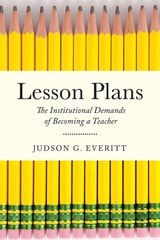
Lesson Plans
The Institutional Demands of Becoming a TeacherEveritt, Judson G.
Rutgers University Press, 2017
In Lesson Plans, Judson G. Everitt takes readers into the everyday worlds of teacher training, and reveals the complexities and dilemmas teacher candidates confront as they learn how to perform a job that many people assume anybody can do. Using rich qualitative data, Everitt analyzes how people make sense of their prospective jobs as teachers, and how their introduction to this profession is shaped by the institutionalized rules and practices of higher education, K-12 education, and gender. Trained to constantly adapt to various contingencies that routinely arise in schools and classrooms, teacher candidates learn that they must continually try to reconcile the competing expectations of their jobs to meet students’ needs in an era of accountability. Lesson Plans reveals how institutions shape the ways we produce teachers, and how new teachers make sense of the multiple and complicated demands they face in their efforts to educate students.

Lessons Inspired by Picture Books for Primary Grades
Maureen Schlosser
American Library Association, 2019
Drawing on compelling picture books that can be used to directly support the AASL National School Library Standards for Learners, School Librarians, and School Libraries, this ready-to-go toolkit of lessons, worksheets, anchor charts, assessments, and rubrics is specifically designed to build learner competencies while examining big ideas inspired by picture books. An invaluable timesaver, this resource provides
- 21 lesson units that cover the six Shared Foundations, each utilizing a formatted template that’s easy to follow and incorporates the four Domains (Think, Create, Share, Grow);
- a picture book synopsis for each unit, followed by lesson objectives, essential questions, materials, and duration;
- worksheets, anchor charts, and exit slips tailored for each picture book and lesson;
- “Quick Tips” that offer helpful ideas and suggestions to consider during the lesson; and
- an appendix that includes rubrics to facilitate assessment in all six foundations.
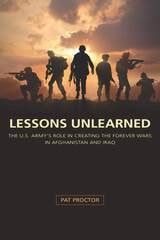
Lessons Unlearned
The U.S. Army's Role in Creating the Forever Wars in Afghanistan and IraqPat Proctor
University of Missouri Press, 2020
In this blunt critique of the senior leadership of the U.S. Army, Proctor contends that after the fall of the Soviet Union, the U.S. Army stubbornly refused to reshape itself in response to the new strategic reality, a decision that saw it struggle through one low-intensity conflict after another—some inconclusive, some tragic—in the 1980s and 1990s, and leaving it largely unprepared when it found itself engaged—seemingly forever—in wars in Afghanistan and Iraq. The first book-length study to connect the failures of these wars to America’s disastrous performance in the war on terror, Proctor’s work serves as an attempt to convince Army leaders to avoid repeating the same mistakes.
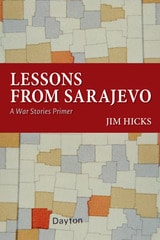
Lessons from Sarajevo
A War Stories PrimerJim Hicks
University of Massachusetts Press, 2013
Hicks explores the limitations of the sentimental tradition in war representation and asks how the work of artists and writers can help us to move beyond the constraints of that tradition. Ranging from Walt Whitman's writings on the Civil War to the U.S. wars in Iraq and Afghanistan, and focusing on the innovative and creative artistic expressions arising out of the wars of the former Yugoslavia, Hicks examines how war has been perceived, described, and interpreted. He analyzes the limitations on knowledge caused by perspective and narrative position and looks closely at the distinct yet overlapping roles of victims, observers, and aggressors. In the end, he concludes, war stories today should be valued according to the extent they make it impossible for us to see these positions as assigned in advance, and immutable.

Lessons in Gratitude
A Memoir on Race, the Arts, and Mental HealthAaron P. Dworkin
University of Michigan Press, 2024
Aaron’s unique journey, which begins with his adoption by a white Jewish couple from Chicago at two weeks of age, leads him to the ultimate reunification with his birth family at the age of 31. Lessons of Gratitude is a coming of age story that examines the difficulties of biracial identity across generations and the challenges that mixed race families still face today. It is also a painful and honest adoption memoir, further complicating the narrator’s experiences of racial identity throughout his life and shaping his experiences with his own children. Through his work in the arts and the impact of this work, Dworkin has been able to “pay forward” the first thing that offered him unconditional love—music.
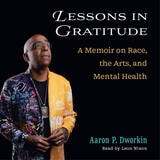
Lessons in Gratitude
A Memoir on Race, the Arts, and Mental HealthAaron P. Dworkin
University of Michigan Press, 2024
Aaron’s unique journey, which begins with his adoption by a white Jewish couple from Chicago at two weeks of age, leads him to the ultimate reunification with his birth family at the age of 31. Lessons in Gratitude is a coming of age story that examines the difficulties of biracial identity across generations and the challenges that mixed race families still face today. It is also a painful and honest adoption memoir, further complicating the narrator’s experiences of racial identity throughout his life and shaping his experiences with his own children. Through his work in the arts and the impact of this work, Dworkin has been able to “pay forward” the first thing that offered him unconditional love—music.
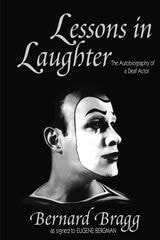
Lessons in Laughter
The Autobiography of a Deaf ActorBernard Bragg
Gallaudet University Press, 1989
To succeed as an actor is a rare feat. To succeed as a deaf actor is nothing short of amazing. Lessons in Laughter is the story of Bernard Bragg and his astonishing lifelong achievements in the performing arts.
Born deaf of deaf parents, Bernard Bragg has won international renown as an actor, director, playwright, and lecturer. Lessons in Laughter recounts in stories that are humorous, painful, touching, and outrageous, the growth of his dream of using the beauty of sign language to act. He starred in his own television show “The Quiet Man,” helped found The National Theatre of the Deaf, and traveled worldwide to teach his acting methods.
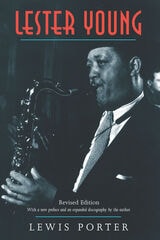
Lester Young
Lewis Porter
University of Michigan Press, 2005
". . . a schematic of unparalleled insight and detail."
---Down Beat
"A monumental work."
---Dizzy Gillespie
". . . a major contribution to jazz scholarship . . . for its illumination of Lester Young's music and for setting the biographical record straight."
---Dan Morgenstern
Several new biographies of Lester Young have been published in the years since Lewis Porter's Lester Young first appeared, but none have supplanted or even attempted the in-depth study that Porter brings to his subject's music. With the same care and scholarship that characterized his John Coltrane, Porter analyzes the music that made Lester Young "the most original tenor sax in jazz."
In addition to helping us understand Lester Young's playing and stylistic evolution, Porter's analysis demonstrates that Young's playing at the end of his career did not mark a serious decline over his earlier style, as many critics have claimed.
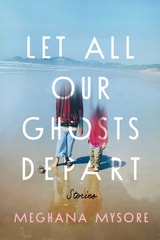
Let All Our Ghosts Depart
StoriesMeghana Mysore
West Virginia University Press, 2026
In this powerful debut collection, present-day women of the South Asian diaspora grapple with belonging and are haunted by intergenerational inheritances. Meghana Mysore, herself the daughter of Indian immigrants, spins her stories around narrators struggling to assimilate into the surreal world around them. At times, this disorientation skews speculative, where deceased mothers reappear as chiding, broken-down cars. At turns absurd and darkly humorous, the women in Mysore’s stories all experience transformation, be it small or monumental, where they find spaces of freedom and delight within their circumstances.

Let Jasmine Rain Down
Song and Remembrance among Syrian JewsKay Kaufman Shelemay
University of Chicago Press, 1998
Shelemay views the intersection of music, individual remembrances, and collective memory through the pizmonim. Reconstructing a century of pizmon history in America based on research in New York, Mexico, and Israel, she explains how verbal and musical memories are embedded in individual songs and how these songs perform both what has been remembered and what otherwise would have been forgotten. In confronting issues of identity and meaning in a postmodern world, Shelemay moves ethnomusicology into the domain of memory studies.
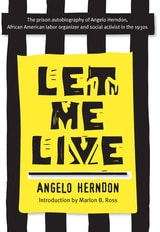
Let Me Live
Angelo Herndon
University of Michigan Press, 2007
Let Me Live tells the remarkable story of Angelo Herndon, a coal miner who worked as a labor organizer in Alabama and Georgia in the 1930s. Herndon led a racially integrated march of the unemployed in 1932 and was subsequently arrested when Communist Party literature was found in his bedroom. His trial made only small headlines at first, but eventually an international campaign to free him emerged, thanks to the efforts of the Communist Party and of labor unions interested in protecting the right to organize in the South. Herndon was finally set free by the U.S. Supreme Court, with the help of well-known leaders including C. Vann Woodward, Thurgood Marshall, A. Philip Randolph, and Whitney North Seymour, Sr.
Written while Herndon was in prison, Let Me Live tells the story behind his arrest and his struggle through the courts. It also describes his early life as a young boy in poverty, as a laborer in the Kentucky mines, and as a construction gang worker and traces the birth and development of his passion for the Communist Party. Originally published in 1937, this is the first new edition of Let Me Live since 1969, when Howard N. Meyer rescued it from obscurity. The book features texts from the Georgia and U.S. Supreme Court decisions, the text of Herndon’s speech, and newspaper editorials from the era. A substantive and thought-provoking introduction by Marlon B. Ross of the University of Virginia sheds light on this unique story and its importance to our understanding of the intersection of race and class in America—past and present.
“A book which every thoughtful American may do well to read. It is moving and challenging as the story of one man’s life and the question of one man’s fate.”
—New York Times
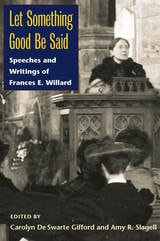
Let Something Good Be Said
Speeches and Writings of Frances E. WillardFrances E. Willard. Edited by Carolyn De Swarte Gifford and Amy R. Slagell
University of Illinois Press, 2007
Celebrated as the most famous woman in America at the time of her death in 1898, Frances E. Willard was a leading nineteenth-century American temperance and women's rights reformer and a powerful orator. President of Evanston College for Ladies (before it merged with Northwestern University) and then professor of rhetoric and aesthetics and the first dean of women at Northwestern, Willard is best known for leading the Woman's Christian Temperance Union (WCTU), America's largest women's organization. The WCTU shaped both domestic and international opinion on major political, economic, and social reform issues, including temperance, women's rights, and the rising labor movement. In what Willard regarded as her most important and far-reaching reform, she championed a new ideal of a powerful, independent womanhood and encouraged women to become active agents of social change. Willard's reputation as a powerful reformer reached its height with her election as president of the National Council of Women in 1888.
This definitive collection follows Willard's public reform career, providing primary documents as well as the historical context necessary to clearly demonstrate her skill as a speaker and writer who addressed audiences as diverse as political conventions, national women's organizations, teen girls, state legislators, church groups, and temperance advocates. Including Willard's representative speeches and published writings on everything from temperance and women's rights to the new labor movement and Christian socialism, Let Something Good Be Said is the first volume to collect the messages of one of America's most important social reformers who inspired a generation of women to activism.
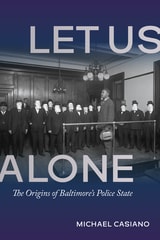
Let Us Alone
The Origins of Baltimore's Police StateMichael Casiano
University of Illinois Press, 2025
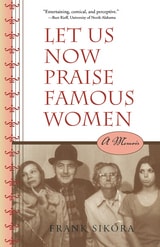
Let Us Now Praise Famous Women
A MemoirFrank Sikora
University of Alabama Press, 2005
An affectionate, humorous account of small town Alabama during the civil rights era.
When Frank Sikora's six-year-old daughter contracted pneumonia in 1962, his wife Millie vowed that would be the last winter she would spend in Ohio. Despite their misgivings about the racial tensions erupting there, they moved their family of six south, where Frank hoped to fulfill his dream of becoming a newspaper reporter. But when those dreams didn't materialize immediately, mounting bills, repossession, and eviction forced them to move in with Millie's parents, Dan and Minnie Belle Helms, in rural Wellington, Alabama.
With even slimmer prospects for employment in impoverished Calhoun County, the Sikoras came to depend heavily upon the Helmses and extended family members and all their lives became closely intertwined. The Helmses were uneducated, unpolished people, but Sikora's narration of his life with them—often humorous but never condescending—provides a compelling portrait of the attitudes and lifestyle of poor whites in Alabama during the second half of the 20th century, just as James Agee's monumental work, Let Us Now Praise Famous Men, illuminated the Depression years in Hale County, Alabama. Sikora illustrates how resourceful, southern women, in particular, held their families together through trying times.
Interwoven with this commentary on rural white culture in the Deep South is the story of Sikora's developing career as a newsman. Determined to succeed, he finally lands a job with the Gadsden Times reporting the news of black citizens. From that introduction to journalism, Sikora becomes one of Alabama's most acclaimed chroniclers of the civil rights movement, eventually writing some of the acknowledged masterpieces about the subject. Like his landmark book, Selma, Lord, Selma, Sikora's newest work tells the stories of ordinary Alabamians and their perspectives on extraordinary times.
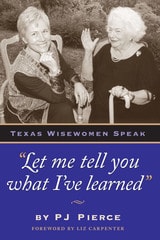
Let me tell you what I've learned
Texas Wisewomen SpeakBy PJ Pierce
University of Texas Press, 2002
Barbara Jordan spoke for many Texas women when she told a reporter, "I get from the soil and spirit of Texas the feeling that I, as an individual, can accomplish whatever I want to, and that there are no limits, that you can just keep going, just keep soaring. I like that spirit." Indeed, the sense of limitless possibilities has inspired countless Texas women—sometimes in the face of daunting obstacles—to build lives rich in work, family, friends, faith, and community involvement.
In this collection of interviews conducted by PJ Pierce, twenty-five Texas women ranging in age from 53 to 93 share the wisdom they've acquired through living unconventional lives. Responding to the question "What have you found that really matters about life?" they offer keen insights into motherhood, career challenges, being a minority, marriage and widowhood, anger, assertiveness, managing change, persevering, power, speaking out, fashioning success from failure, writing your own job description, loving a younger man, and recognizing opportunities disguised as disaster—to name only a few of their topics. In her introduction, Pierce describes how she came to write the book and how she chose her subjects to represent a cross-section of career paths and ethnic groups and all geographic areas of Texas. A topical index makes it easy to compare several women's views on a given subject.
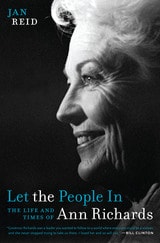
Let the People In
The Life and Times of Ann RichardsBy Jan Reid
University of Texas Press, 2012
Winner, Coral Horton Tullis Memorial Prize, Texas State Historical Association, 2012
Liz Carpenter Award for Research in the History of Women, Texas State Historical Association, 2012
When Ann Richards delivered the keynote of the 1988 Democratic National Convention and mocked President George H. W. Bush—“Poor George, he can’t help it. He was born with a silver foot in his mouth”—she instantly became a media celebrity and triggered a rivalry that would alter the course of American history. In 1990, Richards won the governorship of Texas, upsetting the GOP’s colorful rancher and oilman Clayton Williams. The first ardent feminist elected to high office in America, she opened up public service to women, blacks, Hispanics, Asian Americans, gays, and the disabled. Her progressive achievements and the force of her personality created a lasting legacy that far transcends her rise and fall as governor of Texas.
In Let the People In, Jan Reid draws on his long friendship with Richards, interviews with her family and many of her closest associates, her unpublished correspondence with longtime companion Bud Shrake, and extensive research to tell a very personal, human story of Ann Richards’s remarkable rise to power as a liberal Democrat in a conservative Republican state. Reid traces the whole arc of Richards’s life, beginning with her youth in Waco, her marriage to attorney David Richards, her frustration and boredom with being a young housewife and mother in Dallas, and her shocking encounters with Lyndon Johnson and Jimmy Carter. He follows Richards to Austin and the wild 1970s scene and describes her painful but successful struggle against alcoholism. He tells the full, inside story of Richards’s rise from county office and the state treasurer’s office to the governorship, where she championed gun control, prison reform, environmental protection, and school finance reform, and he explains why she lost her reelection bid to George W. Bush, which evened his family’s score and launched him toward the presidency. Reid describes Richards’s final years as a world traveler, lobbyist, public speaker, and mentor and inspiration to office holders, including Hillary Clinton. His nuanced portrait reveals a complex woman who battled her own frailties and a good-old-boy establishment to claim a place on the national political stage and prove “what can happen in government if we simply open the doors and let the people in.”
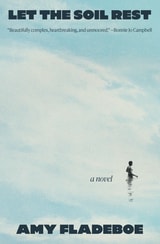
Let the Soil Rest
A NovelAmy Fladeboe
Northwestern University Press, 2027
Reaching across miles and memory to deconstruct the American Dream in the Midwest Rust Belt
Arjan, a teen refugee from postcommunist Albania, and Jess, a Midwestern high schooler, strike up an unlikely friendship working a seasonal job on a farm in Michigan. Now in their thirties, the two have taken different paths—he chasing the American Dream with a running rotation of day-labor gigs, and she living on the road and off the grid, trying to escape the very same ideal. When Jess lands in Hamtramck, just a few miles from her suburban Detroit upbringing after years wandering, they find themselves trudging the same unplowed sidewalks, spinning loads at the same laundromat, and picking the same jukebox songs at the local dive. Both are haunted by the ghosts of childhood traumas, a chorus of the collective unconscious that takes us from the Albanian coast to the Rust Belt heartland. So near one another and yet so far apart, they must reach across miles and memories to discover that the most important voice in our heads is our own.
Let's Pretend
50 Start-To-Finish Preschooler Programs for the Busy Librarian That Foster ImaginationAmerican Library Association, 2010
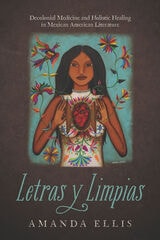
Letras y Limpias
Decolonial Medicine and Holistic Healing in Mexican American LiteratureAmanda Ellis
University of Arizona Press, 2021
Ellis explores the curandera in relationship to decoloniality, bioethics, and the topic of healing while recognizing the limitations and spiritual shortcomings of Western medicine. Ellis argues that our contemporary western health-care system does not know how to fully grapple with illnesses that patients face. Ellis reads the curandera’s perennial representation as an ongoing example of decolonial love useful for deconstructing narrow definitions of health and personhood, and for grappling with the effects of neoliberalism and colonialism on the health-care industry.
Letras y Limpias draws from Chicana feminist theory to assert the importance of the mindbodyspirit connection. Ellis conveys theoretical insights about the continual reimagining of the figure of the curandera as a watermark across Mexican American literary texts. This literary figure points to the oppressive forces that create susto and reminds us that healing work requires specific attention to colonialism, its legacy, and an intentional choice to carry forward the traditional practices rooted in curanderismo passed on from prior generations. By turning toward the figure of the curandera, readers are better poised to challenge prevailing ideas about health, and imagine ways to confront the ongoing problems that coloniality creates. Letras y Limpias shows how the figure of the curandera offers us ways to heal that have nothing to do with copays or medical professionals refusing care, and everything to do with honoring the beauty and complexity of any, every, and all humans.
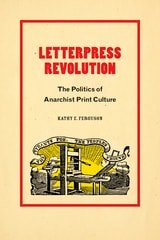
Letterpress Revolution
The Politics of Anarchist Print CultureKathy E. Ferguson
Duke University Press, 2023
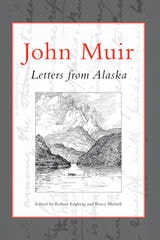
Letters From Alaska
John Muir
University of Alaska Press, 2009
John Muir (1838–1914), founder of the Sierra Club, was one of the most famous and influential environmental conservationists of all time. From 1879 to 1880 Muir traveled the waters of southeastern Alaska in a Tlingit Indian dugout canoe and reported his encounters in a series of letters published in the San Francisco Daily Evening Bulletin. Collected here are Muir’s original letters, bearing the immediacy and candor of his best work and providing a rare account of southeastern Alaska history, alongside breathtaking observations of glaciers and the untamed landscape. Through Muir we encounter gold miners, rogue towns, Taku Inlet, Glacier Bay, profiles of Tlingit Indians, and the infancy of the tourist industry. This collection of work by one of America’s foremost naturalists provides a magnificent look into early conservationist thought and one individual’s encounter with nature.
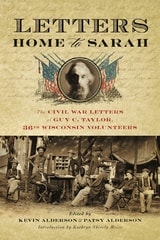
Letters Home to Sarah
The Civil War Letters of Guy C. Taylor, Thirty-Sixth Wisconsin VolunteersGuy C. Taylor; Edited by Kevin L. Alderson and Patsy Alderson; Introduction by Kathryn Shively Meier
University of Wisconsin Press, 2012
From the initial mustering and training of his regiment at Camp Randall in Wisconsin, through the siege of Petersburg in Virginia, General Lee’s surrender at Appomattox, and the postwar Grand Review of the Armies parade in Washington, D.C., Taylor conveys in vivid detail his own experiences and emotions and shows himself a keen observer of all that is passing around him. While at war, he contracts measles, pneumonia, and malaria, and he writes about the hospitals, treatments, and sanitary conditions that he and his comrades endured during the war. Amidst the descriptions of soldiering, Taylor’s letters to Sarah are threaded with the concerns of a young married couple separated by war but still coping together with childrearing and financial matters. The letters show, too, Taylor’s transformation from a lonely and somewhat disgruntled infantryman to a thoughtful commentator on the greater ideals of the war.
This remarkable trove of letters, which had been left in the attic of Taylor’s former home in Cashton, Wisconsin, was discovered by local historian Kevin Alderson at a household auction. Recognizing them for the treasure they are, Alderson bought the letters and, aided by his wife Patsy, painstakingly transcribed the letters and researched Taylor’s story in Wisconsin and at historical sites of the Civil War. The Aldersons’ preface and notes are augmented by an introduction by Civil War historian Kathryn Shively Meier, and the book includes photographs, maps, and illustrations related to Guy Taylor’s life and letters.
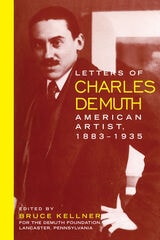
Letters Of Charles Demuth
Bruce Kellner
Temple University Press, 2000
This collection of 155 of his letters offers valuable views of the arts and letters colonies in Provincetown, New York, and Paris. Besides offering information on Demuth's own works, the letters also shed light on the output of his contemporaries, as well as references to their trips, liaisons, and idiosyncrasies. Demuth numbered among his correspondents some of the most famous artists and writers of his time, including Georgia O'Keeffe, Eugene O'Neill, John Reed, Gertrude Stein, Alfred Stieglitz, Carl Van Vechten, and William Carlos Willliams. In his travels in the United States and abroad, he encountered many other talented contemporaries: Peggy Bacon, Muriel Draper, Marcel Duchamp, the Stetthemer sisters, artists and writers, patrons, and gallery owners.
Whether he is offering to pick up a copy of Joyce's Ulysses for Eugene O'Neill or trying to convince Georgia O'Keeffe to decorate his music room ("just allow that red and yellow 'canna' one to spread until it fills the room"), Demuth is always in the thick of art and literary life. Flamboyant in attire but discreet in his homosexuality, Demuth also reveals in his letters the life of a talented homosexual in the teens and twenties. With his best friends Robert Locher and Marsden Hartley, he circulated through the art colonies of Greenwich Village, Provincetown, and Paris, meeting everyone.
The book also contains reprints of some short appraisals of Demuth and his work that were published during his lifetime, long out of print, including pieces by A. E. Gallatin, Angela E. Hagen, Marsden Hartley, Helen Henderson, Henry McBride, Carl Van Vechten, Rita Wells, and Willard Huntington Wright.
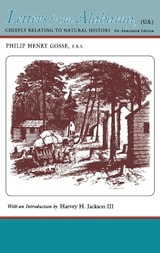
Letters from Alabama
Chiefly Relating to Natural HIstoryPhilip Henry Gosse, introduction by Harvey H. Jackson III, edited by Virginia Hamilton
University of Alabama Press, 1993
A naturalist's captivating portrait of Alabama's wildlife, landscapes, and people.
Philip Henry Gosse (1810-1888), a British naturalist, left home at age 17 and made his way to Alabama in 1838, where he had heard educated people were in demand. He was employed by Judge Reuben Saffold at Pleasant Hill in Dallas County as a teacher for about a dozen children of local landowners, but his principal interest was natural history. During the eight months he lived in th Black Belt he watched, listened, thought, took notes, and made sketches--activities that eventually led to Letters from Alabama. He lived among Alabamians, talked and listened to them, saw them at their best and their worst, and came to understand their hopes and fears. They were a part of the natural world, and he paid attention to them as any good scientist would. With the skills of a scientist and the temperament of an artist, Gosse set down an account of natural life in frontier Alabama that has no equal. Written to no one in particular, a common literary device of the period, the letters were first published in a magazine, and in 1859 appeared as a book. By that time Gosse was an established scholar and one of England’s most noted scientific illustrators.
Letters from Alabama
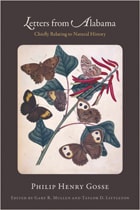
Chiefly Relating to Natural HistoryPhilip Henry Gosse, Edited by Gary R. Mullen and Taylor D. Littleton
University of Alabama Press, 2013
New and improved edition of a naturalist's captivating portrait of Alabama's wildlife, landscapes, and people.
Philip Henry Gosse (1810–1888), a British naturalist, left home at age seventeen and made his way to Alabama in 1838. He was employed by Judge Reuben Saffold and other planters near Pleasant Hill in Dallas County as a teacher for about a dozen of their children, but his principal interest was natural history. Letters from Alabama is a personalized record of Gosse’s perceptive observations during his eight-month residence in this small antebellum community. The work addresses a Victorian readership, including entomologists, who Gosse believed were relatively uninformed about the novelty and beauty of this “hilly region of the State of Alabama.” Written in an engaging literary style and organized as a series of epistolary discussions, the book is unparalleled in its detailed evocations of the natural history and cultural conditions of frontier Alabama. By the time Letters from Alabama appeared in 1859, Gosse’s scientific publications and fine illustrations had led to his being elected a Fellow of the Royal Society of London.
Edited by Gary R. Mullen and Taylor D. Littleton, this authoritative edition features thirty grayscale lithographs shot directly from the 1859 edition, reset type for easier reading, a new introduction and index by the two foremost scholars of Gosse in Alabama, a new appendix that provides modern scientific and common names for the plant and animal species described by Gosse, and a four-color cover featuring one of the plates from Gosse’s Entomologia Alabamensis.
Letters from Clara
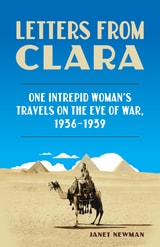
One Intrepid Woman's Travels on the Eve of War, 1936-1939Janet Newman
Wisconsin Historical Society Press, 2022
Letters from Red Farm
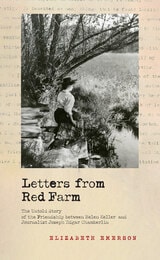
The Untold Story of the Friendship between Helen Keller and Journalist Joseph Edgar ChamberlinElizabeth Emerson
University of Massachusetts Press, 2021
Informed by previously unpublished letters and extensive research, Letters from Red Farm explores for the first time Keller's deep and enduring friendship with the man who became her literary mentor and friend for over forty years. Written by Chamberlin's great-great granddaughter, this engaging story imparts new insights into Keller's life and personality, introduces the irresistible Chamberlin to a modern public, and follows Keller's burgeoning interest in social activism, as she took up the causes of disability rights, women's issues, and pacifism.
Letters from Togo
Susan Blake
University of Iowa Press, 1991
With her delightful prose and insight for detail Blake introduces us to Mahouna, her housekeeper, who runs a cold drink business from his refrigerator in a country where electricity is unreliable; to American Lee Ann and her Togolese family, who works at the American school to earn the fees for a private education for her children; and to the suave René, wearing silk shirts and a most seductive smile, who teeters on the edge of the Togolese and expatriate worlds.
Since Lomé is both an overgrown village and a cosmopolitan city, Blake's exhilarating, often humorous experiences range from buying a car to attending a traditional tom-tom funeral, from visiting people who hunt with bows and arrows to enduring faculty meetings, from negotiating the politics of buying produce to lecturing on Afro-American literature at the English Club. Together, her enlivening letters trace the pattern of adjusting to a foreign environment and probe the connections between Africa and this curious, energetic American. Not "out of Africa" but within it, they take advantage of time and perspective to penetrate the universal experience of being a stranger in a strange land.