Results by title
28164 books match the query 'History' and 932 start with l

Learning to Smoke
Tobacco Use in the WestJason Hughes
University of Chicago Press, 2002
Hughes traces the transformations of tobacco and its use over time, from its role as a hallucinogen in Native American shamanistic ritual to its use as a prophylactic against the plague and a cure for cancer by early Europeans, and finally to the current view of smoking as a global pandemic. He then analyzes tobacco from the perspective of the individual user, exploring how its consumption relates to issues of identity and life changes. Comparing sociocultural and personal experiences, Hughes ultimately asks what the patterns of tobacco use mean for the clinical treatment of smokers and for public policy on smoking. Pointing the way, then, to a more learned and sophisticated understanding of tobacco use, this study will prove to be essential reading for anyone interested in the history of smoking and the sociology of addiction.

Leave Me Alone and I'll Make You Rich
How the Bourgeois Deal Enriched the WorldDeirdre Nansen McCloskey and Art Carden
University of Chicago Press, 2020
For readers looking for a distillation of McCloskey’s magisterial work, Leave Me Alone and I’ll Make You Rich is what you’ve been waiting for. In this lively volume, McCloskey and the economist and journalist Carden bring together the trilogy’s key ideas and its most provocative arguments. The rise of the west, and now the rest, is the story of the rise of ordinary people to a dignity and liberty inspiring them to have a go. The outcome was an explosion of innovation after 1800, and a rise of real income by an astounding 3,000 percent. The Great Enrichment, well beyond the conventional Industrial Revolution, did not, McCloskey and Carden show, come from the usual suspects, capital accumulation or class struggle. It came from the idea of economic liberty in Holland and the Anglosphere, then Sweden and Japan, then Italy and Israel and China and India, an idea that bids fair in the next few generations to raise up the wretched of the earth. The original shift to liberalism arose from 1517 to 1789 from theological and political revolutions in northwest Europe, upending ancient hierarchies. McCloskey and Carden contend further that liberalism and “innovism” made us better humans as well as richer ones. Not matter but ideas. Not corruption but improvement.
Leave Me Alone and I’ll Make You Rich draws in entertaining fashion on history, economics, literature, philosophy, and popular culture, from growth theory to the Simpsons. It is the perfect introduction for a broad audience to McCloskey’s influential explanation of how we got rich. At a time when confidence in the economic system is under challenge, the book mounts an optimistic and persuasive defense of liberal innovism, and of the modern world it has wrought.

Leave The Dishes In The Sink
Alison Comish Thorne
Utah State University Press, 2002

Leavin' a Testimony
Portraits from Rural TexasBy Patsy Cravens
University of Texas Press, 2006
First settled by Stephen F. Austin's colonists in the early nineteenth century, Colorado County has deep roots in Texas history. Mainly rural and agrarian until late in the twentieth century, Colorado County was a cotton-growing region whose population was about evenly divided between blacks and whites. These life-long neighbors led separate and unequal lives, memories of which still linger today. To preserve those memories, Patsy Cravens began interviewing and photographing the older residents of Colorado County in the 1980s. In this book, she presents photographs and recollections of the last generation, black and white, who grew up in the era of Jim Crow segregation.
The folks in Colorado County have engrossing stories to tell. They recall grinding poverty and rollicking fun in the Great Depression, losing crops and livestock to floods, working for the WPA, romances gone wrong and love gone right, dirty dancing, church and faith, sharecropping, quilting, raising children, racism and bigotry, and even the horrific lynching of two African American teenagers in 1935. The Colorado County residents' stories reveal an amazing resiliency and generosity of spirit, despite the hardships that have filled most of their lives. They also capture a rural way of life that was once common across the South, but is now gone forever.
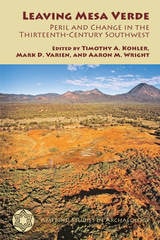
Leaving Mesa Verde
Peril and Change in the Thirteenth-Century SouthwestEdited by Timothy A. Kohler, Mark D. Varien, and Aaron M. Wright
University of Arizona Press, 2012
Much new paleoenvironmental data, and a great deal of archaeological survey and excavation, permit the fifteen scientists represented here much greater precision in determining the timing of the depopulation, the number of people affected, and the ways in which northern Pueblo peoples coped—and failed to cope—with the rapidly changing environmental and demographic conditions they encountered throughout the 1200s. In addition, some of the scientists in this volume use models to provide insights into the processes behind the patterns they find, helping to narrow the range of plausible explanations.
What emerges from these investigations is a highly pertinent story of conflict and disruption as a result of climate change, environmental degradation, social rigidity, and conflict. Taken as a whole, these contributions recognize this era as having witnessed a competition between differing social and economic organizations, in which selective migration was considerably hastened by severe climatic, environmental, and social upheaval. Moreover, the chapters show that it is at least as true that emigration led to the collapse of the northern Southwest as it is that collapse led to emigration.

Leaving Science
Anne E. Preston
Russell Sage Foundation, 2004
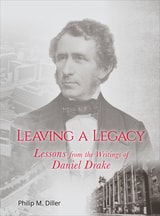
Leaving a Legacy
Lessons from the Writings of Daniel DrakePhilip Diller
University of Minnesota Press, 2019
Leaving a Legacy: Lessons from the Writings of Daniel Drake is a selective collection of excerpts from the vast writings from the nineteenth-century doctor and medical pioneer Daniel Drake. From Drake’s life, documented here in his own words from excerpts of lectures, personal journal entries, presentations, speeches, books, and letters to his children, readers learn about the scope of his accomplishments in medicine, contributions to his community, and dedication to his family. Diller goes beyond biography to contextualize Drake’s life choices and what made him a role model for today’s physicians. Diller selected one hundred and eighty thematically arranged excerpts, which he paired with original reflection questions to guide the reader through thought-provoking prompts. In doing so, Diller presents the lessons from Drake’s remarkable life and work as a guide for others who wish to build an enduring legacy.

Leaving the Pink House
Ladette Randolph
University of Iowa Press, 2014
On September 12, 2001, Randolph and her husband bought a dilapidated farmhouse on twenty acres outside Lincoln, Nebraska, and set about gutting and rebuilding the house themselves. They had nine months to complete the work. The project, undertaken at a time of national unrest and uncertainty, led Randolph to reflect on the houses of her past and the stages of her life that played out in each, both painful and joyful. As the couple struggles to bring the dilapidated house back to life, Randolph simultaneously traces the contours of a life deeply shaped by the Nebraska plains, where her family has lived for generations, and how those roots helped her find the strength to overcome devastating losses as a young adult. Weaving together strands of departures and arrivals, new houses and deep roots, cycles of change and the cycles of the seasons, Leaving the Pink House is a richly layered and compelling memoir of the meaning of home and family, and how they can never really leave us, even if we leave them.

Leaving the Tomboy Behind
Sinophone Lesbian Subjectivities and Transnational Queer MediaCarman K. M. Fung
University of Michigan Press, 2027
For decades queer women in the Sinophone world have followed a strict dating custom: a lesbian relationship usually consists of a masculine partner, known as a tomboy, and a feminine counterpart. In the 2010s, however, many queer women have come to reject this custom and abandon their own former identities as tomboys. Leaving The Tomboy Behind follows their journey moving beyond lesbian masculinity and turning towards global LGBTQ+ media from Japan, Thailand, and the United States to explore new forms of gender expressions. Carman K. M. Fung offers a rich ethnography of the impacts media has had on queer Sinophone women’s lives, focusing on transnational interpretations and misinterpretations, and how media globalization shapes viewers’ perceptions of unfamiliar places. Through a combination of personal interviews and analysis of the global media these communities consume, Fung traces the genealogy of the tomboy identity in China, Hong Kong, and Taiwan in relation to global queer and trans cultures.
Lebanon in Strife
Student Preludes to the Civil WarBy Halim Barakat
University of Texas Press, 1977
In this study, an eminent sociologist of the Arab world analyzes student politics in Lebanon and their relationship to the civil war. This focus is part of a larger concern with upheaval in Arab society and with political and social integration in mosaic societies in general. Professor Barakat provides a clear, thorough, and comprehensive analysis of late twentieth century Lebanese society and the dominant ideological veins within it.
Lebanon in Strife is a comparative study of Lebanese youth with special emphasis on their alienation from society and politics and their place at the vanguard of social change. The study is set in the context of the continual confrontation between forces for change and the established order in Lebanon, viewed from both a local and an international perspective. The author argues that vertical loyalties (based on religious, ethnic, or regional ties) are more significant than horizontal loyalties (based on socioeconomic class) in determining Lebanese student political behavior and attitudes. However, vertical loyalties are explained in socioeconomic terms, for the two forms of cleavages coincide; and the whole society is composed of religious communities arranged in a hierarchy of power and status. The author shows that these ties conflict with and undermine orderly social change and national unity and that they could account for conditions that have led to civil war in Lebanon.
In an epilogue, Professor Barakat relates his analysis of student politics to political developments in Lebanon during the civil war of 1975–1976, including an assessment of the role of Syria and the prospects for a negotiated end to armed struggle in the country.
This is the first empirical study of Lebanese political life viewed from the standpoint of its central force for change, the students. It is an invaluable resource for students of the modem Middle East as well as for specialists in sociology, politics, and history. Lebanon in Strife has special relevance to problems of political change and development in the Third World countries, providing a sociopolitical model for the analysis of student politics in traditional and transitional societies.

Lee's Ferry
From Mormon Crossing to National ParkP. T. Reilly and Robert H. Webb
Utah State University Press, 1999
The Colorado River and its deeply entrenched canyons create a lengthy barrier to travel in the interior West. Here and there, ancient Indian foot trails descend canyon walls and find access to the river, but one of the few places between California and Nevada where wheeled vehicles can approach it is at the mouth of the Pahreah River, between Glen Canyon and the river's steep drop toward Grand Canyon. Here, from the mid-19th until well into the 20th century, Lee's Ferry was a primary link between Utah and Arizona. Mormons trying to reach potential Indian converts and new lands for colonization to the south first developed the site. John D. Lee and parts of his family, seeking an inconspicuous spot after the Mountain Meadows massacre, first took up residence at what they called Lonely Dell. In subsequent decades, many interesting and important western characters passed through this topographical and historical funnel, from John Wesley Powell to Buffalo Bill. As river exploration and adventure increased, the place became as important to those using the river-surveyors, miners, river runners-as to folks crossing it. In recognition of its importance, Lee's Ferry has been partially restored as a historic site in the national park system.
P. T. Reilly, himself a legend on the river as boatman and chronicler, wrote the detailed and colorful history this place demanded, focusing on stories of the hodgepodge of people it attracted. He died before he finished reworking his massive narrative into book form, but Robert H. Webb, author of Grand Canyon: A Century of Change, completed that job and selected rare historical photos from the Reilly collection at Northern Arizona University to illustrate it. An epilogue by Richard Quartaroli provides a biographical sketch of P. T. Reilly.
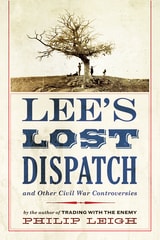
Lee's Lost Dispatch and Other Civil War Controversies
Philip Leigh
Westholme Publishing, 2015
Which over-arching decisions made by the Confederacy or Union had a greater effect on the course of the war than generally thought? Were there lauded command changes that may not have been as beneficial as presumed? How intertwined were the business aspirations on both sides of the conflict and what role did disinformation play in key battles? In Lee’s Lost Dispatch and Other Civil War Controversies, New York Times “Disunion” contributor Philip Leigh presents twelve stories from these turbulent times that afford a better understanding of how the war unfolded and how it was fought. The stories range from the Union’s delayed introduction of repeating arms and why a commercial steamer and not a warship was sent to relieve Fort Sumter to how Robert E. Lee’s critical dispatch at the battle of Antietam may have been lost and whether Southern poverty is the most protracted legacy of the war. Written to promote discussion and debate, this volume will intrigue those who enjoy Civil War history and contemplating alternatives to many assumed conclusions.

Left Behind
Latin America and the False Promise of PopulismSebastian Edwards
University of Chicago Press, 2010
The political and economic history of Latin America has been marked by great hopes and even greater disappointments. Despite abundant resources—and a history of productivity and wealth—in recent decades the region has fallen further and further behind developed nations, surpassed even by other developing economies in Southeast Asia and elsewhere.
In Left Behind, Sebastian Edwards explains why the nations of Latin America have failed to share in the fruits of globalization and forcefully highlights the dangers of the recent turn to economic populism in the region. He begins by detailing the many ways Latin American governments have stifled economic development over the years through excessive regulation, currency manipulation, and thoroughgoing corruption. He then turns to the neoliberal reforms of the early 1990s, which called for the elimination of deficits, lowering of trade barriers, and privatization of inefficient public enterprises—and which, Edwards argues, held the promise of freeing Latin America from the burdens of the past. Flawed implementation, however, meant the promised gains of globalization were never felt by the mass of citizens, and growing frustration with stalled progress has led to a resurgence of populism throughout the region, exemplified by the economic policies of Venezuela’sHugo Chávez. But such measures, Edwards warns, are a recipe for disaster; instead, he argues, the way forward for Latin America lies in further market reforms, more honestly pursued and fairly implemented. As an example of the promise of that approach, Edwards points to Latin America's giant, Brazil, which under the successful administration of President Luis Inácio da Silva (Lula) has finally begun to show signs of reaching its true economic potential.
As the global financial crisis has reminded us, the risks posed by failing economies extend far beyond their national borders. Putting Latin America back on a path toward sustained growth is crucial not just for the region but for the world, and Left Behind offers a clear, concise blueprint for the way forward.
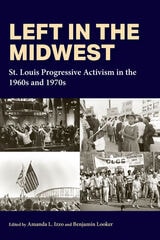
Left in the Midwest
St. Louis Progressive Activism in the 1960s and 1970sAmanda L. Izzo
University of Missouri Press, 2023
Despite St. Louis’s mid-twentieth-century reputation as a conservative and sleepy midwestern metropolis, the city and its surrounding region have long played host to dynamic forms of social-movement organizing. This was especially the case during the 1960s and 1970s, when a new generation of local activists lent their energies to the ongoing struggles for Black freedom, lesbian and gay liberation, feminist social transformations, environmental protection, an end to the Vietnam War, and more. This volume, the first of its kind, offers fifteen scholarly contributions that together bring into focus the exceptional range of progressive activist projects that took shape in a single midwestern city during these tumultuous decades.
In contrast to scholarship that seeks to interpret the era’s social-movement initiatives in a primarily national context, the works presented in this expansive collection emphasize the importance of locality, neighborhood, community institutions, and rooted social networks. Documenting wrenching forces of metropolitan change as well as grassroots resilience, Left in the Midwest shows us how place powerfully shaped agendas, worldviews, and opportunities for the disparate groups that dedicated themselves to progressive visions for their city. By revising our sense of the region’s past, this volume also expands our sense of the possibilities that the future may hold for activist movements seeking change in St. Louis and beyond.
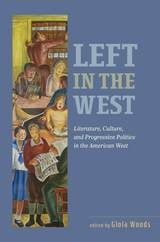
Left in the West
Literature, Culture, and Progressive Politics in the American WestGioia Woods
University of Nevada Press, 2018
From the early 19th century to the present, a remarkably complex and varied body of literary and cultural production has emerged out of progressive social movements. While the literary left in the West shared many interests with other regional expressions—labor, class, anti-fascism, and anti-imperialism, the influence of Manifest Destiny—the distinct history of settler colonialism in western territories caused western leftists to develop concerns unique to the region.
Chapters in the volume provide an impressive range of analysis, covering artists and movements from suffragist writers to bohemian Californian photographers, from civil rights activists to popular folk musicians, from Latinx memoirists to Native American experimental writers, to name just a few.
The unique consideration of the West as a socio-political region establishes a framework for political critique that moves beyond class consequences, anti-fascism, and civil liberties, and into distinct Western concerns such as Native American sovereignty, environmental exploitation, and the legacies of settler colonialism. What emerges is a deeper understanding of the region and its unique people, places, and concerns.
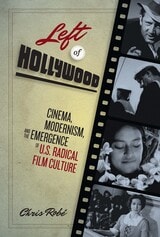
Left of Hollywood
Cinema, Modernism, and the Emergence of U.S. Radical Film CultureBy Chris Robé
University of Texas Press, 2010
In the 1930s as the capitalist system faltered, many in the United States turned to the political Left. Hollywood, so deeply embedded in capitalism, was not immune to this shift. Left of Hollywood offers the first book-length study of Depression-era Left film theory and criticism in the United States. Robé studies the development of this theory and criticism over the course of the 1930s, as artists and intellectuals formed alliances in order to establish an engaged political film movement that aspired toward a popular cinema of social change. Combining extensive archival research with careful close analysis of films, Robé explores the origins of this radical social formation of U.S. Left film culture.
Grounding his arguments in the surrounding contexts and aesthetics of a few films in particular—Sergei Eisenstein's Que Viva Mexico!, Fritz Lang's Fury, William Dieterle's Juarez, and Jean Renoir's La Marseillaise—Robé focuses on how film theorists and critics sought to foster audiences who might push both film culture and larger social practices in more progressive directions. Turning at one point to anti-lynching films, Robé discusses how these movies united black and white film critics, forging an alliance of writers who championed not only critical spectatorship but also the public support of racial equality. Yet, despite a stated interest in forging more egalitarian social relations, gender bias was endemic in Left criticism of the era, and female-centered films were regularly discounted. Thus Robé provides an in-depth examination of this overlooked shortcoming of U.S. Left film criticism and theory.
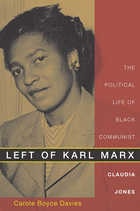
Left of Karl Marx
The Political Life of Black Communist Claudia JonesCarole Boyce Davies
Duke University Press, 2007
Claudia Cumberbatch Jones was born in Trinidad. In 1924, she moved to New York, where she lived for the next thirty years. She was active in the Communist Party from her early twenties onward. A talented writer and speaker, she traveled throughout the United States lecturing and organizing. In the early 1950s, she wrote a well-known column, “Half the World,” for the Daily Worker. As the U.S. government intensified its efforts to prosecute communists, Jones was arrested several times. She served nearly a year in a U.S. prison before being deported and given asylum by Great Britain in 1955. There she founded The West Indian Gazette and Afro-Asian Caribbean News and the Caribbean Carnival, an annual London festival that continues today as the Notting Hill Carnival. Boyce Davies examines Jones’s thought and journalism, her political and community organizing, and poetry that the activist wrote while she was imprisoned. Looking at the contents of the FBI file on Jones, Boyce Davies contrasts Jones’s own narration of her life with the federal government’s. Left of Karl Marx establishes Jones as a significant figure within Caribbean intellectual traditions, black U.S. feminism, and the history of communism.

Legacies of Anti-Semitism in France
Jeffrey Mehlman
University of Minnesota Press, 1983
Legacies of Anti-Semitism in France was first published in 1983. Minnesota Archive Editions uses digital technology to make long-unavailable books once again accessible, and are published unaltered from the original University of Minnesota Press editions.
These four essays—on Blanchot, Lacan, Giraudoux, and Gide—have as their focus the barely imaginable coherence which the writings of four major contemporaries take on when read in the light of France's pre-World War II heritage of anti-Jewish thought. As the essays delve into such crucial topics as the inaugural silence in Blanchot's sense of literature, the "style" of Lacan, Giraudoux's relation to Racine, and the sexual politics of Gide, they engage a realm that at times seems—or seemed—anti-Semitic in its essence. Negotiating the complex ramifications of a lost tradition and the structure of its obliteration, Jeffrey Mehlman, in his conclusion, speculates on the emblematic value of Walter Benjamin's perpetually deferred "journey to Palestine via France" and its import for textual interpretation.
A French version of Mehlman's essay on Blanchot, published in Tel quel,spurred an impassioned journalistic debate in Paris and London. Broadening still further the context of that inquiry, Legacies will prove a source of provocation and insight to all who are interested in the intellectual history of contemporary France.
Legacies of Losing in American Politics
Jeffrey K. Tulis and Nicole Mellow
University of Chicago Press, 2017
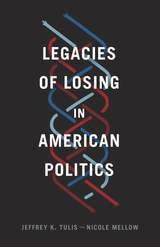
With Legacies of Losing in American Politics, Jeffrey K. Tulis and Nicole Mellow rethink three pivotal moments in American political history: the founding, when anti-Federalists failed to stop the ratification of the Constitution; the aftermath of the Civil War, when President Andrew Johnson’s plan for restoring the South to the Union was defeated; and the 1964 presidential campaign, when Barry Goldwater’s challenge to the New Deal order was soundly defeated by Lyndon B. Johnson. In each of these cases, the very mechanisms that caused the initial failures facilitated their eventual success. After the dust of the immediate political defeat settled, these seemingly discredited ideas and programs disrupted political convention by prevailing, often subverting, and occasionally enhancing constitutional fidelity. Tulis and Mellow present a nuanced story of winning and losing and offer a new understanding of American political development as the interweaving of opposing ideas.

Legacies of War
Violence, Ecologies, and KinKimberly Theidon
Duke University Press, 2022
Legacies of the Stone Guest
The Don Juan Legend in Russian LiteratureAlexander Burry
University of Wisconsin Press, 2023
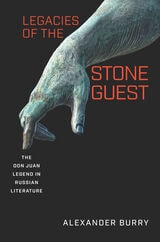
The story of Don Juan first appeared in writing in seventeenth-century Spain, reaching Russia about a century later. Its real impact, however, was delayed until Russia’s most famous poet, Alexander Pushkin, put his own, unique, and uniquely inspirational, spin on the tale. Published in 1830, TheStone Guest is now recognized, with other Pushkin masterpieces, as part of the Russian literary canon. Alexander Burry traces the influence of Pushkin’s brilliant innovations to the legend, which he shows have proven repeatedly fruitful through successive ages of Russian literature, from the Realist to the Silver Age, Soviet, and contemporary periods. Burry shows that, rather than creating a simple retelling of an originally religious tale about a sinful, consummate seducer, Pushkin offered open-ended scenes, re-envisioned and complicated characters, and new motifs that became recursive and productive parts of Russian literature, in ways that even Pushkin himself could never have predicted.
Legacies, Logics, Logistics
Essays in the Anthropology of the Platform EconomyJane I. Guyer
University of Chicago Press, 2016
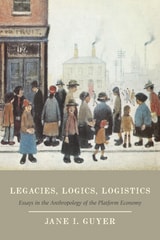
Focusing on economic actors—whether ordinary consumers or financial experts—Guyer traces how people and institutions hold together past experiences (legacies), imagined scenarios and models (logics), and situational challenges (logistics) in a way that makes the performance of economic life (on platforms made of these legacies, logics, and logistics) work in practice. Individual essays explore a number of topics—including time frames and the future, the use of percentages in observations and judgments, the explanation of prices, the coexistence of different world currencies, the reapplication of longtime economic theories in new settings, and, crucially, how we talk about the economy, how we use stable terms to describe a turbulent system. Valuable as standalone pieces, the essays build into a cogent method of economic anthropology.

Legacy of Rage
Jewish Masculinity, Violence, and CultureWarren Rosenberg
University of Massachusetts Press, 2009
From Biblical depictions of heroic warriors like King David to the medieval Jewish legend of the Golem (a fierce man of clay created by Cabalistic magic) to the fictional Alexander Portnoy, Jewish ideas of manhood reflect a simultaneous resistance and attraction to violence. According to Rosenberg, it is an ambivalence shaped by millennia of oppression as well as by the clash of Western ideas of masculinity with Eastern European rabbinical injunctions against violent action. The result has been not only gender confusion, but a suppressed rage evident in a broad range of texts created by Jewish men, from nineteenth-century Yiddish stories to contemporary Hollywood films. Isaac Babel, Henry Roth, Norman Mailer, Saul Bellow, Philip Roth, David Mamet, Barry Levinson, and Steven Spielberg are just some of the writers and filmmakers whose lives and works are marked by this legacy of rage.
Yet if the need to affirm masculinity through violence remains an unacknowledged aspect of Jewish male identity, Rosenberg argues, it is not a historical inevitability. As the work of Cynthia Ozick and Tony Kushner suggests, it is possible to construct new ideas of Jewish manhood by exposing the hidden fallacies of the old.

Legacy of a False Promise
A Daughter's ReckoningMargaret Fuchs Singer
University of Alabama Press, 2009
Margaret Fuchs was thirteen in June 1955 when she learned that her parents had been Communists while working for the U.S. government in the 1930s and '40s. This book chronicles the years during which her parents were exposed and her father was subpoenaed before the House Un-American Activities Committee. Eventually he named names, and subsequently lost his job as a law professor at American University, and was blacklisted from teaching ever again. Legacy of a False Promise also details the author's quest as an adult to learn whether or not her parents ever spied for the Soviet Union.
Based on eight years of research using family records, FBI files, American University archives, personal interviews, and the recently declassified Venona cables, Legacy of a False Promise offers unique insights into the McCarthy Era. Most "red-diaper babies" who have written on the subject had parents who refused to give in to HUAC's demands. Singer's work instead recounts the shame and series of betrayals that her father's decision to name names brought to her family. Furthermore, it explores the campaign of the liberal anti-Communist movement to publicize its political position while defending a fired ex-Communist professor, the nature and activities of secret Communist underground cells, and the motivation of New Deal government workers who spied for the Soviets.
This is a poignant meditation on family secrets, father-daughter relationships in times of crisis, teenage loneliness in the midst of trauma, and the effects of parents' actions on the lives of their children. It also serves as a timely reminder of the dangers of sacrificing civil liberties in the name of national security.

Legacy on Ice
Blake Geoffrion and the Fastest Game on EarthSam Jefferies, Foreword by John Buccigross
University of Wisconsin Press, 2023
With sure-footed and swift-moving prose, Sam Jefferies tells Geoffrion’s story against the backdrop of modern North American hockey. Thorough research and scores of interviews fuel this tale of soaring success and terrible tragedy, offering insight not only into one man’s athletic journey but also into the rise of American hockey on the national and international stage. Geoffrion’s brief career, marked by tribulation and triumph, illustrates the subtle but omnipresent currents of American media, sports labor, and the interplay between college and professional athletics. It tells the story of what was, what is, and what may yet be for the fastest game on earth.

Legal Fictions
Constituting Race, Composing LiteratureKarla FC Holloway
Duke University Press, 2014

Legal Norms, Proceures, and Exchanges in the Early Modern <i>ius commune</i?
Damian Smith
Catholic University of America Press, 2026

Legal Rights
Historical and Philosophical PerspectivesAustin Sarat and Thomas R. Kearns, Editors
University of Michigan Press, 1997
Legal Spectatorship
Slavery and the Visual Culture of Domestic ViolenceKelli Moore
Duke University Press, 2022
Duke University Press Scholars of Color First Book Award recipient

Legal Writing, Legal Practice
The Biblical Bailment Law and Divine JusticeYael Landman
SBL Press, 2022

Legendary Ladies of Texas
Francis Edward Abernethy
University of North Texas Press, 1994

Legends and Lore of Southern Illinois
John W. Allen
Southern Illinois University Press, 1963
In the 1950s and ‘60s, John W. Allen told the people of southern Illinois about themselves—about their region, its history, and its folkways—in his series of newspaper articles, “It Happened in Southern Illinois.” Each installment of the series depicted a single item of interest—a town, a building, an enterprise, a person, an event, a custom. Originally published in 1963, Legends & Lore of Southern Illinois brings together a selection of these articles preserving a valuable body of significant local history and cultural lore.
During territorial times and early statehood, southern Illinois was the most populous and most influential part of the state. But the advent of the steamboat and the building of the National Road made the lands to the west and north more easily accessible, and the later settlers struck out for the more expansive and fertile prairies. The effect of this movement was to isolate that section of the state known as Egypt and halt its development, creating what Allen termed “an historical eddy.” Bypassed as it was by the main current of westward expansion and economic growth, its culture changed very slowly. Methods, practices, and the tools of the pioneer continued in use for a long time. The improved highways and better means of communication of the twentieth century brought a marked change upon the region, and daily life no longer differed materially from that of other areas.
Against such a cultural and historical backdrop, Mr. Allen wrote these sketches of the people of southern Illinois—of their folkways and beliefs, their endeavors, successes, failures, and tragedies, and of the land to which they came. There are stories here of slaves and their masters, criminals, wandering peddlers, politicians, law courts and vigilantes, and of boat races on the rivers. Allen also looks at the region’s earlier history, describing American Indian ruins, monuments, and artifacts as well as the native population’s encounters with European settlers.
Many of the vestiges of the region’s past culture have all but disappeared, surviving only in museums and in the written record. This new paperback edition of Legends & Lore of Southern Illinois brings that past culture to life again in Allen’s descriptive, engaging style.
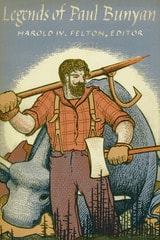
Legends of Paul Bunyan
Harold W. Felton
University of Minnesota Press, 2008
The collected lore of Minnesota's favorite lumberjack hero
Paul Bunyan is a true American folk character, created in logging camp bunkhouses by men who spun exaggerated stories that combined hard work and fantasy.
While the origins of Paul Bunyan and his sidekick Babe the Blue Ox are hazy, many storytellers have over the years contributed their own takes to produce an existing body of work--a true American legend--that matches the size of the lumberjack himself. Collected in colorful and engaging sections such as "Paul the Man," "Paul and the Animal Kingdom," and "The Wonderful Big Blue Ox, Babe," Legends of Paul Bunyan features more than thirty authors celebrating the largest lumberman, including stories by such Bunyan luminaries as James Stevens and W. B. Laughead, as well as such literary icons as Robert Frost and Carl Sandburg.
Legends of the Common Stream
John Hanson Mitchell
University of Massachusetts Press, 2021
While Mitchell never leaves the brook's shores, he draws from a range of traditions and takes readers on excursions to regions and cultures across the globe and across time, making the case that our contemporary separation from nature goes hand in hand with our alienation from the world of myth. This book seeks to restore these broken relationships and offers the reminder that while cultures may come and go, the stream goes on forever.

Legends of the Slow Explosion
Eleven Modern LivesBaron Wormser
Tupelo Press, 2018

Legends of the Warring States
Persuasions, Romances, and Stories from <em>Chan-kuo Ts'e</em>J. I. Crump
University of Michigan Press, 1998

Legions of Boom
Filipino American Mobile DJ Crews in the San Francisco Bay AreaOliver Wang
Duke University Press, 2015

Legislating Gender and Sexuality in Africa
Human Rights, Society, and the StateEdited by Lydia Boyd and Emily Burrill
University of Wisconsin Press, 2020
Legislating Gender and Sexuality in Africa details how legal efforts in the continent can often be moralizing enterprises, illuminating how these processes are closely tied to notions of ethics, personhood, and citizenship. The contributors provide new appraisals of recent events, with fresh arguments about the relationships between local and global fights for rights. This interdisciplinary approach will appeal to scholars in African studies, anthropology, history, and gender studies.

Legislating the French Family
Feminism, Theater, and Republican Politics: 1870-1920Jean Elisabeth Pedersen
Rutgers University Press, 2003

Legislators and Politicians
Iowa's Women LawmakersSuzanne O'Dea Schenken
University of Iowa Press, 1995
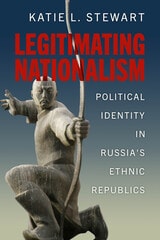
Legitimating Nationalism
Political Identity in Russia's Ethnic RepublicsKatie L. Stewart
University of Wisconsin Press, 2024
Even in the current autocratic system, however, Russia’s multiethnic nature and fractured political history mean that not all political symbols work the same way everywhere; not every story finds the same audience in the same way. The message may emanate from Moscow, but regional actors—including local governments, civic organizations, and cultural institutions—have some agency in how they spread the message: some regionalization of identity work is permitted to ensure that Russian national symbols and narratives resonate with people, and to avoid protest. This book investigates how nation building works on the ground through close studies of three of Russia’s ethnic republics: Karelia, Tatarstan, and Buryatia. Understanding how the project of legitimating nationalism, in support of a unified country and specifically Putin’s regime, works in practice offers crucial context in understanding the shape and story of contemporary Russia.
Legitimizing Empire
Filipino American and U.S. Puerto Rican Cultural CritiqueFaye Caronan
University of Illinois Press, 2015
Faye Caronan's examination interprets the pivotal engagement of novels, films, performance poetry, and other cultural productions as both symptoms of and resistance against American military, social, economic, and political incursions. Though the Philippines became an independent nation and Puerto Rico a U.S. commonwealth, both remain subordinate to the United States. Caronan's juxtaposition reveals two different yet simultaneous models of U.S. neocolonial power and contradicts American exceptionalism as a reluctant empire that only accepts colonies for the benefit of the colonized and global welfare. Her analysis, meanwhile, demonstrates how popular culture allows for alternative narratives of U.S. imperialism, but also functions to contain those alternatives.

Legitimizing Science
National and Global Public (1800-2010)Edited by Axel Jansen, Andreas Franzmann, and Peter Münte
Campus Verlag, 2015

Leibniz and the Two Sophies
The Philosophical CorrespondenceGottfried Wilhelm Leibniz, Sophie Electress of Hanover, Queen Sophie Charlotte of Prussia
Iter Press, 2011
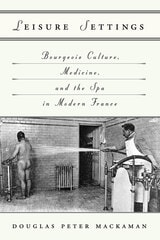
Leisure Settings
Bourgeois Culture, Medicine, and the Spa in Modern FranceDouglas P. Mackaman
University of Chicago Press, 1998
Taking us into the vibrant social world of France's great spas, Mackaman explores the links between class identity and vacationing. Mackaman shows how, after 1800, physicians and entrepreneurs zealously tried to break their milieu's strong association with aristocratic excess and indecency by promoting spas as a rational, ordered equivalent to the busy lives of the bourgeoisie. Rather than seeing leisure time as slothful, Mackaman argues, the bourgeoisie willingly became patients at spas and viewed this therapeutic vacation as a sensible, even productive, way of spending time. Mackaman analyzes this transformation, and ultimately shows how the premier vacation of an era made and was made by the bourgeoisie.
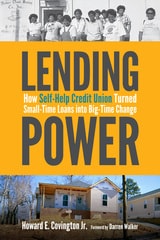
Lending Power
How Self-Help Credit Union Turned Small-Time Loans into Big-Time ChangeHoward E. Covington Jr.
Duke University Press, 2017
In Lending Power journalist and historian Howard E. Covington Jr. narrates the compelling story of Self-Help's founders and coworkers as they built a progressive and community-oriented financial institution. First established to assist workers displaced by closed furniture and textile mills, Self-Help created a credit union that expanded into providing home loans for those on the margins of the financial market, especially people of color and single mothers.
Using its own lending record, Self-Help convinced commercial banks to follow suit, extending its influence well beyond North Carolina. In 1999 its efforts led to the first state law against predatory lending. A decade later, as the Great Recession ravaged the nation's economy, its legislative victories helped influence the Dodd-Frank Wall Street Reform and Consumer Protection Act and the formation of the Consumer Financial Protection Bureau. Self-Help also created a federally chartered credit union to expand to California and later to Illinois and Florida, where it assisted ailing community-based credit unions and financial institutions.
Throughout its history, Self-Help has never wavered from its mission to use Dr. Martin Luther King Jr.'s vision of justice to extend economic opportunity to the nation's unbanked and underserved citizens. With nearly two billion dollars in assets, Self-Help also shows that such a model for nonprofits can be financially successful while serving the greater good. At a time when calls for economic justice are growing ever louder, Lending Power shows how hard-working and dedicated people can help improve their communities.
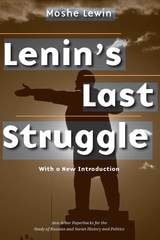
Lenin's Last Struggle
Moshe Lewin
University of Michigan Press, 2005
One of the great political strategists of his era, V. I. Lenin continues to attract historical interest, yet his complex personality eludes full understanding. This new edition of Moshe Lewin's classic political biography, including an afterword by the author, suggests new approaches for studying the Marxist visionary and founder of the Soviet state. Lenin's Last Struggle offers invaluable insights into the rise of the Bolshevik party and the Soviet Union, a saga complicated by complex strategic battles among the leaders of Lenin's generation: leaders whose names are universally known, but whose personalities and motivations are even now not sufficiently understood.
Moshe Lewin was a collective farm worker in the USSR and a soldier in the Soviet army. He later became director of studies at the Ecole Pratique des Hautes Etudes in Paris, a fellow of the Kennan Institute, a senior fellow of Columbia University's Russian Institute, and is now emeritus professor of history at The University of Pennsylvania.
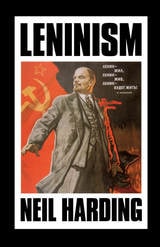
Leninism
Neil Harding
Duke University Press, 1996
Rather than tracing the roots of Leninism to the details of Lenin’s biography, Harding shows how it emerged as a revolutionary Marxist response to the First World War and to the perceived treachery—the support of that war—by social democratic leaders. The economics, politics, and philosophy of Leninism, he argues, were rapidly theorized between 1914 and 1918 and deeply imprinted with the peculiarities of the wartime experience. Its complementary metaphysics of history and science was as intrinsic to its confidence and sureness of purpose as it was to its contempt for democratic practice and tolerance. But, as Harding also shows, although Leninism articulated a complex and coherent critique of capitalist civilization and held a powerful appeal to a variety of constituencies, it was itself caught in a timewarp that fatally limited its capacity to adapt. This book will engage not only Russian and Soviet specialists, but also readers concerned with the varieties of twentieth-century socialism.
Leo Strauss On Plato's Symposium
Leo Strauss
University of Chicago Press, 2001

Leo Strauss and the Rediscovery of Maimonides
Kenneth Hart Green
University of Chicago Press, 2013
An invaluable companion to Green’s comprehensive collection of Strauss’s writings on Maimonides, this volume shows how Strauss confronted the commonly accepted approaches to the medieval philosopher, resulting in both a new understanding of Maimonides and a new depth and direction for his own thought. It will be welcomed by anyone engaged with the work of either philosopher.