Results by title
1116 books match the query 'Africa' and 60 start with m
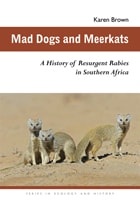
Mad Dogs and Meerkats
A History of Resurgent Rabies in Southern AfricaKaren Brown
Ohio University Press, 2011
Through the ages, rabies has exemplified the danger of diseases that transfer from wild animals to humans and their domestic stock. In South Africa, rabies has been on the rise since the latter part of the twentieth century despite the availability of postexposure vaccines and regular inoculation campaigns for dogs.
In Mad Dogs and Meerkats: A History of Resurgent Rabies in Southern Africa, Karen Brown links the increase of rabies to the HIV/AIDS epidemic. Her study shows that the most afflicted regions of South Africa have seen a dangerous rise in feral dog populations as people lack the education, means, or will to care for their pets or take them to inoculation centers. Most victims are poor black children. Ineffective disease control, which in part depends on management policies in neighboring states and the diminished medical and veterinary infrastructures in Zimbabwe, has exacerbated the problem.
This highly readable book is the first study of rabies in Africa, tracing its history in South Africa and neighboring states from 1800 to the present and showing how environmental and economic changes brought about by European colonialism and global trade have had long-term effects.
Mad Dogs and Meerkats is recommended for public health policy makers and anyone interested in human-animal relations and how societies and governments have reacted to one of the world’s most feared diseases.

Madagascar
A Short HistorySolofo Randrianja and Stephen Ellis
University of Chicago Press, 2009
Madumo, a Man Bewitched
Adam Ashforth
University of Chicago Press, 2000
So begins this true story of witchcraft and friendship set against the turbulent backdrop of contemporary Soweto. Adam Ashforth, an Australian who has spent many years in the black township, finds his longtime friend Madumo in dire circumstances: his family has accused him of using witchcraft to kill his mother and has thrown him out on the street. Convinced that his life is cursed, Madumo seeks help among Soweto's bewildering array of healers and prophets. An inyanga, or traditional healer, confirms that he has indeed been bewitched. With Ashforth by his side, skeptical yet supportive, Madumo embarks upon a physically grueling treatment regimen that he follows religiously-almost to the point of death-despite his suspicion that it may be better to "Westernize my mind and not think about witchcraft."
Ashforth's beautifully written, at times poignant account of Madumo's struggle shows that the problem of witchcraft is not simply superstition, but a complex response to spiritual insecurity in a troubling time of political and economic upheaval. Post-apartheid Soweto, he discovers, is suffering from a deluge of witchcraft. Through Madumo's story, Ashforth opens up a world that few have seen, a deeply unsettling place where the question "Do you believe in witchcraft?" is not a simple one at all. The insights that emerge as Ashforth accompanies his friend on an odyssey through Soweto's supernatural perils have profound implications even for those of us who live in worlds without witches.
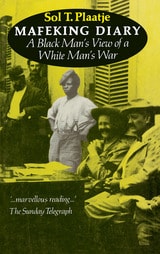
Mafeking Diary
A Black Man’s View of a White Man’s WarSol T. Plaatje
Ohio University Press, 1990
“Sol Plaatje’s Mafeking Diary is a document of enduring importance and fascination. The product of a young black South African court interpreter, just turned 23 years old when he started writing, it opens an entirely new vista on the famous Siege of Mafeking. By shedding light on the part played by the African population of the town, Plaatje explodes the myth, maintained by belligerents, and long perpetuated by both historians and the popular imagination, this this was a white man’s affair. One of the great epics of British imperial history, and perhaps the best remembered episode of the Anglo-Boer war of 1899–1902, is presented from a wholly novel perspective.
“At the same time, the diary provides an intriguing insight into the character of a young man who was to play a key role in South African political and literary history during the first three decades of this century. It reveals much of the perceptions and motives that shaped his own attitudes and intellectual development and, indeed, those of an early generation of African leaders who sought to build a society which did not determine the place of its citizens by the colour of their skin. The diary therefore illuminates the origins of a struggle which continues to this day.”
— John L. Comaroff (ed.) in his preface
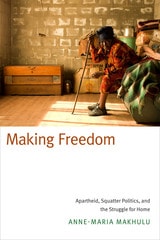
Making Freedom
Apartheid, Squatter Politics, and the Struggle for HomeAnne-Maria Makhulu
Duke University Press, 2015
Making Martial Races
Gender, Society, and Warfare in AfricaMyles Osborne
Ohio University Press, 2024
Making Modern Girls
A History of Girlhood, Labor, and Social Development in Colonial LagosAbosede A. George
Ohio University Press, 2014
Winner of the 2015 Aidoo-Snyder Book Prize for outstanding book on African women's experiences. (African Studies Association)
Honorable Mention, New York African Studies Association Book Prize
In Making Modern Girls, Abosede A. George examines the influence of African social reformers and the developmentalist colonial state on the practice and ideology of girlhood as well as its intersection with child labor in Lagos, Nigeria. It draws from gender studies, generational studies, labor history, and urban history to shed new light on the complex workings of African cities from the turn of the twentieth century through the nationalist era of the 1950s.
The two major schemes at the center of this study were the modernization project of elite Lagosian women and the salvationist project of British social workers. By approaching children and youth, specifically girl hawkers, as social actors and examining the ways in which local and colonial reformers worked upon young people, the book offers a critical new perspective on the uses of African children for the production and legitimization of national and international social development initiatives.
Making Modern Girls demonstrates how oral sources can be used to uncover the social history of informal or undocumented urban workers and to track transformations in practices of childhood over the course of decades. George revises conventional accounts of the history of development work in Africa by drawing close attention to the social welfare initiatives of late colonialism and by highlighting the roles that African women reformers played in promoting sociocultural changes within their own societies.
Making Money
Life, Death, and Early Modern Trade on Africa’s Guinea CoastColleen E. Kriger
Ohio University Press, 2017
A new era in world history began when Atlantic maritime trade among Africa, Asia, Europe, and the Americas opened up in the fifteenth century, setting the stage for massive economic and cultural change. In Making Money, Colleen Kriger examines the influence of the global trade on the Upper Guinea Coast two hundred years later—a place and time whose study, in her hands, imparts profound insights into Anglo-African commerce and its wider milieu.
A stunning variety of people lived in this coastal society, struggling to work together across deep cultural divides and in the process creating a dynamic creole culture. Kriger digs further than any previous historian of Africa into the records of England’s Royal African Company to illuminate global trade patterns, the interconnectedness of Asian, African, and European markets, and—most remarkably—the individual lives that give Making Money its human scale.
By inviting readers into the day-to-day workings of early modern trade in the Atlantic basin, Kriger masterfully reveals the rich social relations at its core. Ultimately, this accessible book affirms Africa’s crucial place in world history during a transitional period, the early modern era.
Making New People
Politics, Cinema, and Liberation in Burkina Faso, 1983–1987James Genova
Michigan State University Press, 2022
Making Refuge
Somali Bantu Refugees and Lewiston, MaineCatherine Besteman
Duke University Press, 2016
Making War in Côte d'Ivoire
Mike McGovern
University of Chicago Press, 2011
After a brief period of active combat in 2002, the conflict in Côte d’Ivoire settled into a pattern of neither war nor peace until the 2010 elections led to a new phase of direct conflict. During these taut years, short bursts of intense violence alternated with long periods of standoff. When things were peaceful, the Ivorian political elite and the press produced inflammatory rhetoric while soldiers and militias used the state of emergency as an excuse to shake down civilians at roadblocks. What kept this perpetually tense, dismal, and destructive situation simmering? In this groundbreaking book, Mike McGovern suggests the answer lies in understanding war as a process, not a series of events, and that rather than focusing on the role of political institutions, we should be paying attention to the flawed and unpredictable people within them.
McGovern argues that only deep knowledge of a region—its history, languages, literature, and popular culture—can yield meaningful insights into political decision making. Putting this theory into action, he examines an array of issues from the micro to the macro, including land tenure disputes, youth boredom, organized crime, and the international cocoa trade. Drawn from McGovern’s academic research and experience working for a conflict resolution think tank and the political access that position gave him, Making War in Côte D’Ivoire will be the definitive work on the Ivorian conflict and an innovative example of how anthropology can address the complexities of politics.
Making a World after Empire
The Bandung Moment and Its Political AfterlivesChristopher J. Lee
Ohio University Press, 2010
In April 1955, twenty-nine countries from Africa, Asia, and the Middle East came together for a diplomatic conference in Bandung, Indonesia, intending to define the direction of the postcolonial world. Representing approximately two-thirds of the world’s population, the Bandung conference occurred during a key moment of transition in the mid-twentieth century—amid the global wave of decolonization that took place after the Second World War and the nascent establishment of a new cold war world order in its wake. Participants such as Jawaharlal Nehru of India, Gamal Abdel Nasser of Egypt, Zhou Enlai of China, and Ahmed Sukarno of Indonesia seized this occasion to attempt the creation of a political alternative to the dual threats of Western neocolonialism and the cold war interventionism of the United States and the Soviet Union.
The essays in this volume explore the diverse repercussions of this event, tracing the diplomatic, intellectual, and sociocultural histories that have emanated from it. Making a World after Empire consequently addresses the complex intersection of postcolonial history and cold war history and speaks to contemporary discussions of Afro-Asianism, empire, and decolonization, thus reestablishing the conference’s importance in twentieth-century global history.
Contributors: Michael Adas, Laura Bier, James R. Brennan, G. Thomas Burgess, Antoinette Burton, Dipesh Chakrabarty, Julian Go, Christopher J. Lee, Jamie Monson, Jeremy Prestholdt, Denis M. Tull
Making and Unmaking Public Health in Africa
Ethnographic and Historical PerspectivesRuth J. Prince
Ohio University Press, 2013
This volume explores how medical professionals and patients, government officials, and ordinary citizens approach questions of public health as they navigate contemporary landscapes of NGOs and transnational projects, faltering state services, and expanding privatization. Its contributors analyze the relations between the public and the private providers of public health, from the state to new global biopolitical formations of political institutions, markets, human populations, and health. Tensions and ambiguities animate these complex relationships, suggesting that the question of what public health actually is in Africa cannot be taken for granted. Offering historical and ethnographic analyses, the volume develops an anthropology of public health in Africa.
Contributors: P. Wenzel Geissler; Murray Last; Rebecca Marsland; Lotte Meinert; Benson A. Mulemi; Ruth J. Prince; and Noemi Tousignant.
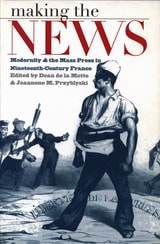
Making the News
Modernity and the Mass Press in Nineteenth-Century FranceDean de la Motte
University of Massachusetts Press, 1999
Much recent writing on print culture has focused on the social and political implications of the transition from “elite” to “mass” culture in the 1800s. The essays in this volume add significantly to our understanding of the role of the nineteenth-century French press in producing the commodities, consumers, and ideological frameworks that are the hallmarks of this shift. The book also offers an opportunity for useful comparisons with recent scholarship on the rise on the popular press in the United States, Great Britain, and Germany.
The essays address a wide range of topics, from the emergence of commercial daily newspapers during the July Monarchy to the photographic representation of women in the Paris Commune. Together they demonstrate that the French mass press was far more heterogeneous than previously supposed, tapping into an expanding readership composed of a variety of publics—from affluent bourgeois to disaffected workers to disenfranchised women. It was also relentlessly innovative, using caricature, argot, advertisements, and other attention-grabbing techniques that blurred the lines separating art, politics, and the news.
Malaria on the Move
Rural Communities and Public Health in Zimbabwe, 1890-2015Kundai Manamere
Ohio University Press, 2025
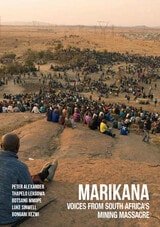
Marikana
Voices from South Africa’s Mining MassacrePeter Alexander
Ohio University Press, 2013
The Marikana Massacre of August 16, 2012, was the single most lethal use of force by South African security forces against civilians since the end of apartheid. Those killed were mineworkers in support of a pay raise. Through a series of interviews conducted with workers who survived the attack, this account documents and examines the controversial shootings in great detail, beginning with a valuable history of the events leading up to the killing of workers, and including eyewitness accounts of the violence and interviews with family members of those who perished.
While the official Farlam Commission investigation of the massacre is still ongoing, many South Africans do not hold much confidence in the government’s ability to examine its own complicity in these events. Marikana, on the other hand, examines the various roles played by the African National Congress, the mine company, and the National Union of Mineworkers in creating the conditions that led to the massacre. While the commission’s investigations take place in a courtroom setting tilted toward those in power, Marikana documents testimony from the mineworkers in the days before official statements were even gathered, offering an unusually immediate and unfiltered look at the reality from the perspective of those most directly affected. Enhanced by vivid maps that make clear the setting and situation of the events, Marikana is an invaluable work of history, journalism, sociology, and activism.
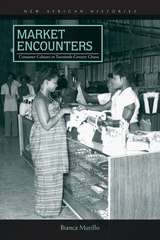
Market Encounters
Consumer Cultures in Twentieth-Century GhanaBianca Murillo
Ohio University Press, 2017
In Market Encounters, Bianca Murillo explores the shifting social terrains that made the buying and selling of goods in modern Ghana possible. Fusing economic and business history with social and cultural history, she traces the evolution of consumerism in the colonial Gold Coast and independent Ghana from the late nineteenth century through to the political turmoil of the 1970s.
Murillo brings sales clerks, market women, and everyday consumers in Ghana to the center of a story that is all too often told in sweeping metanarratives about what happens when African businesses are incorporated into global markets. By emphasizing the centrality of human relationships to Ghana’s economic past, Murillo introduces a radical rethinking of consumption studies from an Africa-centered perspective. The result is a keen look at colonial capitalism in all of its intricacies, legacies, and contradictions, including its entanglement with gender and race.
Markets of Civilization
Islam and Racial Capitalism in AlgeriaMuriam Haleh Davis
Duke University Press, 2022
Marriage by Force?
Contestation over Consent and Coercion in AfricaAnnie Bunting
Ohio University Press, 2016
With forced marriage, as with so many human rights issues, the sensationalized hides the mundane, and oversimplified popular discourses miss the range of experiences. In sub-Saharan Africa, the relationship between coercion and consent in marriage is a complex one that has changed over time and place, rendering impossible any single interpretation or explanation.
The legal experts, anthropologists, historians, and development workers contributing to Marriage by Force? focus on the role that marriage plays in the mobilization of labor, the accumulation of wealth, and domination versus dependency. They also address the crucial slippage between marriages and other forms of gendered violence, bondage, slavery, and servile status.
Only by examining variations in practices from a multitude of perspectives can we properly contextualize the problem and its consequences. And while early and forced marriages have been on the human rights agenda for decades, there is today an unprecedented level of international attention to the issue, thus making the coherent, multifaceted approach of Marriage by Force? even more necessary.
Mastering the Niger
James MacQueen's African Geography and the Struggle over Atlantic SlaveryDavid Lambert
University of Chicago Press, 2013
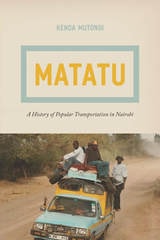
Matatu
A History of Popular Transportation in NairobiKenda Mutongi
University of Chicago Press, 2017
As Mutongi shows, matatus offer a window onto the socioeconomic and political conditions of late-twentieth-century Africa. In their diversity of idiosyncratic designs, they reflect multiple and divergent aspects of Kenyan life—including, for example, rapid urbanization, organized crime, entrepreneurship, social insecurity, the transition to democracy, and popular culture—at once embodying Kenya’s staggering social problems as well as the bright promises of its future. Offering a shining model of interdisciplinary analysis, Mutongi mixes historical, ethnographic, literary, linguistic, and economic approaches to tell the story of the matatu and explore the entrepreneurial aesthetics of the postcolonial world.
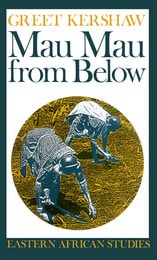
Mau Mau From Below
Eastern African StudiesGreet Kershaw
Ohio University Press, 1996
John Lonsdale says in his introduction:
“This is the oral evidence of the Kikuyu villagers with whom Greet Kershaw lived as an aid worker during the Mau Mau ‘Emergency’ in the 1950s, and which is now totally irrecoverable in any form save in her own field notes.
Professor Kershaw has uncovered long local histories of social tension which could have been revealed by no other means than patient enquiry, of both her neighbour’s memory and government archives…
Nobody, whether Kikuyu participant, Kenyan or European scholar, has provided such startlingly authoritative ethnographic insights into the values, fears and expectations of Kikuyu society and thus of the motivation of Kikuyu action…
Her data suggests, as other scholars have also accepted, that there never was a single such movement and that none of its members, even those who supposed themselves to be its leaders, ever saw it whole, not because they did not have a political aim, but because that agenda was contested within different political circles over which they had no control and of which they may scarcely have had any knowledge.
And why is this finding important? It is because others, including almost all the movement’s enemies, did see Mau Mau whole in order to try to comprehend it, a first step towards defeating it.”
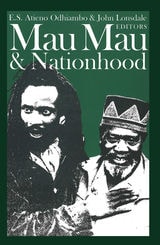
Mau Mau and Nationhood
Arms, Authority, and NarrationE. S. Atieno Odhiambo
Ohio University Press, 2003
Fifty years after the declaration of the state of emergency, Mau Mau still excites argument and controversy, not least in Kenya itself. Mau Mau and Nationhood is a collection of essays providing the most recent thinking on the uprising and its aftermath.
The work of well-established scholars as well as of young researchers with fresh perspectives, Mau Mau and Nationhood achieves a multilayered analysis of a subject of enduring interest. According to Terence Ranger, Emeritus Rhodes Professor, Oxford, “In some ways the historiography of Mau Mau is a supreme example not only of ambiguity and complexity, but also of redemption of a topic once thought incapable of rational analysis.”
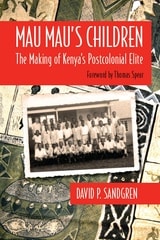
Mau Mau’s Children
The Making of Kenya’s Postcolonial EliteDavid P. Sandgren; Foreword by Thomas Spear
University of Wisconsin Press, 2012
In 1963 David P. Sandgren went to Kenya to teach in a small, rural school for boys, where he remained for the next four years. These were heady times for Kenyans, as the nation gained its independence, approved a new constitution, and held its first elections. In the school where Sandgren taught, the sons of Gikuyu farmers rose to the challenges of this post colonial era and, in time, entered Kenyan society as adults, joining Kenya’s first generation of post colonial elites.
In Mau Mau’s Children, Sandgren has reconnects with these former students. Drawing on more than one hundred interviews, he provides readers with a collective biography of the lives of Kenya’s first postcolonial elite, stretching from their 1940s childhood to the peak of their careers in the 1990s. Through these interviews, Mau Mau’s Children shows the trauma of growing up during the Mau Mau Rebellion, the nature of nationalism in Kenya, the new generational conflicts arising, and the significance of education and Gikuyu ethnicity on his students' path to success.
Meaninglessness
Time, Rhythm, and the Undead in Postcolonial CinemaVlad Dima
Michigan State University Press, 2023
Media Primitivism
Technological Art in AfricaDelinda Collier
Duke University Press, 2020
Media, Geopolitics, and Power
A View from the Global SouthHerman Wasserman
University of Illinois Press, 2018
Herman Wasserman analyzes the debates surrounding South Africa's new media presence against the backdrop of rapidly changing geopolitics. His exploration reveals how South African disputes regarding access to, and representation in, the media reflect the domination and inequality in the global communication sphere. Optimists see post-apartheid media as providing a vital space that encourages exchanges of opinion in a young democracy. Critics argue the public sphere mirrors South Africa's past divisions and privileges the viewpoints of the elite. Wasserman delves into the ways these simplistic narratives obscure the country's internal tensions, conflicts, and paradoxes even as he charts the diverse nature of South African entry into the global arena.
Medicine and Health in Africa
Multidisciplinary PerspectivesPaula Viterbo
Michigan State University Press, 2011
Medicine and the Saints
Science, Islam, and the Colonial Encounter in Morocco, 1877-1956By Ellen J. Amster
University of Texas Press, 2013
The colonial encounter between France and Morocco took place not only in the political realm but also in the realm of medicine. Because the body politic and the physical body are intimately linked, French efforts to colonize Morocco took place in and through the body. Starting from this original premise, Medicine and the Saints traces a history of colonial embodiment in Morocco through a series of medical encounters between the Islamic sultanate of Morocco and the Republic of France from 1877 to 1956.
Drawing on a wealth of primary sources in both French and Arabic, Ellen Amster investigates the positivist ambitions of French colonial doctors, sociologists, philologists, and historians; the social history of the encounters and transformations occasioned by French medical interventions; and the ways in which Moroccan nationalists ultimately appropriated a French model of modernity to invent the independent nation-state. Each chapter of the book addresses a different problem in the history of medicine: international espionage and a doctor’s murder; disease and revolt in Moroccan cities; a battle for authority between doctors and Muslim midwives; and the search for national identity in the welfare state. This research reveals how Moroccans ingested and digested French science and used it to create a nationalist movement and Islamist politics, and to understand disease and health. In the colonial encounter, the Muslim body became a seat of subjectivity, the place from which individuals contested and redefined the political.
Medicine in the Meantime
The Work of Care in MozambiqueRamah McKay
Duke University Press, 2018
Memories of the Slave Trade
Ritual and the Historical Imagination in Sierra LeoneRosalind Shaw
University of Chicago Press, 2002
Drawing on extensive fieldwork and archival research, Shaw argues that memories of the slave trade have shaped (and been reshaped by) experiences of colonialism, postcolonialism, and the country's ten-year rebel war. Thus money and commodities, for instance, are often linked to an invisible city of witches whose affluence was built on the theft of human lives. These ritual and visionary memories make hitherto invisible realities manifest, forming a prism through which past and present mutually configure each other.
Men Own The Fields, Women Own The Crops
Gender And Power In The Cameroon GrassfieldsMiriam Goheen
University of Wisconsin Press, 1996
Based on a decade of fieldwork, this work tracks the negotiations between chiefs and subchiefs and women and men over ritual power, economic power, and administrative power. Though Nso men obviously dominate their society at both the local level and nationally, women have had power of their own by virtue of their status as women. Men may own the land, for example, but women control the crops through their labor . Goheen explains clearly the place of gender in very complex historical processes, such as land tenure systems, title societies, chieftancy, marriage systems, changing ideas of symbolic capital, and internal and external politics.
In examining women’s resistance to traditional patterns of marriage, Goheen raises the question of whether such actions truly change the balance of power between the sexes, or whether resistance to marriage is instead fostering the formation of a new elite class, since it is only the better-educated women of wealthier families who can change the dynamic of power and labor within the household.
The issues raised in this book are not unique to Nso but apply throughout the African subcontinent. Written in a straightforward way with much of the theoretical argument in footnotes, Men Own the Fields, Women Own the Crops marshals important arguments of wide relevance in present-day Africa.

Mercenaries
An African Security DilemmaEdited by Abdel-Fatau Musah and J. Kayode Fayemi
Pluto Press, 1999
Metaphor and the Slave Trade in West African Literature
Laura T. Murphy
Ohio University Press, 2012
Metaphor and the Slave Trade provides compelling evidence of the hidden but unmistakable traces of the transatlantic slave trade that persist in West African discourse. Through an examination of metaphors that describe the trauma, loss, and suffering associated with the commerce in human lives, this book shows how the horrors of slavery are communicated from generation to generation.
Laura T. Murphy’s insightful new readings of canonical West African fiction, autobiography, drama, and poetry explore the relationship between memory and metaphor and emphasize how repressed or otherwise marginalized memories can be transmitted through images, tropes, rumors, and fears. By analyzing the unique codes through which West Africans have represented the slave trade, this work foregrounds African literary contributions to Black Atlantic discourse and draws attention to the archive that metaphor unlocks for scholars of all disciplines and fields of study.
Militarizing Marriage
West African Soldiers’ Conjugal Traditions in Modern French EmpireSarah J. Zimmerman
Ohio University Press, 2020
Following tirailleurs sénégalais’ deployments in West Africa, Congo, Madagascar, North Africa, Syria-Lebanon, Vietnam, and Algeria from the 1880s to 1962, Militarizing Marriage historicizes how African servicemen advanced conjugal strategies with women at home and abroad. Sarah J. Zimmerman examines the evolution of women’s conjugal relationships with West African colonial soldiers to show how the sexuality, gender, and exploitation of women were fundamental to the violent colonial expansion and the everyday operation of colonial rule in modern French Empire.
These conjugal behaviors became military marital traditions that normalized the intimate manifestation of colonial power in social reproduction across the empire. Soldiers’ cross-colonial and interracial households formed at the intersection of race and sexuality outside the colonizer/colonized binary. Militarizing Marriage uses contemporary feminist scholarship on militarism and violence to portray how the subjugation of women was indispensable to military conquest and colonial rule.
Mining in Africa
Regulation and DevelopmentBonnie Campbell
Pluto Press, 2009
The continent of Africa is rich in minerals needed by Western economies, but rather than forming the basis for economic growth the mining industry contributes very little to African development
Investigating the impact of the 2003 Extractive Industries Review on a number of African countries, the contributors find that a key dimension of the problem lies in the regulatory frameworks imposed on the African countries by the IMF and World Bank. They aim to convince academics, governments and industry that regulation needs to be reformed to create a mining industry favourable to social and economic development and environmental protection.
The book takes a multidisciplinary approach and provides a historical perspective of each country, making it ideal for students of development studies and development organisations.
Mirror of the Indies
A History of Dutch Colonial LiteratureRob Nieuwenhuys
University of Massachusetts Press, 1982

Mobile Households
Indian Ocean Intimate Economies in the Age of AbolitionHollian Wint-Frederick
Duke University Press, 2027
Mobile Secrets
Youth, Intimacy, and the Politics of Pretense in MozambiqueJulie Soleil Archambault
University of Chicago Press, 2017
With Mobile Secrets, Julie Soleil Archambault offers a complete rethinking of how we understand uncertainty, truth, and ignorance by revealing how better access to information may in fact be anything but desirable. By engaging with young adults in a Mozambique suburb, Archambault shows how, in their efforts to create fulfilling lives, young men and women rely on mobile communication not only to mitigate everyday uncertainty but also to juggle the demands of intimacy by courting, producing, and sustaining uncertainty. In their hands, the phone has become a necessary tool in a wider arsenal of pretense—a means of creating the open-endedness on which harmonious social relations depend in postwar postsocialist Mozambique. As Mobile Secrets shows, Mozambicans have harnessed the technology not only to acquire information but also to subvert regimes of truth and preserve public secrets, allowing everyone to feign ignorance about the workings of the postwar intimate economy.
Mobility, Mobilization, and Counter/Insurgency
The Routes of Terror in an African ContextDaniel E. Agbiboa
University of Michigan Press, 2022
In Mobility, Mobilization, and Counter/Insurgency, Daniel Agbiboa takes African insurgencies back to their routes by providing a transdisciplinary perspective on the centrality of mobility to the strategies of insurgents, state security forces, and civilian populations caught in conflict. Drawing on one of the world’s deadliest insurgencies, the Boko Haram insurgency in northeast Nigeria and the Lake Chad region, this well-crafted and richly nuanced intervention offers fresh insights into how violent extremist organizations exploit forms of local immobility and border porosity to mobilize new recruits, how the state’s “war on terror” mobilizes against so-called subversive mobilities, and how civilian populations in transit are treated as could-be terrorists and subjected to extortion and state-sanctioned violence en route. The multiple and intersecting flows analyzed here upend Eurocentric representations of movement in Africa as one-sided, anarchic, and dangerous. Instead, this book underscores the contradictions of mobility in conflict zones as simultaneously a resource and a burden. Intellectually rigorous yet clear, engaging, and accessible, Mobility, Mobilization, and Counter/Insurgency is a seminal contribution that lays bare the neglected linkages between conflict and mobility.
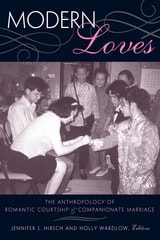
Modern Loves
The Anthropology of Romantic Courtship and Companionate MarriageJennifer S. Hirsch and Holly Wardlow, Editors
University of Michigan Press, 2006
In this first comparative ethnographic look at the global transformation toward marital ideals characterized by emotional intimacy, companionship, and mutual choice—discussed here as "companionate marriage"—Modern Loves asks how this shift is occurring and explores the factors that promote and hinder it, just who is pushing for these more companionate relationships, and what advantages men and women see in modern love. The contributors analyze the intricate negotiations surrounding love, marriage, and sex in Mexico, India, Papua New Guinea, Brazil, Pakistan, Nigeria, Singapore, and Hong Kong and among Latino youth in East Los Angeles. Modern Loves presents the new global approach to kinship studies, examining both the microlevel practices that constitute and bind relationships and the macrolevel forces that shape the landscape of love.
Jennifer S. Hirsch is Associate Professor in the Department of Sociomedical Sciences, Mailman School of Public Health, Columbia University. Holly Wardlow is Assistant Professor of Anthropology at the University of Toronto.
"What‘s love got to do with it? Hirsch and Wardlow answer this question by demonstrating the relevance—indeed, centrality—of the ideologies and practices surrounding romantic love and companionate marriage to the study of social transformation more broadly. The essays compiled in this volume explore the material, structural, and demographic underpinnings of the global shift in marital ideals while also tracing some of the sources of this marital shift in mass media, missionization, and the spread of individualism. The contributors of the chapters provide ethnographically rich examples of the ways in which people living in different societies interpret and act upon these global forces and images in sometimes overlapping and sometimes varying ways. This volume is an important and thoughtful contribution to the study of emotion, gender, kinship, and social change." —Laura M. Ahearn, Department of Anthropology, Rutgers University
"With its rich descriptions of the nuances in romantic love and its lucid analysis of the political economy of conjugal relations, this book will be widely read and loved by anthropologists as well as the concerned public."
—Yunxiang Yan, Department of Anthropology, UCLA
"Modern Loves offers an overview of current scholarship on love in the context of sexual relationships cross-culturally, and provides a view of the complexity of varied aspects of emotion, social structure, and social change in contemporary sexual relationships. It clearly makes the case for a political economic understanding of the emergence of ideologies of love, marriage, and courtship as part of expanding global economies."
—Linda-Anne Rebhun, Department of Anthropology, Yale University
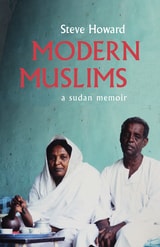
Modern Muslims
A Sudan MemoirSteve Howard
Ohio University Press, 2016
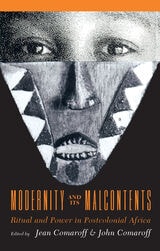
Modernity and Its Malcontents
Ritual and Power in Postcolonial AfricaEdited by Jean Comaroff and John L. Comaroff
University of Chicago Press, 1993
Some of the essays in Modernity and Its Malcontents address familiar anthropological issues—like witchcraft, myth, and the politics of reproduction—but treat them in fresh ways, situating them amidst the polyphonies of contemporary Africa. Others explore distinctly nontraditional subjects—among them the Nigerian popular press and soul-eating in Niger—in such a way as to confront the conceptual limits of Western social science. Together they demonstrate how ritual may be powerfuly mobilized in the making of history, present, and future.
Addressing challenges posed by contemporary African realities, the authors subject such concepts as modernity, ritual, power, and history to renewed critical scrutiny. Writing about a variety of phenomena, they are united by a wish to preserve the diversity and historical specificity of local signs and practices, voices and perspectives. Their work makes a substantial and original contribution toward the historical anthropology of Africa.
The contributors, all from the Africanist circle at the University of Chicago, are Adeline Masquelier, Deborah Kaspin, J. Lorand Matory, Ralph A. Austen, Andrew Apter, Misty L. Bastian, Mark Auslander, and Pamela G. Schmoll.
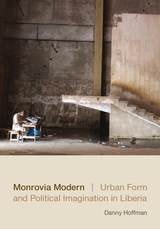
Monrovia Modern
Urban Form and Political Imagination in LiberiaDanny Hoffman
Duke University Press, 2017
Moorings
Portuguese Expansion and the Writing of AfricaJosiah Blackmore
University of Minnesota Press, 2008
How Africa was perceived in the early modern imaginary
In this first book to study Portuguese texts about Africa, Moorings brings an important but little-known body of European writings to bear on contemporary colonial thought. Images of Africa as monstrous, dangerous, and lush were created in early Portuguese imperial writings and dominated its representation in European literature. Moorings establishes these key works in their proper place: foundational to Western imperial discourse.
Attentive to history as well as the nuances of language, Josiah Blackmore leads readers from the formation of the “Moor” in medieval Iberia to the construction of a full colonial imaginary, as found in the works of two writers: the royal chronicler Gomes Eanes de Zurara and the epic poet Luís de Camões. Blackmore’s original work helps to explain how concepts and myths—such as the “otherness” of Africa and Africans—originated, functioned, and were perpetuated.Delving into the Portuguese imperial experience, Moorings enriches our understanding of historical and literary imagination during a significant period of Western expansion.
Morafe
Person, Family, and Nation in Colonial Bechuanaland, 1880s–1950sKhumisho Moguerane
Ohio University Press, 2024
In Morafe, Khumisho Moguerane has written a luminous exploration of two generations of the prominent Molema family. They were “border people” who straddled what would become present-day South Africa and Botswana. The book begins in the 1880s at the frontier of the new British territories of Bechuanaland (North West and Northern Cape provinces) and the Bechuanaland Protectorate (Botswana), where the political boundary between these two territories was negligible and where skin color did not yet necessarily connect with a particular social or political status or affect economic opportunity.
Morafe ends in the 1950s, when the political boundary mattered profoundly, dividing two very different colonial dispensations of racial ordering and classification, and two separate traditions of nationalist politics. With this landmark publication, Moguerane reveals that “the nation” is less “out there,” in public institutions and political struggles, and more “in here,” in the everyday drama of personal and ordinary lives.
Moral Economies of Corruption
State Formation and Political Culture in NigeriaSteven Pierce
Duke University Press, 2016

Moral Philosophy and Development
The Human Condition in AfricaTedros Kiros
Ohio University Press, 1992
Moroccan Islam
Tradition and Society in a Pilgrimage CenterBy Dale F. Eickelman
University of Texas Press, 1976
This book is one of the first comprehensive studies of Islam as locally understood in the Middle East. Specifically, it is concerned with the prevalent North African belief that certain men, called marabouts, have a special relation to God that enables them to serve as intermediaries and to influence the well-being of their clients and kin. Dale F. Eickelman examines the Moroccan pilgrimage center of Boujad and unpublished Moroccan and French archival materials related to it to show how popular Islam has been modified by its adherents to accommodate new social and economic realities. In the course of his analysis he demonstrates the necessary interrelationship between social history and the anthropological study of symbolism.
Eickelman begins with an outline of the early development of Islam in Morocco, emphasizing the "maraboutic crisis" of the fourteenth through sixteenth centuries. He also examines the history and social characteristics of the Sherqawi religious lodge, on which the study focuses, in preprotectorate Morocco. In the central portion of the book, he analyzes the economic activities and social institutions of Boujad and its rural hinterland, as well as some basic assumptions the townspeople and tribesmen make about the social order. Finally, there is an intensive discussion of maraboutism as a phenomenon and the changing local character of Islam in Morocco.
In focusing on the "folk" level of Islam, rather than on "high culture" tradition, the author has made possible a more general interpretation of Moroccan society that is in contrast with earlier accounts that postulated a marked discontinuity between tribe and town, past and present.
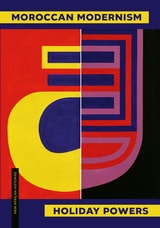
Moroccan Modernism
Holiday Powers
Ohio University Press, 2024
In the years after independence, new art forms and practices flourished at the Casablanca École des beaux-arts, transforming the colonial relic into a wellspring of Moroccan modernism. Casablanca School artists, including Farid Belkahia, Mohammed Chebaa, and Mohammed Melehi, defined the modernist movement in Morocco. Their visual arts activism was displayed at their iconic outdoor exhibition in the Djemaa al-Fna plaza in Marrakech, in their collaborations with the cultural and political journal Souffles, through their radical anticolonial pedagogy, and through their use of abstraction to expand the horizons of postcolonial national culture.
In Moroccan Modernism, Holiday Powers argues that the pedagogy and transnational solidarities of this generation of artists were intrinsic to their broader artistic projects. She advances a novel reading of Moroccan modernism that is rooted in its cosmopolitan national context and in Pan-Africanism and Pan-Arabism, the transnational anticolonial intellectual movements that defined the era.