Results by title
1677 books match the query 'Archaeology' and 87 start with m
Madrid Codex
New Approaches to Understanding an Ancient Maya ManuscriptGabrielle Vail
University Press of Colorado, 2004
Contributors include: Harvey M. Bricker, Victoria R. Bricker, John F. Chuchiak IV, Christine L. Hernández, Bryan R. Just, Merideth Paxton, and John Pohl. Additional support for this publication was generously provided by the Eugene M. Kayden Fund at the University of Colorado.
Maguey Utilization in Highland Central Mexico
An Archaeological EthnographyJeffrey R. Parsons and Mary H. Parsons
University of Michigan Press, 1990
Mahan and Baekje
The Complex Origins of Korean KingdomsRory Walsh
Michigan Publishing Services, 2020
Mahan and Baekje is a pioneering study of the Korean past from the perspective of everyday objects: ceramics made, used, and left behind by ancient Koreans themselves. Focusing on the third to fifth centuries CE in southwestern Korea, this book reexamines the social, political, and economic construction of the interconnected societies known as Mahan and the kingdom of Baekje. Pottery, which played central roles in Mahan’s and Baekje’s culinary practices, community gatherings, trade, and ritual, now sheds new light on the origins of Korean civilization.
Using advanced archaeological and geochemical techniques, this book traces the production, exchange, and use of pottery from Mahan and Baekje. The patterns reveal the shared underpinnings of Mahan and Baekje political economy, showing that the Baekje kingdom developed locally and not as the result of outside forces. Long-distance trade in Mahan and Baekje suggest a cosmopolitan ethos with roots in the deep past, while smaller scale exchanges hint at the complex web of social interactions that typified early Korean societies. Mahan and Baekje provides exciting new details of life at an epochal moment in ancient Korea.
Main Ridge Community At Lost City
Virgin Anazazi Architecture, Ceramics, and BurialsMargaret Lyneis
University of Utah Press, 1992
Making Ecuadorian Histories
Four Centuries of Defining PowerBy O. Hugo Benavides
University of Texas Press, 2004
In Ecuador, as in all countries, archaeology and history play fundamental roles in defining national identity. Connecting with the prehistoric and historic pasts gives the modern state legitimacy and power. But the state is not the only actor that lays claim to the country's archaeological patrimony, nor is its official history the only version of the story. Indigenous peoples are increasingly drawing on the past to claim their rights and standing in the modern Ecuadorian state, while the press tries to present a "neutral" version of history that will satisfy its various publics.
This pathfinding book investigates how archaeological knowledge is used for both maintaining and contesting nation-building and state-hegemony in Ecuador. Specifically, Hugo Benavides analyzes how the pre-Hispanic site of Cochasquí has become a source of competing narratives of Native American, Spanish, and Ecuadorian occupations, which serve the differing needs of the nation-state and different national populations at large. He also analyzes the Indian movement itself and the recent controversy over the final resting place for the traditional monolith of San Biritute. Offering a more nuanced view of the production of history than previous studies, Benavides demonstrates how both official and resistance narratives are constantly reproduced and embodied within the nation-state's dominant discourses.
Making Pictures in Stone
American Indian Rock Art of the NortheastEdward J. Lenik
University of Alabama Press, 2008
A full range of rock art appearances, including dendroglyphs, pictographs, and a selection of portable rock objects
The Indians of northeastern North America are known to us primarily through reports and descriptions written by European explorers, clergy, and settlers, and through archaeological evidence. An additional invaluable source of information is the interpretation of rock art images and their relationship to native peoples for recording practical matters or information, as expressions of their legends and spiritual traditions, or as simple doodling or graffiti. The images in this book connect us directly to the Indian peoples of the Northeast, mainly Algonkian tribes inhabiting eastern Pennsylvania, Maryland and the lower Potomac River Valley, New York, New Jersey, the six New EnglandStates, and Atlantic Canada. Lenik provides a full range of rock art appearances in the study area, including some dendroglyphs, pictographs, and a selection of portable rock objects. By providing a full analysis and synthesis of the data, including the types and distribution of the glyphs, and interpretations of their meaning to the native peoples, Lenik reveals a wealth of new information on the culture and lifeways of the Indians of the Northeast.
Making Senses of the Past
Toward a Sensory ArchaeologyEdited by Jo Day
Southern Illinois University Press, 2013
In ancient Peru, a site provides sensory surprises as voices resound beneath the ground and hidden carvings slowly reveal their secrets. In Canada and New Zealand, the flicker of reflected light from a lake dances on the faces of painted rocks and may have influenced when and why the pigment was applied. In Mesopotamia, vessels for foodstuffs build a picture of a past cuisine that encompasses taste and social activity in the building of communities. While perfume and flowers are examined in various cultures, in the chamber tombs of ancient Roman Palestine, we are reminded that not all smells are pleasant. Making Senses of the Past explores alternative ways to perceive past societies and offers a new way of wiring archaeology that incorporates the senses.
Man Across the Sea
Problems of Pre-Columbian ContactsEdited by Carroll L. Riley, J. Charles Kelley, Campbell W. Pennington, and Robert L. Rands
University of Texas Press, 1971
Whether humans crossed the seas between the Old World and the New in the times before Columbus is a tantalizing question that has long excited scholarly interest and tempted imaginations the world over. From the myths of Atlantis and Mu to the more credible, perhaps, but hardly less romantic tales of Viking ships and Buddhist missionaries, people have speculated upon what is, after all, not simply a question of contact, but of the nature and growth of civilization itself.
To the specialist, it is an important question indeed. If people in the Western Hemisphere and in the Eastern Hemisphere developed their cultures more or less independently from the end of the last Ice Age until the voyages of Columbus, the remarkable similarities between New World and Old World cultures reveal something important about the evolution of culture. If, on the other hand, there were widespread or sustained contacts between the hemispheres in pre-Columbian times, these contacts represent events of vast significance to the prehistory and history of humanity.
Originally delivered at a symposium held in May 1968, during the national meeting of the Society for American Archaeology, the papers presented here, by scholars eminent in the field, offer differing points of view and considerable evidence on the pros and cons of pre-Columbian contact between the Old World and the New. Various kinds of data—archaeological, botanical, geographical, and historical—are brought to bear on the problem, with provocative and original results. Introductory and concluding remarks by the editors pull together and evaluate the evidence and suggest ground rules for future studies of this sort.
Man across the Sea provides no final answers as to whether people from Asia, Africa, or Europe visited the American Indian before Columbus. It does, however, present new evidence, suggested lines of approach, and a fresh attempt to delineate the problems involved and to establish acceptable canons of evidence for the future.
Man Corn
Cannibalism and Violence in the Prehistoric American SouthwestChristy G Turner
University of Utah Press, 1999
Until quite recently, Southwest prehistory studies have largely missed or ignored evidence of violent competition. Christy and Jacqueline Turner’s study of prehistoric violence, homicide, and cannibalism explodes the myth that the Anasazi and other Southwest Indians were simple, peaceful farmers. Using detailed osteological analyses and other lines of evidence the Turners show that warfare, violence, and their concomitant horrors were as common in the ancient Southwest as anywhere else in the world.
The special feature of this massively documented study is its multi-regional assessment of episodic human bones assemblages (scattered floor deposits or charnel pits) by taphonomic analysis, which considers what happens to bones from the time of death to the time of recovery. During the past thirty years, the authors and other analysts have identified a minimal perimortem taphonomic signature of burning, pot polishing, anvil abrasions, bone breakage, cut marks, and missing vertebrae that closely match the signatures of animal butchering and is frequently associated with additional evidence of violence. More than seventy-five archaeological sited containing several hundred individuals are carefully examined for the cannibalism signature. Because this signature has not been reported for any sites north of Mexico, other than those in the Southwest, the authors also present detailed comparisons with Mesoamerican skeletal collections where human sacrifice and cannibalism were known to have been practiced. The authors review several hypotheses for Southwest cannibalism: starvation, social pathology, and institutionalized violence and cannibalism. In the latter case, they present evidence for a potential Mexican connection and demonstrate that most of the known cannibalized series are located temporally and spatially near Chaco great houses.
Manufactured Light
Mirrors in the Mesoamerican RealmEmiliano Gallaga
University Press of Colorado, 2015
Complex and time-consuming to produce, iron-ore mirrors stand out among Prehispanic artifacts for their aesthetic beauty, their symbolic implications, and the complexity and skill of their assembly. Manufactured Light presents the latest archaeological research on these items, focusing on the intersection of their significance and use and on the technological aspects of the manufacturing processes that created them.
The volume covers the production, meaning, and utilization of iron-ore mirrors in various Mesoamerican communities. Chapters focus on topics such as experimental archaeology projects and discussions of workshops in archaeological contexts in the Maya, Central Mexico, and northwest Mexico regions. Other chapters concentrate on the employment and ideological associations of these mirrors in Prehispanic times, especially as both sacred and luxury items. The final chapters address continuities in the use of mirrors from Prehispanic to modern times, especially in contemporary indigenous communities, with an emphasis on examining the relationship between ethnographic realities and archaeological interpretations.
While the symbolism of these artifacts and the intricacy of their construction have long been recognized in archaeological discussions, Manufactured Light is the first synthesis of this important yet under-studied class of material culture. It is a must-read for students and scholars of Mesoamerican archaeology, ethnography, religion, replicative experimentation, and lithic technology.
Contirbutors include: Marc G. Blainey, Thomas Calligaro, Carrie L. Dennett, Emiliano Gallaga, Julie Gazzola, Sergio Gómez Chávez, Olivia Kindl, Brigitte Kovacevich, Achim Lelgemann, José J. Lunazzi, John J. McGraw, Emiliano Melgar, Joseph Mountjoy, Reyna Solis, and Karl Taube.
Mastodons to Mississippians
Adventures in Nashville's Deep PastAaron Deter-Wolf
Vanderbilt University Press, 2021
Was Nashville once home to a giant race of humans?
No, but in 1845, you could have paid a quarter to see the remains of one who allegedly lived here before The Flood. That summer, Middle Tennessee well diggers had unearthed the skeleton of an American mastodon. Before it went on display, it was modified and augmented with wooden “bones” to make it look more like a human being and passed off as an antediluvian giant. Then, like so many Nashvillians, after a little success here, it went on tour and disappeared from history.
But this fake history of a race of Pre-Nashville Giants isn’t the only bad history of what, and who, was here before Nashville. Sources written for schoolchildren and the public lead us to believe that the first Euro-Americans arrived in Nashville to find a pristine landscape inhabited only by the buffalo and boundless nature, entirely untouched by human hands. Instead, the roots of our city extend some 14,000 years before Illinois lieutenant-governor-turned-fur-trader Timothy Demonbreun set foot at Sulphur Dell.
During the period between about AD 1000 and 1425, a thriving Native American culture known to archaeologists as the Middle Cumberland Mississippian lived along the Cumberland River and its tributaries in today’s Davidson County. Earthen mounds built to hold the houses or burials of the upper class overlooked both banks of the Cumberland near what is now downtown Nashville. Surrounding densely packed village areas including family homes, cemeteries, and public spaces stretched for several miles through Shelby Bottoms, and the McFerrin Park, Bicentennial Mall, and Germantown neighborhoods. Other villages were scattered across the Nashville landscape, including in the modern neighborhoods of Richland, Sylvan Park, Lipscomb, Duncan Wood, Centennial Park, Belle Meade, White Bridge, and Cherokee Park.
This book is the first public-facing effort by legitimate archaeologists to articulate the history of what happened here before Nashville happened.
Materia Magica
The Archaeology of Magic in Roman Egypt, Cyprus, and SpainAndrew T. Wilburn
University of Michigan Press, 2015
This exciting new study draws on objects excavated or discovered in the late nineteenth or early twentieth century at three Mediterranean sites. Through the three case studies, Materia Magica identifies specific forms of magic that may be otherwise unknown. It isolates the practitioners of magic and examines whether magic could be used as a form of countercultural resistance. Andrew T. Wilburn discovers magic in the objects of ancient daily life, suggesting that individuals frequently turned to magic, particularly in crises. Local forms of magic may have differed, and Wilburn proposes that the only way we can find small-town sorcerers is through careful examination of the archaeological evidence.
Studying the remains of spells enacted by practitioners, Wilburn's work unites the analysis of the words written on artifacts and the physical form of these objects. He situates these items within their contexts, to study how and why they were used. Materia Magica approaches magic as a material endeavor, in which spoken spells, ritual actions, and physical objects all played vital roles in the performance of a rite.
Materia Magica develops a new method for identifying and interpreting the material remains of magical practice by assessing artifacts within their archaeological contexts. Wilburn suggests that excavations undertaken in recent centuries can yield important lessons about the past, and he articulates the ways in which we can approach problematic data.
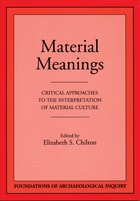
Material Meanings
Elizabeth Chilton
University of Utah Press, 1999
Material Meanings focuses on the social context in which things are produced and in which they are given meaning.
With firm roots in antiquarianism, archaeology began as the study and collection of things. Even today objects take center stage in many areas of archaeological inquiry. But the past few decades have seen a proliferation of the ways anthropological archaeologist analyze raw materials, tools, techniques, finished products, and discarded objects.
Material Meanings examines current approaches to material culture in the archaeological record from three perspective: ethnoarchaeology and technological traditions, material science, and theoretical approaches to materiality. The focus of this book is not on artifacts themselves but on the social context in which things are produced and in which they are given meaning, the technical choices of an artifact producer within a larger technical system, and their interpretation by modern researchers.
The chapters represent a broad range of theoretical perspectives, methods, and data sets. Several chapters consider methodological issues in reconstructing technical systems. Most contributions, however, apply this understanding to larger questions of social identity and ethnicity, emphasizing historical context or models of cultural process.
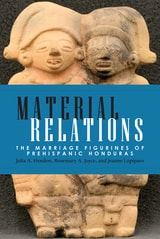
Material Relations
The Marriage Figurines of Prehispanic HondurasJulia A. Hendon
University Press of Colorado, 2014
They examine the production, use, and disposal of marriage figurines from six sites—Campo Dos, Cerro Palenque, Copán, Currusté, Tenampua, and Travesia—and explore their role in rituals and ceremonies, as well as in the forming of social bonds and the celebration of relationships among communities. They find evidence of historical traditions reproduced over generations through material media in social relations among individuals, families, and communities, as well as social differences within this network of connected yet independent settlements.
Material Relations provides a new and dynamic understanding of how social houses functioned via networks of production and reciprocal exchange of material objects and will be of interest to Mesoamerican archaeologists, anthropologists, and art historians.
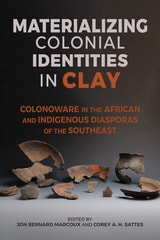
Materializing Colonial Identities in Clay
Colonoware in the African and Indigenous Diasporas of the SoutheastEdited by Jon Bernard Marcoux and Corey A. H. Sattes
University of Alabama Press, 2024
An interdisciplinary excavation of colonoware as a material archive of African, Indigenous, and colonial entanglements across the early American South.
In Materializing Colonial Identities in Clay, Jon Bernard Marcoux, Corey A. H. Sattes, and contributors examine colonoware to explore the active roles that African Americans and Indigenous people played in constructing southern colonial culture and part of their shared history with Europeans.
Colonoware was most likely produced by African and Indigenous potters and used by all colonial groups for cooking, serving, and storing food. It formed the foundation of colonial foodways in many settlements across the southeastern United States. Even so, compared with other ceramics from this period, less has been understood about its production and use because of the lack of documentation. This collection of essays fills this gap with valuable, recent archaeological data from which much may be surmised about the interaction among Europeans, Indigenous, and Africans, especially within the contexts of the African and Indigenous slave trade and plantation systems.
The chapters represent the full range of colonoware research: from the beginning to the end of its production, from urban to rural contexts, and from its intraregional variation in the Lowcountry to the broad patterns of colonialism across the early American Southeast. The book summarizes current approaches in colonoware research and how these may bridge the gaps between broader colonial American studies, Indigenous studies, and African Diaspora studies.
A concluding discussion contextualizes the chapters through the perspectives of intersectionality and Black feminist theory, drawing attention to the gendered and racialized meanings embodied in colonoware, and considering how colonialism and slavery have shaped these cultural dimensions and archaeologists’ study of them.
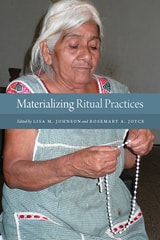
Materializing Ritual Practices
Lisa M. Johnson
University Press of Colorado, 2021
Ritual action produces sequences of creation, destruction, and transformation, which involve a variety of materials that are active and agential. The materialities of ritual may persist at temporal scales long beyond the lives of humans or be as ephemeral as spoken words, music, and scents. In this book, archaeologists and ethnographers, including specialists in narrative, music, and ritual practice, explore the rhythms and materiality of rituals that accompany everyday actions, like the construction of houses, healing practices, and religious festivals, and that paced commemoration of rulers, ancestor veneration, and relations with spiritual beings in the past.
Connecting the kinds of observed material discursive practices that ethnographers witness to the sedimented practices from which archaeologists infer similar practices in the past, Materializing Ritual Practices addresses how specific materialities encourage repetition in ritual actions and, in other circumstances, resist changes to ritual sequences. The volume will be of interest to cultural anthropologists, archaeologists, and linguists with interests in Central America, ritual, materiality, and time.
Contributors: M. Charlotte Arnauld, Giovani Balam Caamal, Isaac Barrientos, Cedric Becquey, Johann Begel, Valeria Bellomia, Juan Carillo Gonzalez, Maire Chosson, Julien Hiquet, Katrina Kosyk, Olivier Le Guen, Maria Luisa Vasquez de Agredos Pascual, Alessandro Lupo, Philippe Nondedeo, Julie Patrois, Russel Sheptak, Valentina Vapnarsky, Francisca Zalaquett Rock
Maya Archaeology and Ethnohistory
Edited by Norman Hammond and Gordon R. Willey
University of Texas Press, 1979
Embracing a wide range of research, this book offers various views on the intellectual history of Maya archaeology and ethnohistory and the processes operating in the rise and fall of Maya civilization.
The fourteen studies were selected from those presented at the Second Cambridge Symposium on Recent Research in Mesoamerican Archaeology and are presented in three major sections.
The first of these deals with the application of theory, both anthropological and historical, to the great civilization of the Classic Maya, which flourished in the Yucatan, Guatemala, and Belize during the first millennium A.D. The structural remains of the Classic Period have impressed travelers and archaeologists for over a century, and aspects of the development and decline of this strange and brilliant tropical forest culture are examined here in the light of archaeological research.
The second section presents the results of field research ranging from the Highlands of Mexico east to Honduras and north into the Lowland heart of Maya civilization, and iconographic study of excavated material.
The third section covers the ethnohistoric approach to archaeology, the conjunction of material and documentary evidence. Early European documents are used to illuminate historic Maya culture. This section includes transcriptions of previously unpublished archival material.
Although not formally linked beyond their common field of inquiry, the essays here offer a conspectus of late-twentieth century Maya research and a series of case histories of the work of some of the leading scholars in the field.
Maya Blue
Unlocking the Mysteries of an Ancient PigmentDean E. Arnold
University Press of Colorado, 2025
Combining the organic dye indigo and the inorganic clay mineral palygorskite in a highly stable chemical hybrid that, unlike indigo, resists attacks by acids, alkalines, and organic solvents and endures without fading, Maya Blue has a rich blue color that has survived for centuries in one of the world’s harshest climates. First used at the site of Calakmul in the tropical forest of southern Mexico during the Late Preclassic period, the Maya’s abiding hue diffused across Mesoamerica over a period of 1,700 years. It appears on Maya pottery, sculpture, murals, and codices and carries multiple meanings, standing as a symbol for cultural cornerstones such as sacrifice and the rain god Chaak. It was discovered in 1931 at Chichén Itzá, and its composition was a mystery for more than three decades, then questions about its source, how and why it achieved such stability, and how and why the Maya made the pigment persisted even longer.
In Maya Blue, Arnold summarizes ethnographic, archaeological, chemical, and material science research over the last century from an anthropological perspective. This thorough, engaging, and accessible book chronicles the history of this pigment as no work has done before.
Maya Calendar Origins
Monuments, Mythistory, and the Materialization of TimeBy Prudence M. Rice
University of Texas Press, 2007
In Maya Political Science: Time, Astronomy, and the Cosmos, Prudence M. Rice proposed a new model of Maya political organization in which geopolitical seats of power rotated according to a 256-year calendar cycle known as the May. This fundamental connection between timekeeping and Maya political organization sparked Rice's interest in the origins of the two major calendars used by the ancient lowland Maya, one 260 days long, and the other having 365 days. In Maya Calendar Origins, she presents a provocative new thesis about the origins and development of the calendrical system.
Integrating data from anthropology, archaeology, art history, astronomy, ethnohistory, myth, and linguistics, Rice argues that the Maya calendars developed about a millennium earlier than commonly thought, around 1200 BC, as an outgrowth of observations of the natural phenomena that scheduled the movements of late Archaic hunter-gatherer-collectors throughout what became Mesoamerica. She asserts that an understanding of the cycles of weather and celestial movements became the basis of power for early rulers, who could thereby claim "control" over supernatural cosmic forces. Rice shows how time became materialized—transformed into status objects such as monuments that encoded calendrical or temporal concerns—as well as politicized, becoming the foundation for societal order, political legitimization, and wealth. Rice's research also sheds new light on the origins of the Popol Vuh, which, Rice believes, encodes the history of the development of the Mesoamerican calendars. She also explores the connections between the Maya and early Olmec and Izapan cultures in the Isthmian region, who shared with the Maya the cosmovision and ideology incorporated into the calendrical systems.

Maya Daykeeping
Three Calendars from Highland GuatemalaJohn M. Weeks
University Press of Colorado, 2009
The use of such calendars is mentioned in historical and ethnographic works, but very few examples are known to exist. Each of the three calendars transcribed and translated by John M. Weeks, Frauke Sachse, and Christian M. Prager - and housed at the University of Pennsylvania Museum of Archaeology and Anthropology - is unique in structure and content. Moreover, except for an unpublished study of the 1722 calendar by Rudolf Schuller and Oliver La Farge (1934), these little-known works appear to have escaped the attention of most scholars. Introductory essays contextualize each document in time and space, and a series of appendixes present previously unpublished calendrical notes assembled in the early twentieth century.
Providing considerable information on the divinatory use of calendars in colonial highland Maya society previously unavailable without a visit to the University of Pennsylvania's archives, Maya Daykeeping is an invaluable primary resource for Maya scholars. Mesoamerican Worlds Series
Maya Figurines
Intersections between State and HouseholdBy Christina T. Halperin
University of Texas Press, 2014
Rather than view the contours of Late Classic Maya social life solely from towering temple pyramids or elite sculptural forms, this book considers a suite of small anthropomorphic, zoomorphic, and supernatural figurative remains excavated from household refuse deposits. Maya Figurines examines these often neglected objects and uses them to draw out relationships between the Maya state and its subjects.
These figurines provide a unique perspective for understanding Maya social and political relations; Christina T. Halperin argues that state politics work on the microscale of everyday routines, localized rituals, and small-scale representations. Her comprehensive study brings together archeology, anthropology, and art history with theories of material culture, performance, political economy, ritual humor, and mimesis to make a fascinating case for the role politics plays in daily life. What she finds is that, by comparing small-scale figurines with state-sponsored, often large-scale iconography and elite material culture, one can understand how different social realms relate to and represent one another. In Maya Figurines, Halperin compares objects from diverse households, archeological sites, and regions, focusing especially on figurines from Petén, Guatemala, and comparing them to material culture from Belize, the northern highlands of Guatemala, the Usumacinta River, the Campeche coastal area, and Mesoamerican sites outside the Maya zone. Ultimately, she argues, ordinary objects are not simply passive backdrops for important social and political phenomena. Instead, they function as significant mechanisms through which power and social life are intertwined.
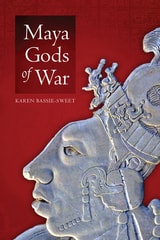
Maya Gods of War
Karen Bassie-Sweet
University Press of Colorado, 2021
Author Karen Bassie-Sweet traces the semantic markers used to distinguish flint from other types of stone, surveys various types of Chahk thunderbolt deities and their relationship to flint weapons, and explores the connection between lightning and the ruling elite. Additional chapters review these fire and solar deities and their roles in Maya warfare and examine the nature and manifestations of the Central Mexican thunderbolt god Tlaloc, his incorporation into the Maya pantheon, and his identification with meteors and obsidian weapons. Finally, Bassie-Sweet addresses the characteristics of the deity God L, his role as an obsidian merchant god, and his close association with the ancient land route between the highland Guatemalan obsidian sources and the lowlands.
Through analysis of the nature of the Teotihuacán deities and exploration of the ways in which these gods were introduced into the Maya region and incorporated into the Maya worldview, Maya Gods of War offers new insights into the relationship between warfare and religious beliefs in Mesoamerica. This significant work will be of interest to scholars of Maya religion and iconography.
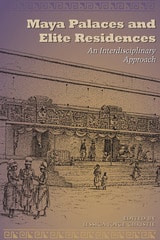
Maya Palaces and Elite Residences
An Interdisciplinary ApproachEdited by Jessica Joyce Christie
University of Texas Press, 2003
Maya "palaces" have intrigued students of this ancient Mesoamerican culture since the early twentieth century, when scholars first applied the term "palace" to multi-room, gallery-like buildings set on low platforms in the centers of Maya cities. Who lived in these palaces? What types of ceremonial and residential activities took place there? How do the physical forms and spatial arrangement of the buildings embody Maya concepts of social organization and cosmology?
This book brings together state-of-the-art data and analysis regarding the occupants, ritual and residential uses, and social and cosmological meanings of Maya palaces and elite residences. A multidisciplinary team of senior researchers reports on sites in Belize (Blue Creek), Western Honduras (Copan), the Peten (Tikal, Dos Pilas, Aguateca), and the Yucatan (Uxmal, Chichen-Itza, Dzibilchaltun, Yaxuna). Archaeologist contributors discuss the form of palace buildings and associated artifacts, their location within the city, and how some palaces related to landscape features. Their approach is complemented by art historical analyses of architectural sculpture, epigraphy, and ethnography. Jessica Joyce Christie concludes the volume by identifying patterns and commonalties that apply not only to the cited examples, but also to Maya architecture in general.
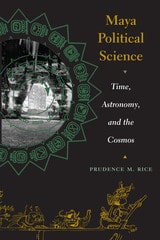
Maya Political Science
Time, Astronomy, and the CosmosBy Prudence M. Rice
University of Texas Press, 2004
How did the ancient Maya rule their world? Despite more than a century of archaeological investigation and glyphic decipherment, the nature of Maya political organization and political geography has remained an open question. Many debates have raged over models of centralization versus decentralization, superordinate and subordinate status—with far-flung analogies to emerging states in Europe, Asia, and Africa. But Prudence Rice asserts that neither the model of two giant "superpowers" nor that which postulates scores of small, weakly independent polities fits the accumulating body of material and cultural evidence.
In this groundbreaking book, Rice builds a new model of Classic lowland Maya (AD 179-948) political organization and political geography. Using the method of direct historical analogy, she integrates ethnohistoric and ethnographic knowledge of the Colonial-period and modern Maya with archaeological, epigraphic, and iconographic data from the ancient Maya. On this basis of cultural continuity, she constructs a convincing case that the fundamental ordering principles of Classic Maya geopolitical organization were the calendar (specifically a 256-year cycle of time known as the may) and the concept of quadripartition, or the division of the cosmos into four cardinal directions. Rice also examines this new model of geopolitical organization in the Preclassic and Postclassic periods and demonstrates that it offers fresh insights into the nature of rulership, ballgame ritual, and warfare among the Classic lowland Maya.
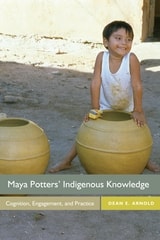
Maya Potters' Indigenous Knowledge
Cognition, Engagement, and PracticeDean E. Arnold
University Press of Colorado, 2017
Based on fieldwork and reflection over a period of almost fifty years, Maya Potters’ Indigenous Knowledge utilizes engagement theory to describe the indigenous knowledge of traditional Maya potters in Ticul, Yucatán, Mexico. In this heavily illustrated narrative account, Dean E. Arnold examines craftspeople’s knowledge and skills, their engagement with their natural and social environments, the raw materials they use for their craft, and their process for making pottery.
Following Lambros Malafouris, Tim Ingold, and Colin Renfrew, Arnold argues that potters’ indigenous knowledge is not just in their minds but extends to their engagement with the environment, raw materials, and the pottery-making process itself and is recursively affected by visual and tactile feedback. Pottery is not just an expression of a mental template but also involves the interaction of cognitive categories, embodied muscular patterns, and the engagement of those categories and skills with the production process. Indigenous knowledge is thus a product of the interaction of mind and material, of mental categories and action, and of cognition and sensory engagement—the interaction of both human and material agency.
Engagement theory has become an important theoretical approach and “indigenous knowledge” (as cultural heritage) is the focus of much current research in anthropology, archaeology, and cultural resource management. While Dean Arnold’s previous work has been significant in ceramic ethnoarchaeology, Maya Potters' Indigenous Knowledge goes further, providing new evidence and opening up different concepts and approaches to understanding practical processes. It will be of interest to a wide variety of researchers in Maya studies, material culture, material sciences, ceramic ecology, and ethnoarchaeology.
Maya Worldviews at Conquest
Leslie G. Cecil
University Press of Colorado, 2009
Focusing on the Postclassic and Colonial periods, Maya Worldviews at Conquest provides a regional investigation of archaeological and epigraphic evidence of Maya ideology, landscape, historical consciousness, ritual practices, and religious symbolism before and during the Spanish conquest. Through careful investigation, the volume focuses on the impact of conversion, hybridization, resistance, and revitalization on the Mayans’ understanding of their world and their place in it.
The volume also addresses the issue of anthropologists unconsciously projecting their modern worldviews on the culture under investigation. Thus, the book critically defines and strengthens the use of worldviews in the scholarly literature regardless of the culture studied, making it of value not only to Maya scholars but also to those interested in the anthropologist’s projection of worldview on other cultures in general.
Meadowood Phase Settlement Pattern in the Niagara Frontier Region of Western New York State
Joseph E. Granger, Jr.
University of Michigan Press, 1978
Measuring the Flow of Time
The Works of James A. Ford, 1935-1941James A. Ford, edited by R. Lee Lyman and Michael J. O'Brien
University of Alabama Press, 1999
This collection of Ford's works focuses on the development of ceramic chronology—a key tool in Americanist archaeology.

Meat and the Birth of Rome
Zooarchaeology, Foodways, and Religious RitualsVictoria C. Moses
University of Alabama Press, 2026
Meat and the Birth of Rome explores faunal remains from archaeological sites dating to the early Iron Age through early Republican period in Rome and its environs and challenges a prevailing view of Rome’s exceptionalism. Victoria C. Moses tempers the myth by illuminating the roles of meat production, distribution, and consumption and ritual sacrifice in the social hierarchy, economy, and religious practices as Rome grew. During the transformative period around the eighth century BCE, Romans conserved older foodways and their diverse ritual practices. These findings within the broader zooarchaeological data from peninsular Italy show that, despite Rome’s later success, it shared many early characteristics with its neighbors.
This compelling narrative adds to the current archaeological conversations and research on the history of the eternal city.
Medicinal Plants of Native America, Vols. 1 and 2
Daniel E. Moerman
University of Michigan Press, 1987
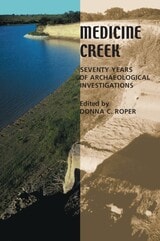
Medicine Creek
Seventy Years of Archaeological InvestigationsEdited by Donna C. Roper
University of Alabama Press, 2002
This valuable book is an excellent overview of long-term archaeological investigations in the valley that remains at the forefront of studies on the First Americans.
In southwest Nebraska, a stretch of Medicine Creek approximately 20 kilometers long holds a remarkable concentration of both late Paleoindian and late prehistoric sites. Unlike several nearby similar and parallel streams that drain the divide between the Platte and Republican Rivers, Medicine Creek has undergone 70 years of archaeological excavations that reveal a long occupation by North America's earliest inhabitants.
Donna Roper has collected the written research in this volume that originated in a conference celebrating the 50th anniversary of the 1947 River Basin Survey. In addition to 12 chapters reviewing the long history of archaeological investigations at Medicine Creek, the volume contains recent analyses of and new perspectives on old sites and old data. Two of the sites discussed are considered for pre-Clovis status because they show evidence of human modification of mammoth faunal remains in the late Pleistocene Age. Studies of later occupation of Upper Republican phase sites yield information on the lifeways of Plains village people.
Presented by major investigators at Medicine Creek, the contributions are a balanced blend of the historical research and the current state-of-the-art work and analysis. Roper's comprehensive look at the archaeology, paleontology, and geomorphology at Medicine Creek gives scientists and amateurs a full assessment of a site that has taught us much about the North American continent and its early people.
Meearmeear Traditions
C. C. Trowbridge
University of Michigan Press, 1938
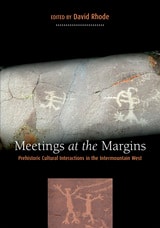
Meetings at the Margins
Prehistoric Cultural Interactions in the Intermountain WestDavid Rhode
University of Utah Press, 2012
Environmental conditions clearly influenced the cultural development of societies in the Intermountain West, but how did interactions with neighbors living along the region’s borders affect a society’s growth and advancement, its cultural integrity, and its long-term survival? Relationships among different societies are, of course, crucial to the spread of information, innovation, and belief systems; to the maintenance of exchange and mating networks; and to the forging of ethnic identity. In these ways and others, intergroup relationships can be as strong a force in shaping a society’s identity and future as are local social and economic dynamics.
Meetings at the Margins focuses on the ways in which different societies in the Intermountain West profoundly influenced each other’s histories throughout the more than fourteen millennia of prehistoric occupation. Historically, inhabitants of this region frequently interacted with more than forty different groups—neighbors who spoke some two dozen different languages and maintained diverse economies. The contributors to this volume demonstrate that in the prehistoric Intermountain West, as elsewhere throughout the world, intergroup interactions were pivotal for the dynamic processes of cultural cohesion, differentiation, and change, and they affirm the value of a long-term, large-scale view of prehistory.
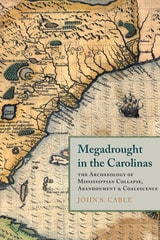
Megadrought in the Carolinas
The Archaeology of Mississippian Collapse, Abandonment, and CoalescenceJohn S. Cable
University of Alabama Press, 2020
A prevailing enigma in American archaeology is why vast swaths of land in the Southeast and Southwest were abandoned between AD 1200 and 1500. The most well-known abandonments occurred in the Four Corners and Mimbres areas of the Southwest and the central Mississippi valley in the twelfth and thirteenth centuries and in southern Arizona and the Ohio Valley during the fifteenth century. In Megadrought in the Carolinas: The Archaeology of Mississippian Collapse, Abandonment, and Coalescence, John S. Cable demonstrates through the application of innovative ceramic analysis that yet another fifteenth-century abandonment event took place across an area of some 34.5 million acres centered on the South Carolina coast.
Most would agree that these sweeping changes were at least in part the consequence of prolonged droughts associated with a period of global warming known as the Medieval Climatic Anomaly. Cable strengthens this inference by showing that these events correspond exactly with the timing of two different geographic patterns of megadrought as defined by modern climate models.
Cable extends his study by testing the proposition that the former residents of the coastal zone migrated to surrounding interior regions where the effects of drought were less severe. Abundant support for this expectation is found in the archaeology of these regions, including evidence of accelerated population growth, crowding, and increased regional hostilities. Another important implication of immigration is the eventual coalescence of ethnic and/or culturally different social groups and the ultimate transformation of societies into new cultural syntheses. Evidence for this process is not yet well documented in the Southeast, but Cable draws on his familiarity with the drought-related Puebloan intrusions into the Hohokam Core Area of southern Arizona during the thirteenth and fourteenth centuries to suggest strategies for examining coalescence in the Southeast. The narrative concludes by addressing the broad implications of late prehistoric societal collapse for today’s human-propelled global warming era that portends similar but much more long-lasting consequences.
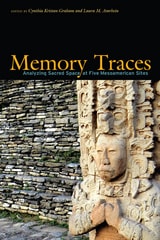
Memory Traces
Analyzing Sacred Space at Five Mesoamerican SitesCynthia Kristan-Graham
University Press of Colorado, 2015
In Memory Traces, art historians and archaeologists come together to examine the nature of sacred space in Mesoamerica. Through five well-known and important centers of political power and artistic invention in Mesoamerica—Tetitla at Teotihuacan, Tula Grande, the Mound of the Building Columns at El Tajín, the House of the Phalli at Chichén Itzá, and Tonina—contributors explore the process of recognizing and defining sacred space, how sacred spaces were viewed and used both physically and symbolically, and what theoretical approaches are most useful for art historians and archaeologists seeking to understand these places.
Memory Traces acknowledges that the creation, use, abandonment, and reuse of sacred space have a strongly recursive relation to collective memory and meanings linked to the places in question and reconciles issues of continuity and discontinuity of memory in ancient Mesoamerican sacred spaces. It will be of interest to students and scholars of Mesoamerican studies and material culture, art historians, architectural historians, and cultural anthropologists.
Contributors: Laura M. Amrhein, Nicholas P. Dunning, Rex Koontz, Cynthia Kristan-Graham, Matthew G. Looper, Travis Nygard, Keith M. Prufer, Matthew H. Robb, Patricia J. Sarro, Kaylee Spencer, Eric Weaver, Linnea Wren
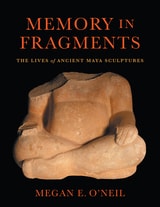
Memory in Fragments
The Lives of Ancient Maya SculpturesMegan E. O'Neil
University of Texas Press, 2024
An exploration of how the ancient Maya engaged with their history by using, altering, and burying stone sculptures.
For the ancient Maya, monumental stone sculptures were infused with agency. As they were used, reused, altered, and buried, such sculptures retained ceremonial meaning. In Memory in Fragments, Megan E. O'Neil explores how ancient Maya people engaged with history through these sculptures, as well as how they interacted with the stones themselves over the course of the sculptures’ long “lives.” Considering Maya religious practices, historiography, and conceptions of materials and things, O’Neil explores how Maya viewers perceived sculptures that were fragmented, scarred, burned, damaged by enemies, or set in unusual locations. In each case, she demonstrates how different human interactions, amid dynamic religious, political, and historical contexts, led to new episodes in the sculptures' lives.
A rare example of cross-temporal and geographical work in this field, Memory in Fragments both compares sculptures within ancient Maya culture across Honduras, Guatemala, Mexico, and Belize over hundreds of years and reveals how memory may accrue around and be evoked in material remains.
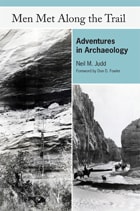
Men Met Along the Trail
Adventures in ArchaeologyNeil M Judd
University of Utah Press, 2009
Written at the request of young associates who felt Judd’s lifetime of experiences in the field could be both instructive and amusing, Men Met Along the Trail provides a glimpse of archaeology when it was an emerging field of study, evolving from simple curio collecting to technologically advanced radiocarbon dating and pollen analysis. Featuring more than thirty original photographs and a new foreword by Don D. Fowler, this book is entertaining and informative, offering readers a vibrant and colorful picture of the adventures to be found in early Southwestern archaeology.

Men among the Mammoths
A. Bowdoin Van Riper
University of Chicago Press, 1993
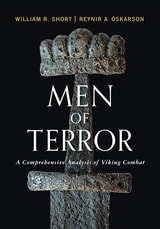
Men of Terror
A Comprehensive Analysis of Viking CombatWilliam R. Short and Reynir A. Óskarson
Westholme Publishing, 2027
Sometime near the end of the tenth century, a man named Fraði died in Sweden. His kinsmen raised a granite runestone to his memory in Denmark. The carved message appears to tell us that Fraði was “first among all Vikings” and that he was the “terror of men.” Known sources about the Vikings revolve around the constant threat of violence: literary and artistic sources from both inside and outside Viking lands, including poetry, myths, stories, and artwork; law codes; burial practices; weapons; even their ship and house architecture.
Based on nearly two decades of research, Men of Terror: A Comprehensive Analysis of Viking Combat is a richly illustrated interdisciplinary study of the heart of Viking society: weapons and combat. Relying on a vast array of sources from a wide range of fields, research scientist William R. Short and independent scholar and martial arts instructor Reynir A. Óskarson dig deep into the culture of men like Fraði to better understand the mindset and performance of Viking warriors that led them to venerate and praise acts of violence and aggression. In the process they have painstakingly reverse-engineered Viking combat to account for the archaeology we have. Along the way, they answer questions such as: Were there women warriors? Why were acts such as raiding held in such high esteem? What mundane object was the king of Viking weapons and how was it used? Could bowstrings of human hair really work? Through their comprehensive research, the authors present a holistic picture of this society from what previously had only been disparate and intriguing parts. By the end of the book, the reader will understand the importance of combat to Viking society, the nature of that combat, and the code of these “men of terror.”
Mesoamerican Lithic Technology
Kenneth Hirth
University of Utah Press, 2003
Any overview of prehispanic society in the Americas would identify its obsidian core-blade production as a unique and highly inventive technology. Normally termed prismatic blades, these long, parallel-sided flakes are among the sharpest cutting tools ever produced by humans. Their standardized form permitted interchangeable use, and such blades became the cutting tool of choice throughout Mesoamerica between 600–800 B.C. Because considerable production skill is required, increased demand may have stimulated the appearance of craft specialists who played an integral role in Mesoamerican society. Some investigators have argued that control over obsidian also had a significant effect on the development and organization of chiefdom and state-level societies.
While researchers have long recognized the potential of obsidian studies, recent work has focused primarily on compositional analysis to reconstruct trade and distribution networks. Study of blade production has received much less attention, and many aspects of this highly evolved craft are still lost.
This volume seeks to identify current research questions in Mesoamerican lithic technology and to demonstrate that replication studies coupled with experimental research design are valuable analytical approaches to such questions.
Mesoamerican Plazas
Arenas of Community and PowerEdited by Kenichiro Tsukamoto and Takeshi Inomata
University of Arizona Press, 2014
The primary question that has motivated the contributors is how Mesoamerican plazas became arenas for the creation and negotiation of social relations and values in a community. The thirteen contributions stress the significance of interplay between power relations and embodied practices set in specific historical and material settings, as outlined by practice theory and performance theory. This approach allows the contributors to explore broader anthropological issues, such as the negotiation of power relations, community making, and the constitution of political authorities.
Overall, the contributions establish that physical interactions among people in communal events were not the outcomes of political machinations held behind the scenes, but were the actual political processes through which people created, negotiated, and subverted social realities. If so, spacious plazas that were arguably designed for interactions among a large number of individuals must have also provided critical arenas for the constitution and transformation of society.
Mesoamerican Ritual Economy
Archaeological and Ethnological PerspectivesE. Christian Wells
University Press of Colorado, 2007
Exploring the intersection of spirituality and materiality, Mesoamerican Ritual Economy will be of interest to all scholars studying how worldview and belief motivate economic behavior. The authors consider a diverse set of Mesoamerican cultural patterns in order to investigate the ways in which ritual and economic practices influenced each other in the operation of communities, small-scale societies, and state-level polities. Contributors include: Sarah B. Barber, Frances F. Berdan, Karla L. Davis-Salazar, Barbara W. Fash, William L. Fash, Antonia E. Foias, Arthur A. Joyce, Brigitte Kovacevich, Ben A. Nelson, Enrique Rodríguez-Alegría, Katherine A. Spielmann, John M. Watanabe, E. Christian Wells.
Mesquite Pods to Mezcal
10,000 Years of Oaxacan CuisinesVerónica Pérez Rodriguez, Shanti Morell-Hart, and Stacie M. King
University of Texas Press, 2024
New case studies documenting ten thousand years of cuisines across the cultures of Oaxaca, Mexico, from the earliest gathered plants, such as guajes, to the contemporary production of tejate and its health implications.
Among the richest culinary traditions in Mexico are those of the “eight regions” of the state of Oaxaca. Mesquite Pods to Mezcal brings together some of the most prominent scholars in Oaxacan archaeology and related fields to explore the evolution of the area’s world-renowned cuisines. This volume, the first to address food practices across Oaxaca through a long-term historical lens, covers the full spectrum of human occupation in Oaxaca, from the early Holocene to contemporary times. Contributors consider the deep history of agroecological management and large-scale landscape transformation, framing food production as a human-environment relation. They explore how, after the arrival of the Spanish, Oaxacan cuisines adapted, diets changed, and food became a stronger marker of identity. Examining the present, further studies document how traditional foodways persist and what they mean for contemporary Oaxacans, whether they are traveling ancient roads, working outside the region, or rebuilding after an earthquake. Together, the original case studies in this volume demonstrate how new methods and diverse theoretical approaches can come together to trace the development of a rich food tradition, one that is thriving today.
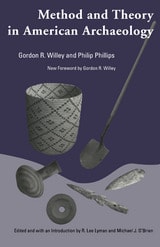
Method and Theory in American Archaeology
Gordon R. Willey
University of Alabama Press, 2001
A Dan Josselyn Memorial Publication
This invaluable classic provides the framework for the development of American archaeology during the last half of the 20th century.
In 1958 Gordon R. Willey and Philip Phillips first published Method and Theory in American Archaeology—a volume that went through five printings, the last in 1967 at the height of what became known as the new, or processual, archaeology. The advent of processual archaeology, according to Willey and Phillips, represented a "theoretical debate . . . a question of whether archaeology should be the study of cultural history or the study of cultural process."
Willey and Phillips suggested that little interpretation had taken place in American archaeology, and their book offered an analytical perspective; the methods they described and the structural framework they used for synthesizing American prehistory were all geared toward interpretation. Method and Theory served as the catalyst and primary reader on the topic for over a decade.
This facsimile reprint edition of the original University of Chicago Press volume includes a new foreword by Gordon R. Willey, which outlines the state of American archaeology at the time of the original publication, and a new introduction by the editors to place the book in historical context. The bibliography is exhaustive. Academic libraries, students, professionals, and knowledgeable amateurs will welcome this new edition of a standard-maker among texts on American archaeology.
Method and Theory in Paleoethnobotany
John M. Marston
University Press of Colorado, 2014
A diverse and highly regarded group of scholars reference a broad array of literature from around the world as they cover their areas of expertise in the practice and theory of paleoethnobotany—starch grain analysis, stable isotope analysis, ancient DNA, digital data management, and ecological and postprocessual theory.
The only comprehensive edited volume focusing on method and theory to appear in the last twenty-five years, Method and Theory in Paleoethnobotany addresses the new areas of inquiry that have become central to contemporary archaeological debates, as well as the current state of theoretical, methodological, and empirical work in paleoethnobotany.
Methods and Methodologies in Heritage Studies
Edited by Rachel King and Trinidad Rico
University College London, 2024
Methods and Methodologies in Heritage Studies offers succinct and accessible analyses of the current debates, intellectual legacies, and practical innovations on heritage value today. Using archaeology, anthropology, history, and geography, this multidisciplinary textbook is designed to support students, researchers, and practitioners, inviting them to review discussions of key problems and argumentative interventions in heritage studies.
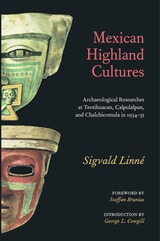
Mexican Highland Cultures
Archaeological Researches at Teotihuacan, Calpoulalpan and Chalchicomula in 1934-35Sigvald Linné
University of Alabama Press, 2003
Presents the broad picture and analysis of excavations at three cultural centers in central Mexico
This classic work published in 1942, ten years after archaeological excavations were begun in the Valley of Mexico by Linné's team, presents additional data that had not been fully detailed in the previously published Archaeological Researches at Teotihuacan. It provides comparative information on the high-status ruins situated on the fringes of the Valley of Mexico and excavation results from a compound within the city of Teotihuacan. This information is of critical use to archaeologists still excavating at Teotihuacan in projecting compound extent, types of artifacts expected to be discovered, and patterns of artifacts to be found in particular types of rooms. The characteristics of burials is also explored.
This book, along with its predecessor, is an important primary resource for Americanists. Staffan Brunius's foreword offers a broad background of Linné's life and work. The introduction by George Cowgill focuses more specifically on the conduct and impact of the archaeological exavations.
G. C. Vaillant has stated, "The greatest achievement of Dr. Linné from the viewpoint of the general student is the presentation of a technical field excavation in such terms that anyone can follow his text and see the relationship between the details of position of specimens and the larger problems of history and anthropology."
Sigvald Linné was Professor of Ethnography at the University of Stockholm and Director of the Swedish National Museum of Ethnography until 1969. He published several other books, including The Technique of South American Ceramics. Staffan Brunius
is Curator of the Americas at the National Museum of Ethnography in Stockholm. George L. Cowgill is Professor of Anthropology at Arizona State University and coeditor of The Collapse of Ancient States and Civilizations.
Additional reviews:
This book . . . makes Linne's work widely available again to those interested and may prompt a new generation of specialists to examine the original material either in Stockholm's National Museum of Ethnography, Mexico's Museo Nacional de Antropologia or the Teotihuacan site itself. Testament to the lasting value of Linne's work is given in a succinct and helpful new introduction by anthropologist George L. Cowgill. A more recent curator of the Americas at Stockholm's ethnographical museum, Steffan Brunius, also chips in with a brief contextualization of Linne's work against the background of the early Swedish-American tradition.—The Historian
Mexican Macaws
Comparative Osteology and Survey of Remains from the SouthwestLyndon L. Hargrave
University of Arizona Press, 1970
Middle Mississippi Exploitation of Animal Populations
Bruce D. Smith
University of Michigan Press, 1975