Results by title
428 books match the query 'Authorship' and 22 start with m
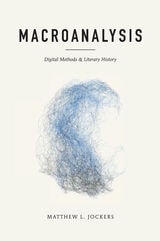
Macroanalysis
Digital Methods and Literary HistoryMatthew L. Jockers
University of Illinois Press, 2013

Made with Words
May Swenson
University of Michigan Press, 1998
Made with Words includes a rich assortment of Swenson's prose, including several short stories, by turns amusing, provocative, and poetic, and inextricably bound with her poetic oeuvre; a one-act play entitled The Floor, produced in New York in the mid-sixties; interviews and book reviews that shed light on Swenson's poetic development as well as her literary and artistic tastes; and finally, a collection of Swenson's letters to the poet Elizabeth Bishop that reveal the intricacies of three decades of their personal and professional relationship. The critical and biographical introduction provides an engaging glimpse into the creative life and prose work of an important contemporary American poet.
Gardner McFall is Assistant Professor of Literature, Cooper Union for the Advancement of Science and Art. She is the author of The Pilot's Daughter; Naming the Animals; and Jonathan's Cloud.
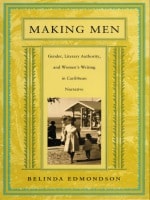
Making Men
Gender, Literary Authority, and Women’s Writing in Caribbean NarrativeBelinda Edmondson
Duke University Press, 1998
Discussing the canonical Caribbean narrative as it reflects national identity under the domination of English cultural authority, Belinda Edmondson focuses particularly on the pervasive influence of Victorian sensibilities in the structuring of twentieth-century national identity. She shows that issues of race and English constructions of masculinity not only are central to West Indian identity but also connect Caribbean authorship to the English literary tradition. This perspective on the origins of West Indian literary nationalism then informs Edmondson’s search for female subjectivity in current literature by West Indian women immigrants in America. Making Men compares the intellectual exile of men with the economic migration of women, linking the canonical male tradition to the writing of modern West Indian women and exploring how the latter write within and against the historical male paradigm in the continuing process of national definition.
With theoretical claims that invite new discourse on English, Caribbean, and American ideas of exile, migration, race, gender identity, and literary authority, Making Men will be informative reading for those involved with postcolonial theory, African American and women’s studies, and Caribbean literature.
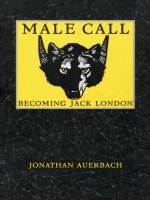
Male Call
Becoming Jack LondonJonathan Auerbach
Duke University Press, 1996
Jonathan Auerbach shows that London’s personal identity was not a basis of his literary success, but rather a consequence of it. Unlike previous studies of London that are driven by the author’s biography, Male Call examines how London carefully invented a trademark “self” in order to gain access to a rapidly expanding popular magazine and book market that craved authenticity, celebrity, power, and personality. Auerbach demonstrates that only one fact of London’s life truly shaped his art: his passionate desire to become a successful author. Whether imagining himself in stories and novels as a white man on trail in the Yukon, a sled dog, a tramp, or a professor; or engaging questions of manhood and mastery in terms of work, race, politics, class, or sexuality, London created a public persona for the purpose of exploiting the conventions of the publishing world and marketplace.
Revising critical commonplaces about both Jack London’s work and the meaning of “nature” within literary naturalism and turn-of-the-century ideologies of masculinity, Auerbach’s analysis intriguingly complicates our view of London and sheds light on our own postmodern preoccupation with celebrity. Male Call will attract readers with an interest in American studies, American literature, gender studies, and cultural studies.
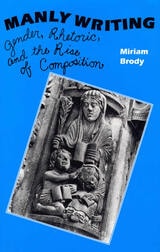
Manly Writing
Gender, Rhetoric and the Rise of CompostionMiriam Brody
Southern Illinois University Press, 1993
In this critical history of the gendered politics of rhetoric and the rise of composition, Miriam Brody argues that nothing about words or their arrangement is innately gendered. Yet since the English Enlightenment, teachers have encouraged their students to admire and imitate "manly" writing, writing that is plain, forceful, cogent, and true. Similarly, students have been enjoined to avoid so-called effeminate or feminine writing—writing characterized as vague, unorganized, ornate, and deceitful.
Such advice, part of what Brody terms the hidden curriculum, has served the interests of discourse communities as various as the early Enlightenment Royal Society in seventeenth-century London (by urging a clear and masculine style for the work of science) and the land-grant universities of nineteenth-century America (by claiming that the work of writing was similar to clearing the land and pushing back the frontier). Brody’s discussion in fact becomes a social history of canonical rhetorical essays and important late Enlightenment, nineteenth-century, and early modern school texts. She points out that in their advice to writers even the Strunks and Whites and Peter Elbows of more recent times have extolled masculine virtues and urged control over invasive and problematic feminine qualities.
Brody’s book not only clarifies rhetoric’s inheritance and transformation of the classical ideal of manliness, it also is the first critical work to explore the ideological significance of gendered imagery and to interpret in light of this imagery rhetorical essays and hard-to-locate early composition texts against a background of previously unpublished archival materials.
Marketing Modernisms
Self-Promotion, Canonization, RereadingKevin J.H. Dettmar and Stephen Watt, Editors
University of Michigan Press, 1996
Mass Authorship and the Rise of Self-Publishing
Timothy Laquintano
University of Iowa Press, 2016
Drawing on eight years of research and interviews with more than eighty self-published writers, Mass Authorship avoids the polemics, instead showing how writers are actually thinking about and dealing with this brave new world. Timothy Laquintano compares the experiences of self-publishing authors in three distinct genres—poker strategy guides, memoirs, and romance novels—as well as those of writers whose self-published works hit major bestseller lists. He finds that the significance of self-publishing and the challenge it presents to traditional publishing depend on the aims of authors, the desires of their readers, the affordances of their platforms, and the business plans of the companies that provide those platforms.
In drawing a nuanced portrait of self-publishing authors today, Laquintano answers some of the most pressing questions about what it means to publish in the twenty-first century: How do writers establish credibility in an environment with no editors to judge quality? How do authors police their copyrights online without recourse to the law? How do they experience Amazon as a publishing platform? And how do they find an audience when, it sometimes seems, there are more writers than readers?
Master Class
Lessons from Leading WritersNancy Bunge
University of Iowa Press, 2005
Master Class: Lessons from Leading Writers gathers more than two decades of wisdom from twenty-nine accomplished authors. It offers previously unpublished interviews along with freshly edited versions of ten interviews from Nancy Bunge's well-received previous collection, Finding the Words. The first section, Theory, incorporates interviews which document the golden age of writing programs in which authors with a strong sense of social and cultural responsibility taught as seriously as they wrote. These conversations delve into the writers' philosophies and teaching methods. The second section, Practice, presents interviews with authors who discuss how they've approached the writing of particular works. Altogether the interviews introduce authors as inspirational models and provide insightful techniques for other writers to try. One piece of advice recurs with striking consistency: to produce fresh, interesting work, aspiring writers must develop a passionate self-trust. This rule has an essential corollary: improving as a writer means constantly stretching oneself with new information and skills. Sure to interest writing and literature teachers as well as writers at every stage of development, Master Class is highly recommended for undergraduate and graduate writing courses.
Interviews with Marvin Bell, Ivan Doig, Sandra Gilbert, Allen Ginsberg, Donald Hall, Jim Harrison, Etheridge Knight, Margot Livesey, Larry McMurtry, James Alan McPherson, Clarence Major, Bobbie Ann Mason, Sue Miller, N. Scott Momaday, Kyoko Mori, Thylias Moss, W. S. Penn, Kit Reed, Alix Kates Shulman, William Stafford, Wallace Stegner, Ruth Stone, Scott Turow, Katherine Vaz, Diane Wakoski, Anne Waldman, Richard Wilbur, Richard Yates, and Helen Yglesias.
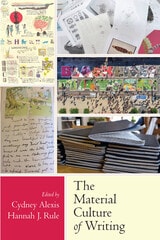
Material Culture of Writing
edited by Cydney Alexis and Hannah J. Rule
University Press of Colorado, 2022
The collection features scholars across the disciplines—such as art, art history, English, museum studies, and writing studies—who work as teachers, historians, museum curators/conservators, and faculty. Each chapter features methods and questions from contributors’ own disciplines while at the same time speaking to writing studies’ interest in writers, writing identity, and writing practice. The authors in this volume also work with a variety of methodologies, including literary analysis, archival research, and qualitative research, providing models for the types of research possible using a material culture studies framework. The collection is organized into three sections—Writing Identity, Writing Work, Writing Genre—each with a contextualizing introduction from the editors that introduces the chapters themselves and imagines possible directions for writing studies research facilitated by material culture studies.
The Material Culture of Writing serves as an accessible introduction to work in material culture studies for writing studies scholars, graduate students, and undergraduates, especially as it makes a distinctive contribution to writing studies in its material culture studies approach. Because of the interdisciplinarity of material culture studies and this volume’s contributors, this collection will appeal to a wide range of scholars and readers, including those interested in writing studies, the history of the book, print culture, genre studies, archival methods, and authorship studies.
Contributors: Cydney Alexis, Debby Andrews, Diane Ehrenpreis, Keri Epps, Desirée Henderson, Kevin James, Jenny Krichevsky, Anne Mackay, Emilie Merrigan, Laura R. Micciche, Hannah J. Rule, Kate Smith
Maverick Heart
The Further Adventures Of Zane GreyStephen J. May
Ohio University Press, 2000
In 1927, at the peak of his career, Zane Grey bought a three-masted schooner, which he sailed to the Galapagos Islands, later journeying to Tahiti, New Zealand, Australia, and Fiji.
As colorful as his characters were, so too was their creator. A consummate explorer, Zane Grey toured the world, was an acclaimed expert on salt- and freshwater fishing, and incorporated the sights and sounds he witnessed into his writings.
As a companion to his biographical work of Grey’s literary life, Zane Grey: Romancing the West, author Stephen J. May now gives as a remarkable look into another aspect of Grey’s existence, the side little known but central to the measure of the man.
Maverick Heart makes use of Grey’s own memoirs and letters to give an enlightening portrait of this larger-than-life American character and a telling insight into one of the key shapers of the cultural heritage of our country.
Memory and Narrative
The Weave of Life-WritingJames Olney
University of Chicago Press, 1998
"This is an elegant work of scholarship." —Jason Berry, Chicago Tribune
"Examines how the fascinating, reciprocal relationship between memory and narrative has evolved over the course of 17 centuries. . . . Olney's work is a valuable companion to his subjects' primary texts." —Booklist
Merrill, Cavafy, Poems, and Dreams
Rachel Hadas
University of Michigan Press, 2000
The second half of the book combines explorations of various corners and horizons of the poetry scene, including neglected American poets and Hadas's thoughts on her own poetics and career. "Two Letters from New York" and "Tangled Web Sites" take bemused looks at literary or cultural landscapes. Hadas also looks inward: to dreams and dreamwork, to her dead mother's address book, to the emblematic drilling of a well in a country house. The range of selections includes essays, interviews, memoir, criticism, and a few of Hadas's own poems.
Rachel Hadas is the author of eleven books of poetry, essays, and translations. Her most recent book is Halfway Down the Hall: New and Selected Poems. She has received a Guggenheim Fellowship in Poetry and an American Academy-Institute of Arts and Letters Award in Literature, and is a member of the American Academy of Arts and Sciences. She is Professor of English at the Newark campus of Rutgers University.
Metawritings
Toward a Theory of NonfictionJill Talbot
University of Iowa Press, 2012
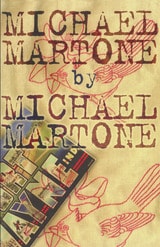
Michael Martone
FictionsMichael Martone
University of Alabama Press, 2005
When the author becomes the story, the possibilities are endless.
Michael Martone, by Michael Martone, continues the author's giddy exploration of the parts of books nobody ever reads. Michael Martone is its own appendix, comprising fifty “contributors notes,” each of which identifies in exorbitant biographical detail the author of the other forty-nine. Full of fanciful anecdotes and preposterous reminiscences, Martone’s self-inventions include the multiple deaths of himself and all his family members, his Kafkaesque rebirth as a giant insect, and his stints as circus performer, assembly-line worker, photographer, and movie extra.
Expect no autobiographical consistency here. A note revealing Martone's mother as the ghost-writer of all his books precedes the note beginning, “Michael Martone, an orphan . . . “ We learn of Martone’s university career and sketchy formal education, his misguided caretaking of his teacher John Barth’s lawn, and his impersonation of a poor African republic in political science class, where Martone's population is allowed to starve as his more fortunate fellow republics fight over development and natural resource trading-cards.
The author of Michael Martone, whose other names include Missy, Dolly, Peanut, Bug, Gigi-tone, Tony's boy, Patty's boy, Junior's, Mickey, Monk, Mr. Martone, and “the contributor named in this note," proves as Protean as fiction itself, continuously transforming the past with every new attribution but never identifying himself by name. It is this missing personage who, from first note to last, constitutes the unformed subject of Michael Martone.
Millions of Suns
On Writing and LifeSharon Fagan McDermott and M. C. Benner Dixon
University of Michigan Press, 2023
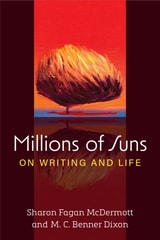
With decades of combined teaching experience, McDermott and Benner Dixon share practical craft-of-writing advice with the reader, including over fifty engaging writing prompts to spark the creative process. These prompts guide readers toward the freedom and joy that comes with finding one’s authentic voice. Embracing both the painful and the playful, Millions of Suns is an ideal text for classrooms, professional development, or daily writing practice. Through humor, lyricism, and poignancy, the fundamental message of the book remains the same for newcomers and career authors, whether they write poetry, fiction, non-fiction, or memoir. Let Millions of Suns open a door for you into your creative work, inviting imagination, memory, and inspiration into your writing life.
Missing Millie Benson
The Secret Case of the Nancy Drew Ghostwriter and JournalistJulie K. Rubini
Ohio University Press, 2015
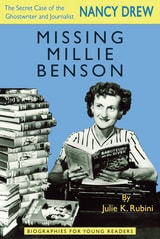
Growing up in Ladora, Iowa, Mildred “Millie” Benson had ample time to develop her imagination and sense of adventure. While still a journalism graduate student at the University of Iowa, Millie began writing for the Stratemeyer Syndicate, which published the phenomenally popular Hardy Boys series, among others. Soon, Millie was tapped for a new series starring amateur sleuth Nancy Drew, a young, independent woman not unlike Millie herself. Under the pen name Carolyn Keene, Millie wrote the first book, The Secret of the Old Clock, and twenty-two other Nancy Drew Mystery Stories. In all, Millie wrote more than a hundred novels for young people.
Millie was also a journalist for the Toledo Times and the Toledo Blade. At sixty-two, she obtained her pilot’s license. Follow the clues throughout Missing Millie to discover the story of this ghostwriter, journalist, and adventurer.
Modes of Production of Victorian Novels
N. N. Feltes
University of Chicago Press, 1986
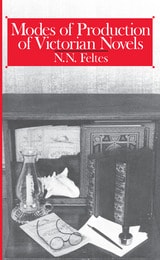
Feltes focuses on five English novels: Dickens's Pickwick Papers, Thackeray's Henry Esmond, Eliot's Middlemarch, Hardy's Tess of the d'Urbervilles, and Forster's Howards End. Published at approximately twenty year intervals between 1836 and 1920, they each represent a different first-publication format: part-issue, three-volume, bimonthly, magazine-serial, and single-volume. Drawing on publishing, economic, and literary history, Feltes offers a broad, synthetic explanation of the relationship between the production and format of each novel, and the way in which these determine, in the last instance, the ideology of the text.
Modes of Production in Victorian Novels provides a Marxist structuralist analysis of historical events and practices described elsewhere only empirically, and traces their relationship to literary texts which have been analyzed only idealistically, thus setting these familiar works firmly and perhaps permanently into a framework of historic materialism.

More Than Words
A Memoir of a Writing LifeJerry Apps
Wisconsin Historical Society Press, 2022
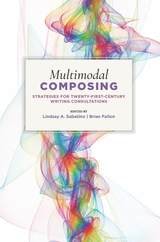
Multimodal Composing
Strategies for Twenty-First-Century Writing ConsultationsLindsay A. Sabatino
Utah State University Press, 2019
Multimodal Composing explores the relationship between rhetorical choices, design thinking, accessibility, and technological awareness in the writing center. Each chapter deepens consultants’ understanding of multimodal composing by introducing them to important features and practices in a variety of multimodal texts. The chapters’ activities provide consultants with an experience that familiarizes them with design thinking and multimodal projects, and a companion website (www.multimodalwritingcenter.org) offers access to additional resources that are difficult to reproduce in print (and includes updated links to resources and tools).
Multimodal projects are becoming the norm across disciplines, and writers expect consultants to have a working knowledge of how to answer their questions. Multimodal Composing introduces consultants to key elements in design, technology, audio, and visual media and explains how these elements relate to the rhetorical and expressive nature of written, visual, and spoken communication. Peer, graduate student, professional tutors and writing center directors will benefit from the activities and strategies presented in this guide.
Contributors:
Patrick Anderson, Shawn Apostel, Jarrod Barben, Brandy Ball Blake, Sarah Blazer, Brenta Blevins, Russell Carpenter, Florence Davies, Kate Flom Derrick, Lauri Dietz, Clint Gardner, Karen J. Head, Alyse Knorr, Jarret Krone, Sohui Lee, Joe McCormick, Courtnie Morin, Alice Johnston Myatt, Molly Schoen, James C. W. Truman
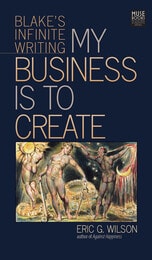
My Business Is to Create
Blake's Infinite WritingEric G. Wilson
University of Iowa Press, 2011
p.MsoNormal, li.MsoNormal, div.MsoNormal { margin: 0in 0in 0.0001pt; font-size: 12pt; font-family: "Times New Roman"; }div.Section1 { page: Section1; }
For William Blake, living is creating, conforming is death, and “the imagination . . . is the Human Existence itself.” But why are imagination and creation—so vital for Blake—essential for becoming human? And what is imagination? What is creation? How do we create? Blake had answers for these questions, both in word and in deed, answers that serve as potent teachings for aspiring writers and accomplished ones alike. Eric G. Wilson’s My Business Is to Create emulates Blake, presenting the great figure’s theory of creativity as well as the practices it implies.
In both his life and his art, Blake provided a powerful example of creativity at any cost—in the face of misunderstanding, neglect, loneliness, poverty, even accusations of insanity. Just as Los cries out in Jerusalem: The Emanation of the Giant Albion, “I must Create a System, or be enslav'd by another Man's; / I will not Reason and Compare: my business is to Create,” generations of writers and artists as diverse as John Ruskin, William Butler Yeats, Allen Ginsberg, Philip K. Dick, songwriter Patti Smith, the avant-garde filmmaker Jim Jarmusch, and the underground comic-book artist R. Crumb have taken Blake’s creed as inspiration.
Unwilling to cede his vision, Blake did more than simply produce iconoclastic poems and paintings; he also cleared a path toward spiritual and ethical enlightenment. To fashion powerful art is to realize the God within and thus to feel connected with enduring vitality and abundant generosity. This is Blake’s everlasting gospel, distilled here in an artist’s handbook of interest to scholars, writing teachers, and those who have made writing their way of life. My Business Is to Create is indispensable for all serious artists who want to transform their lives into art and make their art more alive.
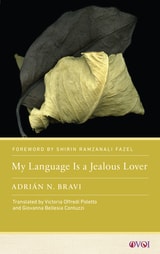
My Language Is a Jealous Lover
Adrián N. Bravi
Rutgers University Press, 2023
My Language Is a Jealous Lover explores the plights and successes of authors who lived and wrote in languages other than their mother tongue, from Samuel Beckett and Vladimir Nabokov to Ágota Kristóf and Joseph Brodsky. Author Adrián N. Bravi weaves their stories in with his own experiences as an Argentinian-Italian, thinking and writing in the language of his new life while recalling that of his childhood. Bravi bears witness to the frustrations, the soul-searching, the pain, and the joys of embracing another language.
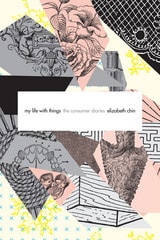
My Life with Things
The Consumer DiariesElizabeth Chin
Duke University Press, 2016