Results by title
5159 books match the query 'Biography' and 312 start with m
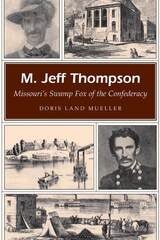
M. Jeff Thompson
Missouri's Swamp Fox of the ConfederacyDoris Land Mueller
University of Missouri Press, 2007
In the treacherous swamps of southeast Missouri, a different kind of Civil War was waged.
Meriwether Jeff Thompson was one of the most intriguing but least-known Missouri participants in the Civil War. He and his troops traveled fast and light to harass Union forces, materializing out of the countryside to surprise the enemy and evading the traps set for them by Northern commanders. Early in the war, Union General Ulysses S. Grant gave Thompson the name “Swamp Fox” for his exploits in the Bootheel region. This book now tells his story—an adventure that will be appreciated by readers of all ages. Doris Mueller has produced a meticulously researched account of Thompson’s life, from his Virginia boyhood and early successes to his wartime exploits and postwar life. When the war began, Thompson left his adopted city of St. Joseph—where he had served as mayor—to fight for the Confederacy. He was elected brigadier general in the First Military District of Southeast Missouri and led poorly equipped and loosely trained men in skirmishes and raids, often using guerrilla tactics. He was captured in August 1863. After being released twelve months later in a prisoner exchange, he joined Sterling Price’s ill-fated raid into Missouri. After the war, he was one of the first Southern leaders to seek reinstatement as a U.S. citizen and worked to allay hostilities among fellow Southerners.
Thompson was also known as the “Poet Laureate of the Marshes,” and Mueller includes numerous excerpts from his writings about his experiences. Her account not only provides a wealth of little-known biographical details about this important Missourian but also offers insight into the state’s unique experiences during that bloody era, personalizing events through the life of this brave soldier.
Scorned by the Northern press for impudence, but beloved as a leader by his men, Thompson was courageous in battle, often to the point of recklessness, making him a constant thorn in the side of Union forces; after the war he was an oft-maligned model for reconciliation. Doris Mueller’s recounting of his life is an action-adventure story that will delight readers as it attests to his important role in Missouri’s heritage.
MERCHANT OF ILLUSION
James Rouse, America’s Salesman of the Businessman’s UtopiaNicholas Dagen Bloom
The Ohio State University Press, 2004
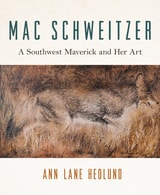
Mac Schweitzer
A Southwest Maverick and Her ArtAnn Lane Hedlund
University of Arizona Press, 2025
Southwest Books of the Year Top Pick
In Tucson during the 1950s, nearly everyone knew, or wanted to know, the southwestern artist Mac Schweitzer. Born Mary Alice Cox in Cleveland, Ohio, in 1921, she grew up a tomboy who adored horses, cowboys, and art. After training at the Cleveland School of Art and marrying, she adopted her maiden initials (M. A. C.) as her artistic name and settled in Tucson in 1946. With a circle of influential friends that included anthropologists, designer-craftsmen, and Native American artists, she joined Tucson’s “Early Moderns,” receiving exhibits, commissions, and awards for her artwork. When she died in 1962, Mac’s artistic legacy faded from public view, but her prize-winning works attest to a thriving career.
Author Ann Lane Hedlund draws from the artist’s letters, photo albums, and published reviews to tell the story of Mac’s creative and adventuresome life. Her watercolors, oil paintings, prints, and sculptures—a diverse body of work never before seen in public—range from naturalistic studies of Sonoran Desert animals to impressionistic landscapes to moody abstractions. A sharp observer of Indigenous life, she sketched and painted scenes of Navajo (Diné), Hopi, O’odham, and Yaqui people and events. These unique portrayals of the Southwest illustrate this saga of a maverick artist rediscovered.
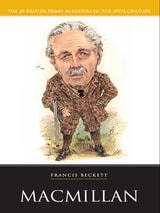
Macmillan
Francis Beckett
Haus Publishing, 2006
Mad Music
Charles Ives, the Nostalgic RebelStephen Budiansky
University Press of New England, 2014
Madam C. J. Walker's Gospel of Giving
Black Women's Philanthropy during Jim CrowTyrone McKinley Freeman
University of Illinois Press, 2020
- AFP/Skystone Partners Prize for Research on Fundraising and Philanthropy, Association of Fundraising Professionals, 2021
- Terry McAdam Book Award, given by the Alliance for Nonprofit Management
- 2023 Peter Dobkin Hall History of Philanthropy Prize from the Association for Research on Nonprofit and Voluntary Action (ARNOVA).
Founder of a beauty empire, Madam C. J. Walker was celebrated as America's first self-made female millionaire in the early 1900s. Known as a leading African American entrepreneur, Walker was also devoted to an activist philanthropy aimed at empowering African Americans and challenging the injustices inflicted by Jim Crow.
Tyrone McKinley Freeman's biography highlights how giving shaped Walker's life before and after she became wealthy. Poor and widowed when she arrived in St. Louis in her twenties, Walker found mentorship among black churchgoers and working black women. Her adoption of faith, racial uplift, education, and self-help soon informed her dedication to assisting black women's entrepreneurship, financial independence, and activism. Walker embedded her philanthropy in how she grew her business, forged alliances with groups like the National Association of Colored Women, funded schools and social service agencies led by African American women, and enlisted her company's sales agents in local charity and advocacy work.
Illuminating and dramatic, Madam C. J. Walker’s Gospel of Giving broadens our understanding of black women’s charitable giving and establishes Walker as a foremother of African American philanthropy.
Madam Chairman
Mary Louise Smith and the Republican Revival after WatergateSuzanne O'Dea
University of Missouri Press, 2012
Madame Chair
A Political Autobiography of an Unintentional PioneerJean Miles Westwood
Utah State University Press, 2007
A Utah national committeewoman and member of the reform committee that reorganized the party, Westwood answered George McGovern’s call to lead his presidential campaign. In the dramatic year of 1972, she became “chairman” of the party, McGovern lost in a landslide, Nixon was reelected, and a covert operation burglarized Democratic National Committee headquarters at the Watergate.
Westwood provides an inside account of a period that reshaped national politics. Second-wave feminism—“women’s liberation”—and the civil rights and antiwar movements opened the way. As a major player in political reform, Jean Westwood both helped build that road and traveled it.
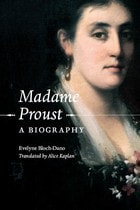
Madame Proust
A BiographyEvelyne E. Bloch-Dano
University of Chicago Press, 2007
Now Evelyne Bloch-Dano’s touching biography acquaints Proust fans with the real Jeanne Weil Proust. Written with the imaginative force of a novel, but firmly grounded in Jeanne and Marcel Proust’s writings, Madame Proust skillfully captures the life and times of Proust’s mother, from her German-Jewish background and her marriage to a Catholic grocer’s son to her lifelong worries about her son’s sexuality, health problems, and talent. As well as offering intimate glimpses of the Prousts’ daily life, Madame Proust also uses the family as a way to explore the larger culture of fin-de-siècle France, including high society, spa culture, Jewish assimilation, and the Dreyfus affair. Throughout, Bloch-Dano offers sensitive readings of Proust’s work, drawing out the countless interconnections between his mother, his life, and his magnum opus.
Those coming to In Search of Lost Time for the first time will find in Madame Proust a delightful primer on Marcel Proust’s life and times. For those already steeped in the pleasures of Proust, this gem of a biography will give them a fresh understanding of the rich, fascinating background of the writer and his art.
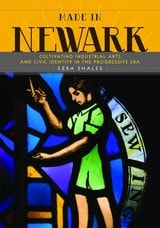
Made in Newark
Cultivating Industrial Arts and Civic Identity in the Progressive EraShales, Ezra
Rutgers University Press, 2010
This is the story of experimental exhibitions in the library and the founding of the Newark Museum Associationùa project in which cultural literacy was intertwined with civics and consumption. Local artisans demonstrated crafts, connecting the cultural institution to the department store, school, and factory, all of which invoked the ideal of municipal patriotism. Today, as cultural institutions reappraise their relevance, Made in Newark explores precedents for contemporary debates over the ways the library and museum engage communities, define heritage in a multicultural era, and add value to the economy.
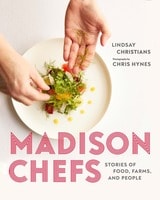
Madison Chefs
Stories of Food, Farms, and PeopleLindsay Christians and Chris Hynes
University of Wisconsin Press, 2021
Farm-to-table is a cliché, but its roots among the farmers and chefs of south-central Wisconsin are deep, vibrant, and resilient. From brats and burgers to bibimbap, Madison’s food scene looks substantially different than it did just a decade ago. Though the city has always been ahead of the locavore movement, a restaurant boom in the 2010s radically changed the dining landscape. Even when individual eateries close or chefs move on, their ideas, connections, and creativity have lasting power. Much larger cities have been unable to match the culinary variety, innovation, and depth of talent found in Wisconsin’s state capital.
Lindsay Christians’s in-depth look at nine creative, intense, and dedicated chefs captures the reason why Madison’s food culture remains a gem in America’s Upper Midwest. This beautifully illustrated book will leave you salivating—or making reservations.

Madonnaland
And Other Detours into Fame and FandomBy Alina Simone
University of Texas Press, 2016
When Alina Simone agreed to write a book about Madonna, she thought it might provide an interesting excuse to indulge her own eighties nostalgia. Wrong. What Simone discovered instead was a tidal wave of already published information about Madonna—and her own ambivalence about, maybe even jealousy of, the Material Girl’s overwhelming commercial success. With the straight-ahead course stymied, Simone set off on a quirky detour through the backroads of celebrity and fandom and the people who love or loathe Madonna.
In this witty, sometimes acerbic, always perceptive chronicle, Simone begins by trying to understand why Madonna’s birthplace, Bay City, Michigan, won’t even put up a sign to celebrate its most famous citizen, and ends by asking why local bands who make music that’s authentic and true can disappear with barely a trace. In between, she ranges from Madonna fans who cover themselves with tattoos of the singer’s face and try to make fortunes off selling her used bustiers and dresses, to Question Mark and the Mysterians—one-hit wonders best known for “96 Tears”—and Flying Wedge, a Detroit band that dropped off an amazing two-track record in the office of CREEM magazine in 1972 and vanished, until Simone tracked it down.
Filled with fresh insights about the music business, fandom, and what it takes to become a superstar, Madonnaland is as much a book for people who, like Simone, prefer “dark rooms, coffee, and state-subsidized European films filled with existential despair” as it is for people who can’t get enough of Madonna.
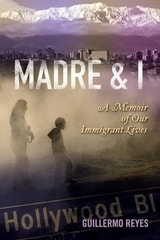
Madre and I
A Memoir of Our Immigrant LivesGuillermo Reyes
University of Wisconsin Press, 2010
In one memorable scene, after realizing that her friend Carmen is cleaning the house of one of the producers of Annie Hall, María recruits her to take her picture as she poses dramatically with Mr. Joffe’s Oscar in hand. It is María’s defiant yet determined attitude amidst her sacrifices that allows for Guillermo’s spirited coming of age and coming out.
Their common ground is the drama of their encounters with discovery, heartbreak, and passion—the explosive emotions that light up the stage of their two-actor theater.
Magnificent Méliès
The Authorized BiographyMadeleine Malthête-Méliès, translated by Kel Pero, edited by Matthew Solomon
University of Michigan Press, 2022
Maharajah of Bikaner
IndiaHugh Purcell
Haus Publishing, 2010
Mai Ya's Long Journey
Sheila Cohen
Wisconsin Historical Society Press, 2005
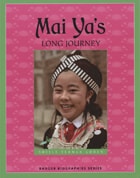
The story of Mai Ya Xiong and her family and their journey from the Ban Vinai refugee camp in Thailand to a new life in Madison, Wisconsin, is extraordinary. Yet it is typical of the stories of the 200,000 Hmong people who now live in the United States and who struggle to adjust to American society while maintaining their own culture as a free people.
Mai Ya's Long Journey follows Mai Ya Xiong, a young Hmong woman, from her childhood in Thailand's Ban Vinai Refugee Camp to her current home in Wisconsin. Mai Ya's parents fled Laos during the Vietnam War and were refugees in Thailand for several years before reaching the United States. But the story does not end there. Students will read the challenges Mai Ya faces in balancing her Hmong heritage and her adopted American culture as she grows into adulthood.
Maid as Muse
How Servants Changed Emily Dickinson’s Life and LanguageAífe Murray
University of New Hampshire Press, 2010
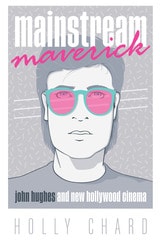
Mainstream Maverick
John Hughes and New Hollywood CinemaBy Holly Chard
University of Texas Press, 2020
Winner, Best First Monograph, British Association of Film, Television and Screen Studies
The first scholarly book on John Hughes examines Hollywood's complex relationship with genre, the role of the auteur in commercial cinema, and the legacy of favorites such as Sixteen Candles and Ferris Bueller's Day Off.
In the 1980s and 1990s, John Hughes was one of Hollywood's most reliable hitmakers, churning out beloved teen comedies and family films such as The Breakfast Club and Home Alone, respectively. But was he an artist? Hughes, an adamantly commercial filmmaker who was dismissed by critics, might have laughed at the question. Since his death in 2009, though, he has been memorialized on Oscar night as a key voice of his time. Now the critics lionize him as a stylistic original.
Holly Chard traces Hughes's evolution from entertainer to auteur. Studios recognized Hughes's distinctiveness and responded by nurturing his brand. He is therefore a case study in Hollywood's production not only of movies but also of genre and of authorship itself. The films of John Hughes, Chard shows, also owed their success to the marketers who sold them and the audiences who watched. Careful readings of Hughes's cinema reveal both the sources of his iconic status and the imprint on his films of the social, political, economic, and media contexts in which he operated.
The first serious treatment of Hughes, Mainstream Maverick elucidates the priorities of the American movie industry in the New Hollywood era and explores how artists not only create but are themselves created.
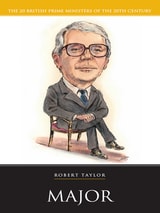
Major
Robert Taylor
Haus Publishing, 2006
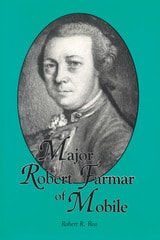
Major Robert Farmar of Mobile
Robert R. Rea
University of Alabama Press, 1990
"An engaging biography [and] a colorful tale. . . . Robert Farmar, a son of New Jersey, used his position among that colony's elite to secure a commission as a captain in the British Army during the War of Jenkins' Ear and King George's War, serving in the unsuccessful assaults at Cartegena, Cuba, and Panama and then in the disaster at Fontenoy in Flanders and in the reversals at Rocoux and Laffeldt. . . . During the Seven Years' War he participated in the capture of Havana.
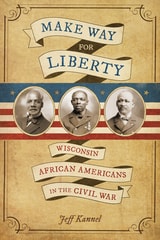
Make Way for Liberty
Wisconsin African Americans in the Civil WarJeff Kannel
Wisconsin Historical Society Press, 2020

Making History / Making Blintzes
How Two Red Diaper Babies Found Each Other and Discovered AmericaFlacks, Mickey
Rutgers University Press, 2018
Throughout this memoir, the couple demonstrates that their lifelong commitment to making history through social activism cannot be understood without returning to the deeply personal context of their family history—of growing up “Red Diaper babies” in 1950s New York City, using folk music as self-expression as adolescents in the 1960s, and of making blintzes for their own family through the 1970s and 1980s. As the children of immigrants and first generation Jews, Dick and Mickey crafted their own religious identity as secular Jews, created a critical space for American progressive activism through SDS, and ultimately, found themselves raising an “American” family.
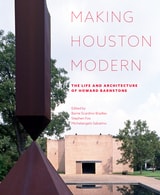
Making Houston Modern
The Life and Architecture of Howard BarnstoneBy Barrie Scardino Bradley, Stephen Fox, and Michelangelo Sabatino
University of Texas Press, 2020
Complex, controversial, and prolific, Howard Barnstone was a central figure in the world of twentieth-century modern architecture. Recognized as Houston’s foremost modern architect in the 1950s, Barnstone came to prominence for his designs with partner Preston M. Bolton, which transposed the rigorous and austere architectural practices of Ludwig Mies van der Rohe to the hot, steamy coastal plain of Texas. Barnstone was a man of contradictions—charming and witty but also self-centered, caustic, and abusive—who shaped new settings that were imbued, at once, with spatial calm and emotional intensity.
Making Houston Modern explores the provocative architect’s life and work, not only through the lens of his architectural practice but also by delving into his personal life, class identity, and connections to the artists, critics, collectors, and museum directors who forged Houston’s distinctive culture in the postwar era. Edited by three renowned voices in the architecture world, this volume situates Barnstone within the contexts of American architecture, modernism, and Jewish culture to unravel the legacy of a charismatic personality whose imaginative work as an architect, author, teacher, and civic commentator helped redefine architecture in Texas.
Making Physics
A Biography of Brookhaven National Laboratory, 1946-1972Robert P. Crease
University of Chicago Press, 1999
"[A] very readable, well illustrated and sometimes even racy, recounting of Brookhaven's history, politics and personalities."—Denys Wilkinson, Physics World
Making Space for Mormon Thought and Culture
The Enduring Influence of Eugene EnglandRobert A. Rees
Signature Books, 2025
This intimate collection brings together a broad array of tributes to Eugene England, a leading Latter-day Saint scholar–teacher of the late twentieth century. It includes the voices of those who knew Gene and his work—family, friends, students, and colleagues—to illuminate the profound impact of one of Mormonism’s most influential thinkers. Through personal narratives and thoughtful reflections, these essays reveal Gene not just as a brilliant theologian and beloved professor, but as a compassionate mentor, faithful questioner, and dedicated disciple.
England’s influence on Latter-day Saint thought, culture, and religion was not only indelible but lasting. His legacy as a founding figure in modern Mormon intellectual life emerges through stories of his classroom teachings, his founding of Dialogue: A Journal of Mormon Thought, and his courageous exploration of difficult questions within a framework of faith. Contributors share how England modeled a life devoted to both unflinching inquiry and deep spiritual commitment—demonstrating that devotion and intellectualism could strengthen rather than threaten one another.
These personal accounts paint a portrait of a man whose theological insights and generous spirit continue to influence Mormon studies and whose example inspires those seeking to harmonize faith with intellectual honesty. For both those who knew England and those discovering him for the first time, this collection offers a window into the heart and mind of a remarkable Mormon thinker and his enduring influence.
Making Stars
Biography and Celebrity in Eighteenth-Century BritainNora Nachumi
University of Delaware Press, 2022
Making a Canon
Ananda K. Coomaraswamy, Sri Lanka, and the Place of Buddhist ArtJanice Leoshko
University of Chicago Press, 2024
An early interpreter of Buddhist art to the West, Ananda Kentish Coomaraswamy laid the foundation of what would become the South Asian visual canon, particularly through his efforts to understand how Buddhist art emerged and developed. In Making a Canon, Janice Leoshko examines how Coomaraswamy’s experience as the director of a mineralogical survey in Sri Lanka shaped his understanding of South Asian art and religion. Along the way, she reveals how Coomaraswamy’s distinctive repetition of Sri Lankan visual images in his work influenced the direction of South Asia’s canon formation and left a lasting impression on our understanding of Buddhist art.
Making a Great Ruler
Grand Duke Vytautas of LithuaniaGiedre Mickunaite
Central European University Press, 2006

Making of Legends
More True Stories of Frontier AmericaMark Dugan
Ohio University Press, 1997
Mark Dugan brings reality to the forefront in The Making of Legends. Some of the characters in his accounts are practically unknown but deserve more recognition than the bandits whose names are mythic. Exhaustive archival research enables him to recreate such colorful lives as North Carolina’s Malina Blaylock, who, disguised as a man, joined her outlaw husband in the Confederate army; slippery escape artist David Lewis, the Robin Hood of the Cumberland, who finally stopped two bullets in a chaotic Pennsylvania shoot-out; Wyatt Earp, in his mysterious post-OK Corral year, amidst the Coeur d’Alene gold rush; and grim “Laughing Sam” Hartman, of South Dakota.
Dugan sets the stage by explaining how newspapers and dime novels fanned the flames of public fascination with outlaws. He unmasks the real Billy the Kid, traces the paths of Butch Cassidy and the Sundance Kid to their historic shoot-out in South America, and masterfully summarizes the Civil War grudges, bloodshed, and wanton destruction along the Kansas-Missouri border that spawned Jesse and Frank James and the Younger brothers gang.
In researching the lawless era of the American frontier, Dugan discovered much information that has never been published — material that will expand readers' views of frontier history and people, both good and bad. The Making of Legends proves that the actual stories of notorious legends can be more exciting, moving, and intriguing than anything dreamed up in a dime novel or a Hollywood fantasy.
With The Making of Legends Mark Dugan’s pursuit of outlaws takes him to Pennsylvania, North Carolina, Texas, California, South Dakota, Idaho, Oregon, Nebraska, Indiana, Wyoming, and Montana.
Making of an Ecologist
My Career in Alaska Wildlife Management and ConservationDavid R. Klein
University of Alaska Press, 2019
The first portion of the book is comprised of stories from Klein’s life collected during oral history interviews, while the latter section contains essays written by Klein about philosophical topics of importance to him, such as eco-philosophy, the definition of wilderness, and the morality of hunting.
Many of Klein’s graduate students have gone on to become successful wildlife managers themselves, in Alaska and around the globe. Through The Making of an Ecologist, Klein’s outlook, philosophy, and approach toward sustainability, wildlife management, and conservation can now inspire even more readers to ensure the survival of our fragile planet in an ever-changing global society.

Making the Carry
The Lives of John and Tchi-Ki-Wis LinklaterTimothy Cochrane
University of Minnesota Press, 2023
An extraordinary illustrated biography of a Métis man and Anishinaabe woman navigating great changes in their homeland along the U.S.–Canada border in the early twentieth century
John Linklater, of Anishinaabeg, Cree, and Scottish ancestry, and his wife, Tchi-Ki-Wis, of the Lac La Croix First Nation, lived in the canoe and border country of Ontario and Minnesota from the 1870s until the 1930s. During that time, the couple experienced radical upheavals in the Quetico–Superior region, including the cutting of white and red pine forests, the creation of Indian reserves/reservations and conservation areas, and the rise of towns, tourism, and mining. With broad geographical sweep, historical significance, and biographical depth, Making the Carry tells their story, overlooked for far too long.
John Linklater, a renowned game warden and skilled woodsman, was also the bearer of traditional ecological knowledge and Indigenous heritage, both of which he was deeply committed to teaching others. He was sought by professors, newspaper reporters, museum personnel, and conservationists—among them Sigurd Olson, who considered Linklater a mentor. Tchi-Ki-Wis, an extraordinary craftswoman, made a sweeping array of necessary yet beautiful objects, from sled dog harnesses to moose calls to birch bark canoes. She was an expert weaver of large Anishinaabeg cedar bark mats with complicated geometric designs, a virtually lost art.
Making the Carry traces the routes by which the couple came to live on Basswood Lake on the international border. John’s Métis ancestors with deep Hudson’s Bay Company roots originally came from Orkney Islands, Scotland, by way of Hudson Bay and Red River, or what is now Winnipeg. His family lived in Manitoba, northwest Ontario, northern Minnesota, and, in the case ofJohn and Tchi-Ki-Wis, on Isle Royale. A journey through little-known Canadian history, the book provides an intimate portrait of Métis people.
Complete with rarely seen photographs of activities from dog mushing to guiding to lumbering, as well as of many objects made by Tchi-Ki-Wis, such as canoes, moccasins, and cedar mats, Making the Carry is a window on a traditional way of life and a restoration of two fascinating Indigenous people to their rightful place in our collective past.
Making the March King
John Philip Sousa's Washington Years, 1854-1893Patrick Warfiled
University of Illinois Press, 2013
Warfield examines Sousa's wide-ranging experience composing, conducting, and performing in the theater, opera house, concert hall, and salons, as well as his leadership of the United States Marine Band and the later Sousa Band, early twentieth-century America's most famous and successful ensemble. Sousa composed not only marches during this period but also parlor, minstrel, and art songs; parade, concert, and medley marches; schottisches, waltzes, and polkas; and incidental music, operettas, and descriptive pieces. Warfield's examination of Sousa's output reveals a versatile composer much broader in stylistic range than the bandmaster extraordinaire remembered as the March King.
In particular, Making the March King demonstrates how Sousa used his theatrical training to create the character of the March King. The exuberant bandmaster who pleased audiences was both a skilled and charismatic conductor and a theatrical character whose past and very identity suggested drama, spectacle, and excitement. Sousa's success was also the result of perseverance and lessons learned from older colleagues on how to court, win, and keep an audience. Warfield presents the story of Sousa as a self-made business success, a gifted performer and composer who deftly capitalized on his talents to create one of the most entertaining, enduring figures in American music.
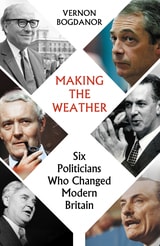
Making the Weather
Six Politicians Who Changed Modern BritainVernon Bogdanor
Haus Publishing, 2025
Making the Weather is the story of six postwar politicians, all of whom exerted an outsized influence on the political life of the United Kingdom—an influence greater than that of most prime ministers. Vernon Bogdanor’s cast includes three from the political Left—Aneurin “Nye” Bevan, Roy Jenkins, and Tony Benn—and three from the Right—Enoch Powell, Keith Joseph, and Nigel Farage. Each study is a fascinating analysis examining how these men achieved such prominence and influence and how, though very different figures in many ways, they came to dominate the political landscape, often for years.
Each of the six made fundamental contributions to the debate about Britain’s future and to the vibrancy of British democracy. From immigration to Europe, from the National Health Service to devolution, the issues and causes that brought these men to prominence are still relevant.
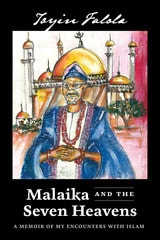
Malaika and the Seven Heavens
A Memoir of My Encounters with IslamToyin Falola
University of Michigan Press, 2025
Although faith is a lifelong journey, Falola identifies key moments in his upbringing that shaped his perception of faith, such as observing Islamic prayers, witnessing the significance of pilgrimage, engaging with spiritual leaders, and interacting with both Muslims and non-Muslims. By blending personal observations and reflections with the broader historical and cultural contexts of Islam, the book provides a unique perspective on the lived experiences of Muslims. In addition, Falola’s comparative perspective on the interaction of Christianity, Islam, and African Traditional Religion illustrates how these faiths influence and coexist with one another. Chapters explore firsthand experiences at madrassas, Islamic education, the influence of Islamic music on Yoruba culture, the historical importance of places like Oja Oba in Ibadan, the role of women in Islam, the intersection of traditional medicine with Islamic healing practices, and the broader social and political implications of Islam in Nigerian cities such as Ilorin and Lagos. Ultimately, Malaika and the Seven Heavens aims to foster a deeper appreciation for our shared humanity, inspire meaningful conversations that bridge cultural divides, and enrich our collective knowledge.
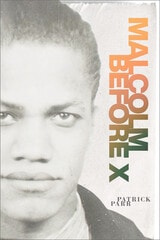
Malcolm Before X
Patrick Parr
University of Massachusetts Press, 2024
A Kirkus Reviews Best Nonfiction Book of 2024
A Spectator Best Book of the Year
Finalist for the 2025 ASALH Book Prize
Drawing upon interviews, correspondence, and nearly 2000 pages of never-before-used prison records, Malcolm Before X is the definitive examination of the prison years of civil rights icon Malcolm X.
In February 1946, when 20-year-old Malcolm Little was sentenced to eight to ten years in a maximum-security prison, he was a petty criminal and street hustler in Boston. By the time he was paroled in August 1952, he had transformed into a voracious reader, joined the Black Muslims, and was poised to become Malcolm X, one of the most prominent and important intellectuals of the civil rights era. While scholars and commentators have exhaustively detailed, analyzed, and debated Malcolm X’s post-prison life, they have not explored these six and a half transformative years in any depth.
Paying particular attention to his time in prison, Patrick Parr’s Malcolm Before X provides a comprehensive and groundbreaking examination of the first twenty-seven years of Malcolm X’s life (1925–1965). Parr traces Malcolm’s African lineage, explores his complicated childhood in the Midwest, and follows him as he moves east to live with his sister Ella in Boston’s Roxbury neighborhood, where he is convicted of burglary and sentenced.
Parr utilizes a trove of previously overlooked documents that include prison files and prison newspapers to immerse the reader into the unique cultures—at times brutal and at times instructional—of Charlestown State Prison, the Concord Reformatory, and the Norfolk Prison Colony. It was at these institutions that Malcolm devoured books, composed poetry, boxed, debated, and joined the Nation of Islam, changing the course of his life and setting the stage for a decade of antiracist activism that would fundamentally reshape American culture.
In this meticulously researched and beautifully written biography, the inspiring story of how Malcolm Little became Malcolm X is finally told.
Malcolm X's Michigan Worldview
An Exemplar for Contemporary Black StudiesRita Kiki Edozie
Michigan State University Press, 2024
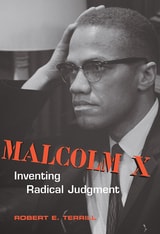
Malcolm X
Inventing Radical JudgmentRobert E. Terrill
Michigan State University Press, 2004
Few figures haunt the collective American psyche like Malcolm X. Hoodlum, convict, convert, prophet, nationalist, and martyr, Malcolm’s life spans the Civil Rights era like an index of America’s racial anxiety. Dozens of books and hundreds of articles have analyzed his life, his work, and the various ways that his image has been appropriated by American culture. Not much has been done, however, to analyze his speeches. This would be a glaring omission in the body of scholarship about almost any public figure, but is especially troubling with regard to Malcolm X. His legacy does not consist of marches preserved on newsreels, legislation passed by Congress, or holidays observed by the state; his legacy consists almost exclusively of his words.
Malcolm X, like any orator, did not fashion his discourse in a vacuum but worked within and modified modes fashioned by his predecessors. Malcolm X: Inventing Radical Judgment begins by exploring the interpretive strategies presented in key texts from the history of African American protest, establishing a spectrum against which Malcolm’s oratory can be assessed. The texts of speeches that Malcolm delivered while he was a minister for the Nation of Islam and the texts of speeches and statements he made after he left the Nation are analyzed carefully to discern the strategies of interpretation and judgment that he enacted and fostered in his audiences. Finally, this radical judgment, presented in and through Malcolm’s public discourse, is re-contextualized by using three disparate theoretical approaches. The purpose of this triangulation is not to contain the rhetoric of Malcolm X within the limitations of these vocabularies, but rather to show that the changing potential of Malcolm’s rhetoric lies, in part, in its iconoclastic refusal to be constrained by definitive boundaries.
Malibu Diary
Notes From An Urban RefugeePenelope O'Malley
University of Nevada Press, 2004
Man Killed by Pheasant and Other Kinships
John T. Price
University of Iowa Press, 2012
Man Made
Searching for Dads, Daddies, Father Figures, and FatherhoodSteve Majors
University of Wisconsin Press, 2025
In this poignant and provocative memoir, Steve Majors takes us on a journey of his own self-discovery as he grows from a gay boy in search of a father figure to a gay man grappling with what it means to be a father himself. In doing so, Majors creates various snapshots of time in which his—and the world’s—understanding of what it means to be a gay man changes.
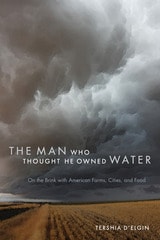
Man Who Thought He Owned Water
On the Brink with American Farms, Cities, and FoodTershia d'Elgin
University Press of Colorado, 2016
When her father bought his farm—Big Bend Station—he also bought the ample water rights associated with the land and the South Platte River, confident that he had secured the necessary resources for a successful endeavor. Yet water immediately proved fickle, hard to defend, and sometimes dangerous. Eventually those rights were curtailed without compensation. Through her family’s story, d’Elgin dramatically frames the personal-scale implications of water competition, revealing how water deals, infrastructure, transport, and management create economic growth but also sever human connections to Earth’s most vital resource. She shows how water flows to cities at the expense of American-grown food, as rural land turns to desert, wildlife starves, the environment degrades, and climate change intensifies.
Depicting deep love, obsession, and breathtaking landscape, The Man Who Thought He Owned Water is an impassioned call to rebalance our relationship with water. It will be of great interest to anyone seeking to understand the complex forces affecting water resources, food supply, food security, and biodiversity in America.
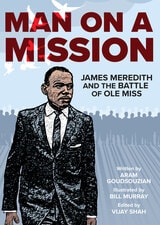
Man on a Mission
James Meredith and the Battle of Ole MissAram Goudsouzian
University of Arkansas Press, 2022
In 1962, James Meredith famously desegregated the University of Mississippi (a.k.a. Ole Miss). As the first Black American admitted to the school, he demonstrated great courage amidst the subsequent political clashes and tragic violence. After President Kennedy summoned federal troops to help maintain order, the South—and America at large—would never be the same.
Man on a Mission depicts Meredith’s relentless pursuit of justice, beginning with his childhood in rural Mississippi and culminating with the confrontation at Ole Miss. A blend of historical research and creative inspiration, this graphic history tells Meredith’s dramatic story in his own singular voice.
From the dawn of the modern civil rights movement, Meredith has offered a unique perspective on democracy, racial equality, and the meaning of America. Man on a Mission presents his captivating saga for a new generation in the era of Black Lives Matter.

Man with the Killer Smile
The Life and Crimes of a Serial Mass MurdererMitchel P. Roth
University of North Texas Press, 2022
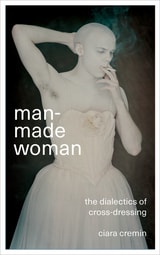
Man-Made Woman
The Dialectics of Cross-DressingCiara Colin Cremin
Pluto Press, 2017
Interweaving personal narrative with political discourse, Man-Made Woman is a vivid exploration of gender, identity, fetishism, aesthetics, and popular culture through the lenses of feminism, Marxism, and psychoanalytic theory. Cremin’s anti-moralistic approach dismantles the abjection associated with male-to-female cross dressing, examines the causes of repression, and considers what it means to publicly materialize desire on one’s body. Man-Made Woman is an experiment that ultimately draws both author and reader into a conflict with their material, ideological, and libidinal relationship to patriarchal-capitalism.
With an emancipatory and empowering voice, Cremin interrogates her, his, and our relationship to the gender binary. In light of recent debate surrounding transgender bathroom rights in the United States, Man-Made Woman is a deeply personal account that offers timely insight for anyone interested in contemporary trans politics and queer theory.
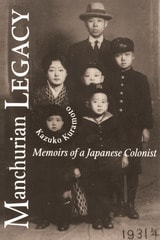
Manchurian Legacy
Memoirs of a Japanese ColonistKazuko Kuramoto
Michigan State University Press, 1999
Kazuko Kuramoto was born and raised in Dairen, Manchuria, in 1927, at the peak of Japanese expansionism in Asia. Dairen and the neighboring Port Arthur were important colonial outposts on the Liaotung Peninsula; the train lines established by Russia and taken over by the Japanese, ended there. When Kuramoto's grandfather arrived in Dairen as a member of the Japanese police force shortly after the end of the Russo-Japanese War in 1905, the family's belief in Japanese supremacy and its "divine" mission to "save" Asia from Western imperialists was firmly in place. As a third-generation colonist, the seventeen-year-old Kuramoto readily joined the Red Cross Nurse Corps in 1944 to aid in the war effort and in her country's sacred cause. A year later, her family listened to the emperor's radio broadcast ". . . we shall have to endure the unendurable, to suffer the insufferable." Japan surrendered unconditionally.
Manchurian Legacy is the story of the family's life in Dairen, their survival as a forgotten people during the battle to reclaim Manchuria waged by Russia, Nationalist China, and Communist China, and their subsequent repatriation to a devastated Japan. Kuramoto describes a culture based on the unthinking oppression of the colonized by the colonizer. And, because Manchuria was, in essence, a Japanese frontier, her family lived a freer and more luxurious life than they would have in Japan—one relatively unscathed by the war until after the surrender.
As a commentator Kuramoto explores her culture both from the inside, subjectively, and from the outside, objectively. Her memoirs describe her coming of age in a colonial society, her family's experiences in war-torn Manchuria, and her "homecoming" to Japan—where she had never been—just as Japan is engaged in its own cultural upheaval.
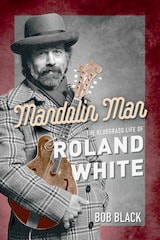
Mandolin Man
The Bluegrass Life of Roland WhiteBob Black
University of Illinois Press, 2022
Roland White’s long career has taken him from membership in Bill Monroe’s Blue Grass Boys and Lester Flatt’s Nashville Grass to success with his own Roland White Band. A master of the mandolin and acclaimed multi-instrumentalist, White has mentored a host of bluegrass musicians and inspired countless others.
Bob Black draws on extensive interviews with White and his peers and friends to provide the first in-depth biography of the pioneering bluegrass figure. Born into a musical family, White found early success with the Kentucky Colonels during the 1960s folk revival. The many stops and collaborations that marked White's subsequent musical journey trace the history of modern bluegrass. But Black also delves into the seldom-told tale of White's life as a working musician, one who endured professional and music industry ups-and-downs to become a legendary artist and beloved teacher.
An entertaining merger of memories and music history, Mandolin Man tells the overdue story of a bluegrass icon and his times.
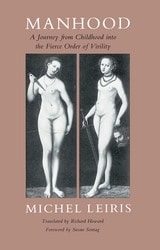
Manhood
A Journey from Childhood into the Fierce Order of VirilityMichel Leiris
University of Chicago Press, 1992
"Leiris writes to appall, and thereby to receive from his readers the gift of a strong emotion—the emotion needed to defend himself against the indignation and disgust he expects to arouse in his readers."—Susan Sontag, New York Review of Books
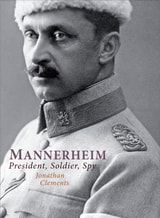
Mannerheim
President, Soldier, SpyJonathan Clements
Haus Publishing, 2012
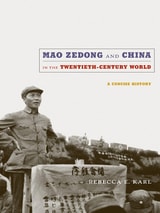
Mao Zedong and China in the Twentieth-Century World
A Concise HistoryRebecca E. Karl
Duke University Press, 2010
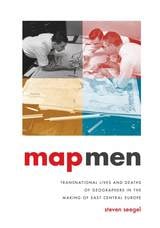
Map Men
Transnational Lives and Deaths of Geographers in the Making of East Central EuropeSteven Seegel
University of Chicago Press, 2018
Taking us deep into cartographical archives, Seegel re-creates the public and private worlds of these five mapmakers, who interacted with and influenced one another even as they played key roles in defining and redefining borders, territories, nations—and, ultimately, the interconnection of the world through two world wars. Throughout, he examines the transnational nature of these processes and addresses weighty questions about the causes and consequences of the world wars, the rise of Nazism and Stalinism, and the reasons East Central Europe became the fault line of these world-changing developments.
At a time when East Central Europe has surged back into geopolitical consciousness, Map Men offers a timely and important look at the historical origins of how the region was defined—and the key people who helped define it.