Results by title
277 books match the query 'Biology' and 9 start with m
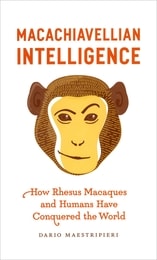
Macachiavellian Intelligence
How Rhesus Macaques and Humans Have Conquered the WorldDario Maestripieri
University of Chicago Press, 2007
Dario Maestripieri thinks it is high time we shelve that misperception, and with Macachiavellian Intelligence he gives rhesus macaques their rightful turn in the spotlight. The product of more than twenty years studying these fascinating creatures, Macachiavellian Intelligence caricatures a society that is as much human as monkey, with hierarchies and power struggles that would impress Machiavelli himself. High-status macaques, for instance, maintain their rank through deft uses of violence and manipulation, while altruism is almost unknown and relationships are perpetually subject to the cruel laws of the market. Throughout this eye-opening account, Maestripieri weds his thorough knowledge of macaque behavior to his abiding fascination with human society and motivations. The result is a book unlike any other, one that draws on economics as much as evolutionary biology, politics as much as primatology.
Rife with unexpected connections and peppered with fascinating anecdotes, Macachiavellian Intelligence has as much to teach us about humans as it does about macaques, presenting a wry, rational, and wholly surprising view of our humanity as seen through the monkey in the mirror.

Mammals of South America, Volume 1
Marsupials, Xenarthrans, Shrews, and BatsEdited by Alfred L. Gardner
University of Chicago Press, 2008
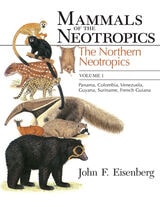
Mammals of the Neotropics, Volume 1
The Northern Neotropics: Panama, Colombia, Venezuela, Guyana, Suriname, French GuianaJohn F. Eisenberg
University of Chicago Press, 1989
John Eisenberg, a leading researcher of Neotropical fauna, begins the volume with a discussion of historical biogeography and contemporary habitats of the northern Neotropics. Each of the chapters that follow presents a mammalian order, with data for all indigenous species. Eisenberg has provided physical descriptions and summaries of range and habitat for nearly 450 species. For those species that have been studied in the field or in captivity, additional notes on natural history are included. For the larger taxa, field keys to help to identify the specimens. Range maps, line drawings, and color plates supplement the text, further aiding identification.
Throughout the book, Eisenberg provides a larger context for the species descriptions. He comments on the diversity of forms within each order, places the Neotropical species in a worldwide geographical perspective, and reviews taxonomic questions and controversies. At the end of each chapter, an extensive bibliography directs readers to related articles on systematics, behavior, ecology, and evolution. Eisenberg concludes with chapters on speciation events and mammalian community ecology.
No comparable account of South and Central American mammals has ever been published in any language. This volume of Mammals of the Neotropics and the forthcoming companion volumes will be an invaluable reference for students and professionals and will help further the research that is so vital to conservation efforts.
Man Is by Nature a Political Animal
Evolution, Biology, and PoliticsEdited by Peter K. Hatemi and Rose McDermott
University of Chicago Press, 2011
Man-Made
The Evolutionary Influence of HumansLynn Carpenter
Michigan Publishing Services, 2023

Maternal Effects in Mammals
Edited by Dario Maestripieri and Jill M. Mateo
University of Chicago Press, 2009
Evolutionary maternal effects occur whenever a mother’s phenotypic traits directly affect her offspring’s phenotype, independent of the offspring’s genotype. Some of the phenotypic traits that result in maternal effects have a genetic basis, whereas others are environmentally determined. For example, the size of a litter produced by a mammalian mother—a trait with a strong genetic basis—can affect the growth rate of her offspring, while a mother’s dominance rank—an environmentally determined trait—can affect the dominance rank of her offspring.
The first volume published on the subject in more than a decade, Maternal Effects in Mammals reflects advances in genomic, ecological, and behavioral research, as well new understandings of the evolutionary interplay between mothers and their offspring. Dario Maestripieri and Jill M. Mateo bring together a learned group of contributors to synthesize the vast literature on a range of species, highlight evolutionary processes that were previously overlooked, and propose new avenues of research. Maternal Effects in Mammals will serve as the most comprehensive compendium on and stimulus for interdisciplinary treatments of mammalian maternal effects.
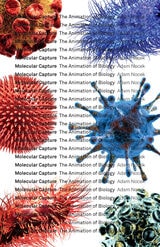
Molecular Capture
The Animation of BiologyAdam Nocek
University of Minnesota Press, 2021
How computer animation technologies became vital visualization tools in the life sciences
Who would have thought that computer animation technologies developed in the second half of the twentieth century would become essential visualization tools in today’s biosciences? This book is the first to examine this phenomenon. Molecular Capture reveals how popular media consumption and biological knowledge production have converged in molecular animations—computer simulations of molecular and cellular processes that immerse viewers in the temporal unfolding of molecular worlds—to produce new regimes of seeing and knowing.
Situating the development of this technology within an evolving field of historical, epistemological, and political negotiations, Adam Nocek argues that molecular animations not only represent a key transformation in the visual knowledge practices of life scientists but also bring into sharp focus fundamental mutations in power within neoliberal capitalism. In particular, he reveals how the convergence of the visual economies of science and entertainment in molecular animations extends neoliberal modes of governance to the perceptual practices of scientific subjects. Drawing on Alfred North Whitehead’s speculative metaphysics and Michel Foucault’s genealogy of governmentality, Nocek builds a media philosophy well equipped to examine the unique coordination of media cultures in this undertheorized form of scientific media. More specifically, he demonstrates how governmentality operates across visual practices in the biosciences and the popular mediasphere to shape a molecular animation apparatus that unites scientific knowledge and entertainment culture.
Ultimately, Molecular Capture proposes that molecular animation is an achievement of governmental design. It weaves together speculative media philosophy, science and technology studies, and design theory to investigate how scientific knowledge practices are designed through media apparatuses.

Morphological Integration
Everett C. Olson and Robert L. Miller
University of Chicago Press, 1999
Everett C. Olson was a professor at the University of Chicago and at the University of California, Los Angeles. He was a former president of the Society of Vertebrate Paleontology. Robert L. Miller was associate professor of geology at the University of Chicago, associate scientist in marine geology at the Woods Hole Oceanographic Institution, and a member of the board of editors of the Journal of Geology.
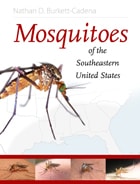
Mosquitoes of the Southeastern United States
Nathan D. Burkett-Cadena
University of Alabama Press, 2013
The definitive guide to the Southeast’s most persistent—and medically important—tiny predators.
Mosquitoes of the Southeastern United States is a full-color, highly illustrated guide to the sixty-four known species of mosquitoes in eleven genera that populate the South—from the Gulf Coastal states to the Carolinas. In addition to detailed and fully illustrated identification keys for both larvae and adults, it includes information on the mosquito’s lifecycle, interaction with humans, and biological diversity in the southeast.
This area of the country has a rich mosquito fauna with diverse species ranging from the tiny pitcher plant mosquito to the brilliantly colored cannibal mosquito. Close-up photographs of live adults showcase their widely varied and beautiful bodies while remarkable images made with the aid of a microaquarium reveal the differences in larval stages of the subjects. For each species described, Nathan D. Burkett-Cadena provides biological information including distribution maps, habitat associations of the larvae and adults, range of animals fed upon, and importance from a medical standpoint.
This book’s usefulness to mosquito control programs in the Southeast and beyond cannot be overstated. Not only for native species, but for new species introduced from exotic locales, mosquitoes must be properly identified in order to know how best to control them. This volume will also be valuable to medical and public health specialists working on mosquito-borne diseases, such as malaria, dengue, yellow fever, West Nile virus, and filariasis. Mosquitoes of the Southeastern United States is the first guide to integrate full-color photography, illustrated keys, and current information on the biology of mosquitoes into one definitive resource.