Results by title
260 books match the query 'Central America' and 23 start with m
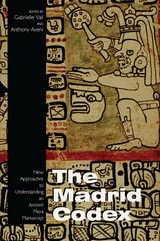
Madrid Codex
New Approaches to Understanding an Ancient Maya ManuscriptGabrielle Vail
University Press of Colorado, 2004
Contributors include: Harvey M. Bricker, Victoria R. Bricker, John F. Chuchiak IV, Christine L. Hernández, Bryan R. Just, Merideth Paxton, and John Pohl. Additional support for this publication was generously provided by the Eugene M. Kayden Fund at the University of Colorado.

Manual of Neotropical Birds, Volume 1
Emmet Reid Blake
University of Chicago Press, 1977

Maras
Gang Violence and Security in Central AmericaEdited by Thomas C. Bruneau, Lucía Dammert, and Elizabeth Skinner
University of Texas Press, 2011
Sensational headlines have publicized the drug trafficking, brutal violence, and other organized crime elements associated with Central America's mara gangs, but there have been few clear-eyed analyses of the history, hierarchies, and future of the mara phenomenon. The first book to look specifically at the Central American gang problem by drawing on the perspectives of researchers from different disciplinary backgrounds, Maras: Gang Violence and Security in Central America provides much-needed insight.
These essays trace the development of the gangs, from Mara Salvatrucha to the 18th Street Gang, in Los Angeles and their spread to El Salvador, Honduras, Guatemala, and Nicaragua as the result of members' deportation to Central America; there, they account for high homicide rates and threaten the democratic stability of the region. With expertise in areas ranging from political science to law enforcement and human rights, the contributors also explore the spread of mara violence in the United States. Their findings comprise a complete documentation that spans sexualized violence, case studies of individual gangs, economic factors, varied responses to gang violence, the use of intelligence gathering, the limits of state power, and the role of policy makers.
Raising crucial questions for a wide readership, these essays are sure to spark productive international dialogues.
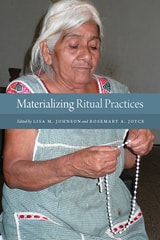
Materializing Ritual Practices
Lisa M. Johnson
University Press of Colorado, 2021
Ritual action produces sequences of creation, destruction, and transformation, which involve a variety of materials that are active and agential. The materialities of ritual may persist at temporal scales long beyond the lives of humans or be as ephemeral as spoken words, music, and scents. In this book, archaeologists and ethnographers, including specialists in narrative, music, and ritual practice, explore the rhythms and materiality of rituals that accompany everyday actions, like the construction of houses, healing practices, and religious festivals, and that paced commemoration of rulers, ancestor veneration, and relations with spiritual beings in the past.
Connecting the kinds of observed material discursive practices that ethnographers witness to the sedimented practices from which archaeologists infer similar practices in the past, Materializing Ritual Practices addresses how specific materialities encourage repetition in ritual actions and, in other circumstances, resist changes to ritual sequences. The volume will be of interest to cultural anthropologists, archaeologists, and linguists with interests in Central America, ritual, materiality, and time.
Contributors: M. Charlotte Arnauld, Giovani Balam Caamal, Isaac Barrientos, Cedric Becquey, Johann Begel, Valeria Bellomia, Juan Carillo Gonzalez, Maire Chosson, Julien Hiquet, Katrina Kosyk, Olivier Le Guen, Maria Luisa Vasquez de Agredos Pascual, Alessandro Lupo, Philippe Nondedeo, Julie Patrois, Russel Sheptak, Valentina Vapnarsky, Francisca Zalaquett Rock
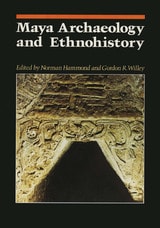
Maya Archaeology and Ethnohistory
Edited by Norman Hammond and Gordon R. Willey
University of Texas Press, 1979
Embracing a wide range of research, this book offers various views on the intellectual history of Maya archaeology and ethnohistory and the processes operating in the rise and fall of Maya civilization.
The fourteen studies were selected from those presented at the Second Cambridge Symposium on Recent Research in Mesoamerican Archaeology and are presented in three major sections.
The first of these deals with the application of theory, both anthropological and historical, to the great civilization of the Classic Maya, which flourished in the Yucatan, Guatemala, and Belize during the first millennium A.D. The structural remains of the Classic Period have impressed travelers and archaeologists for over a century, and aspects of the development and decline of this strange and brilliant tropical forest culture are examined here in the light of archaeological research.
The second section presents the results of field research ranging from the Highlands of Mexico east to Honduras and north into the Lowland heart of Maya civilization, and iconographic study of excavated material.
The third section covers the ethnohistoric approach to archaeology, the conjunction of material and documentary evidence. Early European documents are used to illuminate historic Maya culture. This section includes transcriptions of previously unpublished archival material.
Although not formally linked beyond their common field of inquiry, the essays here offer a conspectus of late-twentieth century Maya research and a series of case histories of the work of some of the leading scholars in the field.
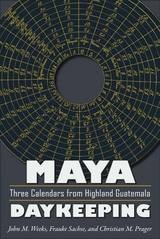
Maya Daykeeping
Three Calendars from Highland GuatemalaJohn M. Weeks
University Press of Colorado, 2009
The use of such calendars is mentioned in historical and ethnographic works, but very few examples are known to exist. Each of the three calendars transcribed and translated by John M. Weeks, Frauke Sachse, and Christian M. Prager - and housed at the University of Pennsylvania Museum of Archaeology and Anthropology - is unique in structure and content. Moreover, except for an unpublished study of the 1722 calendar by Rudolf Schuller and Oliver La Farge (1934), these little-known works appear to have escaped the attention of most scholars. Introductory essays contextualize each document in time and space, and a series of appendixes present previously unpublished calendrical notes assembled in the early twentieth century.
Providing considerable information on the divinatory use of calendars in colonial highland Maya society previously unavailable without a visit to the University of Pennsylvania's archives, Maya Daykeeping is an invaluable primary resource for Maya scholars. Mesoamerican Worlds Series
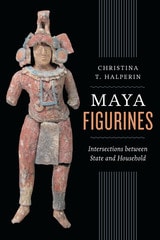
Maya Figurines
Intersections between State and HouseholdBy Christina T. Halperin
University of Texas Press, 2014
Rather than view the contours of Late Classic Maya social life solely from towering temple pyramids or elite sculptural forms, this book considers a suite of small anthropomorphic, zoomorphic, and supernatural figurative remains excavated from household refuse deposits. Maya Figurines examines these often neglected objects and uses them to draw out relationships between the Maya state and its subjects.
These figurines provide a unique perspective for understanding Maya social and political relations; Christina T. Halperin argues that state politics work on the microscale of everyday routines, localized rituals, and small-scale representations. Her comprehensive study brings together archeology, anthropology, and art history with theories of material culture, performance, political economy, ritual humor, and mimesis to make a fascinating case for the role politics plays in daily life. What she finds is that, by comparing small-scale figurines with state-sponsored, often large-scale iconography and elite material culture, one can understand how different social realms relate to and represent one another. In Maya Figurines, Halperin compares objects from diverse households, archeological sites, and regions, focusing especially on figurines from Petén, Guatemala, and comparing them to material culture from Belize, the northern highlands of Guatemala, the Usumacinta River, the Campeche coastal area, and Mesoamerican sites outside the Maya zone. Ultimately, she argues, ordinary objects are not simply passive backdrops for important social and political phenomena. Instead, they function as significant mechanisms through which power and social life are intertwined.
Maya History
By Tatiana Proskouriakoff
University of Texas Press, 1993
Tatiana Proskouriakoff, a preeminent student of the Maya, made many breakthroughs in deciphering Maya writing, particularly in demonstrating that the glyphs record the deeds of actual human beings, not gods or priests. This discovery opened the way for a history of the Maya, a monumental task that Proskouriakoff was engaged in before her death in 1985. Her work, Maya History, has been made ready for press by the able editorship of Rosemary Joyce.
Maya History reconstructs the Classic Maya period (roughly A.D. 250-900) from the glyphic record on stelae at numerous sites, including Altar de Sacrificios, Copan, Dos Pilas, Naranjo, Piedras Negras, Quirigua, Tikal, and Yaxchilan. Proskouriakoff traces the spread of governmental institutions from the central Peten, especially from Tikal, to other city-states by conquest and intermarriage. Thirteen line drawings of monuments and over three hundred original drawings of glyphs amplify the text.
Maya after War
Conflict, Power, and Politics in GuatemalaBy Jennifer L. Burrell
University of Texas Press, 2013
Guatemala’s thirty-six-year civil war culminated in peace accords in 1996, but the postwar transition has been marked by continued violence, including lynchings and the rise of gangs, as well as massive wage-labor exodus to the United States. For the Mam Maya municipality of Todos Santos Cuchumatán, inhabited by a predominantly indigenous peasant population, the aftermath of war and genocide resonates with a long-standing tension between state techniques of governance and ancient community-level power structures that incorporated concepts of kinship, gender, and generation. Showing the ways in which these complex histories are interlinked with wartime and enduring family/class conflicts, Maya after War provides a nuanced account of a unique transitional postwar situation, including the complex influence of neoliberal intervention.
Drawing on ethnographic field research over a twenty-year period, Jennifer L. Burrell explores the after-war period in a locale where community struggles span culture, identity, and history. Investigating a range of tensions from the local to the international, Burrell employs unique methodologies, including mapmaking, history workshops, and an informal translation of a historic ethnography, to analyze the role of conflict in animating what matters to Todosanteros in their everyday lives and how the residents negotiate power. Examining the community-based divisions alongside national postwar contexts, Maya after War considers the aura of hope that surrounded the signing of the peace accords, and the subsequent doubt and waiting that have fueled unrest, encompassing generational conflicts. This study is a rich analysis of the multifaceted forces at work in the quest for peace, in Guatemala and beyond.
Media Power in Central America
Rick Rockwell and Noreene Janus
University of Illinois Press, 2003
Rick Rockwell and Noreene Janus examine the region country by country and deal with the specific conditions of government-sponsored media repression, economic censorship, corruption, and consumer trends that shape the political landscape. Challenging the notion of the media as a democratizing force, Media Power in Central America shows how governments use the media to block democratic reforms and outlines the difficulties of playing watchdog to rulers who use the media as a tool of power.
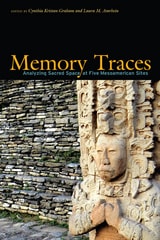
Memory Traces
Analyzing Sacred Space at Five Mesoamerican SitesCynthia Kristan-Graham
University Press of Colorado, 2015
In Memory Traces, art historians and archaeologists come together to examine the nature of sacred space in Mesoamerica. Through five well-known and important centers of political power and artistic invention in Mesoamerica—Tetitla at Teotihuacan, Tula Grande, the Mound of the Building Columns at El Tajín, the House of the Phalli at Chichén Itzá, and Tonina—contributors explore the process of recognizing and defining sacred space, how sacred spaces were viewed and used both physically and symbolically, and what theoretical approaches are most useful for art historians and archaeologists seeking to understand these places.
Memory Traces acknowledges that the creation, use, abandonment, and reuse of sacred space have a strongly recursive relation to collective memory and meanings linked to the places in question and reconciles issues of continuity and discontinuity of memory in ancient Mesoamerican sacred spaces. It will be of interest to students and scholars of Mesoamerican studies and material culture, art historians, architectural historians, and cultural anthropologists.
Contributors: Laura M. Amrhein, Nicholas P. Dunning, Rex Koontz, Cynthia Kristan-Graham, Matthew G. Looper, Travis Nygard, Keith M. Prufer, Matthew H. Robb, Patricia J. Sarro, Kaylee Spencer, Eric Weaver, Linnea Wren
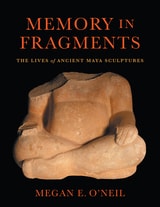
Memory in Fragments
The Lives of Ancient Maya SculpturesMegan E. O'Neil
University of Texas Press, 2024
An exploration of how the ancient Maya engaged with their history by using, altering, and burying stone sculptures.
For the ancient Maya, monumental stone sculptures were infused with agency. As they were used, reused, altered, and buried, such sculptures retained ceremonial meaning. In Memory in Fragments, Megan E. O'Neil explores how ancient Maya people engaged with history through these sculptures, as well as how they interacted with the stones themselves over the course of the sculptures’ long “lives.” Considering Maya religious practices, historiography, and conceptions of materials and things, O’Neil explores how Maya viewers perceived sculptures that were fragmented, scarred, burned, damaged by enemies, or set in unusual locations. In each case, she demonstrates how different human interactions, amid dynamic religious, political, and historical contexts, led to new episodes in the sculptures' lives.
A rare example of cross-temporal and geographical work in this field, Memory in Fragments both compares sculptures within ancient Maya culture across Honduras, Guatemala, Mexico, and Belize over hundreds of years and reveals how memory may accrue around and be evoked in material remains.
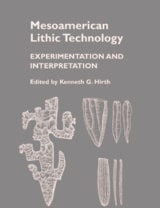
Mesoamerican Lithic Technology
Kenneth Hirth
University of Utah Press, 2003
Any overview of prehispanic society in the Americas would identify its obsidian core-blade production as a unique and highly inventive technology. Normally termed prismatic blades, these long, parallel-sided flakes are among the sharpest cutting tools ever produced by humans. Their standardized form permitted interchangeable use, and such blades became the cutting tool of choice throughout Mesoamerica between 600–800 B.C. Because considerable production skill is required, increased demand may have stimulated the appearance of craft specialists who played an integral role in Mesoamerican society. Some investigators have argued that control over obsidian also had a significant effect on the development and organization of chiefdom and state-level societies.
While researchers have long recognized the potential of obsidian studies, recent work has focused primarily on compositional analysis to reconstruct trade and distribution networks. Study of blade production has received much less attention, and many aspects of this highly evolved craft are still lost.
This volume seeks to identify current research questions in Mesoamerican lithic technology and to demonstrate that replication studies coupled with experimental research design are valuable analytical approaches to such questions.
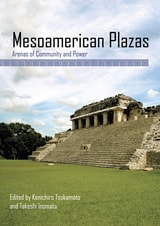
Mesoamerican Plazas
Arenas of Community and PowerEdited by Kenichiro Tsukamoto and Takeshi Inomata
University of Arizona Press, 2014
The primary question that has motivated the contributors is how Mesoamerican plazas became arenas for the creation and negotiation of social relations and values in a community. The thirteen contributions stress the significance of interplay between power relations and embodied practices set in specific historical and material settings, as outlined by practice theory and performance theory. This approach allows the contributors to explore broader anthropological issues, such as the negotiation of power relations, community making, and the constitution of political authorities.
Overall, the contributions establish that physical interactions among people in communal events were not the outcomes of political machinations held behind the scenes, but were the actual political processes through which people created, negotiated, and subverted social realities. If so, spacious plazas that were arguably designed for interactions among a large number of individuals must have also provided critical arenas for the constitution and transformation of society.
Mesoamerican Ritual Economy
Archaeological and Ethnological PerspectivesE. Christian Wells
University Press of Colorado, 2007
Exploring the intersection of spirituality and materiality, Mesoamerican Ritual Economy will be of interest to all scholars studying how worldview and belief motivate economic behavior. The authors consider a diverse set of Mesoamerican cultural patterns in order to investigate the ways in which ritual and economic practices influenced each other in the operation of communities, small-scale societies, and state-level polities. Contributors include: Sarah B. Barber, Frances F. Berdan, Karla L. Davis-Salazar, Barbara W. Fash, William L. Fash, Antonia E. Foias, Arthur A. Joyce, Brigitte Kovacevich, Ben A. Nelson, Enrique Rodríguez-Alegría, Katherine A. Spielmann, John M. Watanabe, E. Christian Wells.
Mexico’s Valleys of Cuicatlán and Tehuacán
From Deserts to CloudsDavid Yetman and Alberto Búrquez
University of Arizona Press, 2023
Through firsthand experience and engaging prose, the authors provide a synthesis of the geology, ecology, history, and cultures of the valleys, showing their importance and influence as Mesoamerican arteries for environmental and cultural interchange through Mexico. It also reveals the extraordinary plant life that draws from habitats ranging from deserts to tropical forests.
The authors, both experts in their respective fields, begin with a general description of the geography of the valleys, followed by an introduction to climate and hydrology, a look at the valleys’ often bewildering geology. The book delves into cultural and linguistic backgrounds of the valleys and discusses archaeological sites that that encapsulate the valleys’ fascinating history prior to the arrival of Europeans. The book concludes by describing the flora that makes the region so singular.
Midwives and Mothers
The Medicalization of Childbirth on a Guatemalan PlantationBy Sheila Cosminsky
University of Texas Press, 2016
The World Health Organization is currently promoting a policy of replacing traditional or lay midwives in countries around the world. As part of an effort to record the knowledge of local midwives before it is lost, Midwives and Mothers explores birth, illness, death, and survival on a Guatemalan sugar and coffee plantation, or finca, through the lives of two local midwives, Doña Maria and her daughter Doña Siriaca, and the women they have served over a forty-year period.
By comparing the practices and beliefs of the mother and daughter, Sheila Cosminsky shows the dynamics of the medicalization process and the contestation between the midwives and biomedical personnel, as the latter try to impose their system as the authoritative one. She discusses how the midwives syncretize, integrate, or reject elements from Mayan, Spanish, and biomedical systems. The midwives’ story becomes a lens for understanding the impact of medicalization on people’s lives and the ways in which women’s bodies have become contested terrain between traditional and contemporary medical practices. Cosminsky also makes recommendations for how ethno-obstetric and biomedical systems may be accommodated, articulated, or integrated. Finally, she places the changes in the birthing system in the larger context of changes in the plantation system, including the elimination of coffee growing, which has made women, traditionally the primary harvesters of coffee beans, more economically dependent on men.
Migration and Mortality
Social Death, Dispossession, and Survival in the AmericasEdited by Jamie Longazel and Miranda Cady Hallett
Temple University Press, 2021
Death threatens migrants physically during perilous border crossings between Central and North America, but many also experience legal, social, and economic mortality. Rooted in histories of colonialism and conquest, exclusionary policies and practices deliberately take aim at racialized, dispossessed people in transit. Once in the new land, migrants endure a web of systems across every facet of their world—work, home, healthcare, culture, justice—that strips them of their personhood, denies them resources, and creates additional obstacles that deprive them of their ability to live fully.
As laws and policies create ripe conditions for the further extraction of money, resources, and labor power from the dispossessed, the contributors to this vibrant anthology, Migration and Mortality, examine restrictive immigration policies and the broader capitalist systems of exploitation and inequality while highlighting the power of migrants’ collective resistance and resilience.
The case studies in this timely collection explore border deaths, detention economies, asylum seeking, as well as the public health and mental health of migrants. Ultimately, these examples of oppression and survival contribute to understanding broader movements for life and justice in the Americas.
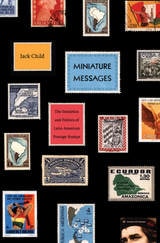
Miniature Messages
The Semiotics and Politics of Latin American Postage StampsJack Child
Duke University Press, 2008
Child combines history and political science with philatelic research of nearly forty thousand Latin American stamps. He focuses on Argentina and the Southern Cone, highlighting stamps representing the consolidation of the Argentine republic and those produced under its Peronist regime. He compares Chilean stamps issued by the leftist government of Salvador Allende and by Augusto Pinochet’s dictatorship. Considering postage stamps produced under other dictatorial regimes, he examines stamps from the Dominican Republic, Guatemala, Nicaragua, and Paraguay. Child studies how international conflicts have been depicted on the stamps of Argentina, Chile, and Peru, and he pays particular attention to the role of South American and British stamps in establishing claims to the Malvinas/Falkland Islands and to Antarctica. He also covers the cultural and political history of stamps in Bolivia, Brazil, Colombia, Cuba, Grenada, Mexico, Uruguay, Venezuela and elsewhere. In Miniature Messages, Child finds the political history of modern Latin America in its “tiny posters.”
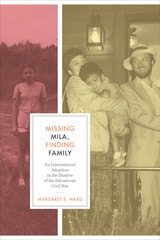
Missing Mila, Finding Family
An International Adoption in the Shadow of the Salvadoran Civil WarBy Margaret E. Ward
University of Texas Press, 2011
In the spring of 1983, a North American couple who were hoping to adopt a child internationally received word that if they acted quickly, they could become the parents of a boy in an orphanage in Honduras. Layers of red tape dissolved as the American Embassy there smoothed the way for the adoption. Within a few weeks, Margaret Ward and Thomas de Witt were the parents of a toddler they named Nelson—an adorable boy whose prior life seemed as mysterious as the fact that government officials in two countries had inexplicably expedited his adoption.
In Missing Mila, Finding Family, Margaret Ward tells the poignant and compelling story of this international adoption and the astonishing revelations that emerged when Nelson's birth family finally relocated him in 1997. After recounting their early years together, during which she and Tom welcomed the birth of a second son, Derek, and created a family with both boys, Ward vividly recalls the upheaval that occurred when members of Nelson's birth family contacted them and sought a reunion with the boy they knew as Roberto. She describes how their sense of family expanded to include Nelson's Central American relatives, who helped her piece together the lives of her son's birth parents and their clandestine activities as guerrillas in El Salvador's civil war. In particular, Ward develops an internal dialogue with Nelson's deceased mother Mila, an elusive figure whose life and motivations she tries to understand.
Mobility and Migration in Ancient Mesoamerican Cities
M. Charlotte Arnauld
University Press of Colorado, 2024
In a series of data-rich chapters that address specific evidence for movement in their respective study areas, an international group of scholars assesses mobility through the isotopic and demographic analysis of human remains, stratigraphic identification of gaps in occupation, and local intensification of water capture in the Maya lowlands. Others examine migration through the integration of historic and archaeological evidence in Michoacán and Yucatán and by registering how daily life changed in response to the influx of new people in the Basin of Mexico.
Offering a range of critical insights into the vital and under-studied role that mobility and migration played in complex agrarian societies, Mobility and Migration in Ancient Mesoamerican Cities will be of value to Mesoamericanist archaeologists, ethnohistorians, and bioarchaeologists and to any scholars working on complex societies.
Contributors:
Jaime J. Awe, Meggan Bullock, Sarah C. Clayton, Andrea Cucina, Véronique Darras, Nicholas P. Dunning, Mélanie Forné, Marion Forest, Carolyn Freiwald, Elizabeth Graham, Nancy Gonlin, Julie A. Hoggarth, Linda Howie, Elsa Jadot, Kristin V. Landau, Eva Lemonnier, Dominique Michelet, David Ortegón Zapata, Prudence M. Rice, Thelma N. Sierra Sosa, Michael P. Smyth, Vera Tiesler, Eric Weaver
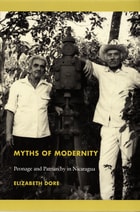
Myths of Modernity
Peonage and Patriarchy in NicaraguaElizabeth Dore
Duke University Press, 2006
Dore seamlessly combines archival research, oral history, and an innovative theoretical approach that unites political economy with social history. She recovers the bygone voices of peons, planters, and local officials within documents such as labor contracts, court records, and official correspondence. She juxtaposes these historical perspectives with those of contemporary peasants, landowners, activists, and politicians who share memories passed down to the present. The reconceptualization of the coffee economy that Dore elaborates has far-reaching implications. The Sandinistas mistakenly believed, she contends, that Nicaraguan capitalism was mature and ripe for socialist revolution, and after their victory in 1979 that belief led them to alienate many peasants by ignoring their demands for land. Thus, the Sandinistas’ myths of modernity contributed to their downfall.
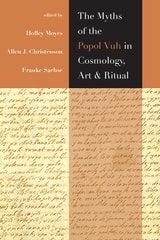
Myths of the Popol Vuh in Cosmology, Art, and Ritual
Holley Moyes
University Press of Colorado, 2021
The chapters are grouped into four sections. The first section interprets the Highland Maya worldview through examination of the text, analyzing interdependence between deities and human beings as well as the textual and cosmological coherence of the Popol Vuh as a source. The second section analyzes the Precolumbian Maya archaeological record as it relates to the myths of the Popol Vuh, providing new interpretations of the use of space, architecture, burials, artifacts, and human remains found in Classic Maya caves. The third explores ancient Maya iconographic motifs, including those found in Classic Maya ceramic art; the nature of predatory birds; and the Hero Twins’ deeds in the Popol Vuh. The final chapters address mythological continuities and change, reexamining past methodological approaches using the Popol Vuh as a resource for the interpretation of Classic Maya iconography and ancient Maya religion and mythology, connecting the myths of the Popol Vuh to iconography from Preclassic Izapa, and demonstrating how narratives from the Popol Vuh can illuminate mythologies from other parts of Mesoamerica.
The Myths of the Popol Vuh in Cosmology, Art, and Ritual is the first volume to bring together multiple perspectives and original interpretations of the Popol Vuh myths. It will be of interest not only to Mesoamericanists but also to art historians, archaeologists, ethnohistorians, iconographers, linguists, anthropologists, and scholars working in ritual studies, the history of religion, historic and Precolumbian literature and historic linguistics.
Contributors: Jaime J. Awe, Karen Bassie-Sweet, Oswaldo Chinchilla Mazariegos, Michael D. Coe, Iyaxel Cojtí Ren, Héctor Escobedo, Thomas H. Guderjan, Julia Guernsey, Christophe Helmke, Nicholas A. Hopkins, Barbara MacLeod, Jesper Nielsen, Colin Snider, Karl A. Taube