Results by title
51 books match the query 'Children's & Young Adult Literature' and 4 start with m
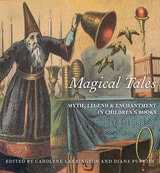
Magical Tales
Myth, Legend, and Enchantment in Children's BooksEdited by Carolyne Larrington and Diane Purkiss
Bodleian Library Publishing, 2013
A faun carrying an umbrella. A hobbit who makes his home in a hole in the ground. An ill-treated schoolboy with a secret and a scar. Fantasy is among the most beloved genres in children’s literature— and its offerings are often just as eagerly anticipated by adults. But how is it that writers like J. K. Rowling and Philip Pullman are able to create such remarkable images?
Magical Tales traces the origin of the genre back through Norse mythology, Arthurian legend, and medieval literature. Drawing on manuscripts and rare books in the renowned collection of the Bodleian Library, the essays turn the spotlight on spell books; grimoires, or magical textbooks; and books of legend and myth whose themes writers like J. R. R. Tolkien and C. S. Lewis incorporated into their work, inspiring generations of writers that extend to the present day. In serving as a source of inspiration for later literary works, the contributors show, myths and legends have themselves been altered in interesting ways.
Richly illustrated, Magical Tales offers an enchanting take on the development of this wildly popular genre.
[more]
Making Americans
Children's Literature from 1930 to 1960Gary D. Schmidt
University of Iowa Press, 2013
American children need books that draw on their own history and circumstances, not just the classic European fairy tales. They need books that enlist them in the great democratic experiment that is the United States. These were the beliefs of many of the authors, illustrators, editors, librarians, and teachers who expanded and transformed children’s book publishing between the 1930s and the 1960s.
Although some later critics have argued that the books published in this era offered a vision of a safe, secure, simple world without injustice or unhappy endings, Gary D. Schmidt shows that the progressive political agenda shared by many Americans who wrote, illustrated, published, and taught children’s books had a powerful effect. Authors like James Daugherty, Laura Ingalls Wilder, Lois Lenski, Ingri and Edgar Parin D’Aulaire, Virginia Lee Burton, Robert McCloskey, and many others addressed directly and indirectly the major social issues of a turbulent time: racism, immigration and assimilation, sexism, poverty, the Great Depression, World War II, the atomic bomb, and the threat of a global cold war.
The central concern that many children’s book authors and illustrators wrestled with was the meaning of America and democracy itself, especially the tension between individual freedoms and community ties. That process produced a flood of books focused on the American experience and intent on defining it in terms of progress toward inclusivity and social justice. Again and again, children’s books addressed racial discrimination and segregation, gender roles, class differences, the fate of Native Americans, immigration and assimilation, war, and the role of the United States in the world. Fiction and nonfiction for children urged them to see these issues as theirs to understand, and in some ways, theirs to resolve. Making Americans is a study of a time when the authors and illustrators of children’s books consciously set their eyes on national and international sights, with the hope of bringing the next generation into a sense of full citizenship.
[more]
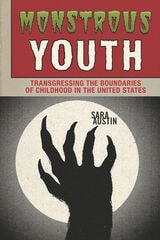
Monstrous Youth
Transgressing the Boundaries of Childhood in the United StatesSara Austin
The Ohio State University Press, 2022
Winner, 2024 Children’s Literature Association Book Award The monstrous has a long, complicated history within children’s popular media. In Monstrous Youth: Transgressing the Boundaries of Childhood in the United States, Sara Austin traces the evolution of monstrosity as it relates to youth culture from the 1950s to the present day to spotlight the symbiotic relationship between monstrosity and the bodies and identities of children and adolescents. Examining comics, films, picture books, novels, television, toys and other material culture—including Monsters, Inc. and works by Mercer Mayer, Maurice Sendak, R. L. Stine, and Stephanie Meyer—Austin tracks how the metaphor of monstrosity excludes, engulfs, and narrates difference within children’s culture. Analyzing how cultural shifts have drastically changed our perceptions of both what it means to be a monster and what it means to be a child, Austin charts how the portrayal and consumption of monsters corresponds to changes in identity categories such as race, sexuality, gender, disability, and class. In demonstrating how monstrosity is leveraged in service of political and cultural movements, such as integration, abstinence-only education, and queer rights, Austin offers insight into how monster texts continue to reflect, interpret, and shape the social discourses of identity within children’s culture.
[more]
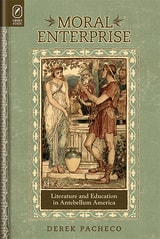
Moral Enterprise
Literature and Education in Antebellum AmericaDerek Pacheco
The Ohio State University Press, 2013
Moral Enterprise: Literature and Education in Antebellum America, by Derek Pacheco,investigates an important moment in the history of professional authorship. Pacheco uses New England “literary reformers” Horace Mann, Nathaniel Hawthorne, Elizabeth Peabody, and Margaret Fuller to argue that writers came to see in educational reform, and the publication venues emerging in connection with it, a means to encourage popular authorship while validating literary work as a profession. Although today’s schools are staffed by systematically trained and institutionally sanctioned teachers, in the unregulated, decentralized world of antebellum America, literary men and women sought the financial stability of teaching while claiming it as moral grounds for the pursuit of greater literary fame.
Examining the ethically redemptive and potentially lucrative definition of antebellum author as educator, this book traces the way these literary reformers aimed not merely at social reform through literature but also at the reform of literature itself by employing a wide array of practices—authoring, editing, publishing, and distributing printed texts—brought together under the aegis of modern, democratic education. Moral Enterprise identifies such endeavors by their dual valence as bold, reformist undertakings and economic ventures, exploring literary texts as educational commodities that might act as entry points into, and ways to tame, what Mann characterized as the “Alexandrian library” of American print culture.
[more]