Results by title
80 books match the query 'Community development' and 5 start with m
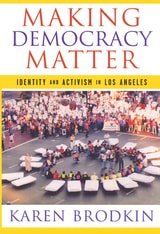
Making Democracy Matter
Identity and Activism in Los AngelesBrodkin, Karen
Rutgers University Press, 2007
This book seeks to answer these questions through conversations and interviews with a generation of activists who came of political age in Los Angeles during the 1990s. Politically schooled in the city's vibrant immigrant worker and youth-led campaigns against xenophobic and racist voter initiatives, these young activists created a new political cohort with its own signature of democratic practice and vision. Combining analytical depth, engaging oral history, and rich description, this absorbing and accessible book will appeal to all those interested in social movements, racial justice, the political activism of women and men of color, and the labor movement today.
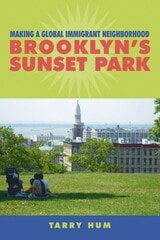
Making a Global Immigrant Neighborhood
Brooklyn's Sunset ParkTarry Hum
Temple University Press, 2014
Based on more than a decade of research, Making a Global Immigrant Neighborhood charts the evolution of Sunset Park--with a densely concentrated working-poor and racially diverse immigrant population--from the late 1960s to its current status as one of New York City's most vibrant neighborhoods.
Tarry Hum shows how processes of globalization, such as shifts in low-wage labor markets and immigration patterns, shaped the neighborhood. She explains why Sunset Park's future now depends on Asian and Latino immigrant collaborations in advancing common interests in community building, civic engagement, entrepreneurialism, and sustainability planning. She shows, too, how residents' responses to urban development policies and projects and the capital represented by local institutions and banks foster community activism.
Hum pays close attention to the complex social, political, and spatial dynamics that forge a community and create new models of leadership as well as coalitions. The evolution of Sunset Park so astutely depicted in this book suggests new avenues for studying urban change and community development.
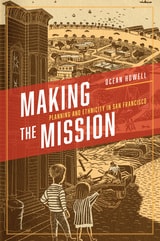
Making the Mission
Planning and Ethnicity in San FranciscoOcean Howell
University of Chicago Press, 2015
In Making the Mission, Ocean Howell tells the story of how residents of the Mission District organized to claim the right to plan their own neighborhood and how they mobilized a politics of place and ethnicity to create a strong, often racialized identity—a pattern that would repeat itself again and again throughout the twentieth century. Surveying the perspectives of formal and informal groups, city officials and district residents, local and federal agencies, Howell articulates how these actors worked with and against one another to establish the very ideas of the public and the public interest, as well as to negotiate and renegotiate what the neighborhood wanted. In the process, he shows that national narratives about how cities grow and change are fundamentally insufficient; everything is always shaped by local actors and concerns.
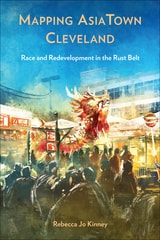
Mapping AsiaTown Cleveland
Race and Redevelopment in the Rust BeltRebecca Jo Kinney
Temple University Press, 2025
Mapping AsiaTown Cleveland challenges ideas about the invisibility of Asian Americans in the urban Midwest by linking the contemporary development of Cleveland’s “AsiaTown” to the multiple and fragmented histories of Cleveland’s Asian American communities from the 1940s to present day. Kinney’s sharp insights illustrate how region matters for Japanese Americans who resettled from concentration camps and Chinese Americans food purveyors, as well as the ways in which Asian American community leaders have had to fight for visibility and representation in city planning—even as the Cleveland Asian Festival is branded as a marquee “diversity” event for the city.
Mapping AsiaTown Cleveland recognizes the vibrant Asian American community formations and belonging that have developed in seemingly unexpected spaces and places.
In the series Asian American History and Culture
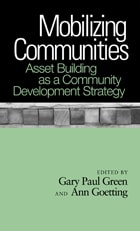
Mobilizing Communities
Asset Building as a Community Development StrategyEdited by Gary Paul Green and Ann Goetting
Temple University Press, 2013