Results by title
679 books match the query 'Ecology' and 27 start with m
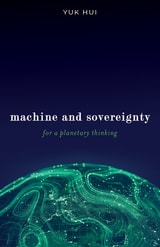
Machine and Sovereignty
For a Planetary Thinkingyuk
University of Minnesota Press, 2024
Developing a new political thought to address today’s planetary crises
What is “planetary thinking” today? Arguing that a new approach is urgently needed, Yuk Hui develops a future-oriented mode of political thought that encompasses the unprecedented global challenges we are confronting: the rise of artificial intelligence, the ecological crisis, and intensifying geopolitical conflicts.
Machine and Sovereignty starts with three premises. The first affirms the necessity of developing a new language of coexistence that surpasses the limits of nation-states and their variations; the second recognizes that political forms, including the polis, empire, and the state, are technological phenomena, which Lewis Mumford terms “megamachines.” The third suggests that a particular political form is legitimated and rationalized by a corresponding political epistemology. The planetary thinking that this book sketches departs from the opposition between mechanism and organism, which characterized modern thought, to understand the epistemological foundations of Hegel’s political state and Schmitt’s Großraum and their particular ways of conceiving the question of sovereignty. Through this reconstruction, Hui exposes the limits of the state and reflects on a new theoretical matrix based on the interrelated concepts of biodiversity, noodiversity, and technodiversity.
Arguing that we are facing the limit of modernity, of the eschatological view of history, of globalization, and of the human, Hui conceives necessary new epistemological and technological frameworks for understanding and rising to the crises of our present and our future.
Retail e-book files for this title are screen-reader friendly.
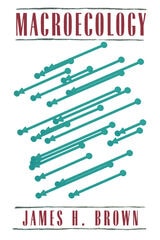
Macroecology
James H. Brown
University of Chicago Press, 1995
While much ecological research is narrowly focused and experimental, providing detailed information that cannot be used to generalize from one ecological community or time period to another, macroecology draws on data from many disciplines to create a less detailed but much broader picture with greater potential for generalization. Integrating data from ecology, systematics, evolutionary biology, paleobiology, and biogeography to investigate problems that could only be addressed on a much smaller scale by traditional approaches, macroecology provides a richer, more complete understanding of how patterns of life have moved across the earth over time. Brown also demonstrates the advantages of macroecology for conservation, showing how it allows scientists to look beyond endangered species and ecological communities to consider the long history and large geographic scale of human impacts.
An important reassessment of the direction of ecology by one of the most influential thinkers in the field, this work will shape future research in ecology and other disciplines.
"This approach may well mark a major new turn in the road in the history of ecology, and I find it extremely exciting. The scope of Macroecology is tremendous and the book makes use of its author's exceptionally broad experience and knowledge. An excellent and important book."—Lawrence R. Heaney, Center for Environmental and Evolutionary Biology, the Field Museum
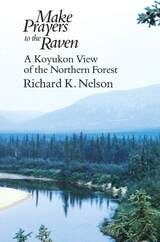
Make Prayers to the Raven
A Koyukon View of the Northern ForestRichard K. Nelson
University of Chicago Press, 1986
A powerful account of the deep connection between the Koyukon people of western Alaska and the natural world that sustains them
A blending of ethnography, personal reflections, and natural history, Make Prayers to the Raven is a moving account of the Koyukon people of western Alaska, who follow a traditional lifeway of hunting, trapping, and fishing in remote villages scattered across the boreal forest. Intimacy with nature is the foundation of their existence, and they have accumulated a masterly knowledge of their environment. The Koyukon hunter moves through a watchful forest, kills with humility and respect, and treats his catch as a being filled with power.
In Make Prayers to the Raven, Nelson describes, from a Koyukon point of view, , elements of the earth, sky, and atmosphere of the boreal forest, as well as the significant plants and animals. He retells their origins in the dreamlike Distant Time, their spirit powers, their behavior and personality, and the rules dictating their proper treatment by men and women. Make Prayers to the Raven leads the reader to an appreciation of the power and substantiality of Koyukon beliefs, and it serves the Koyukon people themselves by educating others about their way of life and by providing the Koyukon with a means of passing on traditional knowledge to their children.
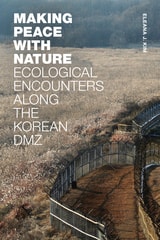
Making Peace with Nature
Ecological Encounters along the Korean DMZEleana J. Kim
Duke University Press, 2022
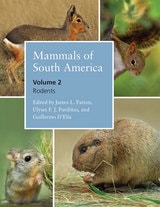
Mammals of South America, Volume 2
RodentsEdited by James L. Patton, Ulyses F. J. Pardiñas, and Guillermo D’Elía
University of Chicago Press, 2015
From spiny mice and guinea pigs to the oversized capybara, this book covers all native rodents of South America, the continental islands of Trinidad and Tobago, and the Caribbean Netherlands off the Venezuelan coast. It includes identification keys and descriptions of all genera and species; comments on distribution; maps of localities; discussions of subspecies; and summaries of natural, taxonomic, and nomenclatural history. Rodents also contains a detailed list of cited literature and a separate gazetteer based on confirmed identifications from museum vouchers and the published literature.
Man's Nature and Nature's Man
The Ecology of Human CommunitiesLee R. Dice
University of Michigan Press, 1955
Marine Macroecology
Edited by Jon D. Witman and Kaustuv Roy
University of Chicago Press, 2009
Pioneered in the late 1980s, the concept of macroecology—a framework for studying ecological communities with a focus on patterns and processes—revolutionized the field. Although this approach has been applied mainly to terrestrial ecosystems, there is increasing interest in quantifying macroecological patterns in the sea and understanding the processes that generate them. Taking stock of the current work in the field and advocating a research agenda for the decades ahead, Marine Macroecology draws together insights and approaches from a diverse group of scientists to show how marine ecology can benefit from the adoption of macroecological approaches.
Divided into three parts, Marine Macroecology first provides an overview of marine diversity patterns and offers case studies of specific habitats and taxonomic groups. In the second part, contributors focus on process-based explanations for marine ecological patterns. The third part presents new approaches to understanding processes driving the macroecolgical patterns in the sea. Uniting unique insights from different perspectives with the common goal of identifying and understanding large-scale biodiversity patterns, Marine Macroecology will inspire the next wave of marine ecologists to approach their research from a macroecological perspective.
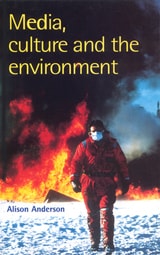
Media, Culture, and the Environment
Anderson, Alison
Rutgers University Press, 1997
Media, Culture and the Environment provides an accessible introduction to key issues and debates surrounding the media politics of risk assessment and the environment. Anderson looks at nature as contested terrain and reveals how news sources use it to compete for our emotions and attention. She shows how framings of risk in relation to the environment are influenced by social, political, and cultural factors, but she also rejects extreme versions of social constructionism.
The book moves beyond traditional disciplinary boundaries by synthesizing recent debates in cultural theory and media studies with key developments in human geography. It offers an in-depth analysis of pressure politics and environmental lobbying groups, while examining the production, transmission and negotiation language of news discourse. The examples, drawn from both Europe and North America, include the tremendous headline controversies over oil spills and killing of baby seals. Difficult issues, clearly surveyed and incisively presented, make this book essential reading for anyone interested in how and why journalists handle environmental news in the ways they do.
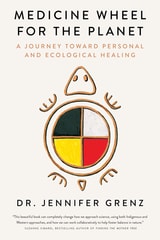
Medicine Wheel for the Planet
A Journey Toward Personal and Ecological HealingJennifer Grenz
University of Minnesota Press, 2024
A personal journey of bringing together Western science and Indigenous ecology to transform our understanding of the human role in healing our planet
I used to be an ecologist. . . . Now, I am a community gatherer, working to help bring healing beyond just the land. I am a story-listener. I am a storyteller. I am a shaper of ecosystems. I work on bringing communities together, in circle, to listen to each other.
A farm kid at heart, and a Nlaka’pamux woman of mixed ancestry, Dr. Jennifer Grenz always felt a deep connection to the land. However, after nearly two decades of working as a restoration ecologist in the Pacific Northwest, she became frustrated that despite the best efforts of her colleagues and numerous volunteers, they weren’t making the meaningful change needed for plant, animal, and human communities to adapt to a warming climate. Restoration ecology is grounded in an idea that we must return the natural world to an untouched, pristine state, placing humans in a godlike role—a notion at odds with Indigenous histories of purposeful, reciprocal interaction with the environment. This disconnect sent Dr. Grenz on a personal journey of joining her head (Western science) and her heart (Indigenous worldview) to find a truer path toward ecological healing.
In Medicine Wheel for the Planet, building on sacred stories, field observations, and her own journey, Dr. Grenz invites readers to share in the teachings of the four directions of the medicine wheel: the North, which draws upon the knowledge and wisdom of elders; the East, where we let go of colonial narratives and see with fresh eyes; the South, where we apply new-old worldviews to envision a way forward; and the West, where a relational approach to land reconciliation is realized.
Eloquent, inspiring, and disruptive, Medicine Wheel for the Planet circles around an argument that we need more than a singular worldview to protect the planet and make the significant changes we are running out of time for.
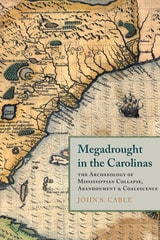
Megadrought in the Carolinas
The Archaeology of Mississippian Collapse, Abandonment, and CoalescenceJohn S. Cable
University of Alabama Press, 2020
A prevailing enigma in American archaeology is why vast swaths of land in the Southeast and Southwest were abandoned between AD 1200 and 1500. The most well-known abandonments occurred in the Four Corners and Mimbres areas of the Southwest and the central Mississippi valley in the twelfth and thirteenth centuries and in southern Arizona and the Ohio Valley during the fifteenth century. In Megadrought in the Carolinas: The Archaeology of Mississippian Collapse, Abandonment, and Coalescence, John S. Cable demonstrates through the application of innovative ceramic analysis that yet another fifteenth-century abandonment event took place across an area of some 34.5 million acres centered on the South Carolina coast.
Most would agree that these sweeping changes were at least in part the consequence of prolonged droughts associated with a period of global warming known as the Medieval Climatic Anomaly. Cable strengthens this inference by showing that these events correspond exactly with the timing of two different geographic patterns of megadrought as defined by modern climate models.
Cable extends his study by testing the proposition that the former residents of the coastal zone migrated to surrounding interior regions where the effects of drought were less severe. Abundant support for this expectation is found in the archaeology of these regions, including evidence of accelerated population growth, crowding, and increased regional hostilities. Another important implication of immigration is the eventual coalescence of ethnic and/or culturally different social groups and the ultimate transformation of societies into new cultural syntheses. Evidence for this process is not yet well documented in the Southeast, but Cable draws on his familiarity with the drought-related Puebloan intrusions into the Hohokam Core Area of southern Arizona during the thirteenth and fourteenth centuries to suggest strategies for examining coalescence in the Southeast. The narrative concludes by addressing the broad implications of late prehistoric societal collapse for today’s human-propelled global warming era that portends similar but much more long-lasting consequences.
Mekong Delta
Ecology, Economy, and Revolution, 1860-1960Pierre Brocheux
University of Wisconsin Press, 1995
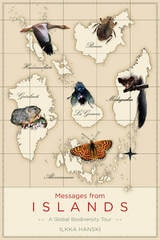
Messages from Islands
A Global Biodiversity TourIlkka Hanski
University of Chicago Press, 2016
Beginning each chapter on a particular island, Hanski dives into reflections on his own field studies before going on to pursue a variety of ecological questions, including: What is the biodiversity crisis? What are extinction thresholds and extinction debts? What can the biodiversity hypothesis tell us about rapidly increasing allergies, asthma, and other chronic inflammatory disorders? The world’s largest island, Greenland, for instance, is the starting point for a journey into the benefits that humankind acquires from biodiversity, including the staggering biodiversity of microbes in the ecosystems that are closest to us—the ecosystems in our guts, in our respiratory tracts, and under our skin. Conceptually oriented but grounded in an adventurous personal narrative, Messages from Islands is a landmark work that lifts the natural mysteries of islands from the sea, bringing to light the thrilling complexities and connections of ecosystems worldwide.
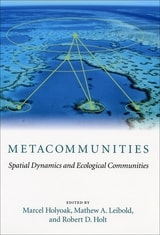
Metacommunities
Spatial Dynamics and Ecological CommunitiesEdited by Marcel Holyoak, Mathew A. Leibold, and Robert D. Holt
University of Chicago Press, 2005
Metacommunities takes the hallmarks of metapopulation theory to the next level by considering a group of communities, each of which may contain numerous populations, connected by species interactions within communities and the movement of individuals between communities. In examining communities open to dispersal, the book unites a broad range of ecological theories, presenting some of the first empirical investigations and revealing the value of the metacommunity approach.
The collection of empirical, theoretical, and synthetic chapters in Metacommunities seeks to understand how communities work in fragmented landscapes. Encouraging community ecologists to rethink some of the leading theories of population and community dynamics, Metacommunities urges ecologists to expand the spatiotemporal scales of their research.
Mexican Macaws
Comparative Osteology and Survey of Remains from the SouthwestLyndon L. Hargrave
University of Arizona Press, 1970
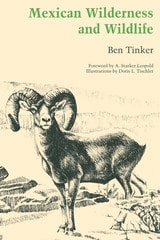
Mexican Wilderness and Wildlife
By Ben Tinker
University of Texas Press, 1978
From the mountainous area bordering Arizona and New Mexico, the western range of the Sierra Madres reaches south into Mexico to the state of Jalisco. The eastern range stretches from the Texas border down to Morelia and the Valley of Mexico. Ben Tinker spent years exploring this rugged wilderness and the vast deserts of Sonora and Baja California. Mexican Wilderness and Wildlife condenses a lifetime of outdoor lore and learning.
Tinker provides detailed life sketches of Mexico's Desert Bighorn Sheep, Pronghorn Antelope, Mule Deer, Whitetail Deer, Peccary, Grizzly and Black Bears, Wild Turkey, Jaguar, Mountain Lion, Timber Wolf, Coyote, and Bobcat. Each is illustrated by wildlife artist Doris Tischler, and Tinker describes their habitats, habits, reproduction, and peculiarities. Information is supplied on the physical measurements of several species of major wildlife. Tinker's observations are laced with anecdotes about his experiences in Mexico's remote backcountry—encounters with bandits, survival in the desert mountains, and the chance discovery of archaeological ruins.
The book describes the terrain and flora of the four life zones inhabited by major game and predatory animals. The section on desert water is a fascinating account of how animals thrive among cacti, thorn trees, and creosote bush remote from streams and waterholes. There is also a brief discussion of conservation efforts in Mexico, chapters on trout fishing in the Sierra Madre Occidental and Baja California, and a guide to big game habitats. This volume will be valuable to hunters, conservationists, naturalists, and others interested in the wilderness and wildlife of Mexico.
Ben Tinker collected much of the material for this book during the years he roamed northern Mexico as Federal Game Guardian. Though an American, Tinker had long been familiar with Mexican wildlife through his Sonoran ranching operation and was known for his interest in conservation when he was appointed by Alvaro Obregón in 1922.
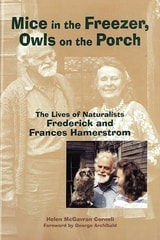
Mice in the Freezer, Owls on the Porch
The Lives of Naturalists Frederick and Francis HamerstromHelen M. Corneli
University of Wisconsin Press, 2006
Mice in the Freezer, Owls on the Porch is in many ways a love story—about a quiet scientist and his flamboyant wife, but also about their passions for hunting, for wild lands, and for the grouse and raptor species that they were instrumental in saving from destruction.
From the papers and letters of Frederick and Frances Hamerstrom, the reminiscences of contemporaries, and her own long friendship with this extraordinary couple who were her neighbors, Helen Corneli draws an intimate picture of Fran and "Hammy" from childhood through the genesis and maturation of a romantic, creative, and scientific relationship. Following the Hamerstroms as they give up a life of sophisticated convention and comfort for the more "civilized" (as Aldo Leopold would have it) pleasures of living and conducting on-the-spot research into diminishing species, Corneli captures the spirit of the Hamerstroms, their profession, and the natural and human environments in which they worked. A nuanced account of the labors, adventures, and achievements that distinguished the Hamerstroms over the years—and that inspired a generation of naturalists—this book also provides a dramatic account of conservation history over the course of the twentieth century, particularly in Wisconsin during the eventful years from the 1920s through the 1970s.

Minnesota’s Endangered Flora and Fauna
Barbara A. Coffin and Lee Pfannmuller, EditorsIllustrations by Jan A. Janssens, Nan Marie Kane, Kris A. Kohn, Don Luce, James Tidwell, and Vera Ming Wong
University of Minnesota Press, 1988
Minnesota's Endangered Flora and Fauna was first published in 1988. Minnesota Archive Editions uses digital technology to make long-unavailable books once again accessible, and are published unaltered from the original University of Minnesota Press editions.
"Extinction of species, the silent crisis of our time, diminishes our world...and a commitment to the preservation of species diversity is fundamental to an optimistic view of the future of our own species," says Harrison B. Tordoff in his forward to this comprehensive reference book. Minnesota's Endangered Flora and Fauna is the result of a legislative mandate -- the 1981 amendment to the State Endangered Species Act -- which called upon the state's Department of Natural Resources and an expert advisory committee to prepare a list of plants and animals in jeopardy.
Covered in the book are some 300 species, ranging from mosses and lichens to jumping spiders, and including vascular plants, birds, mammals, reptiles, and amphibians, fish, butterflies, mollusks, and tiger beetles. A chapter is devoted to each of these floral and faunal groups, with individual status accounts provided for all species. Each account includes the designation endangered, threatened,or special concern,the reasons for that choice, and related information on habitat and distribution. Endangered and threatened species are illustrated; state distribution maps are provided for all species, as well as information on national range. In their substantial introduction, the editors describe the historical background of this project; the components of Minnesota's Endangered Species Program -- one of the most comprehensive and respected in the nation; and the state's natural environment -- its diverse landforms and vegetation.
An up-to-date and expanded version of the information contained in Minnesota's Endangered Flora and Fauna is available online through the Minnesota DNR's Rare Species Guide at www.mndnr.gov/rsg.

Mirage
Florida and the Vanishing Water of the Eastern U.S.Cynthia Barnett
University of Michigan Press, 2007
“Never before has the case been more compellingly made that America’s dependence on a free and abundant water supply has become an illusion. Cynthia Barnett does it by telling us the stories of the amazing personalities behind our water wars, the stunning contradictions that allow the wettest state to have the most watered lawns, and the thorough research that makes her conclusions inescapable. Barnett has established herself as one of Florida’s best journalists and Mirage is a must-read for anyone who cares about the future of the state.”
—Mary Ellen Klas, Capital Bureau Chief, Miami Herald
“Mirage is the finest general study to date of the freshwater-supply crisis in Florida. Well-meaning villains abound in Cynthia Barnett’s story, but so too do heroes, such as Arthur R. Marshall Jr., Nathaniel Reed, and Marjorie Harris Carr. The author’s research is as thorough as her prose is graceful. Drinking water is the new oil. Get used to it.”
—Michael Gannon, Distinguished Professor of history, University of Florida, and author of Florida: A Short History
“With lively prose and a journalist’s eye for a good story, Cynthia Barnett offers a sobering account of water scarcity problems facing Florida—one of our wettest states—and the rest of the East Coast. Drawing on lessons learned from the American West, Mirage uses the lens of cultural attitudes about water use and misuse to plead for reform. Sure to engage and fascinate as it informs.”
—Robert Glennon, Morris K. Udall Professor of Law and Public Policy, University of Arizona, and author of Water Follies: Groundwater Pumping and the Fate of America’s Fresh Waters
Part investigative journalism, part environmental history, Mirage reveals how the eastern half of the nation—historically so wet that early settlers predicted it would never even need irrigation—has squandered so much of its abundant freshwater that it now faces shortages and conflicts once unique to the arid West.
Florida’s parched swamps and supersized residential developments set the stage in the first book to call attention to the steady disappearance of freshwater in the American East, from water-diversion threats in the Great Lakes to tapped-out freshwater aquifers along the Atlantic seaboard.
Told through a colorful cast of characters including Walt Disney, Jeb Bush and Texas oilman Boone Pickens, Mirage ferries the reader through the key water-supply issues facing America and the globe: water wars, the politics of development, inequities in the price of water, the bottled-water industry, privatization, and new-water-supply schemes.
From its calamitous opening scene of a sinkhole swallowing a house in Florida to its concluding meditation on the relationship between water and the American character, Mirage is a compelling and timely portrait of the use and abuse of freshwater in an era of rapidly vanishing natural resources.
Modeling Nature
Sharon E. Kingsland
University of Chicago Press, 1995

Modern Melbourne
City and Site of Nature and CultureRod Giblett
Intellect Books, 2020
It places Melbourne within an international context by comparing and contrasting it to other cities built on or beside wetlands, including London, New York, Paris, Los Angeles, and Toronto. Further, it is the first book to apply the work of European thinkers and writers on modernity and the modern city—such as Walter Benjamin and Peter Sloterdijk—to an analysis of Melbourne. Giblett considers the intertwining of nature and culture, people and place, and cities and wetlands in this bioregional and ecocultural analysis. Placing the city in its proper bioregional and international contexts, Modern Melbourne provides a rich historical analysis of the cultural capital of Australia.
Modern Nature
The Rise of the Biological Perspective in GermanyLynn K. Nyhart
University of Chicago Press, 2009
In Modern Nature,Lynn K. Nyhart traces the emergence of a “biological perspective” in late nineteenth-century Germany that emphasized the dynamic relationships among organisms, and between organisms and their environment. Examining this approach to nature in light of Germany’s fraught urbanization and industrialization, as well the opportunities presented by new and reforming institutions, she argues that rapid social change drew attention to the role of social relationships and physical environments in rendering a society—and nature—whole, functional, and healthy.
This quintessentially modern view of nature, Nyhart shows, stood in stark contrast to the standard naturalist’s orientation toward classification. While this new biological perspective would eventually grow into the academic discipline of ecology, Modern Nature locates its roots outside the universities, in a vibrant realm of populist natural history inhabited by taxidermists and zookeepers, schoolteachers and museum reformers, amateur enthusiasts and nature protectionists.
Probing the populist beginnings of animal ecology in Germany, Nyhart unites the history of popular natural history with that of elite science in a new way. In doing so, she brings to light a major orientation in late nineteenth-century biology that has long been eclipsed by Darwinism.

More-than-Human Histories of Latin America and the Caribbean
Decentring the Human in Environmental HistoryEdited by Diogo de Carvalho Cabral
University of London Press, 2024
The Latin American and Caribbean regions’ historical trajectories have been shaped by complex human-nonhuman interactions. In these histories, people are important, even crucial, actors, but not the only ones. Offering a novel approach to the writing of Latin American history, this book brings eight thought-provoking chapters together with a historiographical introduction and critical afterword to center nonhuman beings and things. The oscillating glare of the sun, the allure and resourcefulness of animals, the reluctant genetic malleability of plant seeds, and the life-giving and intractable impassivity of rivers are some of the other-than-human agents driving history in the volume’s chapters.
This book problematizes Latin American(ist) historiography’s tendency to frame “nature” as a separate ontological domain that is only acted upon—conquered, manipulated, devastated—lacking the self-propelled dynamics capable of shaping the course of events. With broad regional and temporal coverage across Latin America and the Caribbean from the pre-colonial period to the present day, More-than-Human Histories of Latin America and the Caribbean responds to environmental history’s call to write biophysical environments into the human past—a reconsideration of historical agency that, in this era of climate change, is more necessary than ever.
Mosses of the Great Lakes Forest
Howard Alvin Crum
Michigan Publishing Services, 2025
This comprehensive and richly illustrated account of the mosses found throughout the Great Lakes Basin and St. Lawrence River Valley is tailored for use in much of eastern North America. Detailed descriptions, keys, and a glossary are provided. 592 pages, frontispiece, hard cover.
Mountain Sheep of North America
Raul Valdez
University of Arizona Press, 1999
This book is a major reference on the natural history, ecology, and management of wild sheep in North America. Written by wildlife biologists who have devoted years of study to the animals, it covers Dall's and Stone's sheep and Rocky Mountain, California, and desert bighorn and examines a variety of factors pertinent to their life histories: habitat, diet, activity, social organization, reproduction, and population dynamics. Additional chapters consider distribution and abundance, adaptive strategies, and management guidelines. Discussions on diseases of wild sheep present a wealth of information that will be of particular use to wildlife biologists, including detailed clinical descriptions of conditions that threaten sheep populations, from pasteurellosis to capture myopathy. An appendix reviews the cytogenetics and genetics of wild sheep.
North American wild sheep may face extinction in many areas unless critical questions concerning their management are answered soon. Prior to the publication of this book, there was no single reference available in which one could find such a synthesis of information. Mountain Sheep of North America provides that source and points toward the preservation of these magnificent wild creatures.
Mourning in the Anthropocene
Ecological Grief and Earthly CoexistenceJoshua Trey Barnett
Michigan State University Press, 2022

Multispecies Studies
Thom van Dooren, Ursula Münster, Eben Kirksey, Deborah Bird Rose, Matthew Chrulew, and Anna Tsing, special issue editors
Duke University Press, 2016
The emerging field of multispecies studies, grounded in passionate immersion in the lives of fungi, microorganisms, animals, plants, and others, is opening up novel ways of engaging with worlds around us. This issue brings together some of the leading scholars in this field to explore what is at stake—epistemologically, politically, ethically—for different forms of life caught up in diverse relationships of knowing and living together. The collection takes us into the worlds of sheep and shepherds; of stones, worms, salmon, and forest-devouring beetles; of viruses and their elephants; of seals, crows, and lava flows in Hawaii; and finally of frogs-as-pregnancy-tests and possible agents of pathogenic fungal spread. Each of the contributors explores what difference curious and careful attention to others might make in our efforts to inhabit and coconstitute flourishing worlds in these difficult times.
This issue is freely available online at environmentalhumanities.org; a print version is available for purchase.
Mushrooms of the Midwest
Michael Kuo and Andrew S. Methven
University of Illinois Press, 2014
Fusing general interest in mushrooming with serious scholarship, Mushrooms of the Midwest describes and illustrates over five hundred of the region's mushroom species. From the cold conifer bogs of northern Michigan to the steamy oak forests of Missouri, the book offers a broad cross-section of the fungi, edible and not, that can be found growing in the Midwest’s diverse ecosystems.
With hundreds of color illustrations, Mushrooms of the Midwest is ideal for amateur and expert mushroomers alike. Michael Kuo and Andrew Methven provide identification keys and thorough descriptions. The authors discuss the DNA revolution in mycology and its consequences for classification and identification, as well as the need for well-documented contemporary collections of mushrooms.
Unlike most field guides, Mushrooms of the Midwest includes an extensive introduction to the use of a microscope in mushroom identification. In addition, Kuo and Methven give recommendations for scientific mushroom collecting, with special focus on ecological data and guidelines for preserving specimens. Lists of amateur mycological associations and herbaria of the Midwest are also included. A must-have for all mushroom enthusiasts!