Results by title
329 books match the query 'Folklore & Mythology' and 21 start with m
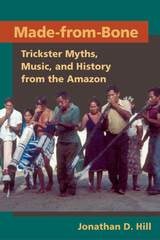
Made from Bone
Trickster Myths, Music, and History from the AmazonJonathan D. Hill
University of Illinois Press, 2008
Made-from-Bone is the first work to provide a complete set of English translations of narratives about the mythic past and its transformations from the indigenous Arawak-speaking people of South America. Among the Arawak-speaking Wakuénai of southernmost Venezuela, storytellers refer to these narratives as "words from the primordial times," and they are set in an unfinished space-time before there were any clear distinctions between humans and animals, men and women, day and night, old and young, and powerful and powerless. The central character throughout these primordial times and the ensuing developments that open up the world of distinct peoples, species, and places is a trickster-creator, Made-from-Bone, who survives a prolonged series of life-threatening attacks and ultimately defeats all his adversaries.
Carefully recorded and transcribed by Jonathan D. Hill, these narratives offer scholars of South America and other areas the only ethnographically generated cosmogony of contemporary or ancient native peoples of South America. Hill includes translations of key mythic narratives along with interpretive and ethnographic discussion that expands on the myths surrounding this fascinating and enigmatic character with broad appeal throughout various folkloric traditions.
Magical Arrows
The Maori, The Greeks, And The Folklore Of The UniverseGregory A. Schrempp
University of Wisconsin Press, 1992
Schrempp suggests that perhaps the most noteworthy Zenoian insight is that paradox is intrinsic to cosmological speculation. But he points out that there are many other characteristics of Zeno’s approach, including the strategy of juxtaposing concrete images to mathematical forms of representation, that reappear persistently in Western intellectual history. Schrempp proceeds through a series of juxtapositions—between Zeno, Kant, Lovejoy, and Lévi-Strauss, and between Western cosmologists and those from other cultures—to highlight subtle similarities and differences among intellectual traditions and to examine the conceptual apparatus of Western social science.
Schrempp concludes that a meaningful comparative cosmology is possible and that the tradition of Zeno provides a propitious starting point for such a perspective.
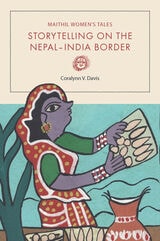
Maithil Women's Tales
Storytelling on the Nepal-India BorderCoralynn V. Davis
University of Illinois Press, 2014
In Maithil Women’s Tales, Coralynn V. Davis examines how these storytellers weave together their own life experiences--the hardships and the pleasures--with age-old themes. In so doing, Davis demonstrates, they harness folk traditions to grapple personally as well as collectively with social values, behavioral mores, relationships, and cosmological questions.
Each chapter includes stories and excerpts that reveal Maithil women’s gift for rich language, layered plots, and stunning allegory. In addition, Davis provides ethnographic and personal information that reveal the complexity of women’s own lives, and includes works painted by Maithil storytellers to illustrate their tales. The result is a fascinating study of being and becoming that will resonate for readers in women’s and Hindu studies, folklore, and anthropology.
Masada Myth
Collective Memory and Mythmaking in IsraelNachman Ben-Yehuda
University of Wisconsin Press, 1996
Ben-Yehuda describes how, after nearly 1800 years, the long, complex, and unsubstantiated narrative of Josephus Flavius was edited and augmented in the twentieth century to form a simple and powerful myth of heroism. He looks at the ways this new mythical narrative of Masada was created, promoted, and maintained by pre-state Jewish underground organizations, the Israeli army, archaeological teams, mass media, youth movements, textbooks, the tourist industry, and the arts. He discusses the various organizations and movements that created “the Masada experience” (usually a ritual trek through the Judean desert followed by a climb to the fortress and a dramatic reading of the Masada story), and how it changed over decades from a Zionist pilgrimage to a tourist destination.
Placing the story in a larger historical, sociological, and psychological context, Ben-Yehuda draws upon theories of collective memory and mythmaking to analyze Masada’s crucial role in the nation-building process of modern Israel and the formation of a new Jewish identity. An expert on deviance and social control, Ben-Yehuda looks in particular at how and why a military failure and an enigmatic, troubling case of mass suicide (in conflict with Judaism’s teachings) were reconstructed and fabricated as a heroic tale.
Meaning of Folklore
The Analytical Essays of Alan DundesSimon J. Bronner
Utah State University Press, 2020
Runner-up, the Wayland Hand Award for Folklore and History, 2009
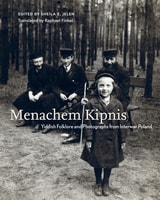
Menachem Kipnis
Yiddish Folklore and Photographs from Interwar PolandSheila E. Jelen
Rutgers University Press, 2026
Menachem Kipnis (1878–1942) was one of the early twentieth-century’s greatest Jewish eastern European ethnomusicologists, folklorists, and photographers. He had a weekly column in the Warsaw Yiddish newspaper Haynt, retelling humorous old folk stories about the fictional Polish town of Chelm, populated exclusively by fools. At the same time, his photographs of Jewish life in eastern Europe regularly appeared in the Forverts (Forward), the most popular Yiddish daily newspaper in the United States. Now, for the first time, Kipnis’s stories and photographs are published together in a single book.
Menachem Kipnis brings these photographs and stories into dialogue with one another, bridging the Jewish communities in Poland and in America during the interwar period. This dialogue, between image and text, between European metropolis and American metropolis, captures a key historical moment when American Jews sought to imagine the lives of their coreligionists in the “Old Country” and eastern European urban Jews sought to distinguish themselves from their Jewish compatriots who were still living in the shtetl. Including an introductory essay, annotations, and an epilogue by Sheila E. Jelen, Menachem Kipnis suggests new ways of understanding both visual and literary depictions of eastern European Jewish culture between the two world wars.
Mexican Folk Narrative from the Los Angeles Area
Introduction, Notes, and ClassificationBy Elaine K. Miller
University of Texas Press, 1973
Urban Los Angeles is the setting in which Elaine Miller has collected her narratives from Mexican-Americans. The Mexican folk tradition, varied and richly expressive of the inner life not only of a people but also of the individual as each lives it and personalizes it, is abundantly present in the United States. Since it is in the urban centers that most Mexican-Americans have lived, this collection represents an important contribution to the study of that tradition and to the study of the changes urban life effects on traditional folklore.
The collection includes sixty-two legendary narratives and twenty traditional tales. The legendary narratives deal with the virgins and saints as well as with such familiar characters as the vanishing hitchhiker, the headless horseman, and the llorona. Familiar characters appear in the traditional tales—Juan del Oso, Blancaflor, Pedro de Ordimalas, and others. Elaine Miller concludes that the traditional tales are dying out in the city because tale telling itself is not suited to the fast pace of modern urban life, and the situations and characters in the tales are not perceived by the people to be meaningfully related to the everyday challenges and concerns of that life. The legendary tales survive longer in an urban setting because, although containing fantastic elements, they are related to the beliefs and hopes of the narrator—even in the city one may be led to buried treasure on some dark night by a mysterious woman.
The penchant of the informants for the fantastic in many of their tales often reflects their hopes and fears, such as their dreams of suddenly acquiring wealth or their fears of being haunted by the dead. Miller closely observes the teller's relation to the stories—to the duendes, the ánimas, Death, God, the devil—and she notes the tension on the part of the informant in his relation to their religion.
The material is documented according to several standard tale and motif indices and is placed within the context of the larger body of Hispanic folk tradition by the citation of parallel versions throughout the Hispanic world. The tales, transcribed from taped interviews, are presented in colloquial Spanish accompanied by summaries in English.

Miles of Smiles, Years of Struggle
STORIES OF BLACK PULLMAN PORTERSJack Santino
University of Illinois Press, 1989
Jack Santino's interviews with retired porters provide extensive firsthand accounts of their work, the job inequities they faced, the formation of the Brotherhood of Sleeping Car Porters, and the aborted Pullman porter strike of 1928. Through the testimony of ran-and-file workers as well as key figures such as E. D. Nixon, the porter who initiated the Montgomery bus boycott and helped launch the career of Martin Luther King, Jr. and C.L. Dellums, the only surviving founding member of the BSCP, Miles of Smiles, Years of Struggle illuminates the Pullman porters' struggle for dignity.
Mormon Healer Folk Poet
Mary Susannah Fowler's Life of 'Unselfish Usefulness'Margaret Brady
Utah State University Press, 2000
Morning Dew and Roses
Nuance, Metaphor, and Meaning in FolksongsBarre Toelken
University of Illinois Press, 1995
"Toelken's insights . . . are unique. His study broadens and deepens scholarly appreciation of how folksong metaphors carry their own semantic weight. . . . One of the best expressions of the power of music in folksong that I have seen in recent years." -- James Porter, author of The Traditional Music of Britain and Ireland
In this lively exploration of folksongs and their meanings, Barre Toelken looks closely at riddle songs and other ambiguous folksongs, as well as the various "ballad commonplaces." Ranging through metaphors such as weaving, plowing, plucking flowers, and walking in the dew, Toelken shows how each contributes to meaning in vernacular song. He includes comparisons to German folksongs, medieval poetry, Italian folk lyrics, and a wide range of Euro-American vernacular expression.
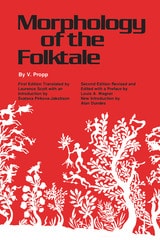
Morphology of the Folktale
Second EditionBy V. Propp
University of Texas Press, 1968
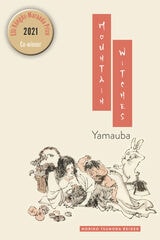
Mountain Witches
YamaubaNoriko T. Reider
Utah State University Press, 2021
Situating the yamauba within the construct of yōkai and archetypes, Noriko T. Reider investigates the yamauba attributes through the examination of narratives including folktales, literary works, legends, modern fiction, manga, and anime. She traces the lineage of a yamauba image from the seventh-century text Kojiki to the streets of Shibuya, Tokyo, and explores its emergence as well as its various, often conflicting, characteristics. Reider also examines the adaptation and re-creation of the prototype in diverse media such as modern fiction, film, manga, anime, and fashion in relation to the changing status of women in Japanese society.
Offering a comprehensive overview of the development of the yamauba as a literary and mythic trope, Mountain Witches is a study of an archetype that endures in Japanese media and folklore. It will be valuable to students, scholars, and the general reader interested in folklore, Japanese literature, demonology, history, anthropology, cultural studies, gender studies, and the visual and performing arts.
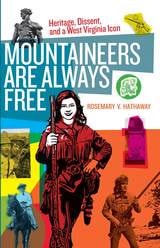
Mountaineers Are Always Free
Heritage, Dissent, and a West Virginia IconRosemary V. Hathaway
West Virginia University Press, 2020
The West Virginia University Mountaineer is not just a mascot: it is a symbol of West Virginia history and identity embraced throughout the state. In this deeply informed but accessible study, folklorist Rosemary Hathaway explores the figure’s early history as a backwoods trickster, its deployment in emerging mass media, and finally its long and sometimes conflicted career—beginning officially in 1937—as the symbol of West Virginia University.
Alternately a rabble-rouser and a romantic embodiment of the state’s history, the Mountaineer has been subject to ongoing reinterpretation while consistently conveying the value of independence. Hathaway’s account draws on multiple sources, including archival research, personal history, and interviews with former students who have portrayed the mascot, to explore the complex forces and tensions animating the Mountaineer figure. Often serving as a focus for white, masculinist, and Appalachian identities in particular, the Mountaineer that emerges from this study is something distinct from the hillbilly. Frontiersman and rebel both, the Mountaineer figure traditionally and energetically resists attempts (even those by the university) to tame or contain it.

Myth and History in the Historiography of Early Burma
Paradigms, Primary Sources, and PrejudicesMichael A. Aung-Thwin
Ohio University Press, 1998
After careful re-reading and analysis of original Old Burmese and other primary sources, the author discovered that four out of the five events considered to be the most important in the history of early Burma, and believed to have been historically accurate, are actually late-nineteenth and twentieth-century inventions of colonial historians caught in their own intellectual and political world.
Only one of these is a genuine indigenous Burmese myth, but it too has been embellished by modern historians.
The author discusses each of these five myths and concludes with an assessment of the current situation in Burma in the context of the new myths springing up today, thereby bringing the thirteenth century into the twentieth.
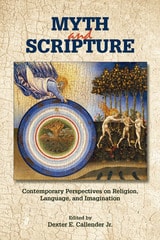
Myth and Scripture
Contemporary Perspectives on Religion, Language, and ImaginationDexter E. Callender, Jr.
SBL Press, 2014
An interdisciplinary collection for scholars and students interested in the connections between myth and scripture
In this collection scholars suggest that using “myth” creates a framework within which to set biblical writings in both cultural and literary comparative contexts. Reading biblical accounts alongside the religious narratives of other ancient civilizations reveals what is commonplace and shared among them. The fruit of such work widens and enriches our understanding of the nature and character of biblical texts, and the results provide fresh evidence for how biblical writings became “scripture.”
Features:
- Essays that explore how myth sheds light on the emergence of scripture
- Examples drawn from the Ancient Near East, Hebrew Bible, New Testament, and Greco-Roman world
- Articles by experts from a range of disciplines
Myth
A HandbookWilliam G. Doty
University of Alabama Press, 2007
An accessible introduction to the role of myth historically and in popular culture.
Myth: A Handbook by William G. Doty is a foundational and wide-ranging exploration of myth as one of humanity’s most enduring and powerful forms of expression. Designed for students and scholars across the humanities and social sciences, this authoritative volume offers both a comprehensive introduction to myth studies and a sophisticated framework for interpreting myth in diverse cultural contexts.
Doty approaches myth not as a static body of ancient stories, but as a dynamic and evolving system of meaning—one that reflects the values, beliefs, and psychological structures of the societies that produce and preserve it. Drawing from a rich interdisciplinary base that includes anthropology, literary criticism, psychology, religious studies, and cultural theory, the book examines how myths operate symbolically, structurally, and socially. Readers are guided through major theoretical approaches to myth, from classical interpretations to modern critical frameworks, enabling them to engage thoughtfully with myth as both narrative and cultural artifact.
One of the book’s central strengths is its emphasis on methodology. Rather than presenting myth as a fixed subject, Doty equips readers with analytical tools to interpret myths across different traditions and historical periods. He explores how myths encode meaning through symbols and archetypes, how they reinforce or challenge cultural norms, and how they adapt over time to address shifting social realities. By emphasizing interpretation over simple retelling, Doty transforms myth from a collection of stories into a living field of inquiry.
The handbook also addresses key questions that continue to resonate in contemporary scholarship: What distinguishes myth from legend or folklore? How do myths shape identity—individual, communal, and national? In what ways do myths persist in modern literature, film, and popular culture? Through clear explanations and carefully structured discussions, Doty demonstrates that myth remains deeply relevant, not only in understanding ancient civilizations but also in analyzing modern narratives and cultural expressions.
Accessible yet intellectually rigorous, Myth: A Handbook has become a widely respected resource in university classrooms, providing students with the conceptual grounding needed to engage critically with mythological material. At the same time, its clarity and breadth make it valuable for general readers interested in the deeper meanings behind the stories that have shaped human thought across time and place.
Ultimately, Doty’s work reveals that myth is not confined to the past—it is an essential framework through which humans interpret experience, construct meaning, and understand their place in the world. This handbook stands as an indispensable guide to that process, illuminating the enduring significance of myth in both ancient traditions and contemporary life.
Mythography
The Study of Myths and RitualsWilliam G. Doty
University of Alabama Press, 2000
This new edition of William Doty's critically acclaimed study provides a comprehensive guidebook to the many schools of interpretation in this burgeoning field
William Doty's popular text has been hailed as the most comprehensive work of its kind. Extensively rewritten and completely restructured, the new edition provides further depth and perspective and is even more accessible to students of myth. It includes expanded coverage of postmodern and poststructuralist perspectives, the Gernet Center, mythic iconography, neo-Jungian approaches, and cultural studies, and it summarizes what is new in the study of Greek myth, iconography, French classical scholarship, and ritual studies. It also features a comprehensive index of names and topics, a glossary, an up-to-date annotated bibliography, and a guide to myth on the Internet.
Presenting all major myth theorists from antiquity to the present, Mythography is an encyclopedic work that offers a cross-disciplinary approach to the study of myth. By reflecting the dramatic increase in interest in myth among both scholars and general readers since publication of the first edition, it remains a key study of modern approaches to myth and
an essential guide to the wealth of mythographic research available today.
Mythologies
Edited by Yves Bonnefoy
University of Chicago Press, 1991
Drawing on a breathtaking array of sources, from the history of religions to anthropology, archaeology, literature, and linguistics, the contributors define a new approach to the understanding of myth in society.
For this first English-language edition, the articles have been rearranged by region or culture. Together they comprise an exceptionally broad, stimulating introduction to the religious and mythical traditions of the world—from the idea of death in Ancient Egypt to the ideology of nationalism in modern Europe. Greeks and Romans are here in force, naturally, but so too are the Bantu, Dinka, and Dogon of Africa and the Armenians, Mongols, and Turks of Asia.
Readers of Mythologies will discover a wealth of fresh primary sources on such little known traditions as those of the Vietnamese—and bold, provocative new interpretations of well-studied traditions, such as those of classical Greece.
Mythology and Values
An Analysis of Navaho Chantway MythsBy Katherine Spencer
University of Texas Press, 1957
Myths America Lives By
White Supremacy and the Stories That Give Us MeaningRichard T. Hughes
University of Illinois Press, 2018
Möbius Media
Popular Culture, Folklore, and the FolkloresqueJeffrey A. Tolbert
Utah State University Press, 2024
The collection challenges readers to consider the stakes of labeling something as folklore or folk. It demonstrates the rhetorical and political potency of ideas such as traditionality, heritage, and community in storytelling venues (including films, games, and even podcasts), in the construction and policing of genres, and in the selling of commodities. By interrogating popular media and expressions that make use of ideas such as folklore, tradition, authenticity, and heritage, Möbius Media further develops the theoretical applicability of the folkloresque concept and encourages productive interdisciplinary dialogue. Through the lens of the folkloresque, scholars can better see the hidden ideologies that inform the marketplace and influence contemporary modes of communication.
This interdisciplinary work will appeal to scholars and students of cultural studies, media studies, popular culture, literature, anthropology, and related areas.