Results by title
484 books match the query 'Foreign relations' and 22 start with m
Making England Western
Occidentalism, Race, and Imperial CultureSaree Makdisi
University of Chicago Press, 2013
Making Sense of the Arab State
Steven Heydemann and Marc Lynch, Editors
University of Michigan Press, 2024
Making Sense of the Arab State brings together top scholars from diverse theoretical orientations to address some of the most critically important questions facing the region today. The authors grapple with enduring questions such as the uneven development of state capacity, the failures of developmentalism and governance, the centrality of regime security and survival concerns, the excesses of surveillance and control, and the increasing personalization of power. Making Sense of the Arab State will be a must-read for scholars of the Middle East and of comparative politics more broadly.
Making the Desert Modern
Americans, Arabs, and Oil on the Saudi Frontier, 1933–1973Chad Parker
University of Massachusetts Press, 2015
In 1933 American oilmen representing what later became the Arabian American Oil Company (Aramco) signed a concession agreement with the Saudi Arabian king granting the company sole proprietorship over the oil reserves in the country's largest province. As drilling commenced and wells proliferated, Aramco soon became a major presence in the region. In this book Chad H. Parker tells Aramco's story, showing how an American company seeking resources and profits not only contributed to Saudi “nation building” but helped define U.S. foreign policy during the early Cold War.
In the years following World War II, as Aramco expanded its role in Saudi Arabia, the idea of “modernization” emerged as a central component of American foreign policy toward newly independent states. Although the company engaged in practices supportive of U.S. goals, its own modernizing efforts tended to be pragmatic rather than policy-driven, more consistent with furthering its business interests than with validating abstract theories. Aramco built the infrastructure necessary to extract oil and also carved an American suburb out of the Arabian desert, with all the air-conditioned comforts of Western modern life. At the same time, executives cultivated powerful relationships with Saudi government officials and, to the annoyance of U.S. officials, even served the monarchy in diplomatic disputes. Before long the company became the principal American diplomatic, political, and cultural agent in the country, a role it would continue to play until 1973, when the Saudi government took over its operation.
Making the Modern Middle East
Second EditionT.G. Fraser, Andrew Mango, and Robert McNamara
Gingko, 2015
This fully revised and updated second edition of The Makers of the Modern Middle East traces those changes and the ensuing history of the region through the rest of the twentieth century and on to the present. Focusing in particular on three leaders—Emir Feisal, Mustafa Kemal, and Chaim Weizmann—the book offers a clear, authoritative account of the region seen from a transnational perspective, one that enables readers to understand its complex history and the way it affects present-day events.

Making the World Safe for Capitalism
How Iraq Threatened the US Economic Empire and had to be DestroyedChristopher Doran
Pluto Press, 2012
The Iraq war defined the first decade of the twenty-first century – leading to mass protests and raising profound questions about domestic politics and the use of military force. Yet most explanations of the war have a narrow focus either on political personalities or oil.
Christopher Doran provides a unique perspective, arguing that the drive to war came from the threat Iraq might pose to American economic hegemony if the UN sanctions regime was ended. Doran argues that this hegemony is rooted in third world debt and corporate market access. It was protection of these arrangements that motivated US action, not Iraq’s alleged weapons of mass destruction or a simplistic desire to seize its oil.
This book will provide new insights on the war which still casts a shadow over global politics, and will have wide appeal to all those concerned about the Middle East, world peace and global development.
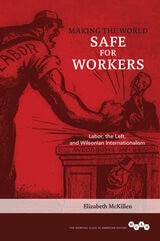
Making the World Safe for Workers
Labor, the Left, and Wilsonian InternationalismElizabeth McKillen
University of Illinois Press, 2018
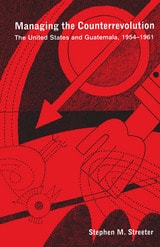
Managing the Counterrevolution
The United States and Guatemala, 1954–1961Stephen M. Streeter
Ohio University Press, 2001
The Eisenhower administration’s intervention in Guatemala is one of the most closely studied covert operations in the history of the Cold War. Yet we know far more about the 1954 coup itself than its aftermath. This book uses the concept of “counterrevolution” to trace the Eisenhower administration’s efforts to restore U.S. hegemony in a nation whose reform governments had antagonized U.S. economic interests and the local elite.
Comparing the Guatemalan case to U.S.-sponsored counterrevolutions in Iran, the Dominican Republic, Brazil, and Chile reveals that Washington’s efforts to roll back “communism” in Latin America and elsewhere during the Cold War represented in reality a short-term strategy to protect core American interests from the rising tide of Third World nationalism.
Mansfield and Vietnam
A Study in Rhetorical AdaptationGregory A. Olson
Michigan State University Press, 1995
Mansfield and Vietnam: A Study in Rhetorical Adaptation is the first major work to examine the role played by Senate Majority Leader Mike Mansfield, Democrat from Montana, in the formulation and execution of U.S. Vietnam policy. Drawing upon material from the Mansfield Papers, personal interviews, public speeches, and recently declassified documents, Olson traces Mansfield's journey from ardent supporter of Diem in the late 1950s to quiet critic of LBJ in the mid-1960s, and finally, to outspoken opponent of the Vietnam War in the late 1960s and early 1970s.
Olson focuses his attention on Mansfield's speaking ability and his use of the written word, analyzing the ways in which they proved crucial in shaping the policies of the Eisenhower, Kennedy, Johnson, Nixon, and Ford presidential administrations. He also examines the way personal and political situations converged to force Mansfield into the center of the stormy Vietnam controversy, and eventually into a position of leadership in the campaign to end America's military presence in Southeast Asia. To date, little has been done to evaluate the roles played by key congressional figures in the Vietnam War debate; thus, Mansfield and Vietnam is bound to become a significant contribution, not only to rhetorical studies, but also to twentieth-century diplomatic history and to the study of congressional-presidential relations.
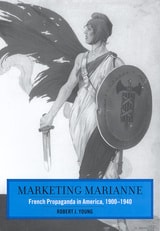
Marketing Marianne
French Propaganda in America, 1900-1940Robert J. Young
Rutgers University Press, 2003
Although historians have written extensively on propaganda during Napoleon III’s regime and Vichy, they have virtually ignored the Third Republic. Focusing on Third Republic policies, Marketing Marianne suggests that Americans’ long-lasting love affair with French culture is no accident. Robert J. Young argues that the French used subtle but effective means to influence U.S. policy in Europe. He examines French propaganda efforts and the methods of the French Foreign Ministry, always highlighting the wider cultural and social context of Franco-American relations. French propagandists believed that the steady promotion of their nation as the cultural capital of the world was the best way to foster goodwill among Americans. They slowly recognized the important role the United States played in maintaining the balance of power in Europe. Young argues that the French deliberately exploited America’s sense of cultural inferiority when faced with Europe’s rich heritage, and the rise of new technologies and modern forms of government in France encouraged the development of more sophisticated forms of propaganda.
Masterpieces of History
The Peaceful End of the Cold War in Europe, 1989The National Security Archive Savranskaya
Central European University Press, 2010
Meddling in Middle Europe
Britain and the 'Lands Between' 1919-1925Miklos Lojkó
Central European University Press, 2006
Media Power in Central America
Rick Rockwell and Noreene Janus
University of Illinois Press, 2003
Rick Rockwell and Noreene Janus examine the region country by country and deal with the specific conditions of government-sponsored media repression, economic censorship, corruption, and consumer trends that shape the political landscape. Challenging the notion of the media as a democratizing force, Media Power in Central America shows how governments use the media to block democratic reforms and outlines the difficulties of playing watchdog to rulers who use the media as a tool of power.
Melting the Ice Curtain
The Extraordinary Story of Citizen Diplomacy on the Russia-Alaska FrontierDavid Ramseur
University of Alaska Press, 2017
Melting the Ice Curtain tells the story of how inspiration, courage, and persistence by citizen-diplomats bridged a widening gap in superpower relations. David Ramseur was a first-hand witness to the danger and political intrigue, having flown on that first Friendship Flight, and having spent thirty years behind the scenes with some of Alaska’s highest officials. As Alaska celebrates the 150th anniversary of its purchase, and as diplomatic ties with Russia become perilous, Melting the Ice Curtain shows that history might hold the best lessons for restoring diplomacy between nuclear neighbors.
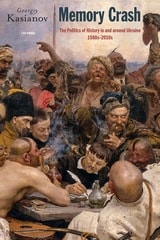
Memory Crash
Politics of History in and around Ukraine, 1980s–2010sGeorgiy Kasianov
Central European University Press, 2022
This account of historical politics in Ukraine, framed in a broader European context, shows how social, political, and cultural groups have used and misused the past from the final years of the Soviet Union to 2020. Georgiy Kasianov details practices relating to history and memory by a variety of actors, including state institutions, non-governmental organizations, political parties, historians, and local governments. He identifies the main political purposes of these practices in the construction of nation and identity, struggles for power, warfare, and international relations.
Kasianov considers the Ukrainian case in the context of a global increase in the politics of history and memory, with particular emphasis on a distinctive East-European variety. He pays special attention to the use and abuse of history in relations between Ukraine, Russia, and Poland.
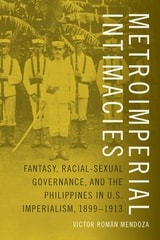
Metroimperial Intimacies
Fantasy, Racial-Sexual Governance, and the Philippines in U.S. Imperialism, 1899-1913Victor Román Mendoza
Duke University Press, 2015
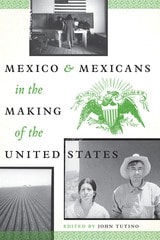
Mexico and Mexicans in the Making of the United States
Edited by John Tutino
University of Texas Press, 2012
Mexico and Mexicans have been involved in every aspect of making the United States from colonial times until the present. Yet our shared history is a largely untold story, eclipsed by headlines about illegal immigration and the drug war. Placing Mexicans and Mexico in the center of American history, this volume elucidates how economic, social, and cultural legacies grounded in colonial New Spain shaped both Mexico and the United States, as well as how Mexican Americans have constructively participated in North American ways of production, politics, social relations, and cultural understandings.
Combining historical, sociological, and cultural perspectives, the contributors to this volume explore the following topics: the Hispanic foundations of North American capitalism; indigenous peoples’ actions and adaptations to living between Mexico and the United States; U.S. literary constructions of a Mexican “other” during the U.S.-Mexican War and the Civil War; the Mexican cotton trade, which helped sustain the Confederacy during the Civil War; the transformation of the Arizona borderlands from a multiethnic Mexican frontier into an industrializing place of “whites” and “Mexicans”; the early-twentieth-century roles of indigenous Mexicans in organizing to demand rights for all workers; the rise of Mexican Americans to claim middle-class lives during and after World War II; and the persistence of a Mexican tradition of racial/ethnic mixing—mestizaje—as an alternative to the racial polarities so long at the center of American life.
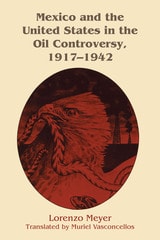
Mexico and the United States in the Oil Controversy, 1917–1942
By Lorenzo Meyer; translated by Muriel Vasconcellos
University of Texas Press, 1977
From reviews of the Spanish edition:
“Meyer’s perceptive commentary on Mexican power politics presents new insights into the petroleum lobbies in Mexico City and Washington. With unbiased empathy he shows the validity of Mexico’s complaints about foreigners’ deriving an overabundance of profit from a nonrenewable natural resource. He understands United States history and never abuses his license to criticize.” —Hispanic American Historical Review
“This useful addition to the literature on twentieth-century Mexican–United States diplomatic relations is a scholarly work, worthy of consideration by all students of the subject.”—American Historical Review
Mexico and the United States in the Oil Controversy, 1917–1942 explores the relationship between the United States and Mexico during the first half of the twentieth century, with special attention to the Mexican nationalization of the oil industry. Relying on Mexican archival material never before analyzed, the author presents a unique perspective on the period following the Mexican Revolution and Mexico’s efforts to diminish its economic dependency on the United States. This work not only describes the political and economic struggle between the Mexican government and the U.S. oil companies but also serves to illustrate in general the nature of dependency between Latin American countries and the United States. It will be of interest not only to Mexican specialists but also to diplomatic and economic historians.

Militarized Currents
Toward a Decolonized Future in Asia and the PacificSetsu Shigematsu
University of Minnesota Press, 2010

Military Occupation and Diplomacy
Soviet Troops in Romania, 1944–1958Sergiu Verona
Duke University Press, 1992
Drawing on declassified archival material in the United States and the United Kingdom, the author considers Khrushchev’s reversal of Stalinist expansionism by examining the motivation, function, and operation of the initial occupation of Romania; the complex involvement of Soviet diplomacy and its perception by the United States and other Western powers; the process by which Khrushchev decided to withdraw Soviet troops from that country; and the impact of this decision on Soviet policy. Verona extends his analysis, providing comparisons between Khrushchev’s and Gorbachev’s approaches to Eastern Europe, noting that similarities exist not only in domestic policies but in the realm of foreign policy as well.
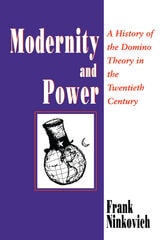
Modernity and Power
A History of the Domino Theory in the Twentieth CenturyFrank Ninkovich
University of Chicago Press, 1994
To emphasize the central role of symbolism and ideological assumptions in twentieth-century American statesmanship, Ninkovich focuses on the domino theory—a theory that departed radically from classic principles of political realism by sanctioning intervention in world regions with few financial or geographic claims on the national interest. Ninkovich insightfully traces the development of this global strategy from its first appearance early in the century through the Vietnam war.
Throughout the book, Ninkovich draws on primary sources to recover the worldview of the policy makers. He carefully assesses the coherence of their views rather than judge their actions against "objective" realities. Offering a new alternative to realpolitic and economic explanations of foreign policy, Modernity and Power will change the way we think about the history of U.S. international relations.
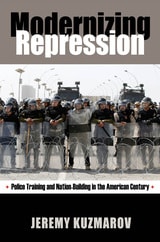
Modernizing Repression
Police Training and Nation-Building in the American CenturyJeremy Kuzmarov
University of Massachusetts Press, 2012
As American troops became bogged down first in Iraq and then Afghanistan, a key component of U.S. strategy was to build up local police and security forces in an attempt to establish law and order. This approach, Jeremy Kuzmarov shows, is consistent with practices honed over more than a century in developing nations within the expanding orbit of the American empire. From the conquest of the Philippines and Haiti at the turn of the twentieth century through Cold War interventions and the War on Terror, police training has been valued as a cost-effective means of suppressing radical and nationalist movements, precluding the need for direct U.S. military intervention and thereby avoiding the public opposition it often arouses.
Unlike the spectacular but ephemeral pyrotechnics of the battlefield, police training programs have had lasting consequences for countries under the American imperial umbrella, fostering new elites, creating powerful tools of social control, and stifling political reform. These programs have also backfired, breeding widespread resistance, violence, and instability—telltale signs of “blowback” that has done more to undermine than advance U.S. strategic interests abroad.
Myths America Lives By
White Supremacy and the Stories That Give Us MeaningRichard T. Hughes
University of Illinois Press, 2018