Results by title
230 books match the query 'Government relations' and 8 start with m
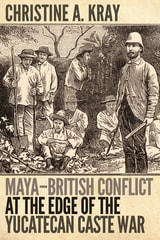
Maya-British Conflict at the Edge of the Yucatecan Caste War
Christine A. Kray
University Press of Colorado, 2023
Official British declarations of neutrality in the Caste War were confounded by a variety of political and economic factors, including competing land claims befuddled by a tangled set of treaties, mahogany extraction by British companies in contested territories, Maya rent demands, British trade in munitions to different groups of Maya combatants, and a labor system reliant on debt servitude. All these factors contributed to uneasy alliances and opportunistic crossings of imagined geopolitical borders in both directions, ultimately leading to a new military conflict in the western and northern regions of the territory claimed by Britain. What frequently began as hyper-local disputes spun out into international affairs as actors called upon more powerful groups for assistance. Evading reductionism, this work traces the decisions and actions of key figures as they maneuvered through the miasma of violence, abuse, deception, fear, flight, and glimpses of freedom.
Positioning the historiographic and ethnographic gaze on the English side without adopting the colonialist narratives and objectives found in English repositories, Maya-British Conflict at the Edge of the Yucatecan Caste War is an important and original contribution to a neglected area of study. It will appeal to students, scholars, and general readers interested in anthropology, Latin American cultures and history, Central American history, British imperialism, Indigenous rights, political anthropology, and colonialism and culture.
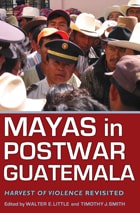
Mayas in Postwar Guatemala
Harvest of Violence RevisitedEdited by Walter E. Little and Timothy J. Smith
University of Alabama Press, 2009
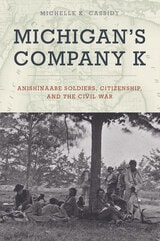
Michigan's Company K
Anishinaabe Soldiers, Citizenship, and the Civil WarMichelle K Cassidy
Michigan State University Press, 2023
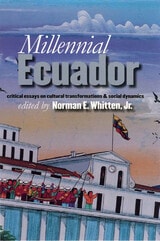
Millennial Ecuador
Critical Essays Cultural TransformationsNorman E Whitten
University of Iowa Press, 2003
Missionaries, Miners, and Indians
Spanish Contact with the Yaqui Nation of Northwestern New Spain, 1533–1820Evelyn Hu-DeHart
University of Arizona Press, 1981
More than a tale of Yaqui Indian resistance, Missionaries, Miners, and Indians documents the history of the Jesuit missions during a period of encroaching secularization. The Yaqui rebellion of 1740, analyzed here in detail, enabled the Yaqui to work for the mines without repudiating the missions; however, the erosion of the mission system ultimately led to the Jesuits’ expulsion from New Spain in 1767, and through their own perseverance, the Yaqui were able to bring their culture intact into the nineteenth century.
Monumental Ambivalence
The Politics of HeritageBy Lisa C. Breglia
University of Texas Press, 2006
From ancient Maya cities in Mexico and Central America to the Taj Mahal in India, cultural heritage sites around the world are being drawn into the wave of privatization that has already swept through such economic sectors as telecommunications, transportation, and utilities. As nation-states decide they can no longer afford to maintain cultural properties—or find it economically advantageous not to do so in the globalizing economy—private actors are stepping in to excavate, conserve, interpret, and represent archaeological and historical sites. But what are the ramifications when a multinational corporation, or even an indigenous village, owns a piece of national patrimony which holds cultural and perhaps sacred meaning for all the country's people, as well as for visitors from the rest of the world?
In this ambitious book, Lisa Breglia investigates "heritage" as an arena in which a variety of private and public actors compete for the right to benefit, economically and otherwise, from controlling cultural patrimony. She presents ethnographic case studies of two archaeological sites in the Yucatán Peninsula—Chichén Itzá and Chunchucmil and their surrounding modern communities—to demonstrate how indigenous landholders, foreign archaeologists, and the Mexican state use heritage properties to position themselves as legitimate "heirs" and beneficiaries of Mexican national patrimony. Breglia's research masterfully describes the "monumental ambivalence" that results when local residents, excavation laborers, site managers, and state agencies all enact their claims to cultural patrimony. Her findings make it clear that informal and partial privatizations—which go on quietly and continually—are as real a threat to a nation's heritage as the prospect of fast-food restaurants and shopping centers in the ruins of a sacred site.
Moral Ecology of a Forest
The Nature Industry and Maya Post-ConservationJosé E. Martínez-Reyes
University of Arizona Press, 2016
Moral Ecology of a Forest provides an ethnographic account of conservation politics, particularly the conflict between Western conservation and Mayan ontological ecology. The difficult interactions of the Maya of central Quintana Roo, Mexico, for example, or the Mayan communities of the Sain Ka’an Biosphere, demonstrate the clashing interests with Western biodiversity conservation initiatives. The conflicts within the forest of Quintana Roo represent the outcome of nature in this global era, where the forces of land grabbing, conservation promotion and organizations, and capitalism vie for control of forests and land.
Forests pose living questions. In addition to the ever-thrilling biology of interdependent species, forests raise questions in the sphere of political economy, and thus raise cultural and moral questions. The economic aspects focus on the power dynamics and ideological perspectives over who controls, uses, exploits, or preserves those life forms and landscapes. The cultural and moral issues focus on the symbolic meanings, forms of knowledge, and obligations that people of different backgrounds, ethnicities, and classes have constructed in relation to their lands. The Maya Forest of Quintana Roo is a historically disputed place in which these three questions come together.
México Profundo
Reclaiming a CivilizationBy Guillermo Bonfil Batalla
University of Texas Press, 1996
This translation of a major work in Mexican anthropology argues that Mesoamerican civilization is an ongoing and undeniable force in contemporary Mexican life.
For Guillermo Bonfil Batalla, the remaining Indian communities, the "de-Indianized" rural mestizo communities, and vast sectors of the poor urban population constitute the México profundo. Their lives and ways of understanding the world continue to be rooted in Mesoamerican civilization. An ancient agricultural complex provides their food supply, and work is understood as a way of maintaining a harmonious relationship with the natural world. Health is related to human conduct, and community service is often part of each individual's life obligation. Time is circular, and humans fulfill their own cycle in relation to other cycles of the universe.
Since the Conquest, Bonfil argues, the peoples of the México profundo have been dominated by an "imaginary México" imposed by the West. It is imaginary not because it does not exist, but because it denies the cultural reality lived daily by most Mexicans.
Within the México profundo there exists an enormous body of accumulated knowledge, as well as successful patterns for living together and adapting to the natural world. To face the future successfully, argues Bonfil, Mexico must build on these strengths of Mesoamerican civilization, "one of the few original civilizations that humanity has created throughout all its history."