Results by title
124 books match the query 'Health and hygiene' and 10 start with m
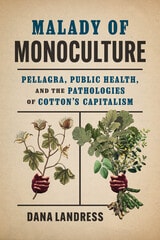
Malady of Monoculture
Pellagra, Public Health, and the Pathologies of Cotton's CapitalismDana Landress
University of Chicago Press, 2027
How the cotton industry restricted sharecroppers’ access to nutritious food, a public health crisis that spurred a wave of influential and inspiring activism.
Pellagra, a nutritional deficiency disease, was once widespread in the southern United States, where it was concentrated in areas of high-yield cotton production. This wasn’t a coincidence. In the early twentieth century, pellagra was ubiquitous in regions where monocultural cotton production foreclosed cotton workers’ access to nutritious foods. Planters paid sharecroppers and millworkers in their own currency—tokens, coins, and other substitutes for money—and sold them unhealthy and overpriced food in company-owned stores. Employers kept workers poor through wage theft, predatory credit systems, and labor coercion, all of which maintained a system of food scarcity.
In Malady of Monoculture, Dana Landress reveals how the unrelenting demands of the cotton economy during the Jim Crow South created a public health crisis in the form of pellagra. She carefully details a “closed food system” that restricted workers’ diets through employer-generated currency; the use of food as an instrument of labor compulsion; manufactured debt structures; alliances between government and private industry; and restrictions on foraging, gardening, and land use. Though official public health programs framed pellagra in personal and behavioral terms, those afflicted with the illness actively challenged the closed food system through union organizing, community health care, freedom farms, and collective action lawsuits. Excavating the landmark contributions of Black nutritionists to the field of public health, Landress spotlights the many constituencies that worked tirelessly to combat hunger and foregrounds their creativity, resilience, and determination.

Man-Made Medicine
Women’s Health, Public Policy, and ReformKary L. Moss, ed.
Duke University Press, 1996
These essays by physicians, lawyers, activists, and scholars present a rare interdisciplinary approach to a complex set of issues. Gender stereotyping and bias in the collection, analysis, and reporting of scientific data and in the ways health-related news is covered by the media are examined. The exclusion of women from the health care policy-making process and the effect such exclusion has on the determination of priorities among potential areas of research are also explored. With discussions of the plight of specific populations of women whose health care needs are not being sufficiently met—for example, immigrants, prisoners, the mentally ill, or women with HIV/AIDS, disabilities, or reproductive health problems—this book considers matters of race and class within the parameters of gender as it builds a fundamental challenge to the existing health care system. A range of current reform proposals are also evaluated in terms of their potential impact on women.
Suggesting no less than a radical rethinking of women’s medicine, Man-Made Medicine gives essential direction to the discussions that will shape the future of health care in this country. It will be of great interest to a wide audience, including health care advocates, policymakers, scholars, and readers generally concerned with women’s health issues.
Contributors. Ellen Barry, Laurie Beck, Joan Bertin, Janet Calvo, Wendy Chavkin, Kay Dickersin, Abigail English, Elizabeth Fee, Carol Gill, Nancy Krieger, Joyce McConnell, Judy Norsigian, Ann Scales, Susan Stefan, Lauren Schnaper, Catherine Teare
Marriage and Health
The Well-Being of Same-Sex CouplesHui Liu
Rutgers University Press, 2020
Medicalized Masculinities
edited by Dana Rosenfeld and Christopher A. Faircloth
Temple University Press, 2006
Medicalized Masculinities considers how these threads in scholarship failed to consider the male body adequately and presents cutting-edge research into the definition and regulation of masculinity by medicine. Renowned health and gender studies experts examine medicalized conditions such as balding, aging, and other dimensions of the life cycle in the tradition of the sociology of health and gender.
Medicating Race
Heart Disease and Durable Preoccupations with DifferenceAnne Pollock
Duke University Press, 2012

Mexican Americans and Health
¡Sana! ¡Sana!Adela de la Torre and Antonia Estrada
University of Arizona Press, 2001
- how values such as machismo, familismo, and marianismo influence care-seeking decisions and treatment of illness;
- how factors such as cultural values, socioeconomic status, peer pressure, and family concerns can contribute to substance abuse;
- how cultural attitudes toward sex can heighten the risk of AIDS—and how approaches to AIDS prevention and education need to reflect core cultural values such as familismo, respeto, and confianza. The book also addresses concerns of Mexican Americans regarding the health care system. These include not only access to care and to health insurance but also the shortage of bilingual and bicultural health care professionals. This coverage stresses not only the importance of linguistic competency but also the need to understand folklore illnesses, herbal remedies, and spiritual practices that can delay the treatment of illness and either complement or compromise treatment. Of all the issues that face the contemporary Mexican American community, none is as important to its very survival as health and health care. This timely book gives readers a broad understanding of these complex issues and points the way toward a healthier future for all people of Mexican origin. Mexican Americans and Health and Chicano Popular Culture are the first volumes in the series The Mexican American Experience, a cluster of modular texts designed to provide greater flexibility in undergraduate education. Each book deals with a single topic concerning the Mexican American population. Instructors can create a semester-length course from any combination of volumes, or may choose to use one or two volumes to complement other texts.

Mexican Americans and Health
¡Sana! ¡Sana!Adela de la Torre and Antonio Estrada
University of Arizona Press, 2015
Given recent developments in health care and policy and a steadily increasing population of people of Mexican origin in the United States, a comprehensive look at Mexican American health has never been more necessary. Adela de la Torre and Antonio Estrada first accomplished such an overview with Mexican Americans and Health in 2001, and they have since continued to revise and expand their initial work. With a multitude of additions and renovations, Mexican Americans and Health, 2nd Edition provides a timely and accessible description of current topics in Latino health.
De la Torre and Estrada once again present a broad and nuanced understanding of recent issues involving Mexican American health and well-being, this time with the addition of discussions on:
* the new U.S. Human Development Index to contextualize the health, education, and income status of Mexican Americans relative to other population groups,
* emerging diseases, such as diabetes and obesity,
* recent health-care reforms under the Obama administration,
* substance abuse, sexual risk, and psychological distress among HIV-positive individuals in the gay/bisexual community,
* and predictions of future trends for the next decade.
This new volume has been updated throughout to reflect the many developments in health care since its first edition. Mexican Americans and Health, 2nd Edition continues to present data on a large number of health issues that are important and relevant to the Mexican American population, while describing the social contexts in which they are occurring. Its comprehensive and interdisciplinary approach brings originality and focus to a dynamic literature.
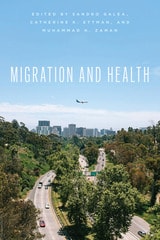
Migration and Health
Edited by Sandro Galea, Catherine K. Ettman, and Muhammad H. Zaman
University of Chicago Press, 2022
International migrants compose more than three percent of the world’s population, and internal migrants—those migrating within countries—are more than triple that number. Population migration has long been, and remains today, one of the central demographic shifts shaping the world around us. The world’s history—and its health—is shaped and colored by stories of migration patterns, the policies and political events that drive these movements, and narratives of individual migrants.
Migration and Health offers the most expansive framework to date for understanding and reckoning with human migration’s implications for public health and its determinants. It interrogates this complex relationship by considering not only the welfare of migrants, but also that of the source, destination, and ensuing-generation populations. The result is an elevated, interdisciplinary resource for understanding what is known—and the considerable territory of what is not known—at an intersection that promises to grow in importance and influence as the century unfolds.
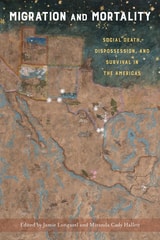
Migration and Mortality
Social Death, Dispossession, and Survival in the AmericasEdited by Jamie Longazel and Miranda Cady Hallett
Temple University Press, 2021
Death threatens migrants physically during perilous border crossings between Central and North America, but many also experience legal, social, and economic mortality. Rooted in histories of colonialism and conquest, exclusionary policies and practices deliberately take aim at racialized, dispossessed people in transit. Once in the new land, migrants endure a web of systems across every facet of their world—work, home, healthcare, culture, justice—that strips them of their personhood, denies them resources, and creates additional obstacles that deprive them of their ability to live fully.
As laws and policies create ripe conditions for the further extraction of money, resources, and labor power from the dispossessed, the contributors to this vibrant anthology, Migration and Mortality, examine restrictive immigration policies and the broader capitalist systems of exploitation and inequality while highlighting the power of migrants’ collective resistance and resilience.
The case studies in this timely collection explore border deaths, detention economies, asylum seeking, as well as the public health and mental health of migrants. Ultimately, these examples of oppression and survival contribute to understanding broader movements for life and justice in the Americas.
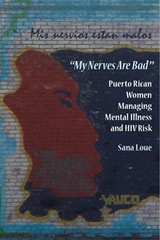
My Nerves Are Bad
Puerto Rican Women Managing Mental Illness and HIV RiskSana Loue
Vanderbilt University Press, 2011
Sana Loue lets us see the remarkable strength of many of the women and hear in their own words about their efforts to survive, despite long histories of childhood physical and sexual abuse, partner violence, substance use, poverty, and severe mental illness. We also witness the violence that surrounds them and the HIV risk that becomes a part of their lives in their efforts to survive economically and emotionally.