Results by title
433 books match the query 'Immigrants' and 38 start with m
Madre and I
A Memoir of Our Immigrant LivesGuillermo Reyes
University of Wisconsin Press, 2010
In one memorable scene, after realizing that her friend Carmen is cleaning the house of one of the producers of Annie Hall, María recruits her to take her picture as she poses dramatically with Mr. Joffe’s Oscar in hand. It is María’s defiant yet determined attitude amidst her sacrifices that allows for Guillermo’s spirited coming of age and coming out.
Their common ground is the drama of their encounters with discovery, heartbreak, and passion—the explosive emotions that light up the stage of their two-actor theater.
Making Michigan Home
Mexican Americans Bridging the Rural-Urban ExperienceBrett T. Olmsted
University of Illinois Press, 2025
Making a Global Immigrant Neighborhood
Brooklyn's Sunset ParkTarry Hum
Temple University Press, 2014
Based on more than a decade of research, Making a Global Immigrant Neighborhood charts the evolution of Sunset Park--with a densely concentrated working-poor and racially diverse immigrant population--from the late 1960s to its current status as one of New York City's most vibrant neighborhoods.
Tarry Hum shows how processes of globalization, such as shifts in low-wage labor markets and immigration patterns, shaped the neighborhood. She explains why Sunset Park's future now depends on Asian and Latino immigrant collaborations in advancing common interests in community building, civic engagement, entrepreneurialism, and sustainability planning. She shows, too, how residents' responses to urban development policies and projects and the capital represented by local institutions and banks foster community activism.
Hum pays close attention to the complex social, political, and spatial dynamics that forge a community and create new models of leadership as well as coalitions. The evolution of Sunset Park so astutely depicted in this book suggests new avenues for studying urban change and community development.
Making the Immigrant Soldier
How Race, Ethnicity, Class, and Gender Intersect in the US MilitaryCristina-Ioana Dragomir
University of Illinois Press, 2023
A compelling union of analysis and rich storytelling, Making the Immigrant Soldier traces the complexities of serving in the military in order to pursue the American dream.
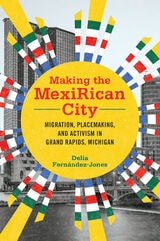
Making the MexiRican City
Migration, Placemaking, and Activism in Grand Rapids, MichiganDelia Fernández-Jones
University of Illinois Press, 2023
A Choice Outstanding Academic Title for 2023
Large numbers of Latino migrants began to arrive in Grand Rapids, Michigan, in the 1950s. They joined a small but established Spanish-speaking community of people from Texas, Mexico, and Puerto Rico. Delia Fernández-Jones merges storytelling with historical analysis to recapture the placemaking practices that these Mexicans, Tejanos, and Puerto Ricans used to create a new home for themselves. Faced with entrenched white racism and hostility, Latinos of different backgrounds formed powerful relationships to better secure material needs like houses and jobs and to recreate community cultural practices. Their pan-Latino solidarity crossed ethnic and racial boundaries and shaped activist efforts that emphasized working within the system to advocate for social change. In time, this interethnic Latino alliance exploited cracks in both overt and structural racism and attracted white and Black partners to fight for equality in social welfare programs, policing, and education.
Groundbreaking and revelatory, Making the MexiRican City details how disparate Latino communities came together to respond to social, racial, and economic challenges.
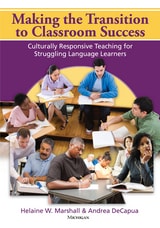
Making the Transition to Classroom Success
Culturally Responsive Teaching for Struggling Language LearnersHelaine W. Marshall and Andrea DeCapua
University of Michigan Press, 2013
Features a chapter on flipped classrooms!
Learners with no, minimal, or limited exposure to formal education generally do not share the expectations and assumptions of their new setting; as a result, they are likely to find themselves confounded by the ways in which the language and content are presented, practiced, and assessed in Western-style educational settings. Institutions and teachers must tailor therefore their instruction to this population. Making the Transition to Classroom Success: Culturally Responsive Teaching for Struggling Language Learners examines how understanding secondary and adult L2 learners’ educational paradigm, rooted deeply in their past experiences and cultural orientations, provides a key to the solution to a lack of progress.
Making the Transition to Classroom Success builds on and expands on two earlier books, Meeting the Needs of Students with Limited or Interrupted Formal Schooling and Breaking New Ground: Teaching Students with Limited or Interrupted Formal Education in U.S. Secondary Schools. These previous books focused specifically on a subset of struggling L2 learners--those with limited or interrupted formal education (SLIFE) in U.S. secondary schools—and detailed the instructional model (MALP). Making the Transition broadens the applications of the MALP model to include academic thinking tasks, flipped classrooms, project design, and rubrics.
Maltese in Michigan
Joseph M. Lubig
Michigan State University Press, 2011
Maltese in Michigan is an enlivening volume depicting the struggles and accomplishments of a singular culture, an immigrant narrative at once recognizable and enigmatic. Without realizing it, most Americans are probably familiar with the Maltese people through the cross displayed by firefighters, which bears a strong similarity in design and meaning to the one used by the Knights of Malta. The noble qualities embodied by the Maltese Cross are reflected in the pride and accomplishments of Maltese immigrants in Michigan, a small but vibrant ethnic group. Rooted in the post–World War II experiences of the 20th century, the Maltese established themselves in the city of Detroit, and thrived due to a strong work ethic and Catholic faith, while maintaining a strong central identity. This volume is a tribute to the Maltese of Michigan and all who have begun anew in an unfamiliar land and culture.
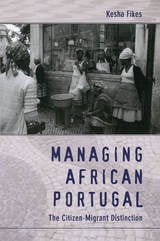
Managing African Portugal
The Citizen-Migrant DistinctionKesha Fikes
Duke University Press, 2009
The ethnographic focus is a former undocumented fish market that at one time employed both Portuguese and Cape Verdean women. Both groups eventually sought work in low-wage professions as maids, nannies, and restaurant-kitchen help. The visibility of poor Portuguese women as domestics was thought to undermine the appearance of Portuguese modernity; by contrast, the association of poor African women with domestic work confirmed it. Fikes argues that we can better understand how Portugal interpreted its economic absorption into the EU by attending to the different directions in which working-poor Portuguese and Cape Verdean women were routed in the mid-1990s and by observing the character of the new work relationships that developed among them. In Managing African Portugal, Fikes pushes for a study of migrant phenomena that considers not only how the enactment of citizenship by the citizen manages the migrant, but also how citizens are simultaneously governed through their uptake and assumption of new EU citizen roles.
Managing Ethnic Diversity after 9/11
Integration, Security, and Civil Liberties in Transatlantic PerspectiveChebel d'Appollonia, Ariane
Rutgers University Press, 2010
Managing Ethnic Diversity after 9/11 compares these two strategies and considers that both may have engendered greater radicalization--and a greater chance of home-grown terrorism. Essays address how transatlantic countries, including the United Kingdom, the United States, France, Germany, Spain, Italy, and the Netherlands have integrated ethnic minorities, especially Arabs and Muslims, since 9/11. Discussing the "securitization of integration," contributors argue that the neglect of civil integration has challenged the rights of these minorities and has made greater security more remote.
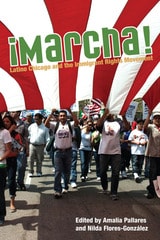
Marcha
Latino Chicago and the Immigrant Rights MovementEdited by Amalia Pallares and Nilda Flores-Gonzalez
University of Illinois Press, 2010
Marcha is a multidisciplinary survey of the individuals, organizations, and institutions that have given shape and power to the contemporary immigrant rights movement in Chicago. A city with longstanding historic ties to immigrant activism, Chicago has been the scene of a precedent-setting immigrant rights mobilization in 2006 and subsequent mobilizations in 2007 and 2008.
Positing Chicago as a microcosm of the immigrant rights movement on national level, these essays plumb an extraordinarily rich set of data regarding recent immigrant rights activities, defining the cause as not just a local quest for citizenship rights, but a panethnic, transnational movement. The result is a timely volume likely to provoke debate and advance the national conversation about immigration in innovative ways.
Maria's Journey
Ramon Arredondo and Trisha (Hull) Arredondo
Indiana Historical Society Press, 2010

Massacred for Gold
The Chinese in Hells CanyonR. Gregory Nokes
Oregon State University Press, 2009
In 1887, more than 30 Chinese gold miners were massacred on the Oregon side of Hells Canyon, the deepest canyon in North America. Massacred for Gold, the first authoritative account of the unsolved crime—one of the worst of the many crimes committed by whites against Chinese laborers in the American West—unearths the evidence that points to an improbable gang of rustlers and schoolboys, one only 15, as the killers.
The crime was discovered weeks after it happened, but no charges were brought for nearly a year, when gang member Frank Vaughan, son of a well-known settler family, confessed and turned state’s evidence. Six men and boys, all from northeastern Oregon’s remote Wallowa country, were charged—but three fled, and the others were found innocent by a jury that a witness admitted had little interest in convicting anyone. A cover-up followed, and the crime was all but forgotten for the next 100 years, until a county clerk found hidden records in an unused safe.
In bringing this story out of the shadows, Nokes examines the once-substantial presence of Chinese laborers in the interior Pacific Northwest, describing why they came, how their efforts contributed to the region’s development, and how too often mistreatment and abuse were their only reward.
Mestizo in America
Generations of Mexican Ethnicity in the Suburban SouthwestThomas Macias
University of Arizona Press, 2006
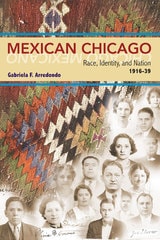
Mexican Chicago
Race, identity and Nation, 1916-39Gabriela F. Arredondo
University of Illinois Press, 2007
Mexican Chicago builds on previous studies of Mexicans in the United States while challenging static definitions of “American” and underlying assumptions of assimilation. Gabriela F. Arredondo contends that because of the revolutionary context from which they came, Mexicans in Chicago between 1916 and 1939 were not just another ethnic group working to be assimilated into a city that has a long history of incorporating newcomers. Suggesting a new understanding of identity formation, she argues that Mexicans wielded tools of identification forged in revolutionary Mexico to collectively battle the prejudices of ethnic groups that included Poles, Italians, and the Irish, as well as African Americans. By turning inward, however, Mexicans also highlighted tremendous differences among themselves, such as gender and class. In discussing this distinctive process of becoming “Mexican” in Chicago during the early twentieth century, Arredondo not only explores how that identity was constructed but also provides telling insight into the repercussions of that identity formation process.
Mexican Immigration to the United States
Edited by George J. Borjas
University of Chicago Press, 2007
From debates on Capitol Hill to the popular media, Mexican immigrants are the subject of widespread controversy. By 2003, their growing numbers accounted for 28.3 percent of all foreign-born inhabitants of the United States. Mexican Immigration to the United States analyzes the astonishing economic impact of this historically unprecedented exodus. Why do Mexican immigrants gain citizenship and employment at a slower rate than non-Mexicans? Does their migration to the U.S. adversely affect the working conditions of lower-skilled workers already residing there? And how rapid is the intergenerational mobility among Mexican immigrant families?
This authoritative volume provides a historical context for Mexican immigration to the U.S. and reports new findings on an immigrant influx whose size and character will force us to rethink economic policy for decades to come. Mexican Immigration to the United States will be necessary reading for anyone concerned about social conditions and economic opportunities in both countries.
Mexican Migration to the United States
Perspectives From Both Sides of the BorderEdited by Harriett D. Romo and Olivia Mogollon-Lopez
University of Texas Press, 2016
Borderlands migration has been the subject of considerable study, but the authorship has usually reflected a north-of-the-border perspective only. Gathering a transnational group of prominent researchers, including leading Mexican scholars whose work is not readily available in the United States and academics from US universities, Mexican Migration to the United States brings together an array of often-overlooked viewpoints, reflecting the interconnectedness of immigration policy.
This collection’s research, principally empirical, reveals significant aspects of labor markets, family life, and educational processes. Presenting recent data and accessible explanations of complex histories, the essays capture the evolving legal frameworks and economic implications of Mexico-US migrations at the national and municipal levels, as well as the experiences of receiving communities in the United States. The volume includes illuminating reports on populations ranging from undocumented young adults to elite Mexican women immigrants, health-care rights, Mexico’s incorporation of return migration, the impact of Deferred Action for Childhood Arrivals on higher education, and the experiences of young children returning to Mexican schools after living in the United States. Reflecting a multidisciplinary approach, the list of contributors includes anthropologists, demographers, economists, educators, policy analysts, and sociologists.
Underscoring the fact that Mexican migration to the United States is unique and complex, this timely work exemplifies the cross-border collaboration crucial to the development of immigration policies that serve people in both countries.
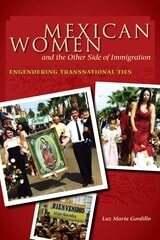
Mexican Women and the Other Side of Immigration
Engendering Transnational TiesBy Luz María Gordillo
University of Texas Press, 2010
Weaving narratives with gendered analysis and historiography of Mexicans in the Midwest, Mexican Women and the Other Side of Immigration examines the unique transnational community created between San Ignacio Cerro Gordo, Jalisco, and Detroit, Michigan, in the last three decades of the twentieth century, asserting that both the community of origin and the receiving community are integral to an immigrant's everyday life, though the manifestations of this are rife with contradictions.
Exploring the challenges faced by this population since the inception of the Bracero Program in 1942 in constantly re-creating, adapting, accommodating, shaping, and creating new meanings of their environments, Luz María Gordillo emphasizes the gender-specific aspects of these situations. While other studies of Mexican transnational identity focus on social institutions, Gordillo's work introduces the concept of transnational sexualities, particularly the social construction of working-class sexuality. Her findings indicate that many female San Ignacians shattered stereotypes, transgressing traditionally male roles while their husbands lived abroad. When the women themselves immigrated as well, these transgressions facilitated their adaptation in Detroit. Placed within the larger context of globalization, Mexican Women and the Other Side of Immigration is a timely excavation of oral histories, archival documents, and the remnants of three decades of memory.
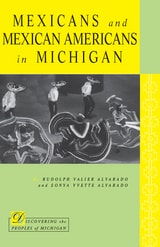
Mexicans and Mexican Americans in Michigan
Rudolph V. Alvarado
Michigan State University Press, 2003
Unlike most of their immigrant counterparts, up until the turn of the twentieth century most Mexicans and Mexican Americans did not settle permanently in Michigan but were seasonal laborers, returning to homes in the southwestern United States or Mexico in the winter. Nevertheless, during the past century the number of Mexicans and Mexican Americans settling in Michigan has increased dramatically, and today Michigan is undergoing its third “great wave” of Mexican immigration. Though many Mexican and Mexican American immigrants still come to Michigan seeking work on farms, many others now come seeking work in manufacturing and construction, college educations, opportunities to start businesses, and to join family members already established in the state. In Mexicans and Mexican Americans in Michigan, Rudolph Valier Alvarado and Sonya Yvette Alvarado examine the settlement trends and growth of this population, as well as the cultural and social impact that the state and these immigrants have had on one another. The story of Mexicans and Mexican Americans in Michigan is one of a steadily increasing presence and influence that well illustrates how peoples and places combine to create traditions and institutions.
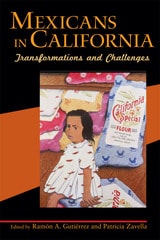
Mexicans in California
Transformations and ChallengesEdited by Ramon A. Gutierrez and Patricia Zavella
University of Illinois Press, 2008
Migrant Feelings, Migrant Knowledge
Building a Community ArchiveRobert McKee Irwin
University of Texas Press, 2022
The digital storytelling project Humanizing Deportation invites migrants to present their own stories in the world’s largest and most diverse archive of its kind. Since 2017, more than 300 community storytellers have created their own audiovisual testimonial narratives, sharing their personal experiences of migration and repatriation. With Migrant Feelings, Migrant Knowledge, the project’s coordinator, Robert Irwin, and other team members introduce the project’s innovative participatory methodology, drawing out key issues regarding the human consequences of contemporary migration control regimes, as well as insights from migrants whose world-making endeavors may challenge what we think we know about migration.
In recent decades, migrants in North America have been treated with unprecedented harshness. Migrant Feelings, Migrant Knowledge outlines this recent history, revealing stories both of grave injustice and of seemingly unsurmountable obstacles overcome. As Irwin writes, “The greatest source of expertise on the human consequences of contemporary migration control are the migrants who have experienced them,” and their voices in this searing collection jump off the page and into our hearts and minds.
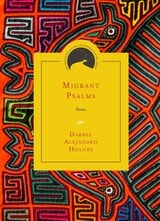
Migrant Psalms
PoemsDarrel Alejandro Holnes
Northwestern University Press, 2021
Migrant Psalms gives us a rare look inside a Panamanian experience of migration, describing the harsh realities of mothers, children, and teens who entered the United States—or tried to do so. Holnes’s poems find the universal through specificity; their exploration of expatriation, assimilation, and naturalization transcends the author’s personal experience to speak to what it means to be “other” anywhere.
The collection begins with “Kyrie,” a coming‑to‑America chronicle that spans three years in Texas, modeled after the liturgical Christian prayer Kyrie Eleison (Lord, have mercy). Other poems experiment with macaronic language and form to parallel shifts in the speaker’s status from immigrant to citizen, ending with “The 21st Century Poem,” which probes what’s “real” in today’s New York City. Through the speaker’s quest to become an American, this collection asks: Who are we becoming as individuals, as a society, as a nation, as a world? And is faith enough to enact change? Or is it just the first step?
Migrant World Making
Sergio F Juárez
Michigan State University Press, 2023
Migrants and City-Making
Dispossession, Displacement, and Urban RegenerationAyse Caglar and Nina Glick Schiller
Duke University Press, 2018
Migrants and Migration in Modern North America
Cross-Border Lives, Labor Markets, and PoliticsDirk Hoerder and Nora Faires, eds.
Duke University Press, 2011
Contributors. Jaime R. Aguila. Rodolfo Casillas-R., Nora Faires, Maria Cristina Garcia, Delia Gonzáles de Reufels, Brian Gratton, Susan E. Gray, James N. Gregory, John Mason Hart, Dirk Hoerder, Dan Killoren, Sarah-Jane (Saje) Mathieu, Catherine O’Donnell, Kerry Preibisch, Lara Putnam, Bruno Ramirez, Angelika Sauer, Melanie Shell-Weiss, Yukari Takai, Omar S. Valerio-Jiménez, Carlos G. Vélez-Ibáñez
Migration Stories
Connecting Activism, Policy, and ScholarshipEdited by Benjamin Gatling
University of Illinois Press, 2025
Ranging from oral history projects to the asylum process to calls for decolonial justice, the contributors’ analyses illuminate how migrants’ and refugees’ personal narratives influence both perceptions and policies. Their merger of perspectives provides a nuanced understanding of migration and emphasizes the importance of how storytelling can foster empathy, challenge stereotypes, and drive social change. At the same time, the essays center migrants’ and refugees’ voices within public debates and in work done to humanize the reality they face.
Original and multifaceted, Migration Stories provides a vital addition to how we study and frame immigration.
Migration and Health
Edited by Sandro Galea, Catherine K. Ettman, and Muhammad H. Zaman
University of Chicago Press, 2022
International migrants compose more than three percent of the world’s population, and internal migrants—those migrating within countries—are more than triple that number. Population migration has long been, and remains today, one of the central demographic shifts shaping the world around us. The world’s history—and its health—is shaped and colored by stories of migration patterns, the policies and political events that drive these movements, and narratives of individual migrants.
Migration and Health offers the most expansive framework to date for understanding and reckoning with human migration’s implications for public health and its determinants. It interrogates this complex relationship by considering not only the welfare of migrants, but also that of the source, destination, and ensuing-generation populations. The result is an elevated, interdisciplinary resource for understanding what is known—and the considerable territory of what is not known—at an intersection that promises to grow in importance and influence as the century unfolds.
Migration and Mortality
Social Death, Dispossession, and Survival in the AmericasEdited by Jamie Longazel and Miranda Cady Hallett
Temple University Press, 2021
Death threatens migrants physically during perilous border crossings between Central and North America, but many also experience legal, social, and economic mortality. Rooted in histories of colonialism and conquest, exclusionary policies and practices deliberately take aim at racialized, dispossessed people in transit. Once in the new land, migrants endure a web of systems across every facet of their world—work, home, healthcare, culture, justice—that strips them of their personhood, denies them resources, and creates additional obstacles that deprive them of their ability to live fully.
As laws and policies create ripe conditions for the further extraction of money, resources, and labor power from the dispossessed, the contributors to this vibrant anthology, Migration and Mortality, examine restrictive immigration policies and the broader capitalist systems of exploitation and inequality while highlighting the power of migrants’ collective resistance and resilience.
The case studies in this timely collection explore border deaths, detention economies, asylum seeking, as well as the public health and mental health of migrants. Ultimately, these examples of oppression and survival contribute to understanding broader movements for life and justice in the Americas.
Migration and Multiculturalism in Scandinavia
Edited by Eric Einhorn, Sherrill Harbison, and Markus Huss
University of Wisconsin Press, 2022
Drawing from personal experiences and theoretical perspectives in such varied fields as sociology, political science, literature, and media studies, nineteen scholars assess recent shifts in Scandinavian societies and how they intertwine with broader transformations in Europe and beyond. Chapters explore a variety of topics, including themes of belonging and identity in Norway, the experiences and activism of the Nordic countries’ Indigenous populations, and parallels between the racist far-right resurgence in Sweden and the United States.
Contributors: Ellen A. Ahlness, Julie K. Allen, Grete Brochmann, Eric Einhorn, Sherrill Harbison, Anne Heith, Markus Huss, Peter Leonard, Barbara Mattsson, Kelly McKowen, Andreas Önnerfors, Elisabeth Oxfeldt, Tony Sandset, Carly Elizabeth Schall, Ryan Thomas Skinner, Admir Skodo, Benjamin R. Teitelbaum, Sayaka Osanami Törngren, Ethelene Whitmire
Migration, Class and Transnational Identities
Croations in Australia and AmericaVal Colic-Pelsker
University of Illinois Press, 2007
Val Colic-Peisker harnesses concepts and theories from sociology, anthropology, and political science to compare the vastly different experiences of two Croatian immigrant cohorts in the city of Perth, Western Australia. The populations explored represent an earlier group of working-class migrants arriving from communist Yugoslavia from the 1950s to 1970s and a later group of urban professionals arriving in the 1980s and 1990s as 'independent' or skills-based migrants. This latter group integrated into professional ranks but also used their Australian experience as a stepping stone in becoming part of a highly mobile global professional middle class.
Employing a refined theoretical analysis, this rich ethnography challenges the domination of the ethnic perspective in migration studies and the idea of ethnic community itself. It emphasizes the importance of class, focusing on the intersection of class, ethnicity, and gender in the process of migration, migrant incorporation, and transnationalism. In theorizing the connection of the two migrant cohorts with their native Croatia, the study introduces concepts of "ethnic" and "cosmopolitan" transnationalism as two distinctive experiences mediated by class.
Migration, Transnationalization & Race
In A Changing New YorkHector Cordero-Guzman
Temple University Press, 2001
In this ambitious book, nineteen scholars from a broad range of disciplines bring our understanding of New York's immigrant communities up to date by exploring the interaction between economic globalization and transnationalization, demographic change, and the evolving racial, ethnic, gender dynamics in the City. Urban and suburban, Asian, European, Latin American, and Caribbean, men and women and children—the essays here analyze the complex forces that shape the contemporary immigrant experience in New York City and the links between immigrant communities in New York and their countries of origin.
Model Immigrants and Undesirable Aliens
The Cost of Immigration Reform in the 1990sChristina Gerken
University of Minnesota Press, 2013
During 1995 and 1996, President Bill Clinton signed into law three bills that altered the rights and responsibilities of immigrants: the Antiterrorism and Effective Death Penalty Act, the Personal Responsibility Act, and the Illegal Immigration Reform and Immigrant Responsibility Act. Model Immigrants and Undesirable Aliens examines the changing debates around immigration that preceded and followed the passage of landmark legislation by the U.S. Congress in the mid-1990s, arguing that it represented a new, neoliberal way of thinking and talking about immigration.
Christina Gerken explores the content and the social implications of the deliberations that surrounded the development and passage of immigration reform, analyzing a wide array of writings from congressional debates and committee reports to articles and human-interest stories in mainstream newspapers. The process, she shows, disguised its underlying racism by creating discursive strategies that shaped and upheld an image of “desirable” immigrants—those who could demonstrate “personal responsibility” and an ability to contribute to the U.S. economy. Gerken finds that politicians linked immigration to complex issues: poverty, welfare reform, so-called family values, measures designed to combat terrorism, and the spiraling costs of social welfare programs.
Although immigrants were often at the center of congressional debates, politicians constructed an elaborate, abstract terminology that appeared to be unrelated to race or gender. Instead, politicians promoted neoliberal policies as the avenue to a postracist, postsexist world of opportunity for every rational consumer with an entrepreneurial spirit. Still, Gerken concludes that the passage of pathbreaking legislation was characterized by a useful tension between neoliberal assumptions and hidden anxieties about race, class, gender, and sexuality.
Modern Jungles
A Hmong Refugee’s Childhood Story of SurvivalPao Lor
Wisconsin Historical Society Press, 2021
Born in a small farming village, Pao was destined to be a Hmong clan leader, wedding negotiator, or shaman. But the course of his life changed dramatically in the 1970s, when the Hmong faced persecution for their role in helping US forces fighting communism in the region. After more than two years in Thai refugee camps, Pao and his surviving family members boarded the belly of an “iron eagle” bound for the United States, where he pictured a new life of comfort and happiness. Instead, Pao found himself navigating a frightening and unfamiliar world, adjusting to a string of new schools and living situations while struggling to fulfill the hopes his parents had once held for his future. Now in Modern Jungles, Pao Lor shares his inspiring coming-of-age tale about perseverance, grit, and hope.
Included are discussion questions for use by book clubs, in classrooms, or around the dinner table.
Modern Migrations, Black Interrogations
Revisioning Migrants and Mobilities through the Critique of AntiblacknessEdited by Philip Kretsedemas and Jamella N. Gow
Temple University Press, 2024
Focusing on antiblackness in immigration and examining restrictions on freedom of movement and on settling alike, chapters address how Black im/mobility operates and how it can be distinguished from that of the migrant and the colonial settler, as well as from the transgressive mobilities of Indigenous populations. Looking at blackness, borders and border practices, and displacement, Modern Migrations, Black Interrogations investigates racialized boundaries that determine immigration policy, citizenship, legality, and inclusion. Additional chapters analyze communities, such as the Haitian diaspora in Miami, antiblackness in the context of Australian migration, and explore literary representations of justice, slavery and Black feminist consciousness.
Modern Migrations, Black Interrogations uses (anti)blackness to rethink the way we understand borders, immigrant identity, barriers to integration, and the dynamics of migrant exclusion, while also providing an understanding of “otherness” for Black populations across nationalities.
Contributors: Maya Hislop, P. Khalil Saucier, Hyacinth Udah, Paula von Gleich, Tryon P. Woods, and the editors
More Peoples of Las Vegas
One City, Many FacesJerry L Simich
University of Nevada Press, 2010
The remarkable economic growth of Las Vegas between 1980 and 2007 created a population boom and a major increase in the ethnic and religious diversity of the city. Today, over 21 percent of the city’s population is foreign born, and over 30 percent speak a language other than English at home. The local court system offers interpreters in 82 languages, and in 2005/2006, for example, more than 11,000 people, originating from 138 countries, were naturalized there as American citizens.More Peoples of Las Vegas extends the survey of this city’s cosmopolitan population begun in The Peoples of Las Vegas (University of Nevada Press, 2005). As in the previous book, this volume includes well-established groups like the Irish and Germans, and recently arrived groups like the Ethiopians and Guatemalans. Essays describe the history of each group in Las Vegas and the roles they play in the life and economy of the city. The essays also explore the influence of modern telecommunications and accessible air travel, showing how these factors allow newcomers to create transnational identities and maintain ties with families and culture back home. They also examine the role of local institutions—including clubs, religious organizations, shops, restaurants, and newspapers and other media—in helping immigrants maintain their ethnic and religious identities and in disseminating national and even regional cultures of origin.More Peoples of Las Vegas adds to our awareness of the rich and varied ethnic and religious character of Las Vegans. In a broader context, it offers thoughtful perspectives on the impact of globalization on a major American city and on the realities of immigrant life in the twenty-first century.

More Than Two to Tango
Argentine Tango Immigrants in New York CityAnahí Viladrich
University of Arizona Press, 2013
Based on a highly visible group of performers within the almost hidden population of Argentines in the United States, More than Two to Tango addresses broader questions on the understudied role of informal webs in the entertainment field. Through the voices of both early generations of immigrants and the latest wave of newcomers, Anahí Viladrich explores how the dancers, musicians, and singers utilize their complex social networks to survive as artists and immigrants. She reveals a diverse community navigating issues of identity, class, and race as they struggle with practical concerns, such as the high cost of living in New York City and affordable health care.
Argentina’s social history serves as the compelling backdrop for understanding the trajectory of tango performers, and Viladrich uses these foundations to explore their current unified front to keep tango as their own “authentic” expression. Yet social ties are no panacea for struggling immigrants. Even as More Than Two to Tango offers the notion that each person is truly conceived and transformed by their journeys around the globe, it challenges rosy portraits of Argentine tango artists by uncovering how their glamorous representations veil their difficulties to make ends meet in the global entertainment industry. In the end, the portrait of Argentine tango performers’ diverse career paths contributes to our larger understanding of who may attain the “American Dream,” and redefines what that means for tango artists.
Muncie, India(na)
Middletown and Asian AmericaHimanee Gupta-Carlson
University of Illinois Press, 2018

My Daughter's Eyes and Other Stories
StoriesAnnecy Báez
Northwestern University Press, 2007

My Parents
Memoirs of New World IcelandersBirna Bjarnadottir
University of Manitoba Press, 2007